Reading view

McAfee and Pat McAfee Turn a Name Mix-Up Into a Push for Online Safety

Pat McAfee

If a message popped up in your feed tomorrow promising a cash refund, a surprise giveaway, or a limited-time crypto opportunity, would you pause long enough to question it? 

That split second matters more than ever.

Most modern scams don’t rely on panic or obvious red flags. They rely on familiarity. On things that feel normal. On moments that seem too small to question. 

And those moments are exactly what scammers exploit. 

Why Today’s Scams Are So Easy to Fall For 

There was a time when spotting a scam was relatively straightforward. The emails were badly written. The websites looked rushed. The warnings were obvious. 

Scammers don’t just rely on obvious spam or panic-driven messages. Instead, many now use: 

  • Friendly, natural language 
  • Faces of celebrities and figures you trust 
  • Messages that arrive through trusted apps 
  • Conversations that unfold gradually 
  • Requests that feel routine instead of suspicious 

McAfee’s Celebrity Deepfake Deception research shows how common and convincing these scams have become: 72% of Americans say they’ve seen a fake or AI-generated celebrity endorsement, and 39% say they’ve clicked on one that turned out to be fraudulent. When scam content shows up in the same feeds, apps, and formats people use every day, it feels normal. 

That’s the danger zone. It’s also why McAfee chose to use a familiar, culturally recognizable moment to talk about a much bigger issue.

Why McAfee Partnered with Pat McAfee 

Whether you’ve been saying mack-uh-fee or mick-affy, the long-running name mix-up is harmless in everyday conversation. 

Online, though, small moments of confusion can have outsized consequences. 

Scammers rely on quick assumptions: that a familiar name means legitimacy, that a recognizable face means trust, that a message arriving in the right place must be real. They move fast, hoping people act before stopping to verify 

Pat McAfee knows firsthand how scammers exploit familiarity and trust. 

In recent months, fake social media giveaways promising cash and prizes have circulated using Pat’s likeness, and even a fraudulent “American Heart Association fundraiser” made the rounds, falsely claiming he was collecting donations. 

Pat wants his fans to know: if you ever see a giveaway, fundraiser, or message claiming to be from him, double-check it on his official channels first. If it feels off, it probably is. 

Unfortunately, these scams work because people trust Pat. Scammers exploit that trust to lower people’s guard and make fraudulent requests feel legitimate. 

It’s the same tactic used across countless impersonation scams today: borrow the authority of a familiar face, add a sense of urgency, and move fast before anyone stops to verify, “is this legit?” We’ve seen it happen with Taylor Swift, Tom Hanks, Al Roker, Brad Pitt, and numerous others. 

Remember, no legitimate giveaway will ask for payment, banking details, login credentials, or account access. And no nonprofit fundraiser tied to a celebrity should ever come from a personal message or unfamiliar social account. 

Watch: Pat McAfee Explains How McAfee Is More Than an Antivirus 

In the video below, Pat McAfee playfully demonstrates how easily familiar moments online can turn into risk, and why digital safety today can’t rely on perfect judgment alone. 


How to Protect Yourself Right Now 

You don’t have to stop using your favorite platforms. But you do have to change how you verify online threats. 

Before You Trust Any Urgent Message or Offer: 

  • Be skeptical of sudden financial opportunities 
  • Assume giveaways that require payment or credentials are scams 
  • Never connect accounts, wallets, or payment methods from social links 
  • Verify claims on official websites, not just inside apps 
  • Be cautious of messages that replace clear context with urgency 

If a video or message feels real but the request feels extreme, that’s a red flag. 

McAfee offers more than traditional antivirus, combining multiple layers of digital protection in one app 

Final Takeaway 

If a scam looks obvious, most people won’t fall for it. 

But modern scams don’t look obvious. They look familiar. They use your favorite faces. They look normal. They look safe. And that’s where people get hurt. 

Staying safe now means slowing down, verifying independently, and having protection work quietly in the background while you stay focused on what you actually came online to do. 

McAfee’s built-in Scam Detector, included in all core plans, automatically detects scams across text, email, and video, blocks dangerous sites, and identifies deepfakes, stopping harm before it happens. 

And because today’s risks aren’t just about what you click, a VPN and Personal Data Cleanup add additional layers of defense by helping protect your connection and limit how much personal information is available to be exploited in the first place. 

Ready to get Pat’s Picks? Learn more here. 

FAQs 

For clarity, and because these questions come up often, here’s the straightforward explanation: 

Q: Is Pat McAfee the founder of McAfee antivirus?
A: No. Pat McAfee is not associated with the founding or leadership of McAfee. McAfee was founded by John McAfee and operates independently. 
Q: Are Pat McAfee and McAfee the same company?
A: No. Pat McAfee is a sports media personality. McAfee is a cybersecurity company. They are separate entities. 
Q: Why does McAfee work with Pat McAfee?
A: McAfee partnered with Pat McAfee to raise awareness about online scams, impersonation fraud, and digital safety using culturally relevant examples. 


The post McAfee and Pat McAfee Turn a Name Mix-Up Into a Push for Online Safety appeared first on McAfee Blog.

  •  

Google Ends Dark Web Report. What That Means and How to Stay Safe

Google has officially discontinued its Dark Web Report, the tool that alerted users when their personal information appeared in dark web breach databases. New scans stop on January 15, 2026, and on February 16, 2026, Google will permanently delete all data associated with the feature. 

This does not mean Google.com or Google Accounts are going away. It means Google is no longer scanning the dark web for leaked data tied to your account, and it is no longer storing or updating any breach information that was collected for the report. 

For people who relied on Google’s alerts, this change creates a real gap. After January 16, you will no longer get new notifications if your information shows up in breach databases. That is why it is worth taking a few minutes now to lock down the basics. 

According to reporting from TechCrunch, Google said it ended the service after concluding that it did not give users enough clarity about what to do once their data was found. 

That decision highlights a much larger shift in online security: Finding leaked data is no longer enough. Protecting identity is now the real challenge. 

What did Google’s Dark Web Report do? 

The Dark Web Report was a Google Account feature that searched known data breach dumps and dark web marketplaces for personal information tied to a user, such as email addresses, phone numbers, and other identifiers. 

If Google found a match, it sent an alert. 

What it did not do was show which accounts were at risk, whether financial or government ID data was involved, or how to prevent fraud from happening next. That gap is why some users said the tool fell short. 

What is the dark web, and why does  stolen data end up there? 

The internet has three layers: 

  1. The surface web is what search engines index. 
  2. The deep web includes anything behind a login, like email, banking, and medical portals. 
  3. The dark web is a hidden part of the deep web that is not indexed by search engines and is accessed through specialized networks or browsers like Tor. 

The dark web is where data from breaches is commonly sold, traded, and packaged for scams. When a company is hacked, stolen files often end up in dark web databases that include email addresses, passwords, Social Security numbers, bank details, and full identity profiles. 

Scammers use this data to commit account takeovers, financial fraud, tax fraud, and identity theft.  

Even without passwords, this personal information can be enough for scammers to target you with convincing phishing and social engineering scams.  

How to check if your personal information is on the dark web: 

Looking up an email address is no longer enough. Modern identity theft relies on things like Social Security numbers, government IDs, bank and credit card numbers, tax records, insurance data, usernames, and phone numbers. 

To understand whether any of that is exposed, people need to monitor the dark web for identity-level data, not just logins. 

Here is what that looks like in practice: 

  • Scan breach databases for government ID numbers and financial data 
  • Look for full identity profiles being sold or traded 
  • Match leaked records back to real people 

Tools like McAfee’s Identity Monitoring are designed to look for those types of data so you can act before fraud happens. 

Have 30 minutes right now? Do this: 

Been meaning to bolster your security? Here are three quick ways you can enhance your identity protection and reduce real-world damage in a breach: 

Freeze your credit

Estimated time: 10 minutes 

This is a powerful free protection option that many forget about. A credit freeze blocks anyone from opening new loans, credit cards, or accounts in your name, even if they have your Social Security number and full identity profile. 

You can do this for free with any of the major credit bureaus. If you do it with one, the others are notified. 

Why this matters: Most identity theft today is not account hacking. It is criminals opening accounts in your name. A credit freeze stops that cold. 


Set up fraud and login alerts on your financial accounts 

Estimated time: 10 minutes 

Go into your main bank and credit card apps and turn on: 

  • Login alerts
  • Transaction alerts
  • Password or profile change alerts
  • These are not the same as marketing notifications. They tell you when someone is trying to access or move money. 

You’ll find these somewhere under Settings>Alerts.

Why this matters: Identity thieves often test stolen data with small charges or login attempts before stealing larger amounts. These alerts are how you catch it early.

Lock down account recovery paths

Estimated time: 10 minutes 

This is one of the most overlooked vulnerabilities. 

Go into: 

  • Your email account 
  • Your Apple ID or Google account 

Check and update: 

  • Recovery email 
  • Recovery phone number 
  • Backup codes 
  • Trusted devices 

Remove anything you do not recognize. 

Why this matters: Even if you change your password, attackers can still take over accounts through recovery systems if those are compromised. This closes that back door. 


FAQ: 

Is Google deleting my Google Account data?
No. Google is only deleting the data it collected specifically for the Dark Web Report feature. Your Gmail, Drive, Photos, and other Google Account data are not affected. 
Is Google still protecting my account from hackers?
Yes. Google continues to offer security features like two-factor authentication, login alerts, and account recovery tools. What it removed is the dark web scanning and alert system tied to breach data. 
Does the dark web report website still exist?
No. After February 16, 2026, Google no longer operates or updates the Dark Web Report feature. There is no active scanning, no dashboard, and no stored breach data tied to it. 
Does this mean dark web monitoring is useless?
No. It means email-only monitoring is not enough. Criminals use far more than emails to commit fraud, which is why identity-level monitoring is now more important. 
What kind of information is most dangerous if it appears on the dark web?
Social Security numbers, government IDs, bank and credit card numbers, tax records, insurance IDs, usernames, and phone numbers are the data types most commonly used for identity theft and financial fraud. 
How can I check if my information is exposed right now?
You can use an identity monitoring service like McAfee that scans dark web sources for sensitive personal data, not just email addresses. That is how people can see whether their identity is being traded or abused today. 


The post Google Ends Dark Web Report. What That Means and How to Stay Safe appeared first on McAfee Blog.

  •  

New Year Reset: A Quick Guide to Improving Your Digital Hygiene in 2026

Scams didn’t slow down in 2025—and all signs point to the problem getting worse in 2026.

While the final numbers aren’t in yet, reported losses are already on track to break records. Through just the first half of 2025, the Federal Trade Commission (FTC) cited nearly $6.5 billion in scam-related losses, putting the year on pace to surpass 2024’s total. And it’s not just isolated incidents: 73% of Americans say they’ve experienced at least one scam or online attack.

As scams become more convincing, often powered by AI and designed to blend into everyday digital life, basic “spot the red flag” advice isn’t enough anymore. Protecting yourself now means tightening up your digital hygiene: how you manage passwords, personal data, online accounts, and the everyday tools you rely on to stay safe.

The good news is that modern protection has evolved just as quickly as the threats. Many of the most effective safeguards can be set up quickly and then work in the background over time.

Below, we’ll walk through practical steps you can take to improve your digital hygiene for 2026, using protections included with McAfee+ to help reduce your exposure to scams, data misuse, and identity theft.

1) Replace every weak password, starting with your email. 

Think about your passwords and everything they give you access to … your finances, online shopping accounts, banking, and of course every important thing in your email account. 

Now are any of those passwords weak, re-used, or highly similar? Don’t worry if the answer to that is “yes.” You can switch them over to strong, unique passwords across all your accounts. Using a password manager like ours helps you create strong, unique while also storing them securely. Quickly. 

Q&A   Q: Should I use a password manager? 

A: Yes. It’s the easiest way to create strong, unique passwords for all your online accounts, which protects you from data breaches and hacks.  


So, what makes up a “strong and unique” password? 

It contains a mix of 16 uppercase and lowercase letters, numbers, and symbols while never reusing that password elsewhere. That makes the password incredibly tough to crack and protects your other accounts if that password gets caught up in a breach (it won’t work on any other account). 

Yes, creating strong and unique passwords for your dozens and dozens of accounts can be … demanding. But that’s where a password manager comes in. It does that work for you. 

2) Delete those old accounts and protect yourself from data breaches. 

Speaking of all the accounts you have, how many of them do you really need? And how many of them have you forgotten about altogether? It’s time to track them down and close them up. Why? Data breaches of various sizes hack into an estimated 3.5 million accounts on average each day, so the odds of an old account of yours getting compromised are better than you might think. But where do you even start? 


Q&A 

 Q: Should I delete my old accounts? 

A: Yes. When you delete old accounts, you reduce your digital footprint and lower the risk of exposure to data breaches, both of which help protect your personal info.  


Our Online Account Cleanup can track down those old accounts for you. It scans for accounts you no longer use and helps you delete the ones you choose, along with your personal info. In our McAfee+ Advanced and McAfee+ Ultimate plans, you get full-service Online Account Cleanup, which sends the data deletion requests for you. 

3) Keep spammers and scammers at bay by removing personal info from the internet. 

Data brokers sell all kinds of info that power all kinds of spam and scams. It’s one way spammers and scammers get contact info like emails and phone numbers, and it’s yet another way they get detailed info to target their ads and their attacks. 

For example, beyond your full name, home address, phone numbers, email addresses, and date of birth, many also have info about your family members, employment, and past purchases. Data brokers might gather and sell other info like religious and political leanings, health conditions, and employment history. Simply put, this detailed profile makes it easier for spammers and scammers to target you. 


Q&A 


 Q: Can people find my detailed personal info online?  

Yes, and some of the easiest places to find it are on data broker sites. They collect and analyze up to hundreds of bits of personal info, often without your knowledge or consent. Further, they’ll sell it to any buyer, including scammers. 


Where do they harvest this info? From public records, shopper loyalty programs, and even from app data—all kinds of sources. And that underscores the problem, some data brokers keep exhaustive amounts of data about people, all in one place.  

And they’ll sell it to anyone who pays for it. You can help reduce those scam texts and calls by removing your info from those sites. A service like our Personal Data Cleanup can do that work for you. It scans some of the riskiest data broker sites, shows you which ones are selling your personal info, and helps you remove it. 

4) Protect privacy with a VPN (it’s not just for travel anymore). 

One of the first things that comes to mind about VPNs is travel, a great way you can stay secure while using public Wi-Fi in airports and cafes. It works at home as well, giving you an extra layer of security when you bank, shop, or do anything that involves sensitive info. Yet it offers another big benefit. It helps make you more private, because it’s not just hackers who want to snoop on you online. 


Q&A Block 


 Q: What is a VPN? 

 A: A VPN, or Virtual Private Network, hides your IP address and encrypts your internet connection in a secure “tunnel” that shields your online activity from snoops, advertisers, and your Internet Service Provider (ISP). 


For example, some ISPs collect your browsing data. In the United States and many other countries, ISPs can legally monitor and record info about the websites you visit and the apps you use. They can use it for advertising and analytics purposes, and, in some cases, they may share it with third parties. 

When you use a VPN, it encrypts all the data leaving your device and routes it through a secure server. As a result, your ISP can only see that you are connected to a VPN server, and it can’t track which websites you visit or the data you send and receive. Without a doubt, going online with a VPN makes you safer and keeps you more private.  

5) As AI scams become the norm, get a scam detector working for you. 

We saw big spikes in several types of scams over the year, and naturally a spike in reported losses followed. One reason for the jump is that AI tools have made it even easier for scammers to create convincing texts, emails, and deepfake videos designed to rip people off.   


Q&A 

 Q: How bad are scams today? 

 A: According to a 2025 Pew Research Center survey, 73% of U.S. adults said they’ve experienced at least one online scam or attack, with 32% reporting an incident within the past year.iv  


They’re getting tougher to spot too. In the earlier days of AI-created content, you could often spot the telltale signs of a fake. That’s not always the case anymore, and scams are looking more and more sophisticated as AI tools evolve. 

But you have tools of your own. Our Scam Detector protects you across text, email, and video by spotting scams and detecting deepfake videos (like the one of a deepfaked Taylor Swift promoting a bogus cookware offer). You also have our Web Protection which detects links to scam sites and other sketchy corners of the internet while you browse. Both will alert you if a link might take you to a sketchy site. It’ll also block those sites if you accidentally tap or click on a bad link. 

6) And just in case, get the reassurance of identity theft protection. 

So, let’s say the unfortunate happens to you. You get scammed. Maybe it’s a few bucks, maybe it’s more. You’re faced with a couple issues. One, that money could be gone for good depending on how you paid the scammer. Two, also depending on the payment method, the scammer might have your financial info.   


Q&A Block 


 Q: What is the cost of identity theft? 

A: Based on reports to the FTC, the median loss was about $500 in 2024, with more than 10% of victims claiming they lost $10,000 or more. However, it levels an emotional cost as well. The time and stress involved in resolving identity theft can be significant. 


This is where something like our ID Theft & Restoration Coverage comes in. It gives you up to $2 million in identity theft coverage and identity restoration support if it’s determined you’re a victim of identity theft.​ Further, it puts a licensed recovery pro on the case to restore your credit and your identity, which takes that time-consuming burden off your shoulders. 

The post New Year Reset: A Quick Guide to Improving Your Digital Hygiene in 2026 appeared first on McAfee Blog.

  •  

Black or Scrambled Phone Screen? Here’s How to Spot a Hacked vs Broken Phone

It’s the screen you never want to see.

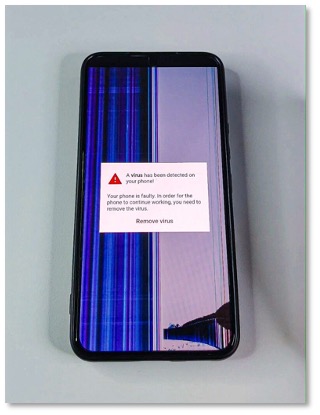
Something is seriously wrong with your phone. Or is it? You might not have a broken phone at all. Instead, you might have a hacked phone.

This is a form of scareware, an attack that frightens you into thinking your device is broken or infected with a virus
Source: Mobile Hacker

What you see above is a form of scareware, an attack that frightens you into thinking your device is broken or infected with a virus. What the hacker wants you to do next is panic. They want you to tap on a bogus link that says it’ll run a security check, remove a virus, or otherwise fix your phone before the problem gets worse.

Of course, tapping that link takes you to a malware or phishing site, where the hacker takes the next step and installs an even nastier form of malware on your phone. In other cases, they steal your personal info under the guise of a virus removal service. (And yes, sometimes they pose as McAfee when they pull that move. In fact,

Note that in this example above, the hacker behind the phony broken screen is arguably going for a user who’s perhaps less tech savvy. After all, the message atop the “broken” screen appears clear as day. Still, in the heat of the moment, it can be convincing enough.

How does scareware get on phones?

Scareware typically finds its way onto phones through misleading ads, fake security alerts, or hacked websites. In other cases, downloading apps from places other than an official app store can lead to scareware (and other forms of malware too).

As for malware on phones, you’ll find different risk levels between Android and iOS phones. While neither platform is completely immune to threats, Android phones are reportedly more susceptible to viruses than iPhones due to differences in their app downloading policies. On Android phones, you can install apps from third-party sources outside the official Google Play Store, which increases the risk of downloading malicious software.

In contrast, Apple restricts app installations to its official App Store, making it harder for malware to get on iOS devices. (That’s if you haven’t taken steps to jailbreak your iPhone, which removes the software restrictions imposed by Apple on its iOS operating system. We absolutely don’t recommend jailbreaking because it may void warranties and make it easier for malware, including scareware, to end up on your phone.)

If you think you’ve wound up with a case of scareware, stay calm. The first thing the hacker wants you to do is panic and click that link. Let’s go over the steps you can take.

How to remove malware from your Android phone

If you don’t already have mobile security and antivirus for your phone, your best bet is to get the latest virus removal guidance from Android, which you can find on this help page.

Moving forward, you can get protection that helps you detect and steer clear of potential threats as you use your phone. You can pick up McAfee Security: Antivirus VPN in the Google Play store, which also includes our Scam Detector and Identity Monitoring. You can also get it as part of your McAfee+

How to remove malware from your iPhone

Step 1: Restart your phone

Hold down the iPhone power button until you see slide to power off on your screen. Slide it, wait for the phone to power down, and then press the power button to restart your iPhone.

Step 2: Download updates 

Having the latest version of iOS on your phone ensures you have the best protection in place. Open the Settings app.  Look for Software Update in the General tab. Select Software Update. Tap Download and Install to the latest iPhone update.

Step 3: Delete suspicious apps 

Press a suspicious app icon on your screen and wait for the Remove App to pop up. Remove it and repeat that as needed for any other suspicious apps.

More steps you can take …

If those steps don’t take care of the issue, there are two stronger steps you can take. The first involves restoring your phone from a backup as described by Apple here.

The most aggressive step you can take is to reset your phone entirely. You can return it to the original factory settings (with the option to keep your content) by following the steps in this help article from Apple.

How to avoid malware on your phone

Clearly these attacks play on fear that one of the most important devices in your life has a problem—your phone.

  1. Protect your phone.

Comprehensive online protection software can secure your phone in the same ways that it secures your laptops and computers. Installing it can protect your privacy, keep you safe from attacks on public Wi-Fi, automatically block unsafe websites and links, and detect scams, just to name a few things it can do.

  1. Update your phone’s operating system.

Along with installing security software, keeping your phone’s operating system up to date can greatly improve your security. Updates can fix vulnerabilities that hackers rely on to pull off their malware-based attacks. It’s another tried-and-true method of keeping yourself safe—and for keeping your phone running great too.

  1. Avoid third-party app stores.

Google Play and Apple’s App Store have measures in place to review and vet apps to help ensure that they are safe and secure. Third-party sites might very well not, and they might intentionally host malicious apps as part of a front. Further, Google and Apple are quick to remove malicious apps from their stores when discovered, making shopping there safer still.

The post Black or Scrambled Phone Screen? Here’s How to Spot a Hacked vs Broken Phone appeared first on McAfee Blog.

  •  

This Year in Scams: A 2025 Retrospective, and a Look Ahead at 2026

The Top Scams of 2025

They came by phone, by text, by email, and they even weaseled their way into people’s love lives—an entire host of scams that we covered here in our blogs throughout the year.

Today, we look back, picking five noteworthy scams that firmly established new trends, along with one in particular that gives us a hint at the face of scams to come.

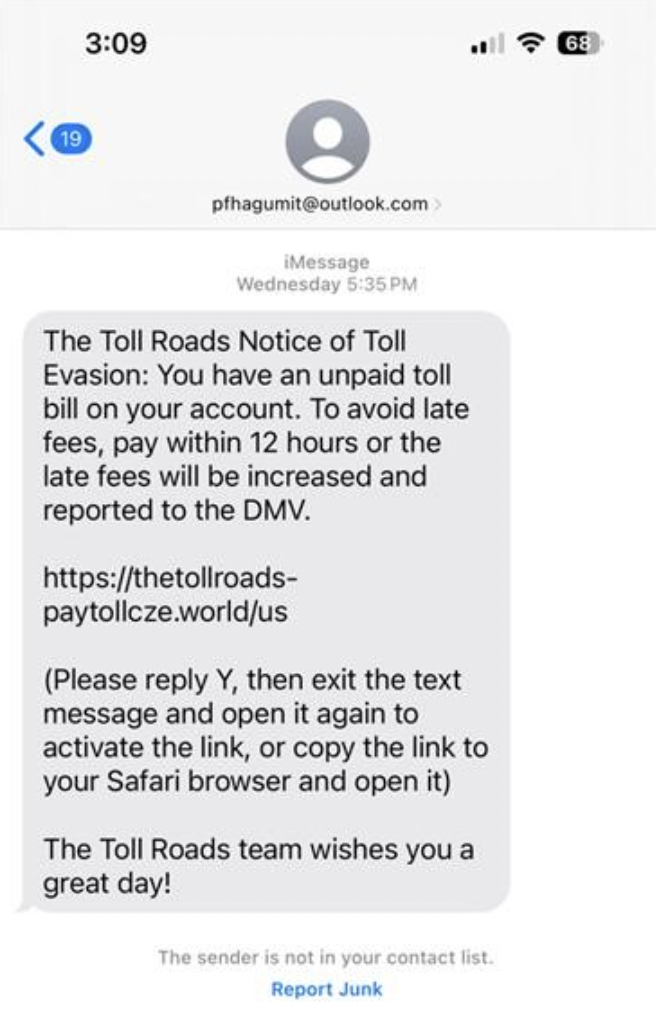
Let’s start it off with one scam that pinged plenty of phones over the spring and summer: those toll road texts.

1 – The Texts That Jammed Everyone’s Phones: The Toll Road Scam

It was the hot new scam of 2025 that increased by 900% in one year: the toll road scam.

There’s a good chance you got a few of these this year,scam texts that say you have an unpaid tab for tolls and that you need to pay right away. And as always, they come with a handy link where you can pay up and avoid that threat of a “late fee.”


Of course, links like those took people to phishing sites where people gave scammers their payment info, which led to fraudulent charges on their cards. In some instances, the scammers took it a step further by asking for driver’s license and Social Security numbers, key pieces of info for big-time identity theft.

Who knows what the hot new text scam for 2026 will be, yet here are several ways you can stop text scams in their tracks, no matter what form they take:

How Can I Stop Text Scams?

Don’t click on any links in unexpected texts (or respond to them, either). Scammers want you to react quickly, but it’s best to stop and check it out.

Check to see if the text is legit. Reach out to the company that apparently contacted you using a phone number or website you know is real—not the info from the text.

Get our Scam Detector. It automatically detects scams by scanning URLs in your text messages. If you accidentally tap or click? Don’t worry, it blocks risky sites if you follow a suspicious link.

2 – Romancing the Bot: AI Chatbots and Images Finagle Their Way Into Romance Scams

It started with a DM. And a few months later, it cost her $1,200.

Earlier this year, we brought you the story of 25-year-old computer programmer Maggie K. who fell for a romance scam on Instagram. Her story played out like so many. When she and her online boyfriend finally agreed to meet in person, he claimed he missed his flight and needed money to rebook. Desperate to finally see him, she sent the money and never heard from him again.

But here’s the twist—he wasn’t real in the first place.

When she reported the scam to police, they determined his images were all made with AI. In Maggie’s words, “That was the scariest part—I had trusted someone who never even existed.”

Maggie isn’t alone. Our own research earlier this year revealed that more than half (52%) of people have been scammed out of money or pressured to send money or gifts by someone they met online.

Moreover, we found that scammers have fueled those figures with the use of AI. Of people we surveyed, more than 1 in 4 (26%) said they—or someone they know—have been approached by an AI chatbot posing as a real person on a dating app or social media.

We expect this trend will only continue, as AI tools make it easier and more efficient to pull off romance scams on an increasingly larger scale.

Even so, the guidelines for avoiding romance scams remain the same:

  • Never send money to someone you’ve never met in person.
  • Things move too fast, too soon—like when the other person starts talking about love almost right away.
  • They say they live far away and can’t meet in person because they live abroad, all part of a scammers story that they’re there for charity or military service.
  • Look out for stories of urgent financial need, such as sudden emergencies or requests for help with travel expenses to meet you.
  • Also watch out for people who ask for payment in gift cards, crypto, wire transfers, or other forms of payment that are tough to recover. That’s a sign of a scam.

3 – Paying to Get Paid: The New Job Scam That Raked in Millions

The job offer sounds simple enough … go online, review products, like videos, or do otherwise simple tasks and get paid doing it—until it’s time to get paid.

It’s a new breed of job scam that took root this spring, one where victims found themselves “paying to get paid.”

The FTC dubbed these scams as “gamified job scams” or “task scams.” Given the way these scams work, the naming fits.

It starts with a text or direct message from a “recruiter” offering work with the promise of making good money by “liking” or “rating” sets of videos or product images in an app, all with the vague purpose of “product optimization.” With each click, you earn a “commission” and see your “earnings” rack up in the app. You might even get a payout, somewhere between $5 and $20, just to earn your trust.

Then comes the hook.

Like a video game, the scammer sweetens the deal by saying the next batch of work can “level up” your earnings. But if you want to claim your “earnings” and book more work, you need to pay up. So you make the deposit, complete the task set, and when you try to get your pay the scammer and your money are gone. It was all fake.

This scam and others like it fall right in line with McAfee data that uncovered a spike in job-related scams of 1,000% between May and July,which undoubtedly built on 2024’s record-setting job scam losses of $501 million.

Whatever form they take, here’s how you can avoid job scams:

Step one—ignore job offers over text and social media

A proper recruiter will reach out to you by email or via a job networking site. Moreover, per the FTC, any job that pays you to “like” or “rate” content is against the law. That alone says it’s a scam.

Step two—look up the company

In the case of job offers in general, look up the company. Check out their background and see if it matches up with the job they’re pitching. In the U.S., The Better Business Bureau (BBB) offers a list of businesses you can search.

Step three—never pay to start a job.

Any case where you’re asked to pay to up front, with any form of payment, refuse, whether that’s for “training,” “equipment,” or more work. It’s a sign of a scam.

4 – Seeing is Believing is Out the Window: The Al Roker Deepfake Scam

Prince Harry, Taylor Swift, and now the Today show’s Al Roker, too, they’ve all found themselves as the AI-generated spokesperson for deepfake scams.

In the past, a deepfake Prince Harry pushed bogus investments, while another deepfake of Taylor Swift hawked a phony cookware deal. Then, this spring, a deepfake of Al Roker used his image and voice to promote a bogus hypertension cure—claiming, falsely, that he had suffered “a couple of heart attacks.”


The fabricated clip appeared on Facebook, which appeared convincing enough to fool plenty of people, including some of Roker’s own friends. “I’ve had some celebrity friends call because their parents got taken in by it,” said Roker.

While Meta quickly removed the video from Facebook after being contacted by TODAY, the damage was done. The incident highlights a growing concern in the digital age: how easy it is to create—and believe—convincing deepfakes.

Roker put it plainly, “We used to say, ‘Seeing is believing.’ Well, that’s kind of out the window now.”

In all, this stands as a good reminder to be skeptical of celebrity endorsements on social media. If public figure fronts an apparent deal for an investment, cookware, or a hypertension “cure” in your feed, think twice. And better yet, let our Scam Detector help you spot what’s real and what’s fake out there.

5 – September 2025: The First Agentic AI Attack Spotted in The Wild

And to close things out, a look at some recent news, which also serves as a look ahead.

Last September, researchers spotted something unseen before:a cyberattack almost entirely run by agentic AI.

What is Agentic AI?

Definition: Artificial intelligence systems that can independently plan, make decisions, and work toward specific goals with minimal human intervention; in this way, it executes complex tasks by adapting to new info and situations on its own.

Reported by AI researcher Anthropic, a Chinese state-sponsored group allegedly used the company’s Claude Code agent to automate most of an espionage campaign across nearly thirty organizations. Attackers allegedly bypassed guardrails that typically prevent such malicious use with jailbreaking techniques, which broke down their attacks into small, seemingly innocent tasks. That way, Claude orchestrated a large-scale attack it wouldn’t otherwise execute.

Once operational, the agent performed reconnaissance, wrote exploit code, harvested credentials, identified high-value databases, created backdoors, and generated documentation of the intrusion. By Anthropic’s estimate, they completed 80–90% of the work without any human involvement.

According to Anthropic: “At the peak of its attack, the AI made thousands of requests, often multiple per second—an attack speed that would have been, for human hackers, simply impossible to match.”

We knew this moment was coming, and now the time has arrived: what once took weeks of human effort to execute a coordinated attack now boils down to minutes as agentic AI does the work on someone’s behalf.

In 2026, we can expect to see more attacks led by agentic AI, along with AI-led scams as well, which raises an important question that Anthropic answers head-on:

If AI models can be misused for cyberattacks at this scale, why continue to develop and release them? The answer is that the very abilities that allow Claude to be used in these attacks also make it crucial for cyber defense. When sophisticated cyberattacks inevitably occur, our goal is for Claude—into which we’ve built strong safeguards—to assist cybersecurity professionals to detect, disrupt, and prepare for future versions of the attack.

That gets to the heart of security online: it’s an ever-evolving game. As new technologies arise, those who protect and those who harm one-up each other in a cycle of innovation and exploits. As we’re on the side of innovation here, you can be sure we’ll continue to roll out protections that keep you safer out there. Even as AI changes the game, our commitment remains the same.

Happy Holidays!

We’re taking a little holiday break here and we’ll be back with our weekly roundups again in 2026. Looking forward to catching up with you then and helping you stay safer in the new year.

The post This Year in Scams: A 2025 Retrospective, and a Look Ahead at 2026 appeared first on McAfee Blog.

  •  

How To Spot Health Insurance Scams This Open Enrollment Season

If you’re in the market for insurance right now, keep an eye out for scammers in the mix. They’re out in full force once again this open enrollment season.

As people across the U.S. sign up for, renew, or change their health insurance plans, scammers want to cash in as people rush to get their coverage set. And scammers have several factors working in their favor.

For starters, many people find the insurance marketplace confusing, frustrating, and even intimidating, all feelings that scammers can take advantage of. Moreover, concerns about getting the right level of coverage at an affordable price also play into the hands of scammers.

Amidst all this uncertainty and time pressure, health insurance scams crop up online. Whether under the guise of helping people navigate the complex landscape or by offering seemingly low-cost quotes, scammers prey on insurance seekers by stealing their personal information, Social Security numbers, and money.

According to the FBI, health insurance scams cost families millions each year. In some cases, the costs are up front. People pay for fraudulent insurance and have their personal info stolen. And for many, the follow-on costs are far worse, where victims go in for emergency care and find that their treatment isn’t covered—leaving them with a hefty bill.

Like so many of the scams we cover here in our blogs, you can spot health insurance scams relatively quickly once you get to know their ins and outs.

What Kind Of Health Insurance Scams Are Out There Right Now?

Here’s how some of those scams can play out.

The Phishing Strategy

Some are “one and done scams” where the scammer promises a policy or service and then disappears after stealing money and personal info—much like an online shopping scam. It’s a quick and dirty hit where scammers quickly get what they want by reaching victims the usual ways, such as through texts, emails, paid search results, and social media. In the end, victims end up on a phishing site where they think they’re locking in a good deal but handing over their info to scammers instead.

The Long Con

Other scams play a long con game, milking victims for thousands and thousands of dollars over time. The following complaint lodged by one victim in Washington state provides a typical example:

A man purchased a plan to cover himself, his wife, and his two children, only to learn there was no coverage. He was sold a second policy, with the same result, and offered a refund if he purchased a third policy. When he filed a complaint, his family still had no coverage, and he was seeking a refund for more than $20,000 and reimbursement for $55,000 in treatments and prescriptions he’d paid out of pocket.

Scams like these are known as ghost broker scams where scammers pose as insurance brokers who take insurance premiums and pocket the money, leaving victims thinking they have coverage when they don’t. In some cases, scammers initially apply for a genuine policy with a legitimate carrier, only to cancel it later, while still taking premiums from the victim as their “broker.” Many victims only find out that they got scammed when they attempt to file a claim.

The “Fake” Cancellation Scam

Another type of scam comes in the form of policy cancellation scams. These work like any number of other account-based scams, where a scammer pretends to be a customer service rep at a bank, utility, or credit card company. In the insurance version of it, scammers email, text, or call with some bad news—the person’s policy is about to get cancelled. Yet not to worry, the victim can keep the policy active they hand over some personal and financial info. It’s just one more way that scammers use urgency and fear to steal to commit identity theft and fraud.

What Are The Signs Of A Health Insurance Scam?

As said, health insurance scams become relatively easy to spot once you know the tricks that scammers use. The Federal Trade Commission (FTC) offers up its list of the ones they typically use the most:

1)Someone says they’re from the government and need money or your personal info.Government agencies don’t call people out of the blue to ask them for money or personal info. No one from the government will ask you to verify your Social Security, bank account, or credit card number, and they won’t ask you to wire money or pay by gift card or cryptocurrency.

If you have a question about Health Insurance Marketplace®, contact the government directly at: HealthCare.gov or 1-800-318-2596

2) Someone tries to sell you a medical discount plan. Legitimate medical discount plans differ from health insurance. They supplement it. In that way, they don’t pay for any of your medical expenses. Rather, they’re membership programs where you pay a recurring fee for access to a network of providers who offer their services at pre-negotiated, reduced rates. The FTC strongly advises thorough research before participating in one, as some take people’s money and offer very little in return. Call your caregiver and see if they really participate in the program and in what way. And always review the details of any medical discount plan in writing before you sign up.

3) Someone wants your sensitive personal info in exchange for a price quote. The Affordable Care Act’s (ACA’s) official government site is HealthCare.gov. It lets you compare prices on health insurance plans, check your eligibility for healthcare subsidies, and begin enrollment. But HealthCare.gov will only ask for your monthly income and your age to give you a price quote. Never enter personal financial info like your Social Security number, bank account, or credit card number to get a quote for health insurance.

4) Someone wants money to help you navigate the Health Insurance Marketplace. The people who offer legitimate help with the Health Insurance Marketplace (sometimes called Navigators or Assisters) are not allowed to charge you and won’t ask you for personal or financial info. If they ask for money, it’s a scam. Go to HealthCare.govand click “Find Local Help” to learn more.

How to Avoid Health Insurance Scams

1)For health insurance, visit a trusted source like HealthCare.gov or your state marketplace. Doing so helps guarantee that you’ll get the kind of fully compliant coverage you want.

2) Make sure the insurance covers you in your state. Not every insurer is licensed to operate in your state. Double-check that the one you’re dealing with is. A good place to start is to visit the site for your state’s insurance commission. It should have resources that let you look up the insurance companies, agents, and brokers in your state.

3) For any insurance, research the company offering it. Run a search with the company name and add “scam” or “fraud” to it. See if any relevant news or complaints show up. And if the plan you’re being offered sounds too good to be true, it probably is.

4) Watch out for high-pressure sales. Don’t pay anything up front and be cautious if a company is forcing you to make quick decisions.

5) Guard your personal info. Never share your personal info, account details, or Social Security number over text or email. Make sure you’re really working with a legitimate company and that you submit any info through a secure submissions process.

6) Block bad links to phishing sites. Many insurance scams rely on phishing sites to steal personal info. A  combination of our Web Protection and Scam Detector can steer you clear of them. They’ll alert you if a link might take you to one. It’ll also block those sites if you accidentally tap or click on a bad link.

7) Monitor your identity and credit. In some health insurance scams, your personal info winds up in wrong hands, which can lead to identity fraud and theft. And the problem is that you only find out once the damage is done. Actively monitoring your identity and credit can spot a problem before it becomes an even bigger one. You can take care of both easily with our identity monitoring and credit monitoring.

Additionally, our identity theft coverage can help if the unexpected happens with up to $2 million in identity theft coverage and identity restoration support if determined you’re a victim of identity theft.​

You’ll find these protections and more in McAfee+.

The post How To Spot Health Insurance Scams This Open Enrollment Season appeared first on McAfee Blog.

  •  

This Week in Scams: Petco Breach Warning, and Watch Out for Fake Federal Calls

A dog in a sweater on a walk.

Pets, poisoned AI search results, and a phone call that sounds like it’s coming straight from the federal government, this week’s scams don’t have much in common except one thing: they’re getting harder to spot.

In today’s edition of This Week in Scams, we’re breaking down the biggest security lapses and the tactics scammers used to exploit them, and what you can do to stay ahead of the latest threats.

Two data security lapses discovered at Petco in one week put pet parents at risk

If you’re a Petco customer, you’ll want to know about not one but two data security lapses in the past week.

First, as reported by TechCrunch on Monday, Petco followed Texas data privacy laws by filing a data breach with the attorney general’s office. In that filing, Petco reported that the affected data included names, Social Security numbers, and driver’s license numbers. Further info including account numbers, credit and debit card numbers, and dates of birth were also mentioned in the filing.

Also according to Techcrunch, the company filed similar notices in California and Massachusetts.

To date, Petco has not made a comment about the size of the breach and the number of people affected.

Different states have different policies for reporting data breaches. In some cases, that helps us put a figure to the size of the breach, as some states require companies to disclose the total number of people caught up in the breach. That’s not the case here, so the full scope of the attack remains in question, at least for right now.

As of Thursday, we know Petco reported that 329 Texans were affected along with seven Massachusetts residents, per the respective reports filed. California’s report does not contain the number of Californians affected, yet laws in that state require businesses to report breaches that affect 500 or more people, so at least 500 people were affected there.

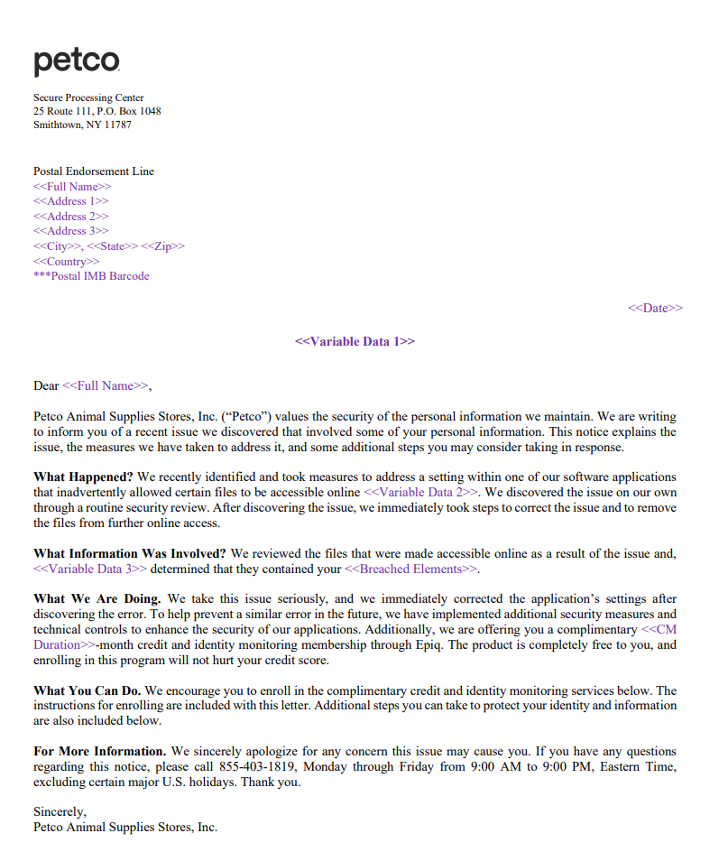
Below you can see the form letter Petco sent to affected Californians in accordance with California’s data privacy laws:

Copy of the form letter posted on the California Attorney General’s Website


In it, you can see that Petco discovered that “a setting within one of our software applications … inadvertently allowed certain files to become accessible online.” Further, Petco said that it “immediately took steps to correct the issue and to remove the files from further online access,” and that it “corrected” the setting and implemented unspecified “additional security measures.”

So while no foul play appears to have been behind the breach, it’s still no less risky and concerning for Petco’s customers. We’ll cover what you can do about that in a moment after we cover yet another data issue at Petco through its Vetco clinics.

Also within the same timeframe, yet more research and reporting from Techcrunch uncovered a second security lapse that exposed personal info online. From their article:

“TechCrunch identified a vulnerability in how Vetco’s website generates copies of PDF documents for its customers.

“Vetco’s customer portal, located at petpass.com, allows customers to log in and obtain veterinary records and other documents relating to their pet’s care. But TechCrunch found that the PDF generating page on Vetco’s website was public and not protected with a password.

“As such, it was possible for anyone on the internet to access sensitive customer files directly from Vetco’s servers by modifying the web address to input a customer’s unique identification number. Vetco customer numbers are sequential, which means one could access other customers’ data simply by changing a customer number by one or two digits.”

What to do if you think you had info stolen in the Petco breach

With the size and reach of the Petco breach still unknown, and the impact of the Vetco security lapse also unknown, we advise caution for all Petco customers. At minimum, monitor transactions and keep an eye on your credit report for any suspicious activity. And it’s always a good time to update a weak password.

For those who received a notification, we advise the following:

Check your credit, consider a security freeze, and get ID theft protection. You can get all three working for you with McAfee+ Advanced or McAfee+ Ultimate.

Monitor transactions across your accounts, also available in McAfee+ Advanced and Ultimate.

Keep an eye out for phishing attacks. Use our Scam Detector to spot any follow-on attacks.

Update your passwords. Strong and unique passwords are best. Our password manager can help you create and store them securely.

And use two-factor authentication on all your accounts. Enabling two-factor authentication provides an added layer of security.

Image Credit: Federal Register


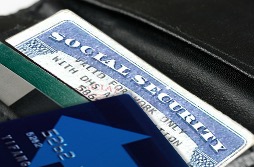
What to do if your Social Security number was breached.

If you think your Social Security number was caught up in the breach, act quickly.

  1. First, contact one of the three credit bureaus (Equifax, Experian, or TransUnion) and place a fraud alert on your credit report.
  2. That will cover all three bureaus and make it harder for someone to open new accounts in your name. You can also quickly freeze your credit altogether with McAfee+ Ultimate.
  3. Also notify the Social Security Administration (SSA) along with the Internal Revenue Service (IRS), and file a police report immediately if you believe your number is being misused.

The call center number that connects you to … scammers?

You might want to be careful when searching for customer service numbers while in AI mode. Or with an AI search engine. It could connect you to a scammer.

From The Times comes reports of scammers manipulating the AI in platforms like Google and Perplexity so that their search results return scam numbers instead of a proper customer service numbers for, say, British Airways.

How do they manipulate those results? By spamming the internet with false info that gets picked up and then amplified by AI.

“[S]cammers have started seeding fake call center numbers on the web so the AI is tricked into thinking it is genuine …

“Criminals have set up YouTube channels with videos claiming to help with customer support, which are packed with airline brand names and scam numbers designed to be scraped and reused by the AI.

“Bot-generated reviews on Yelp or video descriptions on YouTube are filled with fraudulent numbers as are airline and travel web forums.”

And with these tactics, scammers could poison the results for just about any organization, business, or brand. Not just airlines. Per The Times, “The scammers have also hijacked government sites, university domains, and even fitness sites to place scam numbers, which fools the AI into thinking they are genuine.”

This reveals a current limitation with many AI platforms. Largely they can’t distinguish when people deliberately feed them bad info, as seen in the case here.

Yet even as this attack is new, our advice remains the same: any time you want to ring up a customer service line, get the number directly from the company’s official website. Not from AI search and not by clicking a paid search result that shows up first (scammers can poison them too).

Is that a call from an FTC “agent?” If so, it’s a scam.

Are you under investigation for money laundering? Of course not. But this scam wants you to think so—and to pay up.

On Tuesday, the Federal Trade Commission (FTC) issued a consumer alert warning that people are reporting getting unexpected calls from someone saying they’re “FTC agent” John Krebs. Apparently “Agent Krebs” is telling people that they’re under investigation for money laundering—and that a deposit to a Bitcoin ATM can resolve the matter.

Of course, it’s a scam.

For starters, the FTC doesn’t have “agents.” And the idea of clearing one’s name in an investigation with a Bitcoin payment is a sure-fire sign of a scam. Lastly, any time someone asks for payment with Bitcoin or other payment methods that are near-impossible to recover (think wire transfers and gift cards), those are big red flags.

Apart from hanging up and holding on to your money, the FTC offers the following guidance, which holds true for any scam call:

  • Never transfer or send money to anyone in response to an unexpected call or message, no matter who they say they are.
  • Know that the FTC won’t ask for money. In fact, no government agency will ever tell you to deposit money at a cryptocurrency ATM, buy gift cards and share the numbers, or send money over a payment app like Zelle, Cash App, or Venmo.
  • Don’t trust your caller ID. A call might look like it’s coming from the government or a business, but scammers often fake caller ID.

And we close things out a quick roundup …

As always, here’s a quick list of a few stories that caught our eye this week:

AI tools transform Christmas shopping as people turn to chatbots

National cybercrime network operating for 14 years dismantled in Indonesia

Why is AI becoming the go-to support for our children’s mental health?

We’ll see you next Friday with a special edition to close out 2025 … This Year in Scams.

The post This Week in Scams: Petco Breach Warning, and Watch Out for Fake Federal Calls appeared first on McAfee Blog.

  •  

Think That Party Invite Is Real? Fake E-Vite Scams Are the New Phishing Trap

It looks harmless enough.

A digital party invitation lands in your inbox or phone. You click to see the details. Then it asks you to log in or create an account before revealing the event. 

That’s where the scam begins. 

Fake e-vite phishing scams are on the rise, and they take advantage of something simple: social trust. You’re far more likely to click an invitation than a generic “account alert” or “delivery notice.” 

And that’s exactly why scammers are using them. 

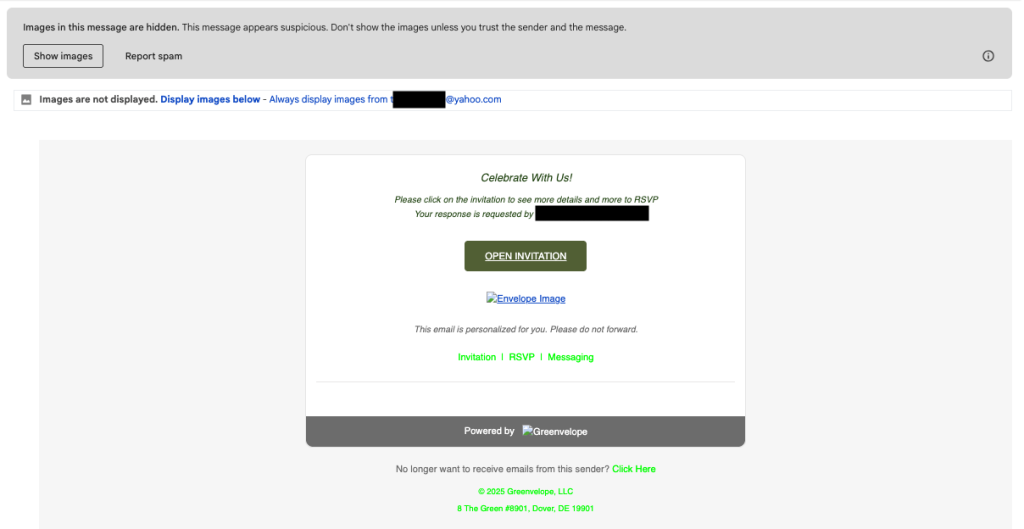
In fact, here’s a screenshot of a fake phishing email I recently got this holiday season:

Screenshot of a Phishing Email sent this holiday season

When you click the “open invitation” link, it immediately asks you to sign in or create an account with your personal information. That’s the step where scammers steal your private data. 

What Is a Fake E-Vite Scam? 

A fake e-vite scam is a phishing attack that pretends to be a real invitation from platforms like Paperless Post or other digital invitation services. 

The goal is to trick you into: 

  • Entering your email and password 
  • Creating a fake account on a malicious site 
  • Clicking links that lead to credential-stealing pages 
  • Downloading malware disguised as an invitation 

Once scammers have your login information, they can: 

  • Take over your email 
  • Reset passwords on other accounts 
  • Send scams to your contacts 
  • Launch identity theft attempts 

How These Fake Invitation Scams Usually Work 

Here’s the most common flow: 

  1. You receive a digital invitation that looks normal 
  2. The message prompts you to “view the invitation” 
  3. You’re redirected to a login or signup page 
  4. You enter your email, password, or personal info 
  5. The invitation never appears 
  6. Your credentials have now been stolen 

Because this starts with something familiar and social, many people don’t realize it’s phishing until accounts are already compromised. Plus, scammers then use your email and name to trick friends and family into trusting more fake e-vites from your account.

How to Tell If a Paperless Post Invite Is Real 

Paperless Post has publicly acknowledged these scams and shared what legitimate messages actually look like. 

Legitimate Paperless Post Emails Will Never: 

  • Include .EXE attachments 
  • Include .PDF attachments 
  • Include any attachments other than image files 

Official Paperless Post Email Domains: 

Legitimate invitations and account messages only come from: 

Official support emails only come from: 

If the sender does not match one of these exactly, it’s a scam. 

Paperless Post also notes that verified emails may display a blue checkmark in supported inboxes to confirm authenticity.  

The Biggest Red Flags of a Fake E-Vite 

If you see any of the following, do not click: 

  • You’re forced to log in to “see” who invited you 
  • The sender email doesn’t match the official domains above 
  • The invitation creates urgency 
  • You’re asked for payment to view the event 
  • The message feels generic instead of personal 
  • The site address looks slightly off 

Why These Scams Are So Effective Right Now 

Modern phishing attacks don’t rely on sloppy design anymore. Many now use: 

  • Polished branding 
  • Clean layouts 
  • Familiar platforms 
  • Friendly language 
  • Social pressure 

Invitation phishing is especially powerful because: 

  • It triggers curiosity 
  • It feels harmless 
  • It mimics real social behavior 
  • It doesn’t start with fear or threats 
  • By the time the scam turns risky, your guard is already down. 

What To Do If You Clicked a Fake E-Vite 

If you entered any information into a suspicious invitation page: 

  1. Immediately change your email password 
  2. Change any other account that reused that password 
  3. Enable two-factor authentication 
  4. Check for unknown login activity 
  5. Warn contacts if your email may have been compromised 
  6. Run a security scan on your device 

The faster you act, the more damage you can prevent. 

The post Think That Party Invite Is Real? Fake E-Vite Scams Are the New Phishing Trap appeared first on McAfee Blog.

  •  

How to Stay Safe on Your New AI Browser

AI-powered browsers give you much more than a window to the web. They represent an entirely new way to experience the internet, with an AI “agent” working by your side.

We’re entering an age where you can delegate all kinds of tasks to a browser, and with that comes a few things you’ll want to keep in mind when using AI browsers like ChatGPT’s Atlas, Perplexity’s Comet, and others.

What are agentic AI browsers?

So, what’s the allure of this new breed of browser? The answer is that it’s highly helpful, and plenty more.

By design, these “agentic” AI browsers actively assist you with the things you do online. They can automate tasks and interpret your intentions when you make a request. Further, they can work proactively by anticipating things you might need or by offering suggestions.

In a way, an AI browser works like a personal assistant. It can summarize the pages in several open tabs, conduct research on just about any topic you ask it to, or even track down the lowest airfare to Paris in the month of May. Want it to order ink for your printer and some batteries for your remote? It can do that too. And that’s just to name a few possibilities.

As you can see, referring to the AI in these browsers as “agentic” fits. It truly works like an agent on your behalf, a capability that promises to get more powerful over time.

Is it safe to use an AI browser?

But as with any new technology, early adopters should balance excitement with awareness, especially when it comes to privacy and security. You might have seen some recent headlines that shared word of security concerns with these browsers.

The reported exploits vary, as does the harm they can potentially inflict. That ranges from stealing personal info, gaining access to Gmail and Google Drive files, installing malware, and injecting the AI’s “memory” with malicious instructions, which can follow from session to session and device to device, wherever a user logs in.

Our own research has shown that some of these attacks are now tougher to pull off than they were initially, particularly as the AI browser companies continue to put guardrails in place. If anything, this reinforces a long-standing truth about online security, it’s a cat-and-mouse game. Tech companies put protections in place, bad actors discover an exploit, companies put further protections in place, new exploits crop up, and so on. It’s much the same in the rapidly evolving space of AI browsers. The technology might be new, but the game certainly isn’t.

While these reports don’t mean AI browsers are necessarily unsafe to use, they do underscore how fast this space is evolving…and why caution is smart as the tech matures.

How To Use an AI Browser Safely

It’s still early days for AI-powered browsers and understanding the security and privacy implications of their use. With that, we strongly recommend the following to help reduce your risk:

Don’t let an AI browser do what you wouldn’t let a stranger do. Handle things like your banking, finances, and health on your own. And the same certainly goes for all the info tied to those aspects of your life.

Pay attention to confirmations. As of today, agentic browsers still require some level of confirmation from the user to perform key actions (like processing a payment, sending an email, or updating a calendar entry). Pay close attention to them, so you can prevent your browser from doing something you don’t want it to do.

Use the “logged out” mode, if possible. As of this writing, at least one AI browser, Atlas, gives you the option to use the agent in the logged-out mode.i This limits its access to sensitive data and the risk of it taking actions on your behalf with your credentials.

If possible, disable “model learning.” By turning it off, you reduce the amount of personal info stored and processed by the AI provider for AI training purposes, which can minimize security and privacy risks.

Set privacy controls to the strictest options available. Further, understand what privacy policies the AI developer has in place. For example, some AI providers have policies that allow people to review your interactions with the AI as part of its training. These policies vary from company to company, and they tend to undergo changes. Keeping regular tabs on the privacy policy of the AI browser you use makes for a privacy-smart move.

Keep yourself informed. The capabilities, features, and privacy policies of AI-powered browsers continue to evolve rapidly. Set up news alerts about the AI browser you use and see if any issues get reported and, if so, how the AI developer has responded. Do routine searches pairing the name of the AI browser with “privacy.”

How McAfee Can Help

McAfee’s award-winning protection helps you browse safer, whether you’re testing out new AI tools or just surfing the web.

McAfee offers comprehensive privacy services, including personal info scans and removal plus a secure VPN.

Plus, protections like McAfee’s Scam Detector automatically alert you to suspicious texts, emails, and videos before harm can happen—helping you manage your online presence confidently and safeguard your digital life for the long term. Likewise, Web Protection can help you steer you clear of suspicious websites that might take advantage of AI browsers.

The post How to Stay Safe on Your New AI Browser appeared first on McAfee Blog.

  •  

Brushing Scams: What They Are and How to Stay Safe From Unsolicited Packages

It’s an increasingly common surprise: a package shows up at your door with your name and your address…but you never ordered it.  

These unsolicited deliveries may seem harmless, but they’re often tied to a scheme called a brushing scam. These scams occur year-round but tend to pick up around the holidays or peak shopping seasons, when shipping volume spikes and it’s easier for suspicious packages to blend in. 

Below is everything you need to know: how brushing scams work, what they mean for your personal information, and the exact steps to take if one shows up at your doorstep. 

 Takeaways 

  • A brushing scam is when a seller sends you an item you didn’t order so they can post a fake “verified purchase” review under your name. 
  • These scams usually involve low-value items like cheap jewelry, seeds, or trinkets. 
  • Unexpected packages can signal that your personal data was exposed in a breach or has been purchased illegally. 
  • You don’t have to return the item, but you should report it, update your passwords, and check for suspicious activity. 
  • These scams increase during busy shipping periods, including holidays. 

What Is a Brushing Scam? 

A brushing scam is when sellers send you unsolicited items so they can post fake reviews using your name, boosting their product’s ranking and credibility without your consent. 

How Brushing Scams Work 

A typical brushing scam looks like this: 

  1. A scammer creates or uses a seller account on a marketplace like Amazon or AliExpress. 
  2. They obtain your name and address, often through a breach, data leak, or illegal database. 
  3. They “order” their own product but send it to you at no cost. 
  4. Once shipping confirms delivery, they post a fake verified review under your identity to boost their seller rating. 
  5. The product gains more visibility, which drives more sales. 

In one sentence: Your delivery confirmation becomes their proof that a real customer received the item—even though you never ordered it. 

Why It’s Called “Brushing” 

The term comes from e-commerce, where sellers would “brush up” their sales by generating fake orders and reviews. Today, brushing scams are a global issue affecting major online marketplaces. 

Common Items Sent in Brushing Scams 

  • Costume jewelry 
  • Small electronics or keychain gadgets 
  • Random home goods 
  • Seeds (often unmarked) 
  • Low-cost accessories 

If the item feels random or unusually cheap, it fits the profile. 

Are Brushing Scams Dangerous? 

Personal Data Exposure

The biggest red flag is that someone had your name and address, and possibly more. Brushing scams often follow data breaches or third-party leaks. 

Account Risk

Some platforms may temporarily flag or freeze your account if someone posts fake reviews under your name. 

Misleading Products

Fake reviews inflate trust and push low-quality items higher in search results. That misleads other shoppers and props up fraudulent sellers.

Potential Safety Hazards

Some unsolicited items—cosmetics, supplements, electronics, or seeds—may be unsafe, expired, counterfeit, or banned. 

What To Do If You Receive an Unordered Package 

  1. Don’t use or consume the item, especially cosmetics, food, or electronics. 
  2. Check your marketplace account (Amazon, AliExpress, etc.) to confirm there’s no unauthorized order. 
  3. Report the brushing scam using the platform’s built-in reporting tools. 
  4. Update your passwords for your shopping account and linked email. 
  5. Enable two-factor authentication (2FA) for added security. 
  6. Monitor bank/credit card activity for unusual charges. 
  7. If the package came via USPS, you can mark it “Return to sender” without cost. 

How to Report a Brushing Scam on Amazon 

  1. Log into your Amazon account. 
  2. Go to the Report Unsolicited Package section. 
  3. Add your tracking number and package details. 
  4. Amazon may take up to 10 days to investigate. 

Should You Return the Package? 

Generally: No.

You are not legally required to return or pay for an unsolicited package. But reporting it helps platforms investigate fraudulent sellers. 

How To Protect Yourself From Brushing Scams

Secure Your Accounts

Report Every Unsolicited Package

This helps platforms identify abusive sellers.

Verify Reviews Before Buying

Genuine reviews mention specific details; fake ones are vague, repetitive, or overly positive.

Stick to Well-Reviewed, Long-Standing Sellers

Avoid newly created storefronts with few verified reviews.

Quick FAQ 

Why am I receiving random packages from overseas?
It’s often part of a brushing scam where sellers need a “delivered” status to post fake reviews.

Is a brushing scam identity theft?
Not exactly, but it does mean someone had access to your personal data, which increases your overall risk.

Should I throw the item away?
You can safely discard most brushing-scam items, but avoid using them and report the incident first.

Should I worry if I get seeds or soil?
Yes—never plant or dispose of unknown seeds improperly. Report them to the USDA or your state agriculture office.

Final Thoughts

Brushing scams may seem like a harmless freebie, but they’re a sign that your personal information was exposed and could potentially be misused.

Stay cautious, secure your accounts, report any unsolicited packages, and trust only reputable sellers. With simple steps, you can protect your identity, and avoid being pulled into a scammer’s fake review scheme.

The post Brushing Scams: What They Are and How to Stay Safe From Unsolicited Packages appeared first on McAfee Blog.

  •  

This Week in Scams: Phony AI Ads, Apple Account Takeover Attempts, and a PlayStation Scam

For this week in scams, we have fake AI-generated shopping images that could spoil your holidays, scammers use an Apple Support ticket in a takeover attempt, and a PlayStation scam partly powered by AI.

Let’s start with those fake ads, because holiday shopping is in full swing.

Keep a sharp eye out for fake AI shopping ads that sell knockoff goods

Turns out that three-quarters of people (74%) can’t correctly identify a fake AI-generated social media ad featuring popular holiday gifts—which could leave them open to online shopping scams.

That finding, and several others, comes by way of research from Santander, a financial services company in the UK.

Here’s a quick rundown of what else they found:

  • Less than one in 10 (8%) people feel “very confident” in their ability to spot an AI-generated ad on social media.
  • More than half (56%) fear that they or a family member could get scammed as a result.
  • About two-thirds (63%) said that they won’t purchase anything from social media platforms because they’re not sure what’s real and what’s fake.

From the study … could you tell these ads are both fake?


Fake ads, like this, have been popping up across social.


Could you tell this ad is fake?

In all, cheap and readily available AI tools make spinning up fake ads quick and easy work. The same goes for launching websites where those “goods” can get sold. In the past, we’ve seen scammers take two different approaches when they use social media ads and websites to lure in their victims:

Phishing sites

During the holidays, scammers pump out ads that offer seemingly outstanding deals on hot items. Of course, the offer and the site where it’s “sold” is fake. Victims hand over their personal info and credit card number, never to see the items they thought they’d purchased. On top of the money a victim loses, the scammer also has their card info and can run up its tab or sell it to others on the dark web.

Knock-off sites

In this case, the scammer indeed sells and delivers something. But you don’t get what you paid for. The item looks, feels, fits, or works entirely differently than what was advertised. In this way, people wind up with a cheaply made item cobbled together with inferior materials. Worse yet, these scams potentially prop up sweatshops, child labor, and other illegal operations in the process. Nothing about these sites and the things they sell on them are genuine.

So, fake AI shopping ads are out there. What should you look out for? Here’s a quick list:

  • First off, any offer that sounds too good to be true and heavy discounts on hard-to-find or popular items are major signs of a scam—and have been for years running now.
  • See if the image looks a little too polished or even cartoony in some cases. As for people in AI ads, they can look airbrushed and have skin tones that seemingly give off an odd glow.
  • Look up reviews of the company. Trustpilot and the Better Business Bureau offer great resources for that. Even simple a search using “CompanyName scam” can give you an idea if it’s a scam or not.
  • And lastly, the combination of our Scam Detector and Web Protection can help sniff out a scam for you.

The Apple Support scam that came from … Apple? (Not really. We’ll explain.)

“I almost lost everything—my photos, my email, my entire digital life.”

So opens a recent Medium post from Eric Moret recounting how he almost handed over his Apple Account to a scammer armed with a real Apple Support ticket to make this elaborate phishing attack look legit.

Over the course of nearly 30 minutes, a scammer calmly and professionally walked Moret through a phony account takeover attempt.

It started with two-factor authentication notifications that claimed someone was trying to access his iCloud account. Three minutes later, he got a call from an Atlanta-based number. The caller said they were with Apple Support. “Your account is under attack. We’re opening a ticket to help you. Someone will contact you shortly.”

Seconds later came another call from the same number, which is where the scam fully kicked in. The person also said they were from Apple Support and that they’d opened a case on Moret’s behalf. Sure enough, when directed, Moret opened his email and saw a legitimate case number from a legitimate Apple address.

The caller then told him to reset his password, which he did. Moret received a text with a link to a site where he could, apparently, close his case.

Note that at no time did the scammers ask him for his two-factor authentication code throughout this process, which is always the sign of a scam. However, the scammers had another way to get it.

The link took him to a site called “appeal-apple dot com,” which was in fact a scam site. However, the page looked official to him, and he entered a six-digit code “confirmation code” sent by text to finish the process.

That “confirmation code” was actually a fresh two-factor authentication code. With that finally in hand, the scammers signed in. Moret received a notice that a new device had logged into his account. Moret quickly reset his password again, which kicked them out and stopped the attack.

So, what went wrong here? Let’s break down three key moments in this account takeover scam:

  • The unsolicited phone calls. That’s an immediate sign to hang up and call an official support number to confirm the “issue” yourself.
  • The fake website. A site with a URL like “appeal-apple dot com” is a scam site, even if it looks “official.” Scammers can create them easily today.
  • The code heist. Scammers trick people into handing over their authorization code by calling it something else, like a “confirmation code.”

So, how can you protect yourself from account takeover scams? Let’s break that down too.

  • Know that Apple Support won’t call you or open a case on your behalf.
  • Also know that anyone can create an Apple Support ticket for anyone else, without verification. If you didn’t create it yourself, it’s a strong sign of a scam.
  • If you have concerns, call Apple yourself at 1-800-275-2273 or contact them through their Apple Support App, available here on Apple’s support page.
  • Only interact with Apple through sites and emails with the proper “apple dot com” address. Watch out for altered addresses like the “appeal-apple dot com” used here.
  • Never, ever share your authentication code in any way … verbally, in an email, in a text, or a website. Any request for it from anyone is a scam.
  • You can see the devices signed into your account any time. Go to Settings, tap your Name, and scroll to see all devices linked to your Apple ID.
  • Get protection that blocks links to scam sites, like our Scam Detectorand Web Protection.

The FCC takes aim at the Wal-Mart PlayStation 5 Robocall Scam

Maybe you didn’t get a scam call from “Emma” or “Carl” at Wal-Mart, but plenty of people did. Around eight million in all. Now the Federal Communications Commission’s (FCC) Enforcement Bureau wants to put a stop to them.

“Emma” and “Carl” are in fact a couple of AI voices fronting a scam framed around the bogus purchase of a PlayStation. It’s garnered its share of complaints, so much that the FCC has stepped in. It alleges that SK Teleco, a voice service provider, provisioned at least some of these calls, and that it must immediately stop.

According to the FCC, the call plays out like this:

“A preauthorized purchase of PlayStation 5 special edition with Pulse 3D headset is being ordered from your Walmart account for an amount of 919 dollars 45 cents. To cancel your order or to connect with one of our customer support representatives, please press ‘1.’ Thank you.”

Pressing “1” connects you to a live operator who asks for personal identifiable such as Social Security numbers to cancel the “purchase.”

If you were wondering, it’s unlawful to place calls to cellphones containing artificial or prerecorded voice messages absent an emergency purpose or prior express consent. According to the FCC’s press release, SK Teleco didn’t respond to a request to investigate the calls. The FCC further alleges that it’s unlikely the company has any such consent.

Per the FCC, “If SK Teleco fails to take swift action to prevent scam calls, the FCC will require all other providers to no longer accept call traffic from SK Teleco.”

We’ll see how this plays out, yet it’s a good reminder to report scam calls. When it comes to any kind of scam, law enforcement and federal agencies act on complaints.

Get a scam call? Who’s here you can report it to:

And we close things out a quick roundup …

Here’s a quick list of a few stories that caught our eye this week:

Scammers pose as law enforcement, threaten jail time if you don’t pay (with audio)

Deepfake of North Carolina lawmaker used in award-winning Brazilian Whirlpool video

What happens when you kick millions of teens off social media? Australia’s about to find out

We’ll see you next Friday with more updates, scam news, and ways you can stay safer out there.

The post This Week in Scams: Phony AI Ads, Apple Account Takeover Attempts, and a PlayStation Scam appeared first on McAfee Blog.

  •  

How To Protect Yourself from Black Friday and Cyber Monday AI Scams 

It usually starts with something small.

You’re scrolling TikTok or Instagram, half-paying attention, when a Black Friday ad pops up. It looks like the brand you love—same logo, same photos, same “limited-time deal” language you’ve seen in real promos. The link takes you to a site that looks identical to the real one. The checkout page works. The confirmation email looks legit.

Then the payment clears, and the merchant name on your bank statement doesn’t match the store at all.

That moment, wait, what did I just buy from?, is becoming the defining holiday-shopping scam of 2025.

This year, fake ads and cloned storefronts aren’t sketchy one-offs or typo-filled red flags. They’re polished. They’re identical. And increasingly, they’re powered by AI.

McAfee’s 2025 holiday research found that nearly half of Americans (46%) have already encountered AI-altered or AI-generated scams while shopping. And with 96% of people planning to shop online, many doing so daily, scammers know this is peak opportunity.

Here’s how fraudsters are blending into the busiest shopping season of the year, what the data shows, and how to stay one step ahead.

Why Scammers Are So Effective Right Now

A perfect storm is happening:

People are shopping more often.
Nearly half of U.S. adults expect to shop online daily or multiple times per day during the holidays.

People are rushed.
From early Black Friday “price drop” alerts to Cyber Monday countdowns, shoppers don’t slow down to verify what they’re seeing.

AI makes scam content nearly flawless.
McAfee found technology email scams surging ~85%, retail email scams rising ~50%, and fraudulent URLs climbing across the board—from counterfeit Apple support pages to fake Costco refund portals.

Holiday deals are already rolling out—and so are the scams.

McAfee’s 2025 holiday research shows major spikes in email scams (~50% increase), technology scams (~85% increase), and fake storefronts that mimic trusted retailers. AI tools are making these scams faster, more realistic, and harder to spot.

It’s not that shoppers suddenly got careless.

It’s that scammers suddenly got good.

This shows a SMishing text from a fake Amazon. Companies won't text you like this.
This shows a SMishing text from a fake Amazon. Companies won’t text you like this.

The 2025 Scams Hitting Shoppers the Hardest

1. Fake Retail Sites & “Deal” Pages That Look Real

This is the big one, and it’s getting cleaner every year.

Scammers lift entire storefronts:

  • Logos
  • Product photos
  • Sale graphics
  • Checkout flows
  • Even fake customer service pages

The only giveaway? A URL that’s juuust slightly off—“target-sale.com” instead of “target.com,” or a link ending in “.shop” or “.store” rather than a brand’s normal domain.

Once you enter your payment info, it goes directly into a database that criminals resell or use to make purchases.

How to spot and avoid this scam: Skip the ad. Type the retailer’s name into your browser yourself. If it’s a real deal, you’ll find it on their actual site.

2. TikTok, Instagram & Social Video Scams

Short-form videos are now a prime scam vehicle.

Scammers steal influencer footage, use AI voice clones, or generate deepfake “promo” videos with celebrities offering huge holiday discounts. When someone clicks the link, it leads straight to a counterfeit store.

According to McAfee:

  • 46% have encountered fake influencer/celebrity endorsements
  • Younger shoppers (18–34) see them most
  • Many appear during holiday-sale cycles on TikTok Shop and Instagram Shopping
  • US – Holiday Shopping 2025 fact…

How to spot and avoid this scam: Check the creator’s account history. Real brands don’t drop one-off promo videos from accounts you’ve never seen before. Same as our initial advice, skip the ad entirely and go directly to the official brand website rather than clicking any links.

3. Delivery & Shipping Text Scams

The classic delivery scam is back, with McAfee researchers finding dozens of examples of fake messages attempting to scam holiday shoppers.

You’ll receive a text saying a package can’t be delivered or that a small fee is needed to confirm your address.

McAfee found that 43% of people have encountered fake delivery notifications, and many victims say they entered credit card information thinking they were resolving a legitimate issue.

How to spot and avoid this scam: UPS, USPS, and FedEx will never send a clickable payment link in a text. If you’re wondering about a specific delivery, go directly to the site you ordered it from, or your original receipt in your email to find your tracking information.

4. Account Verification & Gift Card Scams

These hit during the weeks leading up to the holidays.

Messages claim:

  • Your Amazon account is locked
  • Your Apple ID has “suspicious activity”
  • Your loyalty points are expiring
  • You must verify your payment information
  • You must pay a fee or gift card to resolve an issue

How to spot and avoid this scam:
No legitimate company will ever resolve account issues through gift cards or text-confirmation codes.

How AI Is Supercharging These Scams

Not long ago, scam emails had broken English and pixelated logos.

Now scammers use generative AI to:

  • Clone real brand websites
  • Rewrite perfect phishing emails
  • Fake customer service chatbots
  • Produce Hyper-real video ads
  • Replicate influencer voices
  • Generate thousands of unique scam texts instantly

And people are noticing.

57% of shoppers say they’re more concerned about AI scams this year than last.

Yet 38% believe they can spot scams—even though 22% have fallen for one.

Confidence ≠ protection.

Fake designer websites like this page for Gucci shirts are deceptive and look close to the real thing.

What to Do if You Think You’ve Encountered a Scam

If something feels off—a message, a link, a charge on your bank statement—don’t panic. Most holiday scams rely on speed and confusion. Slowing down and taking a few simple steps can keep a bad situation from turning into real damage.

1. Stop engaging immediately

Close the tab, delete the message, and don’t click anything else.
Scammers often stack multiple pop-ups or redirects to pressure you into acting fast.

2. Don’t enter any additional information

If you started typing in a password or card number but didn’t hit “submit,” back out.
If you did enter details, move to the next steps right away.

3. Change your passwords (starting with the affected account)

Use a strong, unique password—especially for accounts tied to:

  • email
  • shopping apps
  • banking
  • cloud storage

A reused password is how one compromised login unlocks everything else. McAfee offers a password manager to help you make and store strong, unique passwords.

4. Check your bank or credit card for unexpected charges

Fraud usually starts small: $1–$5 “test” charges, odd merchant names, or tiny withdrawals.
If you see anything suspicious, contact your bank and request:

  • a card replacement
  • a fraud alert
  • a temporary account freeze, if necessary

5. Run a security scan on your device

Some fake sites drop malware or spyware quietly in the background.
A quick scan can detect:

  • malicious downloads
  • browser hijackers
  • unsafe extensions
  • keyloggers

McAfee offers a free antivirus trial that you can use to scan your device and check for compromises.

6. Report the scam

Reporting helps stop other shoppers from being targeted.
You can report scams to:

  • the retailer being impersonated
  • the platform where you saw the ad (TikTok, Instagram, Facebook)
  • your national fraud reporting center

7. Let technology help you clean up

McAfee can automatically detect whether the link, message, or site you interacted with is malicious—and alert you if your information may have been exposed.
Tools like:

can help contain an issue before it turns into identity theft.

We offer a free antivirus trial to help protect your devices.

Need a Gift for the Practical Person in Your Life? Consider Giving Them Scam Protection

There’s always someone on your holiday list who doesn’t want more stuff, they want something useful. The friend who loves a clean inbox. The sibling who’s constantly traveling. The parent who keeps forwarding you suspicious texts asking, “Is this real?”

For them, security might actually be the most thoughtful gift you can give this year.

Online safety tools aren’t flashy, but they are the thing people reach for the moment they click the wrong link, lose a password, or get a sketchy delivery text. And with scams more believable than ever, digital protection has quietly become a new “practical essential,” like a good VPN or a reliable password manager.

Gifting McAfee means giving someone:

Scam protection that works quietly in the background
Scam Detector flags dangerous messages, deepfake-style content, and fake shopping sites before they ever interact with them.

Identity & financial monitoring
A huge help for anyone who’s been burned by fraud in the past — or is tired of checking bank statements manually.

Password security that doesn’t require them to remember anything
Perfect for the person who uses the same password everywhere (and you know exactly who I mean).

Device protection for laptops, phones, and tablets
Which is especially relevant for people shopping, traveling, or working remotely through the holiday season.

It’s practical. It’s protective. And unlike most presents, it’s something they’ll use all year.

The post How To Protect Yourself from Black Friday and Cyber Monday AI Scams  appeared first on McAfee Blog.

  •  

The Most Impersonated Brands in Holiday Shopping, Ranked

Scammers aren’t worried about ending up on the naughty listIf anything, they’re doubling down in 2025.  

This year, scammers are impersonating major brands with startling accuracy, from fake delivery updates to cloned checkout pages.

Our McAfee Labs researchers analyzed real scam texts, emails, and URLs from October through early November, along with consumer survey data, to identify the patterns shaping this season’s fraud.

Here’s what shoppers need to know, what’s trending upward, and how to spot the fakes before they reach your cart.

What Is a Holiday Brand-Impersonation Scam?

A brand-impersonation scam is when criminals copy a real brand, like a retailer, tech company, bank, or delivery service, to make fake emails, texts, ads, or websites that look legitimate.

Their goal is to trick shoppers into clicking, entering account details, or making a payment.

McAfee Labs’ brand impersonation analysis shows criminals focusing on the items people shop for most — tech gifts, luxury goods, and high-demand drops.

Fake versions of these brands typically include:

  • Copied product photos
  • Familiar layouts
  • Holiday sale graphics
  • Support pages designed to capture logins
An example of a phishing attempt this holiday season.
An example of a phishing attempt this holiday season. THIS IS A FAKE PHISHING EMAIL!

Which Brands Are Being Faked the Most This Holiday Season?

Top 5 most impersonated luxury brands

  1. Coach
  2. Dior
  3. Ralph Lauren
  4. Rolex
  5. Gucci
Top 5 most impersonated mainstream consumer brands
  1. Apple
  2. Nintendo
  3. Samsung
  4. Disney
  5. Steam

Other Key Research Takeaways US:

  • Email scams are exploding, up ~50% in retail and ~85% in tech as the holidays approach.
  • Fake storefronts are rising, with technology URL scams up nearly 50% and consumer URL scams up ~5%.
  • Trusted brands are the most impersonated, including Amazon, Microsoft, Apple, Walmart, and Costco.
  • 96% plan to shop online
  • 91% see ads from unfamiliar retailers
  • 37% may buy from brands they don’t recognize
  • AI is reshaping scams, with 46% of Americans encountering fake celebrity or influencer endorsements.

Other Key Research Takeaways UK:

  • 97% plan to shop online
  • 86% see ads from unfamiliar retailers
  • 30% may buy from brands they don’t recognize
  • AI is reshaping scams, with 42% of Americans encountering fake celebrity or influencer endorsements.

How to Stay Safe While Brands Are Being Faked This Season

Scammers are getting better at copying the brands you trust, but avoiding the fakes gets much easier when you slow down, verify what you see, and use tools that check links and messages before you click.

Here’s what actually helps during a season when realistic-looking scams are everywhere:

1. Go straight to the source

If you get a message about an order, refund, delivery issue, or account lockout, don’t click the link.

Go directly to the retailer’s app or type the URL manually.

This single habit eliminates most holiday scams.

This may look exactly like the Netflix login page... but it's not. This scam landing page is meant to steal your username and password.
This may look exactly like the Netflix login page… but it’s not. This scam landing page is meant to steal your username and password.

2. Inspect the sender, not the graphics

Scammers can recreate logos, colors, and templates perfectly.

What they can’t easily mimic:

  • A legitimate domain
  • A verified phone number
  • A support email that matches the company’s format

If the sender looks off, the message is off.

3. Let security tools check the link for you

McAfee’s online protection adds a critical layer of holiday safety, especially when scammers imitate retailers with near-perfect accuracy.

Key protections include:

Web Protection
Blocks malicious or suspicious websites before they load — including fake checkout pages, login portals, and support sites.

Scam Detector
Built into all core McAfee plans. It flags scam texts, emails, and even deepfake-style video promotions, letting you know a link or message is unsafe before you interact with it.

Password Manager
Creates and stores strong, unique passwords so a stolen login from one retailer doesn’t unlock your whole digital life.

Identity & Financial Monitoring
Transaction Monitoring and Credit Monitoring can alert you to unusual activity — a crucial safety net when stolen logins, card numbers, or personal details circulate quickly during the holidays.

These tools help counter the exact tactics scammers rely on: cloned websites, fake brand emails, and phishing links disguised as legitimate retailers.

This shows a SMishing text from a fake Amazon. Companies won't text you like this.
This shows a SMishing text from a fake Amazon. Companies won’t text you like this.

4. Turn on two-factor authentication everywhere you shop

Even if a scammer gets your password, they can’t get in without your one-time code.

5. Treat urgency as a red flag

Legitimate companies don’t ask you to “act in minutes,” pay fees to “unlock” an account, or claim you must stay on the line.

Pressure is a tactic — not customer service.

6. Keep an eye on your accounts

Check your banking and shopping accounts weekly.

Small unauthorized charges often appear before large ones.

The post The Most Impersonated Brands in Holiday Shopping, Ranked appeared first on McAfee Blog.

  •  

This Week in Scams: DoorDash Breach and Fake Flight Cancellation Texts

Leading off our news on scams this week, a heads-up for DoorDash users, merchants, and Dashers too. A data breach of an undisclosed size may have impacted you.

Per an email sent by the company to “affected DoorDash users where required,” a third party gained access to data that may have included a mix of the following:

  • First and last name
  • Physical address
  • Phone number
  • Email address

You might have got the email too. And even if you didn’t, anyone who’s used DoorDash should take note.

As to the potential scope of the breach, DoorDash made no comment in its email or a post on their help site. Of note, though, is that one of the help lines cited in their post mentions a French-language number—implying that the breach might affect Canadian users as well. Any reach beyond the U.S. and Canada remains unclear.

Per the company’s Q2 financial report this year, “hundreds of thousands of merchants, tens of millions of consumers, and millions of Dashers across over 30 countries every month.” Stats published elsewhere put the user base at more than 40 million people, which includes some 600,000 merchants.

The company underscored that no “sensitive” info like Social Security Numbers (and potentially Canadian Social Insurance Numbers) were involved in the breach. This marks the third notable breach by the well-known delivery service, with incidents in 2019 and 2022

Image of DoorDash email about data breach.

What to do if you think you got caught up in the DoorDash breach

While the types of info involved here appear to be limited, any time there’s a breach, we suggest the following:

Protect your credit and identity. Checking your credit and getting identity theft protection can help keep you safer in the aftermath of a breach. Further, a security freeze can help prevent identity theft if you spot any unusual activity. You can get all three in place with our McAfee+ Advanced or Ultimate plans.

Keep an eye out for phishing attacks. With some personal info in hand, bad actors might seek out more. They might follow up a breach with rounds of phishing attacks that direct you to bogus sites designed to steal your personal info. As with any text or email you get from a company, make sure it’s legitimate before clicking or tapping on any links. Instead, go straight to the appropriate website or contact them by phone directly. Also, protections like our Scam Detector and Web Protection can alert you to scams and sketchy links before they take you somewhere you don’t want to go.

Update your passwords and use two-factor authentication. Changing your password is a strong preventive measure. Strong and unique passwords are best, which means never reusing your passwords across different sites and platforms. Using a password manager helps you stay on top of it all while also storing your passwords securely.

Attention travelers: Now boarding, a rise in flight cancellation scams

Even as the FAA lifted recent flight restrictions on Monday morning, scammers are still taking advantage of lingering uncertainty, and upcoming holiday travel, with a spate of flight cancellation scams.

How the scam works

Fake cancellation texts

The first comes via a text message saying that your flight has been cancelled and you must call or rebook quickly to avoid losing your seat—usually in 30 minutes. It’s a typical scammer trick, where they hook you with a combination of bad news and urgency. Of course, the phone number and the site don’t connect you with your airline. They connect you to a scammer, who walks away with your money and your card info to potentially rip you off again.

Fake airline sites in search results

The second uses paid search results. We’ve talked about this trick in our blogs before. Because paid search results appear ahead of organic results, scammers spin up bogus sites that mirror legitimate ones and promote them in paid search. In this way, they can look like a certain well-known airline and appear in search before the real airline’s listing. With that, people often mistakenly click the first link they see. From there, the scam plays out just as above as the scammer comes away with your money and card info.

How to avoid flight cancellation scams

Q: How can I confirm whether my flight is really canceled?
A: Check directly in your airline’s official app or website. Never click links in texts or emails.

Q: How can I spot a fake airline search result?
A: Look for “Ad”/“Sponsored,” confirm the URL, and check that the site uses HTTPS, not HTTP.

Q: Is there a tool that flags fake booking sites?
A: Scam-spotting tools like Scam Detector and Web Protection can identify sketchy links before you click.

In search, first isn’t always best.

Look closely to see if your top results are tagged with “Sponsored” or “Ad” in some way, realizing it might be in fine print. Further, look at the web address. Does it start with “https” (the “s” means secure), because many scam sites simply use an unsecured “http” site. Also, does the link look right? For example, if you’re searching for “Generic Airlines,” is the link the expected “genericairlines dot-com” or something else? Scammers often try to spoof it in some way by adding to the name or by creating a subdomain like this: “genericairlines.rebookyourflight dot-com.”

Get a scam detector to spot bogus links for you.

Even with these tips and tools, spotting bogus links with the naked eye can get tricky. Some look “close enough” to a legitimate link that you might overlook it. Yet a combination of features in our McAfee+ plans can help do that work for you.  Our Scam Detector helps you stay safer with advanced scam detection technology built to spot and stop scams across text messages, emails, and videos. Likewise, our Web Protection will alert you if a link might take you to a sketchy site. It’ll also block those sites if you accidentally tap or click on a bad link.

Scammers Hijack a Trusted Mass Texting Provider

You’ve probably seen plenty of messages sent by short code numbers. They’re the five- or six-digit codes used to send texts instead of by a phone number. For example, your cable company might use one to send a text for resetting a streaming password, the same goes for your pharmacy to let you know a prescription is ready or your state’s DoT to issue a winter travel alert, and so on.

According to NBC News, scammers sent hundreds of thousands of texts using codes used by the state of New York, a charity, and a political organizing group. The article also cites an email sent to messaging providers by the U.S. Short Code Registry, an industry nonprofit that maintains those codes in the U.S. In the email, the registry said attempted attacks on messaging providers are on the rise.

What this means for the rest of us is that just about any text from an unknown number, and now short codes, might contain malicious links and content. It’s one more reason to arm yourself with the one-two punch of our Scam Detector and Web Protection.

What are short codes?
Short codes are 5–6 digit numbers used by pharmacies, utilities, banks, and government agencies to send official alerts.

Why this attack is unusual
Scammers didn’t spoof short codes—they gained access to real ones used by:

  • The State of New York
  • A charity
  • A political organizing group

Why this matters
Even texts from legitimate short-code numbers can no longer be trusted at face value.

What to do now

  • Treat any unexpected text—even from a short code—as suspicious.
  • Don’t tap links.
  • Verify by going directly to the official website or app.

Quick Scam Roundup

Consumers warned over AI chatbots giving inaccurate financial advice 

  • Our advice: Always verify recommendations with trusted financial sources

Why our own clicks are often cybercrime’s greatest allies

  • Our advice: Many attacks rely on rushed or emotional decisions, slow down before clicking

TikTok malware scam uses fake software activation guides to steal data

  • Our advice: Download software only from official sources


We’ll be back after the Thanksgiving weekend with more updates, scam news, and ways to stay cyber safe.

The post This Week in Scams: DoorDash Breach and Fake Flight Cancellation Texts appeared first on McAfee Blog.

  •  

Learn to Identify and Avoid Malicious Browser Extensions

Browser extensions have become essential parts of how we browse, bank, work, and shop online. From password managers to ad blockers, these tools can significantly improve your digital life when chosen wisely. Chief among these are browser plug-ins, which extend its functionality. Almost all popular browsers support these extensions, unfortunately, making them one of the most commonly used malware attack vectors.

In this guide, you will learn about the advantages and security risks of browser extensions, the role that permissions play in ensuring your privacy when using these extensions, and some best practices when using them.

Browser extensions and their malicious counterparts

Browser extensions are small software programs that enhance your web browser by adding new functionality or modifying existing ones. Think of them as helpful extra tools that can block ads, manage passwords, check prices while shopping, or customize how websites look and behave. Legitimate extensions make your browsing experience more efficient and enjoyable.

Cybercriminals, however, have taken advantage of their popularity by creating malicious versions disguised as useful tools that secretly operate with harmful intentions. Some of these malicious browser extensions access and modify web pages, monitor your browsing activity, and interact with websites on your behalf.

While legitimate extensions request only the minimum permissions necessary for their stated purpose, malicious extensions often request more permissions than they need to access your browsing data and history.

Core tactics of malicious browser extensions

Malicious browser extensions typically operate through specific methods that can significantly impact your daily online activities, from casual browsing to important financial transactions, including:

  • Permission abuse occurs when an extension requests far more access than it needs to operate. For example, a weather extension that claims to show local forecasts might request permission to track the websites you visit, allowing it to monitor everything you do online and capture sensitive information such as passwords and credit card numbers without your knowledge.
  • Ad injection is where malicious extensions insert unwanted advertisements into web pages you’re viewing, appearing as pop-ups, banner ads, or even replacing legitimate advertisements with malicious ones. These injected ads disrupt your browsing experience, can lead to scam websites, or attempt to trick you into downloading additional malware.
  • Data theft is one of the most serious threats posed by malicious extensions. These programs can silently capture everything you type, including usernames, passwords, credit card information, and personal details, exposing your personal information to cybercriminals. When you log into your online banking or online shopping account, the malicious extension might record your login credentials and account information.
  • Traffic redirection involves redirecting your legitimate web traffic to scam websites designed to steal your information or trick you into making fraudulent purchases. This is particularly dangerous when you’re trying to access your bank’s website or other financial services, but are redirected to a convincing fake site that could capture your login credentials.
  • Drive-by downloads can be triggered by these ill-intentioned browser extensions when you visit specific websites, click on seemingly innocent links or files, or even during routine browsing activities. The links and files are disguised as legitimate software updates, media files, or useful applications that, in fact, could infect your device with ransomware, keyloggers, or other types of malware.
  • Cryptocurrency mining extensions secretly use your computer’s processing power to mine cryptocurrency for the extension creator, running resource-intensive calculations in the background without your knowledge or consent. This unauthorized mining activity causes your device to run more slowly, drain your laptop battery faster, consume more electricity, generate excess heat, and potentially shorten your hardware’s lifespan.

The impact of malicious browser extensions

If not caught, malicious extensions can disrupt your daily life and compromise your personal security.

Malicious extensions violate your privacy when they monitor your online behavior and track the websites you view, build a profile of your habits and preferences, and even obtain your home address and other personal details. These details can be used for identity theft, social engineering attacks, or sold to data brokers, ultimately compromising your privacy and potentially affecting your real-world safety and financial security.

When it comes to online shopping, some malicious extensions could pressure you into hasty purchase decisions, intercept your checkout process, and capture your payment information. Once cybercriminals have your shopping account credentials, they can impersonate you to make unauthorized purchases.

Similar incidents could happen with your banking and financial accounts. Malicious browser extensions can steal your login credentials, account numbers, transaction details, and eventually your money. Some cybercriminals have gone as far as opening new accounts and applying for loans using your stolen information.

The most insidious aspect of malicious browser extensions is their ability to operate silently in the background while maintaining the appearance of legitimate functionality. A malicious extension might continue providing its advertised service—such as weather updates or price comparisons—while simultaneously conducting harmful activities, making them effective at avoiding detection.

On top of the higher electricity bills, degraded device performance and browsing experience, and wasted network bandwidth, malicious extensions violate your values by turning your device into an unwitting money-making tool for cybercriminals while you bear the operational costs. Furthermore, malicious extensions could potentially expose you to additional malware or scams, and involve you in fraudulent advertising schemes.

Their impact extends beyond your own device and could affect your entire household. On the shared networks and devices, malicious extensions can spread and compromise other users.

Guidelines to stay safe with browser extensions

Chrome extensions can absolutely be safe to use when you approach them with the right knowledge and precautions. The vast majority of extensions on the official Chrome Web Store undergo Google’s review process and are built by legitimate, reputable developers who aim to enhance your browsing experience and follow security best practices.

Additionally, the Chrome Web Store’s rating system and user reviews provide valuable insights into an extension’s reliability and performance. When you stick to well-established extensions with thousands of positive reviews and regular updates, you’re generally in safe territory.

However, the extension ecosystem does present a few security challenges. The primary risks come from two main areas: permission abuse and post-installation behavior changes. When you install an extension, you give it permission to access various aspects of your browsing data and your device. Some extensions may request more permissions than they actually need, creating potential privacy and security vulnerabilities. Even more concerning, some extensions start with benign functionality but later receive updates that introduce malicious features or get sold to malicious actors who update them with data-harvesting capabilities, turning a once-safe extension into a potential threat.

To help you navigate these challenges safely, here’s a practical risk assessment framework you can use before installing any Chrome extension. This systematic approach takes just a few minutes but can save you from potential headaches down the road.

Step 1: Evaluate the source’s reputation

Start by examining who created the extension. Look for extensions developed by well-known companies or developers with established track records. Check the developer’s website and other extensions they’ve created. Extensions from companies like Google, Microsoft, or other recognized tech firms generally carry lower risk profiles. For individual developers, look for those who maintain a professional online presence and have created multiple successful extensions.

Step 2: Analyze user reviews and ratings

Don’t just glance at the overall star rating. Read the actual reviews, look for patterns in user feedback, and pay special attention to recent comments that might indicate changes in the extension’s behavior. Be wary of extensions with suspiciously perfect ratings or reviews that seem artificially generated. Legitimate extensions typically have a mix of ratings with detailed, specific feedback from real users.

Step 3: Examine permission requests carefully

This is perhaps the most critical step in your assessment. When you click “Add to Chrome,” pay close attention to the permission dialog that appears. Question if the requested permissions make sense for the tool’s functionality and be particularly cautious of extensions requesting broad permissions such as “Read and change all your data on the websites you visit.”

Step 4: Check installation numbers and update history

Extensions with millions of users and regular updates are generally safer bets than those with just a few hundred installations. However, don’t let high installation numbers alone convince you. Look for extensions that receive regular updates, which indicates active maintenance and ongoing security attention from developers.

Step 5: Research recent security issues

Before installing, do a quick web search for the extension name with terms like “security,” “malware,” or “removed.” This will reveal any recent security incidents or concerns that other users have reported. Security researchers and tech blogs often publish warnings about problematic extensions, information that can be invaluable in your decision-making process.

Ongoing browser security

The security landscape changes constantly, and extensions that are safe today might develop problems in the future. This is why ongoing vigilance is just as important as your initial assessment.

  • Install only as needed: Adopt a minimalist approach to installing extensions, as every browser extension you add increases your attack surface. Only install those you absolutely need.
  • Regularly audit your installed extensions: Set a reminder to review your extensions every few months, removing any that you no longer use or that haven’t been updated recently. This reduces your attack surface and helps keep your browser running efficiently.
  • Be wary of unrealistic benefits: When adding new browser extensions, be cautious of those that promise fantastic functions such as dramatically increasing internet speed or providing access to premium content for free. Extensions that require you to create accounts with suspicious email verification processes or that ask for payment information outside of Google’s official channels should also raise red flags.
  • Be cautious of duplicate functions: Be suspicious if the extension is replicating functionality already built into Chrome, as these often exist primarily to harvest user data. Extensions with generic names, poor grammar in their descriptions, or unprofessional-looking icons and screenshots indicate lower development standards and potentially higher security risks.
  • Install only from official stores: While not perfect, official browser stores offer significantly more security oversight than third-party sources or direct installation methods. Their layers of security screening include automated malware detection, manual code reviews for popular extensions, continuous monitoring for suspicious behavior, review systems, and developer verification processes.
  • Enable automatic updates and smart monitoring: Browser updates often include enhanced extension security and additional protection mechanisms that help detect and prevent malicious extension behavior. In addition, implement a monitoring system to identify extensions that update unusually frequently or at suspicious times, such as during periods you’re less likely to notice behavioral changes.
  • Deploy comprehensive protections: Integrate your browser extension security with broader security measures that can monitor extension behavior and detect suspicious activities such as unauthorized data access, unexpected network connections, or attempts to modify system files. These tools use behavioral analysis and machine learning to identify malicious patterns that might not be apparent through manual observation.
  • Secure your shopping and banking accounts: Your financial transactions and shopping activities represent high-value targets that need specialized protections. Consider using a dedicated browser for financial activities to isolate your transactions or temporarily disable extensions not related to security or privacy. Enable multi-factor authentication to prevent unauthorized access even if a malicious extension captures your primary login credentials.
  • Create a positive security routine: Establish straightforward security routines that include the measures listed above to ensure that your shopping, banking, and general browsing activities remain secure while still allowing you to benefit from the enhanced functionality that well-designed extensions provide.

Thankfully, Google continues to improve its security measures for the Chrome Web Store by implementing stricter review processes for extensions and enhancing its ability to detect and remove malicious extensions after they’ve been published. For additional protection, enable Chrome’s Enhanced Safe Browsing, under the browser’s Privacy and Security section.

Malicious browser extensions also pose similar threats across all major browser ecosystems, with attackers targeting the same vulnerabilities: excessive permissions, post-installation payload updates, and social engineering tactics.

Safari’s extension model, while more restrictive, still allows extensions to access browsing data and modify web content when you grant permissions. Microsoft Edge, built on Chromium, shares Chrome’s extension architecture and therefore inherits many of the same security challenges, though Microsoft has implemented additional screening measures for their Edge Add-ons store. Regardless of which browser you use, the fundamental protection strategies remain consistent.

Action plan if you’ve installed a malicious extension

If you suspect you’ve installed a malicious browser extension by mistake, speed matters in the race to protect your accounts. Follow this clear, step-by-step guide to remove the extension, secure your accounts, and check for any signs of compromise.

  1. Immediately disconnect sensitive accounts: Sign out of all banking, shopping, and financial accounts you’ve accessed recently. Malicious extensions can capture session tokens and credentials in real-time, making immediate disconnection critical to prevent unauthorized access.
  2. Remove the malicious extension completely: Open your browser settings and navigate to the Extensions or Add-ons section. Locate the suspicious extension and click “Remove” or “Uninstall.” Don’t just disable it. Check for related extensions that may have been installed simultaneously, as malicious extensions often come in bundles.
  3. Clear all cookies and site data: Go to your browser’s privacy settings and clear all stored cookies, cached data, and site data to remove persistent tracking mechanisms or stored credentials the malicious extension may have accessed or modified. Pay special attention to clearing data from the past 30 days or since you first noticed suspicious activity.
  4. Change all your passwords immediately: Start with your most sensitive accounts—banking, email, and work credentials—followed by all other accounts. Use strong, unique passwords that will make it difficult for the malicious extensions to attempt to access your accounts again. As mentioned earlier, enable multi-factor authentication.
  5. Run a comprehensive security scan: Use reputable security software such as McAfee+ to perform full system scans on all devices where you’ve accessed sensitive accounts. Because malicious extensions can download additional malware or leave traces, it is best to schedule follow-up scans over the next few days to catch any delayed payloads.
  6. Review all account activity thoroughly: Many malicious extensions operate silently for weeks before executing their primary payload. So keep monitoring your login history, transaction records, and changes in account settings across all your accounts, and look for any unauthorized transactions.
  7. Set up account alerts: Set up automated account alerts for all transactions and closely monitor your bank and credit card statements for the next 60-90 days. Place fraud alerts with major credit bureaus if you suspect identity information may have been compromised.

Final thoughts

Browser extensions offer great functionality and convenience, but could introduce cybersecurity risks. With the right combination of smart browsing habits, regular security audits, and comprehensive protection tools, and staying informed, you can safely explore the web, manage your finances online, and shop without worry.

Make it a habit to question your intent to install a new extension, and download only from official browser stores. Review your installed extensions monthly—determine if each one still serves your needs. These practices, combined with keeping your browser and operating system updated, and employing trusted security software, reinforce your defense against evolving online threats. Remember to research any new browser extensions thoroughly before installation, checking developer credentials and reading recent user reviews to identify which browser extensions to avoid.

The post Learn to Identify and Avoid Malicious Browser Extensions appeared first on McAfee Blog.

  •  

App Locks Can Improve the Security of Your Mobile Phones

mobile apps on a phone

The practice of locking our possessions is relevant in every aspect of our modern lives. We physically lock our houses, cars, bikes, hotel rooms, computers, and even our luggage when we go to the airport. There are lockers at gyms, schools, amusement parks, and sometimes even at the workplace.

Digitally, we lock our phones with passcodes and protect them from malware with a security solution. Why, then, don’t we lock the individual apps that house some of our most personal and sensitive data?

From photos to emails to credit card numbers, our mobile apps hold invaluable data that is often left unprotected, especially given that some of the most commonly used apps on the Android platform such as Facebook, LinkedIn and Gmail don’t necessarily require a log in each time they’re launched.

Without an added layer of security, those apps are leaving room for nosy family members, jealous significant others, prankster friends, and worst of all thieves to hack into your social media or email accounts at the drop of a hat. In this article, we will discuss what an app lock is, everyday scenarios you may need it, and how to set it up on your smartphone.

Your apps hold details of your life

Your mobile phone is more than just a gadget. It’s your wallet, camera, diary, and connection to the world. You likely keep photos, messages, social media, payment apps, and even confidential work files on it. To protect these bits of personal information, we use PINs, patterns, or biometrics to lock our devices, but once the phone is open, every app is fair game.

I f someone were able to go beyond your phone’s lock screen and gain access to the information in your phone, how much of your life could they see? A friend could scroll through your photos. Your child could open your shopping app and make purchases. Or a thief could get into your banking and social media accounts in seconds.

One way to avoid this from happening is by applying an app lock, a digital padlock that adds an authentication step such as a password, pattern, or biometric before an application can be launched.

Device locks aren’t enough

In your home, a locked front door keeps strangers out. But what happens if you unwittingly leave the front door unlocked and someone walks in? Without interior locks, your bedroom, office, and safe are now accessible to anyone.

This same concept applies to your device with unprotected apps. Once unlocked, apps like Gmail, Facebook, or mobile banking don’t always require you to log in every time. It’s convenient, until it’s not.

An app lock serves as an indoor lock, protecting your sensitive data even after an unauthorized person has accessed it, and maintaining privacy boundaries.

When you or another person attempts to open an app on your device, the system first triggers an authentication screen. After verifying your PIN, fingerprint, or face, the app will open, ensuring that your personal information stays off-limits to people who do not know your authentication step. In Android, app locks work seamlessly in the background without slowing performance.

This layered defense mirrors the cybersecurity approach used on enterprise systems, but scaled down for consumers. Each layer handles different threats, so if one fails, the others still protect you:

  • Your phone’s screen lock guards the device.
  • Your antivirus protects against malware.
  • Your app lock safeguards the personal data inside.

Everyday scenarios where app locks matter

  • Family and shared devices: If you are a parent, you might lend your phone to your child for a game. Within minutes, they’ve opened your email app or shopping account. With app lock, you can hand over your device without worrying they’ll see or purchase something they shouldn’t.
  • Friends and social moments: You’re showing photos to a friend, and they accidentally swipe into your text or social media messages. An app lock keeps your private conversations private, no explanations needed.
  • Traveling and public use: Whether you’re going through airport security or connecting to public Wi-Fi, app locks ensure that even an unlocked device doesn’t expose your sensitive apps if your phone is stolen or misplaced.
  • Work and personal boundaries: Many professionals use personal phones for work. App locks separate business and personal data, securing email, document-sharing apps, and collaboration tools from family members or friends who borrow your device.

The risks of unprotected apps

Leaving apps unprotected can do more than just embarrass you. Here are some examples of how unprotected apps could lead to lasting harm:

  • Email access lets intruders reset passwords for your other accounts and eventually lock you out. This applies not only to your personal email, but also to your corporate email account if you have a work profile on your phone.
  • Social media enables hackers to impersonate you, violate your privacy or that of the people around you, or post malicious content that could damage your reputation and personal relationships.
  • Banking and finance apps provide direct access to your money and accounts. Aside from the financial loss, cybercriminals who gain access to your accounts could apply for loans in your name or commit financial fraud in your name.
  • Photo galleries reveal personal images, family details, or screenshots containing sensitive data.

Even just one unauthorized session could cascade into identity theft or financial fraud. That’s why security experts recommend app-level protection as part of a layered, reinforced mobile defense strategy.

Your guide to setting up your app locks on Android

While many Android phones include some app-locking capabilities, dedicated mobile security apps provide more robust options and better protection. Here’s how to set up app locks effectively:

1. Choose a strong authentication method

Use a 6-digit or longer PIN, complex pattern, or biometric such as fingerprint or face unlock. Avoid using the same PIN as your main device.

2. Select which apps to protect

Choose the priority mobile apps that you want to protect. Start with your most sensitive apps, such as:

  • Banking and finance
  • Email and messaging
  • Cloud storage
  • Photo gallery
  • Shopping apps with saved payment info

3. Adjust lock timers for convenience

Set timeouts based on app sensitivity:

  • Banking and shopping: Lock these immediately after you finish using them. This gives prying eyes zero chances to intercept your information.
  • Messaging: You can be more lenient here. Allow for a 30- to 60-second delay in case you have additional thoughts to communicate.
  • Work apps: For continuity, you can permit short delays in locking work apps during business hours. But once you leave work, you can set up the app locks to immediately activate.

4. Manage notifications and privacy

Hide notification content for locked apps. This keeps private messages or bank alerts from showing up on your lock screen.

The advantage of dedicated app locks

Most Android manufacturers now offer convenient, built-in app locking features. However, they are limited, often lacking biometric integration, cloud backup, or smart settings.

Dedicated solutions go further, providing:

  • Seamless biometric access
  • Anti-tampering protection
  • Stealth mode to hide locked apps from view
  • Remote access controls if your phone is lost or stolen
  • Integrated alerts for suspicious log-in attempts

With an app lock, your mischievous friends will never be able to post embarrassing status updates on your Facebook profile, and your jealous partner won’t be able to snoop through your photos or emails. For parents, you can keep your kids locked out of the apps that would allow them to access inappropriate content without having to watch their every move.

Most importantly, app locks protect you from thieves and strangers in case of a stolen or lost device.

Final thoughts

Your phone carries more than just apps. It holds the details of your daily life. From private conversations and family photos to financial information and work data, much of what matters most to you lives behind those app icons. While a device lock is an important first step, it isn’t always enough on its own.

App locks give you greater control over your privacy by protecting individual apps, even when your phone is already unlocked. They help prevent accidental access, discourage snooping, and reduce the risk of serious harm if your device is lost or stolen. Most importantly, they allow you to use and share your phone, without worrying about who might see what they shouldn’t.

By adding app-level protection to your mobile security routine, you’re taking a simple but meaningful step toward safeguarding your personal information.

The post App Locks Can Improve the Security of Your Mobile Phones appeared first on McAfee Blog.

  •  

What Does It Take To Be Digitally Secure?

woman taking a digital detox

It’s no longer possible to deny that your life in the physical world and your digital life are one and the same. Coming to terms with this reality will help you make better decisions in many aspects of your life.

The same identity you use at work, at home, and with friends also exists in apps, inboxes, accounts, devices, and databases, whether you actively post online or prefer to stay quiet. Every purchase, login, location ping, and message leaves a trail. And that trail shapes what people, companies, and scammers can learn about you, how they can reach you, and what they might try to take.

That’s why digital security isn’t just an IT or a “tech person” problem. It’s a daily life skill. When you understand how your digital life works, what information you’re sharing, where it’s stored, and how it can be misused, you make better decisions. This guide is designed to help you build that awareness and translate it into practical habits: protecting your data, securing your accounts, and staying in control of your privacy in a world that’s always connected.

The essence of digital security

Being digitally secure doesn’t mean hiding from the internet or using complicated tools you don’t understand. It means having intentional control over your digital life to reduce risks while still being able to live, work, and communicate online safely. A digitally secure person focuses on four interconnected areas:

Personal information

Your personal data is the foundation of your digital identity. Protecting it includes limiting how much data you share, understanding where it’s stored, and reducing how easily it can be collected, sold, or stolen. At its heart, personal information falls into two critical categories that require different levels of protection:

  • Personally identifiable information (PII):This represents the core data that defines you, such as your name, contact details, financial data, health information, location history, Social Security number, driver’s license number, passport information, home address, and online behavior. Financial data such as bank account numbers, credit card details, and tax identification numbers also fall into this category. Medical information, including health insurance numbers and medical records, represents some of your most sensitive PII that requires the highest level of protection.
  • Sensitive personal data:While not always directly identifying you, this type of information can be used to build a comprehensive profile of your life and activities. This includes your phone number, email address, employment details, educational background, and family information. Your online activities, browsing history, location data, and social media posts also constitute sensitive personal data that can reveal patterns about your behavior, preferences, and daily routines.

Digital accounts

Account security ensures that only you can access them. Strong, unique passwords, multi-factor authentication, and secure recovery options prevent criminals from hijacking your email, banking, cloud storage, social media, and other online accounts, often the gateway to everything else in your digital life.

Privacy

Privacy control means setting boundaries and deciding who can see what about you, and under what circumstances. This includes managing social media visibility, app permissions, browser tracking, and third-party access to your data.

Digital security is an ongoing effort as threats evolve, platforms change their policies, and new technologies introduce new risks. Staying digitally secure requires periodic check-ins, learning to recognize scams and manipulation, and adjusting your habits as the digital landscape changes.

Common exposure points in daily digital life

Your personal information faces exposure risks through multiple channels during routine digital activities, often without your explicit knowledge.

  • Public Wi-Fi networks: When you connect to unsecured networks in coffee shops, airports, hotels, or retail locations, your internet traffic can be intercepted by cybercriminals using the same network. This puts your login credentials, banking information, and communications at risk, even on networks that appear secure.
  • Data brokers: These companies gather data, often without your explicit knowledge, from public records, social media platforms, online purchases, and other digital activities to create your profile. They then sell this information to marketers, employers, and other interested parties.
  • Social media: When you overshare details about your location, vacation plans, family members, workplace, or daily routines, you provide cybercriminals with valuable information for identity theft and social engineering attacks. Regular platform policy changes can reset your previously private information or expose you to data breaches.
  • Third-party applications: Mobile apps, browser extensions, and online services frequently collect more data than necessary for their stated functionality, creating additional privacy risks for you. You could be granting these apps permission to access your personal data, contacts, location, camera, and other device functions without fully understanding how your data will be used, stored, or shared.
  • Web trackers: These small pieces of code embedded in websites follow your browsing behavior, monitoring which sites you visit, how long you stay, what you click on, and even where you move your mouse cursor. Advertising networks use this information to build a profile of your interests and online habits to serve you targeted ads.

Core pillars of digital security

Implementing comprehensive personal data protection requires a systematic approach that addresses the common exposure points. These practical steps provide layers of security that work together to minimize your exposure to identity theft and fraud.

Minimize data sharing across platforms

Start by conducting a thorough audit of your online accounts and subscriptions to identify where you have unnecessarily shared more data than needed. Remove or minimize details that aren’t essential for the service to function. Moving forward, provide only the minimum required information to new accounts and avoid linking them across different platforms unless necessary.

Be particularly cautious with loyalty programs, surveys, and promotional offers that ask for extensive personal information, as they may share it with third parties. Read privacy policies carefully, focusing on sections that describe data sharing, retention periods, and your rights regarding your personal information.

If possible, consider using separate email addresses for different accounts to limit cross-platform tracking and reduce the impact if one account is compromised. Create dedicated email addresses for shopping, social media, newsletters, and important accounts like banking and healthcare.

Adjust account privacy settings

Privacy protection requires regular attention to your account settings across all platforms and services you use. Social media platforms frequently update their privacy policies and settings, often defaulting to less private configurations that allow them to collect and share your data. For this reason, it is a good idea to review your privacy settings at least quarterly. Limit who can see your posts, contact information, and friend lists. Disable location tracking, facial recognition, and advertising customization features that rely on your personal data. Turn off automatic photo tagging and prevent search engines from indexing your profile.

On Google accounts, visit your Activity Controls and disable Web & App Activity, Location History, and YouTube History to stop this data from being saved. You can even opt out of ad personalization entirely if desired by adjusting Google Ad Settings. If you are more tech savvy, Google Takeout allows you to export and review what data Google has collected about you.

For Apple ID accounts, you can navigate to System Preferences on Mac or Settings on iOS devices to disable location-based Apple ads, limit app tracking, and review which apps have access to your contacts, photos, and other personal data.

Meanwhile, Amazon accounts store extensive purchase history, voice recordings from Alexa devices, and browsing behavior. Review your privacy settings to limit data sharing with third parties, delete voice recordings, and manage your advertising preferences.

Limit app permissions

Regularly audit the permissions you’ve granted to installed applications. Many apps request far more permissions to your location, contacts, camera, and microphone even though they don’t need them. Cancel these unnecessary permissions, and be particularly cautious about granting access to sensitive data.

Use strong passwords and multi-factor authentication

Create passwords that actually protect you; they should be long and complex enough that even sophisticated attacks can’t easily break them. Combine uppercase letters, lowercase letters, numbers, and special characters to make it harder for attackers to crack.

Aside from passwords, enable multi-factor authentication (MFA) on your most critical accounts: banking and financial services, email, cloud storage, social media, work, and healthcare. Use authenticator apps such as Google Authenticator, Microsoft Authenticator, or Authy rather than SMS-based authentication when possible, as text messages can be intercepted through SIM swapping attacks. When setting up MFA, ensure you save backup codes in a secure location and register multiple devices when possible to keep you from being locked out of your accounts if your primary authentication device is lost, stolen, or damaged.

Alternatively, many services now offer passkeys which use cryptographic keys stored on your device, providing stronger security than passwords while being more convenient to use. Consider adopting passkeys for accounts that support them, particularly for your most sensitive accounts.

Enable device encryption and automatic backups

Device encryption protects your personal information if your smartphone, tablet, or laptop is lost, stolen, or accessed without authorization. Modern devices typically offer built-in encryption options that are easy to enable and don’t noticeably impact performance.

You can implement automatic backup systems such as secure cloud storage services, and ensure backup data is protected. iOS users can utilize encrypted iCloud backups, while Android users should enable Google backup with encryption. Regularly test your backup systems to ensure they’re working correctly and that you can successfully restore your data when needed.

Request data deletion and opt out from data brokers

Identify major data brokers that likely have your information and look for their privacy policy or opt-out procedures, which often involves submitting a request with your personal information and waiting for confirmation that your data has been removed.

In addition, review your subscriptions and memberships to identify services you no longer use. Request account deletion rather than simply closing accounts, as many companies retain data from closed accounts. When requesting deletion, ask specifically for all personal data to be removed from their systems, including backups and archives.

Keep records of your opt-out and deletion requests, and follow up if you don’t receive confirmation within the stated timeframe. In the United States, key data broker companies include Acxiom, LexisNexis, Experian, Equifax, TransUnion, Whitepages, Spokeo, BeenVerified, and PeopleFinder. Visit each company’s website.

Use only trusted, secure networks

Connect only to trusted, secure networks to reduce the risk of your data being intercepted by attackers lurking behind unsecured or fake Wi-Fi connections. Avoid logging into sensitive accounts on public networks in coffee shops, airports, or hotels, and use encrypted connections such as HTTPS or a virtual private network to hide your IP address and block third parties from monitoring your online activities.

Rather than using a free VPN service that often collects and sells your data to generate revenue, it is better to choose a premium, reputable VPN service that doesn’t log your browsing activities and offers servers in multiple locations.

Ongoing monitoring and maintenance habits

Cyber threats evolve constantly, privacy policies change, and new services collect different types of personal information, making personal data protection an ongoing process rather than a one-time task. Here are measures to help regularly maintain your personal data protection:

  • Quarterly reviews: Set up a quarterly review process to examine your privacy settings across all platforms and services. Create a calendar reminder to check your social media privacy settings, review app permissions on your devices, and audit your online accounts for unused services that should be deleted.
  • Credit monitoring: Monitor your financial accounts regularly for unauthorized activity and consider using credit monitoring services to alert you to potential identity theft.
  • Breach alerts: Stay informed about data breaches in the services you use by signing up for breach notification services. If a breach occurs, this will allow you to take immediate action to change passwords, monitor affected accounts, and consider additional security measures for compromised services.
  • Device updates: Enable automatic security and software updates on your devices, as these updates include important privacy and security improvements that protect you from newly discovered vulnerabilities.
  • Education and awareness: Stay informed about new privacy risks, learn about emerging protective technologies, and share knowledge with family members and friends who may benefit from improved personal data protection practices.

By implementing these systematic approaches and maintaining regular attention to your privacy settings and data sharing practices, you significantly reduce your risk of identity theft and fraud while maintaining greater control over your digital presence and personal information.

Final thoughts

You don’t need to dramatically overhaul your entire digital security in one day, but you can start making meaningful improvements right now. Taking action today, even small steps, builds the foundation for stronger personal data protection and peace of mind in your digital life. Choose one critical account, update its password, enable multi-factor authentication, and you’ll already be significantly more secure than you were this morning. Your future self will thank you for taking these proactive steps to protect what matters most to you.

Every step you take toward better privacy protection strengthens your overall digital security and reduces your risk of becoming a victim of scams, identity theft, or unwanted surveillance. You’ve already taken the first step by learning about digital security risks and solutions. Now it’s time to put that knowledge into action with practical steps that fit seamlessly into your digital routine.

The post What Does It Take To Be Digitally Secure? appeared first on McAfee Blog.

  •  

Hack the Vote: Pros and Cons of Electronic Voting

vote wallpaper on laptop

Every four years, scores of American people flood churches, schools, homes, and auditoriums to cast their ballots for the future of American leadership. But amid the highs and lows of election night, there is an ongoing conversation about how the votes are being counted.

As results slowly roll in, voters struggle with long lines and faulty machinery in key battleground states, prompting debates on the efficiency of the U.S. voting process. In an age where American Idol results can be instantaneously transmitted over a mobile device, why are we still feeding paper ballots into machines that look like props from ‘90s movies?

On the one hand, countries like Canada, Norway and Australia have already experienced success with their adoption of online voting systems, and proponents say going digital will boost voter turnout and Election Day efficiency. On the other, naysayers cite hacking, malware, and other security threats as deal-breakers that could threaten the backbone of American democracy.

So what are the facts behind this debate? Below, we’ve outlined key arguments for and against online, email, and electronic voting systems, to help users at home move beyond the pre-election campaign hype.

Electronic voting: Better or worse than paper ballots?

Since there have been elections, there have been people tampering with votes. Given this, experts are justifiably concerned with any technology that could introduce new points of access to the data stored during an election. Nevertheless, a handful of states now use electronic voting machines exclusively—Delaware, Georgia, Louisiana, New Jersey and South Carolina—and even notorious battleground states Ohio and Florida have made the move toward paperless votes.

The concern is that when there is no physical ballot, it becomes next to impossible to determine if there has been tampering—especially in the case of a close election. The contested 2000 Bush-Gore race comes to mind as an example of the stark importance of reliable election machinery. In 2012, Pennsylvania voting machines were taken out of service after being captured on video changing votes from one candidate to another.

Still, most of these machines now supply a paper trail to guard against tampering, and a vast majority undergo frequent, mandatory testing. The machines are also not connected to the Internet and are segregated from any network-connected devices. In terms of physical security, the machines themselves are secured with locks and tamper-evident seals, and they’re heavily protected when transported to and from polling places.

Hacking the vote: It’s easier than you think

While electronic voting promises efficiency and convenience, the reality is that these systems face significant vulnerabilities that make them easy targets for hacking.

Attackers don’t need to hack every voting machine individually. They only need to target the broader voting ecosystem through several key attack vectors. For one, supply chain risks represent one of the most concerning threats, where malicious components or software can be introduced during manufacturing or updates. Misconfigured systems and outdated firmware create entry points that cybercriminals actively seek out, while exposed network ports can provide side-channel access to supposedly isolated voting infrastructure.

Beyond direct machine tampering, sophisticated attacks focus on ballot definition files—the digital templates that determine how votes are recorded and counted. Manipulating these files can alter election outcomes without voters realizing it. Similarly, result reporting systems that transmit vote tallies from polling locations to central counting facilities present attractive targets for those seeking to disrupt electoral processes.

Recent security research demonstrates these vulnerabilities aren’t theoretical. In 2003, cybersecurity researchers at Johns Hopkins University documented significant security gaps in widely used electronic voting systems during controlled testing environments, revealing that basic network intrusion techniques could compromise vote tallies without detection. Meanwhile, a 2022 audit conducted by election security experts in Georgia identified configuration errors in electronic polling systems that could have allowed unauthorized access to voter data and ballot information.

Perhaps more concerning is how disinformation campaigns around unofficial election results can amplify doubts about electoral integrity, regardless of actual system security. These campaigns often spread false information about electronic voting fraud or online voting hack attempts, creating confusion that undermines public trust in legitimate election outcomes.

It’s crucial to understand that the primary impact of these vulnerabilities often isn’t direct vote manipulation—it’s the erosion of voter confidence in our democratic processes. When people doubt that their votes count accurately, it weakens the foundation of democratic participation.

Privacy & security concerns in online voting

Will our presidential elections ever go the way of American Idol? Despite advances in technology, the vast majority of Americans must vote in person or via mail-in ballot. At present, only very limited electronic voting options exist, primarily for specific voter groups and circumstances, such as:

  • Military and overseas voters: The Uniformed and Overseas Citizens Absentee Voting Act (UOCAVA) allows military personnel and overseas citizens to return marked ballots electronically in some states. However, this typically involves downloading a ballot, marking it, and returning it via secure email or portal—not full online voting.
  • Voters with disabilities: These accommodations vary by state. Some states offer electronic ballot marking tools or accessible voting systems for voters with disabilities. These systems often allow electronic marking but require printing ballots for submission, maintaining a paper trail for verification.
  • Citizens displaced by natural disasters: During an election cycle when many New Jersey residents were affected by Hurricane Sandy, officials established email as an alternative voting method. But as Election Day loomed, the system was soon blamed for a slew of issues.

Vulnerabilities in online voting systems

Understanding the vulnerabilities that plague electronic voting systems isn’t about creating fear, but about building stronger defenses. Below, we have listed some of the potential attack vectors to help you make informed decisions about digital democracy.

The email software

In email voting, unencrypted emails pose a serious security risk because they can be easily intercepted, spoofed, or altered in transit. When a ballot is sent without encryption, it travels across networks in plain text, allowing cybercriminals to access and modify its contents before it reaches election officials. Attackers also might impersonate legitimate voters by sending forged emails or inject malware into attachments that appear to be ballots.

The device

Computers used to send or receive the emails can be compromised to change or block a voter’s choices. When you cast your ballot online, malware can intercept your vote before it even leaves your device. In addition, the receiving computer will need to open attachments sent by unknown users to tally the votes, one of the most common causes of malware infections.

Credential theft

Phishing attacks specifically target voting credentials, often through fake election websites or deceptive emails. Multi-factor authentication and government-issued digital certificates provide essential barriers. In 2023, the National Institute of Standards and Technology released its Digital Identity Guidelines that recommended biometric verification combined with secure tokens for high-stakes digital transactions like voting.

Man-in-the-middle attacks

Your vote travels across networks where attackers might intercept or modify it. To thwart these attacks and ensure your ballot remains tamper-proof during transmission, end-to-end encryption with cryptographic signatures can be integrated into online voting systems. Advanced protocols such as homomorphic encryption allow vote counting without exposing individual choices.

Server-side vulnerabilities

Voting servers face constant attack attempts. Independent security audits, isolated network environments, and blockchain-based verification systems can help maintain integrity. Regular penetration testing, as recommended in the Election Assistance Commission’s 2023 Voluntary Voting System Guidelines, identifies weaknesses before they’re exploited.

Distributed denial of service

DDoS attacks can overwhelm voting portals during critical periods. Distributed server architecture, traffic filtering, and backup submission methods could ensure continuous access, while cloud-based solutions provide scalable protection against volume-based attacks.

Ballot secrecy

Online systems must balance verification with privacy. Protocols such as zero-knowledge proof could allow voters to confirm that their ballot was counted without revealing their choices. Anonymous credential systems separate voter identity from vote content.

Auditability challenges

Digital voting requires verifiable paper trails or cryptographic receipts. This can be addressed with voter-verified paper audit trails (VVPAT) and risk-limiting audits that provide the transparency necessary for public confidence.

Cyber threats to voting abound long before Election Day

In this digital age, threats to the voting process start well before election day. Cybercriminals take advantage of the campaign fever when citizens turn to technology for updates on the election process or news about running candidates.

Amid all this, your role as a voter includes staying informed about these protections and choosing secure voting methods when available or legitimate information sources. Democracy thrives when citizens understand both the possibilities and precautions of digital participation.

  • Fake voter registration websites: Scammers create convincing look-alike sites that mimic official election portals to steal your personal information. These sites often appear in search results with urgent messaging about registration deadlines, but they’re designed to harvest your data for identity theft or voter suppression purposes.
  • Phishing texts and emails about “polling changes”: You might receive official-looking messages claiming your polling location has changed, voting has been extended, or you need to “confirm” your registration via text or email. These communications often create false urgency to trick you into clicking malicious links or sharing sensitive information.
  • Impersonation of election officials: Scammers pose as election workers, poll supervisors, or government officials via phone calls, texts, or door-to-door visits. They may claim there are problems with your registration, then request personal information to “verify” your eligibility.
  • Malinformation hotlines: Fraudulent phone lines spread false information about voting procedures, dates, or requirements. These services intentionally provide incorrect details to discourage voting or cause confusion about the electoral process.
  • Political donation fraud: Fake political organizations and candidates set up fraudulent donation sites that look legitimate but funnel your money and financial information directly to scammers. These sites often use names similar to real campaigns or causes to deceive donors.

Your role in protecting election integrity

Every voter plays a role in ensuring elections remain fair, secure, and transparent. By following proper voting procedures, verifying information through official sources, and reporting suspicious activity, you help strengthen trust in the system. Small actions can make a big difference in protecting the integrity of every vote.

  • Plan your preferred voting method: Before Election Day arrives, take time to plan how you’ll cast your ballot—whether it’s in person at your local polling place, by mail, or through accessible voting options available in your state. If you’re an overseas military or citizen, research your state’s UOCAVA procedures. Knowing this could help you avoid last-minute issues that might force you to bypass safe voting practices.
  • Confirm your voter registration status at your official state portal: This quick step ensures that your information—such as your name, address, and polling location—is accurate and up to date, and helps you avoid surprises like being listed under the wrong district or finding out you’re not registered at all.
  • Verify your polling location through official channels: This ensures you’re voting at legitimate facilities with properly managed systems. When available, choose paper backup options or locations that use voter-verified paper audit trails, which provide physical evidence of your vote that can’t be altered digitally.
  • Keep your personal devices secure during election periods: You can do this by updating software, using strong passwords, and being cautious about election-related apps, websites, or messages that aren’t from official government sources.
  • Stay alert for potential vulnerabilities: As a voter or observer, you can: verify polling place seals are intact, confirm machines display zero totals before voting begins, observe that poll workers follow proper procedures, and report any irregularities to election officials immediately.

Key tips to verify legitimate communication during election season

Practicing good cybersecurity hygiene helps safeguard not only your information but also the integrity of democratic participation. Here are some key guidelines to stay secure online and protect your vote.

  • Official election information only comes from verified .gov websites: Scammers often create legitimate-looking websites to trick voters into sharing personal data or clicking malicious links. When searching for election details, always rely on official .gov domains. These are verified and maintained by state and local election authorities, offering information that is accurate, secure, and up to date.
  • Contact your state or local election office directly using official phone numbers: For voting-related questions, contact your state or local election office directly using details listed on verified .gov websites to ensure you receive accurate local information. Do not rely on social media, emails, or unofficial websites, as scammers often use these fake hotlines to collect personal data or sow disinformation.
  • Deal only with verified election officials: Imposters may pose as officials through phone calls, emails, or even in person to collect your personal data or influence your vote. To confirm legitimacy, check any communication from an official .gov email address or website, verified government phone line, or your local election office.
  • Verify “urgent” voting information through multiple official sources: During election season, scammers often spread “urgent” messages or “breaking news” to sow panic or confusion—such as changes in polling hours or locations—to suppress voter turnout. Always verify updates through official sources, such as your state’s .gov election website, local election office, or trusted news outlets.
  • Update all your devices with the latest security patches: Before researching candidates, browsing election information, or logging into voter portals, make sure all your devices are running the latest versions. Security patches fix vulnerabilities that hackers can exploit to install malware or steal personal data.
  • Use strong, unique passwords for voter-related accounts or portals. When creating strong, unique passwords for each election-related site you use, especially government or voter registration portals, use a mix of letters, numbers, and symbols, and avoid personal details like birthdays or pet names. Password managers can help you generate and store complex passwords, reducing the risk of credential theft.
  • Enable two-factor authentication (2FA) wherever possible. Enabling 2FA on your email and voter-related accounts significantly strengthens your defense against unauthorized access. Even if hackers obtain your password, they won’t be able to log in without this additional confirmation.
  • Report suspected election-related scams to your local officials and relevant authorities: If you encounter a suspicious website, message, or phone call related to voting—report it to your state or local election office, the Cybersecurity and Infrastructure Security Agency or the Federal Trade Commission. Authorities track malicious activity and protect other voters from falling victim to similar schemes.

These multi-layered protections work together to maintain election integrity, though gaps can emerge when procedures aren’t consistently followed or when oversight is insufficient.

Final thoughts

While online voting systems can’t be written off, ongoing cybersecurity challenges don’t bode well for the immediate future of these platforms.

While technology has transformed nearly every aspect of modern life—from shopping to banking, and working—applying that convenience to the voting booth still presents challenges. Security, transparency, and public trust remain at the core of any democratic process, and rushing toward online or paperless voting without upholding these principles could be harmful.

Progress is steadily being made, however, with advances in encryption and digital identity frameworks. With careful design, rigorous testing, and strong oversight, technology can enhance the safeguards that underpin election integrity.

For now, the most effective way to protect democracy is through awareness and participation. Stay informed about your state’s voting systems, verify election information only through official sources, and remain alert to misinformation and scams. Each responsible voter plays a part in strengthening the integrity of elections.

The post Hack the Vote: Pros and Cons of Electronic Voting appeared first on McAfee Blog.

  •  

How Agentic AI Will Be Weaponized for Social Engineering Attacks

We’re standing at the threshold of a new era in cybersecurity threats. While most consumers are still getting familiar with ChatGPT and basic AI chatbots, cybercriminals are already moving to the next frontier: Agentic AI. Unlike the AI tools you may have tried that simply respond to your questions, these new systems can think, plan, and act independently, making them the perfect digital accomplices for sophisticated scammers. The next evolution of cybercrime is here, and it’s learning to think for itself.

The threat is already here and growing rapidly. According to McAfee’s latest State of the Scamiverse report, the average American sees more than 14 scams every day, including an average of 3 deepfake videos. Even more concerning, detected deepfakes surged tenfold globally in the past year, with North America alone experiencing a 1,740% increase.

At McAfee, we’re seeing early warning signs of this shift, and we believe every consumer needs to understand what’s coming. The good news? By learning about these emerging threats now, you can protect yourself before they become widespread.

A Real-World Example: How Anthropic’s Claude AI Was Used for Espionage

A new case disclosed by Anthropic, first reported by Axios, marks a turning point: a Chinese state-sponsored group used the company’s Claude Code agent to automate the majority of an espionage campaign across nearly thirty organizations. Attackers allegedly bypassed guardrails through jailbreaking techniques, fed the model fragmented tasks, and convinced it that it was conducting defensive security tests. Once operational, the agent performed reconnaissance, wrote exploit code, harvested credentials, identified high-value databases, created backdoors, and generated documentation of the intrusion. In all, they completed 80–90% of the work without any human involvement.

This is the first publicly documented case of an AI agent running a large-scale intrusion with minimal human direction. It validates our core warning: agentic AI dramatically lowers the barrier to sophisticated attacks and turns what was once weeks of human labor into minutes of autonomous execution. While this case targeted major companies and government entities, the same capabilities can, and likely will, be adapted for consumer-focused scams, identity theft, and social engineering campaigns.

Understanding AI: From Simple Tools to Autonomous Agents

Before we dive into the threats, let’s break down what we’re actually talking about when we discuss AI and its evolution:

Traditional AI: The Helper

The AI most people know today works like a very sophisticated search engine or writing assistant. You ask it a question, it gives you an answer. You request help with a task, it provides suggestions. Think of ChatGPT, Google’s Gemini, or the AI features on your smartphone. They’re reactive tools that respond to your input but don’t take independent action.

Generative AI: The Creator

Generative AI, which powers many current scams, can create content like emails, images, or even fake videos (deepfakes). This technology has already made scams more convincing by cloning real human voices and eliminating telltale signs like poor grammar and obvious language errors.

The impact is already visible in the data. McAfee Labs found that for just $5 and 10 minutes of setup time, scammers can create powerful, realistic-looking deepfake video and audio scams using readily available tools. What once required experts weeks to produce can now be achieved for less than the cost of a latte—and in less time than it takes to drink it.

Agentic AI: The Independent Actor

Agentic AI represents a fundamental leap forward. These systems can think, make decisions, learn from mistakes, and work together to solve tough problems, just like a team of human experts. Unlike previous AI that waits for your commands, agentic AI can set its own goals, make plans to achieve them, and adapt when circumstances change

Key Characteristics of Agentic AI:

  • Autonomous operation: Works without constant human guidance from a cybercriminal
  • Goal-oriented behavior: Actively pursues specific objectives without requiring regular input.
  • Adaptive learning: Improves performance based on experience through previous attempts.
  • Multi-step planning: Can execute complex, long-term strategies based on the requirements of the criminal.
  • Environmental awareness: Understands and responds to changing conditions online.

Gartner predicts that by 2028, a third of our interactions with AI will shift from simply typing commands to fully engaging with autonomous agents that can act on their own goals and intentions. Unfortunately, cybercriminals won’t be far behind in exploiting these capabilities.

The Scammer’s Apprentice: How Agentic AI Becomes the Perfect Criminal Assistant

Think of agentic AI as giving scammers their own team of tireless, intelligent apprentices that never sleep, never make mistakes, and get better at their job every day. Here’s how this digital apprenticeship makes scams exponentially more dangerous.

Traditional scammers spend hours manually researching targets, scrolling through social media profiles, and piecing together personal information. Agentic AI recon agents operate persistently and autonomously, self-prompting questions like “What data do I need to identify a weak point in this organization?” and then collecting it from social media, breach data, exposed APIs and cloud misconfigurations.

What The Scammer’s Apprentice Can Do

  • Continuous surveillance: Monitors your social media posts, job changes, and online activity 24/7.
  • Pattern recognition: Identifies your routines, interests, and vulnerabilities from scattered digital breadcrumbs.
  • Relationship mapping: Understands your connections, colleagues, and family relationships.
  • Behavioral analysis: Learns from your communication style, preferred platforms, and response patterns.

Unlike traditional phishing that uses static messages, agentic AI can dynamically update or alter their approach based on a recipient’s response, location, holidays, events, or the target’s interests, marking a significant shift from static attacks to highly adaptive and real-time social engineering threats.

An agentic AI scammer targeting you might start with a LinkedIn message about a job opportunity. If you don’t respond, it switches to an email about a package delivery. If that fails, it tries a text message about suspicious account activity. Each attempt uses lessons learned from your previous reactions, becoming more convincing with every interaction.

AI-generated phishing emails achieve a 54% click-through rate compared to just 12% for their human-crafted counterparts. With agentic AI, scammers can create messages that don’t just look professional, they sound exactly like the people and organizations you trust.

The technology is already sophisticated enough to fool even cautious consumers. As McAfee’s latest research shows, social media users shared over 500,000 deepfakes in 2023 alone. The tools have become so accessible that scammers can now create convincing real-time avatars for video calls, allowing them to impersonate anyone from your boss to your bank representative during live conversations.

Advanced Impersonation Capabilities:

  • Voice cloning: Create phone calls that sound exactly like your boss, family member, senator, or bank representative
  • Writing style mimicry: Craft emails that perfectly match your company’s communication style.
  • Visual deepfakes: Generate fake video calls for “face-to-face” verification.
  • Context awareness: Reference specific projects, recent conversations, or personal details

Perhaps most concerning is agentic AI’s ability to learn and improve. As the AI interacts with more victims over time, it gathers data on what types of messages or approaches work best for certain demographics, adapting itself and refining future campaigns to make each subsequent attack more powerful, convincing, and effective. This means that every failed scam attempt makes the AI smarter for its next victim. Understanding how agentic AI will transform specific types of scams helps us prepare for what’s coming. Here are the most concerning developments:

Multi-Stage Campaign Orchestration

Agentic AI can potentially orchestrate complex multi-stage social engineering attacks, leveraging data from one interaction to drive the next one. Instead of simple one-and-done phishing emails, expect sophisticated campaigns that unfold over weeks or months.

Automated Spear Phishing at Scale

Traditional spear phishing required manual research and customization for each target. In the new world order, malicious AI agents will autonomously harvest data from social media profiles, craft phishing messages, and tailor them to individual targets without human intervention. This means cybercriminals can now launch thousands of highly personalized attacks simultaneously, each one crafted specifically for its intended victim.

Real-Time Adaptive Attacks

When a target hesitates or questions an initial approach, agents adjust their tactics immediately based on the response. This continuous refinement makes each interaction more convincing than the last, wearing down even skeptical targets through persistence and learning. Traditional red flags like “This seems suspicious” or “Let me verify this” no longer end the attack, they just trigger the AI to try a different approach.

Cross-Platform Coordination

These autonomous systems now independently launch coordinated phishing campaigns across multiple channels simultaneously, operating with an efficiency human attackers cannot match. An agentic AI scammer might contact you via email, text message, phone call, and social media—all as part of a coordinated campaign designed to overwhelm your defenses.

How to Protect Yourself in the Age of Agentic AI Scams

The rise of agentic AI scams requires a fundamental shift in how we think about cybersecurity. Traditional advice like “watch for poor grammar” no longer applies. Here’s what you need to know to protect yourself:

  • The Golden Rule: Never act on urgent requests without independent verification, no matter how convincing they seem.
  • Use different communication channels: If someone emails you, call them back using a number you look up independently
  • Verify through trusted contacts: When your “boss” asks for something unusual, confirm with colleagues or HR
  • Check official websites: Go directly to company websites rather than clicking links in messages
  • Trust your instincts: If something feels off, it probably is—even if you can’t identify exactly why

Understanding a New Era of Red Flags

Since agentic AI eliminates traditional warning signs, focus on these behavioral red flags:

High-Priority Warning Signs:

Emotional urgency: Messages designed to make you panic, feel guilty, or act without thinking

Requests for unusual actions: Being asked to do something outside normal procedures

Isolation tactics: Instructions not to tell anyone else or to handle something “confidentially”

Multiple contact attempts: Being contacted through several channels about the same issue

Perfect personalization: Messages that seem to know too much about your specific situation

How McAfee Fights AI with AI: Your Defense Against Agentic Threats

At McAfee, we understand that fighting AI-powered attacks requires AI-powered defenses. Our security solutions are designed to detect and stop sophisticated scams before they reach you. McAfee’s Scam Detector provides lightning-fast alerts, automatically spotting scams and blocking risky links even if you click them, with all-in-one protection that keeps you safer across text, email, and video. Our AI analyzes incoming messages using advanced pattern recognition that can identify AI-generated content, even when it’s grammatically perfect and highly personalized.

Scam Detector keeps you safer across text, email, and video, providing comprehensive coverage against multi-channel agentic AI campaigns. Beyond analyzing message content, our system evaluates sender behavior patterns, communication timing, and request characteristics that may indicate AI-generated scams. Just as agentic AI attacks learn and evolve, our detection systems continuously improve their ability to identify new threat patterns.

Protecting yourself from agentic AI scams requires combining smart technology with informed human judgment. Security experts believe it’s highly likely that bad actors have already begun weaponizing agentic AI, and the sooner organizations and individuals can build up defenses, train awareness, and invest in stronger security controls, the better they will be equipped to outpace AI-powered adversaries.

We’re entering an era of AI versus AI, where the speed and sophistication of both attacks and defenses will continue to escalate. According to IBM’s 2025 Threat Intelligence Index, threat actors are pursuing bigger, broader campaigns than in the past, partly due to adopting generative AI tools that help them carry out more attacks in less time.

Hope in Human + AI Collaboration

While the threat landscape is evolving rapidly, the combination of human intelligence and AI-powered security tools gives us powerful advantages. Humans excel at recognizing context, understanding emotional manipulation, and making nuanced judgments that AI still struggles with. When combined with AI’s ability to process vast amounts of data and detect subtle patterns, this creates a formidable defense.

Staying Human in an AI World

The rise of agentic AI represents both a significant threat and an opportunity. While cybercriminals will certainly exploit these technologies to create more sophisticated scams, we’re not defenseless. By understanding how these systems work, recognizing the new threat landscape, and combining human wisdom with AI-powered protection tools like McAfee‘s Scam Detector, we can stay ahead of the threats.

The key insight is that while AI can mimic human communication and behavior with unprecedented accuracy, it still relies on exploiting fundamental human psychology—our desire to help, our fear of consequences, and our tendency to trust. By developing better awareness of these psychological vulnerabilities and implementing verification protocols that don’t depend on technological red flags, we can maintain our security even as the threats become more sophisticated.

Remember: in the age of agentic AI, the most important security tool you have is still your human judgment. Trust your instincts, verify before you act, and never let urgency override prudence, no matter how convincing the request might seem.

The post How Agentic AI Will Be Weaponized for Social Engineering Attacks appeared first on McAfee Blog.

  •  

Crush that Worm before It Creeps into Your Computer

virus check on screen

Some years ago, a highly infectious computer worm called W32/Autorun was discovered to be infecting Windows computers. Unlike a virus, a worm such as W32/Autorun doesn’t steal anything from your computer. Instead, it spreads rapidly and opens as many security holes as possible to allow hackers to install a different form of malware that will eventually steal information, money, or both.

While this worm is less widespread today, it continues to infect older Windows operating systems that are not regularly updated. This guide will take a closer look at how the worm spreads and outline preventive measures to avoid infection.

Older Windows versions at risk

Autorun worms primarily affect older Windows systems such as Windows XP, Vista, and early versions of Windows 7, which had AutoRun enabled by default. Microsoft recognized this security vulnerability and significantly restricted AutoRun capabilities in newer Windows versions, but millions of older systems remain at risk if they haven’t been properly updated or configured.

When an autorun worm infects your system, it can compromise both your files and privacy in several ways by stealing personal documents, capturing passwords and banking information, or installing additional malware that monitors your online activities. Some variants encrypt your files for ransom, while others turn your computer into part of a botnet used for spam or cyberattacks. The infection can also spread to family members, friends, or colleagues when you share USB drives or connect to shared networks.

While this worm is less common today due to security updates in newer Windows operating systems, the concept of autorun malware is still relevant, often evolving into new forms that spread via malicious downloads, USB drives, or network shares. These forms use clever file drops and social engineering, with detection still relying on robust antivirus and user caution.

Key ways W32/Autorun bypasses your computer’s defenses

W32/Autorun is effective because it exploits everyday behaviors and outdated system features. Instead of forcing its way into your computer, it relies on built-in Windows functionality and simple tricks to get users to let it in, slip past basic defenses, and infect systems.

Easy way in via Windows AutoRun

An autorun worm spreads, as its name suggests, automatically through removable storage devices such as USB drives, external hard drives, and network shares. It takes advantage of Windows’ AutoRun and AutoPlay features to secretly execute itself when you connect the removable device to your computer that has AutoRun. A dialog box then pops up asking if you want to automatically run whatever is on the device. When you unsuspectingly click “run,” you’ve authorized the W32/Autorun worm. Once active, the worm copies itself to other connected drives and network locations, rapidly spreading to any system. While this feature was not included in Windows 8 for security reasons just like this, it still exists on many older machines that haven’t been updated in a while.

Fake folders lure victims in

Even if you don’t have Windows AutoRun enabled in your device, W32/Autorun disguises itself as interesting imposter files and folders with names like “porn” and “sexy” in infected flash drives or shared internet connections to trick you into downloading the worm. Once you click on the malicious file, it executes AutoRun and infects your computer.

The worm can also change your computer’s settings to allow it to run every time you boot up. Some variants even disable Windows updates to prevent the system from downloading security patches and ensure the worm can do its job of infecting every device your computer comes into contact with, opening the door for any virus a hacker wants to install at your expense.

Symptoms of a W32/Autorun worm infection

A W32/Autorun worm infection works quietly in the background, spreading to connected devices and weakening your system’s defenses without triggering immediate alarms. However, there are subtle signs that indicate the infection. Recognizing these early symptoms can help you take action to block the worm’s activities before it causes irreparable damage to your device and network:

  • Slow performance: Your computer or internet connection may slow down due to the high processing usage that the worm requires as it actively searches for drives to infect.
  • Presence of unfamiliar files/folders: The worm creates copies of itself and configuration files on infected drives, sometimes disguised with random names or enticing names such as “porn” or “sexy”.
  • System instability: Your computer may begin freezing, crashing, or restarting unexpectedly as the worm runs multiple background processes while consuming system resources and interfering with normal operating functions.
  • Modified settings: You might notice unexpected changes to your desktop, folder views, or system preferences without your input. These modifications are often made to hide malicious files or make it easier for the worm to run automatically.
  • Loss of access to some features: Tools like Task Manager, Registry Editor, or Folder Options may suddenly become inaccessible. The worm disables these features to prevent you from stopping its processes or removing it manually.
  • Disabled antivirus software or Windows updates: Your security software may stop working properly, or Windows updates may be turned off without explanation. This enables the worm to block security patches and scans that could remove it.
  • Unusual network activity: You may notice unexplained internet traffic even when you’re not actively using your device. The worm could be contacting remote servers to report successful infections or download additional malicious components.
  • Diminished storage space: Available disk space may shrink rapidly with no clear reason. This happens because the worm repeatedly copies itself across your system and connected drives.

Consequences of the W32/Autorun worm

The impact of the W32/Autorun worm can vary depending on the specific variant, ranging from minor annoyances to severe system compromise:

  • System damage and further infection: The W32/Autorun worm acts as an entry point for attackers to silently install more dangerous malware, including data-stealing Trojans or destructive viruses.
  • Data loss and corruption: Some variants can delete important files or corrupt stored data, making documents, photos, or applications unusable or permanently unreadable, even after the worm is removed.
  • Disruption of operations: Because the worm consumes large amounts of processing power and memory in the background, it can slow down your device’s performance and stall programs to make daily computing tasks difficult.
  • Unauthorized access and information theft: Certain W32/Autorun variants are capable of monitoring your online activity, including logging keystrokes, capturing login credentials, and stealing financial details or personal data.
  • Aesthetic changes: Less destructive versions of the worm may focus on annoying changes such as altered desktop backgrounds, browser settings, or system appearance.

How to Prevent a W32/Autorun Infection

Preventing a W32/Autorun infection is largely about closing the simple security gaps the worm relies on to spread. By taking these steps, you can significantly reduce the chances of this worm gaining access to your computer.

1. Disable AutoRun

If your computer is still prompting you to automatically run applications each time you insert a CD, connect to a new network, or plug in a flash drive, update your computer as soon as possible. Visit the Microsoft website to learn how to disable AutoRun for your specific version of Windows.

2. Beware of shared removable devices

Remember that this worm is highly infectious. If you share a flash drive with a friend whose computer is infected, that flash drive will carry the worm to your computer. If you do need to share a device, make sure AutoRun is disabled before you plug it in, and check that your security protection has the capability to scan new drives to prevent you from clicking on infected files.

3. Use reliable antivirus

While the first two tips focus on prevention, a reliable security solution will not only prevent a W32/Autorun infection, but also remove it from your computer. Solutions like McAfee+ will catch the W32/Autorun worm bug and other similar malware, protecting you from accidentally spreading it to friends and family.

Final thoughts

Autorun worms represent a persistent threat that combines old vulnerabilities with modern attack techniques. Newer security measures may have reduced their impact, but these worms continue to target systems with outdated configurations through the continued use of removable media. This is why keeping systems updated and being cautious with external devices are important habits to apply.

In addition, you can protect yourself with proper security practices: disable AutoRun on older systems, keep your antivirus software updated, scan external devices before accessing their contents, and avoid connecting unknown USB drives to your computer.

The post Crush that Worm before It Creeps into Your Computer appeared first on McAfee Blog.

  •  
❌