❌

Reading view

An AI coding agent, a browser, and a Mac tool found a financial firm's access key in under 6 minutes

A Romanian hacker, armed with only an open source coding agent, a Chrome browser, and a Mac, tried multiple ways to break into a financial services firm, ultimately found an access key - luckily, it was a decoy - and carried out an entire (almost) attack in under six minutes. It’s a stark reminder that miscreants don’t need sophisticated malware - as in the Binance heist - or AI pen-testing tools like ARTEX to carry out intrusions into critical networks. Open source coding agents, and specifically OpenCode in this case, also work just fine. “What surprised me most was how little it took and the toolkit: a free coding agent, the curl that comes with every Mac and an ordinary Chrome, all from one laptop,” Jesta co-founder and CTO Lior Finkelshtein told The Register. “Until now I thought that we had more time until tools like OpenCode are used in offensive operations. This incident shows us that it's already in use in the field, and we will probably see more of that in the future.” Jesta is a Tel Aviv-based security startup that builds defensive tools to detect and stop autonomous AI attacks. In a report shared exclusively with The Register, Finkelshtein documented an attempted intrusion targeting a major financial services company that’s also a Jesta customer - the security shop declined to say which one. Jesta’s investigation into the incident determined that someone in Bucharest downloaded a free AI coding agent called OpenCode and pointed it at the financial services customer on November 16 at 4:24:57 a.m. ET. 'Nothing in OpenCode was built for hacking' OpenCode is an open source coding agent that lets users connect to more than 200 model providers or local models, including Anthropic’s Claude models, OpenAI’s GPTs, Google’s Gemini, DeepSeek, and Z.ai’s GLM. Jesta doesn’t know which model the attacker used, as there was nothing in the traffic that named the model. OpenCode's web fetch tool, however, did name itself, so Jesta knows the attacker used this coding agent - not a scanner - to do the dirty work. “Nothing in OpenCode was built for hacking,” Finkelshtein said in a Tuesday report about the agent-led attack. But, he added, nothing in the coding agent “stops you from pointing it at someone else's website either. When you do, the agent goes through the site the same way it goes through code. It reads, tries something, reads the result and tries the next thing, for as long as you let it run.” That’s what it did in this operation, which took less than six minutes and cost the human operator nothing. The first call came from a Chrome browser on a Mac, requesting the front page of one of the financial firm’s systems. The site refused it, and six seconds later, the same IPv6 address in Bucharest, on an ordinary DIGI Romania business line, tried again. It used the same Chrome version, but said it was an Android Pixel 10 phone (it wasn’t) to see if the site would let a phone in (it didn’t). After failing to gain access through the front page, the agent asked the system for its API definition, which was also refused. Five seconds later, it tried a different address - this one was a decoy set up by Jesta - and it answered the agent, providing the readable file defining how the API works. The agent read the document, and 13 seconds later followed a link it contained. At 4:26:01 a.m. ET, Jesta’s defenses marked the website visitor as an AI agent, opened a case, and from here on out, everything the agent accessed was contained inside a fake environment designed to trick intruders. This included a phony key, which the attacker then used to attempt to break into the company’s systems. “It worked like a developer,” Finkelshtein said about the coding agent. “It read the API docs and did what they said. It found a key and used it. It checked whether the lock was real, then made up a key of its own and tried that. None of the threat feeds the customer has knew the address, so a blocklist would never have stopped it. The bar for doing this is now installing an app. Think about how many people can do that.” 'No blocklist would have helped' In addition to OpenCode, the attacker used only Chrome 157, both in desktop and mobile modes, and curl/8.7.1, a command-line tool that has shipped with every Mac since macOS 15. The agent passed information between the three tools. It included the planted key in a command-line request and then tested three scenarios – using the decoy key, no key, and a fabricated key – to determine whether what it found in the API documentation was legit. It also tried multiple URLs using the browser. While it ultimately identified a valid endpoint, it attempted to read from one that accepts only data submissions, so its request was blocked again. Five minutes and 44 seconds after the first request, it gave up, and the logs haven’t detected any activity from this same intruder since then. The security shop and its customer disclosed the activity to law enforcement and told us it’s “being handled.” While the attacker wasn’t able to steal anything in this attempt, security teams still need to take note, according to Finkelshtein. “No blocklist would have helped” detect the malicious traffic, he explained. “Most security tools still decide by asking whether an address is known to be bad, and for this one the answer was no. If that key had been real, it would have been in.” Instead of blocklists, Finkelshtein suggests paying attention to what the visitor does. In this case, several of its actions gave it away - including following a link that only existed inside an API doc, using a desktop browser and a fake phone, then curl, all from the same address within minutes, and trying multiple keys - including one with a made up name and then no key - within seconds. “Open source lets anyone build software without a big team,” Finkelshtein wrote in the Tuesday blog. “AI is doing the same for hacking. The skill is in the model, the model is a setting, and the person giving the instructions doesn't need to know how any of it works.” ®

  •  

CrowdStrike splashes $44B on Zscaler, customers brace for the bill

CrowdStrike has agreed to buy Zscaler for $43.9 billion in what would be the biggest cybersecurity acquisition on record, and customers are already bracing for pricier renewals. The all-stock deal, announced on Monday, will see Zscaler shareholders receive 1.135 CrowdStrike shares for every share they own, representing a 34 percent premium on Friday's closing price. The transaction dwarfs even Google's $32 billion acquisition of cloud security upstart Wiz. Buying Zscaler gives CrowdStrike a sizeable foothold in the network security market, where it will be going up against the likes of Palo Alto Networks and Fortinet. The plan is to combine Falcon's endpoint protection capabilities with Zscaler's zero-trust network security technology, giving customers a single platform for securing devices and the connections between them. Naturally, there's an AI angle to the biggest cyber deal in history. CrowdStrike reckons owning both technologies will allow it to keep tabs on what AI agents are doing on corporate devices, where they're connecting, and what data they're getting their hands on. CrowdStrike CEO George Kurtz described the proposed combination as "cybersecurity’s operating system." The acquisition also gives CrowdStrike's salespeople plenty to get excited about. Around 8,000 Zscaler customers don't currently buy CrowdStrike's wares, and the companies already have more than 2,000 customers in common. CrowdStrike reckons it can boost its annualized revenue by around $1 billion within 30 months of closing the deal by selling more products to the two companies' existing customers. Some of those customers, however, don't sound particularly keen on being cross-sold to. Over on Reddit's r/sysadmin subreddit, news of the purchase was met with a familiar set of concerns from IT professionals who've lived through big-ticket enterprise software acquisitions before. "As a zscaler customer, this does worry me. Cost increase, forced move to Falcon, integration issues, etc," wrote one sysadmin. Another, whose organization already uses both vendors' products, added: "I think they're both great products but I imagine they'll jack up the price for our next renewal. Fun." CrowdStrike intends to make Zscaler's products available through its Falcon Flex licensing scheme, which allows customers to commit to a certain level of spending and pick and choose the products they deploy. Monday's acquisition announcement didn't spell out what the deal would mean for customers who want to continue using Zscaler alongside a rival endpoint security product. Others raised concerns about the fate of Red Canary, the managed detection and response specialist snapped up by Zscaler in August 2025. CrowdStrike already operates a competing service in Falcon Complete. There may also be some nervous employees at both companies. CrowdStrike is targeting $500 million in annual cost savings within two years of completing the acquisition, identifying datacenter infrastructure, supplier spending, and wider operations as areas where it can trim the fat. Neither company disclosed whether that would involve job cuts. Then there's the matter of putting more of the world's corporate security infrastructure in the hands of CrowdStrike, whose botched July 2024 software update took down an estimated 8.5 million Windows machines, grounding flights and disrupting hospitals, banks, and businesses worldwide. The incident gave IT departments a rather painful lesson in the risks of relying heavily on a single technology supplier. The deal is expected to close in the second half of CrowdStrike's fiscal 2028, assuming regulators and Zscaler shareholders give it the green light. Zscaler founder and CEO Jay Chaudhry will remain in charge of the business and take a seat on CrowdStrike's board. CrowdStrike reckons the combined business will have more than $10 billion in annual recurring revenue when the deal closes. Judging by the reaction from some customers, they'll be keeping a particularly close eye on how much of that revenue comes from them. ®

  •  

Orgs that leak data 'prioritize corporate interests over customers' says Have I Been Pwned’s Troy Hunt

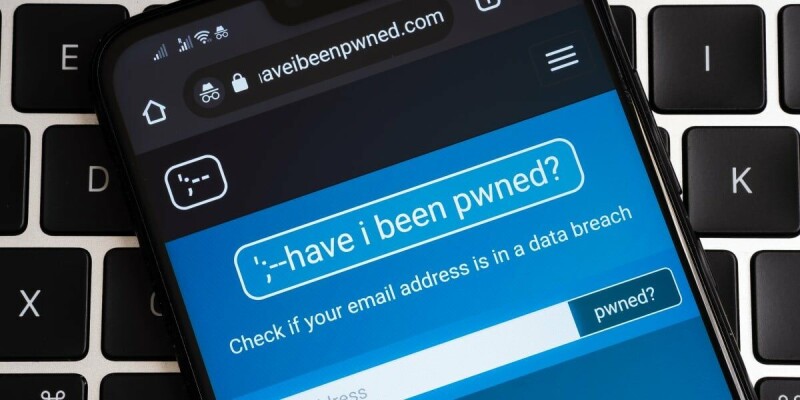
Troy Hunt, the founder of data breach reporting site Have I Been Pwned (HIBP), has revealed how organizations respond when he informs them they’ve leaked data – if they respond at all. Hunt gave Anthropic’s Claude access to an email inbox containing over eight years of his email correspondence and then asked the AI to write a post summarising them, a method he said “was the best way to highlight the behaviors I keep seeing across many breaches and subsequent disclosure efforts.” Writing in person, Hunt described those behaviors as “standoffish behavior, deliberate delays, heavy involvement from lawyers, and a constant theme: prioritizing corporate interests over those of their customers.” Once Claude takes over writing duties, it opens with the observation that Hunt sent his standard notification email to 73 organizations between March 2018 and November 2026 and also used website contact forms. Claude/Hunt focuses on the breach notifications that don’t go well, for example when first contact “often goes nowhere” because “many organisations have no obvious way to report a security incident.” Some organizations Hunt contacted logged his notifications as customer support requests. “In one case, Troy received three automated surveys asking him to rate the support he'd received,” Claude wrote, before observing “A message that an organization’s customer data is being traded among criminals ended up in the same queue as a question about a late delivery.” Once someone at victim organization gets the message, a common response is to say they can find no evidence of the breach. Others try to play down the incident, saying it was only a website defacement or that Hunt is re-reporting a previous breach the victim has already disclosed. If an organization accepts Hunt is probably onto something, it typically says it needs to investigate the matter. Claude’s take on Hunt’s mails suggests he responds by pointing out that this is an irresponsible approach, because while the investigation takes place, “people whose data has been taken don't know they need to change a password or watch for phishing.” Next, victims send in the lawyers who ask if their employer or client is legally required to reveal the breach. Hunt typically replies by saying it is up to the victim to decide if the incident meets the threshold that triggers mandatory disclosure requirements under local laws, but that he intends to notify HIBP users regardless. Victims don’t like hearing that and respond in three ways: Calling to discuss disclosure, rather than committing to it; Asking to see the wording HIBP will use in its disclosure, a request that sees Hunt refer the victim to the HIBP site for examples of the thousand-plus breach reports already on the site; Arguing that disclosure, not the breach, is the real harm. Hunt/Claude suggests that each argument victims use to avoid disclosure “sounds reasonable on its own,” but argues “Together, they mean the people most affected by the breach are the last to hear about it.” The post also reports on some better interactions, such as a small booking platform that was initially skeptical about Hunt’s report, then admitted he was right and acted swiftly to inform customers. A European travel app hardened its systems, rotated its keys, and published a disclosure. “Troy held off loading the data so he could link to their statement, and thanked them for their transparency,” according to the Claude-generated text. The bot’s analysis also offers examples of when breach notifications go well. “Someone with authority over security answered quickly,” Claude concluded. “They treated Troy's data as help rather than as a threat. They told their customers what they knew, even when they didn't know everything yet, and updated the details later. None of them needed lawyers to manage the conversation.” Hunt appears to have asked Claude to offer its opinion of his email trove. “I don't think the main obstacle to disclosure is technical, or even legal,” the post states. “It's about incentives. For the organization, every day without a public statement is a day without bad headlines.” Hunt also said he won’t make a habit of having AI write his content, but said Claude “absolutely nails it!” Unlike many of the orgs Hunt contacted. ®

  •  

Prevent Location-Based Services from Putting You at Risk

woman's phone with location tracking apps

Location-based technologies are a great help to us, giving us convenient access to many routine services, from food delivery apps to fitness trackers, while providing safety features such as child-tracking tools.

However, they can also expose sensitive information about your daily life if your settings aren’t properly managed, potentially revealing detailed information about your daily routines and movements. Someone giving you unwanted attention may be able to find your exact location every time you check in on your smartphone. If you’re not careful, they can expose where you live, who you meet, and when you’re most vulnerable.

In this article, we will dive deeper into the legitimate uses of location-based services, how criminals are abusing this technology to harm you and other consumers, and what the government is doing to protect you. You will also learn concrete steps you can take to ensure you use these location-based services safely.

Key Takeaways

  • Location data brokers have been collecting and selling your movement histories without meaningful consent, creating detailed profiles of your destinations and daily routines.
  • Recent data breaches and law enforcement actions show that even anonymized location data can be linked to individuals, revealing visits to medical facilities, places of worship, and other sensitive locations.
  • GPS interference is no longer theoretical. It’s affecting commercial aviation, maritime navigation, and critical infrastructure worldwide.
  • New regulations are emerging, but protecting your location privacy still requires proactive steps on your part, starting with adjusting app permissions, disabling ad tracking, and being more selective about what you share.

The Convenience of Location-Based Services

Location-based technologies are apps or systems that use your real-time or historical whereabouts to provide a service. Some of the more popular location-based services are maps and navigation, ride-hailing, and food delivery, but the technology is also applied to social check-ins, nearby friends features, targeted ads, geofenced coupons, and fitness tracking. These services pinpoint your location by combining GPS satellites, cell tower triangulation, Wi-Fi access point mapping, Bluetooth beacons, and IP address geolocation.

Typically, location data collection begins with an app feed combined with identifiers such as device IDs, ad IDs, and sometimes emails or phone numbers. The result is a detailed map of your life that you never authorized anyone to create. It is repackaged into audience segments and movement patterns, then sold to advertisers and analytics firms. Persistence Market Research notes that demand for precise location data incentivizes aggressive data collection without your knowledge.

Professional services and consulting firm Ernst & Young notes that phone apps and telecom carriers supply much of the location data sold to third parties. This prompted the Federal Communications Commission (FCC) to propose hundreds of millions of dollars in fines for the carriers’ continued abuses. The data is even sold to some government agencies, including those involved in homeland security, federal investigations, anti-drug enforcement, and taxation.

Balancing Convenience and Risk

Location services aren’t inherently evil. Many provide genuine benefits that make our lives easier and safer. The challenge is understanding when location access is worth the risk and when it’s unnecessary exposure.

Legitimate Benefits

One of the most common and useful applications of location services is navigation and traffic routing, which help millions of people get where they need to go efficiently every day. Meanwhile, emergency services use automatic location for 911 calls, potentially saving lives when seconds count. Fraud detection systems also use location to spot suspicious banking logins. Lost-device recovery features can help you find a stolen phone. Limited family location sharing can help parents track their kids or check on elderly relatives.

Research notes that GPS modernization and geospatial accuracy upgrades can improve precision for agriculture, construction, and autonomous systems when implemented safely. These are real benefits that many individuals and businesses rely on.

Incidents Where Location Data Put People at Risk

While location tracking conveniences abound, so do the risks. They’re happening right now and affecting millions of people worldwide.

The Gravy Analytics / Venntel Enforcement and Breach

In 2024, the Federal Trade Commission (FTC) banned data brokers Venntel and its parent, Gravy Analytics, from selling consumers’ precise location information after finding they unlawfully tracked and sold people’s visits to medical clinics, places of worship, protests, and more, sometimes to federal law-enforcement customers.

The following year, a data breach at Gravy involving more than 30 million location data points linked location histories to personal information, demonstrating that even anonymized data, given the high volume and precision of location records, can make it possible to identify individuals and track their daily routines.

Everyday Harms: Stalking, Harassment, and Domestic Abuse

Beyond infrastructure risks, location sharing can be weaponized on a deeply personal level. Advocacy groups and digital safety guides describe how abusers use phone-based location sharing, tools like Find My, and car-tracking apps to stalk partners and family members, sometimes even after restraining orders are in place. Even journalists, activists, and high-risk users must treat their location data as highly sensitive, as digital surveillance can reveal their movements.

GPS Interference, National Security, Flight Safety Concerns

GPS jamming and spoofing are now routine tactics in global conflict zones, affecting flights near major airports worldwide. The European Union Aviation Safety Agency reported roughly 6,000 spoofing incidents in 2025, and reports also indicated that more than 700 daily flights in Gulf air corridors experienced suspected GPS interference in March 2026. Long-haul carriers flying from Europe to Asia and the Middle East now frequently encounter GPS radio-frequency interference along affected routes.

Concrete Safety Steps for Using Location-Based Services

You don’t have to give up location services entirely. You just need to be smarter about how and when you share your whereabouts.

Follow NSA-Level Basics for Location Privacy

The National Security Agency advisory recommends that iPhone and Android users limit location tracking by taking these steps:

  • Restrict app permissions: When using a location-based app, set its access to “While Using the App” whenever possible. Deny location access entirely for apps that don’t truly need it. Go through your phone’s settings now and review which apps have “Always” access. Make this a monthly habit.
  • Disable advertising tracking: On iOS, turn off “Allow Apps to Track” in Privacy & Security settings and limit ad personalization. On Android, reset or delete your advertising ID regularly, ideally weekly.
  • Disable location services when not needed: For sensitive activities or high-risk situations, consider turning off your cellular and Wi-Fi radios and disabling location services completely.

They’re basic privacy hygiene practices that take only a few minutes but dramatically reduce your exposure.

Limit the Silent Location Trail Across Devices

High-risk users and privacy-conscious individuals should consider all three categories of location surveillance: visual surveillance via cameras, internet-based surveillance via IP addresses and logins, and device-based surveillance via GPS and Bluetooth beacons.

Turn off Wi-Fi, Bluetooth, and location when you are not using them. Use a media access control (MAC) address randomization to help prevent Wi-Fi networks from recognizing and tracking your device over time, or a virtual private network (VPN) to mask your IP address and encrypt your internet traffic to reduce online location tracking.

For especially sensitive locations, leave your devices at home if possible. This might sound extreme, but for journalists covering protests, activists organizing, or survivors of domestic abuse, these precautions can be life-saving.

Safer Use of Social, Fitness, and Find My Features

  • For social media: Turn off default geotagging on the platforms you use and avoid posting your location in real time. Share photos after you’ve left a place. That vacation photo looks just as good when you post it after returning home.
  • For fitness and sports apps: Many fitness apps let you create privacy zones around your home and workplace. For instance, you can hide or randomize the start and end points of your running, hiking, or cycling routes. You can also avoid public leaderboards that reveal home and work patterns.
  • For family location tools: Use them intentionally, with clear boundaries. Regularly review who can see your location, and disable sharing when relationships change. Location sharing should be mutual and temporary, not permanent and one-sided.

Talk with Your Family about Location Sharing

Have an open, honest conversation with your family and decide who can see whose location, such as parents monitoring their children’s location. Also determine the instances when location must never be shared, such as at home, at school, at medical appointments, at therapy, and at places of worship. Make it mutual and consensual, not surveillance.

What To Do After a Location Data Breach

If a cybercriminal has enough location data points to build your profile, that data can be linked to your personal information, such as your name, address, phone number, and even your email account. These details could be used in account takeover or phishing attempts. If you learn that your location data has been compromised, take these steps:

  • Monitor for unusual logins or recovery attempts on your accounts and update passwords that might have been exposed.
  • Turn off your location tracker and adjust your routines, especially if you’re at higher risk for domestic abuse or are a public figure.
  • Consider credit freezes and fraud alerts if other personal data was involved.

Don’t panic, but do take it seriously. Location breaches can have delayed consequences, so stay vigilant for several months after learning of the exposure.

Seek the Help of Trusted Security Solutions

A reliable, comprehensive security solution goes beyond traditional antivirus. It can block malicious websites, phishing pages, and scam apps that attempt to harvest your location data. Services such as McAfee+ provide privacy and identity monitoring that alerts you if your data appears in breaches similar to the Gravy Analytics leak. It also offers device-level protections and parental control tools to help your family manage app permissions, screen time, and risky features on your children’s devices.

Develop Longer-Term Habits

Aside from reviewing app permissions monthly, delete apps you no longer use. Each unused app is another potential tracker and a breach risk. Avoid connecting every new gadget, such as a car, TV, or smart appliance, to your account without considering what location or usage data it collects.

Think of this as location hygiene. Just as you wouldn’t leave your front door unlocked, don’t leave your location data exposed.

Regulatory and Legal Context

Regulators are finally waking up to the dangers of unchecked location tracking, but the changes are uneven and incomplete.

More Regulation and Government Response

The FTC’s actions against X-Mode Social, InMarket, Venntel, and Gravy mark the first time the agency has outright banned companies from selling precise location data. In its orders, the commission required these companies to delete improperly collected data, implement sensitive-data programs, and stop tracking people near sensitive locations without explicit consent. U.S. senators have also urged the Pentagon to assess GPS risks to critical infrastructure, highlighting how a GPS failure could disrupt transportation, power grids, and emergency services.

These actions show that the government recognizes the danger of location surveillance and creates important precedents. However, they are still largely reactive, punishing bad actors after harm has been done, rather than preventive.

Your Rights as a Consumer

Many privacy laws give users the right to request access to their data, request deletion, and opt out of sale. The Electronic Frontier Foundation and consumer rights groups recommend using these rights to request deletion of your location history from data brokers when possible.

Exercising these rights takes some effort. You need to identify which companies have your data, find their contact information, submit requests, and follow up. It’s not easy, but it’s worth doing for the companies you’re most concerned about.

Final Thoughts

Following major breaches and misuse of consumer location data, regulators are cracking down on brokers, and companies are being forced to respect boundaries to help you reclaim control over one of your most sensitive digital assets.

Your phone may track where you go, but you can decide which apps get that access and when. Data brokers may profit from your movements, but you can cut off their access. Location breaches may expose millions, but you can strengthen your security layers to reduce unnecessary data collection.

Applying these practical safeguards will fit easily into your daily routine. All you need is fifteen minutes today to review your phone’s location permissions, and a monthly habit of checking which apps still need access. On social media, think twice before sharing your location in real time. These small choices add up to meaningful protection.

When you combine smart location habits with security tools that catch threats you might miss, such as McAfee+, you create layers of defense that make you a much harder target.

The post Prevent Location-Based Services from Putting You at Risk appeared first on McAfee Blog.

  •  

Revenge Posts on Social Media Could Land You in Jail

blogging on social media

People worldwide are posting more personal content than ever before, and AI tools make it frighteningly easy to fabricate damaging images in minutes.

When you are caught in a moment of anger, it can be easy to compose a revenge post against someone containing abusive language, their personal details, or an intimate photo. But with one click, you could face years in federal prison.

Lawyers and law enforcement officials warn that even revenge posts, fake profiles, or reposted content meant as jokes can lead to criminal charges, civil lawsuits, job loss, and permanent online reputational damage.

If you’ve ever been in a situation where you almost posted content that could harm another person, keep reading this guide to understand where the legal boundary lies and why revenge posts aren’t worth it.

Key Takeaways

  • Revenge posts are serious crimes. Sharing intimate images without consent, creating fake profiles of another person, or posting AI-generated explicit content that harms another person can result in prison and substantial fines.
  • Fake doesn’t mean safe. AI-generated and deepfake images are now explicitly criminalized in many regions, closing a loophole that abusers tried to exploit.
  • Even if criminal charges don’t stick, victims can pursue civil lawsuits that result in six- or seven-figure judgments.
  • Laws are evolving rapidly. Governments worldwide are toughening penalties and expanding definitions to cover new forms of digital abuse.
  • If you’re a target of revenge posts, you have support from social media platforms and law enforcement, as well as legal recourse.

The Full Spectrum of Revenge Posts

When you hear the term revenge post, you might picture an ex-partner sharing your intimate photos after a breakup. That’s certainly part of it, but the reality is far broader and more complex.

A revenge post is a broad, informal umbrella term for digital content shared online with the intent to punish, embarrass, intimidate, harass, or harm another person’s reputation, privacy, safety, or emotional well-being.

It can take many forms. Cyberstalking, which uses digital platforms to repeatedly harass or threaten individuals, often overlaps with revenge posting. These posts can include non-consensual intimate images or videos, commonly called revenge porn or non-consensual pornography, and they also encompass AI-generated or photoshopped explicit images, even when the depicted scenario never actually occurred. Even text-only posts accompanied by threats or abuse can cross legal lines and result in serious criminal charges.

Fake profiles, sometimes called catfishing, are frequently used to post defamatory or humiliating content in someone else’s name. Doxxing, which exposes an individual’s personal information such as home addresses or employers to incite abuse, often appears alongside these other tactics.

Criminal and Civil Consequences

Because of overlapping offenses, revenge posts are treated not as a single crime but as a cluster of crimes, each carrying its own penalties. Criminal charges often fall under state revenge porn statutes that address non-consensual pornography or image-based abuse, which involves sharing someone’s explicit images without consent.

Cyberstalking and harassment charges frequently apply, especially when threats or repeated behavior are involved. In some cases, creating fake accounts and posting as someone else can trigger identity theft and impersonation charges.

Nearly every jurisdiction in the United States has criminalized revenge porn, with federal penalties and severe sentences when minors are involved.

On the civil side, claims may include defamation, intentional infliction of emotional distress, invasion of privacy, and violations of state-specific privacy statutes. Juries are increasingly willing to award substantial verdicts in social media harm cases, with some reaching into the millions of dollars.

Groups That Are Most at Risk

A large-scale survey of 16,000 individuals across 10 countries found that victims of revenge posting are often women and marginalized people targeted by ex-partners, acquaintances, or online trolls. Young adults and teens are particularly vulnerable because of heavy social media use and practices such as sexting, yet they’re often least aware of the legal consequences and removal options available to them.

If you are a parent, educator, concerned citizen, or young adult, understanding these risk factors can help you recognize warning signs early. It can also help you prevent harm, educate, and provide accessible support to address this crisis.

The “But It’s True” Defense Doesn’t Work

In many jurisdictions, the First Amendment and similar free speech protections allow you to publish truthful information and express opinions, even if they’re embarrassing or unkind to someone else.

However, this protection has critical limits. It doesn’t extend to defamation, which involves knowingly posting false statements that harm someone’s reputation. It also doesn’t protect you when you share non-consensual explicit images or engage in certain forms of threats and harassment. Truth is not a blanket shield when you’re violating someone’s privacy or engaging in abusive behavior.

Revenge Posts Can Lead to Prison Time

A number of individuals have successfully filed federal civil and criminal lawsuits against people who created fake profiles and posted damaging content. Let’s take a look at real cases to make the stakes crystal clear.

16 Years of Torment, Nine Years in Prison

In July 2025, James Florence Jr. of Massachusetts was sentenced to nine years in federal prison, plus 10 years of supervised release, for cyberstalking more than a dozen women over 16 years.

The scale of his campaign included more than 60 fake accounts across nearly 30 platforms, thousands of fake, AI-generated, and photoshopped explicit images, and systematic doxxing that exposed victims’ home addresses, workplaces, and personal details. Florence also actively encouraged others to contact and humiliate his victims.

This kind of systematic harassment makes it nearly impossible for victims to escape and significantly easier for abusers to amplify harm. Common tactics include creating multiple fake accounts that impersonate the victim and tagging the victim’s real accounts so their friends and family see them. This case illustrates that long-term, multi-platform revenge posting is a serious federal crime that can result in nearly a decade behind bars.

Ohio’s First AI Revenge Porn Conviction

In early 2026, James Strahler of Ohio was convicted of posting AI-generated sexual content featuring women and children he knew. Strahler’s phone contained more than 3,000 fake pornographic images, which he shared online and used to send harassment messages demanding more content. He pled guilty to cyberstalking, producing obscene visual representations of child sexual abuse, and publishing digital forgeries.

Federal Cyberstalking: Revenge Porn Plus Threats

In May 2020, a man from Hawaii was charged with federal cyberstalking for systematically harassing a former intimate partner. He disseminated sexual images of her across multiple websites and social media platforms, shared her personal address and phone number, accessed her social media accounts without authorization to distribute images to her friends and family, and sent repeated death threats and degrading insults via email and text messages.

This case demonstrates that combining revenge posts with threats and doxxing significantly increases legal exposure and can even move cases from state to federal jurisdiction, where penalties can be more severe.

AI Amplifies the Threat

We can’t talk about revenge posts in 2026 without addressing the elephant in the room: artificial intelligence.

Minutes to Create, Years to Recover From

AI technology has made it possible to produce believable explicit images from a single fully clothed photograph. Victims can find themselves depicted in scenarios that never happened, engaging in acts they never performed. Yet the images look real enough to fool casual observers and can spread virally before being debunked.

This is why laws and platforms are scrambling to keep up. Sharing, liking, or even downloading and possessing AI-generated abuse content without reporting it can be legally risky in some jurisdictions, potentially implicating you as a party to distribution.

Laws Are Getting Tougher

If you think revenge posting is becoming easier to get away with, think again. Laws around the world are rapidly evolving to close loopholes and increase penalties.

U.S. State And Federal Laws

In the United States, all 50 states and the District of Columbia have enacted laws criminalizing non-consensual pornography or image-based sexual abuse. Misdemeanors carry 6 to 12 months in jail and fines, while felonies carry several years of imprisonment and tens of thousands of dollars in fines for cases involving profit motives, minors, or repeat offenses.

In May 2025, the signing of the Take It Down Act into law made it a federal crime to knowingly publish or threaten to publish intimate images without consent, whether they are real, edited, or AI-generated deepfakes. Violations involving adults carry up to two years in federal prison, while violations targeting minors can result in up to three years behind bars, plus substantial fines and property forfeiture.

The Act also gives victims powerful tools to get content removed from platforms within 48 hours. It closes a legal loophole in which generating, possessing, or sharing fake explicit images of real people without their consent is treated with the same serious penalties as authentic images.

Global Response to Revenge Posting

In early 2026, the U.K. government announced that social media firms must remove non-consensual intimate images, including AI-generated deepfakes, within 48 hours or face steep fines and have their services blocked entirely in the country. This signals growing worldwide pressure on platforms to act faster and more decisively to protect users.

Other countries and regions such as Australia, Canada, the European Union, Israel, and Singapore have also adopted major legislation. Meanwhile, the United Nations Office on Drugs and Crime has developed a global framework to prevent and combat revenge posts.

Platforms Are Finally Taking Responsibility

For years, social media and content-sharing platforms took a less active stance on revenge posts. That’s changing, driven by new laws and public pressure.

Takedown Requirements Are Getting Stricter

Major platforms such as Facebook, Instagram, X (formerly Twitter), and TikTok now explicitly ban non-consensual intimate images, impersonation, fake profiles, and doxxing. Many of them cooperate with law enforcement investigations and have developed specialized teams to handle these reports.

Platforms that fail to remove reported non-consensual intimate images within 48 hours and fail to take reasonable steps to prevent the same content from being re-uploaded will face enforcement action by the Federal Trade Commission, and violations will be treated as deceptive or unfair practices under consumer protection law.

New Detection Tools Offer Hope

Platforms and safety organizations increasingly use hashing technology and AI-based matching systems to detect and block known non-consensual intimate images. These tools generate a unique digital fingerprint, or hash value, for reported content, enabling platforms to identify and prevent reuploads across participating services. This shifts the burden from victims, who previously had to constantly monitor the internet for their own images and file repeated reports, to platforms and automated systems that can act preemptively.

How Not to Go to Jail

Now let’s talk about prevention and protection. Whether you’re trying to avoid making a devastating mistake in anger or need to protect yourself and your family from being targeted, this section provides you with actionable steps.

Think Twice or Thrice Before You Post

Rejection hurts, and sometimes we want to express those strong emotions. Before you share anything damaging about someone else online, run through this checklist:

  • Does it include sexual content or nudity? Even if you created the content together or the person gave it to you willingly, sharing it without consent is illegal in the U.S. and many countries worldwide.
  • Could it be false or misleading? Posting false information that harms someone’s reputation can expose you to defamation lawsuits. Even if you delete it or claim you were just joking, the damage may already be done and liability may be established.
  • Does it expose their private contact info or address? Doxxing is illegal in many jurisdictions and often leads to criminal charges such as cyberstalking and harassment.
  • Could it be seen as a threat or part of a harassment pattern? Sharing explicit content without consent, even by forwarding it in private messages, is illegal in most places. A pattern of messages, posts, or contact can quickly escalate from poor judgment to criminal harassment.

If you answered “yes” to any of these questions, don’t post. The momentary satisfaction you might feel from revenge posting isn’t worth years in prison, thousands of dollars in fines, or permanent damage to your own reputation and future.

Safer Alternatives to Expressing Your Anger

Feelings of betrayal and hurt after a relationship ends or a conflict arises are valid and normal. But how you channel those feelings makes all the difference. Instead of revenge posting, try these approaches:

  • Vent privately and offline: Journaling, talking with close friends in person, or working with a therapist provide outlets for your emotions without creating digital evidence or harming anyone else.
  • Use official reporting channels if needed: If you’re the victim of online harassment, report it through proper channels, such as platform reporting tools or law enforcement, rather than retaliating with potentially illegal posts.
  • Seek legal advice before exposing someone: If you feel genuinely compelled to share information about someone’s behavior publicly, consult a lawyer first. They can help explain what you can legally post and document legitimate concerns without crossing into defamation or harassment.

Protect Yourself and Your Family from Revenge Posts

When you are the one being targeted by revenge posts, here’s how to reduce your risk:

  • Limit the sensitive content you share online: Think carefully before sending or sharing intimate photos or personally identifiable information online. Keep backups of your content in secure, private storage you alone control, not in shared cloud accounts or on devices others can access.
  • Talk to your teens and young adults: The legal consequences of sexting may include criminal charges if minors are involved. Teach young people about image-sharing risks, how to recognize pressure tactics, and what to do if someone threatens to expose them or demands more content.
  • Document everything if harassment occurs: If you become a target, preserve evidence by taking dated and timed screenshots, saving URLs, emails, and text messages, and considering specialized documentation apps for harassment victims. This evidence can be key to investigations and lawsuits.
  • File reports promptly: Don’t wait until the incident has passed without lasting effects. Quick action can prevent broader distribution and demonstrates to courts that you took the threat seriously from the beginning.

Final Thoughts

Revenge posts now carry real legal consequences that can reshape your future. From federal prison sentences to devastating civil judgments, the legal system takes these offenses seriously, and penalties are only getting tougher. Think twice before posting in anger.

If you’re on the receiving end of harassment, document everything. Talk with your family about digital safety and consider installing digital security tools like McAfee+. Our tools can flag malicious or suspicious links in direct messages and comments, helping you avoid sextortion scams in which criminals threaten to expose fabricated or stolen intimate images unless you pay. We offer identity monitoring that alerts you if your email address, phone number, or other personal data appears in leaks, potentially giving you early warning if someone is collecting information to target you with doxxing or harassment.

The post Revenge Posts on Social Media Could Land You in Jail appeared first on McAfee Blog.

  •  

Cisco and OpenAI pitch eBPF kernel plugins as the way to tame the patchpocalypse

Cisco and OpenAI have released an open-source tool called Shirudo to implement compensating controls in Linux, potentially improving security for users who can’t quickly patch newly discovered software flaws. Shirudo relies on eBPF, the technology that makes it possible to run sandboxed programs in the Linux kernel. eBPF programs are effectively kernel plug-ins but don’t get unrestricted access to system resources. Developers have mostly used eBPF to create network functions that enable things like the open source Kubernetes observability and security tool Cilium, a Cloud Native Computing Foundation project. Cisco and OpenAI think eBPF can help organizations cope with the flood of 100,000-plus software flaws reported this year, many after the debut of AI-powered bug finders. The increased volume of flaws, and patches to fix them, is a problem for many organizations which already struggle to test fixes or find change windows in which to implement them. That problem has seen greater interest in “compensating controls” – changes to applications or infrastructure that harden them against flaws or malware, without requiring a patch. With Shirudo, Cisco and OpenAI are suggesting two things: The privileges eBPF programs enjoy make them a fine way to implement compensating controls for Linux; Agents should scan your infrastructure for vulnerabilities, then use tools like OpenAI’s Codex to write compensating controls as eBPF programs at machine speed. “Shirudo” is apparently the Japanese word for “shield,” so Cisco and OpenAI have called the eBPF programs the tool creates “shields.” The two companies envision humans checking every shield Shirudo creates before putting it into production. Shirudo is open source and available here. The two companies say they’ve already demonstrated it could mitigate the recently discovered flaws in Java without requiring downtime for an Elasticsearch implementation. Cisco and OpenAI are not alone in advocating for compensating controls. Third-party software maintenance outfits like Rimini Street have used them for years to protect software when their clients no longer have the right to access patches. VMware has introduced “virtual patching.” Palo Alto Networks and Rapid 7 also like this approach, and offer automation to develop controls. Where Cisco and OpenAI differ is their decision to make Shirudo open source, and their ambition that other players adapt and advance it. That offer is not entirely altruistic, as if Shirudo takes off it could create more demand for Codex. Cisco’s angle comes from the fact it owns Isovalent, an early champion of eBPF and the creator of both Cilium and the Tetragon sub-project on which Shirudo is based. Switchzilla is using eBPF in other products, so normalizing its use through an open source project can’t hurt. ®

  •  

Inception - possibly a ShinyHunters reboot - claims seven victims in a week

Don't mind the recent arrests. The ShinyHunters extortion gang may still be operating, just under the new name of Inception, according to Okta's threat intelligence group. ShinyHunters is the brash cybercriminal group that, most recently, breached rival gang Clop before hacking the FBI, resulting in at least three arrests of key suspects in September and October. The crims - and their old data leak site - have since gone dark. “While this threat cluster has changed their brand affiliation, the operators remain active in targeting organizations with voice phishing attacks and account takeovers resulting in data theft and extortion,” Okta threat hunters Moussa Diallo and Katie Nickels said on Monday. Okta tracks this threat cluster as O-UNC-053 - the “O-UNC” prefix stands for an Okta Uncategorized cluster, and it uses this label before formally attributing the activity to a named threat group. While Okta hasn't formally confirmed O-UNC-053 to be the same crime crew as ShinyHunters, the identity and access management provider’s researchers note that it does use nearly identical social engineering tactics: voice phishing, during which the scammers trick targets into entering credentials into phishing pages and approving multi-factor authentication (MFA). Plus, they note: O-UNC-053 operators change the themes of their phishing domains about every four to six weeks, and they also post claimed victims on ShinyHunters’ data leak site. In November, however, organizations targeted by O-UNC-053 began appearing on a new data leak site branded as Inception and not ShinyHunters. The first five - Advanced Micro Devices, Cigna Healthcare, Paychex, PepsiCo, and Henry Schein - appeared November 17 on the site, and all were marked “leaked.” Soon after, security maven Dominic Alvieri questioned if Inception was linked to ShinyHunters. “ShinyHunters are not all in jail,” he wrote on social media. On November 19, AutoZone appeared on the site, with Inception again claiming to have leaked the auto-parts retailer's files. On Saturday, EV technology firm Lucid Group joined the claimed victims. None of the seven companies have confirmed breaches, and none responded to The Register’s inquiries. We will update this story when we receive more information. Okta Threat Intelligence “is unable to validate if published data is authentic,” the researchers said in response to our questions. In the Monday report, the Okta team does note that Inception’s new data leak site listings “included multiple targets for which Okta Threat Intelligence previously observed O-UNC-053 infrastructure registration.” The infrastructure was registered between six and 19 days before Inception listed the companies on its leak site, and this gap “is consistent with prior shifts from Com-affiliated actors,” Diallo and Nickels added. The Com (short for community) is a loosely knit network of online groups whose young members participate in a range of illicit activities including hacking, swatting, digital extortion, real-life shootings, and other physical violence. Many security researchers consider ShinyHunters to be connected to The Com, along with groups such as Scattered Spider and LAPSUS$, with overlapping memberships and shared infrastructure. “Before and after the change in DLS publication, O-UNC-053 maintained consistent infrastructure and TTPs, leading us to assess that the cluster has very likely changed their brand affiliation,” the Okta researchers wrote. “We cannot currently make a high confidence assessment as to whether O-UNC-053 is operating the DLS themselves or is partnering with another extortion actor.” Regardless, members of the group formerly known as ShinyHunters and/or O-UNC-053 are still roaming the internet, looking for new victims, and conducting voice phishing attacks to steal data and then extort victims' companies for exorbitant sums of money. Consider yourself warned - and turn on phishing-resistant MFA.®

  •  

Bluetooth brakes are broken as researchers find anyone can control them

Imagine something as mission-critical as the brakes on a trailer being vulnerable to unauthorized control. One Australian manufacturer made the interesting choice of building Bluetooth into a trailer brake controller without adequately securing its critical braking functions. Anyone within Bluetooth range of an unpatched Elecbrakes trailer controller could potentially trigger its brakes or apply more braking force than intended, without needing to authenticate. The discovery comes courtesy of a pair of security researchers from Element Digital, Patrick Forck and Jeremy McCarthy. Their investigation began earlier this year when Forck was driving down the road and noticed that his physical Elecbrakes In-Car Remote had connected to someone else's trailer without pairing or prompting him. “It had connected mid-drive, without pairing or a prompt, to a brake controller that wasn’t mine, on a trailer I’d never seen, belonging to a driver who had no idea,” the researchers wrote. That one-off connection triggered a full-scale investigation by the pair. For those unfamiliar with trailer brake controllers, these devices are commonly used on larger trailers. Australian manufacturer Elecbrakes sells such controllers in Australia and New Zealand. Depending on jurisdiction, trailers over a certain weight are required to have their own braking system, which Elecbrakes manufactures. Elecbrakes offers two versions that are designed to be easier to install than traditional controllers: One that’s mounted in a vehicle, and one that is mounted directly on a trailer. That trailer-mounted unit can receive Bluetooth commands from the Elecbrakes smartphone app or a separate in-car remote. Given the importance of such control units to road safety, it’s easy to imagine how serious such a vulnerability could be if it proved to be easy to exploit, and boy, did it. Forck and McCarthy admitted they’re infrastructure security guys, not software devs, so they turned to Claude Code to dissect a decompiled copy of the Elecbrakes app, which Claude was happy to oblige. “What came back from the analysis was a map of the device’s entire Bluetooth GATT profile: 47 characteristics across four services, commands sent as plain unencrypted byte arrays, no checksums, no sequence numbers,” the researchers noted. To make matters worse, there was no authentication required for critical braking commands, even though other Bluetooth functions required pairing. Claude then built a web app that ran in Chrome which was able to access the Bluetooth controls for a nearby Elecbrakes system, and they were able to modify practically every aspect of brake control on a unit owned by one of them. Pairing failed on a few attempts, but not where it mattered: It allowed the connection without issue for actual brake control. They sent a few bytes to the brake control characteristic, and were shocked. “The electromagnetic hum at the brake drums was immediate and, frankly, a little sickening,” the pair said. “It said yes to four bytes from a total stranger then energised several tonnes’ worth of brakes and reported back that it had done so, pleased with itself.” Further experiments managed to modify braking strength based on deceleration speed as well, making it so that the trailer acted unpredictably based on the amount of force a driver applied to stop their vehicle. To say this is worse than a typical internet-connected device bug is to put it mildly - it even earned a trio of CVEs from CISA, with two of them scoring a CVSS of 9.6. “The attack surface is ‘anyone within Bluetooth range,’ the skill required is ‘can write four bytes,’ and the victim selection is ‘optional,’ ” Forck and McCarthy said. The fact AI was able to get them to that point in just a couple of days is even more concerning, they added. “This kind of research used to require a fairly rare and specific skill set,” the pair noted. “It now requires curiosity, a device you own, and an AI that can read bytecode faster than any human.” Luckily, they appear to have been dealing with a relatively responsive company in Elecbrakes - patches have been deployed for both the in-car and trailer-mounted models of their brake controllers. Installation is a manual process, we note, so if you own a controller from the company, be sure to stop and install the update. Unfortunately, Elecbrakes has a third controller out there that hasn’t been manufactured in several years, and it got skipped in the patching process. Owners of an ELBC2000 should be aware that their controller is still vulnerable, and there’s no patch available yet, as the vendor didn’t confirm that the ELBC2000 was vulnerable until the end of October, after it faced pressure from the researchers. Following publication, the firm told us, "Elecbrakes takes the safety and security of its products seriously. Our engineering team reproduced and validated the cybersecurity vulnerability reported by the researchers. A safety risk assessment considered the likelihood of injury under specific scenarios. It concluded that, when a user is actively connected to their own controller through the Elecbrakes app or remote in line with product instructions, the cybersecurity vulnerability identified in the research is not present." ®

  •  

Critical Cisco remote code execution bug under attack

Attackers are currently exploiting a critical vulnerability tracked as CVE-2026-76466 in Cisco Expressway that allows them to remotely execute commands as root without any authentication, according to warnings from the US government and security researchers. CVE-2026-76466, which carries a 9.8 CVSS rating, affects Cisco Expressway-C and Cisco Expressway-E gateways configured in clusters, both virtual and physical appliances running vulnerable software. These provide firewall traversal, VPN-less remote access, and call routing for remote users connecting to voice, video, and messaging collaboration services. The bug involves hard-coded authentication credentials and insufficient certificate validation in clustered Expressway deployments. “An attacker with possession of the cookies could exploit this vulnerability by connecting to the database service and invoking specific remote procedure call (RPC) commands,” Cisco said in October, when it disclosed the bug and issued a software update that fixed the flaw. “A successful exploit could allow the attacker to execute arbitrary commands as root on the underlying operating system of an affected device.” At the time, the networking vendor said it wasn’t aware of any abuse of the vulnerability. That all changed late last week, however, when Russian security firm F6 said it was investigating “the first observed case” of miscreants exploiting CVE-2026-76466, shortly after a public proof-of-concept exploit became available. “The attackers initially compromised two Cisco Expressway internet-facing devices,” F6’s Cyber Defense Center said on Thursday. “Through one of them, they gained access to two additional cluster nodes located on the organization’s internal network. After obtaining root access, the attackers began preparing tooling for further lateral movement across the infrastructure.” Specifically, the criminals prepared custom Python code to scan the victim’s network and identify files and folders shared over the Server Message Block (SMB) protocol. The scripts were also designed to interact with SQL Server and WinRM, and search GitLab repositories for credentials and other sensitive information. The Python scripts used in the attack indicated that the operator used an AI assistant, according to F6. The security shop also noted that one of the key indicators of compromise is a nodeup “wombat@127.0.0.1” entry in the Erlang system log (erlang.log) on affected Cisco Expressway devices. A day later, the US Cybersecurity and Infrastructure Security Agency (CISA) added CVE-2026-76466 to its Known Exploited Vulnerabilities catalog, and told federal agencies to patch by Monday. Cisco updated its advisory on Monday to acknowledge CISA’s addition, while noting that it has no direct evidence of active exploitation. The Register reached out to the networking and security vendor for additional details about the scope of the attacks, but did not receive any response. We will update this story as we learn more. ®

  •  

Bulgaria evicts cyber snoops who lurked inside government networks for 5 years

The Ancient Thracian heartland of Bulgaria says it has shut down a cyberespionage operation that gave intruders access to government networks for five years – the longest-running known campaign against its administration. Bulgaria's Ministry of Innovation and Digital Transformation said the unauthorized and officially unattributed attackers first gained access to infrastructure used by government institutions to exchange information in 2021. It explained that the intrusion went unnoticed for so long because "the previous means of protection did not work as a single, integrated system," and that without a new, recently installed product, it may have gone undetected for much longer. "The incident was discovered thanks to the new national cybersecurity system, which for the first time provides a single picture of what is happening in state networks," the ministry added. "Without it, this activity would most likely have remained hidden for an indefinite period of time." Bulgaria acknowledged that "sensitive information related to the work of the state" was accessed, but did not specify the scale of the compromise. Innovation and Digital Transformation Minister Ivan Vasilev said attackers had downloaded more than 130 GB of data over five years. He also put the volume at 62 million pages. The Register contacted the Bulgarian government for confirmation of these numbers. The ministry said that it has not yet found any evidence that citizens' personal data was compromised, and that the affected infrastructure "will be under increased surveillance for 90 days" in case the attackers try to regain access. Vasilev said multiple international hacking groups had accessed government systems since 2021. He did not specify the names of these groups, however, nor did he name any specific countries that may have been involved. In a follow-up interview with bTV, Vasilev blamed political instability and frequent changes of ministerial leadership for leaving government systems inadequately protected. A representative of the Progressive Bulgaria party, which back in May won Bulgaria's eighth general election in five years, Vasilev said the "constant change of leadership" means "important things for the state do not actually happen." Vasilev said the intrusion was discovered over the summer as the national cybersecurity system was upgraded, and that teams had spent the past three to four months removing the attackers. ®

  •  

Norway links energy firm cyberattacks to critical Azure API Management flaw

Microsoft has issued a critical vulnerability advisory after attackers were caught raiding Azure API Management (APIM) instances for secrets and performing admin operations. According to a nonpublic advisory, seen by The Register, Microsoft said the attacks, which have already affected two major energy companies, only impact customers on Azure API Management Classic tiers, not Azure API Management v2. It said of the now-patched vuln: "Our investigation found that customers were exposed and an unauthorized party could have used the issue to access secrets stored in Azure API Management Classic instances before Microsoft identified the security issue." Microsoft linked exposure to Classic-tier configurations that did not follow its network security guidance or stored secrets directly in APIM rather than referencing them from Azure Key Vault. Microsoft directs customers to its security guidance for the recommended configuration. The advisory lists potentially exposed secrets, including named values, client secrets associated with identity providers and OpenID Connect providers, subscription keys, and tokens used to call direct management APIs. Security expert Anders Kristiansen warned that stolen credentials could also give attackers access to services behind APIM. "If someone obtains a credential from that configuration, they may be able to use it directly against the service it protects, outside APIM," he wrote. "What they can reach depends on the credential's permissions and whether it is still valid." Norway's National Security Authority (NSM) urged organizations using APIM to assume their secrets and named values had been exposed and rotate all tokens and secrets. The agency also advised mapping the information accessible through each APIM instance to assess the potential scope of any compromise. NSM credited Norway's energy sector with first detecting the vulnerability last week. It named gas giant Equinor and hydropower company Skagerak Energi among the affected organizations. The authority commended Equinor for its early detection and rapid information-sharing, and warned that growing use of AI increased the risk of further exploitation. "The vulnerability affects several sectors in Norway and also beyond Norway's borders," it said. "NSM has close dialogue and cooperation with national and international partners and businesses about the situation. "When a vulnerability becomes known, multiple actors will be able to attempt to exploit it. Rapid escalation in the use of artificial intelligence is affecting the situation. This poses a risk to Norwegian businesses." Customers who spoke to The Register warned that forgotten development and test instances could leave more organizations exposed. The extent of exploitation remains unclear. Microsoft said it identified the security issue on November 18 and automatically applied a mitigation to close the access path the following day. The Windows giant said customers still needed to investigate whether their instances had been compromised before the mitigation was applied. NSM nevertheless advised organizations to check their instance's runtime version against its published patch thresholds and contact their provider if it remained unpatched. Microsoft did not immediately respond to our request for comment. ®

  •  

$1 of GPT-5.1 tokens finds new ways around China’s Great Firewall

Researchers have found new ways to evade China’s Great Firewall after spending just $1 worth of tokens. That result appeared last week in a paper titled “CircumVolve: Automated Discovery of Censorship Evasion Strategies Using Large Language Models” presented at the Conference on Computer and Communications Security run by the Association for Computing Machinery’s Special Interest Group on Security, Audit and Control. Penned by six researchers from the University of Massachusetts Amherst, University of Colorado Boulder, and activist group the Great Firewall Report, the paper points out that finding holes in the Great Firewall is a laborious process – so just the kind of task worth handing to AI. The authors came up with a tool they call “CircumVolve” and describe as “a system for automated discovery of censorship circumvention strategies across the full network stack.” “CircumVolve combines LLM code generation with iterative feedback-driven evaluation to produce verifiable and deployable evasion techniques,” they wrote. “CircumVolve models different censorship techniques as discrete scenarios, each capturing the specific context, protocol constraints, and blocking mechanisms of real-world censors. Within each scenario, evasion strategies are represented as executable Python programs that implement packet and protocol manipulations — from rewriting TCP/IP header fields, to crafting DNS queries that exploit parser ambiguities, to modifying the internal structure of encrypted QUIC Initial packets — while maintaining protocol correctness within tolerable bounds or strategically violating it when beneficial.” The authors tested CircumVolve on simulated censorship tools used by China, Iran, Pakistan, and Kazakhstan, and on virtual private servers deployed on clouds in those countries. Those tests found the median API cost to the first successful evasion was less than $1 in token expenditure costs when using GPT-5.1. The authors acknowledge that operators of censorship infrastructure might be able to observe CircumVolve at work, but feel its relatively small payloads – 80 KB of outgoing and 150 KB of incoming traffic – and 25-45-second pauses between tests might see it fly under the radar. “CircumVolve represents a first step in leveraging LLMs to accelerate the censorship-circumvention lifecycle,” the authors wrote. “By automating the labor-intensive tasks of protocol analysis, implementation, and testing, AI-driven approaches make studying circumvention capabilities far more accessible to the comparatively under-resourced Internet freedom community [and] demonstrates how AI-assisted systems can narrow the resource gap between Internet freedom advocates and well-funded censoring states.” Lenovo finally cracks monster datacenter profits Ever since acquiring IBM’s x86 server business in 2014, Chinese hardware giant Lenovo has struggled to turn a profit from datacenter sales, even as it expanded its business into storage, networking, and selling to hyperscalers. The AI boom has finally done what various strategy shifts and waves of hype could not: propel the company’s Infrastructure Solutions Group (ISG) to a $1 billion quarterly profit. In its Q2 results announcement [PDF] last week, the company revealed ISG revenue hit a quarterly record of $11.3 billion, up 178 percent year-over-year, and that lovely big profit. At a time when enterprise hardware supply chains are tight, Lenovo says it was able to increase shipments of x86 servers and even emerge as the largest vendor of such systems with 16 percent market share. Lenovo also claimed it’s moved further ahead as the planet’s premier PC provider, by pointing to 15 percent year-on-year growth for its intelligent devices group where quarterly revenue reached $17.4 billion. The company claims it has 23.8 percent of the PC market and now has seven percent more market share than its closest rival, Apple. The company said premium devices account for 63 percent of its PC business Overall revenue rose 48 percent year over year to $30.24 billion for the quarter. Indonesia’s glaciers are all but gone It may surprise readers to know that Indonesia, the nation that spreads across 17,000 islands in the tropical latitudes of 11°S to 6°N, is home to alpine regions sufficiently high that glaciers can form. Indonesia’s glaciers clung to the top of Puncak Jaya, aka Carstenz Pyramid, a 4,884-meter peak on New Guinea at 4°S. Sadly, an assessment published last week by NASA says the glaciers have probably melted to the point at which not much is left other than a few patches of ice. NASA last week posted images that show glaciers covering 4.31 km2 atop Puncak Jaya in 1988, and another from this year that shows most of that ice is gone. Images from September 2025 apparently showed just .09km2 of ice remained. “To qualify as a glacier, a body of ice generally has to be thick enough to flow downhill under its own weight, and it needs an area where snow builds up faster than it melts,” NASA’s Kathryn Hansen wrote. “Puncak Jaya’s remaining ice has thinned so much and broken into such small, stagnant patches that it no longer flows.” For what it’s worth, commercial operators run expeditions to Puncak Jaya. Peak-baggers seek it out because some consider it the highest mountain in Australasia/Oceania and therefore one of the “Seven Summits” – the highest point on each continent. The Reg won’t get into the debate about the validity of including Puncak Jaya on that list, but if you fancy some equatorial alpine action your correspondent recently climbed Malaysia’s 4,095m Mount Kinabalu. It’s an overnight walk that requires no technical skills or gear, but definitely demands supple knees. The peak was clearly glaciated in the distant past but snow is now extremely rare on Kinabalu. Australian bank giving away its bug-hunter Here’s an odd one: Australia’s Commonwealth Bank (CBA) created an AI-powered tool to scan its bespoke code for bugs, and has now packaged it as a free release called “CodeCheck.” The bank says analyzes the output of OpenAI’s Codex and Anthropic’s Claude Code with “a consistent process for analyzing code, investigating potential vulnerabilities and providing information to assist engineers.” Apparently, it is “ based on an approach used within CBA, but it is not the same as, and does not represent, the systems, tools or controls CBA uses internally.” The bank posted CodeCheck to GitHub, where it warns the project is “a one-time open-source release for businesses to evaluate” and that it will not actively maintain, update, or support the code. Japan’s space program hands some launches to Mitsubishi Japan’s Aerospace Exploration Agency (JAXA) last week announced it has reached an agreement with Mitsubishi Heavy Industries (MHI) to take over responsibility for running launches of its flagship H3 rocket when used in certain configurations. The deal means MHI will handle launches for H3s that use a pair of LE-9 liquid-fuel engines alongside two SRB-3 solid-fuel boosters. JAXA will continue running launches that use different, or experimental, configurations. Once JAXA is satisfied those new rigs are reliable, it plans to transition them to private operators, too. ®

  •  

Signal slams door on prying AI agents to protect privacy

Signal, the encrypted messaging app, has barred Google Gemini, Apple Siri, and other AI agents from accessing messages unless the user has explicitly granted permission, based on privacy concerns. Citing the screenshot blocking implemented last year to defend against Microsoft Recall, Signal President Meredith Whittaker said similar measures have become necessary to prevent agentic software available in iOS and Android from gaining access to communication that's intended to be private. "Google and Apple are integrating agentic capabilities like Gemini Intelligence with Google Gemini and Onscreen Awareness with Siri AI deep into their operating systems," wrote Whittaker in a blog post. "In order to gain access to information about you, these OS AI agents 'scan' the information that’s on your screen. In doing so, your Signal data is captured, then made available to these agentic systems in order to allow them to answer your questions and do your bidding." The result is that private messages ingested by these agentic systems may end up on someone else's server where they're no longer private. Updates to Signal's iOS and Android apps now include controls that by default block Siri on iOS and Gemini and other agents on Android from taking screenshots, which AI agents process using optical character recognition to extract text. Whittaker says that those who wish to take screenshots of their messages can disable this protection via Signal's settings menu, but warns doing so risks exposing your Signal content (and that sent by your contacts) to AI agents. Screenshot blocking, Whittaker concedes, is only a partial solution since AI agents may have other ways to access application data through the device file system. "We want to be very clear: it is a serious problem that Signal – and application developers beyond – lack robust tools to prevent AI agents from undermining application-level privacy," she said. "Even where we are able to detect and block AI data access, Google, Apple, Microsoft, and others do not provide ways for developers to easily restrict such AI data access without making drastic compromises to the core user experience. This is also the reason we are currently unable to implement these protections on macOS." Apple is taking some action to implement protection from AI agents on macOS, though it appears to be doing so largely to defend against third-party access to data rather than to limit its own Siri service. Siri can be turned off separately. With macOS 27.3, currently in public beta testing, Apple's desktop operating system will get more granular controls on two APIs: Device Control and Data Access, and Full Disk Access. The result will be more permission prompts for users of macOS apps that seek access to user data, and the inconvenience of applying for an entitlement from Apple to obtain Full Disk Access for backup software and assistive technologies that use Accessibility APIs. "As AI agents become increasingly capable and autonomous, the risks associated with this level of access will grow substantially," Apple said when it introduced the Full Disk Access change. "We are committed to ensuring users clearly understand these risks before granting such access, so they can make informed decisions about their own data and privacy." Apple is also reportedly working on its own AI agent in a bid to compete with Anthropic and OpenAI. It remains to be seen whether Apple will use its operating system ownership as competitive leverage against AI firms that threaten its gatekeeping power, as it has done with web browsers. First the flood, then the dams While Apple casts itself as an ally that's helping to defend device customers against prying AI agents, Signal's decision to block Siri shows that AI agents have complicated trust decisions and the competitive landscape. AI agents are supposed to serve the user but when they spirit data away to the cloud and come between customers and merchants, they wear out their welcome. AI agents also threaten the business relationship between consumers and merchants. Amazon has blocked shopping agents like Meta Muse from its e-commerce site (though not AWS Marketplace) while Walmart has invited third-party agents to interact through its AI Gateway. Anthropic has blocked subscription customers from using third-party harnesses. United Airlines has banned transactions from unauthorized AI bots. Similar barriers or limitations related to third-party AI agents have been erected by Target, Home Depot, Etsy, eBay, JPMorgan Chase, Charles Schwab, Citigroup, and Wells Fargo, among others. Meanwhile, there's a burgeoning industry in bot detection and mitigation, led by the likes of Cloudflare, Akamai, and DataDome, to name a few. The web browser is sometimes referred to as a user agent, based on the idealistic notion that it serves its user. That vision has been muddied by online advertising and data collection, and default settings that often serve the interests of browser makers instead of promoting privacy. Now AI agents face the same scrutiny as people wonder whether their agents really serve them or someone else. After a year or two of agent vendors arguing for access to all digital data for the sake of personalization and context, the backlash has arrived. ® Correction: An earlier version of this article misstated Meredith Whitaker's title. She is the president of the Signal Foundation.

  •  

China attackers deployed AI agents that autonomously found and exploited a 0-day to take over a university server

Suspected Chinese spies deployed AI agents which worked autonomously to find a zero-day in an open source application and then abuse the flaw to break into university networks, gaining full control of a server, according to Amazon CISO CJ Moses. The China-linked attacker used Cairn, an open source, penetration-testing framework that has become increasingly popular with cybercriminals who use the AI tool to carry out multi-stage intrusions with no human assistance. In this case, the agents found and exploited a zero-day MONAI Label, an open-source medical imaging AI application. Amazon notified the project's maintainers of the vulnerability, and they released a fix and a security advisory. On September 10, Amazon's Threat Intelligence Team found a server with a publicly hosted instance of Cairn that provided visibility into the campaign targeting universities in East Asia, outside Mainland China, Moses said in a Friday report shared with The Register. The campaign occurred over a period of 48 hours beginning on September 8, and the prompts were written in Simplified Chinese, with timestamps in executed scripts configured to China Standard Time. Before the AI agents found and exploited the zero day, however, they tried to break into another university’s Redis server over about 16 hours and 148 sequential actions, including abusing Redis's replication feature to load unauthorized code, escaping its scripting sandbox, writing to its configuration files, and corrupting its memory. None of these were successful, and when those actions failed, the agents also attempted a Log4Shell injection against a different service, a server-side request forgery (SSRF) attack against a vulnerability in a co-located Qdrant instance, and several credential sprays against PostgreSQL, SSH, and other tools. Meanwhile, a separate operation running for more than 6 hours targeted a university GPU server with another credential-spray attack, compiling a list of 80 real user names found across the school’s public websites, academic papers and other documents. "Neither operation succeeded, yet together they show that the agents kept adapting for nearly a full day without human direction," Moses wrote. Then the AI agents found the zero-day path traversal vulnerability in MONAI Label, and this time they were able to gain access to the server. "The agents identified the application's framework, mapped its API endpoints, and found an upload endpoint with a filename parameter," Moses wrote. They tested that parameter for path traversal, and the parameter was vulnerable. In about 11 minutes, the agents went from mapping the application’s API to arbitrarily writing files on the server." Later, the agents abused the same flaw to execute a Python reverse shell running as root. In another session, after the agents discovered the zero-day, the human operator provided them with a proxy that tunneled into a second university network, and connected to a server running the same vulnerable code. Amazon's discovery follows an earlier report by Gambit Security's threat intelligence team that also documented a Chinese operator using Cairn to carry out at least 105 attacks, and managing to compromise, "to varying degrees," at least 27 companies. This campaign also occurred in September. In addition to Cairn, the attacker used two other open source AI harnesses to steal credit card records and other sensitive data from a Fortune 500 hospitality company, a major US airline, a large private US industrial supplies distributor, and a US online fashion retailer, and other companies. "Together, these cases show that this autonomous AI agent framework is being adopted in both espionage and criminal operations," Moses wrote. ®

  •  

Dutch data watchdog highlights safety issues with AI glasses

The Dutch Data Protection Authority (AP) has officially advised consumers against buying AI-powered smart glasses after safety tests revealed concerning behaviors beyond their controversial recording capabilities. The AP recently tested six different models of smart glasses and found glaring issues, including a willingness to display dating advice to an adult glasses-wearer who expressed an interest in a minor. In another case involving a cardiopulmonary resuscitation (CPR) simulation, testers noted that one pair of glasses informed the wearer that emergency services had been called and were scheduled to arrive at the scene, despite no one having made the call. Some glasses did not properly process safety warnings on children’s toys, others made mistakes when reading medication leaflets, and some misinterpreted warnings for extreme weather events. The AP did not specify the models it tested, saying only that they tested six models ranging from under €100 ($110) to over €500 ($550), including two that "were extensively tested in simulated real-life situations where human safety played a key role." A spokesperson also declined to match any specific behavior to a model by price point (minor dating advice linked to a €354 pair of glasses, for example), adding that the research was intended to highlight the risks of AI glasses in a broader sense. "Glasses that film you unnoticed are already concerning. Glasses that also give you incorrect advice when someone's life is at stake go a step too far," said Monique Verdier, vice chair at the AP. "AI offers many opportunities, but we must be able to trust that technology. With the camera glasses examined, that trust cannot currently be justified." The warning issued this week follows the regulator's previous work on smart glasses. The AP reminded the public in September that everyone has the right to privacy and encouraged organizations to ban them where necessary. The same warning mentioned the potential risks regarding data processing under the GDPR, as well as those related to the training of AI. The AP doubled down on these earlier criticisms, saying the latest tests showed that the AI functions rely on processing data using servers mostly located outside of the European Union. Relatedly, it found that users were not given sufficient information about how the AI was processing the data they captured. On a cybersecurity note, the tests threw up a range of issues, including the ability for people nearby the glasses-wearer to connect to the device without permission, view recordings, and in some cases operate the camera. Further, the regulator echoed the pre-existing concerns about smart specs - those that helped give them their colloquial name “pervert glasses.” Its tests found that with "virtually all of the camera glasses examined," the recording lights that are supposed to clearly show when a user is recording were dim and easily coverable. The AP said that models could also be wangled into recording even when that light indicator was covered, which goes against what manufacturers so often claim. "As a result, bystanders can barely see whether they are being filmed," it said. The technology has a number of beneficial use cases, such as assisting the visually impaired, those with lower literacy levels, or for any number of other scenarios where people need help understanding the world around them However, the watchdog's official stance on the technology, as it is today, deems smart glasses "unsafe… due to the risks to users and bystanders." Verdier said politicians in the Netherlands and across Europe should take note of the results when developing AI policy. "It is important that we, as a society, learn to deal with these types of high-risk AI products," she said. "Simply banning everything provides some leeway in the beginning, but we cannot sustain that indefinitely. It is important that we collectively work on awareness, resilience, and ethical conscience." Smart specs can't shake the hate When DEF CON announced a no pervert glasses policy ahead of its event in August, the move was broadly welcomed by attendees. "Love to see a ‘no pervert glasses’ policy at DEF CON," said Eva Galperin, EFF director of cybersecurity, at the time. Several other organizations have implemented similar restrictions, including Monopoly Events, which manages UK Comic Cons, national treasure pub chain Wetherspoons, and even Immigration and Customs Enforcement (ICE). Most members of the general public will have at least come to terms with the fact that the smartphone generation, and their willingness to snap shots anywhere and everywhere, means there is no enshrined human right to privacy in public spaces. Public video recording once carried an air of expectation or consideration for bystanders’ personal privacy, although smartphone users have slowly eradicated that over time. Like it or not, it's generally understood that a smartphone is usually recording something - or someone - at any given time, especially in urban areas. On paper, the fact that smart glasses can record in public spaces isn’t wildly different from what’s already come to be expected from smartphones. However, given how similar they appear to analog glasses and the ability to cover the recording light, it makes the act of public recording via glasses far more surreptitious, and thus concerning. With smartphones, it's easy to see from the user's body language - holding the phone out in front of them - that they are recording. There are no overt signals displayed by wearers of smart glasses during image or video capture, which fuels a sense of unease about the technology in general. A quick search online for "smart glasses privacy violation" yields a slew of complaints about the technology, often regarding behavior toward women and children. There are also worries about how easily the devices can get past security checks, potentially providing opportunities to those who wish to cause greater harm than a mere blight on personal privacy. A joint investigation by The Observer and BBC Radio 4 recently revealed how AI-enabled glasses went undetected through the airport-style security scanners used in the UK parliament. The two news outlets found that a £60 ($78) pair of Chinese-made glasses bypassed the scanners and could be used to read upside-down documents on MPs' desks, recording data such as phone numbers and addresses to be accessed at a later point. ®

  •  
❌