Travel giant Flight Centre Travel Group (FLT) says "a significant number of customer records" may have been accessed by "unknown persons" following a cyberattack. The Brisbane-headquartered company said the incident affected a third-party accommodation booking system used by Flight Centre, Travel Associates, Cruiseabout, and some independent travel agents. Its disclosure [PDF], filed with the Australian Securities Exchange today, added that it was aware that records were accessed, but cannot definitively say how many were exfiltrated. Flight Centre is working with the supplier and incident response specialist Mandiant to establish the scope of the incident. An initial review suggests most accessed records contained only customer names, some with basic travel information. A "very small percentage" may also include birth dates, email addresses, limited passport details, phone numbers, or, in rare cases, health or mobility information. Flight bookings and corporate travel use separate systems and are unaffected, the company said. "FLT values customer privacy and data security," the company said in its disclosure. "The company understands that an incident like this can be unsettling for customers who may be affected, and we apologize for any concern this causes." Investigations remain ongoing, but FLT has already contained the attack, rotated keys and credentials, and increased system monitoring, it said. The company said it would contact affected customers directly. Its brands continue to operate normally, and travelers should proceed with their plans. Customers should independently verify unexpected messages about their bookings before clicking links, opening attachments, or sharing personal information. The attack on FLT follows others that have hit booking systems in the past year, including those on Booking.com and BWH Hotels. More recently, another Australian business, RMS Cloud, which provides booking software to travel and leisure companies, also acknowledged a breach that led to WhatsApp scams in late October. Numerous reports of travelers being targeted with messages that contained their names and booking details hit local news outlets at the time. Customers were sent convincing messages seemingly from the hotels they had booked, and according to Australia's National Anti-Scam Centre, the scams appeared to be financially motivated. Muhammad Yahya Patel, vCISO and cybersecurity advisor for EMEA at Huntress, said attackers targeting booking systems is a "familiar supply chain story" that has a greater impact than simple data theft. Speaking generally about the risks of exposed travel records, Patel said: "Unlike a compromised email address or phone number, a passport can't be changed easily or quickly. For affected customers, the practical risk extends well beyond the immediate breach. "Passport details combined with names, addresses, and travel history create a comprehensive identity profile that enables document fraud, identity theft, and targeted social engineering that could persist for years." ®
Peninsula Energy has temporarily shut down its Wyoming uranium operation after a "cybersecurity incident" affected plant and wellfield control systems. The Australian uranium producer said on Wednesday that it had activated its response procedures and brought in outside specialists following the attack on its US subsidiary, Strata Energy, which operates the Lance uranium project. Peninsula Energy said it believes the attack is "confined to the plant and wellfield operating and control systems," and that back-office functions, such as payroll and other corporate systems, in both the US and Australia, remain unaffected. "The company's immediate priorities have been to protect the safety of its employees, secure its operating systems, and work towards the restoration of operations in a safe and controlled manner," it said in an update to the Australian Securities Exchange. The notification [PDF] went on to say that Peninsula Energy's investigations into the attack, including whether any data was compromised, remain ongoing. Peninsula has not given a restart date and says it cannot yet assess the impact on its 2027 production guidance. Operations will remain suspended until recovery and safety checks are complete. "Peninsula will provide further updates to the market as material information becomes available," it said. The disclosure of additional information came two days after Peninsula secured a short trading halt, which referenced a cybersecurity incident at its Wyoming site. The November 23 filing [PDF] dated the incident to Friday evening in Western Australia. Wednesday's update clarified that Strata detected it on the morning of November 20, local US time. Peninsula subsequently requested a voluntary suspension of trading until the earlier of November 30 or an announcement on restarting operations and any resulting change to production guidance. Peninsula's Lance project is a uranium mining operation, extracting the element from underground deposits and turning it into uranium concentrate, aka yellowcake or U₃O₈. Uranium concentrate is feedstock for nuclear fuel production, typically undergoing conversion, enrichment, and fabrication into uranium dioxide pellets before use in reactors. The Lance central processing plant was constructed to produce a maximum of 2.0 million pounds (Mlb) of U₃O₈ annually, and is licensed for 3.0 Mlb. Peninsula previously forecast production of 500,000 to 600,000 pounds in 2027, having withdrawn its 2026 guidance earlier this year following operational problems at Lance. It now says it will reassess the 2027 outlook once operations resume. ®
Welcome, once again, to PWNED, where we’re thankful every time someone leaves a password sticky note on a monitor or fails to delete a terminated employee’s admin account. But neither of those common occurrences is what we’ll be talking about today. Instead, our subject broke the number-one rule of backups: you gotta keep ’em separated. Our story comes courtesy of Da Li, who serves as global alliance manager at Info2Soft, a company that provides data protection and recovery software. At one point, a partner called him into a case where a Chinese vehicle parts manufacturer fell victim to a ransomware gang. Unfortunately, its backup was compromised too. The manufacturer had religiously backed up its manufacturing execution system (MES) and SAP orders, inventory, and finance systems every night. There was even a green dashboard that showed the backup process had succeeded, and someone checked that every morning. However, one Friday evening, crims broke into the network and found out that the backup server was joined to the same Windows domain as the rest of the network. The hackers found a plaintext password for the backup service account in a maintenance script on a file share and discovered that someone had used the very same password for a domain admin account. So the first thing the crooks did was delete every restore point on that backup server. Then they started encrypting the production servers to ransom them. “Every backup job had succeeded for three years,” Li said. “The failure was that the thing meant to save them could be reached with the same keys as the thing being attacked.” The results were devastating. With the MES and SAP data both gone, the plant couldn't schedule production, ship parts, or track them. By the time Li was called in, the plant had already resolved its ransomware situation. We don’t know whether it paid or not. The manufacturer did ask Li and his company to make sure that this couldn’t happen again. Li’s fix was not radical, but it was instructive. He made sure that the company now keeps its backup system outside the production domain, uses unique credentials, and requires MFA to reduce the risk of unauthorized access even if a password is compromised. He also made sure that the company keeps at least one offline backup and runs a test restore quarterly to ensure it’s prepared for emergencies.®
1Password is reassuring customers that their vaults remain secure after an attacker breached its systems and stole account information and private source code. The Canadian security biz disclosed this week that an attacker had compromised an employee's corporate GitHub account, made off with private source code, and deployed malicious code to its backend services to siphon off customer information. 1Password, which began investigating the intrusion on November 19, hasn't said how many customers were affected, but confirmed that the stolen data includes names and email addresses used to sign in to the service, account identifiers, timestamps showing when users created and last accessed their accounts, and various pieces of non-secret account metadata. The company insists the information that customers actually pay it to protect was beyond the intruder's reach. "At no time were customer vault contents accessed by, or available to, the attacker," 1Password said. Arguably more troubling is the revelation that the intruder gained access to 1Password's continuous integration and continuous delivery (CI/CD) infrastructure, which houses credentials used to keep its products running. The company says it has rotated or revoked potentially exposed credentials and that neither its apps nor its browser extensions were affected. 1Password hasn't explained how access to an employee's GitHub account enabled the attacker to deploy malicious code to its backend services, nor has it detailed the extent of the attacker's access to its software build and distribution infrastructure. The company did not respond to The Register's questions. The miscreant also got their hands on tokens embedded in emails sent to some customers as part of account invitations, provisioning, and recovery processes. These tokens aren't enough to access an account on their own, according to 1Password, as users must also authenticate via single sign-on or enter a verification code sent to their registered email address. The company says it specifically notified the small number of users with affected provisioning or recovery processes underway. It found no internal evidence of account takeovers using the exposed provisioning tokens. Still, the breach has prompted the password management biz to beef up those verification codes, replacing the six-digit numeric variety with ten-character alphanumeric codes to make brute-forcing them considerably more difficult. 1Password has booted the intruder out of its GitHub environment, revoked the stolen token, and rolled back the affected backend services to clean versions of the code. It's since shored up security around its development infrastructure and employees' devices, and brought in outside security specialists to review its handiwork. The incident recalls the first stage of LastPass's 2022 breach, when an attacker compromised its development environment and stole source code. Information obtained in that intrusion helped enable a second attack that exposed customer vault backups, including encrypted passwords. The UK Information Commission's Office slapped LastPass with a £1.2 million ($1.6 million) fine last December over the incident, which compromised the personal information of up to 1.6 million UK users. Among the regulator's gripes was that LastPass had fallen short of the higher standard of security expected of a company entrusted with people's passwords. Customers aren't being asked to change their account passwords or Secret Keys, neither of which 1Password stores, although the company is warning users to be on the lookout for phishing attempts. A list of email addresses belonging to people known to use a particular password manager is a handy thing for a phisher to have, especially when said password manager has just given them a plausible pretext for getting in touch. ®
The Information Commission's Office (ICO) has reprimanded the UK Home Office over a border watchlist system launched without an effective way to correct inaccurate personal information. The regulator said the failings risked people being wrongly detained for additional checks at the UK border, potentially causing distress and other harm. The platform in question, Helios, was slated to replace its predecessor, Warnings Index, in September 2024 and despite an initial delay due to concerns over data quality, went live the following month. Both Helios and Warnings Index are watch-listing systems, designed to allow law enforcement officials – mainly but not exclusively Border Force – to check people's data against official records at the UK border. Helios's federated operating model, whereby the data sources are not centrally managed, yielded quicker results than Warnings Index, but contained a critical flaw in that operational staff could not alter incorrect records. Platform operators, such as Border Force officers, could not amend the data that feeds into it, neither after the fact nor in real time. This was not the case with Warnings Index, which had a dedicated team responsible for correcting data entries in real time. Under Helios, staff were supposed to report inaccuracies to the organization responsible for the relevant source data, which would make the correction. One slight problem: there was no established reporting system at the time Helios was launched on October 2. The platform went live anyway, as officials deemed the data integrity and security risks presented by Warnings Index to be greater than those of Helios. Just nine days passed before the Home Office's data protection officer had to submit a breach report after Helios operational staff said they didn't know how to request data corrections. During the time, Helios operators sent 87 data rectification requests to the Warnings Index correction team, despite it having no capability to make the required changes to the data. The Home Office later said that many other requests likely weren't logged as the proper processes were not in place, and that staff should have logged the issue through a ServiceNow IT ticket, as any other departmental civil servant with any kind of IT issue would have. But the Home Office also said that including personal data in those helpdesk tickets would itself constitute a data breach. The ICO said in its reprimand document [PDF] that it is "unclear" how such a reporting arrangement could realistically work in practice, given that a report would require details from a subject's record that required rectification as well as the new, accurate information that should be used to replace it. The Home Office's proposed workaround was to get operational staff to verbally read out said personal data over a phone call with the IT helpdesk – a procedure it described as possible "but cumbersome." It took the Home Office more than a year to implement a temporary data-rectification method, which involved a BX Data Query tile on the IT Now platform, allowing Helios operators to securely report data accuracy issues. The new method went live on October 25, 2025. By March 18, 2026, the Home Office said the new process had received more than 6,500 correction requests and around 5,000 records had been removed. The ICO said it "remains concerned" about the efficacy of this method, given that operators cannot include personal data in the tile report, but the regulator is satisfied the problem is at least in part fixed. The Home Office also said it was aware of an increase in customer complaints following Helios's launch, and around 800 cases in which people were delayed at the UK border pending additional checks. It was unable to attribute a specific number of these to Helios's technical issues, however. "The Home Office further stated that it was not aware of any data subjects suffering distress as a result of using its services at the UK border," the ICO's report stated. A Home Office spokesperson told us: "We take data protection extremely seriously. That is why we have co-operated fully with the Information Commissioner's Office. "We immediately removed all outdated records to minimize delays to passenger journeys and strengthened mechanisms to speed up updates. "Our processes will continue to be kept under review, ensuring we meet data protection obligations while protecting border security." Joanne Stones, investigations manager at the ICO, said: "People must be able to trust that decisions about their immigration status at the UK border are made with accurate, up to date information." She added: "They also have the right to expect that when information is inaccurate, there is a swift and efficient way for it to be corrected. "We recognize that federated systems like Helios present unique challenges and welcome the steps the Home Office has taken since this issue was identified. However, the Home Office must ensure that its permanent solution provides a robust and effective way to identify and correct inaccurate information without delay." The ICO's public sector enforcement policy favors guidance, reprimands, and other interventions, reserving fines for the most egregious cases. Its rationale is to avoid diverting money from public services and effectively punishing those affected twice. Fines have included £350,000 for a 2021 MoD email that exposed details of Afghan evacuation applicants, and £750,000 for the PSNI's 2023 disclosure of workforce information, including surnames, initials, ranks, and roles. The PSNI penalty was reduced from £5.6 million under the public sector approach. ®
American water systems are even less secure than we thought, according to a study of 236 technology vendors that provide gear to US drinking water, wastewater, and industrial water systems. The federal government has issued 4,014 security advisories for industrial control systems and cataloged 1,792 vulnerabilities known to have been exploited in cyberattacks. A new index, called Water Supply Chain Watch and published by exposure management firm Securin, however, found almost twice as many vulnerabilities as public records identified – including 20 exploited flaws that weren't even in the federal government's Known Exploited Vulnerabilities (KEV) catalog. The security provider compared data on water-tech vendors with records from the US Cybersecurity and Infrastructure Security Agency (CISA), the Environmental Protection Agency (EPA), the FBI, and WaterISAC, drawing on CISA advisory data through November 20 and KEV catalog entries through November 23. It found that federal water advisories hit their highest level this year since 2020. However, the volume of security alerts isn't a reliable predictor of real-world attacks, the researchers noted. Five vendors – Rockwell Automation (58), Advantech (48), Schneider Electric (35), Siemens (26), and ABB (24) – account for 191 of the 376 water-tagged security advisories. The No. 2 firm, Advantech, accounted for the highest number of vulnerabilities rated critical, but none of the CVEs in its advisories appear in CISA's KEV catalog. Unitronics, on the other hand, accounted for only two water-tagged security advisories, but at least 75 of its controllers were compromised between November 2023 and January 2024 by attackers taking advantage of default or missing passwords. The report also highlights another disconnect between water-related CVEs and real-world cyberattacks, which don't always require attackers to exploit software bugs. The July intrusions, which security researchers suspect were the work of Iran-linked attackers, targeted more than 100 water systems, with incidents reported across at least 12 states, and involved poorly secured internet-connected controllers. According to Securin, 791 Rockwell MicroLogix 1400 controllers across multiple industries in the US were exposed to the internet as of November 17. Additionally, research by Forescout cited by the security shop found that most exposed Rockwell controllers in the US – seven in 10 – sit on mobile carrier networks, where poorly secured cellular modems can provide an entry point for attackers. A CISA advisory from July describes this technique: The authoring agencies observed Iranian-affiliated APT actors using several foreign-based IP addresses to access internet-facing PLCs manufactured by Rockwell Automation/Allen-Bradley, Schneider Electric, Siemens, and potentially other manufactured PLCs [T0883]. The actors used leased, third-party hosted infrastructure and manufacturers’ PLC programming software to connect to misconfigured victim PLCs. Inbound malicious traffic has been observed targeting PLC devices on the following ports: 44818, 2222, 102, and 502, as well as targeting modems on port 22. These cellular modems, often installed by third-party contractors, frequently aren’t documented. Unsurprisingly, the top recommendation for water utilities is to find every cellular modem in the environment, including those installed by contractors, make sure they aren’t exposed to the open internet, and put a gateway with multifactor authentication (MFA) in front of them to stop would-be intruders from gaining access via the modem and controller combo. “Water utilities are spending time and money fixing the vulnerabilities they're told to worry about,” Securin CEO Srinivas Mukkamala said in a statement. “Meanwhile, attackers are getting in through equipment nobody knew was connected or passwords nobody bothered to change.” ®
Microsoft's November security updates can break authentication in some third-party applications and devices following changes to NTLM message signing. Affected systems include authentication proxy servers, single sign-on (SSO) products, and application packaging tools, the company's support notice says. The failures stem from products that claim to supply required information during NTLM authentication but return incomplete or empty data, Microsoft said: "An affected device might set the NTLMSSP_NEGOTIATE_TARGET_INFO flag in its CHALLENGE_MESSAGE but provide an empty or incomplete TargetInfo field." Administrators can use the notice's network trace and event log examples to identify affected products. For confirmed cases, the temporary workaround is to set the ClientAllowUnsignedNtlm Registry value to 1 on affected clients. This stops the client offering signing, backing out the new default rather than fixing the incompatible product. The recommended long-term options are a vendor update or Kerberos authentication, where supported. The value sits under HKEY_LOCAL_MACHINE\SYSTEM\CurrentControlSet\Control\Lsa\MSV1_0 and defaults to 0, enabling clients to offer signing on non-anonymous connections. The NTLM changes arrived in the November 10 update as phase 1 in a 2-phase process. In phase 1, "Windows client devices begin offering NTLM signing on all connections by default. Servers accept both signed and unsigned clients. Auditing events identify clients not using signing." Phase 2, scheduled for May 2027, will make Windows servers require NTLM signing by default. "Clients that do not offer signing will be rejected by secure servers," Microsoft stated. Ominously, Microsoft warned that it "might remove the registry keys at a future date," so the company is not kidding about the temporary workaround thing. The additional protections were added to address CVE-2026-118737, a vulnerability in which "improper verification of cryptographic signature in Windows Remote Procedure Call Runtime allows an unauthorized attacker to execute code over a network." NTLM is on Microsoft's hit list, having joined the Deprecated Features list in 2024. It dates back to the era of Windows NT, and Microsoft has made clear that it wants customers to move to Kerberos, which became the default in 2000. Even so, NTLM lingers on. Deprecation doesn't remove Microsoft's obligation to secure NTLM while it remains in supported Windows releases. For administrators, though, the immediate task is identifying incompatible products before temporary exceptions give way to stricter enforcement. ®
The US Treasury's Financial Crimes Enforcement Network (FinCEN) has taken some systems offline following unauthorized access, disrupting regulatory filings for financial institutions. An alert has gone up on FinCEN's Bank Secrecy Act E-Filing website, as shown in this archived copy, informing those who need to submit reports that they might not be able to while the agency deals with the situation. FinCEN not only enforces compliance with the Bank Secrecy Act and associated regulations but also collects and analyzes financial intelligence for sharing with other US agencies and foreign government partners. In other words, it has some juicy info in its databases. “FinCEN is investigating a cybersecurity incident that resulted in unauthorized access to a limited subset of its systems,” the alert states. “As a proactive measure, FinCEN has taken some systems offline.” FinCEN hasn't said which systems intruders accessed, but clues in the deadline extension notice the agency posted alongside the warning suggest the disruption affects its reporting services for banks and other financial institutions required to submit reports detailing certain financial transactions and suspicious activity that may indicate money laundering or other illicit activity. FinCEN's Secure Data Transfer Mode, one method of submitting those reports, appears to be affected, as do services companies use to submit beneficial ownership information reports and individuals use to update their FinCEN identifiers. Eligible organizations and individuals with filings or updates due from November 18 through December 29 now have until December 30 to submit them. The Register has learned that there’s no evidence of any unauthorized access to Bank Secrecy Act data or beneficial ownership databases. That said, the investigation is ongoing - so that could change. “Treasury is working with the Federal Bureau of Investigation, the Cybersecurity and Infrastructure Security Agency, and third-party forensic examiners to determine the scope and impact of the incident,” a FinCEN official told us in an email. Several US government agencies have experienced cybersecurity incidents in recent months, including the ATF and the FBI, and reports emerged this week that intruders had also compromised an unclassified CIA system. While US authorities have linked previous cyberespionage campaigns to Chinese or other government-backed groups, financially motivated criminal groups have also targeted federal agencies. As the FinCEN breach is still under investigation, the agency hasn’t stated who may be involved and for what purpose. ®
London Gatwick Airport has warned customers that a breach of its drop-off payment service exposed personal information and, in limited cases, payment records. A notification email seen by The Register identifies the affected system as AutoPay, operated by ParkPark and used by Gatwick's drop-off zone manager, Times24 UK Limited. AutoPay lets drivers register their vehicle and payment details in advance so drop-off charges are collected automatically. Gatwick told us it was unable to provide details about how many customers were affected by the breach, or how far back the affected records go. The email said most affected customers would have only some of the listed data exposed. The could include names, home addresses, cities, postcodes, contact details, and AutoPay login credentials such as email addresses and bcrypt-hashed passwords were affected. Other records implicated in the breach include details of vehicles linked to AutoPay accounts, those vehicles' entry and exit times at Times24-managed parking locations, and vehicle registrations. The email also states that payment records, including amounts, card types, card expiry dates, payment references, transaction statuses, transaction IDs, and drop-off locations and times were affected, but a Gatwick spokesperson said this applied only to "very limited cases." Again, in a minority of cases, "some limited emails between the customer service team and customers" were also exposed, the email stated. Gatwick said Times24 "immediately suspended" AutoPay after detecting the intrusion. The service remains disabled while the investigation continues. Airport officials are overseeing the response with outside cybersecurity specialists. Gatwick warned of possible disruption to its website but said flights were unaffected. Customers can still use Gatwick's drop-off zones, although they'll have to use alternative payment methods, and all other airport services are still operating as usual. The notification email urged customers to exercise caution when receiving communications from Gatwick, Times24, AutoPay, or ParkPark, especially those that ask for payment or bank details. Times24, which operates across more than 200 car parks in the UK, did not immediately respond to our request for more information. Dray Agha, senior manager at Huntress's tactical response division, warned that criminals could use the data for convincing scams long after news coverage of the breach has faded. "The real damage often comes after the breach," he said. "Criminals rarely use stolen data straight away; they'll wait until the headlines fade, then send a text about a 'parking fine' or an email offering a 'refund' that references a real booking. Even partial card details add a layer of credibility that makes people far more likely to hand over the rest. "Gatwick customers should assume any unexpected message about their parking could be a scam, check directly with the airport, and keep a close eye on their bank statements over the coming months." ®
Attacks linked to a network of young people obsessed with mass shooters are greatly increasing, research shared with WIRED shows, as the nihilistic group uses TikTok and AI to spread its message.
Nvidia’s place at the center of the US economy may have outweighed concerns about its CEO’s ties to a suspected Chinese intelligence asset, national security and foreign policy experts say.
Inception, a new data theft and extortion gang that security researchers have theorized is a rebrand of the ShinyHunters group, “reject[s] this attribution” and claims it has no affiliation with any prior cybercrime enterprise. In a lengthy statement posted Tuesday and shared on X, the extortionists insist that they are a new group, with new operators, and that their alleged social engineering attacks aren’t copying anyone - but rather just abusing the weakest link in an organization’s security: “a human being holding a phone.” The rant follows a Monday report by Okta Threat Intelligence - along with social media speculation since Inception’s inception last week - that the newly emerged group is very likely ShinyHunters with a different name. Okta’s researchers based their analysis on the two groups’ shared infrastructure, plus Inception’s nearly identical tactics: voice phishing, during which the scammers trick targets into entering credentials into phishing pages and approving multi-factor authentication (MFA) requests. Inception apparently took offense to this. “We would like to address this once, clearly, and only once,” the crims' statement says. “We are not ShinyHunters. We were never ShinyHunters. We are Inception.” The gang argues that its overlapping domain registrars, hosting providers, and DNS services don’t prove anything. These are commodity services, “available to anyone who can pay for them,” Inception wrote. Plus, their similar methodologies don't necessarily make Inception a reboot. “That is not theft of tradecraft,” they wrote. “It is acknowledgment of a good idea – the same way every group after LockBit used a leak site, and nobody called them LockBit.” “Inception is a new group, with new operators, our own objectives, and our own name,” the statement continues. “What we share with the past is plumbing.” To be fair, the new crime crew has every reason to distance itself from ShinyHunters. That gang’s September FBI hack - plus several earlier digital heists during which the criminals stole information belonging to millions of people, including cancer patients, university and K-12 students - put a massive target on its collective backs. And while at least three ShinyHunters suspects were arrested in September and October, there's no confirmation that authorities have dismantled the entire operation. Plus, as a ShinyHunters spokesperson told The Register in an earlier interview, they and others in the crew started off as GnosticPlayers before rebranding as ShinyHunters in 2020 - so a reboot isn’t beyond the realm of possibility. Inception, for its part, says it “will not comment further on the ghost of ShinyHunters,” and it has its own work to do. And by work, it means copying ShinyHunters' playbook, stealing corporate data, and extorting victim companies for massive sums of money.®
A Romanian hacker, armed with only an open source coding agent, a Chrome browser, and a Mac, tried multiple ways to break into a financial services firm, ultimately found an access key - luckily, it was a decoy - and carried out an entire (almost) attack in under six minutes. It’s a stark reminder that miscreants don’t need sophisticated malware - as in the Binance heist - or AI pen-testing tools like ARTEX to carry out intrusions into critical networks. Open source coding agents, and specifically OpenCode in this case, also work just fine. “What surprised me most was how little it took and the toolkit: a free coding agent, the curl that comes with every Mac and an ordinary Chrome, all from one laptop,” Jesta co-founder and CTO Lior Finkelshtein told The Register. “Until now I thought that we had more time until tools like OpenCode are used in offensive operations. This incident shows us that it's already in use in the field, and we will probably see more of that in the future.” Jesta is a Tel Aviv-based security startup that builds defensive tools to detect and stop autonomous AI attacks. In a report shared exclusively with The Register, Finkelshtein documented an attempted intrusion targeting a major financial services company that’s also a Jesta customer - the security shop declined to say which one. Jesta’s investigation into the incident determined that someone in Bucharest downloaded a free AI coding agent called OpenCode and pointed it at the financial services customer on November 16 at 4:24:57 a.m. ET. 'Nothing in OpenCode was built for hacking' OpenCode is an open source coding agent that lets users connect to more than 200 model providers or local models, including Anthropic’s Claude models, OpenAI’s GPTs, Google’s Gemini, DeepSeek, and Z.ai’s GLM. Jesta doesn’t know which model the attacker used, as there was nothing in the traffic that named the model. OpenCode's web fetch tool, however, did name itself, so Jesta knows the attacker used this coding agent - not a scanner - to do the dirty work. “Nothing in OpenCode was built for hacking,” Finkelshtein said in a Tuesday report about the agent-led attack. But, he added, nothing in the coding agent “stops you from pointing it at someone else's website either. When you do, the agent goes through the site the same way it goes through code. It reads, tries something, reads the result and tries the next thing, for as long as you let it run.” That’s what it did in this operation, which took less than six minutes and cost the human operator nothing. The first call came from a Chrome browser on a Mac, requesting the front page of one of the financial firm’s systems. The site refused it, and six seconds later, the same IPv6 address in Bucharest, on an ordinary DIGI Romania business line, tried again. It used the same Chrome version, but said it was an Android Pixel 10 phone (it wasn’t) to see if the site would let a phone in (it didn’t). After failing to gain access through the front page, the agent asked the system for its API definition, which was also refused. Five seconds later, it tried a different address - this one was a decoy set up by Jesta - and it answered the agent, providing the readable file defining how the API works. The agent read the document, and 13 seconds later followed a link it contained. At 4:26:01 a.m. ET, Jesta’s defenses marked the website visitor as an AI agent, opened a case, and from here on out, everything the agent accessed was contained inside a fake environment designed to trick intruders. This included a phony key, which the attacker then used to attempt to break into the company’s systems. “It worked like a developer,” Finkelshtein said about the coding agent. “It read the API docs and did what they said. It found a key and used it. It checked whether the lock was real, then made up a key of its own and tried that. None of the threat feeds the customer has knew the address, so a blocklist would never have stopped it. The bar for doing this is now installing an app. Think about how many people can do that.” 'No blocklist would have helped' In addition to OpenCode, the attacker used only Chrome 157, both in desktop and mobile modes, and curl/8.7.1, a command-line tool that has shipped with every Mac since macOS 15. The agent passed information between the three tools. It included the planted key in a command-line request and then tested three scenarios – using the decoy key, no key, and a fabricated key – to determine whether what it found in the API documentation was legit. It also tried multiple URLs using the browser. While it ultimately identified a valid endpoint, it attempted to read from one that accepts only data submissions, so its request was blocked again. Five minutes and 44 seconds after the first request, it gave up, and the logs haven’t detected any activity from this same intruder since then. The security shop and its customer disclosed the activity to law enforcement and told us it’s “being handled.” While the attacker wasn’t able to steal anything in this attempt, security teams still need to take note, according to Finkelshtein. “No blocklist would have helped” detect the malicious traffic, he explained. “Most security tools still decide by asking whether an address is known to be bad, and for this one the answer was no. If that key had been real, it would have been in.” Instead of blocklists, Finkelshtein suggests paying attention to what the visitor does. In this case, several of its actions gave it away - including following a link that only existed inside an API doc, using a desktop browser and a fake phone, then curl, all from the same address within minutes, and trying multiple keys - including one with a made up name and then no key - within seconds. “Open source lets anyone build software without a big team,” Finkelshtein wrote in the Tuesday blog. “AI is doing the same for hacking. The skill is in the model, the model is a setting, and the person giving the instructions doesn't need to know how any of it works.” ®
CrowdStrike has agreed to buy Zscaler for $43.9 billion in what would be the biggest cybersecurity acquisition on record, and customers are already bracing for pricier renewals. The all-stock deal, announced on Monday, will see Zscaler shareholders receive 1.135 CrowdStrike shares for every share they own, representing a 34 percent premium on Friday's closing price. The transaction dwarfs even Google's $32 billion acquisition of cloud security upstart Wiz. Buying Zscaler gives CrowdStrike a sizeable foothold in the network security market, where it will be going up against the likes of Palo Alto Networks and Fortinet. The plan is to combine Falcon's endpoint protection capabilities with Zscaler's zero-trust network security technology, giving customers a single platform for securing devices and the connections between them. Naturally, there's an AI angle to the biggest cyber deal in history. CrowdStrike reckons owning both technologies will allow it to keep tabs on what AI agents are doing on corporate devices, where they're connecting, and what data they're getting their hands on. CrowdStrike CEO George Kurtz described the proposed combination as "cybersecurity’s operating system." The acquisition also gives CrowdStrike's salespeople plenty to get excited about. Around 8,000 Zscaler customers don't currently buy CrowdStrike's wares, and the companies already have more than 2,000 customers in common. CrowdStrike reckons it can boost its annualized revenue by around $1 billion within 30 months of closing the deal by selling more products to the two companies' existing customers. Some of those customers, however, don't sound particularly keen on being cross-sold to. Over on Reddit's r/sysadmin subreddit, news of the purchase was met with a familiar set of concerns from IT professionals who've lived through big-ticket enterprise software acquisitions before. "As a zscaler customer, this does worry me. Cost increase, forced move to Falcon, integration issues, etc," wrote one sysadmin. Another, whose organization already uses both vendors' products, added: "I think they're both great products but I imagine they'll jack up the price for our next renewal. Fun." CrowdStrike intends to make Zscaler's products available through its Falcon Flex licensing scheme, which allows customers to commit to a certain level of spending and pick and choose the products they deploy. Monday's acquisition announcement didn't spell out what the deal would mean for customers who want to continue using Zscaler alongside a rival endpoint security product. Others raised concerns about the fate of Red Canary, the managed detection and response specialist snapped up by Zscaler in August 2025. CrowdStrike already operates a competing service in Falcon Complete. There may also be some nervous employees at both companies. CrowdStrike is targeting $500 million in annual cost savings within two years of completing the acquisition, identifying datacenter infrastructure, supplier spending, and wider operations as areas where it can trim the fat. Neither company disclosed whether that would involve job cuts. Then there's the matter of putting more of the world's corporate security infrastructure in the hands of CrowdStrike, whose botched July 2024 software update took down an estimated 8.5 million Windows machines, grounding flights and disrupting hospitals, banks, and businesses worldwide. The incident gave IT departments a rather painful lesson in the risks of relying heavily on a single technology supplier. The deal is expected to close in the second half of CrowdStrike's fiscal 2028, assuming regulators and Zscaler shareholders give it the green light. Zscaler founder and CEO Jay Chaudhry will remain in charge of the business and take a seat on CrowdStrike's board. CrowdStrike reckons the combined business will have more than $10 billion in annual recurring revenue when the deal closes. Judging by the reaction from some customers, they'll be keeping a particularly close eye on how much of that revenue comes from them. ®
A pair of unsecured databases exposed sensitive information about hundreds of millions of people—including data that could let attackers “own” a victim’s digital life.
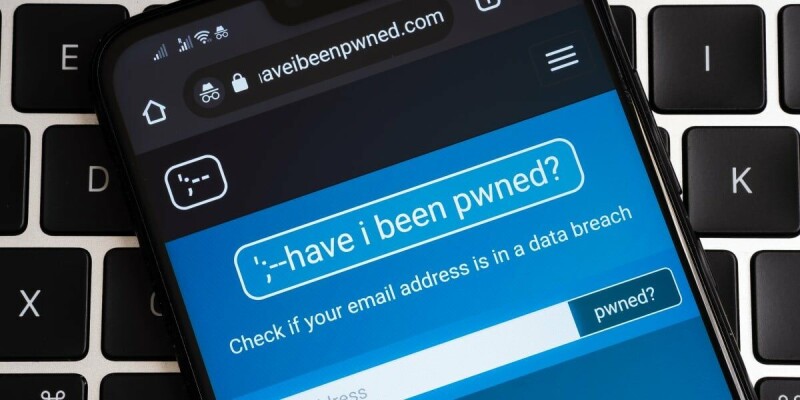
Troy Hunt, the founder of data breach reporting site Have I Been Pwned (HIBP), has revealed how organizations respond when he informs them they’ve leaked data – if they respond at all. Hunt gave Anthropic’s Claude access to an email inbox containing over eight years of his email correspondence and then asked the AI to write a post summarising them, a method he said “was the best way to highlight the behaviors I keep seeing across many breaches and subsequent disclosure efforts.” Writing in person, Hunt described those behaviors as “standoffish behavior, deliberate delays, heavy involvement from lawyers, and a constant theme: prioritizing corporate interests over those of their customers.” Once Claude takes over writing duties, it opens with the observation that Hunt sent his standard notification email to 73 organizations between March 2018 and November 2026 and also used website contact forms. Claude/Hunt focuses on the breach notifications that don’t go well, for example when first contact “often goes nowhere” because “many organisations have no obvious way to report a security incident.” Some organizations Hunt contacted logged his notifications as customer support requests. “In one case, Troy received three automated surveys asking him to rate the support he'd received,” Claude wrote, before observing “A message that an organization’s customer data is being traded among criminals ended up in the same queue as a question about a late delivery.” Once someone at victim organization gets the message, a common response is to say they can find no evidence of the breach. Others try to play down the incident, saying it was only a website defacement or that Hunt is re-reporting a previous breach the victim has already disclosed. If an organization accepts Hunt is probably onto something, it typically says it needs to investigate the matter. Claude’s take on Hunt’s mails suggests he responds by pointing out that this is an irresponsible approach, because while the investigation takes place, “people whose data has been taken don't know they need to change a password or watch for phishing.” Next, victims send in the lawyers who ask if their employer or client is legally required to reveal the breach. Hunt typically replies by saying it is up to the victim to decide if the incident meets the threshold that triggers mandatory disclosure requirements under local laws, but that he intends to notify HIBP users regardless. Victims don’t like hearing that and respond in three ways: Calling to discuss disclosure, rather than committing to it; Asking to see the wording HIBP will use in its disclosure, a request that sees Hunt refer the victim to the HIBP site for examples of the thousand-plus breach reports already on the site; Arguing that disclosure, not the breach, is the real harm. Hunt/Claude suggests that each argument victims use to avoid disclosure “sounds reasonable on its own,” but argues “Together, they mean the people most affected by the breach are the last to hear about it.” The post also reports on some better interactions, such as a small booking platform that was initially skeptical about Hunt’s report, then admitted he was right and acted swiftly to inform customers. A European travel app hardened its systems, rotated its keys, and published a disclosure. “Troy held off loading the data so he could link to their statement, and thanked them for their transparency,” according to the Claude-generated text. The bot’s analysis also offers examples of when breach notifications go well. “Someone with authority over security answered quickly,” Claude concluded. “They treated Troy's data as help rather than as a threat. They told their customers what they knew, even when they didn't know everything yet, and updated the details later. None of them needed lawyers to manage the conversation.” Hunt appears to have asked Claude to offer its opinion of his email trove. “I don't think the main obstacle to disclosure is technical, or even legal,” the post states. “It's about incentives. For the organization, every day without a public statement is a day without bad headlines.” Hunt also said he won’t make a habit of having AI write his content, but said Claude “absolutely nails it!” Unlike many of the orgs Hunt contacted. ®
The attorneys general of Oregon and Virginia are suing several of Elon Musk’s companies, alleging they implemented weak safeguards against sexualized imagery of real people, including children.
Meta employees have reported alarming privacy violations involving Muse, including unauthorized actions. An investigation also found the AI agent accessed private messages.

 Login