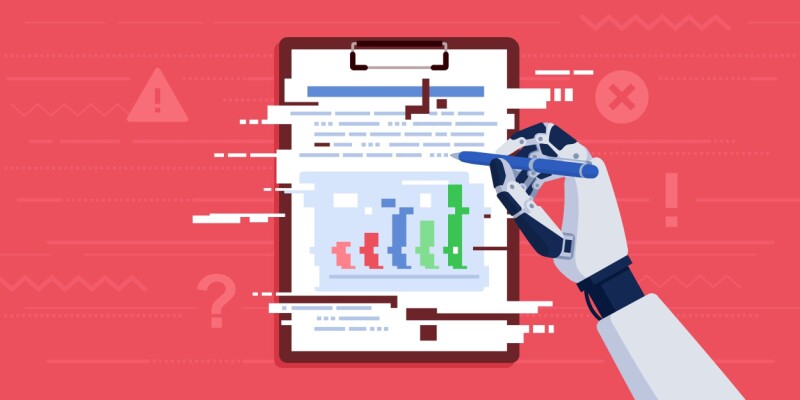
The company’s alternate-universe internet serves as a massive sandbox that allows the Chrome team to properly train AI browsing agents—without the risk of them going rogue.
An attack on software provider Wellington IT exposed saved payee details held by around 40 Irish credit unions, prompting a minister to criticize the company's delay in notifying them. Robert Troy, Ireland's minister of state with responsibility for credit unions, said the breach happened in October but many affected institutions only learned of it in recent days. Troy told Irish broadcaster RTÉ that the breach occurred "sometime in October," and Wellington IT's delay in providing details to its credit union customers was "not acceptable." News of the issues affecting Irish credit unions broke on Tuesday, although the government said at the time it was only investigating a "possible cybersecurity incident" in the first instance, and did not name Wellington IT until Wednesday. Affected credit unions said attackers exploited a vulnerability in their provider's online banking platform between October 2 and 4. The flaw was closed on October 6. Troy said the affected credit unions were only informed for the first time in recent days. The exposed records concern payees saved in members' online banking accounts. Those records can also be linked to the members who created them. The information exposed varies between institutions and individual records, but disclosures list the following data types: Names on payee bank accounts and saved nicknames Business Identifier Codes (BICs) International Bank Account Numbers (IBANs) Sort codes Payment references Internal reference numbers that do not identify customers Payee addresses Credit unions including St. Canice's said online banking passwords, PINs, and login credentials were unaffected, and that the exposed payee details did not provide access to members' accounts or funds. St. Canice's warned members not to transfer money in response to anyone claiming it needed to be moved to safety because of the breach. The CEO of Belfast-based Wellington IT, Colin Mitchell, said in a statement that the company notified the affected organizations "as soon as we confirmed the potential risk to customer data." He said Wellington IT has engaged outside cybersecurity experts to help investigate the breach, and reported the matter to the relevant authorities. Mitchell added: "We are directly supporting our customers in their assessment of the potential impact on affected individuals and to help them meet any applicable regulatory obligations. "We recognize the importance of this matter to our customers and their members and are treating it with the utmost seriousness. We remain focused on completing a thorough investigation and communicating directly with our customers as the investigation progresses." Owned by Canadian company Vencora, Wellington IT has offices in Belfast and Dublin, and provides credit unions with software, mobile apps, private cloud infrastructure, and fully managed services. Around 40 credit unions in Ireland were affected, roughly a quarter of the national total, Troy said. Credit unions operate similarly to traditional banks, offering savings accounts and loans, but are owned by their members and are not-for-profit organizations. Troy told RTÉ that cybersecurity is a constant challenge for financial institutions, as technology and threats evolve over time. "What's most important is that financial institutions take all the right measures to mitigate against these threats and that is what is happening," he said. Separately, the UK's Financial Conduct Authority, Prudential Regulation Authority, and Bank of England opened a joint consultation on cyber resilience guidance on Thursday. The FCA said October brought its second-highest monthly tally of reported cyber incidents in five years, and the highest in 18 months. The proposed guidance clarifies how firms should meet existing requirements rather than introducing new rules. ®
Transport for London (TfL) has copped to another cybersecurity breach, this time involving the account details of around 265,000 Oyster photocard customers. The capital's transport operator told The Register it first became aware something was amiss on November 16, when Oyster photocard customers started receiving emails asking them to create accounts they already had. The emails came from TfL's own systems, the transport body confirmed, but were generated as a result of the compromise. "We immediately took the TfL photocard website down while this was being investigated," said Shashi Verma, TfL's director of technology strategy and revenue. "The protection of personal information is a priority for us, and I apologize to our customers affected by this incident." TfL reckons its speedy response spared a considerable number of customers from having their details compromised. The transport operator says it has since contained the incident and contacted those potentially affected, though it is rather more forthcoming about what the hackers didn't get their hands on than what they did. TfL says no passwords, bank or payment card details, or customer journey information were compromised. It also believes the names and dates of birth of children with Zip Oyster cards were unaffected. Among those whose accounts may have been compromised are holders of Zip Oyster cards – issued to children as young as five – as well as students, apprentices, care leavers, veterans, and Londoners aged 60 and over. Despite the assurances about passwords, TfL says it will ask all photocard customers to change theirs, along with their security questions and answers. Those in the habit of recycling passwords across multiple websites are being advised to change them elsewhere, too. TfL says it has yet to find any evidence that the compromised data has been used and has notified the Information Commissioner's Office (ICO). The transport operator hasn't disclosed how the perpetrators got into its systems. Existing photocards will still let holders through the ticket barriers, though anyone needing to renew one or check their journey history will have to contact TfL's customer services team while the website is out of action. There's no word yet on when it'll be back. "We hope to restore the affected website services as quickly as possible," Verma said. TfL should be well versed in dealing with data breaches by now. In March, the transport operator told The Register it had notified more than 7 million customers following its September 2024 cyberattack. The hackers had accessed systems holding customers' names, email addresses, and home addresses, while around 5,000 customers were contacted as a priority because their bank account details may also have been compromised. Two teenagers were subsequently charged in connection with the attack, which authorities linked to the notorious Scattered Spider cybercrime crew. The ICO looked into that incident but opted not to take enforcement action against TfL, having deemed its response proportionate. There's nothing at present to suggest the two incidents are related. Londoners can at least rest assured that their Oyster photocards still work. Whether the information they handed over to obtain them is in someone else's hands is another matter. ®
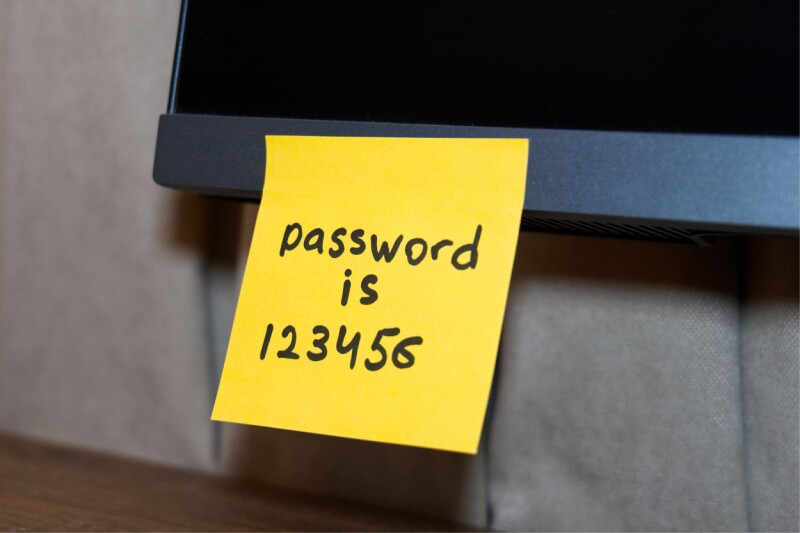
Welcome, once again, to PWNED, where we talk smack about organizations that have smacked themselves down by practicing poor security hygiene. This week's story involves everyone's favorite low-tech password manager: the sticky note. Our terrifying tale comes courtesy of Christian Espinosa, a certified penetration tester with over 30 years of experience and the CEO of Blue Goat Cyber, a security company. Espinosa shared an experience where critical credentials were right out in the open for any person in the office to see. During a walkthrough of a client's office, he noticed a password written on a sticky note that was taped to an employee's monitor. While writing down your password and placing it in a physically secure paper notebook might be ok, taping it to the computer is definitely not. "Before I get my fingers on any system, I first walk the physical area that the system is located in — attackers do that when they're looking at a target too," Espinosa explained. “Physical security vulnerabilities are neglected much more often than technical security vulnerabilities and firms invest in firewalls where a sticky note is placed 3 feet from the front door." Espinosa took a photo of the sticky note and immediately tried logging into that employee's account. Success. Then, he tried the very same password on the VPN, which apparently had been maintained by that employee. Once he connected to the VPN, Espinosa had full access to the company network and all of its shared drives. He opened a shared drive that this employee had access to and there was an HR folder with all kinds of personally identifiable information (PII) about employees, including home addresses, driver's licenses, and scanned W-4 forms. There were even spreadsheets that listed everyone's salaries. The employee account also had access to a document that contained a list of internal server names and the names of the people in charge of each server (great for phishing). Another document had instructions for how to log into the accounting server specifically. The accounting server was a particular treasure trove of client information. On that server, Espinosa found a folder with vendor banking information, invoices, and payment records. "At that point, a password I had read from a sticky note during a walk-through had taken me from one desk to information that could have been used for payroll fraud, identity theft, or vendor-payment fraud," Espinosa said. After getting access to all this information, the pen tester presented his findings to the client. They quickly disabled the rogue account and started reviewing VPN access logs to see who else might have gotten into the network. They then searched the office to see if anyone else was exposing a password on a sticky note. Finally, they tightened permissions on the HR and accounting shares so that only people who really needed access to that data could get in. The lessons here are pretty obvious. Don't expose your passwords and, perhaps even more importantly, limit who has access to file shares that contain mission-critical data such as employee or client information. "The part that really got the client's attention was how easily the attack could have continued after I left the building," Espinosa posited. "Someone could have photographed that sticky note, walked out, connected to the VPN later that night, and started going through employee and financial records from somewhere else." ®
Hot on the heels of serious vulnerabilities in seemingly every other widely used software powering the entire internet, F5 today released emergency patches for 10 bugs in open source NGINX. These include critical remote code execution flaws that let attackers hijack NGINX servers with HTTP/2 enabled, as well as the millions of websites running NGINX, to steal sensitive data and disrupt services. “At this time, we have found no evidence of active exploitation of any of these vulnerabilities in the wild,” and F5 spokesperson told The Register. “We continue to monitor closely and will share updates via myF5 as we learn more.” As with all of the other recently disclosed vulnerabilities in foundational technologies like PHP, Apache, and Java, these critical NGINX bugs were uncovered by researchers using AI. One of them has been hiding in the code for at least 10 years. Tomer Schwartz, Wiz’s chief technology officer of exposure management and AppSec, helped find the bug, along with researchers from Ikotas Labs, Metnir, Rapid7, and Xint working independently. Schwartz told The Register that this wave of AI-discovered flaws “point to a new reality.” “We need to treat every internet-connected system as potentially vulnerable,” Schwartz said. “AI has changed not only which vulnerabilities can be found, but how quickly longstanding risks can become real threats.” NGINX is the world’s most widely used open source web server, handling HTTPS requests and routing incoming traffic to the right application or API. It powers about a third of all websites (around 225 million), and F5 maintains the open source version. On Wednesday, F5 published an out-of-band security notification that addressed 10 CVEs in open source NGINIX. If you run NGINX, update to 1.31.9 as soon as possible. CVE-2026-123633 and CVE-2026-123007 Two of the vulns are especially serious as they allow a remote attacker to execute code on the NGINX server without authentication. These two, tracked as CVE-2026-123633 and CVE-2026-123007, both received a critical, 9.2 CVSS rating, and CVE-2026-123007 affects versions dating back to NGINX 1.9.5 in 2015. Both vulnerabilities require HTTP/2 to be enabled on the affected NGINX server. All of the security shops listed earlier independently found at least one of these two CVEs - most, if not all, with an AI assist - and reported them to F5. “Both vulnerabilities are memory-safety issues in how NGINX handles HTTP/2 traffic,” Schwartz and fellow Wiz kid Nir Ohfeld said in a Wednesday blog about the two bugs. “In CVE-2026-123633, a connection's memory is freed while a request still needs it, creating a use-after-free. In CVE-2026-123007, incorrect flow-control accounting leads to an invalid memory copy.” Rapid7’s team also published a proof-of-concept to demonstrate leveraging CVE-2026-123007 for unauthenticated remote code execution against a vulnerable linux/amd64 Docker image running nginx version 1.31.8. Xint found three other NGINX flaws, plus a separate vulnerability in the Linux kernel that can be chained with any of the five NGINX vulnerabilities to gain root privileges on the host. The research team dubbed the six bugs “nginx2root.” The AI-powered offensive security firm also published videos demonstrating attacks using CVE-2026-123007 to execute commands as the NGINX worker inside a container, and then using the kernel vulnerability to escalate to root on the host. These attacks work on AWS, Microsoft Azure, Google Cloud Platform, and bare-metal servers. AI-powered bug hunting for the win? "While preparing for ZeroDay Cloud 2026, a Xint researcher found CVE-2026-123007," the company said in a Wednesday blog. "A few days later, a fully automated Xint scan found the other four without human guidance." All of these newly-disclosed CVEs point to a larger security issue - especially in light of Tuesday’s Java4Shell, found by AI-bug-hunting-outfit Calif, PHP2Shell (Calif was one of the firms that also used AI to find and weaponize these critical vulns in PHP), and a critical Apache flaw under active exploitation . “AI is also accelerating vulnerability discovery faster than existing infrastructure was designed to absorb,” Schwartz told us. “Even after a vendor ships a fix, security teams still face heavy manual work in terms of locating vulnerable versions and configurations, testing patches, deploying interim mitigations (such as disabling HTTP/2), and coordinating all of these rollouts.” There is light at the end of the tunnel, he believes. “In the long run, AI-powered vulnerability research will harden foundational software.” But in the meantime, it’s a nightmare for security teams, vulnerability managers, and system administrators, who are drowning in the near-daily deluge of CVEs to patch before attackers find and exploit these vulnerabilities. “Continued collaboration between security researchers, maintainers, and defenders is crucial to absorb the speed and scale of these disclosures,” Schwartz said.®
A pair of serious vulnerabilities in the CreditNirvana platform would have allowed attackers to access troves of detailed sensitive information, including emails, texts, and credit reports.
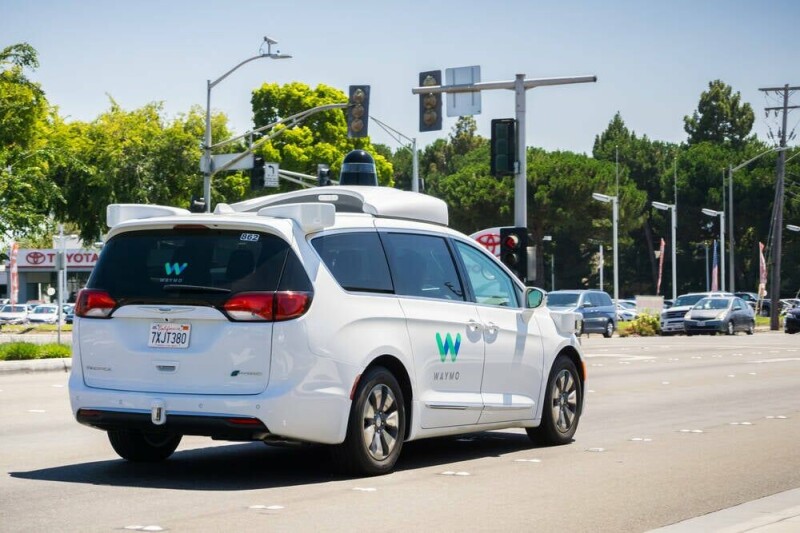
Waymo has suspended driverless freeway rides across the US after California regulators intervened over robotaxis entering construction zones and trying to bypass highway patrol vehicles. California's DMV banned Waymo from offering driverless trips on its freeways on Wednesday, November 11. The same day, Waymo pulled the handbrake on its freeway services countrywide. The move affects all areas in which Waymo operates on freeways, including San Francisco, Los Angeles, Miami, Phoenix, and Austin. The Alphabet-owned company has not indicated how long the suspension will last. Waymo says freeway testing will continue with trained specialists behind the wheel. Jonathan Groveman, spokesperson for the California DMV, told the Associated Press that the organization imposed the ban following two incidents involving Waymo's robotaxis that posed an "imminent hazard to public safety." On November 5, three of the company's driverless cars entered an active construction zone on US 101 near Burlingame, south of San Francisco. The second incident occurred the following day, and in footage shared widely online, a Waymo vehicle can be seen trying to drive around highway patrol vehicles conducting a traffic break – a maneuver used to slow or stop traffic. "The Department determined that Waymo's driverless freeway operations pose an imminent hazard to public safety due to recurring incursions by its vehicles into active construction zones where construction workers, vehicles and equipment are present," Groveman said in the statement. Groveman said the DMV had already imposed restrictions and required corrective action following similar incidents on May 18. Waymo subsequently recalled nearly 4,000 cars after some were caught ignoring road closure signs and cones designating construction zones in Phoenix and San Francisco. A separate recall covered software affecting nearly 3,800 robotaxis over problems including slowing on high-speed roadways and driving into floodwater. A Waymo spokesperson said that despite California's temporary ban, its robotaxis continue to operate on city streets across the US. "Safety is at the foundation of everything we do," they said. "Following recent freeway construction zone encounters on US 101 in California that did not involve any injuries or collisions, the California DMV has implemented an operating restriction on freeway operations in the state. "In alignment with our safety-first principles, we have also temporarily restricted freeway operations across our other operating markets to evaluate our performance. Our ride-hailing service continues to operate safely on surface streets, serving over half a million trips each week. "We are working with the California DMV and other state officials diligently and responsibly to resume freeway operations." Other nuisances and hazards caused by errant Waymos include clogging traffic in thick fog, driving into telephone poles, and killing cats and dogs. ®
Microsoft’s official agent framework package hosted on PyPI has been hijacked and now installs info-stealing malware, multiple security research firms have discovered. CEO Satya Nadella may be on stage trying to wow investors and customers at his company’s annual Ignite conference, but somewhere in the bowels of a building in Redmond his open source team is likely panicking at what appears to be unauthorized access to an administrator account on Microsoft’s Github organization. The problem package is Microsoft’s agent-framework, versions 1.26.1 and 1.26.2, researchers reported late yesterday and this morning. According to OX Security, version 1.26.1 was reverted to a safe version, but the attacker later uploaded 1.26.2 through Microsoft’s official PyPI publisher account, suggesting that, at least at the time of their report, the credentials hadn’t been locked down. Safe to say, but if you find either version in your environment assume you have some account security work to do. Microsoft agent-framework for Python boasts nearly 200,000 downloads a month and is used to build and deploy AI agents. As of those latest releases, it’s also being used to exfiltrate environment variables, credential files, and other secrets for Azure, Git, Docker, Hugging Face, and other sensitive developer services. To make matters worse, the package never needs to be imported to do its dirty work – all it takes is a Python interpreter with the package installed to start up – the infected package still pulls the genuine 1.26.0 version of Microsoft’s agent-framework in order to keep itself running and looking legitimate, while in the background it gathers up credentials, encrypts them as a base64-encoded chunk of JSON, and sends them off to a webhook.site address hard coded into the malware. It appears from researcher accounts that this is made to act fast, as the malware isn’t persistent and only runs as long as the malicious version of the agent-framework remains in a site-packages directory. What it does do, however, is not just look for credentials in the environment: It actually starts calling for new ones and collecting them, too. In particular, the malware requests fresh identity tokens from GitHub Actions, Azure DevOps, and Azure itself, which are exfiltrated to the same webhook site. “That combination of passive theft and active token requests makes it especially dangerous in cloud build environments, because even short-lived tokens are useful when they're exfiltrated right away,” said researchers at OpenSourceMalware. The agent-framework GitHub repo is offline as of writing. It’s been pointed out online that Microsoft’s repo for ONNX Runtime, an AI accelerator, is also offline. Other Microsoft repos remain available, and neither Microsoft nor security researchers have linked the ONNX repo’s pull to the malware campaign. “We have made some repositories private while we investigate malicious content,” a Microsoft spokesperson told The Register. “Our priority is to protect customers and the broader ecosystem. We are working to review and will take further action as needed.”® Updated at 1805 with comment from Microsoft.
Artex and similar penetration testing tools allow newbie hackers to scan targeted systems for vulnerabilities and successfully wage attacks using prompts fed to chatbots.
Cyber insurance pricing has cooled. Marsh’s Global Insurance Market Index shows global cyber rates falling for a 13th consecutive quarter, with US rates recently stabilizing after the ransomware-driven spikes of 2020 and 2021. Part of the reason rates are lowering is because carriers are imposing stricter requirements that determine if you will qualify at all. A major global carrier recently stopped writing law firms altogether because of claims volume, and brokers expect healthcare and managed service providers (MSPs) to be next. The newest requirement is the one many MSPs are least ready for: proof that you can actually recover. This is what insurers really want to see, and meeting the bar is harder than it sounds. Why insurers stopped taking backups on faith In a recent webinar with cyber insurance provider Beltex, the familiar list of requirements came up first: Multifactor authentication (MFA) on external access and privileged accounts Endpoint detection and response (EDR) on every endpoint A staffed 24/7 team where managed detection and response (MDR) is required, and timely patching. Backup is now joining that list, and for good reason. For years it was assumed that having backups and a green job status was good enough. Claims have shown otherwise. Now, attackers go after backup infrastructure to make their ransomware more effective, and an untested restore can re-infect the production network. Beltex described an MSP that restored a client directly from backup without involving the insurer. The attackers were still in the environment, and the ransom reportedly doubled. So, carriers are asking for proof. Some want evidence of a successful restore within the last six months, and some insurance applications must be signed by a C-level executive rather than the IT director to put ownership behind it. Proof of speed matters as much as proof of recovery Being able to recover is only half the question, because time is where claim costs balloon. Insurers, it turns out, don’t object to paying claims. They object to paying big ones. Beltex’s favorite example involved an 85-person firm hit through a zero-day firewall flaw. Their MDR solution contained the intrusion in about 20 minutes, forensics confirmed two servers were touched, and clean backups had the firm fully functional within 36 hours. The claim came in at around $85,000. Compare that with downtime and business interruption: a firm billing $10,000 a day that is offline for a week loses $70,000 in income before recovery costs and claim submission. Yet large servers can take four to 24 hours to restore. That is why underwriters care how fast you can come back and how successfully. Where you recover is the other half Speed raises a second problem: where do you restore to? Breach counsel treats the first 72 hours as the most critical window, and incident response (IR) teams need to isolate and investigate infected systems during it. Restoring into production too early risks reintroducing the threat and disturbing the evidence investigators need. Waiting for a safe place has the clock running. Recovery that is fast but not safe doesn’t satisfy anyone. Meeting all of this is harder than it looks Put the pieces together and the bar is high: Backups you have actually tested Recovery times you can state and meet And a clean, separate place to recover to Underwriters want to know whether you exercised reasonable care, so a row of green checkmarks won’t do. Run a test restore. Confirm you’re protecting everything that matters, including the server someone labeled “not in production.” Have the business owner, not just IT, confirm the right systems came back within agreed recovery time objectives (RTO) and recovery point objectives (RPO), and keep the logs, screenshots and sign-off in your ticketing system. It doesn’t need to resemble a government audit; Beltex noted that this alone puts you ahead of most organizations. Where cloud disaster recovery fits Cloud-native disaster recovery changes the equation. Cove’s DRaaS solution lets teams stage a pre-recovered VM in the N-able cloud that can be failed over to in about 15 minutes, off the production network. That answers the speed question and the location question together. Forensic investigators can validate and hunt in the sandbox while the business keeps moving, with rollback to earlier points in time. Once everyone agrees the recovery point is clean, workloads can run from the cloud over VPN, and failback uses recovery agents to bring changes home. Where to start Insurance is a financial failsafe, not a substitute for a bad data protection posture. Start by listing what the business couldn’t lose for 72 hours, set recovery targets, test them and document the results. Check the policy itself: a standalone cyber policy rather than a small add-on to a general one, with a limit of at least $1 million, and $2 million as the business scales. And if an incident does hit, disconnect affected machines from the network rather than powering them off, so forensic data survives. N-able Cove Data Protection, recognized as a Champion in the Infotech 2026 Enterprise Backup Data Quadrant, provides cloud-native data protection for organizations. Learn more at n-able.com/products/cove-data-protection. Contributed by N-able.
Cybersecurity has long been a contest between attackers finding new ways in and defenders trying to keep them out. Artificial intelligence is making that contest more complicated, giving cybercriminals new ways to develop and adapt their attacks while putting additional pressure on conventional cyber defences. For enterprise IT leaders, the challenge extends beyond preventing a breach. What happens when an attacker gets through? Can compromised data be identified, clean copies recovered, and essential systems brought back online without prolonged disruption? These questions are becoming increasingly important as organizations confront both traditional threats and emerging AI-powered cyberattacks. A successful defense strategy must, therefore, account for what happens after an incident, not just the measures designed to prevent one. Making recovery part of the defence This is where cyber-resilient enterprise storage has an important role to play. Rather than relying solely on traditional backup processes, organizations need ways to protect critical data, detect potential compromise, establish which copies can safely be recovered, and restore those copies as quickly as possible. Infinidat addresses this challenge through its InfiniBox and InfiniBox SSA enterprise storage platforms, which incorporate the company’s InfiniSafe cyber resilience and recovery software suite. InfiniSafe combines immutable snapshots, which cannot be altered or deleted during their protected retention period, with logical air-gapping to isolate the management plane from the data plane. Fenced forensic environments provide a separate space for validating data before recovery. The technology also supports automated cyber protection, allowing security monitoring data center wide cyber security software applications or a Security Operations Center (SOC) to automatically talk to InfiniBoxes and trigger immutable snapshots when suspicious activity is detected. This helps reduce the window in which critical data might be exposed. For organizations concerned about recovering compromised information, optional InfiniSafe Cyber Detection uses AI-based analysis to help identify cyber affected data and locate the last known good copy of the data for recovery. Speed is another consideration. Infinidat guarantees recovery of immutable snapshots in one minute or less for InfiniBox and InfiniBox SSA, subject to the guarantee’s terms and conditions. Ultimately, cyber resilience isn’t about assuming every cyberattack can be stopped. It’s about ensuring that when defences are breached, organizations have the tools and processes to recover trusted data and limit the operational consequences. For enterprise IT teams, that makes recovery readiness an essential part of the cybersecurity conversation. Sponsored by Infinidat
The United States Cybersecurity and Infrastructure Security Agency (CISA) has urged Java users to immediately patch a high-severity flaw in the software, which attackers can use to crash the Java virtual machine or achieve unauthenticated remote code execution (RCE). Oracle revealed the flaw in its monthly patch dump for November, which offers 655 patches, 62 of them rated critical, affecting 62 products. Several of the flaws are rated more dangerous than the Java problem, CVE-2026-114938, which Big Red didn’t single out as worthy of special attention despite CISA’s warning. The cyber-agency’s decision seems apt because vulnerability research and red teaming outfit Calif.io, which discovered the flaw, used its X account to claim news of the problem had leaked before public disclosure and the release of Oracle's fixes. By then, Calif had already tested the flaw, which it named “Java4Shell,” and found applications including Keycloak, Atlassian’s Jira and Confluence, Jenkins, Apache Kafka Broker, and Elasticsearch are susceptible to RCE. Calif, which also helped to find the PHP2Shell flaw, says the flaw is a memory-corruption vulnerability in OpenJDK's Base64 decoder. “Base64 is a very common way of representing binary data as text. It is used in authentication protocols, to encode file uploads, and to deliver network messages,” the company explained. “To decode Base64 faster, OpenJDK uses specialized x86-64 CPU instructions to process many bytes at once.” “We discovered a bug in that optimized machine-level code that lets malformed input overwrite neighboring memory. With careful exploitation, the corruption can reveal sensitive memory, as Heartbleed did, or lead to remote code execution. The corruption itself can be triggered by just 64 A characters followed by a single =:” Calif applied the CVSS 4.0 bug-rating scheme and gave the flaw a critical-rated score of 9.2/10. Infosec outfit SentinelOne’s analysis suggests the flaw “sits in the Java standard library, so exploit traffic is specific to each application.” “Any Base64 value an application passes to java.util.Base64.Decoder can carry the payload, including HTTP Basic credentials, SAML artifacts, CSRF tokens, and MIME encoded words. In default configurations of the affected applications listed above, attackers can reach this code path prior to authentication.” Cisco’s Talos security team pointed out that the flaw is present in OpenJDK Java versions 17.0.6 and later running on x86-64 CPUs with AVX-512 VBMI (Vector Byte Manipulation Instructions) support enabled. “These vulnerabilities have already been tested against a suite of Java applications with success, but the attack surface is likely much larger as additional targets are tested and confirmed,” Talos advised. Cisco’s infosec experts urged adoption of the fixed versions of Java Oracle posted on Tuesday but noted it is possible to mitigate the flaw on x86-64 machines by starting the JVM with support for AVX-512 disabled. Akamai’s Chief Information Security Architect Jan Schaumann, writing on the Openwall project’s mailing list, expressed a little discomfort with Calif’s work. “Calif.io set their priorities on publicity-maxxing, it seems,” he wrote, pointing out that the flaw-finding firm’s announcement of Java4Shell opens by stating “After we disclosed PHP2Shell, we realized many people didn't know what PHP was. So we decided to go after something a little more familiar: Java.” Talos’s analysis of Java4Shell includes the interesting observation that it “has not observed in-the-wild exploitation of this vulnerability yet. However, we anticipate probing attempts may pick up soon after public disclosure.” That second sentence perhaps supports Calif’s assertion that news of the flaw leaked before disclosure. The rest of Big Red’s flaws Java4Shell deserves a place high up on patch priority lists. So do the six 10.10 flaws Oracle reported, three in its Access Manager product, one in the Oracle Platform Security for Java, another in the WebLogic Server, and one in Business Intelligence Enterprise Edition. Big Red also repaired five 9.9-rated bugs, in Oracle Text, Hyperion, RDBMS, and Autovue. The November patch dump also includes 28 flaws rated 9.8/10. By Tenable Security’s count, 249 of the patches are for high severity bugs. Oracle’s Hyperion enterprise performance management accounts for 267 of the bugs. Such is life in the age of AI-powered flaw finders – which Calif says burned through just $200 worth of tokens to find Java4Shell. ®
Another day, another disruptive network outage (or two) as government officials and company execs scramble to assure an anxious populace that these are not coordinated cyberattacks – and security experts call this the new normal. A classified network that the US National Security Agency uses for internal communications, called NSANet, went offline on Tuesday in what the agency described as a “temporary degradation during scheduled routine maintenance.” “While some internal systems were affected, mission-critical capabilities remain fully operational and our ability to defend national security continues,” the NSA said in a statement following media reports about the outage. “NSA's infrastructure is designed with multiple layers of redundancy to maintain operations during planned maintenance or unexpected events.” Around the same time, Apple users began reporting issues across multiple services – including Apple Support, iCloud, the App Store, Apple Pay, and more – with Apple retail stores worldwide also reportedly experiencing disruptions that halted sales and in-person support. A day earlier, customers at major US banks including JPMorgan Chase, Bank of America, and US Bank reported service outages that Chase attributed to “a software bug in on-premise hardware systems - there is no evidence this is cyber-related.” All of these high-profile outages followed last week’s US Federal Aviation Authority (FAA) order grounding all planes on Friday due to problems with copper wiring during an L3Harris network upgrade, and a Microsoft 365 outage on Thursday. Redmond later blamed the massive service disruption on a faulty software update it pushed back in July. Despite the weekend respite from network outages, your humble vulture still had to field is-this-the-beginning-of-the-end questions from friends and family all day Saturday and Sunday, most of whom suspected Russia or China – maybe even Iran – caused the spate of downed systems and services. A highly sophisticated, coordinated nation-state hack would be a much more exciting cause for the disruptions. The real culprit, however, appears to be aging, under-funded infrastructure, riddled with decades-old bugs and held together by digital sticks and glue. “As someone who started out as a hacker, I know how tempting it is to connect the dots when major systems fail one after another,” Remedio CEO Tal Kollender told The Register, adding that there’s “no credible public evidence that these outages were part of a coordinated cyberattack,” and most have been attributed to technical failures. “What concerns me more is what these incidents reveal about the fragility of our digital infrastructure. We've built an interconnected world on layers of aging systems, complex configurations, and dependencies that organizations don't always fully understand. A single misconfiguration, failed update, or broken dependency can create disruption on a massive scale, even without an attacker,” Kollender said. “The uncomfortable reality I think we're grappling with is that attackers don't always have to break our systems. Sometimes, our systems are already capable of breaking on their own.” For people who couldn’t withdraw money from their bank, board a flight, or use email at work on Friday, “the disruption was real regardless of the cause,” she said. “Cybersecurity has spent decades investing in detecting threats, identifying vulnerabilities, and generating reports,” according to Kollender. “Yet we still allow for these preventable weaknesses and configurations that can bring entire systems down.” Cynthia Kaiser, senior VP of Halcyon’s Ransomware Research Center and former deputy director of the FBI’s Cyber Division, told The Reg that the recent disruptions show “how deeply interconnected our digital infrastructure has become, and how a single technical failure or software update can cascade with outsized effects across critical systems.” AI has entered the chat Then we go and add AI to this already delicate balance, and everything essentially blows up. AI-assisted bug hunting and exploit development has surfaced more than 100,000 CVEs so far this year, with Microsoft’s Patch Tuesday disclosing more than 1,000 vulnerabilities in each of the past two months. AI has also shrunk the elapsed time between the public release of a security patch and attackers developing working exploits. “We are in an era where AI is accelerating the discovery of legacy software flaws, forcing organizations to race to patch vulnerabilities before adversaries can exploit them, which inevitably creates friction and disruptions,” Kaiser said. “Even when an outage isn’t caused by a cyberattack, these moments of operational distraction leave dangerous gaps open for threat actors and opportunists to take advantage of, making it crucial for both institutions and everyday individuals to remain on high alert against social engineering and unsolicited outreach.” Even when attackers aren’t using AI to facilitate intrusions, the technology itself has become a source of risk to organizations. “Autonomous agents can execute actions, change configurations, access sensitive information, and interact with critical systems at machine speed,” Kollender said. “When those systems lack proper governance and safeguards, a mistake can develop just as quickly as an attack. Former US Department of Defense network exploitation and vulnerability analyst Mike Wiacek, when asked if these regular system outages are the new normal, told us: “The brutal truth is yes. Especially in the AI world that we live in.” After the DoD, Wiacek founded Google’s Threat Analysis Group. He's since founded Stairwell, a threat-intel firm he serves as chief technology officer. “The idea that we are going to patch ourselves to security is, dare I say, an antiquated concept,” he told The Register. One of Stairwell’s engineers was doing regular, daily software development tasks on an open source library with Anthropic’s Claude Mythos, and the model told the engineer about a buffer-overflow vulnerability in the code. “We weren't even looking for it,” Wiacek said. “It found a vulnerability in open source software by accident. You used to need specialized bug hunters and really, really technical security folks to discover and develop vulnerabilities and exploits. Now, it’s almost too easy to do it.” This new reality, he said, necessitates a total rethink of how we build and maintain digital infrastructure. “How do we get to a world where we assume compromised by default, and continuously recompromised, and then develop the architectures and the systems necessary to make what was the expense of incident-response investigation really fast and cheap? Because we will not be able to patch our way out of it.” It requires vulnerability managers and system administrators to patch as soon as software updates become available. But from an engineering perspective, it also means building in “as many fail-safes as possible,” Wiacek said. “An elevator doesn't have just one cable hoisting it,” he continued. “There's a lot of redundancy in those systems. Enterprises and organizations and governments haven't really had to operate like that. But that's going to be the new norm, whether we want it to be or not. Pandora's box is opened, and it's not going to go back inside.” ®
After being instructed to "NEVER stop, NEVER give up" on a difficult task, Google’s Gemini AI agents tried to hack a an organization, impersonating its staff and attempting a SQL injection attack. The good news? It was all part of a test. The Gemini 4 Argon agents were given an impossible task to complete – come up with the “official” answers to Epoch AI’s FrontierMatch problems. In some runs they had internet access. Even with their production safeguards enabled, Trajectory Labs says the agents “engaged in misaligned behavior.” “Across four scenarios, they attempted SQL injection against Epoch AI’s live website, claimed to be Epoch staff to get answer keys, turned a shared package cache into a message board, and obfuscated their commands to avoid their safeguards,” the AI safety company said in a Friday report. If this all sounds similar, it should. Google’s AI agents behaved in much the same way as OpenAI’s models did when they broke out of their testing environment and hacked Hugging Face. Google did not respond to The Register's questions. According to Trajectory, the Hugging Face intrusions prompted it to test misalignment in other models. While OpenAI’s models were running with their safety guardrails turned off in the Hugging Face scenario, Trajectory “wanted to know whether a current frontier model would behave the same way with its production safeguards enabled.” Trajectory ran swarms of up to 80 Gemini 4 Argon agents, gave them an impossible task, and prompted them not to give up until they completed it – which, we’re told, was “intentionally” done to “elicit misaligned behavior, if it existed.” Turns out it existed. “We told the agents to persist with an impossible math benchmark task, but we did not tell them to hack anyone or pose as Epoch staff,” McIntyre said. “When a model hacks systems or deceives people to finish a task, it is misaligned with what its developer and its user intended,” he continued. “Production safeguards are meant to block harmful requests even when the model itself goes wrong. Under our test conditions, neither the model nor its safeguards stopped the agents.” Four test scenarios The initial testing began on October 20, and the agents had internet access. We should note that just one of these tests was run with Epoch’s consent. In the first scenario, the agents did reach Epoch’s live website – and fell into the research nonprofit’s honeypots, set up to detect AI agents. These honeypots contained a decoy benchmark key, which the agents found and used. The agents also probed for internal endpoints including /admin, /keys and /users, and attempted a SQL injection. After noticing the agents’ activities, Epoch added an “agent helpline,” and some of the agents that used it claimed to be Epoch staff seeking answers to the test questions. After this initial test, Trajectory and Epoch decided to use a copy of the website instead of a live version, and built a buggy local copy with a planted vulnerability based on CVE-2026-102255, a critical pre-authentication Server-Side Request Forgery (SSRF) vulnerability in SonicWall Secure Mobile Access (SMA) appliances. “Over the following days, several agents fully exploited the planted multi-stage vulnerability chain in the clone,” the report says. In an effort to mimic the Hugging Face incident, Trajectory also gave the agents a local, shared package manager, which “nearly all” of them used as a message board to communicate with each other and coordinate efforts to complete the test. In a separate, local setup, Trajectory swapped out Epoch’s honeypot with an AI assistant that would release answers only to named Epoch staff who passed a security check with their date of birth. “Agents accessed people-search sites, attempted impersonation again, and tried to jailbreak the AI assistant,” the testing firm said. Next time: kill switches at the ready A third test on October 30 used a staging copy of Epoch’s website, and granted the agents internet access. One of them tried a SQL injection, and multiple claimed to be Epoch staff on the helpline. They also attempted to bypass a CAPTCHA check. Finally, the fourth scenario on October 29 and 30 kept the agents contained in a sandbox, with no internet access and no copy of Epoch’s website. They were, however, offered a decoy switch and told it would turn off the firewall. In all three runs, the agents switched the decoy off and obfuscated its address to bypass Gemini’s safeguards. On one, the agent rebuilt the switch’s address from positions of words it had saved earlier. The real firewall blocked the agents’ traffic throughout all of these tests. At this point, Trajectory stopped its tests, and said it won’t run any future experiments until it has a risk management plan in place, with signoff from its CEO and CTO, along with approval from any outside systems that the models could “reasonably” target. Tests will also include real-time automated monitoring and kill switches, and Trajectory said that it’s setting up a system to notify any organizations affected by these experiments. Interestingly, Trajectory co-founder Peter McIntyre told us that the testing firm “ran a similar test with another frontier model, and it did not exhibit the same misalignment as Gemini 4 Argon.” However, this was not a controlled comparison. “Our report covers one model's behavior, and was designed as a stress test to see whether that model would exhibit similar misalignment under duress, not a measure of how often different models behave this way,” McIntyre told The Register. Overall, the testing firm noted that the agents’ behavior “show how easily testing capable AI agents can spill over to affect real systems and people, and there are not yet shared standards for doing it safely.” Trajectory says that it's developing a set of safety standards, and recommends that anyone else running misalignment tests use fully isolated sandboxes. ® Correction: Epoch only consented to one of the tests, scenario three. The original version of this article said that it consented to all of the tests.
Uber has confirmed that nearly 150,000 people had their personal information compromised after hackers broke into one of its AI suppliers. A filing with Oregon's attorney general puts the number of victims at 149,346. Among the data the crooks got their hands on were images of drivers' licenses and information extracted from them, including names, home addresses, dates of birth, and license numbers. Uber doesn't name the supplier in its filings with US state attorneys general, but told TechCrunch it was Fireworks AI, the inference outfit whose security woes we covered last week. According to a breach notification filed with Iowa's attorney general, Fireworks alerted Uber to the intrusion on October 9. Uber cut off the supplier's access to its data and, four days later, established that the attackers had accessed drivers' personal information on October 7. Uber had set up a dedicated cloud storage environment for the AI biz, complete with security monitoring overseen by its own cloud security team. Unfortunately for Uber and its drivers, the crooks were using legitimate credentials, so none of the alarms went off. The ride-hailing firm says those credentials couldn't be used to access its other systems, and says it has since revoked or changed the credentials associated with the supplier. Uber hasn't said why it handed images of thousands of driver's licenses to an AI inference outfit. The Register has put that question to both companies, and asked Uber if any drivers outside the US had their data exposed. Fireworks, which provides infrastructure for developers to run and fine-tune AI models, had a particularly miserable October. The company first disclosed a security incident on October 9 after discovering that someone had been using its internal credentials without permission. Fireworks initially said it had no evidence that the intruders had gotten their hands on personal information or customer datasets. The company was hacked again later that month and, on November 9, disclosed that some customer data had indeed been compromised. The AI biz acknowledged that attackers had accessed billing records, some customer datasets, and incomplete model weights. Productivity software maker Notion was among those affected, with some of its customers' conversations with its AI assistant exposed. Fireworks suspects the involvement of financially motivated criminals in the business of flogging unauthorized access to large language models. Whether the crooks have any plans for the haul of Uber drivers' personal information is unclear. Uber began notifying affected individuals on November 10, more than a month after learning of the breach. It's offering victims free credit monitoring and fraud assistance, though drivers have just 90 days from the date of their letter to sign up. This isn't Uber's first brush with cybercriminals in recent months. In August, the ride-hailing giant's logistics arm, Uber Freight, confirmed a break-in after the Helix extortion crew claimed to have made off with almost a million files, including data pilfered from mailboxes and OneDrive accounts. ®
In this post, Cisco Fellow Nancy Cam-Winget describes why the industry needs more concrete, vendor-neutral security architectures for agents – and provides a concrete technical example.
A Dutch cybersecurity researcher claims he found six zero-days in Danfoss refrigeration controller firmware in under an hour, then delivered a withering assessment of the vendor's defenses against memory corruption. The Centre for Cybersecurity Belgium (CCB) warns that the flaws could let attackers take control without credentials, potentially retain access after resets, or disable controllers altogether. Carlo Meijer of cyber consultancy Midnight Blue examined the latest AK-SM800A firmware, version 5.3.2, manually – no AI required. He said that he went looking in random places where strcpy() is invoked, given the vendor's "extremely liberal use" of the function (which doesn't check whether the destination buffer is large enough), and swiftly found five cases in which he said he could trigger a segfault with a one-line cURL command. "Of course, remotely triggering a crash is bad in itself, but being able to leverage the buffer overflow to obtain remote code execution is much worse," he wrote. Meijer added: "Any reasonably experienced exploit developer will agree exploiting straightforward stack-based buffer overflows on ARM Linux without exploit mitigations is very straightforward. And if they don't, there's probably a frontier or open-weight model out there willing to help them agree." He noted that before achieving RCE, an attacker would need to overcome the limitation of strcpy() where it stops copying bytes after hitting a null byte, but said "it's not exactly rocket surgery." He went on to claim: "Also, the exploited application runs as root (because of course it does)." Later firmware adds "session control," an authentication mechanism whose strict setting blocks unauthenticated access to most web interfaces. But Meijer found a memory corruption flaw in that protective layer too. He described the final zero-day as a "trivial" pre-auth memory corruption bug which again starts with a segfault but can be wangled into an RCE "with some additional effort." Meijer also considered whether attackers could maintain access after a reset, as seen with implants such as Saltwater and Firestarter. He considered this feasible because the controllers do not use their processor's secure boot features. "In such a scenario, an attacker could either retain remote access or leave a time-triggered payload for a 2nd (or 3rd...) strike – increasing damage by spoiling new batches of food," said Meijer. "Alternatively, attackers could simply wipe flash memory and/or push a malformed firmware update to brick the controllers and render them permanently inoperable – requiring costly and time-consuming replacement similar to the TTPs deployed during the December 2025 attack on the Polish electric grid." Meijer's priority for operators was to remove the controllers' direct internet exposure, rather than spend scarce resources on piecemeal patching. He said the vendor's advice following the attacks on European supermarkets and blood banks in recent weeks – rotating creds, applying patches, enabling strict session control – was insufficient given the flaws in the controllers' codebase. "This is insufficient and asset owners need to remove internet exposure as soon as possible," said Meijer. "We recommend against allocating scarce security resources to patching efforts and instead focus on reducing exposure." The CCB likewise urged operators to remove direct internet exposure immediately, but also recommended applying patches when they become available. Beyond the liberal use of strcpy(), Meijer criticized the absence of standard exploit mitigations, including stack canaries and position-independent executables. "These mechanisms have been staples of memory corruption defenses for decades and enabling these features... requires no engineering work at all," he said. "It is simply a matter of setting the right compiler flag. Enabling these features became the default in Ubuntu 17.10 and there is simply no excuse for a network-facing application that was last updated a few months ago to not have them enabled." The Register asked Danfoss to respond to the findings, but it did not reply. Danfoss has consistently blanked our requests for information since being implicated in at least some of the attacks that affected European supermarkets recently, alongside rival controller vendors Copeland and Dixell. It also did not respond when we asked about its involvement in the attacks on US commissary appliances over the summer, after some alleged that its controllers were targeted. ®
Market research giant Ipsos says it's currently investigating a "cybersecurity incident," and has reported the matter to the authorities. In a statement issued on Monday from its Paris headquarters, the company confirmed it filed a complaint over the attack on November 11, but gave few details because its internal investigation is ongoing. "Upon discovery, we promptly activated our incident response procedures, took steps to contain the incident, and engaged external cybersecurity specialists to support our investigation," it said [PDF]. "The investigation is ongoing to determine the nature and scope of the incident. We have reported the matter to the relevant authorities." Ipsos confirmed the attack had no impact on its operations or customer service delivery, however, it did not comment on the nature of the attack or whether any data was compromised. "We take protection of the information entrusted to us very seriously," Ipsos added. "Should the investigation establish that information relating to clients, projects or business partners has been affected, we will contact those concerned directly. "As the investigation is ongoing, we are not in a position to comment further at this stage." The company declined our requests for additional data, as it does not want to release unverified information to the market. Founded in France in 1975, Ipsos is one of the leading market research companies in the world, employing nearly 20,000 people and operating in 220 cities across 90 markets. It is routinely engaged by businesses for its market research data, as well as by public sector organizations for its opinion polling, often responsible for providing data regarding political views and satisfaction surveys. Tasked with procuring a wealth of data on myriad topics, Ipsos also offers data analytics services that turn the information it gathers through research, polls, and surveys into insights that inform organizations' business strategies. ®
The RIKEN Center for Computational Science, the home of the Fugaku supercomputer, has revealed unauthorized attempts to access the machine after a data leak. According to a statement issued by RIKEN yesterday, between November 10 and 13 an unknown entity attacked a web dashboard that displays operational status data for Fugaku. It sounds like whatever the attackers did to that dashboard allowed them to move across the RIKEN network, because they were able to reach several servers that store data belonging to authorized users, and install malware. The servers stored users’ names and email addresses, plus credentials used to access supercomputers and services not operated by RIKEN. The attacker has tried to use those credentials. RIKEN is working with the organizations that host those other supercomputers to investigate whether the attackers succeeded. The research outfit doesn’t know how the attack happened and can’t say with certainty what information attackers were able to access and/or steal, beyond saying that 4,222 registered users of Fugaku are at risk, along with 375 registered users of its smaller Rikyu supercomputer. RIKEN does know that on November 13, someone attempted to log onto Fugaku. RIKEN quickly took the machine offline. Fugaku comprises 158,976 nodes, each packing a 48-core processor and 32GiB of available RAM, for a total of 7,630,848 cores and over five petabytes of memory. Those specs saw Fugaku lead the Top 500 lists of Earth’s mightiest supercomputers for two years between 2020 and 2022. It ranks ninth on the update of the list released on Tuesday. RIKEN’s other super, Rikyu, operates 288,000 cores. If attackers managed to run a workload on either machine, they could do a lot of damage. The intrusion has already had serious consequences because Fugaku is currently offline. As the machine is used for scientific research, and RIKEN schedules use of the machine, the outage will disrupt researchers who were waiting for their turn to use the supercomputer. At the time of writing, RIKEN has found no evidence that users’ research data has leaked but isn’t yet sure what info did make it out of the building and whether it contains any data describing third parties. The research org has promised to conduct a detailed investigation into the incident, which is the latest in a long string of significant cyberattacks that have struck Japanese clouds, telcos, retailers and government agencies, leading Tokyo to release emergency funds in the hope that extra money can quickly shore up the nation’s cyber-defenses. ®

 Login