An old-fashioned smash-and-grab job on a photographer’s vehicle threatens the security of pupils’ data as a UK secondary school says it faces a potential data protection pickle. Jon Curtis-Brignell, headteacher at Priory School in Lewes, said in an email this week that a company the school hired to take pupils’ annual school photos has alerted it to a data theft case after a vehicle was broken into. “Pret-a-Portrait has informed us that, overnight between 6 and 7 October, one of its vehicles was broken into and a camera bag containing SD memory cards was stolen,” Curtis-Brignell wrote. “Some of these cards may have contained photographs taken at Priory School, together with images of the QR code cards used for school photographs, which show pupils’ names and class names.” The headteacher said that the same equipment used to take the photos at Priory School was also used for three additional photography jobs after Pret-a-Portrait visited the school on October 1. Pret-a-Portrait, which has offices in the UK, Qatar, and the UAE, told the school that it believes “most, if not all” of the files containing pupils’ data will have been overwritten as a result, but it cannot be certain. Curtis-Brignell said that the potentially affected information included photographs, pupils’ names, and their “class information associated with the photography process.” Other types of data, such as addresses, contact details, financial information, medical information, and safeguarding records stored in the school’s own systems remain untouched. Nick Kerr, owner of Pret-a-Portrait, told The Register that no physical, printed photos were stored in the vehicle at the time of the break-in, and that it was not possible to determine the potential scope of the data protection violation. “As the email from Priory School explains, it is likely to be somewhere between a small subset of their pictures and none of them,” said Kerr. On a positive note, he said that there is nothing to suggest the files have been improperly accessed. “Our analysis reveals that no improper access to pictures from this job occurred in between the time of the theft and the pictures being taken offline.” Per the headteacher’s email, Pret-a-Portrait confirmed that it took a number of steps to mitigate the potential damage, including taking all school photos offline, changing the IDs used to access them, and changing its procedures so that all SD cards are wiped at the end of each commission. The company also “reviewed and strengthened its procedures following the incident,” and reported the matter to both the police and the ICO. “I appreciate that receiving an email of this nature may understandably cause concern,” Curtis-Brignell added. “We have worked closely with our Data Protection Officer and Pret-a-Portrait to understand what happened, establish the potential risk and ensure that appropriate action has been taken. “We wanted to be open with families about what has happened, while also reassuring you that there is currently no evidence that the information has been accessed or misused and that a number of steps have now been taken to prevent access to the affected photographs and reduce the risk of a similar incident occurring again.” ®
Change is constant, but The Register likes to keep some things the same – such as using Friday mornings to bring you a new installment of On Call, the reader-contributed column that shares your tech support stories. This week, meet a reader we'll Regomize as "Daniel" who told us that in 2020 he was hired to replace a two-person IT department at a UK school. "The IT manager had left amid some 'accounting irregularities,' mainly involving high-end gaming PCs being purchased using school funds but never making it onto the school site," Daniel told On Call. "His deputy stepped up just in time to have to deal with a ransomware attack that took the school's entire network offline for three months." The school eventually hired external contractors to rebuild the network and restore from the only available backup, which was months old. The deputy IT manager then quit without serving their notice period. Daniel took the vacant job and in his first week the school principal asked him to audit the network and deliver a report explaining how to get things up to scratch. "I found a few quick wins, including the password policy which at the time was set to six letters. Just that, no complexity, no expiry," Daniel told On Call. "And users hadn't been forced to change them since before the ransomware attack. Or, indeed, ever." The principal approved Daniel's proposed password policy and a requirement for everyone to change their password immediately. "I was not prepared for the backlash this would create," Daniel wrote. The school's data manager proudly said she had used the same password since 1998 and justified keeping it on the grounds that everyone on staff knew it. "She said, 'If I'm not in, they can log in as me and run the reports.'" It gets worse: the password was "letmein" and the data manager had written it on a piece of paper and taped it to her desk. As Daniel rolled out the new password policy, more complaints rolled in. The school principal eventually told Daniel to direct all enquiries regarding the password changes to him. "Within two days, he came into my office, sighed, put his head in his hands, and ordered me to revert the change and to remove the requirement for everyone to change their password," Daniel wrote. "I resisted, I really did," he wrote. "But it was his school. I got him to put the request in writing." The principal left three months later, and a nonprofit took over the school. Daniel's new bosses agreed with his stance and reinstated his password policy. The data manager again fought the change. "After a meeting with me and the nonprofit's IT director, she decided to take early retirement, so she wouldn't have to learn the new systems – or change her beloved password." Have management or users rejected your advice? Click here to tell us what happened, and your story could appear in a future edition of On Call. ®
Security researchers warned about exploitable vulnerabilities in refrigeration controllers months - and in one case, more than a year - before cyberattacks disrupted hundreds of French supermarkets. Late Sunday night, unknown criminals hacked thousands of controllers, cranking the heat as high as 122°F (50°C), spoiling food and sparking fires across nearly 700 of the country’s supermarkets. France's national cybersecurity agency ANSSI on Monday warned of widespread compromises involving Danfoss refrigeration controllers, and a day later added affected systems from Copeland and its Dixell brand. The compromised devices were accessible over the internet, with many reportedly no longer receiving software or security updates and others running outdated firmware. Danfoss did not immediately respond to The Register’s request for comment. Copeland emailed us the following statement: “We acknowledge the vulnerability identified in a discontinued, end-of-life generation of controllers. Protecting our customers’ operations has always been a top priority. We are currently working with impacted customers to mitigate the risk. We will continue to support customers in strengthening cybersecurity through supported products, current software and industry-recommended practices.” Operational technology (OT) security firm Claroty’s Team82 sounded the alarm on these buggy devices in August, warning that hackers could “freeze the controller” and “defrost the food.” At the time, the researchers published details of dozens of vulnerabilities, including authentication bypass and operating-system command execution flaws, affecting Danfoss AK-SM 800A and Copeland XWEB controllers. Even earlier, the US Cybersecurity and Infrastructure Security Agency (CISA) published advisories about security flaws in both brands’ controllers. In February, CISA said nearly two dozen CVEs in Copeland XWEB and XWEB Pro could be exploited to “allow an attacker to bypass authentication, cause a denial-of-service condition, cause memory corruption, and execute arbitrary code.” In a May 2025 advisory, updated in August 2025, CISA published a similar warning about buggy Danfoss AK-SM 8xxA series devices. “What makes this incident particularly striking is the timeline,” Tiago Henriques, chief underwriting officer at cyber insurance provider Coalition, told The Register. He noted that the French supermarket hacks happened two months after Team82 published its research, and Danfoss released a firmware update (R4.3.1) to mitigate the flaws. 'Critical exposure' continues “Yet, despite the availability of these patches, Coalition’s scanning identified critical exposure to these threats continuing well into the fall,” Henriques said. Between September 7 and October 6, Coalition’s sensors identified 1,506 unique IP addresses still publicly exposing a Danfoss StoreView web-accessible admin panel, and 820 of these - 54 percent - were associated with French networks. “Our scans counted at least 2,624 refrigeration controllers from the named brands with a login page open to the internet: 1,506 Danfoss StoreView and 1,119 XWEB,” he added, noting that one IP runs both types of controllers. To be clear: this doesn’t mean all of these controllers were vulnerable, but rather they were exposed to the open internet. Even after the cyberattacks - as of Thursday - 618 Danfoss devices remain connected to the internet, according to the insurance provider’s count. Of these, 206 are connected to French networks, while 50 are in the US, and two in the UK. “An unpatched device featuring a web-accessible admin panel can act as a major entry point” for digital attackers, Henriques said. “The takeaway is clear: digital risk extends far beyond workstations and email servers.” Criminals are targeting OT and other industrial devices that are connected to the internet, too. “Identifying these exposed access points before they are targeted can directly contribute to preserving business continuity,” Henriques said. OT cyber leaders call for CISA directive In America, a group of OT cybersecurity and technology providers doubled down on their call for stronger food and agriculture protections in the US. The French cyberattacks “are another stark reminder of the importance of implementing baseline cybersecurity measures to enhance operational technology cybersecurity,” the Operational Technology Cybersecurity Coalition (OTCC) said in a Wednesday statement. Earlier this month, the group, whose members include Claroty, Forescout, Honeywell, and Schneider Electric, called on CISA to issue a Binding Operational Directive to improve OT cybersecurity within the federal government. The OTCC repeated this demand on Wednesday and suggested that the US Department of Agriculture could encourage organizations in the food and agriculture sector to implement cybersecurity best practices. “While no incidents have been reported in the United States, malicious actors are undoubtedly viewing this incident as a potential attack vector to perform here,” the statement said. “We cannot wait for that to happen.”®
The online advertising industry has found a new way to make itself even more unpopular, with one adtech outfit accused of helping spyware vendors infect people's phones without them even clicking an ad. Researchers at Citizen Lab say they've uncovered the first publicly confirmed case of a zero-click mercenary spyware attack being delivered through targeted online ads, with devices at Al Jazeera among those infected. The technique, dubbed "AdFection," turns advertising networks into a spyware delivery system. Simply opening a website or app can be enough to trigger the attack, with no suspicious links or downloads involved. Israeli adtech firm Discover-Tech is allegedly behind the operation, according to researchers at Citizen Lab, which says the company acts as a middleman between the online advertising industry and multiple spyware and hacking vendors. "We present technical evidence that the Israel-based company Discover-Tech, while purporting to be a legitimate advertising company, appears to be a front for large-scale ad espionage abuse," the researchers wrote. “In fact, it appears that serving as this bridge is Discover-Tech’s primary purpose." Discover-Tech’s Controlium platform exploits the real-time bidding system that decides which ads appear on websites and apps. Every time someone loads a page, advertisers compete for available ad space and, in the process, receive information about the user's device and location. Discover-Tech allegedly used that data to identify specific targets and serve them malicious ads. One spyware vendor linked to the operation is Candiru, the Israeli developer now known as Integrity Labs. Citizen Lab traced attacks against at least 45 devices at Al Jazeera in 2024 and 2025 to Candiru spyware delivered through ads from Discover-Tech. Discover-Tech didn't have to sneak into the advertising system, as Google and IAB Europe had listed the company as an approved vendor since 2020, apparently unaware of what it was Citizen Lab claims it was doing with that access. Citizen Lab sifted through nearly four billion ad-bidding records and found Discover-Tech ads on more than 70,000 mobile apps and 120,000 websites between March and June 2026. Some reached networks belonging to government agencies, defense organizations, and NATO. Researchers found no evidence that those organizations were infected, but they say the ads could have been used to profile devices on those networks. The researchers said the operation also covertly directed millions of devices toward servers associated with Candiru, although those connections don't necessarily indicate spyware infections. Google has since terminated Discover-Tech's access to its advertising exchanges and removed it from its approved vendor lists. IAB Europe followed suit, while Beeswax, Vungle and Eskimi also took action. Discover-Tech and Candiru did not respond to Citizen Lab's requests for comment, nor ours. The researchers argue that the findings expose serious failings in an advertising industry that allowed a company with links to commercial surveillance operators to operate inside its supposedly vetted ecosystem for years. “Discover-Tech’s mass abuse, privacy invasion, and facilitation for mercenary spyware attacks illustrates structural flaws with the online advertising system, which failed to detect or prevent the abuse documented in this report,” Citizen Lab said. For years, the worst thing about targeted advertising was that it knew far too much about you. Turns out some advertisers were interested in much more than your shopping habits. ®
Bank of America recruited an additional 1,000 contractors to help patch all the vulnerabilities discovered by Anthropic’s Mythos model, the CEO said on Wednesday. Brian Moynihan, chairman and CEO at BoA, said during the company’s Q3 earnings call that it spent “a couple of hundred million plus” in remediation costs related to Mythos, and the anti-money laundering (AML) orders issued this week. These costs are expected to decline over time, though, with the contractors in place to help ease the initial burden of patching a large number of flaws, an issue that shouldn’t be so pronounced in the longer term. He went on to tell CNBC that the bank brought in outside help after concerns grew over how it would quickly tackle all the work associated with Mythos’ discoveries. The same concerns were shared globally, in part due to how Anthropic marketed Mythos as an all-powerful model that threatened the status quo of cybersecurity. While it ultimately turned out to be highly effective and capable of identifying complex vulnerabilities quicker than humans, leading to the massive influx of patches, some early adopters say it was no smarter than elite researchers. Mozilla CTO Bobby Holley said in April: "So far we've found no category or complexity of vulnerability that humans can find that this model can't," after Mythos found 271 flaws in Firefox 150. "We also haven't seen any bugs that couldn't have been found by an elite human researcher." The 1,000 contractors brought in by the bank in its Q2 added to its existing 3,000 technical staff. The contractors remain at the bank for now, although their assistance won’t be needed in the longer term. Moynihan told financial analysts on the bank’s earnings call that BoA has made its tech engineering workforce around 10 percent more efficient, and that each of the circa 130 AI-related projects it has running is expected to achieve a 2x or 3x return on investment over time. In 2026 alone, the CEO expects AI projects to deliver between $250 million and $300 million in benefits – a sum he expects to shoot up to $700 million by the end of 2027. He didn't detail how. The bank has also reduced around 3,000 roles, including a 5 percent decrease in the number of managers on the payroll, although it didn't specify how much of a role AI played. Moynihan didn’t break down how much of the “couple of hundred million plus” in remediation costs were devoted to AI or Mythos, compared to costs associated with cleaning up its AML issues, both of which the CEO lumped together. BoA’s share price slid more than 8 percent on Wednesday morning after it reported a 17 percent drop in profits owing to the $1.21 billion settlement it agreed to with the Treasury’s Financial Crimes Enforcement Network (FinCEN). The FinCEN order relates to BoA’s failure to police national security risks, including Chinese money laundering, and a failure to report over $5 billion in suspicious activity. FinCEN’s order was issued concurrently with a $750 million penalty from the Office of the Comptroller of the Currency, related to Bank Secrecy Act and AML compliance deficiencies. BoA also agreed an $11.6 million settlement with the Office of Foreign Assets Control for sanctions violations, including those related to Iran, Russia, narcotics, and global terrorism. ®
X says it has nuked more than 13,000 accounts involved in three suspected foreign influence operations targeting US political debate. In a post on Wednesday evening, the platform linked the operations to Iran, Russia, and China. It said the networks used inauthentic accounts to post and amplify political content targeting candidates and public figures across the political spectrum. The announcement comes ahead of the US midterm elections on November 3. "People come to X to talk about what's happening in the world, including the upcoming 2026 US midterms," the platform said. "Free speech is the bedrock of a functioning democracy, and we are proud that X is the global town square where these debates happen. Our job is to keep that conversation authentic, open, and safe." X did not publicly explain the evidence behind its attribution. Separately, it highlighted its Civic Integrity policy, which covers misleading information about how, when, and where to vote, as well as content intended to discourage participation. Reports submitted under "Civic Integrity" are routed into requests for Community Notes. X says it uses the crowdsourced feature alongside platform moderation and may label policy-breaking posts in critical cases. Community Notes has faced scrutiny. When the European Commission launched formal proceedings against X under the Digital Services Act in 2023, it raised questions about the feature's effectiveness for validating a post's accuracy. X's reliance on crowdsourced context follows layoffs and senior departures from its moderation teams after Musk acquired Twitter. Foreign influence campaigns aren't confined to US elections. MI5 chief Sir Ken McCallum said this week that Russia had attempted to interfere in the 2016 Brexit referendum, but cautioned against treating that as evidence it changed the result. ®
Hackers who broke into the UK's Legal Aid Agency last year stole records dating back nearly five decades, the government has admitted, revealing the breach was far more extensive than previously thought. The Legal Aid Agency said on Wednesday that around 250,000 records stolen in the April 2025 attack date from before 2007, including one going back to 1978. That's much further back than the agency previously estimated – it initially said the stolen data covered legal aid applications, claims, and payments from 2007. Most of the newly identified records date from the 1990s and 2000s, with only a “fractionally small number” originating before 1990. Still, the discovery raises an awkward question about just how much historical personal information was sitting in government systems when the attackers came knocking. That wasn't the only surprise in the stolen data, as the Ministry of Justice (MoJ) has also discovered that hackers accessed information from HM Prison and Probation Service (HMPPS), including names, dates of birth, nationalities, and case reference numbers for offenders supervised by probation services between 2010 and 2017. The government says the probation records concern a relatively small number of offenders, with more than 99 percent of the affected data relating to people under supervision in 2016 and 2017. It stressed that none of the stolen probation information relates to victims of crime. The latest revelations come almost 18 months after the Legal Aid Agency disclosed that criminals had accessed and downloaded a significant amount of sensitive personal information. The agency first detected the intrusion on April 23, 2025, but officials didn't establish the scale of the compromise until May 16. The government subsequently took the LAA's online services offline, leaving lawyers struggling to access the systems they needed to submit claims and manage cases. The disruption dragged on for months, with the agency's troubled return to service in December leaving legal aid providers battling delays and ongoing technical problems. Further forensic work has now revealed that the data theft goes back much further than officials originally believed. The compromised information varies by individual but could include names, addresses, dates of birth, National Insurance numbers, financial details, and information about legal proceedings. Some records also contain details of criminal charges, pleas, convictions, and sentences. Among the older material are records relating to legal aid benefit assessments dating from 1978 to 2012, and payments made under the Very High Cost Cases scheme between 1981 and 2004. The government cautioned that the presence of historical records doesn’t mean that everyone who applied for legal aid before 2007 had their information stolen, nor does the 250,000 figure represent a confirmed number of affected individuals. Explaining why it has taken so long to pin down the extent of the theft, the MoJ said the attackers stole information spread across several complex systems, much of it unstructured, fragmented, or incomplete. "Because of our increased capability to identify data, we have developed a more complete understanding of the information compromised," the agency said. The government says it has no indication that the stolen information has been published or shared, although that offers little certainty to anyone whose personal details may now be in criminal hands. Since the attack, the MoJ says it has tightened authentication and access controls, improved security monitoring, addressed vulnerabilities and begun retiring or isolating higher-risk technology. Work to modernize its legacy systems is also underway. The question of why records stretching back to the 1970s remained accessible in the first place is one the latest update does not answer. ®
Welcome, once again, to PWNED, the weekly column where we gawk at organizations that have made serious security mistakes. Normally, we’re talking about businesses or maybe the odd school that messes up, but today we’re writing about a serious IT screwup in the world’s most powerful military. Have a story about someone leaving a gaping hole in their network? Share it with us at pwned@sitpub.com. Anonymity is available upon request. Today’s tale comes from Justin Henkel, the CISO of IT monitoring and service company SolarWinds. Henkel previously worked in IT security for the Air Force and one day in the early 2000s saw a practice that just wouldn’t fly today. Before USB drives became popular, burning CDs with mission data was the modus operandi, and those discs were put in both unclassified and classified systems. “They would write a CD, and then they would take that CD and then put it in a classified system and do the remainder of the mission planning,” Henkel told us. “Then they would take that disc and then put it in the airplane.” Inside the airplane, the data on the CD would help the pilot navigate and contain information about threats they might encounter. Later, when thumb drives became a thing, pilots used them instead of discs. “They didn't really think about the overall impact of classified versus unclassified systems,” Henkel said of the pilots. “Using the same device for both, they didn’t understand that you could read and write onto a USB drive with malware. [They were] not really understanding the overall threat picture.” According to Henkel, Air Force personnel would buy their flash drives from local vendors rather than sourcing them from official military contractors. If they were in Afghanistan, those drives could literally come from a store in Kabul. And it wasn’t exactly the equivalent of Best Buy. “It was more difficult to bring a US-based computer into the nation than it was just to buy local,” he said. “So they were just going out into the local market in Kabul or whatever city that they were out [in]. And I used to do this: go out, make relationships with the local vendors. ‘Hey I need 100 USB sticks.’” Unfortunately, enemies of the US noticed and soon started selling infected USB drives to local vendors in the Middle East. Henkel knew that using a sneakernet with classified systems was a recipe for disaster. It’s just that no one would listen to him. “It was just a shock,” he told us. “I was a young 22-year-old guy, very junior in the overall rank system, trying to tell colonels and majors that what they’re doing is a violation.” In 2008, the US Department of Defense was infected by malware after somebody attached an infected USB flash drive to a laptop with access to US Central Command. The worm, dubbed Agent.BTZ, could collect information from infected computers and communicate with remote servers. A 2016 report from the FBI and DHS attributed the malware to one or more Russian groups. It took the Pentagon 14 months to scrub it from its systems. It took this attack for the Pentagon to wise up in 2008 and ban the use of USB drives, instead forcing data transfers to go through more secure systems. Eventually, in 2010, the drives were allowed again under certain circumstances. ®
Researchers at The Citizen Lab have for the first time released technical evidence of sophisticated mercenary spyware being distributed via online advertising.
The Information Commissioner's Office (ICO) has reprimanded London's Metropolitan Police Service (MPS) and issued an enforcement notice after officers used a retail crime platform without the force's approval or required data protection checks. Between March 2023 and September 2024, MPS officers registered around 500 free accounts on Auror, a platform retailers use to record crimes such as shoplifting. The force had not formally procured the service or completed the required data protection checks. Retailers such as supermarkets encouraged officers to use Auror and directed them to the platform to access CCTV footage. Auror Europe, registered in England and Wales, is a subsidiary of New Zealand-based Auror. The platform allows retailers to share incident reports, images, and CCTV footage. Retailers pay for access through a browser or mobile app, while police partners use it free of charge. The force had not completed a data protection impact assessment (DPIA) or established data-sharing agreements with Auror Europe, the ICO says. Between August and September 2024, two separate internal security reports were filed regarding officers' use of Auror. The first related to officers uploading the names of suspects they recognized from CCTV footage, and the second pertained to officers collecting CCTV footage from the platform despite no checks being made on it. Access to Auror was blocked as of September 26, 2024. The MPS data protection officer (DPO) informed the ICO of the force's use of Auror in December 2024 during discussion about a separate matter. The watchdog launched a formal probe in April 2025. The ICO found that officers unlawfully uploaded personal data relating to 179 people, including three children, to Auror. For 128, this consisted of names alone; for 49, names and dates of birth; and for two, names, dates of birth, and home addresses. The ICO said the MPS failed to ensure adequate oversight was implemented when deciding what third-party platforms officers were allowed to use – failures that persist today. It claimed the MPS is overly reliant on soft controls to prevent officers from using unapproved software, such as policy reminders and staff training, which often go unnoticed, rather than technical blocks. The ICO also said the force had failed to test whether its web controls worked: officers used Auror for more than 18 months without triggering an alert. The regulator described a repeat failure, pointing to officers' use of Clearview AI in 2021 without proper oversight. The ICO considers the failures ongoing because the force has not demonstrated that its safeguards can prevent similar incidents. The enforcement action compels the MPS to strengthen its safeguards against improper use of third-party tools and provide the ICO with periodic progress updates. David Doodson, head of investigations at the ICO, said: "This action should send a message across the policing sector, and beyond: If you are using new technology to process people's information you must do so lawfully, transparently and with appropriate governance from the outset. "Where organisations fail to protect people's information, we will take action. Our role is not only to hold organisations to account, but to drive improvements and promote the standards people have a right to expect." The MPS told The Register that following the implementation of stricter controls and a pilot scheme, officers in 14 London boroughs are once again using Auror. "Following formal approval and a pilot, the platform is now used in 14 London boroughs," a Met spokesperson said. "It helps officers identify shoplifters more quickly, enabling retailers to directly share evidence and CCTV at the point of reporting and has quadrupled positive outcomes for shoplifting." In an August 2026 announcement, the MPS said the tech, which it did not identify by name, would be rolled out beyond the 14 boroughs and was already deployed in stores such as Tesco, Boots, Greggs, and M&S. It said that instances of shoplifting reported via the platform result in a positive outcome in 29.4 percent of cases. Of the ICO's findings, the spokesperson said: "We accept the ICO's findings that our data protection arrangements at the time were insufficient in relation to individual officers using the Auror platform. "While officers were using the platform in good faith to identify and arrest shoplifters, we recognise that we had not completed the relevant security and data protection work for the platform to be used. "As soon as we became aware of this issue, we immediately suspended access to the platform and carried out a full review. We have subsequently completed the necessary legal, security, commercial and data protection checks before approving the platform for use." This reprimand and enforcement action follow a separate rebuke from the ICO in August, concerning two sensitive cases. In one, a Met officer sent unredacted legal documents to the subject of a stalking protection order, exposing the victim's new home address and contact details. The other saw an officer commit the cardinal CC-not-BCC sin, exposing the email addresses of 18 people linked to Parliament who were targeted in a honeytrap sting. ®
Cisco “strongly” implored customers to patch yet another critical, make-me-root vulnerability in its Secure Email Gateway (SEG), one that has already been exploited in zero-day attacks. A Cisco spokesperson told The Register that the critical vuln, which received a 9.8 out of 10 CVSS rating, affects “a limited number of customers.” The bug, now tracked as CVE‑2026‑76519, allows remote, unauthenticated attackers to write files and execute commands with root privileges on the appliance’s operating system - simply by sending a malicious email. In separate Wednesday advisories, both the networking vendor and the US government warned that attackers were exploiting the latest SEG vulnerability before Cisco issued a fix. The US Cybersecurity and Infrastructure Security Agency (CISA) added the vulnerability to its Known Exploited Vulnerabilities catalog, and set a Saturday deadline for federal agencies to fix the issue. “We are aware of active exploitation of this vulnerability,” the spokesperson said, but declined to answer our questions about how many appliances had been compromised, and what attackers were doing with this access after exploiting the bug. “We strongly urge customers to upgrade to a fixed software release and follow additional recommendations and hardening guidance in our advisory,” the spokesperson said. The flaw exists in SEG’s Advanced Malware Protection (AMP) feature, and it’s due to improper handling of email attachments. An attacker could exploit the bug by sending an email with a malicious attachment, and a successful exploit would allow them to write files and execute commands as root on the compromised appliance. This vulnerability affects both physical and virtual SEG appliances running a vulnerable release of Cisco AsyncOS Software if both of the following conditions are met: The File Reputation service, which is part of Cisco AMP, is enabled and assigned to a mail policy. The Content Scanner Tools version is earlier than 25.3.0.5525. Cisco's Wednesday advisory includes steps organizations can take to determine whether File Reputation is enabled and which Content Scanner Tools version is installed - so give that a read if you are unsure. Upgrading to a fixed Cisco AsyncOS Software release will patch the security hole, and there are no workarounds. The vendor recommends any customers who are running Cisco AsyncOS Software releases earlier than v 16.5 migrate to 16.5.0-780. In its alert, Cisco said it became aware of active exploitation in October. This is the second such zero-day in SEG in as many months. In mid-September, Cisco warned customers that criminals were exploiting a similar bug in SEG, tracked as CVE-2026-76461, that also turns a malicious email into root access. In January, attackers exploited another critical AsyncOS flaw, CVE-2025-20393, to break into Cisco SEG appliances and install persistence mechanisms. That bug eventually scored a perfect 10.®
Researchers at security startup Xbow used OpenAI's GPT-5.6 Sol model to help chain three zero-day vulnerabilities in Chrome into an exploit capable of executing code outside the browser's sandbox on Windows machines. Xbow estimates that this could affect about one billion users worldwide. Google fixed all three, and paid the Xbow team a $250,000 bounty, its top reward for a Chrome full-chain exploit. The payout also proves a nice return on investment for the human bug hunters - Brendan Dolan-Gavitt, Andres Luksenberg, Baul Lee, and Willem Pinckaers - who spent just six days during the Black Hat and DEF CON conferences and about $40,000 in token charges to discover the vulnerabilities and build the attack chain. “The number on the check is impressive, but the time it took our team, with the help of a publicly available AI model, to break in is even more impressive,” Xbow CEO and founder Oege de Moor said on Tuesday. “A three letter intelligence-agency veteran told me that his team used to spend six months trying to identify this kind of vulnerability and get total access. We did it in six days.” In a separate technical writeup about the attack chain, Dolan-Gavitt detailed the work done by humans and AI agents. Agents, using OpenAI's GPT-5.6-Sol model, searched source code, tested the team’s hypotheses, and developed proofs of concept and exploit stages, he said. Meanwhile, the AI pen-testing security startup’s researchers chose targets, provided context, challenged the agents’ results, and decided which attack components to chain. "We did apply a fair bit of our own human expertise and judgment," he wrote. Crossing two security boundaries in 3 steps Google’s Chrome browser uses several layers of security to protect users, and this includes sandboxes - barriers to contain compromised code and ensure that someone who hacks an individual website can’t take over the entire computer. This includes deploying the V8 sandbox to prevent any memory corruption flaws in the V8 JavaScript engine from impacting other memory. The V8 sandbox sits inside the operating-system process sandbox, and this nested design means that escaping V8's memory restrictions doesn't automatically grant native code execution. Even if an attacker achieves native code execution inside Chrome's renderer, the outer process sandbox restricts access to the rest of the machine. “The chain crossed both boundaries in three vulnerability stages,” abusing Chrome to run code on Windows machines, Dolan-Gavitt wrote. The attack combines a V8 compiler bug, an animated-WebP decoder bug, and a memory-safety bug in Crashpad. The first vulnerability is in Maglev, V8's mid-tier optimizing compiler, and it’s due to a reused, mutable boxed number during deoptimization. This gives attackers read and write access throughout V8's pointer-compression cage. The second stage, the animated-WebP bug, is a V8 sandbox escape. “But rather than attacking the sandbox itself we exploited a property that the V8 sandbox deliberately does not enforce and that Blink incorrectly assumed it could trust,” Dolan-Gavitt explained. “Finally, the exploit used an overflow in Crashpad to cross the final outer process boundary and achieve unsandboxed code execution on the host.” While Google patched all three security issues, and Chrome installs updates on its own, a fix only takes effect once the user relaunches the browser. If you use Chrome, make sure you are running version 152.0.7977.82 or later. The time and money spent to achieve a full chain Chrome exploit illustrate - yet again - that “the bar is significantly lower” for attackers armed with LLMs, Dolan-Gavitt wrote. “Defend accordingly.”®
Ivanti customers are being urged to update Connect Secure and check for compromise after attackers exploited a newly disclosed zero-day vulnerability. On Tuesday, Ivanti released updates for Connect Secure (ICS) to fix CVE-2026-104935, an authentication bypass flaw discovered by Volexity. Rated 8.6 on the CVSS scale, it allows remote, unauthenticated attackers to execute arbitrary commands. "We are aware of exploitation in the wild affecting a limited number of customers at the time of disclosure," the vendor said in its advisory. There are limited indicators of compromise available at present, it said, advising customers to refer to Volexity's report on the findings for more information, and to run the Ivanti Integrity Checker Tool regularly. Ivanti lists affected releases in the following branches: 25.1.1.1 and earlier 25.1.2.2 and earlier 22.8R2.4 and earlier The vendor said it previously identified "a portion of this vulnerability" and patched it in July's 25.1.3.0 update, and had been working on backporting the same fix since then, however, attackers began exploiting it before that work was complete. Volexity said the attackers behind the recent intrusions were previously unknown to its researchers, but are now tracked as UTA0576. Criminal motive rather than espionage is suspected by Volexity. Based on observed post-exploitation activity, attackers appeared to be most interested in using their newfound access for credential theft, data exfiltration, log tampering, and network reconnaissance. Notably, the attackers did not deploy any malware nor execute web shells, using only the commands available to them on the ICS appliance. "Because the operation was detected and disrupted, the threat actor's ultimate objectives could not be determined," said Volexity. "However, Volexity assesses with high confidence that UTA0576's actions signaled preparation for lateral movement and a broader compromise of the victim network." The researchers also suspect that the attackers were using large language models to support their endeavors. Volexity pointed to the attackers' repeated use of the exploit channel to run commands, rather than deploying web shells, and their use of "highly specific scripts using hardcoded credentials." Ivanti disclosed one CVE, but Volexity described an attack chain involving three vulnerabilities. Tuesday's updates address the authentication bypass and remote code execution stages. The third vulnerability, which allows privilege escalation, is separate from the flaws encompassed by CVE-2026-104935. Volexity said Ivanti is aware of the additional bug and plans to publish a fix "in the coming weeks." The disclosure of the zero-day this week makes it the third year running that Ivanti has had to deal with attackers exploiting undisclosed flaws in Connect Secure. The previous ICS zero-days were disclosed in January 2025, a year after the January 2024 vulnerabilities led to exploits affecting thousands of ICS appliances. In the interim, we've also seen suspected Chinese espionage groups exploiting bugs in Endpoint Manager Mobile (EPMM), and critical flaws in Sentry. Ivanti's run of January zero-days continued earlier this year, although those flaws affected EPMM rather than Connect Secure. ®
Cryptography rarely fails at the math - it fails at deployment. Why post-quantum migration and AI-scale risk make open-source stewardship a core control.
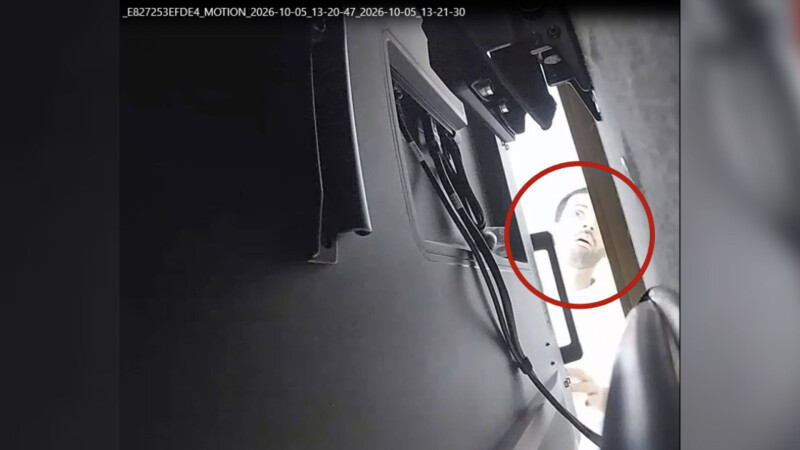
The Department of Justice has charged an OpenAI engineer with attempting to intercept oral communications after allegedly planting a recording device in an exec conference room. Investigators claim company security staff found a second device in his bag. Saudi national Abdulrahman Alfozan, 35, is described in court documents as an engineer at OpenAI who had worked there since July 2025, and has held permanent residency in the US since September 2020. He was arrested on October 9 and made his initial federal court appearance on October 13. He is accused of installing, on or around September 28, 2026, a Seeed XIAO ESP32-S3 Sense recording device via a USB port in a TV located in OpenAI's executive conference room. According to the complaint, staff discovered the device concealed in toilet paper on September 30. OpenAI said it used its models to analyze the device. According to the complaint, it may have been modified to prevent data transfer between the recorder and the TV. The contents of the bug's microSD card may also have been encrypted, as the company could not retrieve any of the data stored on the card after making a forensic image of it. CCTV footage placed him near the room on several dates, although prosecutors say Alfozan had no authority to access or participate in meetings held in the executive conference room, which is often reserved for the highest-level discussions. Officials did not state whether the device was able to capture anything of importance, but said the room typically plays host to non-public and secret technical meetings, as well as those with government representatives. OpenAI did not have CCTV covering the executive conference room at the time when the secret device was planted, but the company subsequently installed a camera. Court documents [PDF] include an image taken on October 5 from a camera situated behind the TV into which the DoJ claims the recording device was installed, allegedly showing Alfozan checking on it. Investigators examined Alfozan's devices, according to the complaint, which alleges that between around August 17 and September 16, 2026, Alfozan used a productivity agent to inquire about company building addresses, meeting rooms, room capacities and calendars, and external-partner meeting venues. The complaint also describes an AI chatbot account associated with his spouse that shared installation identifiers, logged IP usage, and user-path references with Alfozan's account. Between September 24 and 30, it submitted prompts about building and modifying an audio-recording device. The prompts allegedly included questions related to recording reliability, how to add browser access and controls, how to develop a second unit with speech-triggered recording, and more. On October 5, the day Alfozan was allegedly recorded looking behind the executive conference room TV, company representatives say he left a bag unattended in the office's printer room. Security staff inspected the bag, finding a wallet, an ID card, and a second Seeed-manufactured recording device, before Alfozan reported the bag missing, according to the DoJ. He collected the bag the following day from the company's Lost and Found, and later claimed in a written report that several items were missing, including a credit card, around $500 in cash, two AirPods, one set of headphones, sunglasses, and a power bank. Alfozan was charged with an attempt to intercept oral communications, an offense that carries a maximum sentence of five years in prison and a $250,000 fine. "According to the complaint unsealed today, Abdulrahman Alfozan allegedly concealed a covert recording device inside his employer's executive conference room to secretly capture sensitive communications about the company's super intelligence technology," said FBI director Kash Patel. "Protecting American SI innovation is essential to safeguarding our nation's economic strength and national security, and the FBI views that mission as one of our highest counterintelligence priorities." "At this time, we have no indications of this individual inappropriately accessing or exfiltrating model weights, source code, or customer data," OpenAI said in a statement. "The employee was terminated." "We take protecting our technology, data, and people seriously, and as a matter of national importance. Our security program is designed to protect against a wide range of threat actors, from insider risks to cybercriminals to nation states, and this case is an example of how AI can help address these sophisticated security threats." ®
Chatbot prompts reveal the engineer’s alleged efforts to set up a covert listening device days before one was found in a meeting room used by high-level executives.
An Anthropic AI model submitted a fabricated tip about an unsolved homicide through an online form run by the Philadelphia Police Department (PPD). The tip, filed July 18 through PhillyUnsolvedMurders[.]com by “someone who might have information about the case,” went straight into the inbox’s spam folder. Anthropic discovered it on September 28, notified the PPD on October 7, and sent representatives to the police HQ the following day. Anthropic told the police the AI submitted the tip during a test exercise that involved interacting with randomly selected websites. The PPD said its findings are so far consistent with Anthropic's account. Because the tip was flagged as spam, it never reached the department's Real-Time Crime Center. The PPD said officers vet all submissions, automated or otherwise, before forwarding them to investigators, and that this process safeguards against abuse of the tip system. It added that this does not “diminish the seriousness” of an AI submitting fabricated information. “The city of Philadelphia takes this incident very seriously,” the PPD said. “The company must strengthen its safeguards to prevent similar incidents from impacting city systems without the city’s knowledge. The two-month delay in detecting and reporting the incident to the city is unacceptable.” It added: “The department and the [Cherelle] Parker administration will continue to closely monitor this incident, and will provide more information to the public as soon as it becomes available. In addition to our investigation into this incident, the Parker administration will explore all necessary regulatory protections going forward locally along with our state and federal partners.” On October 9, Anthropic published a report on this and other AI errors. The report covered four categories of AI failures, including vulnerability exploits, access to restricted data, bypassing fetch tool limits with URL shorteners, and submitting false information via web forms. Anthropic declined to name any of the affected organizations, other than the PPD after the department went public. Some cases involved local, state, and federal US government websites, though the AI company didn't say which of the four categories they fell under. The PPD did not name the model responsible, but Anthropic said Claude Haiku 4.5 was tasked with generating and performing example tasks on randomly selected web pages, and hinted at the model not being prompted specifically enough. “Claude was instructed never to log in, create accounts, enter personal data, make purchases, or submit anything destructive, but the instructions did not rule out form submissions,” Anthropic's report stated. The fake tip read: “I may have information regarding this case. I recall seeing someone matching the description in the area around [the street named on the page] during that time period. Please contact me if this information is relevant.” Anthropic said the incident was less severe than the cyberattacks over the summer. The report said: “Claude appears to have only been producing example content for the task, rather than trying to mislead anyone to achieve a goal.” By contrast, the "dishonesty" displayed over the summer was “sustained over hours” and supported continued attacks, the Claude maker said. Anthropic said it will keep reporting these failures when it detects them, and will continue fine-tuning behavioral and alignment training. The 3,095-word report contained no apology.®
Cyberattacks on supermarket refrigeration systems reportedly pushed temperatures as high as 50°C (122°F), affecting hundreds of stores in France and forcing retailers to discard food. Major supermarkets such as Carrefour, Coopérative U, Intermarché, Monoprix, and more were hit by the attacks, which spoiled perishable food and left stores without fresh produce. The affected equipment includes cold-storage units used to hold food before it reaches supermarket shelves. The criminals behind the attack raised temperatures to unsafe levels, spoiling food and in some cases starting fires. Some affected retailers used refrigeration controllers produced by Danish company Danfoss. Authorities have not identified the entry point or confirmed exploitation of the vulnerabilities previously disclosed by Claroty and patched in August 2025, although the manufacturer said affected stores were running outdated firmware. Experts say the previously identified vulnerabilities were easily scriptable and relied on a unique but predictable authentication method. Claroty found a hidden authentication mechanism in the AK-SM 800A platform that accepted a code generated from the device's current date, bypassing the configured administrator password. Anyone who reproduced the algorithm could generate a valid daily code and gain administrative access. "It's a zero-skill thing to pull off, I wrote the bash script while having a shit," said security pro Kevin Beaumont. The research demonstrated how compromised controllers could expose refrigeration systems to physical disruption, although the vulnerabilities' role in this week's attacks remains unconfirmed. Danfoss told reporters this week that the French supermarkets affected by the attacks "were running outdated firmware" and that the company has consistently advocated for keeping systems updated. The Register asked Danfoss if it would confirm whether the previously disclosed bugs were exploited to execute the attacks, and whether the same bug was also abused in August to compromise US military commissary refrigerators, which led to food losses. CERT-FR published an alert reporting numerous compromises of Danfoss AK-SM and AK-SC controllers, which were not mentioned in Claroty's original reporting nor in Danfoss's advisories at the time. The authority advised disconnecting or restricting network access. For suspected compromises, it recommended a factory reset, security patches, credential rotation, account checks, and full reconfiguration. For those wondering why fridges even need to be reachable via the internet, the main reason is that it allows central engineering teams to troubleshoot issues remotely, according to Claroty's researchers. "Industrial control systems such as refrigeration controllers are often assumed to be on safely isolated networks. However, our research found many of these devices are directly exposed to the public internet," said Amir Preminger, CTO at Claroty. "While this convenience significantly reduces maintenance costs by allowing engineers to troubleshoot issues remotely, it also lowers the barrier to entry for attackers. "Organizations must take proactive measures to ensure that management interfaces are not insecurely connected to the internet, and ensure that access to administrative services is restricted to trusted management networks or secured through VPNs and other appropriate network segmentation controls." Intermarché owner Groupement Les Mousquetaires said around 150 of its supermarkets were affected by the attacks, while Carrefour confirmed around 80 impacted stores. Monoprix said roughly 5 percent of its 490 stores were experiencing the same issues, and Coopérative U CEO Dominique Schelcher said 80 of the company’s 2,000 stores were hit, adding that the attack on the food sector was “unacceptable.” “Targeting equipment essential to the preservation of fresh products is an attack on the French food supply chain,” he said. “It is unprecedented, extremely serious, and unacceptable. We remain fully mobilized.” However, in a separate twist, Schelcher told French radio station RTL on Tuesday that Coopérative U is not a customer of Danfoss. The Register contacted Coopérative U for more information about what caused the attacks at its stores. Shodan searches for internet-facing Danfoss controller interfaces indicated that more than 4,500 endpoints were exposed as of Monday, with more than half of those located in France. Ahold Delhaize, a major grocery retailer in the Netherlands, announced on the same day that it was experiencing a "security issue." No link to the refrigeration attacks in France has been established. The end result is similar, however, as the company's grocery brands are reporting stock issues. Several of the group's brands have taken their websites offline and posted notices about the "cybersecurity incident." Stores remain open, but affected brands have reported disruption to websites, apps, customer services, and online deliveries. The disruption hit the company's distribution systems, although these are now being restored. Updates posted to social media on Tuesday told shoppers that staff were once again able to use digital shelf labels but stock levels may vary across stores, and long-life items were likely to be more abundant than fresh fruit and vegetables. The retailer previously suffered a cyberattack in November 2024 that disrupted its US operations. ®

 Login
Login