In 2019, OpenAI decided not to publicly release a new model because its research uncovered “concerns about malicious applications of the technology.” And on Tuesday, the company announced it has built a kill switch for the models deployed in its research labs, months after some of them displayed disturbing behavior. “As our models get more powerful and the associated safety and security risks become bigger, it becomes more and more critical that we can detect potential issues, and quickly stop models in their tracks when needed,” OpenAI explains in a Tuesday post. The company named the kill switch “Control Room” and described it as “a central system to track model workloads across our research infrastructure and stop them quickly when safety or security concerns arise.” The facility can apparently stop models from producing any output 35 seconds after a decision to pull the plug – and can go faster. “The 35-second lag comes from a caching layer for inference authorization, to support the required volume of traffic. We are working to drive this number down to zero so that we can end jobs instantly,” the company promises. A rookie mistake in critical infrastructure design is to build both production and resilience tools on shared resources that could be taken offline by a single incident. OpenAI seems conscious of that risk, because it says the tool “has been built to keep working even when other systems fail, and to stop model output if Control Room itself goes down.” OpenAI hasn’t explained why it took so long to build a kill switch or why it decided now is the moment when it needs one. The Register fancies recent examples of agents exceeding their brief in worrying ways – like attacking Hugging Face, causing trouble at the Wikimedia Foundation, or going a little too deep when researching Australian healthcare data – may have influenced the timing of this development. “Control Room is already deployed across our research infrastructure, where the need is greatest,” the company’s announcement states. “Our external model-serving stack is already much more centralized by nature, with a well-developed operational capability to quickly take down model deployments if needed.” OpenAI says it plans to “strengthen and expand the system over the coming months, alongside our investments in monitoring for misaligned behavior and security breaches.” That’s a variant of Big Tech’s usual “We’re sorry and we promise to do better in future” proclamation that follows the latest SNAFU. Yet back in 2019, OpenAI pulled the pin before matters ever reached that state. ®
It’s another doozy of a Patch Tuesday, with Microsoft fixing 1,094 bugs in its products, including one that attackers exploited before Redmond released a patch. Jake Knott, head of threat intelligence at exposure management firm watchTowr, succinctly said in an email to The Register: “Maybe we should just go home.” “Most security teams haven’t quite recovered from the last month of bumper-to-bumper critical vulnerabilities, emergency patches, and ‘2shell’-branded everything, and we’re yet again at another Patch Tuesday,” Knott told us. Starting with the zero-day: It’s an Outlook spoofing vulnerability, tracked as CVE-2026-124194, and it only garnered a 6.5 out of 10 CVSS rating. But as Dustin Childs, head of threat awareness at TrendAI’s Zero Day Initiative, warns, don’t let the score or the name lull you into thinking it’s OK to put off patching this one. “It’s labeled spoofing, but the impact is bigger than the name suggests,” Childs said in his monthly Patch Tuesday review. “An attacker sends a specially crafted message file and convinces a user to open it,” he wrote. “Outlook then connects to an attacker-controlled network location without showing the usual external-content warning, which discloses the user’s NTLMv2 hash. The attacker can use that hash to authenticate as the user.” Microsoft marked CVE-2026-124194 as exploited, but per usual didn’t say when the attacks started, who is battering this bug, and what they are doing with the access post exploitation. These details will likely start trickling out soon. Plus, now that there’s a public fix, other miscreants are undoubtedly already scanning for vulnerable versions and reverse engineering the patch for their own attack purposes. So prioritize this fix, and keep an eye on your inbox for any suspicious files. Back-to-back months of 1K+ CVEs Despite the second month of more than 1,000 CVEs (October had 1,474), CVE-2026-124194 is the only one under active exploitation, and none of the 1,094 are listed as publicly known. Childs says this shouldn’t give organizations “false comfort.” “Logging back-to-back months above 1,000 CVEs proves automated bug-hunting has permanently reset patch volume,” he told The Register. “With AI making patch-diffing and exploit generation near-instant, the threat window opens the minute these updates drop.” For defenders, this means two things, Childs added. “What defenders need to know and do right now is abandon broad triage and take immediate defensive action: patch Exchange and Domain Controllers (LDAP/Kerberos) first to stop zero-click compromise, ring-fence exposed network services like DNS and DHCP to prevent wormable spread, and verify manual administrative fixes on your cloud services,” he said. Zero-click threats There are two zero-click threats in this month’s batch of fixes: CVE-2026-116928 and CVE-2026-119958. Both are critical, carrying 9.8 CVSS ratings, in part because they don’t require any user interaction to exploit. CVE-2026-116928 is an out-of-bounds write in Microsoft Windows Search Component that could lead to remote code execution. An unauthenticated attacker could abuse this search feature in Exchange “by sending an email containing a specially crafted attachment,” Redmond warned. “Exchange automatically processes the attachment for indexing, so the recipient does not need to open the email or attachment. Successful exploitation could allow the attacker to execute code with the permissions of the affected processing service.” CVE-2026-119958 is an out-of-bounds write vulnerability in Windows' implementation of the Lightweight Directory Access Protocol (LDAP) that could allow unauthenticated attackers to execute code remotely without user interaction. This one can be exploited by sending specially crafted LDAP requests to vulnerable systems, potentially compromising domain controllers. Childs also counts 30 CVEs that pose a “wormable risk,” requiring zero authentication and zero user interaction over a network. All of those are listed in his blog, so prioritize fixing those as well. And…Xbox remote code execution And finally, for funsies, a critical flaw in the Windows Xbox Live Networking Service, CVE-2026-112967, that could allow remote code execution also made this month's roundup. It's a heap-overflow vulnerability with a 9.8 CVSS rating that doesn't require authentication or user interaction to exploit. So don't take a gaming break between testing November's updates. Or, if you do, at least make sure vulnerable Windows systems running the Xbox Live Networking Service are on your patching list, too. ®
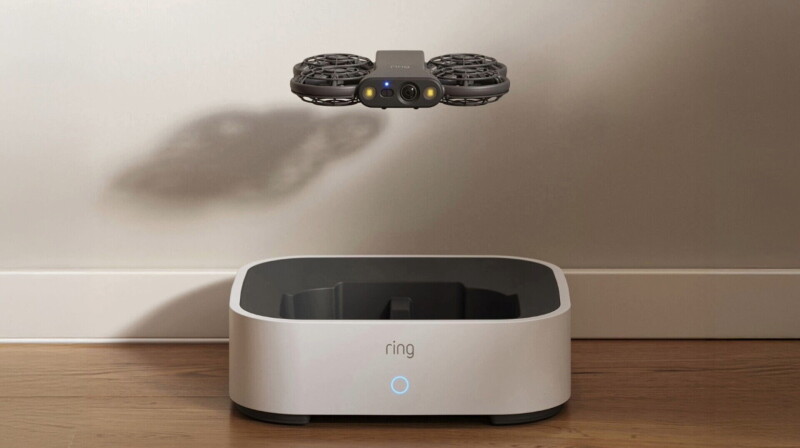
If you didn't have any privacy concerns about slapping a Ring doorbell on your front door or putting Ring cameras inside, you'll love Amazon's newest offerings, which move around homes and businesses to capture views stationary cameras might miss. The house of Bezos announced the launch of Ring Robotics on Tuesday along with its first two products: a drone designed for indoor home security, and a wheeled robot with a telescoping camera mast for automated after-hours business patrols. Both are designed to proactively patrol spaces as well as respond to alerts from connected alarm systems and Ring-connected devices. According to Ring founder Jamie Siminoff, this is something customers actually want, as those stationary cameras just can’t quite see everywhere. “It’s not just a new category of security; it’s the beginning of a future where proactive, autonomous protection is something every home and every business can have,” Siminoff said. The consumer-focused Ring Drone Cam launches from its own charging dock that Amazon says keeps the thing “out of sight” when not in use, and when in flight is able to patrol a home by flying around pre-programmed routes to take in the sights with its 148-degree FOV, 2K camera that includes LED illumination for night patrols. Amazon says it can also respond to alerts from cameras, sensors, and alarm systems. The Ring Rover Cam, designed with businesses in mind, is sort of like a security Roomba that sports a camera on a telescoping mast that Amazon says can be programmed to certain heights to let it see over counters, shelves, and other workplace obstacles. The Rover can also perform 360-degree scans and includes a siren, lights, and two-way audio so you can yell at intruders who aren't dissuaded by its presence. The Rover streams and records video in up to 4K while moving or patrolling and is designed to make regular patrols of businesses during off hours. It can also detect people and respond to alerts from connected Ring devices. Of course, given that this is Ring we're talking about, these flying and free-wheeling cameras use Amazon's cloud for some processing, likely inviting privacy concerns about what footage and mapping data the company can access and retain. The Amazon-owned security tech firm has faced a number of privacy complaints over the years, some of which have resulted in multimillion-dollar settlements. Ring agreed to pay $5.8 million in a 2023 settlement with the FTC over allegations that employees and contractors improperly accessed customers' private videos and that the company failed to adequately protect accounts against unauthorized access – just imagine the privacy concerns raised by flying robots. More recently, the company took heat for partnering with surveillance outfit Flock Safety, a relationship which it has since canceled. Amazon/Ring also invited criticism for a Super Bowl ad earlier this year promoting a new feature called Search Party, which would remotely activate Ring cameras to search for lost pets, suggesting that Amazon had the ability, in theory, to use Ring cameras like a dystopian neighborhood surveillance network. Another Ring feature, Familiar Faces, which uses AI-powered facial recognition to identify people captured by compatible cameras, prompted a proposed class-action lawsuit filed in June. The complaint alleges that the feature collected biometric information from visitors and passersby without their consent. If we can’t have iRobot, we’ll do it with Ring Amazon abandoned its efforts to buy Roomba robot-vacuum maker iRobot in 2024, blaming regulatory scrutiny for the move. The FTC, under then-chair Lina Khan, examined the deal's potential effects on competition and consumer privacy, including concerns about the information Roombas collect while mapping customers' homes. European regulators, meanwhile, raised concerns that Amazon could use its marketplace to disadvantage rival robot vacuum makers. With this Ring move, Amazon is once again putting robots capable of mapping interior spaces into customers' hands, reviving some of the privacy questions raised during its failed iRobot acquisition. As Amazon explains in Tuesday’s press release, both new Ring robots are powered by AI Pilot, “a custom-built system that uses the devices’ cameras, specialized vision models, on-device sensors, and cloud processing to see, think, and navigate autonomously.” To help the Ring robots understand where they're operating, the devices generate floor plans of interior spaces, according to Amazon. “Carry Ring Drone through your space or let Ring Rover autonomously explore, and it turns what it sees into a floor plan,” the company explains of the setup process. AI Pilot takes the reins in identifying the types of rooms it sees and suggests key patrol areas it should focus on, which users can add to in the Ring app. Amazon claims that videos captured by these new flying and free-wheeling cameras will be protected by an encryption scheme it calls Throw Away the Key Encryption (TAKE). The system temporarily allows Ring's cloud services to access recordings for enabled features before the relevant encryption keys are deleted. Ring announced the scheme in August, presenting it as a way to limit access to customer recordings without sacrificing cloud-powered features. “With TAKE, your Ring videos are protected with unique, rotating encryption keys,” Amazon explained. “A copy of the keys is temporarily held inside a secure enclave within the cloud; think of it as a sealed vault that can only provide Ring access to the key under strict, limited conditions.” The keys, Amazon claims, are later deleted so that only users and those they allow access to can see videos, with Ring only retaining them “to power the intelligent features that you have active on your account.” “We take privacy concerns seriously, and we believe privacy and customer control are fundamental to building products people trust,” a Ring spokesperson told The Register when asked about prior privacy concerns. “That is why customers decide where these devices go and when.” We asked about floor plan security, but didn’t get an answer about that. As for when those devices will be available, the Rover Cam will start shipping on December 16 at a price of about $1,000, but the Drone Cam might not ever actually make it to homes. Amazon’s announcement mentions a release date of January 27, 2027, but that’s subject to the FCC giving its blessing. “Ring Drone Cam has not been authorized as required by the rules of the FCC,” Amazon’s release states. “This device is not, and may not be, offered for sale or lease, or sold or leased, until authorization is obtained.” Amazon told us that the Drone Cam would still start shipping in January, luckily giving everyone a few months to figure out how to deal with this new, more mobile, invasion of privacy. ®
Security company Barracuda warns that attackers are exploiting a pre-authentication authorization bypass bug and a command-injection vulnerability in its popular Email Security Gateway (ESG) products that, when chained, could allow the crims to run commands with root privileges. “We have identified exploitation activity affecting a small number of organizations,” the security vendor said in a late Monday night update to its earlier security advisory. Barracuda declined to answer The Register’s questions, including one about how many organizations have been hit by attackers. A company spokesperson told us that it “worked directly” with the affected businesses “to quickly address the issue. Barracuda acted promptly to remediate the vulnerabilities, releasing patches for affected products.” The vendor disclosed and fixed the vulnerabilities, CVE-2026-116606 and CVE-2026-111560, last week. CVE-2026-116606 is a 9.3 CVSS-rated, pre-authentication authorization bypass flaw in ESG. While authentication is not required to exploit this vulnerability, the attacker must have access to the administrative user interface. As Purplecop Security founder Tausif Ahmed said on Tuesday: “If your Email Security Gateway's admin UI is open to the internet, that's the first thing I'd close today.” CVE-2026-111560 is an 8.6-rated command-injection flaw that affects multiple Barracuda products: its ESG, load balancer (ADC), message archiver (BMA), web application firewall (WAF), WAF control center (WCC), and web security gateway (WSG). “If exploited in combination, these vulnerabilities could allow an attacker to bypass authorization controls and obtain root access to the device,” Barracuda warned on November 2. At the time, the vendor did not report any active exploitation of either. We don’t yet know who is responsible for the attacks, or whether the intruders gained root access – but if they did, they could steal data, install backdoors, and take full control of affected systems. These types of edge-device exploits have been used by Chinese-government spies, and in 2023 the FBI blamed PRC-linked attackers for a series of attacks that targeted Barracuda ESGs to deploy custom malware and maintain access to high-value networks. According to Mandiant, 27 percent of identified affected organizations were government entities. So if you haven’t already: patch now. ®
President Donald Trump has nominated Palantir security chief Michael LoSapio to lead CISA, putting an executive from the controversial government supplier in line to run America's civilian cyber defense agency. The nomination, announced on Monday, could end CISA's nearly two-year wait for a Senate-confirmed director following Jen Easterly's departure in January 2025. LoSapio has served as Palantir's CISO since September 2024, having previously led the company's infrastructure and network security team. He first joined the data analytics outfit in 2013, later spent a spell at database company SingleStore, and returned to Palantir in 2017. If confirmed, LoSapio would move from securing Palantir's systems to leading the federal government's main civilian cyber defense agency. CISA protects federal civilian networks and works with critical infrastructure operators, including power, water, and telecommunications providers. It's a substantial job, particularly given the state of the agency he would inherit. CISA has shed more than 1,000 staff, roughly a third of its workforce, since Trump returned to the White House, according to reports. It's now trying to plug the gaps, although acting director Nick Andersen said in September that around 250 would-be recruits were still waiting for security clearance before they could get to work. Andersen has been running CISA since February. With fewer people to go around, CISA is also rethinking where to spend its time. A strategy published last month emphasizes infrastructure whose failure would do the most damage, raising questions about what gets less attention as the agency operates with fewer staff. LoSapio would be the second person Trump has put forward for the role. His previous pick, Sean Plankey, withdrew in April after spending more than a year awaiting confirmation, with his nomination becoming caught up in a dispute involving Republican Senator Rick Scott over Coast Guard contracting. The nomination arrives late in the congressional calendar. If the Senate does not confirm LoSapio before the current Congress ends, Trump would have to nominate him again for consideration by the incoming Democratic-controlled Senate. Palantir, co-founded by billionaire Peter Thiel, has become a major supplier of technology to US government agencies, including the Department of Homeland Security and Immigration and Customs Enforcement (ICE). Its work with immigration authorities has attracted criticism from civil liberties groups and Democratic lawmakers concerned about surveillance and the handling of sensitive personal information. The controversy isn't confined to the US either. In the UK, WhatsApp messages obtained by campaign group Foxglove this week indicate that Palantir privately lobbied a health minister to consider extending its software into GP patient records, despite that data being expressly excluded from its £330 million NHS England contract for the Federated Data Platform. That revelation follows news that NHS England wants greater oversight of Palantir's claims about the benefits of its software, amid questions over the evidence supporting its performance figures. Those controversies could make LoSapio's confirmation hearings particularly interesting, especially as Democrats prepare to scrutinize Palantir's government business more closely. It's unclear whether LoSapio plans to leave Palantir or what would happen to any financial interests he holds in the company if confirmed. Those are questions likely to come up during a confirmation process that CISA, having spent nearly two years without a permanent boss while losing a third of its workforce, could probably do without dragging on any longer. ®
Fireworks AI has disclosed another cyberattack in October and a wider customer data exposure involving billing records, datasets, and incomplete model weights. The company, which lets customers train and run AI models, said a third-party cloud provider hosting its research and development machines was compromised on October 23. Attackers used that access the following day to reach Fireworks development systems and run an unauthorized workload. Fireworks suspects links to financially motivated criminals involved in LLMJacking – selling unauthorized access to AI models through illicit gateways. Fireworks grouped the affected data into three categories: Resource metadata: Resource identifiers, display names, descriptions, creation times, and more Billing information: Billing and shipping addresses, invoice and payment histories, account balances, and credit usages. Payment card numbers are not saved and therefore unaffected Model weights and datasets: For certain customers, a subset of incomplete model weights and datasets were accessed, Fireworks said Lin Qiao, Fireworks co-founder and CEO, said the apparent motive was not stealing model weights in response to concerns raised by Cantina Security CEO Hari Mulackal. "From what we see attackers are not after weights," said Qiao. "Most downloads were partial and stopped." Render founder and CEO Anurag Goel shared a notification from Notion warning that some chats with its AI assistant may have been exposed through the Fireworks incident. "Following an investigation by the Notion security team, we have determined that your workspace, Render, was among the
Google has patched its eighth actively exploited Chrome zero-day of 2026, matching its total for the whole of last year with nearly two months still left on the calendar. The latest flaw, tracked as CVE-2026-125350, is a high-severity use-after-free vulnerability in Chrome's XML component. Google confirmed in a security advisory published Monday that attackers are already exploiting the bug, although it hasn't said who's behind the attacks or who might be getting targeted. "Google is aware that an exploit for CVE-2026-125350 exists in the wild," the company said, offering little else about the attacks. The vulnerability was reported anonymously on November 6 and involves a memory management error that occurs when software continues using a pointer to memory that has already been freed. Such bugs can potentially allow attackers to corrupt memory and execute malicious code, although Google hasn't disclosed how this particular flaw is being exploited. Google is keeping further technical details under wraps until enough users have installed the fix, a familiar approach intended to stop other attackers from getting their hands on a working exploit. The patch arrives in Chrome 157.0.8103.50/.51 for Windows and macOS, and 157.0.8103.50 for Linux. The update also addresses eight other security vulnerabilities, including high-severity flaws affecting WebGL, FileSystem, GPU, Compositing, and the V8 JavaScript engine. The release fixes another use-after-free bug in Chrome's XML component, CVE-2026-125346, which was reported by Arni Hardarson of Neonix Security in October, though Google hasn't indicated that this second vulnerability is being exploited. The latest discovery adds to what's becoming a rather long list of Chrome zero-days this year. By June, Google had already patched five actively exploited Chrome zero-days, including flaws in its V8 JavaScript engine, Skia graphics library, and WebGPU implementation. The list has only grown since then, with two more V8 bugs fixed in September and the latest XML vulnerability bringing the total to eight. That puts 2026 level with 2025, when Google also fixed eight Chrome zero-days exploited in the wild. Whether the browser maker can make it through the remaining weeks of the year without adding another to the pile is anyone's guess. Google says the latest update will roll out over the coming days and weeks, but users can check manually by heading to Chrome's Settings menu and selecting About Chrome. With attackers already making use of the vulnerability, it's probably worth doing that sooner rather than waiting for Chrome to get around to it. ®
Classes at Vanderbilt University are proceeding as scheduled today, although access to most university systems remains restricted following a cyberattack claimed by ransomware group BYOD. Vanderbilt announced on Monday morning that it was dealing with "an active cybersecurity incident," and that the fallout may affect university devices, systems, and cloud-based services. The Nashville-based university initially told students and staff to shut down university devices and disconnect from campus Wi-Fi. It warned them to watch for unexpected prompts, altered files or permissions, unfamiliar applications, and unsolicited authentication requests. Campus computers reportedly began playing an audio threat attributed to BYOD. Student newspaper The Vanderbilt Hustler cited posts on campus social network Fizz showing the message. "You have been compromised by BYOD," the recording said. "We suggest you reach out to us as soon as possible. Instructions have been placed on your desktop. Failure to communicate will result in this estate being brought to the ground completely. Make the right choice or rot with the wrong one." By Monday evening, Vanderbilt had restored access to campus Wi-Fi, but warned that access to most systems remains restricted. "We know this has disrupted important work and caused frustration across the university," it said. "Vanderbilt Information Technology is working with government agencies and other partners to manage this situation." Students were told to attend classes as scheduled on Tuesday and contact instructors about flexibility on coursework deadlines. Staff were instructed to report to work normally. Vanderbilt's Athletics department said that its ticketing system was unavailable, and that students were unable to claim tickets for the college's football game against Alabama on Saturday. BYOD claimed responsibility for the attack on Vanderbilt on Monday, along with extensive data theft. "If you could not tell already, your databases are locked [and] we have your entire estate and research data," it said via its leak site. "Over 1 million SSNs, full names, email addresses, phone numbers, student and employee records, full takeover of your DC, whatever was on your network, we possess." Vanderbilt has not confirmed BYOD's claims about the extent of its access or the data allegedly stolen. BYOD may be a familiar name to some. The group previously claimed attacks on the University of New Mexico and Trump Mobile's customer database. BYOD also claimed responsibility on Monday for an attack on Texas Health and Human Services. The agency has not publicly confirmed an incident and did not immediately respond to our questions. ®
Google DeepMind researchers have completed a formal verification of Signal's messaging security, marking what they claim is the first time AI has helped devise a proof that links protocol-level security guarantees to a widely used cryptographic implementation. They did so using AlphaProof Code, a multi-agent framework for formal software specification and verification. AlphaProof Code relies on a human-guided agent that writes a Lean specification, assesses machine code semantics, and crafts an agent-authored proof that the Lean kernel checks against the specification. In this instance, AlphaProof Code verified Signal’s post-quantum PQXDH handshake and Triple Ratchet, thereby validating the design of libsignal's forward secrecy, authentication, post-compromise security, and handshake secrecy. In so doing, the Google/DeepMind team – Swarat Chaudhuri, Andrew Ferraiuolo, Anton Kovsharov, Tej Chajed, Sam Schlesinger, Karn Seth, Jonathan Katz, Charles Sutton, and Pushmeet Kohli – has taken a step toward a challenge the Beneficial AI Foundation issued in April to formally verify the Signal protocol and Signal app with Lean. The AlphaProof Code process involves working with various models to turn Signal's security goals into a human-reviewed mathematical specification. Based on this spec, the researchers assigned Gemini Carbon agents to generate Lean code proving the correctness of the libsignal implementation. After the agents generated 6.5 million lines of Lean code, they undertook an auditing pass and flagged bits that required human review. The result is theoretical in that it assumes perfect cryptography and doesn't guarantee the computational secrecy of bytes. But it's still a meaningful assertion of correctness. "It's a system that is fundamentally built for human AI collaboration," said Swarat Chaudhuri, research scientist at Google DeepMind and a professor at the University of Texas at Austin, in an interview with The Register. Traditionally, said Chaudhuri, you start proving theorems with well-defined problems formulated by a mathematician that get submitted to an AI agent for proof. In this case, the researchers had to figure out what to prove. "In formal methods, we always had this belief that verification is the hard bit," he said. "There's thirty or forty years of work on how to scale up verification. Now we are able to do that. So now the question is what are we verifying? … That process is fundamentally human-in-the-loop, but we devised a process of trying to scale it up to the extent possible with AI." As Chaudhuri and his colleagues note in their research paper, "AlphaProof Code: Verifying Signal’s Security at the Machine-Code Level," formal verification used to require heroic efforts. Formally verifying the seL4 microkernel took 20 person-years, while developing the verified CompCert C compiler took six years. AlphaProof Code, they believe, can drastically reduce the cost of formal verification, though their Signal work still took four weeks for a team of five people and "quite a few tokens." "The dream is definitely to scale this up," said Chaudhuri. "So you know there's been this rise in offensive AI capabilities, right? There are a lot of insecure systems around the world, and they're going to be exploited. "So what we really need to do is to apply this kind of technology to code at large all over the world and figure out what is it that you want to guard against? How do you write those properties, how do we specify those properties? That's going to be super important, but we have to figure that out." Pointing to a related DeepMind project, AlphaProof Nexus, which is focused on mathematics, Chaudhuri said the next step is to apply this technology during the software design process – not just to cryptographic protocols but code in general. "We really believe that the next frontier is not going to be proof but specification in this kind of research," he said. "And so that's why we took on this domain where that was actually a hard problem. And I think that we have some really good insights now about how to go about this, although not the last word by any means." ®

 Login