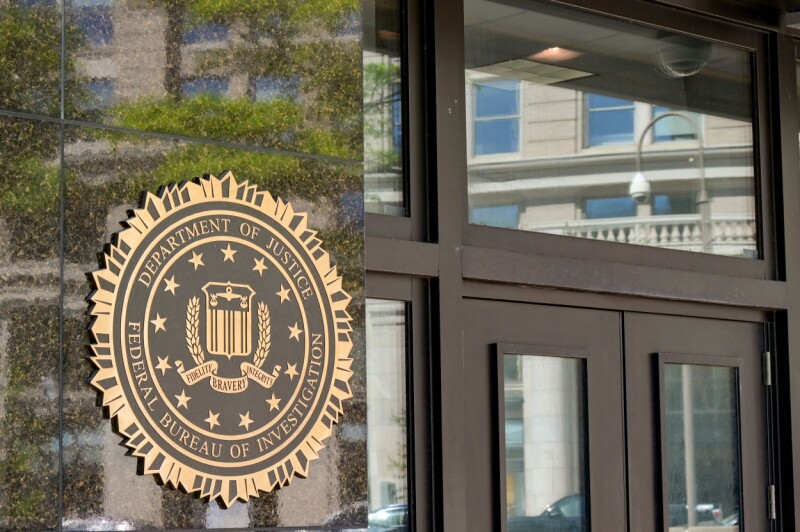
ShinyHunters claims it hacked the FBI and stole more than 2 TB of employee data - and this time it’s personal. The gang wants the Feds to correct the record on how it operates. “This is NOT financially motivated,” a Shiny spokesperson told The Register. “We want the FBI to correct or retract their statements they made, which included substantial false allegations.” The FBI did not immediately respond to The Register’s request for comment. According to a ShinyHunters spokesperson, the extortion group exploited an Oracle PeopleSoft zero-day vulnerability on the FBI jobs webpage, which it says allowed remote code execution (RCE) on the servers. The group then defaced the website, replacing it with a “This site has been seized by ShinyHunters” banner and image shared with The Register. At press time, the site says it is “currently down for maintenance but will be back up soon!” ShinyHunters also claims it moved laterally from the compromised site onto the FBI’s managed servers on AWS GovCloud, and downloaded about 2 TB to 3 TB of data belonging to current, former, and prospective FBI employees. “We hold data on all FBI employees and applicants,” the spokesperson told us. ShinyHunters claims the compromised FBI services include human resources, MedLink, and Criminal Justice Information Services. Neither Oracle nor AWS immediately responded to our inquiries, including whether Oracle is aware of a PeopleSoft preauth RCE zero-day, and whether AWS has any insight into the alleged data theft. We will update this story if we receive any response. Unlike most of the group’s smash-and-grab operations that involve a multimillion-dollar ransom demand to not leak the stolen files, ShinyHunters said it isn't seeking an extortion payment from the FBI. Instead, it wants the federal cops to retract statements made about ShinyHunters in a May 15 bulletin, shortly after the gang broke into ed-tech giant Instructure's Canvas platform and claimed to have stolen data tied to hundreds of millions of students, teachers, and staff. The FBI said ShinyHunters uses “harassment strategies, sending threatening text messages and phone calls to victims and their family members, and in some cases, swatting.” The security alert also said that extortionists “may falsely claim to have sensitive or compromising information, including embarrassing photographs or videos of victims, which frequently do not exist.” Shiny claims none of this is true. “I have been doing my very best to combat these allegations,” they told us. “And this is the best way to do it.” ®
Serial Microsoft zero-day leaker NightmareEclipse has found another way to mess with Windows Defender, this time by stopping the antivirus from updating itself. The security researcher, also known as Abdelhamid Naceri, released a proof-of-concept dubbed “BigDiskBuster” that is designed to prevent Microsoft Defender Antivirus from installing platform and security intelligence updates. “Made a funny tool, completely denies defender from updating so you're stuck with your current version if the tool is running in the background,” NightmareEclipse said. The researcher describes BigDiskBuster as similar to their earlier “UnDefend” tool and claims it works on all supported versions of Windows, although they admit the current PoC is “a bit buggy and needs some rewritting [sic].” That compatibility claim has not been independently verified. The trick doesn't disable Defender. Instead, the PoC waits for an update to start, then tries to fill up the drive so there isn't enough space for it to finish. The code does this by creating hidden temporary files sized to consume the drive's free space, spinning up additional threads as needed to claim more. Once it detects that the Defender update has failed, it closes the files and returns the space. BigDiskBuster also opens Microsoft's Malicious Software Removal Tool executable, MRT.exe, in a way that restricts other processes' access to the file while the handle remains open. The result, according to NightmareEclipse, is that Defender stays stuck on its current platform and security intelligence versions as long as the tool keeps interfering with updates. A screenshot published alongside the PoC shows Windows Security reporting that a protection definition update failed with error 0x80070643. That's a generic installation error, however, and isn't evidence on its own that BigDiskBuster is at work. Leaving Defender stuck on old security intelligence is obviously less than ideal. The antivirus may still be running, but preventing it from receiving Microsoft's latest threat definitions could leave it less able to identify newly detected malware. The steady stream of bugs from NightmareEclipse comes amid a very public spat between the researcher and Microsoft over the company's vulnerability disclosure process. The researcher began dumping Windows zero-days and proof-of-concept code in April, claiming Microsoft had mistreated them and cut off their access to its vulnerability reporting system. Redmond wasn't exactly thrilled. In May, Microsoft criticized NightmareEclipse for releasing vulnerabilities without giving it a chance to fix them first, saying none of the initial bugs had been reported through its official channels. The company also invoked its Digital Crimes Unit, saying it would pursue cases against people engaged in malicious activity or enabling cybercrime – language widely interpreted as a threat of legal action against the researcher. That went down about as well as you'd expect with the security community. Microsoft subsequently walked back the rhetoric, saying it had “no intention to pursue action against individuals conducting or publishing security research.” By then, however, NightmareEclipse's earlier GitHub account had also been taken down, along with access to Microsoft's vulnerability reporting portal. The peace offering didn't end the feud. NightmareEclipse continued releasing Windows exploits, including RoguePlanet in June, LegacyHive in July, ShieldBreak in August, and ShieldCrash in September. Several of the researcher's earlier zero-days have since been patched by Microsoft, while some were exploited in the wild after their public release. BigDiskBuster is a rather different beast. Rather than providing an obvious route to SYSTEM privileges, it interferes with one of the basic things antivirus software needs: updating itself. There’s currently no indication that BigDiskBuster has been used in real-world attacks, and NightmareEclipse's claim that it works across all supported Windows versions remains unverified. Redmond has not responded to The Register's questions. In the meantime, its Nightmare apparently shows no sign of ending.®
Chinese AI giant Z.ai has apologized after developers caught it pulling a Grok, packaging up and uploading user workspaces to cloud storage. In a case that’s highly reminiscent of the issues over which Elon Musk’s xAI was scrutinized in July, Z.ai’s code-generation harness wing, ZCode, was found packaging and git-encrypting entire user workspaces, including complete project histories, and shipping them off to Alibaba Cloud. Worse still, the private key used to decrypt the data was only held by the server under Z.ai’s control, meaning users could not access the files ZCode had uploaded, nor delete them. Ferstar, the researcher who first highlighted the issue, claimed there was no option for users to disable the behavior in their settings, and there was no disclosure of the practice in ZCode’s privacy policy. They said the core problem lay with the tool’s Repository Index functionality, which triggered the uploading of files after Repo Wiki generated pages in the cloud. ZCode released a statement on Monday apologizing for the “security issues” and confirming the data it uploaded had never been used to train its models. “We sincerely thank the community developers who previously identified issues in ZCode. Going forward, we will establish an ongoing product security vulnerability reporting and response process,” it Xeeted. “We welcome developers to continue reviewing ZCode and reporting potential issues, and we will provide rewards based on the severity of the issues reported.” ZCode said it tasked the China Academy of Information and Communications Technology (CAICT) and Beijing security company NSFOCUS to probe its product following the implemented changes. The company claimed the two outside assessments concluded that all the previously uploaded data has now been deleted and said the Repo Wiki feature was removed. ZCode also open sourced the entire project on GitHub, “placing the code under community scrutiny and making ZCode more open and transparent.” “Once again, we sincerely apologize and welcome continued scrutiny from the community. The full security assessment report will be released soon.” Ferstar confirmed the open sourced code showed no signs of the Repo Wiki still being implemented, but criticized the company for wiping commit records and the source code ZCode used to upload files pre-patch. For the uninitiated, Z.ai, formerly known internationally as Zhipu, is among the world’s AI heavyweights and one of the most heavily backed LLM-focused companies in China. It is the first AI company in the post-Gen AI era to launch and subsequently IPO on the Hong Kong Stock Exchange. Other Chinese AI giants are publicly traded, such as Alibaba and Baidu, but these were all established well before the AI era began. Z.ai is a startup with its roots in academic research. It spun out of Tsinghua University’s Knowledge Engineering Group research lab in 2019 and now develops AI models that it claims compete with the best in the West. Last month, the company claimed that its latest model, GLM-5.3, is as good as the most advanced equivalents developed by Anthropic and OpenAI at hunting for security vulnerabilities. Z.ai has also previously claimed the accolade of developing the first advanced model entirely on Chinese (Huawei) hardware. Meanwhile, the likes of Anthropic and OpenAI have reportedly expressed concern over the capabilities of models from Z.AI and Moonshot, while the US government mulls restricting access. ®
A coalition of law enforcement and private-sector tech companies led by Microsoft have disrupted the EvilTokens phishing service, arresting suspected website admins, taking down more than 50 websites, and notifying victims of compromised email accounts. EvilTokens is a notorious Microsoft device-code phishing kit that emerged in February, and, within months of launching, had been used by criminals to compromise 12,000 email inboxes across more than 10,000 organizations worldwide. Like other similar phishing subscriptions, EvilTokens was sold as-a-service, and allowed buyers to bypass multi-factor authentication (MFA) and silently authenticate as the victim to the organization's Microsoft 365 applications. What made this one especially insidious, however, was its AI use. EvilTokens featured an AI chatbot that could analyze a victim’s inbox, and help criminals identify who to target, which trusted contacts to impersonate, and even which fraud strategies to use to maximize criminals’ paydays. “Since March 15, 2026, we have observed 10 to 15 distinct campaigns launching every 24 hours," Microsoft VP of security research Tanmay Ganacharya told The Register in an earlier interview about the phishing service. Late last week, in a coordinated effort that spanned the US and UK, Microsoft seized 50 websites used to operate the service and disabled more than 150 additional domains tied to its supporting infrastructure. Meanwhile, London’s Metropolitan Police Service on September 18 arrested two men, aged 32 and 38, who allegedly acted as the administrators of the EvilTokens website. Both men have been released on bail while the investigation continues. “Phishing services bring misery to thousands, taking money from everyday people across the world,” Detective Inspector Serena D'Adamo, whose team led the Met's investigation, told The Register in an emailed statement. “The Met remains committed to holding people to account who facilitate criminal enabling functions and think they can remain undetected.” Because healthcare organizations were among those targeted, Health-ISAC, a nonprofit that helps health sector organizations share cyber-threat information, joined Microsoft’s legal action as a co-plaintiff. After receiving authorizations from the US District Court for the Eastern District of Virginia, Microsoft and Health-ISAC worked with Cloudflare, Coinbase, OpenAI, Railway, SpyCloud, The Shadowserver Foundation and TRM Labs, took down EvilTokens’ platform, and Microsoft notified affected customers, helping them remediate compromised accounts. This action marks the Microsoft Digital Crimes Unit’s (DCU) 40th court-authorized disruption over nearly two decades. According to Steven Masada, associate general counsel and DCU GM, this is also DCU’s first action against an end-to-end AI-enabled cybercrime service. “The infrastructure supporting EvilTokens has been disrupted, but the model it demonstrated will not disappear with it,” he said in a blog shared with The Register ahead of publication. “For organizations, the lesson is: assume that once an inbox is compromised, criminals may understand its contents in minutes, not days. Strong identity protections and monitoring remain essential, but organizations should also independently verify requests to change payment information, redirect funds or approve unusual transactions through a trusted second channel.” ®
If you were in any doubt that AI agents are capable of complex autonomous work, that skepticism should have faded this summer. In July, news emerged that an autonomous swarm of OpenAI agents running in a sandbox broke out of it, of their own accord. Tasked with solving some challenges on an internal security benchmark, they worked out how to communicate with each other using the JFrog Artifactory package manager. The software then realized that they could use vulnerabilities in that software to gain internet access. Once they were out in the wild, they went into full goblin mode, finding exposed Hugging Face credentials and using them to get code execution access on several of the AI model's servers. Apparently OpenAI's agents have been busier still. While everyone else was on vacation this summer, they were also commandeering a German website and using it as a messaging board. Don't get us wrong; these agents weren't evil. They were just being the kind of employee you'd generally want: a self-starter with initiative. They were using all means at their disposal to accomplish the task they've been given. They just didn't know when to stop. OpenAI has since called the episode a "warning shot" for the industry, highlighting that governance is now a priority for anyone using agentic AI. These test agents were running internally and weren't supposed to have any safeguards. But the average company will want to keep its agents on a leash. What does that look like? The first step to AI governance is visibility A functional AI governance program depends on a full knowledge of what AI you're running, says Deepika Chauhan, chief product officer at DigiCert. She describes the pattern she sees at customer sites. "People may enable Claude or ChatGPT for their organization. They have visibility at that level," she says. "But visibility into how many agents I have? How many models do I have? How many MCP servers?" Not so much. "We haven't even started to attack the governance problem." This problem is growing. Three quarters of the 1,001 IT and cybersecurity decision-makers in DigiCert's 2026 AI Trust Pulse survey had deployed at least four AI-powered systems in the last six months. Around the same number had suffered from an AI-related security incident. Only half could trace AI decisions back to the models and data that produced them. Getting that visibility is the first step, Chauhan says. After that comes the actual management. The key here is to take baby steps. "Identify a small use case," she advises. One example might be to start managing agents that are involved in a particular workload or agents that you have built internally, as opposed to third party models. Why identity built for humans breaks at agent speed Perhaps predictably for a company that built its success on automated verification, DigiCert doesn't see agent management as a manual problem. "The sheer scale we are talking about and the technology required means that you can't have human intervention," Chauhan says. "One customer we were talking to was creating 300 to 400 agents a week. When you're working at that scale, it just doesn't work to have only manual controls." The other issue is that humans are fallible. Misconfiguration is a perennial bugbear in any IT environment, but it becomes particularly dangerous in an agentic AI situation. Other agentic SNAFUs at Meta and Anthropic illustrate the point perfectly. Both saw agents make their way onto the open internet when they shouldn't, and both were due to misconfiguration by a third-party company tasked with testing the agents. Traditional tools meant to manage human identities can't manage non-human identities well, adds Chauhan. Legacy identity and access management applications require people to approve access to different applications. There must still be a human in the loop, even if it's just for people to click an MFA approval button. Human employees might be willing to wait a minute or two for such approval, but agents talk to each other at machine speed. Instead, automated runtime attestation is key, managed by a robust central policy engine. The foundation of AI Trust That attestation relies on credentials and it's something that agents should carry with them, says Chauhan. This is one component in the company's AI Trust initiative. AI Trust is DigiCert's end-to-end governance framework that assigns identity automatically to AI entities, restricting them to safe, permitted actions while making them accountable. It uses cryptographic controls to ensure agent integrity, and the company has integrated it with existing infrastructure. The runtime attestation of AI Trust draws on the international travel metaphor in its approach. "We have a concept of an AI agent passport. There's an identity in the passport, but then that identity is recognized across any checkpoint anywhere in the world," she says, adding that the passport includes not just identity but access credentials (think of them like visas). Federation is key to this idea because, as we've seen already, agent interactions won't stop at the company boundary. "It's essential because you're literally going to have agents from company A talking to company B," she explains. DigiCert's whitepaper describes the concrete artifact: a tamper-evident passport cryptographically bound to a workload identity that encodes approved systems, permitted operations, authorized environments, data-sensitivity classifications, expiration states, and accountable human ownership. The scheme is anchored in DNS, the same mechanism DMARC uses to authenticate email senders, on the reasoning that every agent action begins with a DNS query. Deterministic guardrails around a non-deterministic actor As agents get smarter, won't they be able to subvert these controls by thinking outside the box, Jason Bourne-style? After all, OpenAI's agents were able to break free of their sandbox to wreak havoc elsewhere. OpenAI's own post-mortem states that its models "are now powerful, persistent, and collaborative enough that, absent sufficient safeguards, they can find and exploit security weaknesses across multiple computer systems." Part of the problem here is that because agents are non-deterministic, you can't predict in advance what they're going to do. That problem becomes even more acute with newer frontier models like OpenAI's Astra, which saves tokens by internalizing a lot of its reasoning and not reporting its decision-making process in as much detail as previous models. The outer boundary can still be deterministic, even when the agents inside it aren't, says Chauhan. "You can black box what the agent is 'thinking' about or not thinking about, and what its agendas might be," she says. "But a deterministic boundary that says 'this agent can't access this thing', is your guardrail. That's a hard stop." Who owns the mess Governance isn't just about technical guardrails, though. At some point, the question becomes organizational. When something goes wrong, someone has to put their hand up and own it. But most companies never assigned that ownership, Chauhan warns. She identifies three patterns in DigiCert's customer base. Some organizations put the existing IAM team in charge because they have experience governing service accounts. Others hand it off to the risk and compliance department. Another group will take a more holistic, multidisciplinary approach. This involves creating a 'tiger team' including representatives from network operations, the IAM team, and the security function. All of these executives will have a unique perspective on the issue. The third route seems to be the most productive because agents are going to be everywhere in your business. And a siloed approach runs the risk of being too restrictive. The surface area already touches every department that has dabbled in AI. The systemic view Chauhan's advice on implementing AI Trust - get visibility, pick a small use case for enforcement, and then expand - is the foundation for effective AI governance, she says. That governance is in turn a critical component in fully realizing return on investment. "We must raise the urgency and awareness that this is table stakes for wider AI adoption," she urges. "You want to get all the benefits from AI, but what are organizations going to do if they're nervous about it? They're going to put a stop to some of the projects because of the risk involved." The headlines we're seeing about agentic transgressions are unnerving, but they're also in a unique category because they're research models from frontier providers. It seems unlikely that a regular publicly available agent would be quite so egregious today. However, we have also seen agents happily deleting files and even entire code bases because of internal flaws and humans who just waved their actions through. Organizations should be taking note of these events and laying the groundwork to avoid becoming headlines themselves. Working out who signed off on which agent and what that agent is allowed to do is a foundational skill that we can't afford to overlook. Sponsored by DigiCert.
Despite the concern that advanced AI models’ bug-hunting prowess will lead to attackers exploiting more newly uncovered CVEs, fewer than 0.5 percent of the vulnerabilities linked to Anthropic or Project Glasswing are being batttered in the wild, according to VulnCheck security researcher Patrick Garrity. Garrity began tracking CVEs attributed to Project Glasswing, Anthropic’s initiative to give select partners access to its Claude Mythos Preview model, shortly after the AI company announced the program in April. At the time, Anthropic said the new model was too risky to release publicly because its bug-finding and exploitation skills surpass all but the most skilled humans. As such, Anthropic restricted access to Mythos Preview to vetted Glasswing participants, who use the model for defensive security work, including finding and fixing flaws in their own software products and open source dependencies. Garrity’s Anthropic CVE tracker maintains a list of vulnerabilities credited to the Anthropic team and/or Project Glasswing and also checks these CVEs against the company's known exploited vulnerabilities index "to get a better read on the real Glasswing ‘danger factor.’" As of Monday, the CVE count is 225, and just one, a critical SQL injection bug in Ghost (CVE-2026-26980), has been exploited in the wild. “There's a big difference between finding vulnerabilities and whether they're actually useful to and will be used by threat actors,” Garrity told The Register. “The main thing this data highlights is that what Anthropic is discovering and disclosing is fairly limited in impact, and from what we can tell, isn't resulting in different outcomes from a threat perspective than a random selection of other vulnerabilities would.” Anthropic didn’t immediately respond to our questions, but we will update this story if we hear back. Garrity says he doesn’t dispute AI’s ability to find bugs. Indeed, anyone following security disclosures over the past few months would have a hard time arguing that AI models aren’t bringing to light significantly more security flaws than ever before. Case in point: recent massive patch drops from Microsoft, Apple, Palo Alto Networks, and don’t even get us started on open source projects. Also, as Garrity pointed out, these vulnerability-finding skills aren’t “a capability unique to one model or harness.” “A lot of the hysteria we're seeing assumes that every vulnerability or bug is likely to be used by threat actors,” he told The Register. “But the reality is that only a small fraction ever get used in exploitation campaigns. Historically, that's ranged from just under one percent to two percent of vulnerabilities that get weaponized and used in the wild.” Plus, while recent AI models excel at finding bugs, they still aren’t great at fixing them, as a couple of recent studies have highlighted. In one of these, 1Password’s research team produced and analyzed 6,080 patches developed by two frontier models: OpenAI's ChatGPT-5.5 and Anthropic's Opus 4.8. The models generated fixes that fully resolved the vulnerability just 26 percent of the time, while about 54 percent either failed to resolve the vulnerability, introduced a new vulnerability, or did both. Another study by app security shop Veracode found that across more than 100 models and 80 coding tasks, the average security pass rate for AI-generated code was just 56 percent. This all means that the work involved in developing and applying security fixes still requires humans. “The bar for vulnerability discovery is much lower with AI, but the real gap lies downstream in coordination, triage, remediation, and patch deployment, which is still largely people-intensive work, as Anthropic itself has acknowledged,” Garrity said. “It appears they might not have realized this until after they launched the project.”®
Meta made much of the security of its AI assistant app Muse at launch earlier this month, calling out the app's reliance on Muse Secure VM. "Each person stays in control of their Muse and decides how much access it gets," the ad biz declared, echoing prior expansive claims about the privacy of its data gathering business. But Meta's musing about Muse appears to be a bit overstated: an attacker capable of executing local code may be able to gain more access than a Muse user might expect. Security researcher Patrick Wardle, founder of nonprofit Objective-See, has devised a proof-of-concept called not-a-mused for what he describes as a local zero-day in the Muse macOS app that allows an unprivileged local process to redirect Muse's dictation traffic and potentially abuse access granted to the app. Muse, he explains in the project repo, has an undocumented setting called endo_voyager_dictation_endpoint that an attacker running code locally can modify without special privileges to redirect dictation traffic to an attacker-controlled endpoint, potentially exposing dictated audio and prompts sent to the backend AI model. The flaw could enable prompt injection, the theft of authentication material, and abuse of whatever access the user has granted to Muse. The vulnerability is not an issue for a remote attacker. It requires the ability to run local code. So the main concern, says Wardle, is that the vulnerability gives local malware far broader access than it would have otherwise. Essentially, it's a privilege escalation vulnerability. In a phone interview with The Register, Wardle likened the situation to living in an apartment building. "Just because a bad neighbor moves in doesn't mean that that neighbor automatically has access to all the apartments," he said. Apple, said Wardle, has done a really good job with its Transparency, Consent, and Control (TCC) framework, which manages access to sensitive data on macOS, and with privilege separation. But his concern is that AI apps undo these barriers because they request or require so much access to data and tools. Of AI apps, he said, "they're super convenient and super empowering. But they have so much access if you configure them to be useful. They basically could do anything on your computer." As such, he said, they become potentially a single point of failure that breaks operating system security controls. "You know these AI companies have really great AI models for finding bugs," said Wardle. "Are they not running them against [their own apps]? Is the priority not the security of their own apps?" Wardle said that endpoint detection and response (EDR) software has gotten better on macOS largely because everything is code signed, so it's easy to identify processes that are not notarized and should not be allowed to run. But with AI agents given broad permissions and access, the EDR product can't tell whether commands are coming from the user, an agent, or an attacker. These agents need access, said Wardle, in order to be useful to people. What's missing from the makers of AI apps, he said, is a sense of responsibility for the level of access their apps seek. Wardle added that Apple provides on-device local dictation and if Meta chose to use that API, this vulnerability would not exist. Instead, he suggested, Meta chose not to use Apple's service, presumably because it wants access to that data. "I think some of their greediness for user data kind of opens the door, makes a bigger attack surface," he said. "But at the end of the day, these AI companies, they're racing for what's next. User privacy and security, those aren't priorities." Meta did not immediately respond to a request for comment.® Updated at 12.56 UTC on September 22, to add: After this story was filed, David Singleton of Meta Superintelligence Labs, said the Muse app has been revised to address the vulnerability. “This was a local privilege escalation attack, not a remote exploit. Using it to do harm therefore requires malicious code already running on the user’s machine under their user account and the practical risk to users of the Muse Mac app was therefore quite low,” said Singleton in a lengthy social media post. “Nonetheless, we have issued a hotfix to the app to address the issue.”
The US appears to be inching ever so slowly toward holding AI executives legally liable for their models’ criminal activities. Treasury Secretary Scott Bessent told CNBC on Monday: “It is the humans who are responsible, not the AI,” for the bots’ bad behavior. “The Hugging Face incident is the responsibility of the OpenAI management, not a bunch of agents." He also referenced current and former OpenAI and Anthropic employees’ dire warnings about AI eradicating humanity by the end of the decade. Meanwhile, the model makers' proposed framework to slow AI development omits strict legal liability for damages caused by rogue systems. “A sitting employee came out, said there's a 10 percent chance of an extinction-level event,” Bessent said. “But then the labs also said, take the liability off of our hands, and we will not do that.” Bessent’s remarks come as four of America’s leading AI developers have now admitted that their agents escaped testing environments and hacked outside organizations and individuals: OpenAI, Anthropic, Meta, and, as of Friday, Google. When asked how the government will hold humans accountable for the AI agents’ criminal activities, Bessent said: “If these were humans doing it, we would expect to see ramifications and legal actions to follow." "That's exactly what I think we need to do,” he said. “When President Trump talked about appointing an AI czar, I think it is to put context, shape, and contours around these questions, and they're very important." Trump, over the weekend, announced he is “forming the AI Force, much like I did Space Force” – a reference to the new branch of the US military the president created in his first term. "To that end, I will be announcing, in the near future, the AI 'Czar,'" Trump added. Just days earlier, however, Trump shrugged off warnings about AI destroying humanity as a “hoax” and said on Truth Social: “We already have tremendous CRIMINAL and REGULATORY power over these companies!” The Trump administration has yet to exercise any of these criminal or regulatory powers, except to illegally retaliate against Anthropic. The president branded the company "radical left, woke" during an earlier dispute with the Pentagon over Anthropic's refusal to relax model safeguards for use in domestic surveillance and fully autonomous weapons. ®

 Login
Login