❌

Reading view

Nearly 7 Million Driver’s Licenses Exposed in Assurance Breach: This Week in Scams

Millions of Americans hand over personal information every day. They share their data with insurance companies, banks, investment apps, and other services they trust. 

And that’s exactly why cybercriminals target and impersonate those services.

This week, an insurance provider disclosed a breach reportedly affecting nearly 7 million people’s driver’s license numbers, while a California journalist shared how a convincing fake Robinhood text ultimately cost her more than $70,000. 

Here’s what happened, why these scams work, and what you can do to protect yourself This Week in Scams. 

Nearly 7 Million Driver’s License Numbers Exposed in Insurance Data Breach 

One of the largest U.S. data breaches of the year has exposed sensitive information belonging to 6.9 million people. 

According to reporting from TechCrunch, insurance provider AssuranceAmerica confirmed that hackers accessed customer information after compromising an employee account. The company says the stolen data includes names, contact information, driver’s license numbers, insurance policy details, vehicle information, and claims data. 

While the company has not said exactly how the employee’s credentials were compromised, it noted that the attackers targeted an employee account before accessing company systems. 

Why driver’s license numbers matter 

Unlike a password, you can’t simply change your driver’s license number. 

Combined with your name, address, phone number, or other information from previous breaches, driver’s license numbers can be used by criminals to: 

  • Open fraudulent accounts  
  • Impersonate victims during identity verification  
  • Make phishing scams more convincing  
  • Support broader identity theft schemes  

This is also part of a larger trend. In recent months, multiple breaches have exposed government-issued identity documents as more organizations collect IDs for identity verification and age-check requirements. 

If you receive a notice that your information was involved in a breach, monitor your financial accounts closely, consider placing a fraud alert or credit freeze, and remain cautious of unexpected emails, texts, or phone calls referencing your insurance or driver’s license information. 

Unfortunately, scammers will reach out saying they’re trying to “help” secure your stolen information, only to try and steal more personal data from you.

How McAfee Can Help Before, During, and After a Data Breach

Before a breach

Personal Data Cleanup helps reduce your digital footprint by removing your personal information from many data broker sites, limiting what scammers can easily find about you.

During a breach

Identity Monitoring alerts you if your personal information appears on the dark web or in known data leaks, helping you respond faster if your information is exposed.

After a breach

Scam Detector helps identify suspicious texts, emails, and links that often follow major breaches, while Web Protection helps block malicious websites designed to steal additional information or credentials.

Fake Robinhood Text Scam Costs Former News Anchor More Than $70,000 

Even people who report on scams can become victims. 

A former California television news anchor recently shared how she lost more than $70,000 after receiving what appeared to be a legitimate text message claiming there was suspicious activity on her Robinhood investment account. 

The message instructed her to call a phone number for assistance. Once connected, the caller posed as Robinhood support before transferring her to a fake “fraud department.” 

Believing she was protecting her investments from hackers, she was convinced to move her money into what she thought was a secure account. Instead, it went directly to scammers. 

She later contacted Robinhood through the official app, but by then the money had already been transferred. 

Why investment scams are becoming more convincing 

Investment scams rely on urgency, authority, and impersonation rather than obvious phishing emails. 

Rather than asking targets to “invest” immediately, many scams begin by convincing people that their existing account is under attack and immediate action is needed. 

At McAfee, we’ve also seen scammers impersonate Robinhood, Charles Schwab, cryptocurrency platforms, and other investment services through fraudulent text messages and malicious links promising AI-powered investing, exclusive bonuses, or unusually high returns. 

Whether the message claims your account has been compromised or promises incredible profits, the goal is often the same: get you to click, call, or transfer money before you have time to verify what’s happening. 

Investment Safety Checklist 

Before responding to any message about your investments: 

✅ Never call the phone number provided in a text message or email. Instead, contact your financial institution using the number listed in its official app or website. 

✅ Slow down when someone creates urgency. Claims that your account is being hacked or frozen are designed to make you act before you think. 

✅ Be skeptical of guaranteed returns or AI-powered investment opportunities. Promises of extraordinary profits are a common hallmark of investment fraud. 

✅ Verify alerts through your account directly. If you receive a suspicious notification, log in through the official app, not a link in the message. 

How McAfee Can Help   

With McAfee+, multiple layers work together before any damage is done:  

Scam Detector flags suspicious texts, emails, links, QR codes, and even deepfake videos before you engage 

Secure VPN keeps your data private, especially on public Wi-Fi  

Web Protection helps block risky sites, even if you do accidentally click 

Password Manager doesn’t just help you make unique, strong passwords, it keeps them stored and organized for you

Device Security helps detect malicious apps or downloads   

Identity Monitoring alerts you if your personal info appears online in places it shouldn’t, so you can act fast

Personal Data Cleanup helps remove your information from sites selling it. 

Online Account Cleanup assists in taking down your old, forgotten accounts across the web 

Social Privacy Manager helps you monitor and change privacy settings across your social platforms in just a few clicks 

Together, these protections are designed to address the broader range of online risks people face every day. 

The post Nearly 7 Million Driver’s Licenses Exposed in Assurance Breach: This Week in Scams appeared first on McAfee Blog.

  •  

Weekly Update 511: Live from my Riad in Marrakech

Weekly Update 511: Live from my Riad in Marrakech

How's this for a location?! I mean, last week was nice with Scott in Mallorca, but Marrakech is, well, wow 😮 Anyway, about those data breaches... This week I'm talking about the futility of attempting to remove piss from a pool, yet here we are, with various companies wanting to place that message alongside the very data breaches they can do nothing about! As I say in the post, I don't question the good intentions behind setting up a service to try to scrub data from legally operating data brokers, but the marketing machines behind those organisations that regularly reach out to me for product placement don't really seem to grasp that reality. At least now they have a nice explainer courtesy of that post 😊

Weekly Update 511: Live from my Riad in Marrakech
  •  

Felons, Fraudsters Flog Offensive Cybersecurity Startup

A cybersecurity startup dangling millions of dollars to acquire zero-day security vulnerabilities in popular software is run by a pair of far-right conspiracy theorists and convicted felons whose most recent ventures included fake intelligence companies and a now-defunct AI-based lobbying platform they operated under assumed names.

The X/Twitter account IRIS C2 (@C2IRIS) has gained more than 4,000 followers since its creation in January 2025, posting frequently about security vulnerabilities, AI and software exploits. IRIS C2 says it is a company in McLean, Va. that sells offensive cybersecurity capabilities.

The IRIS C2 website dangles the possibility of million-dollar payouts for exploits to attract talent.

“Our business model is this,” reads a pinned post on top of the IRIS C2 account on X. “Attract the very best vulnerability researchers and exploit developers in the world to join our company. This mostly revolves around junior engineers with raw talent/extremely high IQ. We don’t care if they have a college degree/industry experience.”

The website linked in that profile — irisc2[.]com — says the company is hiring for a number of open positions, and a recent post on its LinkedIn page enthuses about an overwhelming number of applications from potential employees. The website claims IRIS C2 is in the business of acquiring “zero-day exploits, individual primitives, partial chains, and full capabilities across all major platforms. Payouts range from $10,000 to $7 million depending on target, reliability, and operational value.”

The government contracting portal g2exchange.com reports that irisc2[.]com is operated by a business based in Virginia called Calvexa Group LLC. The “contact” link on the website for Calvexa Group — calvexagroup[.]com — forwards visitors to irisc2[.]com. G2Exchange shows that while Calvexa Group LLC is registered as a federal contractor, it does not appear to be working on any direct government contracts.

A search on the Arlington, Va. address listed in the incorporation records for Calvexa Group LLC finds the property is occupied by Jack Burkman, the 60-year-old founder and managing partner of the lobbying firm Burkman & Associates. When approached with questions about IRIS C2, Burkman referred further inquiries to his longtime associate, 28-year-old Jacob Wohl.

Jack Burkman (left) and Jacob Wohl, at a press conference in August 2020. Image: Wikipedia.

Burkman and Wohl have a storied history of creating fake intelligence companies and using them to spread false claims about and frame public figures, including fabricated sexual assault claims against then FBI director Robert Mueller, and Pete Buttigieg, then mayor of South Bend, Indiana and a Democratic candidate for the presidency. In 2019, Burkman and Wohl held press conferences falsely alleging extramarital affairs by Sen. Elizabeth Warren (D-Mass.) and then-2020 presidential candidate Kamala Harris.

In the wake of the 2020 presidential election, Wohl and Burkman were prosecuted by multiple U.S. states for making thousands of robocalls to residents of battleground states and disseminating false claims about mail-in ballots. They were indicted in Cleveland on 15 felony counts of orchestrating a robocall scheme aimed at suppressing the black vote in Detroit, and were sentenced in late 2025 to probation after their appeals to dismiss the charges were rejected.

In 2022, Wohl and Burkman both pleaded guilty to a single felony charge of telecommunications fraud in Ohio, and sentenced to a fine, probation, and community service. In March 2023, a judge in a New York civil case ruled that Wohl and Burkman had violated federal and state civil rights laws, and the two agreed to pay a $1 million settlement.

In June 2023, the Federal Communications Commission (FCC) imposed a $5.1 million fine against Wohl and Burkman for their robocall campaigns, at the time the largest fine ever sought by the FCC under the Telephone Consumer Protection Act.

Jacob “Jay” Wohl’s GitHub account.

By the age of 17, Wohl had started multiple investment firms, and cultivated the nickname “Wohl of Wall Street” after appearing on Fox News in 2015 to discuss his new hedge funds. In 2017, the Arizona Corporation Commission charged Wohl and his investment funds with 14 counts of securities fraud, and ordered him to pay $35,000 in restitution. In 2019, Wohl pleaded guilty in California to four felony counts of selling unregistered securities and was sentenced to two years of probation.

The market for previously unknown security vulnerabilities has always been populated by a colorful mix of researchers, academics, charlatans, clout-chasers and people actively involved in cybercrime communities. But the market for selling offensive security services to the U.S. government tends to be far more circumspect. Plenty of government contractors recruit vulnerability researchers and pay for the exclusive rights to novel software exploits, yet none of them do so quite as brazenly and openly as IRIS C2.

Recent posts from the Twitter/X account IRISC2 (@c2iris).

Indeed, KrebsOnSecurity was unaware of IRIS C2 until last month, when an attendee at a regional cybersecurity conference shared that Wohl and Calvexa Group were pestering people at the conference about selling their vulnerability research.

In an interview with KrebsOnSecurity, Wohl said Mr. Burkman was not involved in the day-to-day operations of IRIS C2. Wohl shared that IRIS C2 originally began as a penetration testing company, but shifted its focus recently to selling phone-hacking services to the government. Several times throughout the interview, Mr. Wohl mentioned working on federal government contracts, but when pressed for specifics said he was not at liberty to speak publicly about them.

Mr. Wohl said he does not have any formal education or training in computer science or information security, and that most of his knowledge on the matter is self-taught.

“I know more about tech than anyone,” Wohl bragged. “My background has always been extremely technical, and I’ve always been deeply into tech. People know me as someone who is able to create spectacularly exquisite capabilities that would make your head spin.”

Wohl said security researchers bring the company unique vulnerability findings “on a regular basis,” but that in many cases those findings are preliminary and not fully fleshed-out.

“Let’s say someone finds a flaw in a media decoder on a phone,” Wohl said. “A lot of times what we receive is an exploit primitive, where the idea is there but the [execution] needs work. You need that exploit to be stable and reliable, and that’s what we do.”

Wohl claims IRIS C2 has approximately 40 employees, although he said none of them are allowed to list their employment on LinkedIn for operational security reasons. In May, the author of the IRIS C2 account on X said that his girlfriend had no idea what he did for a living. But if IRIS C2 has any other employees, they may be similarly unaware of Mr. Wohl’s history of outright fabrications — or even his real name.

In September 2024, Politico reported that Burkman and Wohl were bragging about big companies supposedly buying services from their now-defunct company LobbyMatic, which claimed to use artificial intelligence to assist in political lobbying efforts. However, Politico found the pair were running the company using pseudonyms, with Wohl reportedly adopting the name “Jay Klein” and Burkman using the moniker “Bill Sanders.” Politico reported that two of the former LobbyMatic employees resigned after learning of their true identities, while other employees only learned after they had left the company.

Update, July 9, 9:44 a.m. ET: Several readers pointed our attention to a March 31 publication from journalist Molly White, which reported that Burkman and Wohl were paid a $300,000 retainer by a Canadian cryptocurrency fraudster wanted by the United States and several other countries for allegedly stealing $65 million from the crypto platforms KyberSwap and Indexed Finance. According to that report, the two were hired to pursue a “presidential pardon to avert a miscarriage of justice” on behalf of the accused hacker, who has not yet been convicted.

  •  

SharpHound Recon Attack – How AI enhanced the threat hunt

During the Cisco Live Americas 2026 Agentic SOC, we discovered and investigated suspicious LDAP activity both manually and with the assistance of AI. This helped us understand how the Agentic SOC can improve the threat-hunting process.
  •  
  •  
  •  
  •  

Swimming Pools, Pee, and Trying to Delete Your Data From the Internet

Swimming Pools, Pee, and Trying to Delete Your Data From the Internet

I can't recall if someone else originally came up with this saying or if I said it in some off-the-cuff comment and it just propagated, but since it's often attributed back to me, I'll relay it here regardless:

Trying to delete yourself from the internet is like trying to take piss out of a swimming pool

Depending on the publication, I'll tailor the saying to be either more broadly palatable or more, uh, "Australian", but the sentiment doesn't change: once data spreads on the internet, you can never put a lid on it. This is important in the context of data breaches because it speaks to the immutability of our exposed personal information. It also speaks to the limited practicality of services that promise to erase your data from the internet, and it's the constant outreach from these organisations looking for marketing opportunities on Have I Been Pwned (HIBP) that's prompted me to write this.

Let's begin with those services, and because there are so many and I don't want to throw any of them under the bus, I won't name names. I also won't name them because whilst they're rather assertive in their marketing outreach, I do believe they're well-intentioned and I don't want to imply otherwise. And they have a role to play; it's just much more limited than is represented. The positioning is often around "data broker removal services", or "protect my data", or "remove my information from the internet". You'll find various companies providing these services by searching for those terms, or you can search for specific organisations... and find others hijacking the search term as they pay to market their brand in front of others. Usual internet marketing shadiness, of course, but IMHO it speaks volumes about the commercialisation of the data removal business.

These services all follow roughly the same marketing handbook:

  1. Data brokers have your personal information, which they may obtain via both legitimate and dodgy means
  2. It may be used for nefarious purposes such as identity theft, stalking, spam and other privacy violations
  3. Pay us, and we'll ask the brokers to remove your data

So let's go through these points one by one, starting with the data broker claim, which is absolutely correct. Your data has value - "data is the new oil" - and there's business in obtaining and selling it. I've dealt with many of them personally over the years, primarily because they've had data breaches. Master Deeds in South Africa was massive. National Public data a couple of years ago was many times larger. Exactis, Adapt, and many others have also been added to HIBP over the years. To the best of my knowledge, they're legally operating services, even if they may exist on the fringe of what most of us would consider "a bit dodgy" as far as respecting our personal information goes.

Which brings us to the second point about nefarious uses. There is a very broad spectrum of legitimacy across data brokers. Let's pick two extremes as far as the legality of the service goes. On the "very legally operating" end of things, we have Experian, and even if you don't like what they do, there's no arguing the fact that they're on the cleaner end of legitimacy and do provide valid services. At the other end, you have the likes of LeakedSource (and pretty much every other service with the word "Leak" in its name) that... well... just Google them. And there are many, many more at each end and everywhere in between. And a lot of it's very grey: different legal jurisdictions, different means of obtaining data, and different tolerances for adhering to opt-out requests.

But it's the data removal piece that's the real problem. If you pay one of the services in question to scrub you from the internet, I have no doubt they'll have some degree of success with the legally operating services. Those services will comply with legal requests and are adequately equipped to receive and process them. But the LeakedSources of the world? Not so much. And that's where the rub begins:

Requests to remove personal information are only effective for services that are willing to honour them.

That should sound profoundly obvious to anyone reading this now, but it doesn't really feature when you read the marketing material on data removal services. But I'm only just warming up...

Imagine trying to remove your data from here:

🚨🇺🇸 ShinyHunters has leaked the data of multiple companies...

🇺🇸 American Tower Corporation

🇺🇸 JCPenney & subsidiaries under Catalyst Brands & Authentic Brands Group

🇺🇸 Madison Square Garden Sports Corp.

🇺🇸 Ralph Lauren

🇺🇸 https://t.co/08IaUnp1sx pic.twitter.com/TvqanSTO1Y

— Dark Web Informer (@DarkWebInformer) June 16, 2026

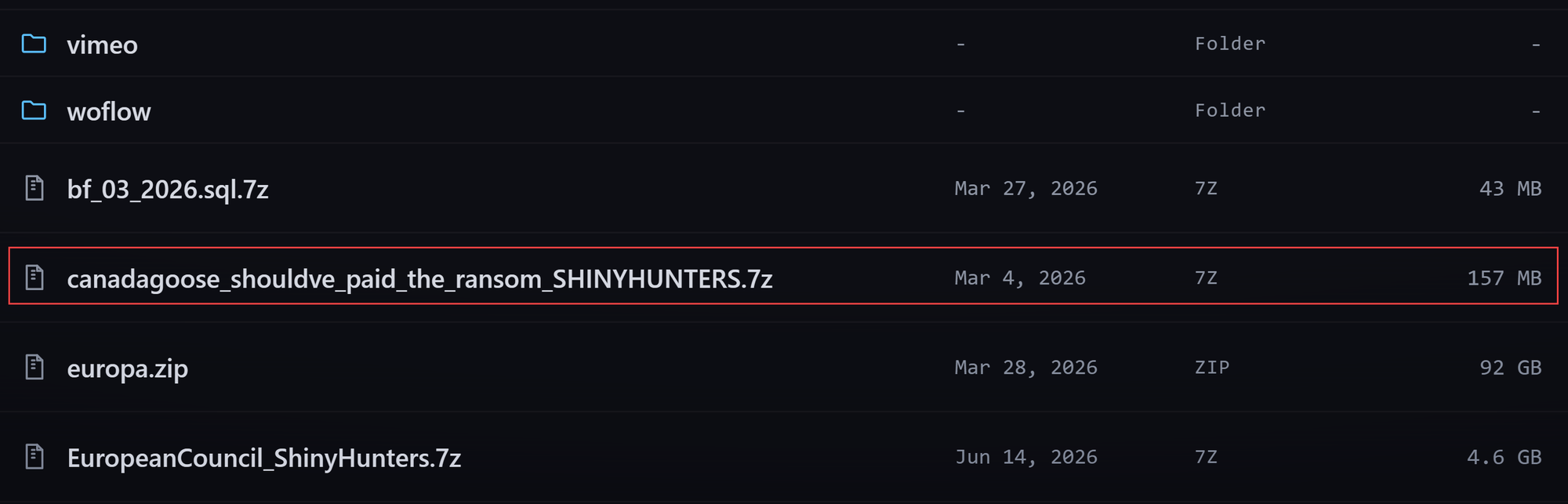
That's a small snippet of the ShinyHunters website from a couple of weeks ago. At the time of writing, a bunch more data has been dumped, including only about 15 minutes before putting these words down in the draft blog post. These breaches have impacted tens of millions of people, including my wife courtesy of her having previously shopped at Canada Goose. Now, let's see how you go about scrubbing her data from that incident. For all the data broker removal services I'll direct to this post later, how do you do that? Clearly, you can't. The pee is now in the pool, and you're not taking it back out. And it's not just "on the dark web" either, their Tor site links through to a clear web site hosting all the data:

Swimming Pools, Pee, and Trying to Delete Your Data From the Internet

And that's just the beginning. Because we're talking about digitised data posted publicly, it replicates like crazy. There will be tens of thousands of copies of my wife's personal info floating around between personal stashes, Telegram channels and public hacking forums. That genie is never going back in the bottle, not unless we're talking about the narrow scope of a legally operating data broker, which raises another issue:

What legally operating broker is enriching their corpus from data breaches?! That's just not where the legitimate ones source info from. The data comes from surveys, exchanges with other services where you ticked the box to agree to the terms and conditions for exchanging data with "partners", public business directories, and even arrest records. Legal services, legal sources, legal processes. In one of the emails from a company looking for product placement, they described their plan as follows (bold is mine):

a plan which allows you to remove your personal information from any URL (where it's legal) you find your personal information on

So what we're left with is data removal services being effective for legally operating brokers who honour legitimate requests, whilst being completely useless against the worst kinds of sites that replicate and abuse your data. In other words, you may be able to opt out of some marketing material or content that's way too specifically targeted to you, but you can't stop the bad guys trying to steal your identity or extort you because "we caught you watching porn on your PC via the malware we installed". It's a little like the court injunctions being the thoughts and prayers of data breach response I wrote about in October: I can't touch the Qantas data breach because I'm a law-abiding Australian who knows about the injunction, but there's absolutely nothing stopping the genuinely bad actors from abusing that data.

And therein lies the core of why I don't want to entertain partnerships with these organisations: not because I disagree with the service or because it will cause any harm, rather because when someone uses HIBP to search for their email address and finds it in the Canada Gooses of the world, these services can't do anything about it. They're merely skimming the leaves off the top of the pool, and no amount of skimming is going to remove what we all know still lies beneath.

  •  
❌