Reading view

Fake USPS QR Code Text Scams and a Major Health Data Breach: This Week in Scams

A new scam making the rounds takes a familiar delivery trick and upgrades it with hyperrealistic messaging and a QR code that looks safe to scan. 

But don’t be fooled. 

It’s the same delivery scam playbook scammers have relied on for years, just repackaged with better design and more convincing details. 

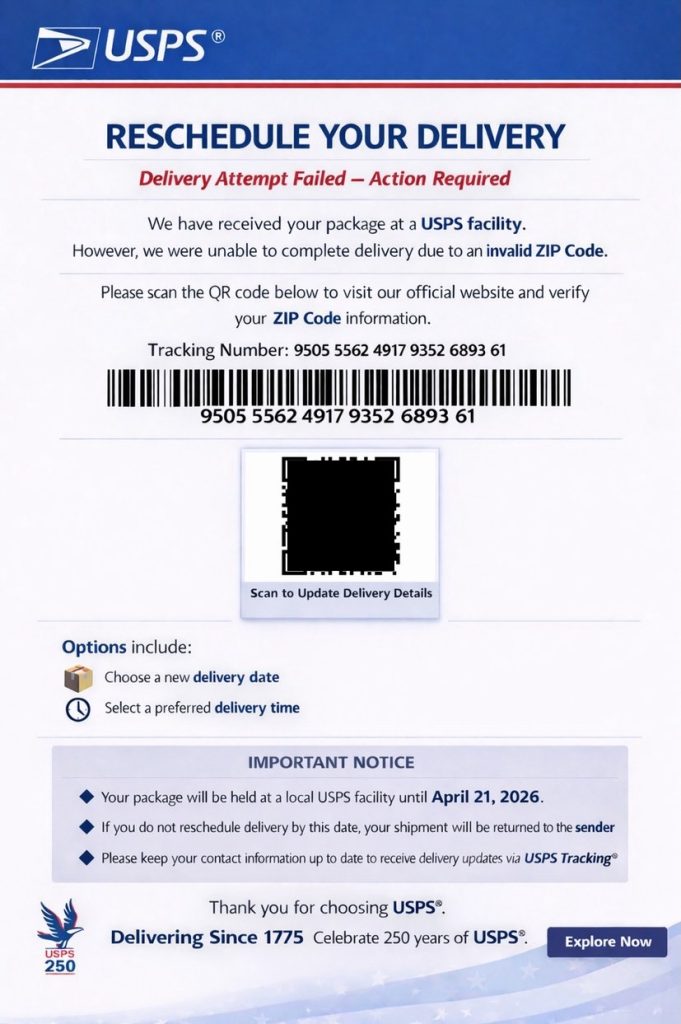
You get a message with a notice that looks something like this, a real message received by our team and tested against McAfee’s Scam Detector. 

A real image of a scam message impersonating the USPS
This is an example of the scam message we received, impersonating the USPS.


That added layer of realism is what makes this version more dangerous. But it doesn’t hold up under scrutiny. McAfee’s Scam Detector flagged both the suspicious language and the QR code in this message before any interaction. 

If you receive something like this, pause. Do not scan the code. 

You can also protect yourself with McAfee’s Scam Detector, which flags suspicious links and messages, including delivery scams and QRbased attacks, and explains why they may be risky. 

What is the USPS QR Code Scam and How Does it Work? 

The USPS QR code scam is a phishing attempt where scammers impersonate postal services and use QR codes instead of clickable links to direct victims to malicious websites. 

Once scanned, the QR code can lead to a fake USPS page that asks for payment, login credentials, or personal information. 

How the scam works 

Step  What happens  The red flags  What to do  How McAfee helps 
You receive a text about a delivery issue or missed package  Urgency, you’re not tracking a package  Be skeptical of unsolicited delivery messages  Scam Detector flags suspicious messages 
The message includes a QR code instead of a link  QR codes instead of official tracking links  is a red flag  Do not scan QR codes from unknown sources  QR scanning protection warns before opening risky destinations 
You scan the code and land on a fake USPS page  Generic or slightly off branding on the webpage  Do not enter any information  Safe Browsing blocks known malicious sites 
The page asks for payment or personal details  Requests for small “redelivery” or “processing” fees  are not normal  Exit immediately and do not submit anything  Scam Detector explains why the page is risky, and Identity Monitoring supports you when if your info gets out. 

What To Do If You Get This Message 

  • Do not scan the QR code  
  • Go directly to the official USPS website to check tracking  
  • Delete the message  
  • Report it as spam  
  • Monitor your accounts if you interacted with it  

And that, my friends, is scam number one in this week’s This Week in Scams. 

Let’s get into what else is on our radar. 

A Major Health Data Breach Exposes 500,000 Records 

A massive health data incident is raising new concerns about how sensitive information is handled and shared. 

According to reporting from the Associated Press, data tied to 500,000 participants in a major U.K. health research project was found listed for sale online. The dataset included biological and health-related information, though it did not contain direct identifiers like names or contact details. 

Access to the data had been granted to research institutions, but that access has since been revoked. Authorities say no purchases were made, and the listing has been removed. 

Still, the situation highlights a growing reality: once data is accessed or shared, control over it becomes harder to guarantee. 

What This Breach Says About Data Privacy 

Scams are no longer isolated events. They are layered. 

A data breach does not just stay a breach. It becomes fuel for future scams. Exposed information can be used to make phishing messages more convincing, personalize attacks, and build trust with targets. 

That is why detection alone is not enough anymore. Protection has to account for both incoming threats and what happens when data is already out there. 

How McAfee Protects You In A World of Scams and Data Breaches  

McAfee+ Advanced gives you multiple layers working together so you are not left figuring it out after the damage is done:  

  • Identity Monitoring alerts you if your personal info shows up where it should not, so you can act fast 
  • Personal Data Cleanup helps remove your information from data broker sites, making you harder to target in the first place 
  • Scam Detector flags suspicious texts, emails, links, and even deepfake videos before you engage 
  • Safe Browsing helps block risky sites if you do click 
  • Device Security helps detect malicious apps or downloads 
  • Secure VPN keeps your data private, especially on public Wi-Fi   

McAfee Safety Tips This Week  

As always, we have some best practices and safety tips for navigating life online:  

  • Pause before clicking, especially when a message creates urgency   
  • Go directly to websites or apps instead of using email links   
  • Be skeptical of routine account alerts that push immediate action   
  • Double-check sender addresses and URLs closely   
  • Use tools like McAfee’s Scam Detector to flag suspicious links and messages before interacting   
  • Turn on identity monitoring so you’re alerted if your data is exposed  

And we’ll be back next week with more scams making headlines.

The post Fake USPS QR Code Text Scams and a Major Health Data Breach: This Week in Scams appeared first on McAfee Blog.

  •  

Cyberbullying Prevention: How to Protect Kids & Teens Online

For many families around the world, the digital spaces where children learn and play have also become venues for relentless harassment. According to a 2025 survey of nearly 3,500 U.S. teens by the Cyberbullying Research Center, about 58% have been cyberbullied at least once, a significant jump from 34% in 2016.

Experts warn that this issue is now a constant crisis and impacting the well-being of children and teens.

In this guide, we will clarify exactly what counts as cyberbullying. We will explore how new platforms and artificial intelligence are reshaping the landscape. Most importantly, we will provide you with practical steps to protect your family. Together, we can take actionable steps to keep our digital lives safe and positive.

What Is Cyberbullying?

Cyberbullying is not a vague term for online drama. It has specific characteristics that separate it from a simple disagreement between friends. Similar to bullying, cyberbullying has standard elements of unwanted aggressive behavior, an observed or perceived power imbalance, and behavior that is repeated or likely to be repeated.

Common cyberbullying behaviors include name-calling, severe insults, rumor spreading, direct threats, impersonation through fake accounts, intentional exclusion from group chats, non-consensual sharing of private photos, and doxxing, publishing someone’s private information like their home address or phone number without consent. We also frequently see pile-on attacks, where dozens or hundreds of users flood a person’s comments section with hate statements.

The Cyberbullying Research Center notes that in recent national surveys, about 26.5% of U.S. students reported being cyberbullied in the last 30 days, underscoring the ongoing nature of online harassment as a daily reality for many.

Why Cyberbullying is Different (and More Harmful)

While the core intent to harm is the same as traditional bullying, cyberbullying operates differently:

  • Platform: Bullying takes place in the physical world, while cyberbullying occurs in digital spaces such as text messages, direct messages, social media platforms, group chats, online gaming environments, email, and photo-sharing applications.
  • Anonymity: Another major difference is anonymity. Cyberbullies often hide behind fake profiles or anonymous accounts, making it difficult to know who is launching the attacks.
  • Constancy: A significant difference with cyberbullying is the constant nature of the internet. Online harassment can follow teens home and continue late into the night via phones and apps.
  • Audience and permanence: A hurtful comment made in a school hallway is heard by a few people and eventually fades, while a similar post online can spread to thousands of people in minutes. It can be screen-captured and may resurface years later. Once it is out there, it is incredibly difficult to remove.

Despite these differences, there is a strong overlap in how bullying and cyberbullying impact individuals. Many youths who are bullied online are also bullied at school, and experience anxiety or depression.

Types and Examples of Cyberbullying

Cyberbullying takes many forms, from classic harassment tactics to emerging AI-powered threats. The most frequently reported forms of cyberbullying include being excluded from group chats, mean or hurtful comments posted online, public embarrassment or humiliation, and rumors spread online, according to the Cyberbullying Research Center’s 2025 survey. Understanding these methods helps you recognize and stop them.

Common Cyberbullying Methods

  • Harassment: Sending repeated offensive messages through texts, direct messages, or comments, or intentionally leaving someone out of group chats and online activities where they can see what they’re missing.
  • Flaming: An online fight conducted through angry, vulgar exchanges via emails, messages, social media, or chat rooms. Unlike harassment, flaming is often a heated back-and-forth exchange rather than one-sided attacks.
  • Impersonation and Fake Accounts: Creating fake profiles or hacking into someone’s account to post damaging content as if the victim wrote it themselves, destroying reputations quickly
  • Outing and Doxing: Sharing private photos, messages, or personal information (like addresses or phone numbers) publicly without consent to embarrass, humiliate, or intimidate
  • Cyberstalking: Persistent online monitoring accompanied by threatening messages that make someone fear for their safety, which is a federal crime. Examples include tracking someone’s location through social media check-ins, obsessively monitoring their online activity, or sending relentless, threatening messages.

Where Cyberbullying Occurs Most

To protect our kids, we need to know where the risks are highest. Recent analyses find that cyberbullying mainly happens on social media platforms, including YouTube, TikTok, and Facebook, as well as in messaging apps and online games, where teens commonly interact.

If you are a parent, take an inventory of the apps your child uses most frequently and ask them to show you how the messaging and commenting features work. Familiarizing yourself with these digital environments will help them navigate these platforms safely.

Emerging AI-Driven Threats

Artificial intelligence (AI) has fundamentally changed the internet, and has, unfortunately, introduced alarming new tactics:

  • Deepfake Images and Videos: AI-generated content can be misused to create highly realistic images or videos called deepfakes. Entirely fake videos can be created showing a student doing or saying something they never did, which complicates evidence gathering. These are then shared in group chats or posted publicly to spread false narratives and destroy reputations.
  • Voice Cloning: Students are using AI to mimic classmates’ voices, generating audio that makes someone sound like they said something offensive or embarrassing, with no easy way to prove it wasn’t real. About 11% of U.S. high schoolers have experienced this.
  • AI-Generated Harassment: AI chatbots are being used to generate spam, threats, and hate speech at scale, flooding a victim’s inbox or comment sections across platforms.
  • Body-Shaming with AI Filters: AI-altered images and filters are being weaponized to body-shame and humiliate targets, often shared widely before victims can respond.

AI Can Also Be a Safety Tool

However, platforms have also begun using AI as a safety tool to detect hate speech, harassment, and predatory behavior in real time. Newer safety reports show that AI-driven comment filtering and think-before-you-post nudges successfully reduce toxic comments and repeat harassment on major platforms.

How Common Is Cyberbullying Today?

The statistics show that cyberbullying is a widespread issue requiring immediate attention. In a 2024 study, the World Health Organization revealed that 15% of surveyed adolescents have experienced cyberbullying.

In the U.S., the Centers for Disease Control and Prevention (CDC) Youth Risk Behavior Survey reports that 16% of high school students were electronically bullied in the previous 12 months, about 38.3% of whom were girls compared to 29.9% of boys.

Another study showed that about 53.9% of teens aged 13 to 17 reported being cyberbullied. These statistics demonstrate that cyberbullying is a mainstream experience, making digital safety education relevant to almost every family.

The Most Affected Groups

Aside from gender, identity plays a key role in who is targeted for cyberbullying. Gender minorities reported much higher rates of harassment at 47.1% compared with their heterosexual peers at 30%, as did students with developmental disabilities.

How Cyberbullying Affects Mental Health

There is evidence that online harassment causes profound psychological harm. A CDC report links frequent social media use with higher rates of both in-person and cyberbullying, as well as constant sadness, hopelessness, and suicidal thinking among teens.

This is supported by the 2025 announcement from mental health experts highlighting the connection between cyberbullying and increased anxiety, depression, and trauma-like symptoms. Even though incidents seem minor, parents and teens must acknowledge that emotional reactions to cyberbullying are valid and serious. Early support and intervention can significantly reduce long-term harm.

Platform Safety Updates for Teens

Social media companies are facing intense pressure to protect younger users, leading to significant updates. In 2025, Meta tightened default messaging and commenting settings for teens, automatically assigning the strictest safety options to teen accounts to filter inappropriate interactions from unknown users.

In addition, the company’s Instagram and Facebook platforms now provide more information about users contacting teens, showing details such as the age of the account and providing a way to block and report abusive users.

Help your child utilize these settings by ensuring their accounts are set to private to restrict direct messages from strangers. Enable each platform’s built-in AI comment filtering to hide offensive words automatically.

Signs Your Child May Be Cyberbullied

As a parent, one of your most powerful tools is simply paying attention. Cyberbullying often leaves visible traces in your child’s behavior, emotions, and device habits, if you know what to look for. The good news is that early recognition means early intervention, and that can make all the difference.

Behavioral Changes to Watch For

  • Sudden withdrawal from social activities or friends
  • Reluctance to go to school or participate in usual activities
  • Anxiety or nervousness when using devices or checking messages
  • Changes in sleep patterns or appetite

Emotional Warning Signs

  • Increased sadness, anxiety, or irritability, especially after being online
  • Low self-esteem or negative self-talk (“nobody likes me,” “I’m stupid”)
  • Reluctance to discuss online activities or what’s happening at school

Device and Online Behavior

  • Extreme changes in screen time, either excessive checking or complete avoidance
  • Suddenly deleting social media accounts without explanation
  • Being secretive about online activity or quickly hiding screens
  • Receiving unusual volumes of messages or calls, especially at odd hours

If you notice several of these signs together, it’s time for a conversation. The key is approaching with empathy and making it clear they won’t be punished for opening up.

How to Prevent Cyberbullying: Guidance for Families

Knowing the impact of cyberbullying is only half the battle. The most important step is being proactive to protect your family. Here is how you can build a resilient defense against online harassment and empower your children.

Build Open Communication and Digital Citizenship Skills

The foundation of digital safety is trust. Encourage regular, judgment-free check-ins on your child’s online activities. Ask them what they are doing, seeing, and feeling related to the ongoing online issues. Assure them you will not confiscate their phone when they report a problem.

In addition, teach your kids to recognize cyberbullying and to support their peers who are being targeted. Underscore the importance of not joining in on the comment pile-ons, and let them know that it is perfectly acceptable to block, mute, or simply leave harmful digital spaces. Research suggests that strong parent-teen communication can buffer some negative effects of social media use and encourage teens to ask for help sooner.

Enable Safety Settings

Every major platform has tools designed to stop harassment. Teach your child to use keyword filters to automatically hide comments that contain specific insults, slurs, and other forms of hate speech. Help them set their accounts to private to restrict direct messages from strangers, and enable each platform’s built-in AI comment-filtering features.

How to Report Cyberbullying

Alongside safety features, teach them to block and report harassers on the platform. You can end cyberbullying quickly if you know how to use platforms’ tools effectively.

1. Document Everything First

Before blocking, deleting, or reporting anything, save evidence. Create a digital safety plan and agree with your family that if anyone receives a threatening or highly abusive message, they should document the incident with screenshots before blocking, deleting, or responding to it. These screenshots will serve as important pieces of evidence if the school or platforms need to take action.

2. Use Platform Reporting Tools

Most importantly, teach your child to block and report harassers on the platform. Here’s how on major platforms:

Instagram, Facebook, and Threads:

  1. Tap the three dots on the post or message
  2. Select “Report” and choose the violation type (bullying or harassment)
  3. Follow prompts to block the account
  4. Use “Restrict” to limit interactions without full blocking

TikTok:

  1. Long-press the comment or video
  2. Select “Report” and choose “Bullying and harassment”
  3. Block the account from their profile page

Snapchat:

  1. Press and hold on the message or username
  2. Tap “Report” and select the issue
  3. Block the user to prevent further contact

YouTube:

  1. Click the three dots next to the comment or video
  2. Select “Report” and choose “Cyberbullying or harassment”

Gaming Platforms (Xbox, PlayStation, Discord, and Roblox)

  1. Use in-game or platform reporting options, typically found in user profiles or chat menus
  2. Many platforms now offer real-time abuse detection that automatically flags harassment

Text Messages:

  1. Block the number through your phone settings
  2. Report spam to your carrier (forward to 7726/SPAM for most U.S. carriers)
  3. Save screenshots before blocking

3. Escalate for More Help

Sometimes, platform tools are not enough. You need to know when to escalate the situation to the appropriate authorities. Follow the steps below when you see signs of ongoing harassment, physical threats, identity-based or other forms of hate, the sharing of private images, as well as changes in your child’s mood, sleep patterns, or school attendance.

  1. Save all evidence, including screenshots, URLs, usernames, and timestamps.
  2. Contact school officials, such as a counselor or principal, and provide them with specific documentation.
  3. Seek professional mental health support to address your child’s distress.
  4. Contact local law enforcement immediately if there are threats of physical harm or illegal content involved.

How Technology Can Help Prevent Cyberbullying

While technology is the medium for cyberbullying, it is also a tool for prevention and protection. Using the right software can give parents peace of mind and help teens navigate the web.

Device-Level Protection and Parental Controls

Cyberbullying is frequently accompanied by other digital threats, such as sending malicious links, stealing passwords, or tricking victims into downloading scam apps. This is where robust security software becomes essential to help block phishing links and compromised websites.

Additionally, parental control tools allow you to manage screen time, filter inappropriate web content, and monitor or limit certain types of app usage for age-appropriate scenarios. These tools help protect younger children from platforms they are not emotionally ready to handle.

Digital Well-Being Tools that Signal Distress

Modern security solutions offer digital well-being tools that track app usage and highlight sudden changes in behavior, such as late-night device use, massive spikes in messaging, or the sudden downloading of new, unfamiliar apps. These changes can be early warning signs of distress or harassment.

It is crucial to use these tools transparently by introducing them to your teens as conversation starters rather than secret surveillance. Saying that you noticed they were on their phone very late last night and asking if everything is okay builds trust. Spying breaks it.

Legal Grounds to Deal with Cyberbullying

Cyberbullying is not just a behavioral issue. It intersects heavily with school policies, community safety, and the law. Understanding this context will help your family deal with severe harassment.

Laws and School Responsibilities

Globally, many countries are adopting frameworks to protect digital citizens against cyberbullying. In the United States, all 50 states have anti-bullying laws, most of which now explicitly include electronic or cyberbullying in their definitions and guidance. These include laws and district policies that allow schools to address online behavior that creates a hostile environment or substantially disrupts a student’s learning. This means that even if the harassment happens on a weekend via a smartphone, the school has the authority and the responsibility to intervene if it impacts the victim’s ability to feel safe in the classroom.

Cyberbullying as a Crime

Certain cruel online behaviors may cross the line into criminal activity and to be considered crimes. For instance, credible threats of violence, stalking, extortion, hate-motivated harassment, and the non-consensual sharing of intimate images may violate criminal laws.

If a situation escalates to this level, it is time for legal and law enforcement to intervene. When this happens, families should document all evidence and consider contacting law enforcement or civil rights agencies.

Look up your local school district’s specific cyberbullying policies and legal obligations, and find out who to contact. This will save you valuable time if you need to report an incident.

Final Thoughts

Cyberbullying is intentional, repeated online harm, and a serious issue that leverages the constant nature of the internet to follow young children, teens, and certain groups into their homes and bedrooms.

While social media platforms, school policies, and laws are steadily improving, families still hold the most powerful tools. You can significantly reduce the harm to your children caused by online harassment by initiating open and non-judgmental conversations, utilizing built-in device protections and app privacy settings, partnering with your local schools, and seeking mental health support when needed.

Talk with your kids this week about their online experiences. Sit down together and review the safety and privacy settings on their favorite apps. Finally, consider using a trusted security partner such as McAfee+ as part of a broader, proactive digital safety plan.

A McAfee+ family plan helps protect your household’s devices from the malware and malicious links that often accompany harassment or sextortion attempts and sets healthy boundaries around apps, web content, and screen time. Furthermore, it provides educational resources on digital citizenship and safe social media use beyond basic antivirus software.

When you work with trusted tools, you can help keep the internet a place of connection and creativity.

The post Cyberbullying Prevention: How to Protect Kids & Teens Online appeared first on McAfee Blog.

  •  

Weekly Update 500

Weekly Update 500

Looking back at this milestone video, it's the audience question towards the end I liked most: "are you happy"? Charlotte and I have chosen a path that's non-traditional, intense and at times, pretty stressful. There's no clear delineation of when work starts and ends, no holidays where we don't work, nor weekends, birthdays or Christmases. But we do so on our terms. It gives us a life of means and choices, one with excitement and adventure, and, above all, one with purpose, where we feel like we're doing something that makes a meaningful difference. I hope you enjoy this week's video, it's more personal than usual, but yeah, that's kinda what you do at milestones 😊

Weekly Update 500
Weekly Update 500
Weekly Update 500
Weekly Update 500
  •  

Why Hackers Are Collecting Data They Can’t Read Yet. And How to Stay Safe

Co-Authored by Luiz Parente 

Your data might be safe today. But that doesn’t mean it’s safe forever. 

A growing number of sophisticated actors are collecting encrypted data now, with the goal of decrypting it later, when more powerful technology becomes available. 

This strategy is known as Harvest Now, Decrypt Later (HNDL). And it’s not a future problem. It’s already happening, according to research from our McAfee VPN team. 

For everyday people, that means private messages, financial records, and sensitive documents could be exposed years from now if protections don’t evolve today. 

That’s why security teams, including McAfee’s VPN engineers, are already working on ways to strengthen encryption for both today and what comes next. 

What “Harvest Now, Decrypt Later” Means 

At its core, HNDL is simple: Attackers collect encrypted data now, store it, and wait until they have the tools to unlock it later. 

Even though today’s encryption is incredibly strong, the strategy doesn’t rely on breaking it today. It relies on patience.  

A Simple Way to Think About It 

You put valuable belongings and documents in a safe at home that’s locked and secured. This works at preventing crimes of opportunity. But let’s say there’s a thief who steals the entire safe, knowing they have tools they can use later to access what’s inside. They wait, and once the tools are available, they break into your safe and access everything inside. 

That’s one way to think of HNDL. The safe is the encryption. The quantum computing is the tool they can use later.  

But in real life, you’d probably notice if your safe is gone. In the case of HNDL, if you’re not monitoring your data, you may not even notice encrypted information has been stolen to be decrypted.  

Key Terms Explained 

Term  What it means 
Encryption  Scrambling data so others can’t read it 
Quantum computing  A new type of computing that can break some encryption 
HNDL  A strategy to collect encrypted data now and decrypt it later 

Why This Matters Right Now 

This isn’t about whether your data is valuable today. It’s about whether it might be valuable later. 

Data with a long shelf life is especially at risk, including: 

  • Financial records  
  • Medical information  
  • Private messages  
  • Legal or identity documents  

Even something that feels low-stakes today could become sensitive in the future. 

And because the collection phase is already happening, the risk isn’t hypothetical. It’s already in motion. 

How This Affects VPNs (and what doesn’t change) 

VPNs remain one of the most effective ways to protect your data today. That hasn’t changed. 

But HNDL introduces a new layer of complexity. 

  • What’s still strong: The encryption that protects your data in transit remains highly resilient.  
  • Where the risk is: The “handshake” process (how a secure connection is established) is more vulnerable to future quantum attacks.  

In simple terms: Your data is well protected today, but parts of how that protection is set up may need to evolve for the future. 

What Quantum Computing Changes 

Traditional computers process information in a linear way. 

Quantum computers work differently. They can solve certain types of problems much faster, including the kinds of mathematical challenges that protect today’s encryption. 

That’s why attackers are willing to wait. 

Once quantum computing reaches a certain level, it could unlock data that was previously considered secure. 

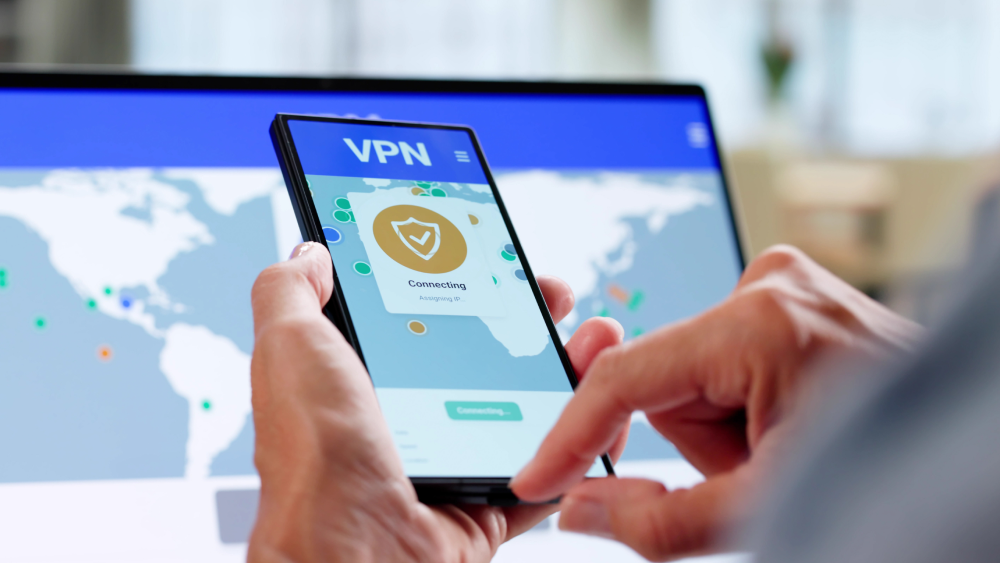
Image shows a phone connecting to VPN

What McAfee’s VPN Team is Working On 

McAfee’s VPN team is already preparing for this shift. 

  • Evaluating quantum-safe encryption approaches  
  • Exploring hybrid models that protect both now and long-term  
  • Building toward a more resilient VPN experience  

This work builds on a broader privacy-by-design approach, where systems are designed to minimize risk from the start, not react after the fact. 

Because with HNDL, waiting isn’t an option. 

What You Can Do Now 

You don’t need to wait for quantum computing to take steps today. 

  • Use a trusted VPN to encrypt your connection  
  • Be mindful of long-term sensitive data you share online  
  • Avoid unsecured public Wi-Fi when possible  
  • Keep your apps and devices updated  

These steps help protect your data now while the industry builds toward future-ready security. 

How McAfee Helps Protect You 

McAfee+ Advanced gives you multiple layers working together so you are not left figuring it out after the damage is done:  

  • Identity Monitoring alerts you if your personal info shows up where it should not, so you can act fast 
  • Personal Data Cleanup helps remove your information from data broker sites, making you harder to target in the first place 
  • Scam Detector flags suspicious texts, emails, links, and even deepfake videos before you engage 
  • Safe Browsing helps block risky sites if you do click 
  • Device Security helps detect malicious apps or downloads 
  • Secure VPN keeps your data private, especially on public Wi-Fi   

Frequently Asked Questions (FAQs) 

FAQ 
Q: Is my data safe right now?  

A: In most cases, yes—today’s encryption is extremely strong and is designed to protect your data from current threats. If you’re using trusted security tools like a VPN, safe browsing protections, and device security, your data is actively protected while it’s in transit and in use. However, no system is risk-free. Data exposed through phishing, weak passwords, breaches, or unsecured networks may still be vulnerable. And with “Harvest Now, Decrypt Later,” even properly encrypted data could be collected today and targeted for decryption in the future. 

Q: What is quantum-safe encryption? 

A: Quantum-safe (or post-quantum) encryption refers to new types of cryptography designed to remain secure even against future quantum computers. Today’s encryption relies on math problems that are extremely difficult for classical computers to solve, but quantum computers could eventually solve some of them much faster. Quantum-safe approaches use different mathematical foundations that are believed to resist those capabilities. In practice, many companies are moving toward hybrid encryption, combining today’s proven methods with newer quantum-resistant techniques to protect data both now and long-term. 

Q: Should I still use a VPN? 

A: Yes. A VPN remains one of the most effective ways to protect your data today, especially on public or unsecured networks. It encrypts your internet traffic and helps prevent interception by hackers, internet providers, or other third parties. While VPN protocols are evolving to address future quantum risks, they still provide strong, essential protection against today’s threats. 

Q: When will this become a real threat? 

A: The risk unfolds in two phases. The collection phase is already happening today, where sophisticated actors gather encrypted data and store it. The decryption phase depends on when quantum computing advances far enough to break certain types of encryption, which could take years but is actively progressing. This means data with a long lifespan, such as financial records, personal communications, and sensitive documents, is most at risk because it only needs to remain valuable until those capabilities exist. 

The post Why Hackers Are Collecting Data They Can’t Read Yet. And How to Stay Safe appeared first on McAfee Blog.

  •  

‘Scattered Spider’ Member ‘Tylerb’ Pleads Guilty

A 24-year-old British national and senior member of the cybercrime group “Scattered Spider” has pleaded guilty to wire fraud conspiracy and aggravated identity theft. Tyler Robert Buchanan admitted his role in a series of text-message phishing attacks in the summer of 2022 that allowed the group to hack into at least a dozen major technology companies and steal tens of millions of dollars worth of cryptocurrency from investors.

Buchanan’s hacker handle “Tylerb” once graced a leaderboard in the English-language criminal hacking scene that tracked the most accomplished cyber thieves. Now in U.S. custody and awaiting sentencing, the Dundee, Scotland native is facing the possibility of more than 20 years in prison.

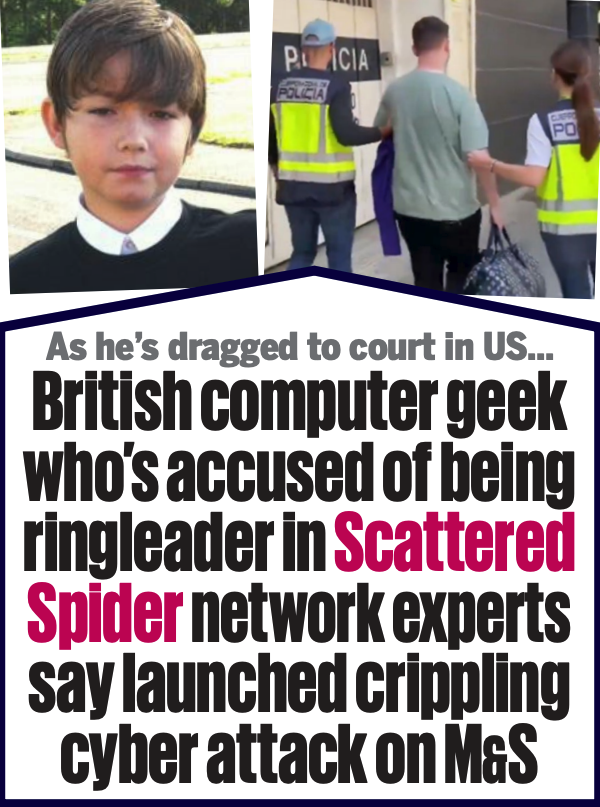
A screenshot of two photos of Buchanan that appeared in a Daily Mail story dated May 3, 2025.

Two photos published in a Daily Mail story dated May 3, 2025 show Buchanan as a child (left) and as an adult being detained by airport authorities in Spain. “M&S” in this screenshot refers to Marks & Spencer, a major U.K. retail chain that suffered a ransomware attack last year at the hands of Scattered Spider.

Scattered Spider is the name given to a prolific English-speaking cybercrime group known for using social engineering tactics to break into companies and steal data for ransom, often impersonating employees or contractors to deceive IT help desks into granting access.

As part of his guilty plea, Buchanan admitted conspiring with other Scattered Spider members to launch tens of thousands of SMS-based phishing attacks in 2022 that led to intrusions at a number of technology companies, including Twilio, LastPass, DoorDash, and Mailchimp.

The group then used data stolen in those breaches to carry out SIM-swapping attacks that siphoned funds from individual cryptocurrency investors. In an unauthorized SIM-swap, crooks transfer the target’s phone number to a device they control and intercept any text messages or phone calls to the victim’s device — such as one-time passcodes for authentication and password reset links sent via SMS. The U.S. Justice Department said Buchanan admitted to stealing at least $8 million in virtual currency from individual victims throughout the United States.

FBI investigators tied Buchanan to the 2022 SMS phishing attacks after discovering the same username and email address was used to register numerous phishing domains seen in the campaign. The domain registrar NameCheap found that less than a month before the phishing spree, the account that registered those domains logged in from an Internet address in the U.K. FBI investigators said the Scottish police told them the address was leased to Buchanan throughout 2022.

As first reported by KrebsOnSecurity, Buchanan fled the United Kingdom in February 2023, after a rival cybercrime gang hired thugs to invade his home, assault his mother, and threaten to burn him with a blowtorch unless he gave up the keys to his cryptocurrency wallet. That same year, U.K. investigators found a device at Buchanan’s Scotland residence that included data stolen from SMS phishing victims and seed phrases from cryptocurrency theft victims.

Buchanan was arrested by Spanish authorities in June 2024 while trying to board a flight to Italy. He was extradited to the United States and has remained in U.S. federal custody since April 2025.

Buchanan is the second known Scattered Spider member to plead guilty. Noah Michael Urban, 21, of Palm Coast, Fla., was sentenced to 10 years in federal prison last year and ordered to pay $13 million in restitution. Three other alleged co-conspirators — Ahmed Hossam Eldin Elbadawy, 24, a.k.a. “AD,” of College Station, Texas; Evans Onyeaka Osiebo, 21, of Dallas, Texas; and Joel Martin Evans, 26, a.k.a. “joeleoli,” of Jacksonville, North Carolina – still face criminal charges.

Two other alleged Scattered Spider members will soon be tried in the United Kingdom. Owen Flowers, 18, and Thalha Jubair, 20, are facing charges related to the hacking and extortion of several large U.K. retailers, the London transit system, and healthcare providers in the United States. Both have pleaded not guilty, and their trial is slated to begin in June.

Investigators say the Scattered Spider suspects are part of a sprawling cybercriminal community online known as “The Com,” wherein hackers from different cliques boast publicly on Telegram and Discord about high-profile cyber thefts that almost invariably begin with social engineering — tricking people over the phone, email or SMS into giving away credentials that allow remote access to corporate internal networks.

One of the more popular SIM-swapping channels on Telegram has long maintained a leaderboard of the most rapacious SIM-swappers, indexed by their supposed conquests in stealing cryptocurrency. That leaderboard previously listed Buchanan’s hacker alias Tylerb at #65 (out of 100 hackers), with Urban’s moniker “Sosa” coming in at #24.

Buchanan’s sentencing hearing is scheduled for August 21, 2026. According to the Justice Department, he faces a statutory maximum sentence of 22 years in federal prison. However, any sentence the judge hands down in this case may be significantly tempered by a number of mitigating factors in the U.S. Sentencing Guidelines, including the defendant’s age, criminal history, time already served in U.S. custody, and the degree to which they cooperated with federal authorities.

  •  

Cloud Storage Scam Emails and Record-Breaking Fraud Losses: This Week in Scams 

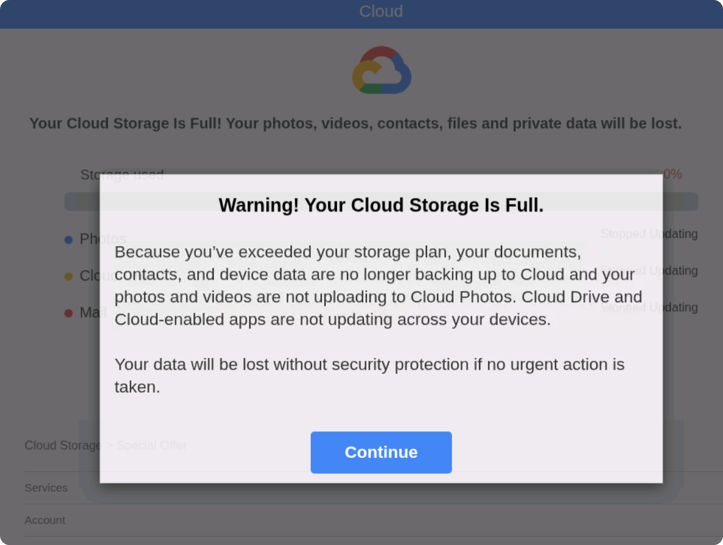
Fake cloud email example

You open your inbox and see it: Your cloud storage is full. 

There’s a warning about photos being deleted, your account being suspended, or a renewal failing. There’s a button to “fix it now.” Or a warning to “act today.” 

It looks routine. Maybe even urgent enough to click. 

That’s exactly the point. 

An example of a cloud storage scam detected by McAfee.

Cloud storage scams are making headlines again, building on patterns we flagged earlier this year in our State of the Scamiverse research.  

These emails have circulated steadily since 2025, often impersonating trusted brands like Apple, Microsoft, and Google. Many are timed to moments when people are already thinking about storage, backups, or subscriptions. 

The safest move is simple: pause and don’t click. If there’s a real issue, go directly to your account through the official app or website. 

You can also protect yourself with McAfee’s Scam Detector, which flags suspicious links and messages, including cloud storage scams, and explains why they may be risky. 

What Is A Cloud Storage Scam And How Does It Work? 

Cloud storage scams are phishing attacks designed to trick you into believing there’s an issue with your account so you’ll click a malicious link.

They often look like this, and include 3 key red flags:  

  • Messages that create urgency like “act now or lose your data”  
  • Generic greetings instead of your name  
  • Links that don’t match the official domain  

How the scam works (step-by-step) 

Step  What happens  What to do  How McAfee helps 
1. You receive a message  Email or text claims your storage is full or your account has an issue  Don’t click links directly from the message  Scam Detector flags suspicious messages before you interact 
2. Urgency is introduced  Warning that files or photos will be deleted if you don’t act  Pause. Urgency is a red flag  Scam Detector identifies pressure-based scam patterns 
3. You’re pushed to a link  Link mimics a real login or billing page  Go directly to the official website instead  Safe browsing tools help block malicious sites 
4. You’re asked for info  Login credentials or payment details requested  Never enter info from a link you didn’t verify  Scam Detector explains why a page or link is risky 

5. Data is captured  Scammers collect your data or payment  Monitor accounts and report suspicious activity  Identity monitoring alerts you if your data is exposed 

 Why This Scam Works 

  • Familiar brands: Messages often appear to come from trusted platforms like Apple iCloud or Google Drive  
  • Emotional pressure: The threat of losing photos or files triggers quick decisions  
  • Routine context: Storage alerts feel normal, so people don’t question them  

And that, my friends, is scam number one in this week’s This Week in Scams. 

Let’s get into what else is on our radar. 

FBI Report: Over $20 Billion Lost to Scams in 2025

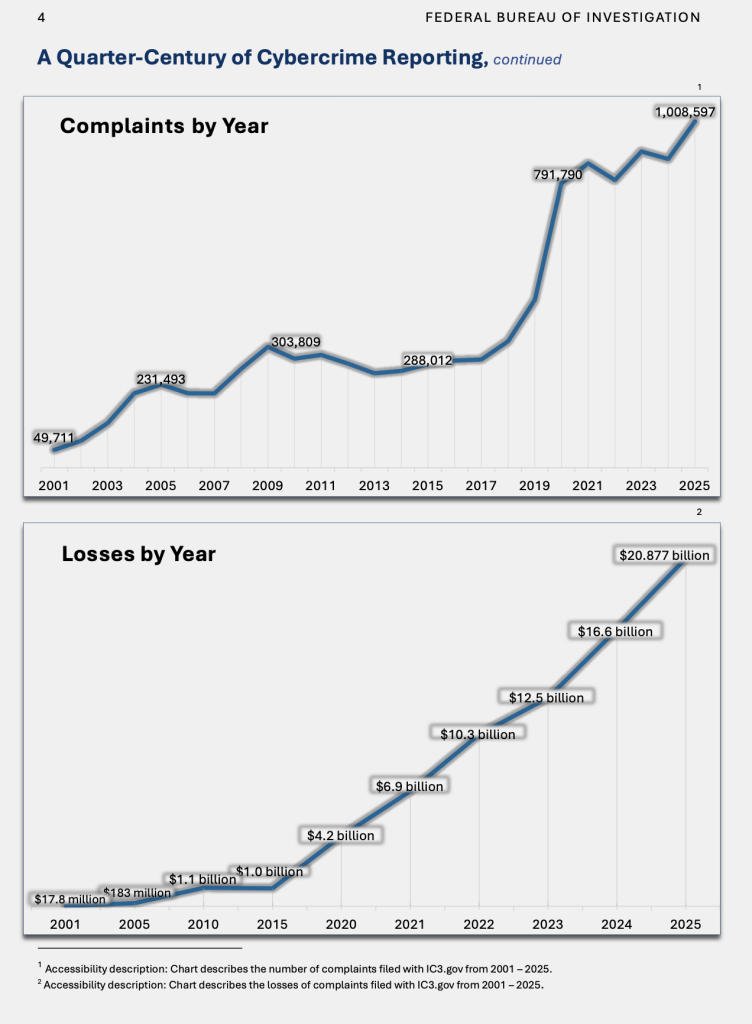
New data from the FBI’s Internet Crime Complaint Center (ICC) shows just how large the scam economy has become. 

 Accessibility description: Chart describes the number of complaints filed with IC3.gov from 2001 – 2025. 2 Accessibility description: Chart describes the losses of complaints filed with IC3.gov from 2001 – 2025. (Image Courtesy, FBI)
Cybersecurity-related fraud losses topped $20 billion in 2025. (Image Courtesy, FBI)

In 2025 alone: 

  • Americans reported over $20.8 billion in losses  
  • More than 1 million complaints were filed  
  • That’s roughly 3,000 complaints per day  
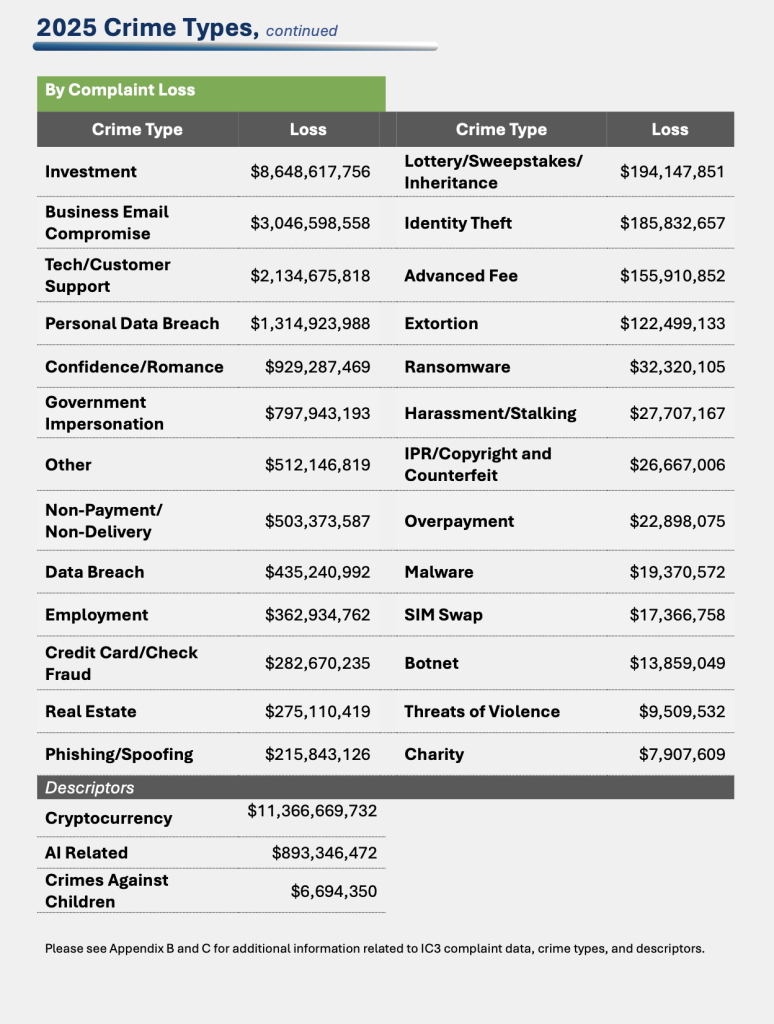
(Image Courtesy, FBI)
Investment-related fraud topped the charts, with over $8.5 billion lost to investment cybercrime in 2025. And that’s just losses that were reported. Not everyone reports when they were scammed. (Image Courtesy FBI)

This is where layered protection matters. It’s not just about catching one bad link. It’s about recognizing patterns across messages, platforms, and moments when something feels slightly off. 

How McAfee Protects You From Scams and Cyber Threats 

McAfee+ Advanced gives you multiple layers working together so you are not left figuring it out after the damage is done:  

  • Identity Monitoring alerts you if your personal info shows up where it should not, so you can act fast 
  • Personal Data Cleanup helps remove your information from data broker sites, making you harder to target in the first place 
  • Scam Detector flags suspicious texts, emails, links, and even deepfake videos before you engage 
  • Safe Browsing helps block risky sites if you do click 
  • Device Security helps detect malicious apps or downloads 
  • Secure VPN keeps your data private, especially on public Wi-Fi   

McAfee Safety Tips This Week 

As always, we have some best practices and safety tips for navigating life online: 

  • Pause before clicking, especially when a message creates urgency  
  • Go directly to websites or apps instead of using email links  
  • Be skeptical of routine account alerts that push immediate action  
  • Double-check sender addresses and URLs closely  
  • Use tools like McAfee’s Scam Detector to flag suspicious links and messages before interacting  
  • Turn on identity monitoring so you’re alerted if your data is exposed 

And we’ll be back next week with more scams making headlines. 

The post Cloud Storage Scam Emails and Record-Breaking Fraud Losses: This Week in Scams  appeared first on McAfee Blog.

  •  
❌