❌

Reading view

XCPE Botnet: Is Your Android TV Box Hacked? What to Do Now

Google and a group of security partners said on Nov. 2, 2026, that they had dismantled XCPE, a botnet hidden inside more than 1.3 million TV set-top boxes, most of them inexpensive Android TV boxes. According to Google’s Threat Intelligence Group, the device maker Videostrong Technology Co. built the backdoor into the boxes and sold access to criminals, who used owners’ home internet connections for ad fraud and residential proxy networks. The servers that controlled the botnet are down, but the backdoor is still on the boxes, and owners cannot remove it themselves.

Key points

  • The backdoor, called x.cpe, sits in the box’s firmware and reinstalls itself if you delete it.
  • Google attributes it “with high confidence” to Videostrong Technology Co.
  • Google says the takedown also cuts criminals off from at least 10 million other infected devices.
  • If your box is affected, disconnect it and plan to replace it. A factory reset may not remove the backdoor, which lives in protected firmware.

How the XCPE Backdoor Works

XCPE turned ordinary TV boxes into a botnet, a network of devices that criminals control remotely. According to Google’s report, it worked in three layers:

  1. A hidden system app. A small program named x.cpe (com.oemservice on some boxes) is preloaded in the firmware with system-level access. If a user uninstalls it, it reinstalls itself from a protected part of the firmware the next time the box restarts.
  2. A remote control channel. The backdoor checks in with the operators’ servers and waits for orders. Through it, the operators could install apps silently, run commands, capture the screen, and map the home network. Before installing anything, it switched off Google Play Protect’s app checks.
  3. Paid add-ons for criminals. Videostrong sold access to other criminal groups and loaded their programs onto the boxes. Most of these turned the box into a residential proxy or used it for bandwidth sharing, which rents out your home internet address so someone else’s traffic appears to come from your house. Others faked ad views or loaded other malware.

Google says it saw the operators take live screenshots, inject keystrokes, and copy account details, device information, app lists, and system logs from infected boxes. Google ties two of the add-on programs, Moyu and Bird, to the BadBox operation. The FBI warned consumers about that operation, known as BADBOX 2.0, in a June 2025 public service announcement.

Most infected devices were Android TV set-top boxes, but Google also found the backdoor on telehealth devices, karaoke machines, and digital signage. (For more background on this kind of threat, see our explainers on backdoor attacks and pre-installed malware on Android devices.)

Google says it used legal action to take down the botnet’s control servers and the control domains of more than a dozen malware families. It also banned Videostrong and any future subsidiaries or affiliates from making certified Android devices or supplying software to other certified vendors. Japan’s National Police Agency, Lumen, HUMAN Security, Plume, Synthient, and TrendAI worked with Google on the operation, according to Google’s report.

Is My Android TV Box Affected?

There is no single test, but these checks will tell you whether your box is likely part of XCPE. Work through them in order.

  1. Check the brand and model. Researchers at Synthient and Plume link MECOOL-branded boxes to Videostrong, and Synthient found the backdoor already installed on a MECOOL KM9PRO Max it bought. Synthient has published a list of 182 device model names seen in the campaign. A match is a strong warning sign, not proof: the list itself says a model name alone does not confirm infection. A box that is not on the list is not automatically safe, because Videostrong also makes boxes sold under other brands.
  2. Look for the backdoor app. On the box, open Settings, then Apps, and choose the option to show system apps. If you see x.cpe, com.oemservice, or com.abc.nexus, treat the box as infected. These are the package names Google published. Not finding them does not clear the box: since August 2026, the operators have also installed extra apps disguised as Android system apps, with names such as com.android.system.ntp.
  3. Check whether Play Protect was turned off. The XCPE backdoor disables Google Play Protect’s app checks. If you find Play Protect’s app scanning switched off and you did not turn it off, treat that as a red flag.
  4. Watch your home network. The FBI lists unexplained internet traffic as a possible sign of an infected device. Check your router’s app or admin page for heavy data use by the TV box, especially when nobody is watching anything.

Warning Signs Your TV Box Is Part of a Botnet

Red flag Why it matters
The box was sold as “unlocked” or able to access free content The FBI lists this as a possible sign of a compromised device
The brand is one you do not recognize The FBI lists unrecognizable brands as a possible sign of a compromised device. Videostrong also makes boxes for other brands, so its firmware can ship under names you may not know
Google Play Protect is off and you did not turn it off XCPE disables Play Protect’s app checks so it can install software silently
Apps appear that you never installed The backdoor can install apps without asking
Heavy internet traffic from the box while it sits idle Proxy software sends other people’s traffic through your connection
Settings change on their own The operators can run commands on the box remotely

Doesn’t Play Protect Certification Protect Me?

Not in this case. Google requires device makers to pass compatibility and security tests before they can ship Google’s apps, but Google says Videostrong hid its code to get through a gap in those tests and loaded the malicious parts only after the box first started up. Plume found both Google-certified boxes and uncertified boxes in the botnet. Google has not said how many certified devices were affected.

Google says it has changed its review process and is improving how it checks firmware on certified Android TV devices. Certification is still worth checking for, but it is not proof that a particular box is clean, so check the other signs above as well.

What to Do If Your TV Box Is Affected

  1. Unplug it from your network. Remove the Ethernet cable and forget your Wi-Fi network on the box, or simply power it off. This stops your connection from being used as a proxy and cuts the operators’ access to your home network.
  2. Don’t count on a factory reset. The backdoor lives in the box’s firmware, which a reset does not replace, and it reinstalls itself after it is deleted. Plume suggests a full reset to clear any extra programs the operators added, but researchers disagree on whether any home fix works: TrendAI says cleanup needs vendor action, platform protection, or replacement of the device, and Synthient advises throwing these boxes away.
  3. Replace the box. Contact the seller or marketplace and ask about a return or refund, and keep your receipt, order details, and the model number. Recycle the old box as electronic waste rather than passing it on to someone else.
  4. Change passwords for accounts you used on the box. That includes streaming services, your Google account, and any other app you signed in to. Google observed the operators capturing screens, injecting keystrokes, and copying account details, so assume anything typed on the box may have been seen. Turn on multi-factor authentication where it is offered.
  5. Secure your router. Change your Wi-Fi password and the router’s admin password, and remove any devices you don’t recognize. If your router supports a guest network, put streaming boxes and other smart devices on it, apart from your computers and phones.
  6. Check your other devices. If a phone or tablet shares the network and is behaving oddly, follow our steps to remove malware from an Android device.
  7. Watch your accounts. Look out for login alerts, password-reset emails you didn’t request, or charges you don’t recognize. If you entered payment details on the box and see charges you didn’t make, call your bank or card issuer. If someone opened accounts or used your identity, report it and get a recovery plan at IdentityTheft.gov.

How to Buy a Safer Android TV Box

Google recommends buying set-top boxes only from reputable manufacturers, and it keeps a list of its Android TV partners you can check before you buy. Skip boxes sold as “unlocked” or able to access free content, which the FBI lists as a possible sign of a compromised device. Once the box is set up, keep Google Play Protect on, install apps only from official app stores, and pass on any app that offers to pay you for your unused bandwidth. Google says those apps are one of the main ways illicit proxy networks grow.

How to Report It

  • FBI Internet Crime Complaint Center: If you think a device on your network was used for criminal activity or someone got into your accounts, file a report at ic3.gov.
  • Federal Trade Commission: Report a seller or marketplace listing that sold you an infected device at ReportFraud.ftc.gov.
  • The seller or marketplace: Report the listing so others don’t buy the same device.
  • Local police: File a report if you lost money.

Google warns that when one part of this criminal supply chain is disrupted, operators quickly switch to new loaders and tools. If your TV box matches the signs above, unplug it and replace it rather than waiting for a fix.

The post XCPE Botnet: Is Your Android TV Box Hacked? What to Do Now appeared first on McAfee Blog.


  •  

Revolve Data Breach Hits 1.5M: What to Do if You Got a Letter From Revolve

Revolve Group, the online fashion retailer, says hackers may have obtained names, contact information, payment card numbers, and expiration dates from customers who saved a card to their online shopping accounts, according to the company’s October 29, 2026, SEC filing. Revolve’s breach report to the Texas attorney general lists 1,515,073 people affected, though Revolve has not confirmed that total in a public statement.

If you saved a card with Revolve, your most urgent next step is to ask your card issuer for a new card number. Revolve is not offering free credit monitoring, so affected shoppers will need to be vigilant and closely monitor their own statements and credit reports for signs of misuse.

What Happened in the Revolve Data Breach

An unauthorized actor got into certain Revolve systems and used “automated means” to pull saved customer payment details, Revolve said in its 8-K. The company said it notified federal law enforcement, brought in outside cybersecurity experts, has remediated the activity, and is putting enhanced security measures in place. It reported no operational disruption and said it does not expect a material impact on its business.

The SEC filing gives no dates or victim count. Those came from state breach notices. Revolve’s Texas filing lists September 11, 2026, as the date of the breach and September 29, 2026, as the date Revolve discovered it. The Texas filing also listed 127,200 affected Texans and 1,515,073 total affected shoppers.

Revolve breach timeline

Date (2026) What happened
Sept. 11 Date of breach, per Texas AG records
Sept. 29 Revolve discovers the incident
Oct. 29 Revolve files an 8-K with the SEC; customer notices begin
Oct. 30 8-K posts publicly on EDGAR; Texas AG publishes Revolve’s breach report, listing 127,200 Texans and 1,515,073 people in total.

What Data Was Stolen in the Revolve Breach

The stolen data covers customers who had saved payment information to their Revolve shopping accounts. According to the 8-K, it includes:

  • Full name
  • Contact information, including address
  • Payment card number
  • Card expiration date

Neither the SEC filing nor the Massachusetts letter lists CVV security codes, Social Security numbers, or passwords. That limits some misuse, but a card number paired with a name, address, and expiration date still has value to criminals. McAfee Labs has tracked how this kind of data is sold. As our guide to how stolen data travels through the internet (April 2026) explains, a stolen credit card number might sell for just a few dollars, while a more complete identity profile can go for about $50.

Got a Revolve Data Breach Letter? What It Means and What to Do

A Revolve breach letter means a card you saved on Revolve was in the stolen data, and that card is the one to replace. Revolve’s notification letter filed with Massachusetts names the affected card by its last four digits and lists:

  • What was taken: your name, address, card number, and expiration date
  • Contact details for Equifax, Experian, TransUnion, and the FTC
  • A Revolve call center at 888-517-6458, Monday through Friday, 9 a.m. to 9 p.m. ET, excluding some major U.S. holidays

The letter does not offer credit monitoring, and it does not ask you to enter card details on a website. If a letter, email, or text about the Revolve hack asks for your card number, CVV, or a payment, treat it as a scam and contact Revolve through revolve.com or the number above.

How Do I Know If My Credit Card Has Been Compromised?

The clearest signs are charges you don’t recognize, a notice from your card issuer, or a breach letter from Revolve. Watch for these red flags over the coming months, not just this week:

Red Flag Why It Matters
Tiny charges of a few cents or dollars from unfamiliar merchants Criminals run small “card testing” charges to confirm a stolen card works before using it for bigger purchases
Purchases, subscriptions, or declined transactions you didn’t make A declined attempt can mean someone tried your number and failed
Emails or texts about the Revolve breach that link to a “verify your card” or refund page Scammers use breach news to collect the CVV and other details this breach didn’t expose
Calls claiming to be from Revolve or your bank asking for your full card number, CVV, or a one-time code Revolve and card issuers already have your card details and don’t need you to read them back
Messages that know your name and address and push you to act fast The stolen data makes phishing look more convincing

Saved a Card on Revolve? Replace It and Take These Steps

If you saved a card on revolve.com or in the Revolve app, treat that card number as exposed. These steps apply whether or not you’ve received a letter yet:

  1. Ask your card issuer for a new card number. Call the number on the back of your card and say the card was exposed in the Revolve breach. A new number makes the stolen one useless.
  2. Remove saved cards from your Revolve account. Delete stored payment methods, then add a new card only at checkout if you continue shopping there.
  3. Check your last three months of statements. Look for any charge you don’t recognize since the September 11, 2026, breach date, including small ones from merchants you don’t know.
  4. Turn on transaction alerts. Most card issuers can text or email you for every purchase, which flags a test charge the day it happens.
  5. Verify any breach letter before you act on it. Revolve’s notification letter filed with Massachusetts lists a call center at 888-517-6458. Call that number, or go to revolve.com directly, instead of using links or phone numbers in an email or text.

Revolve’s 8-K says the stolen payment data relates to certain customers who saved payment information to their accounts. If you shop at Revolve but never saved a card, your card number was likely not exposed. You likely don’t need a new card, but watch for phishing that uses the Revolve name, since the breach is now widely reported.

What to Do If You’ve Already Seen Fraudulent Charges

If you spot charges you didn’t make, report them to your card issuer right away and follow up in writing. When only your card number was stolen, you aren’t responsible for unauthorized credit card charges, according to the FTC.

  • Debit cards carry more risk. Fraud drains your bank account directly, and you’re protected only if you report the charges within 60 days after your statement is sent.
  • Dispute every unauthorized charge. Include small test charges, even if they look like rounding errors.
  • Stop contact with anyone who reached out about the breach. Don’t send money, codes, or card details to callers or texters, even if they know your name and address.
  • If you gave a scammer more information, such as your CVV, Social Security number, or bank login, change affected passwords, turn on multi-factor authentication, and consider a free credit freeze with Equifax, Experian, and TransUnion.
  • If someone used your details to open accounts, report it and get a recovery plan at IdentityTheft.gov.
  • Keep records. Save statements, dispute confirmations, Revolve’s letter, and any suspicious messages or phone numbers.

How to Report Revolve Breach Fraud and Scams

  • Your card issuer or bank: for unauthorized charges and replacement cards
  • FTC: report breach-themed phishing calls, emails, or texts at ReportFraud.ftc.gov
  • gov: if your information was used to open accounts or commit other identity theft
  • FBI Internet Crime Complaint Center: if you lost money to a scam that used the Revolve name, at ic3.gov
  • Revolve’s call center: 888-517-6458, for questions about your notice

The single most effective step for Revolve shoppers who saved a card is to replace that card number now. A new number cuts off the stolen data at the source, no matter how long it circulates.

Revolve Data Breach FAQ

Is Revolve offering free credit monitoring?

No. Revolve is not offering free identity theft or credit monitoring. You can check your credit reports for free at AnnualCreditReport.com.

Should I delete my Revolve account?

You don’t need to delete your account to cut off this breach. Removing saved cards and replacing the exposed card number does that. If you no longer shop at Revolve, you can request account deletion through Revolve’s privacy policy.

Is this the same as the Revolut or Evolve Bank breaches?

No. Revolve Group is a US online fashion retailer. Revolut is a financial app, and Evolve Bank & Trust is a bank, and both had separate incidents.

The post Revolve Data Breach Hits 1.5M: What to Do if You Got a Letter From Revolve appeared first on McAfee Blog.
  •  

Hackers Drain $6.3B From Binance in Record Crypto Heist: How to Protect Your Wallet

Hackers stole about $6.36 billion in cryptocurrency from Binance wallets on Oct. 29, 2026, according to blockchain intelligence firm TRM Labs, the largest crypto heist on record. Binance estimates the impact at $6.3 billion and says it will cover all losses from its SAFU fund and company funds. If you hold crypto on any platform, expect scammers to use this news as bait: check your account only in the official app, and never share your seed phrase.

Key Takeaways

  • TRM Labs puts the theft at about $6.36 billion, drained from Binance wallets on 10 blockchains, mostly within 20 minutes.
  • Binance says user funds are safe and that it will cover all losses. Binance briefly suspended deposits and withdrawals. Deposits are back to normal, and withdrawals remain paused.
  • TRM Labs and Chainalysis attribute the attack to TraderTraitor, a North Korean hacking group.
  • Binance’s early findings point to one engineer’s compromised work laptop, plus additional points of breach still under investigation.
  • The biggest risk for most people now is follow-on scams: fake support messages, fake refund sites, and fake recovery firms.

What Happened in the Binance Crypto Heist

Attackers moved billions of dollars in crypto out of Binance’s hot wallets, the internet-connected wallets an exchange uses to process withdrawals. According to TRM Labs’ Oct. 29 analysis, most of the roughly $6.36 billion left in about 20 minutes starting at 20:05 UTC (4:05 p.m. ET), across 10 blockchains. That is about four times the $1.5 billion Bybit hack of February 2025, previously the largest on record.

Binance’s own estimate puts the impact at about $6.3 billion. Binance says it and its blockchain partners have frozen about $3 billion in affected assets on-chain, while TRM Labs estimates the attacker still holds about $2.4 billion in assets that issuers can’t freeze.

Is Your Money on Binance Safe?

Binance says yes. Late on Oct. 29, Binance said user funds are safe and that it will cover all losses from its SAFU fund and company funds. SAFU, short for Secure Asset Fund for Users, is an emergency reserve Binance set up to cover losses from incidents like this one.

In an Oct. 30 video update, Binance co-CEO Richard Teng said Binance has reserved more than $6.34 billion of company funds to cover the stolen assets, $5 billion of which is already held in the exact tokens taken, according to Decrypt.

What that means for you as of October 30, 2026:

  • Deposits and withdrawals: Binance briefly suspended deposits and withdrawals. Deposits are back to normal, and withdrawals remain paused while Binance completes a security revamp of its withdrawal service. In the same video, Teng said Binance aims to reopen withdrawals within about 40 hours, ahead of a Sunday, Nov. 1 deadline, once the rebuilt service passes testing, according to WinBuzzer.
  • Your balance: Teng said the exchange never uses customer funds, “so they are not impacted,” according to Bitcoin.com News; the losses hit Binance’s corporate holdings. Teng advised anyone concerned to check their balance and contact Binance support. You don’t need to file a claim, pay anyone, or move funds to protect your balance.
  • US: Binance.US, a separate platform that serves US residents, said it has not been affected, according to the BBC.
  • Next updates: Binance says it will publish a technical post-mortem when its investigation is complete. Get updates only from Binance’s official app, website, or verified social accounts.

Who’s Behind the Hack and How It Worked

TRM Labs attributes the attack with high confidence to TraderTraitor, which it calls North Korea’s elite hacking unit. Chainalysis reached the same conclusion after watching stolen Binance funds mix with funds from an earlier exploit tied to North Korea. The FBI attributed the 2025 Bybit hack to the same group, which is part of North Korea’s Lazarus Group.

The attack reportedly started on a single device. Binance’s initial investigation suggests it may have begun with a compromised DevOps engineer’s laptop, which gave the attacker access to a service container used to submit withdrawals. Binance has found no evidence that wallet private keys leaked, but it later said it uncovered “additional points of breach” and hasn’t published a root cause.

TRM Labs reports that on Ethereum, the attacker submitted 50 pre-signed authorizations so that one would work, handing control of a Binance hot wallet to a contract only the attacker could command.

The lesson for everyone else: a compromised computer can hand attackers the keys to accounts it touches. The same logic applies at home. If malware lands on the laptop or phone you use for crypto, an attacker can capture passwords, swap wallet addresses you copy, or approve transactions in your name. Learn more in our guide to how data breaches happen and how to avoid them.

Scams That Can Follow the Binance Hack

Scammers often target crypto holders after major exchange incidents. After FTX collapsed in 2022, McAfee Labs found several phishing sites targeting FTX users, including one that asked people to submit their crypto wallet phrase to receive a refund.

“When news about such big breaches breaks, there tends to be panic and confusion for consumers. Scammers will try and take advantage and leverage this incident by making contact over Email, text/whatsapp, a phone call,” says McAfee’s Head of Threat Research Abhishek Karnik. “Avoid such interactions that come out of the blue. The key is don’t panic, don’t react to inbound messages, and don’t have a knee-jerk reaction. Consumers shouldn’t let urgency override verification. If you are curious about your account at Binance, verify it but by navigating to the trusted website and not clicking on a link you received inadvertently from a text or email. The breach may be the headline, but the secondary scam wave could reach far more consumers.”

Watch for these red flags:


Red Flag Why It Matters
An email, text, or call saying your Binance account is “at risk” In an Oct. 29 statement to TechCrunch, Binance said it would share verified updates through official channels and warned users to avoid unofficial links.
A request for your seed phrase or private key to “verify” or “refund” you Anyone with your seed phrase can empty your wallet. This is the exact tactic McAfee Labs found on fake FTX refund sites.
Instructions to move your crypto to a “safe wallet” The wallet belongs to the scammer. Binance has pledged to cover the losses from its own funds. Moving your crypto won’t protect it.
A compensation form, claims portal, or airdrop for “hack victims” Binance has not announced any claims process as of October 30, 2026. Fake refund sites can steal your login, seed phrase, or wallet approvals.
An unsolicited law firm or “recovery service” offering to get your crypto back The FBI’s IC3 warned in August 2025 that fake law firms target people who lost crypto and charge fees.
A claim to work with the FBI or another government agency “There are no law firms which are officially authorized partners of US Government agencies,” according to the same IC3 warning.
Fees requested in crypto or gift cards, or through a WhatsApp group chat Fees demanded in crypto or gift cards, or talks moved to a private group chat, are common signs of a recovery scam.
“Support agents” who contact you first on social media or messaging apps Real support is reached through the exchange’s official app or website, not through accounts that message you.

For more warning signs, see our guide on how to spot a crypto scam.

How to Protect Your Crypto Right Now

The most important step is to verify every message about your account through the official app, never through a link. These steps apply whether you use Binance, another exchange, or your own wallet:

  1. Check your account only in the official app or by typing the web address yourself. Scam messages copy real branding and link to look-alike sites. Bookmark the real site and use only that.
  2. Never share your seed phrase or private keys. No legitimate exchange, wallet, or recovery service needs them. Treat any request for them as a scam.
  3. Use an authenticator app, passkey, or hardware security key for two-factor authentication. These are harder to intercept than codes sent by text message.
  4. Turn on your exchange’s extra protections. If your exchange offers a withdrawal address allowlist or an anti-phishing code in its emails, turn them on. They make unauthorized withdrawals and fake emails easier to catch.
  5. Review and revoke wallet permissions you don’t recognize. Connecting a wallet to a site can grant it ongoing permission to move certain tokens. Use your wallet’s settings or a block explorer’s approval checker to remove ones you no longer use.
  6. Keep the devices you use for crypto updated and clean. The Binance hack reportedly began on one laptop. Install system and browser updates promptly, avoid unknown apps and browser extensions, and consider a dedicated device for large holdings.
  7. Double-check every address before you send. Some malware swaps a copied wallet address for the attacker’s. Compare the first and last several characters before confirming.
  8. Don’t act on urgency. Pressure to move funds, pay a fee, or confirm details “within the hour” is a sign of a scam. You don’t need to pay anyone or move funds to protect your Binance balance.

Exchange vs. Self-Custody: What’s the Difference?

Neither option removes all risk; they trade one set of risks for another. Here’s how they compare:

Crypto on an exchange Self-custody wallet
Who holds the private keys The exchange You
Main risks Platform hacks, paused withdrawals, exchange failure Lost or stolen seed phrase, malware, signing a malicious transaction
If something goes wrong Depends on the exchange’s reserves and policies Usually no one can reverse the loss
What protects you most Strong two-factor authentication and phishing awareness Offline seed phrase backup and careful transaction review

Whichever you choose, the same rule applies: nobody legitimate will ask for your seed phrase. For more background, see our guide to blockchain security. This article doesn’t recommend specific wallets, exchanges, or investments.

What to Do If You’ve Already Been Targeted

If you clicked a suspicious link, shared account details, or sent crypto after this hack, act quickly to limit the damage. Scammers are skilled at timing their messages to major news, and anyone can be caught off guard.

  1. Stop all contact. Don’t reply, and don’t send more money or crypto, even if the person promises a refund or says one more fee will unlock your funds.
  2. Secure your accounts. Change your exchange and email passwords from a device you trust, and turn on app-based two-factor authentication. Sign out of all other sessions if your exchange allows it.
  3. If you shared your seed phrase, move what’s left. Create a new wallet with a new seed phrase on a clean device, and transfer any remaining funds there. The old wallet is no longer safe.
  4. Revoke wallet permissions. If you connected your wallet to a suspicious site, revoke the approvals it received.
  5. Contact the platform you sent from. Report the transaction to your exchange or wallet provider through its official support channel. Exchanges can sometimes flag or freeze funds that reach another platform.
  6. Check your devices. Update your operating system and remove apps or browser extensions you don’t recognize. If you installed something a scammer sent, run a full security scan.
  7. Protect your identity if you shared personal details. If you gave out your Social Security number, ID photos, or bank details, go to IdentityTheft.gov and consider a free credit freeze with Equifax, Experian, and TransUnion.
  8. Keep records. Save wallet addresses, transaction IDs (hashes), dates, amounts, screenshots, phone numbers, and messages. Investigators and platforms need them.

If you’re a Binance customer and haven’t interacted with a scammer, you don’t need to pay anyone or move funds. If you’re concerned, check your balance and contact Binance support through its official app. Don’t pay anyone who offers to file a claim for you.

How to Report It

Report scams and suspicious messages tied to the Binance hack to these channels:

  • FBI Internet Crime Complaint Center: file at ic3.gov, and include wallet addresses and transaction IDs.
  • Federal Trade Commission: report at reportfraud.ftc.gov.
  • Binance: report phishing and fake accounts through Binance’s official app or website support.
  • Your local FBI field office or police: contact them if you lost money or were threatened. The IC3 recommends contacting a local FBI field office about fake law firms.

The Binance hack is the largest crypto theft on record, but for most people, the next risk arrives by email, text, or direct message. Check your account only through the official app, never share your seed phrase, and treat any unsolicited offer to recover or protect your crypto as a scam.

FAQ

Can stolen crypto be recovered?

Sometimes, but only in part. Some tokens can be frozen: about $2.7 billion of the Binance theft has been frozen, mostly by stablecoin issuers, according to TRM Labs. Recovery isn’t guaranteed: TRM Labs estimates the attacker still holds about $2.4 billion beyond issuers’ reach. Be wary of anyone who contacts you offering to recover crypto for a fee, the FBI’s IC3 warns.

Can someone steal my crypto if they have my wallet address?

Not with the address alone. A wallet address lets people see your balance and send you funds. To move your crypto, a thief needs your private key or seed phrase, or needs you to approve a malicious transaction.

Can you lose crypto in a cold wallet?

Yes. A cold wallet keeps your keys offline, which reduces exposure to online hacks. You can still lose funds if someone gets your seed phrase, you lose your only backup, or you approve a malicious transaction.

The post Hackers Drain $6.3B From Binance in Record Crypto Heist: How to Protect Your Wallet appeared first on McAfee Blog.
  •  

Public Discord Servers Become Searchable: How to Keep Your Messages Off Google

Stay Safer Online

Discord announced on October 27, 2026, that messages from public channels in its more than 63,000 Discoverable Servers will start appearing in Google and other search engines from mid-December 2026, according to Discord’s official blog. In the US and most other countries, the setting that shares your messages is on by default for adult accounts. To keep new messages off the web, turn off “Show my message content from Discoverable channels on web pages” under User Settings > Data & Privacy.

Key takeaways

  • Only public channels in Discoverable Servers are affected. DMs, group DMs, and private servers are not.
  • Server Web Pages with AI-generated Channel Summaries go live November 16, 2026. Individual messages follow from mid-December.
  • One Discord privacy setting covers every Discoverable Server you belong to.
  • Turning the setting off stops future messages from appearing. It does not remove messages already published.
  • Discord hides usernames and avatars, but the details inside a message can still identify you.

What Is Changing on Discord, and When

Discord is rolling out search visibility in three stages, starting with admin controls and ending with individual messages. The change covers only Discoverable Servers: communities listed in Discord’s Server Discovery that have at least 1,000 members, are at least eight weeks old, and meet Discord’s activity and safety requirements, according to the Discord blog.


Date What happens Who controls it
October 27, 2026 Admin controls and the member privacy setting begin rolling out Server admins and members
November 16, 2026 Every Discoverable Server gets a public Server Web Page, including AI-generated Channel Summaries Server admins
Mid-December 2026 Individual messages from participating channels begin appearing, rolled out gradually over several weeks Members (and admins, by channel)

Discord says messages sent before mid-December 2026 won’t be included, whatever your setting. Channels whose content may appear on the web are labeled, so you can see it before you post.

Is Discord Private? What Can Go Public and What Stays Private

Public channels in Discoverable Servers can now reach search engines, but your DMs and private servers stay out of search. Here’s how the change applies, based on the Discord announcement:

Can appear on the web Stays off the web
Message text in participating public channels of Discoverable Servers (from mid-December 2026) Direct messages (DMs) and group DMs
AI-generated Channel Summaries of active conversations (from November 16, 2026) Private servers and servers not listed in Server Discovery
Server Web Pages describing each Discoverable Server Messages sent before mid-December 2026
Usernames and avatars, which Discord says won’t be shown
Messages from accounts in Discord’s teen age group

How to Change Your Discord Privacy Settings to Opt Out

You can opt out of Discord’s search indexing with one toggle, and it applies to every Discoverable Server you’re in. On desktop or the web:

  1. Open User Settings. Select the gear icon next to your name at the bottom left of the Discord window.
  2. Go to Data & Privacy. It’s listed in the settings menu on the left.
  3. Turn off “Show my message content from Discoverable channels on web pages.” This stops messages you send afterward from appearing on Server Web Pages and in search results.
  4. If you don’t see the option on the mobile app, try the desktop app or a browser. Log in at discord.com/settings/data-and-privacy. Changes made there apply to your entire account across all devices.

Two things to know before you rely on the switch:

  • It only works going forward. According to Discord, messages you sent while the setting was on stay up unless you delete them in Discord.
  • It doesn’t cover Channel Summaries. Summaries are controlled by server admins, so a summary can still describe a conversation you took part in.

If you don’t see the setting yet, Discord says controls are rolling out gradually from October 27, 2026. Check again before mid-December, when messages start going live.

If You Run a Server: Use the Web Presence Controls

Server owners and admins decide whether their community appears on the web at all, including the AI-generated summaries members can’t switch off. If you take no action, Discord says public channels stay on and a Server Web Page goes live on November 16, 2026.

  1. Open Server Settings > Web Presence.
  2. Choose which channels take part, or opt every channel out.
  3. Review Channel Summaries. You can change which channels feed them, curate what’s shown, or turn them off.
  4. Tell your members. Post a short note explaining what will be public and how members can turn off message sharing.

Why Hidden Usernames Don’t Make You Anonymous

Discord removes usernames and avatars from public pages, but the words in a message can still point to you. Doxxing, the practice of piecing together and publishing someone’s personal details, often starts with small clues spread across many posts.

What’s in a message How it can identify you
Your city, school, workplace, or gym Narrows you down to a small group of people
A distinctive phrase, project, or story Can be matched to your posts on other platforms
Photos and screenshots Can show faces, locations, or details in the background
Links to your other accounts Connect your Discord activity to your real name
Dates and plans (“I’m away next week”) Reveal routines or when your home is empty

Public pages can also be copied by other sites, and search results can lag behind changes, with a removed or changed page often showing in results for a while until a search engine’s crawler revisits it. McAfee’s guide on how to protect yourself from doxxing covers Discord-specific steps, including using a username you don’t use anywhere else.

What to Do If Your Discord Messages Are Already in Search

If you’re reading this after Discord’s mid-December 2026 rollout and your setting was on, messages you’ve sent since then may already be on Server Web Pages and in search results. Turning the setting off now only stops new messages from appearing, so you’ll need to delete the ones you want gone. Messages sent before mid-December aren’t included in search results. Work through the steps that apply:

  1. Turn off the Data & Privacy setting so nothing new is shared.
  2. Delete messages that reveal personal details. Discord says deleting a message removes it from its public pages.
  3. Search for yourself. Look up your username, display name, and any phrases you’ve used to see what’s indexed.
  4. Ask Google to refresh old results. After you delete a message, use Google’s Refresh Outdated Content tool so search results stop showing the old text. For personal information that’s still online, see Google’s guide to removing web results.
  5. Secure your accounts. If a message exposed an email address or linked account, change those passwords and turn on multi-factor authentication.
  6. Keep records. Save screenshots, links, and dates of anything posted about you or any threats you receive.

Is Discord Safe to Use After This Update?

Discord’s search change doesn’t make the platform inherently unsafe, but you do need to stay mindful of what you post and avoid sharing personal information about yourself. Your DMs and private servers are unaffected. Treat anything in a Discoverable Server’s public channels as something anyone could find.

  • Post as if your words are searchable. Keep your real name, location, school, and workplace out of public channels.
  • Review your server list. Leave Discoverable Servers you no longer use.
  • Limit who can DM you. Restrict DMs to friends to cut down on unwanted contact.
  • Use a unique username. Don’t reuse a handle that links to your other accounts.
  • Turn on two-factor authentication for your Discord account.

Lock Down the Accounts Your Discord Posts Could Lead To

Discord’s toggle only controls Discord. If a public message can be tied to your Instagram, X, or LinkedIn profile, those accounts can fill in your name, photos, location, and contacts. That’s why it’s worth checking privacy settings across all your social accounts, not only the one that changed.

Take control of who sees what. McAfee’s Social Privacy Manager recommends privacy settings based on how you prefer to social, then applies them across your accounts in just a few clicks, with no need to open each site. It covers nearly every privacy setting across Facebook, Instagram, X, LinkedIn, YouTube, TikTok and Google. You can change your settings back at any time. Update your Discord privacy settings directly, since Social Privacy Manager doesn’t cover Discord.

You can make your social media presence safer by setting each profile to private or friends-only, hiding your friends or followers list, removing your location and workplace from public profile fields, and turning off search engine indexing where the platform offers it.

Tips for Parents Whose Teens Use Discord

Teen accounts are excluded entirely. Discord says users in its teen age group can’t enable message sharing until they’re adults. That protection depends on the age on the account, so check that your teen’s birthdate is accurate.

  • Talk about what “public” means. Server Web Pages and Channel Summaries may describe conversations in large communities, even when individual messages aren’t shown.
  • Know which servers your teen is in. Large public communities are the ones affected.
  • Revisit the setting at 18. Discord hasn’t said whether sharing turns on automatically when a teen account becomes an adult account, and the adult default in the US is on.

How to Report Doxxing or Harassment on Discord

If someone uses your public messages to find, threaten, or extort you, report it to the platform and to authorities:

  • Discord: right-click (desktop) or press and hold (mobile) a message, then select Report Message, as described in Discord’s guide to reporting content.
  • Local police: if you’ve been threatened or your safety is at risk.
  • FBI Internet Crime Complaint Center: report extortion or online fraud at ic3.gov.
  • FTC: if your identity is misused, report it at IdentityTheft.gov.

The single most useful step is the setting itself. Before mid-December, open User Settings > Data & Privacy, turn off “Show my message content from Discoverable channels on web pages,” and delete any public messages that reveal more about you than you’d want a stranger to find.

FAQ

Will my Discord DMs show up in Google?

No. Discord says DMs, group DMs, and private servers are always private and aren’t part of this change.

Are Discord messages public now?

Messages in public channels are already visible to anyone in the server. From mid-December 2026, messages from participating channels in Discoverable Servers can also appear on the open web and in search, but only for members whose sharing setting is on.

Will my old Discord messages appear in search?

No. Discord says messages sent before mid-December 2026 won’t be included, regardless of your setting.

If I opt out later, are my messages removed?

No. Turning the setting off stops future messages only. Messages already published stay up unless you delete them in Discord, and search results may take time to update.

The post Public Discord Servers Become Searchable: How to Keep Your Messages Off Google appeared first on McAfee Blog.
  •  

Quest Diagnostics Data Breach Exposes Patient Records: How to Stay Safe

Quest Diagnostics, one of the largest lab testing companies in the US, disclosed in an October 22, 2026, SEC filing that an unauthorized party accessed certain patient records in its Quanum Lab Services Manager (LSM) system. The company’s Quanum security notice says Quest believes protected health information and personal information were involved. The number of affected patients and the specific data taken have not been disclosed, and the investigation is ongoing.

How the Quest Diagnostics Breach Happened and What Was Exposed

The unauthorized access was discovered on October 21, 2026, according to Quest’s SEC filing. Doctors’ offices, health systems, and other Quest clients use Quanum LSM to place lab test orders and to receive and look up results. Patient data inside that system was accessed, the company says, but its other systems were not affected.

According to the notice, the company believes both protected health information (PHI) and personally identifiable information (PII) were involved. Quest has not listed which specific data fields were exposed, and it has not disclosed how many patients were affected. The potential reach is wide: Quest says it serves about half of the physicians and hospitals in the US and touches the lives of one in three American adults each year.

To contain the breach, Quest paused access to Quanum LSM and, as a precaution, to its Essential Insights and LabHQ systems. Its notice says access to all three had been restored as of October 26. The SEC filing adds that Quest notified federal law enforcement and brought in outside cybersecurity experts. As of October 23, no hacking group had publicly claimed the attack. Quest is posting updates on its security notice at questdiagnostics.com/links/quanum-notice.

This is not Quest’s first breach involving patient data. In 2019, about 11.9 million Quest patients were affected by a breach at AMCA, a third-party billing collections vendor. Medical records exposed in older breaches can still be misused today. Health data retains its value to criminals over time, because unlike a credit card number, it cannot be canceled or reissued.

Red Flags: Scams That Follow the Quest Breach

The most immediate risk for most patients is follow-up scams that use the breach as a hook. Quest’s own notice warns people to watch for “breach-notification, credit-monitoring or settlement scams.”

Red Flag Why It Matters
An email, text, or call about the Quest breach asking you to confirm your Social Security number, insurance ID, or date of birth Quest has said it will notify affected patients by letter. A message asking you to re-enter personal data is a common way to collect more of it.
A credit or identity monitoring offer that asks for payment or sends you to an unfamiliar link Quest says its notification letters will describe available resources, including credit and identity monitoring. Verify any offer through Quest’s official website or phone number.
A “class action settlement” message asking for a fee or your bank details Quest’s notice specifically flags settlement scams. Treat any request to pay to join a settlement as fraud.
A “your lab results are ready” message with a login link you didn’t expect Scammers borrow the look of real health notices. Log in only through an app or website you already use.
A bill or Explanation of Benefits (EOB) for lab tests or services you didn’t get Charges for care you never received can mean someone is using your medical identity.
A debt collector contacting you about medical debt you don’t owe Collection notices for unfamiliar medical debt can mean someone received care or opened accounts in your name.


How to Protect Yourself After the Quest Diagnostics Breach

If you’ve had lab work processed by Quest, take these steps now, even if you don’t yet know whether your records were involved.

  1. Get updates from Quest directly. Use the official notice at questdiagnostics.com/links/quanum-notice or call Quest at 1-866-MYQUEST. If someone contacts you first about the breach via call, text, or email, don’t use any phone number or click any link they provide. Contact Quest through these official channels instead.
  2. Watch your mail for a notification letter. Quest says it will send letters to affected patients once its investigation identifies them. If a letter includes a monitoring enrollment code, confirm it by contacting Quest through its official channels before you enroll.
  3. Review your medical bills and EOBs. Look for tests, visits, or prescriptions you don’t recognize. This is one of the earliest places medical identity theft shows up.
  4. Check your credit reports. You can get free reports from Equifax, Experian, and TransUnion at AnnualCreditReport.com. Look for accounts or medical collections you don’t recognize.
  5. Consider a credit freeze. A freeze is free and blocks new credit accounts from being opened in your name. You can lift it temporarily when you need to apply for credit.
  6. Secure your health accounts. Use a unique password for any patient portal or health app, and turn on multi-factor authentication where it’s available. A password manager makes it easier to keep up with unique passwords.
  7. Be skeptical of unexpected breach messages. Quest has said it will notify affected patients by letter. If an email, text, or call asks you to act quickly, click a link, or share personal or payment details, don’t respond. Contact Quest directly using the number on its official website.

What to Do If Your Information Was Exposed or You’ve Already Been Targeted

Your next steps depend on what has happened so far:

  • If you received a Quest notification letter: Follow its instructions, note any enrollment deadline, and keep the letter with your records.
  • If you shared information with a scammer: Stop contact. Call your bank, card issuer, or payment app right away to try to stop or reverse any payments.
  • If you gave away a password: Change it on that account and any account that uses the same password, and turn on multi-factor authentication.
  • If you see signs of medical identity theft: The FTC recommends asking each doctor, lab, pharmacy, and insurer involved for copies of your records and reporting any errors in writing. If a provider doesn’t send your records within 30 days of a written request, you can file a complaint with the HHS Office for Civil Rights.
  • If fraudulent claims appear: Call your health insurer’s fraud line, using the number on your insurance card.
  • If your identity data was exposed or misused: Place a credit freeze or fraud alert with Equifax, Experian, and TransUnion, and create a recovery plan at IdentityTheft.gov.
  • Keep records: Save the breach letter, suspicious messages, phone numbers, bills, EOBs, and notes from every call.

How to Report It

Report breach-related fraud and identity theft to the right channel:

  • Medical or other identity theft: IdentityTheft.gov
  • Scam messages or calls using the Quest breach: FTC at ReportFraud.ftc.gov
  • Online fraud that cost you money: FBI Internet Crime Complaint Center at ic3.gov
  • Concerns about how your health information was handled: HHS Office for Civil Rights at hhs.gov/ocr/complaints
  • Money lost or threats made: Your local police department

Quest is still determining whose records were accessed, so the most useful step today is to treat every unexpected message about this breach as suspect. Get information only from Quest’s official notice or phone number, and check your bills, EOBs, and credit reports for activity you don’t recognize.

FAQ

Was my information exposed in the Quest Diagnostics breach?

Quest has not disclosed how many patients were affected. It says it will send notification letters to affected patients once its investigation identifies them.

What is Quanum Lab Services Manager?

Quanum LSM is a Quest system that healthcare providers use to place lab test orders and to receive and look up results. Quest describes it as a system its clients use, so patients’ records can be in it when their provider orders tests through it.

Will Quest offer free credit monitoring?

Quest’s notice says its letters will describe available resources, including credit and identity monitoring. Enrollment details have not been published, so verify any offer through Quest’s official channels.

Is this related to the 2019 Quest data breach?

No. The 2019 breach happened at AMCA, a third-party billing collections vendor. The 2026 incident involves Quest’s own Quanum LSM system.

The post Quest Diagnostics Data Breach Exposes Patient Records: How to Stay Safe appeared first on McAfee Blog.
  •  

CAPCOM ID Data Breach Hits 11.7M Accounts: What Players Should Do

Capcom, the Japanese publisher behind Street Fighter, Resident Evil, and Monster Hunter, confirmed on October 22, 2026, that an unauthorized third party accessed records tied to more than 11.7 million CAPCOM ID accounts worldwide. According to the company’s official notice, the exposed data includes email addresses and account details such as creation dates, login counts, and the IP address used at last login. Capcom says credit card information was not affected, and it is warning players about fraudulent messages that impersonate the company.

How the CAPCOM ID Breach Happened and What Was Exposed

Unauthorized access to CAPCOM ID, a free player account for games such as Street Fighter 6, was detected on October 19, 2026, and blocked on the same day. The company reported the incident to police and Japan’s Personal Information Protection Commission on October 21.

Most of the 11.7 million records held only an email address and basic account activity: creation date, last login, login count, and last-login IP address. Forty-three records also included a date of birth, gender, country or region, and nickname. The attacker also changed passwords on 196 accounts, which Capcom has since reset, and used 19 of them to view e-Capcom store profiles in Japan with names, addresses, phone numbers, birth dates, and purchase histories, according to an October 23 update.

Capcom says credit card information was not affected and it has not confirmed that customer-set passwords were compromised. Its investigation is complete, and it will notify affected customers.

Why Phishing Is the Bigger Risk

Capcom warns that the exposed data could be used in emails, texts, or calls impersonating the company. A message that quotes your real email address, account creation date, or last login can look convincing because those details are accurate. Scammers use that credibility to steer players to fake login pages or to request passwords, one-time codes, or payment details, which they can use to take over accounts or commit fraud.

Gamers are a regular target. Every major game launch brings a noticeable increase in gaming-themed scams, including phishing pages posing as gaming platforms, according to McAfee’s August 2026 report on gaming scams. McAfee Labs also recently reported on WeedHack, malware disguised as free Minecraft clients and mods, that has infected more than 116,000 gamers.

Warning Signs of CAPCOM ID Phishing

Watch for messages that use the breach as a hook. Common red flags include:

Red Flag Why It Matters
An unexpected email or text about your CAPCOM ID, a password reset, or account suspension The breach gives scammers a believable reason to contact you.
Your real account details used as “proof” Creation dates, login counts, and IP addresses were exposed, so knowing them does not prove a message is from Capcom.
A link or attachment urging you to “verify” or “secure” your account, especially from a look-alike domain Capcom advises customers not to open links or attachments in suspicious messages.
A request for your password, a one-time code, or payment card details Attackers use these to take over accounts or commit fraud.
Offers of free in-game currency, DLC, or compensation for the breach Freebies tied to a breach are a common lure to fake login pages.
An unsolicited call claiming to be Capcom support Calls are harder to verify, and some phone numbers were exposed.

How to Protect Your CAPCOM ID and Gaming Accounts

Treat any breach-related message as suspicious until you verify it yourself, then lock down the accounts attackers would target first:

  1. Verify through Capcom directly. Don’t use links in messages. Type the CAPCOM ID site address into your browser, and use only the support contacts Capcom lists in its notice, such as the Capcom customer support site. If you can’t confirm a request there, don’t act on it.
  2. Change your CAPCOM ID password and any reused passwords. Capcom has not confirmed that customer-set passwords were exposed, but a new, unique password limits the damage if account details are misused. A password manager makes maintaining many unique passwords practical.
  3. Secure your email and turn on multi-factor authentication. Your email controls password resets, so protect it first. Then add multi-factor authentication to your PlayStation, Xbox, Nintendo, and Steam accounts so a stolen password alone isn’t enough to sign in.

What to Do If You’ve Already Been Targeted

If you clicked a link, entered your login, or shared information with someone posing as Capcom, act now to limit the damage:

  • Stop responding to the sender and don’t send any money, codes, or card details.
  • Reset your passwords now, starting with your email, then your CAPCOM ID and any account that shares that password. Check your email’s recovery phone number and forwarding rules for changes.
  • Call your bank or card issuer right away if you entered payment details, and ask about stopping or reversing charges.
  • Review your accounts for unfamiliar purchases, linked devices, or changed settings on your game platforms.
  • Consider a credit freeze with Equifax, Experian, and TransUnion if you shared your name, address, date of birth, or other identity details.
  • Visit identitytheft.gov for a personalized recovery plan if your personal information was misused.
  • Keep records of suspicious messages, sender addresses, phone numbers, links, and any receipts.

How to Report CAPCOM ID Phishing

Reporting helps platforms and investigators shut down phishing campaigns. In the U.S.:

  • FTC: Report phishing and fraud at ftc.gov.
  • FBI Internet Crime Complaint Center: File a complaint at ic3.gov if you lost money or account access.
  • Capcom: Report suspicious messages and account changes through the Capcom customer support site.
  • Your email provider: Use the “report phishing” or “report spam” option so similar messages get filtered.
  • Local police: File a report if you lost money or were threatened.

The CAPCOM ID breach exposed contact and account details, not credit card data, so the main threat now is phishing that looks like it comes from Capcom. Don’t click links in unexpected Capcom messages. Only sign in through the official site or your game, and use a unique password with multi-factor authentication on your email and gaming accounts.

FAQ

Was my credit card information exposed in the Capcom breach?

Capcom says credit card information was not included in the affected data. That applies to both the CAPCOM ID records and the 19 e-Capcom store accounts accessed in Japan.

Were CAPCOM ID passwords stolen?

Capcom says it has not confirmed that passwords customers set themselves were compromised. However, the attacker changed the passwords of 196 accounts, which Capcom has since reset. That said, it is still a good idea to update your password, use multi-factor authorization, and avoid using the same password for multiple accounts.

How do I know if my CAPCOM ID was affected?

Capcom says it will notify affected customers. Because 11.7 million records were involved, assume your email may be on the list if you have a CAPCOM ID, and watch for phishing.

Can I still play Street Fighter 6 and other Capcom games?

Yes. Capcom says access to games and CAPCOM ID–linked services was not affected, and registered email addresses can still be used.

The post CAPCOM ID Data Breach Hits 11.7M Accounts: What Players Should Do appeared first on McAfee Blog.
  •  

Navigate360 Breach Exposes Millions of Anonymous Tips: How to Protect Your Family

Hackers stole about 8.3 million confidential tip records submitted to school safety and crime tip lines across the US and Canada, according to Nevada education officials citing media estimates. The exposed data may include names, addresses, dates of birth, and Social Security numbers. The tips were stored on P3 Global Intel, an anonymous reporting platform owned by safety software company Navigate360, which acknowledged the breach on Oct. 23, 2026, as reported by Reuters.

How the Navigate360 Breach Happened

An attacker accessed Navigate360’s P3 Global Intel system between November 2025 and March 2026 and copied confidential tips. P3 runs the anonymous reporting apps and websites behind many school safety and crime tip lines. According to an April 2026 letter from U.S. Sens. Maggie Hassan and Jim Banks, Navigate360’s products are used by more than 35,000 schools and 5,000 public safety agencies.

Here is what’s known so far:

  • March 2026: A hacktivist group claimed it stole 93GB of data, including millions of tips.
  • 22, 2026: The Nevada Department of Education said about 10% of SafeVoice Nevada tips containing personally identifiable information were compromised between November 2025 and March 2026, in what it called a “criminal multistate cybersecurity incident.”
  • 22, 2026: Toronto Crime Stoppers said it had frozen its operations after CBC reported that more than 1.5 million Canadian Crime Stoppers tips, some dating back 25 years, were exposed. The stolen data had been made available to journalists and researchers by the transparency group Distributed Denial of Secrets in March, according to The Record.
  • 23, 2026: Navigate360 publicly acknowledged the breach and said sensitive personal data may have been exposed.

Tip records are different from most breached data. A single tip can include the tipster’s details, a student’s name, a description of another person, and sensitive details such as medical information. Nevada says it cannot notify everyone directly because SafeVoice tips are anonymous, so many affected people may never receive a letter.

Exposed personal data often fuels follow-up scams. Americans already receive an average of 14 scam messages a day across text, email, and social media, according to McAfee’s State of the Scamiverse report (January 2026). Breach news gives scammers a fresh, believable pretext to add to that volume.

Red Flags After the Navigate360 Breach

Watch for messages that use this breach as a hook:

  • A text or email about “your tip” or “your SafeVoice report” with a link: Scammers copy breach news to steer people to fake claim or login pages.
  • A caller who says they’re from Navigate360, a school, or police and asks for your SSN or bank details: Legitimate breach notifications don’t ask for payment, and you should never give your full SSN to an unsolicited caller.
  • A demand for payment to “remove” your tip or keep it private: No legitimate organization charges to protect leaked data. This is extortion or a scam.
  • Someone who knows details from a tip you submitted: This may mean your tip was exposed. Treat it as a possible safety issue, not just a scam.
  • New credit accounts, inquiries, or tax notices you don’t recognize: These are signs your SSN may be in use.
  • Mail or calls about credit in your child’s name: Children rarely have credit, so this activity is a warning sign.

How to Protect Yourself After the Navigate360 Breach

If you or your child ever submitted a tip through SafeVoice, a Crime Stoppers program, or another P3-powered tip line, take these steps now:

  1. Use only the official notice line. Navigate360’s call center is 833-966-1754, open 6 a.m. to 6 p.m. Pacific Time, Monday through Friday, according to the Nevada Department of Education. If a message gives a different number or link, don’t use it.
  2. Freeze your credit. A freeze with Equifax, Experian, and TransUnion blocks new accounts in your name. It’s free and does not affect your current accounts.
  3. Freeze your child’s credit, too. Parents and legal guardians can freeze credit files for children under 16 at no cost. You’ll typically need your child’s birth certificate and Social Security card, your ID, and proof of address. Our guide on how to protect your child from identity theft walks through the freeze and other steps.
  4. Check your credit reports. Get free reports at AnnualCreditReport.com and look for accounts or inquiries you don’t recognize.
  5. Treat unexpected breach messages as suspect. Don’t click links or call numbers in unsolicited texts or emails. Go directly to the official source instead.
  6. Turn on multi-factor authentication. Add it to email, banking, and school accounts so a stolen password alone can’t unlock them.

What to Do If Your Information Was Exposed or Misused

Act quickly if you see signs your data is being used:

  • Report identity theft: Go to identitytheft.gov to get a recovery plan and an FTC Identity Theft Report.
  • Contact your bank or card issuer: Call right away if you see charges or accounts you didn’t open.
  • Stop contact and don’t send money: Don’t pay anyone who threatens to release your tip or demands payment.
  • Change passwords: Update any account that shares a password you used with a tip app or school portal.
  • Call the Navigate360 line: Dial 833-966-1754 to ask about the breach and available help.
  • Keep records: Save letters, messages, phone numbers, and any accounts or charges you dispute.
  • Contact police: File a report if anyone threatens or harasses you over a tip.

How to Report Navigate360 Breach Scams and Identity Theft

If you encounter suspicious activity, potential scam communications, or identity theft related to the breach, it is essential to report it promptly to the appropriate authorities. Reporting assists law enforcement in tracking fraudulent schemes and protects others from falling victim. Use these official channels:

While learning about a potential breach can be unsettling, taking a few proactive steps can go a long way in securing your personal information. If you or your child have ever used SafeVoice, Crime Stoppers, or another P3-powered tip service, freezing your credit files is an effective measure to help keep your family protected. As always, stay vigilant and verify any unexpected messages referencing your tip through official channels.

FAQ

Is SafeVoice Nevada still safe to use?

Navigate360 told Nevada that SafeVoice “remains fully operational and available 24/7.” The state has also opened a request for information to evaluate other vendors, according to the Nevada Department of Education.

What information was exposed in the Navigate360 breach?

Navigate360 said names, addresses, dates of birth, Social Security numbers, and other sensitive information may have been exposed. What was exposed varies by tip.

Which states were affected by the Navigate360 breach?

As of Oct. 27, 2026, Nevada is the only US state that has publicly quantified its impact. Canadian Crime Stoppers programs were also affected. Navigate360 has not published a full list.

The post Navigate360 Breach Exposes Millions of Anonymous Tips: How to Protect Your Family appeared first on McAfee Blog.

  •  

The Top 5 Scams Hitting Gen Z Harder Than the Rest of America

Gen Z grew up online. But that isn’t giving them an advantage against the next generation of AI-powered scams, and the data shows it. 

More than one in three Gen Z adults reported losing money to an online scam in the past year. They’re also encountering several types of online fakes at higher rates than Americans overall, including fake social media profiles, fake recruiters, AI-generated images and deepfake-style videos.

The data points to a new reality for a generation that has spent much of its life online: Digital familiarity alone may not be enough when AI is making fake content easier to create and harder to recognize.

Here’s what we found, plus our Head of Threat Research Abhishek Karnik’s key safety takeaways for Gen Z:

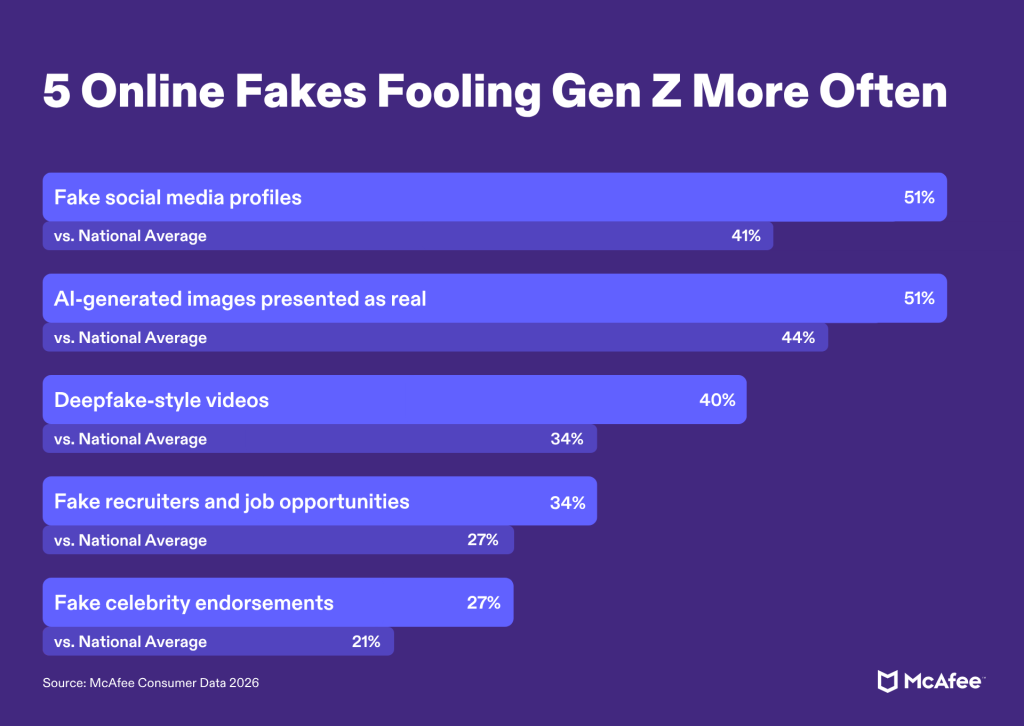
 5 Online Fakes Fooling Gen Z More Often

Gen Z Data- Top 5 Online Fakes

1. Fake social media profiles: 51% of Gen Z vs. 41% of Americans overall

More than half of Gen Z adults encountered a fake social media profile in the past year, according to McAfee’s research.

In these instances, someone might impersonate a creator, brand, potential romantic partner or even a person you already know. Once contact is established, the conversation can move toward a suspicious link, request for money, investment opportunity or attempt to collect personal information.

Abhishek’s key takeaway: “Treat unexpected messages regarding requests for money or help, with some level of skepticism, even if it’s from familiar-looking accounts. Account takeovers (where a known contact’s account was compromised) and copycat accounts (impersonated accounts where someone created a similar looking profile) are often tactics used to target victims. Call your friend on a trusted number and confirm if they really need help.”

2. AI-generated images presented as real: 51% vs. 44%

AI image tools can produce realistic-looking people, products, places and events that never existed.

For scammers, that creates another way to manufacture credibility. A fake profile can have convincing photos. A fraudulent product listing can appear to show a real item. An investment or giveaway scam can be dressed up with imagery that looks legitimate at first glance.

Abhishek’s key takeaway: “Look for oddities in the images itself. AI is not always perfect and does make errors. But also look beyond the image. Check the account posting it, the surrounding context and whether reputable sources confirm the claim before acting on it.”

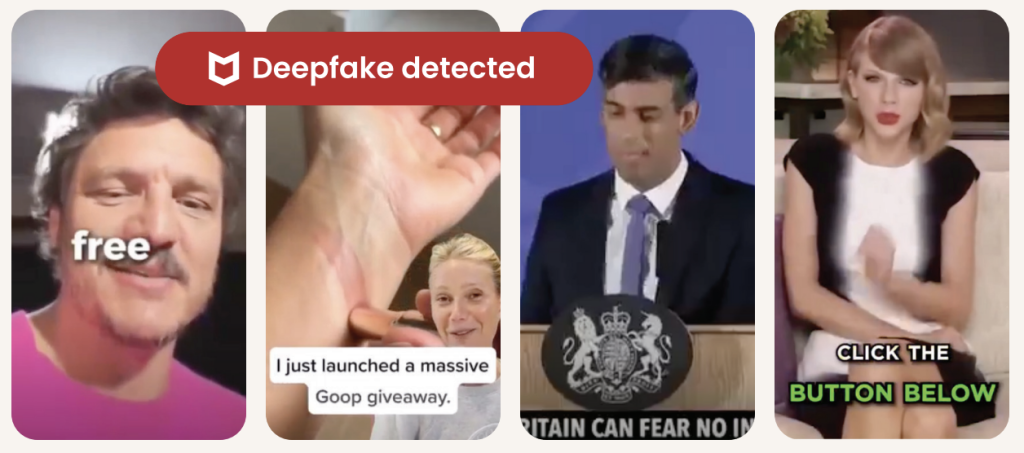
3. Deepfake-style videos: 40% vs. 34%

Two in five Gen Z adults said they encountered deepfake-style videos in the past year.

A deepfake is manipulated or AI-generated media designed to make it appear that a real person said or did something they didn’t. Improvements in AI mean visual oddities alone are becoming a less reliable way to identify one.

Abhishek’s key takeaway: “Not all deepfakes are bad. Some are made for entertainment. However, pause to analyze and consider what the video is asking you to do or believe.

A surprising celebrity investment pitch, urgent request for money or unbelievable announcement deserves independent verification, even when the person on screen looks and sounds convincing.”

Examples of deepfake videos

4. Fake recruiters and job opportunities: 34% vs. 27%

For Gen Z adults entering or moving through the workforce, job hunting increasingly means interacting with people they have never met through email, social media, job platforms and messaging apps.

Scammers can exploit that normal behavior by posing as recruiters or employers. A convincing company name, professional-looking profile and friendly interview process can make a fraudulent opportunity harder to distinguish from the real thing.

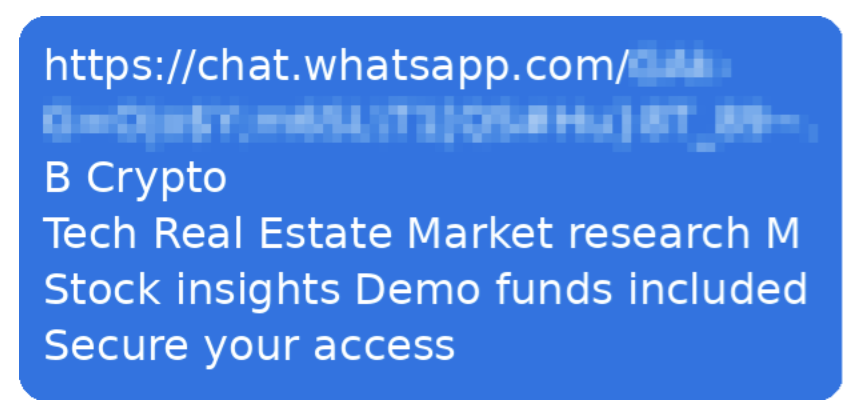
Abhishek’s key takeaway: “Be cautious when a recruiter quickly asks for sensitive personal information, asks you to pay upfront costs or moves the hiring process onto an unusual platform like WhatsApp. Verify the role through the employer’s official website and independently confirm that the recruiter works there.”

5. Fake celebrity endorsements: 27% vs. 21%

AI has also made it easier to put familiar faces and voices behind claims they never made.

Fake celebrity endorsements can appear in investment scams, product promotions and giveaways. What makes them powerful is the borrowed trust. Seeing someone familiar can make an unfamiliar offer feel more credible.

Before buying, investing or sharing information, verify the endorsement through the celebrity’s official channels and independently research the company or offer.

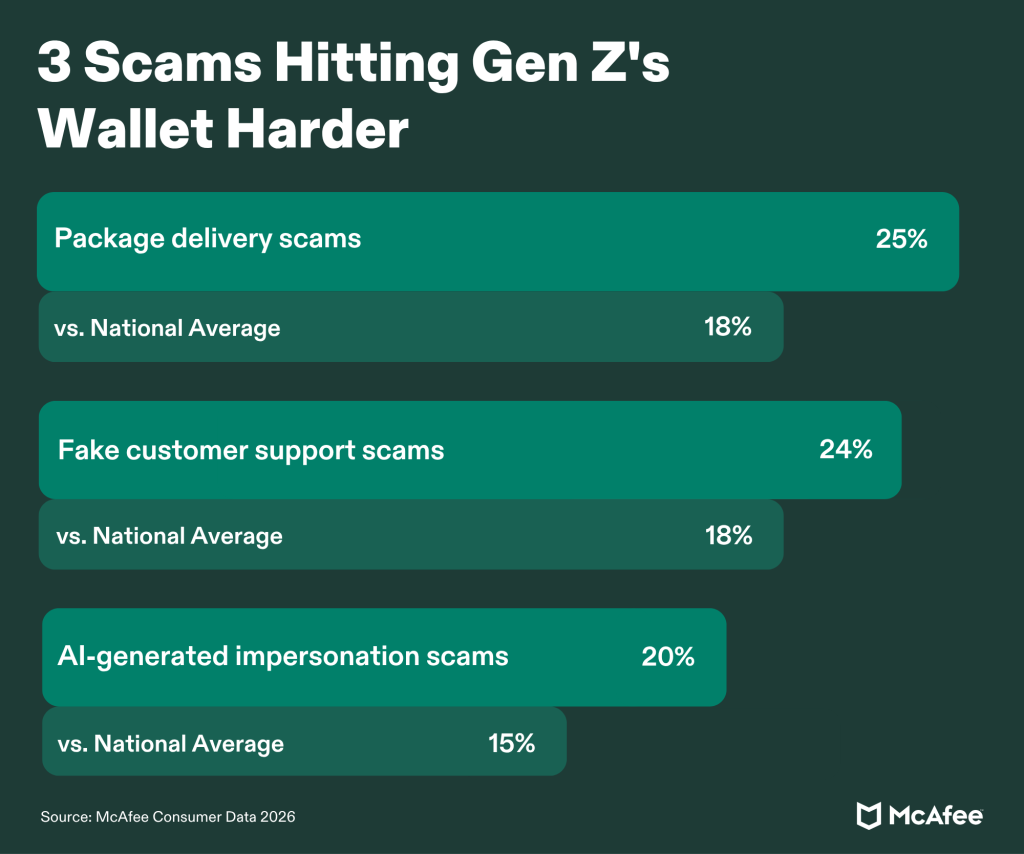
3 Scams Hitting Gen Z’s Wallet Harder

Gen Z Data- Money Scams

Exposure tells us what people are seeing. Financial loss tells another part of the story.

McAfee’s research found Gen Z adults were more likely than Americans overall to report losing money to three particular types of scams:

  • Package delivery scams: 25% of Gen Z vs. 18% overall
  • Fake customer support scams: 24% vs. 18%
  • AI-generated impersonation scams: 20% vs. 15%

Each takes advantage of an ordinary digital interaction.

Abhishek’s key takeaway: “Scams can work by fitting naturally into what someone is already doing online, making verification increasingly important before clicking a link, sending money or sharing sensitive information.”

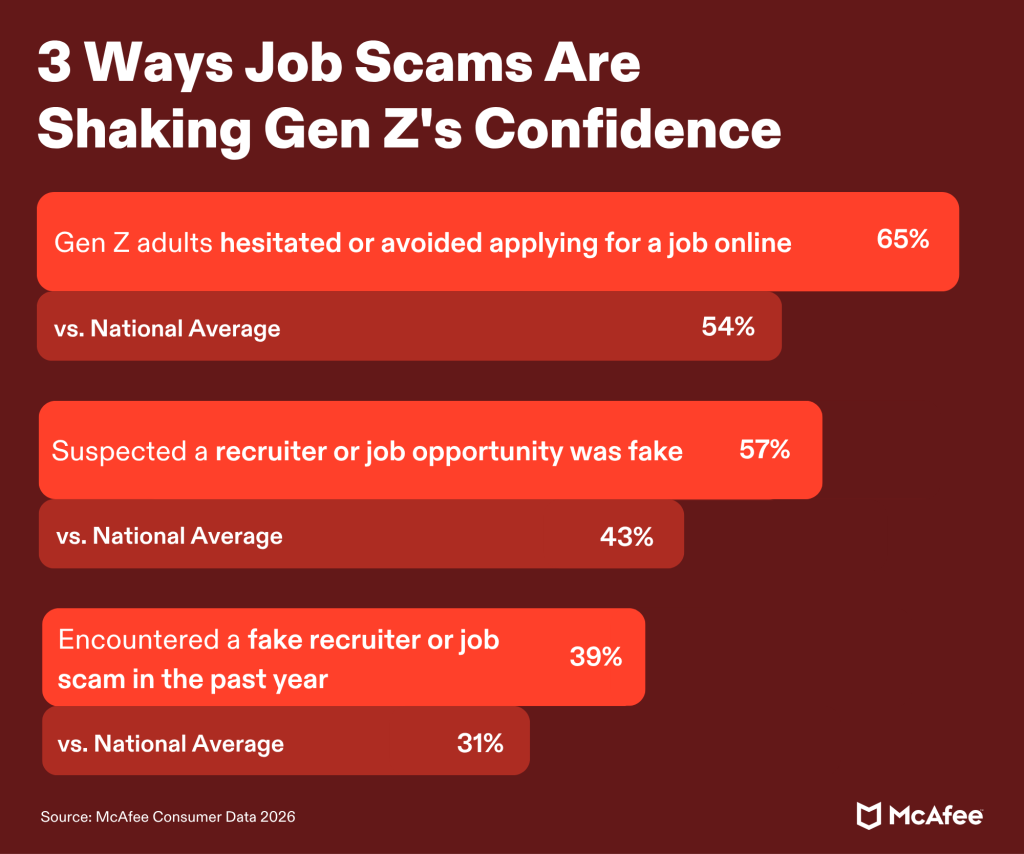
3 Ways Job Scams Are Shaking Gen Z’s Confidence

Gen Z Data- Job Scams

The job market provides one of the clearest examples of how scam concerns can affect people even when they never lose money.

McAfee found:

  • 65% of Gen Z adults say scam concerns have made them hesitate or avoid applying for a job online, compared with 54% of Americans overall.
  • 57% have suspected a recruiter or job opportunity was fake, compared with 43% overall.
  • 39% encountered a fake recruiter or job scam in the past year, compared with 31% overall.

For young adults building careers, that uncertainty can carry a real cost. A legitimate recruiter and a scammer may contact someone through the same platforms and use many of the same professional conventions.

Abhishek’s key takeaway: “Verification can help. Search for the position on the company’s official careers page, check the recruiter independently and contact the company through information you find yourself when something feels questionable.”

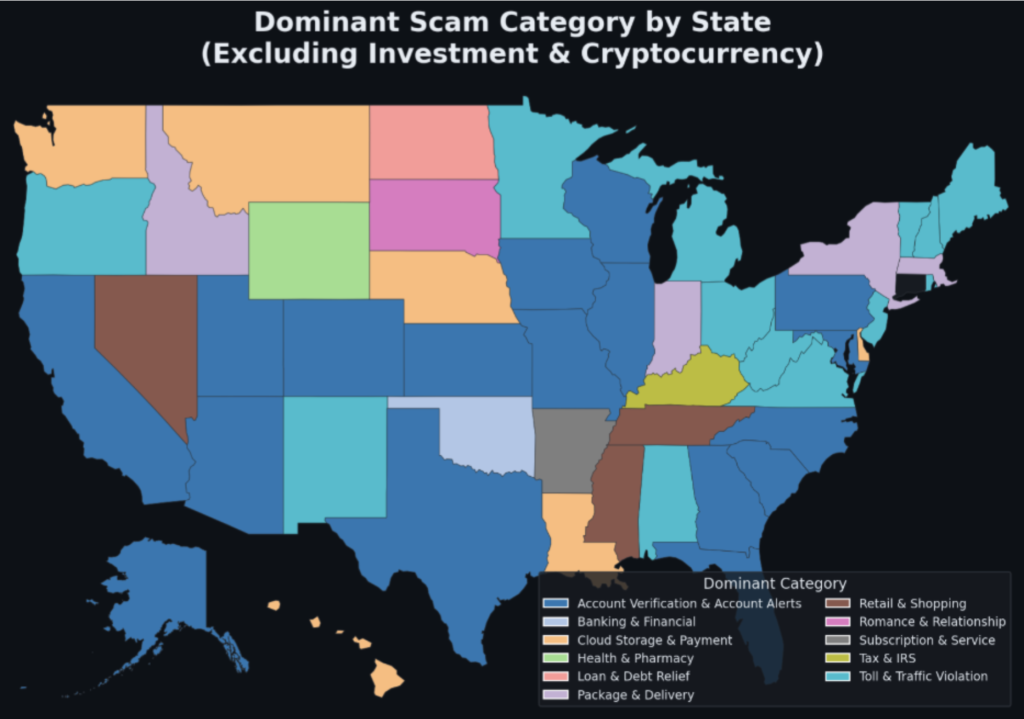
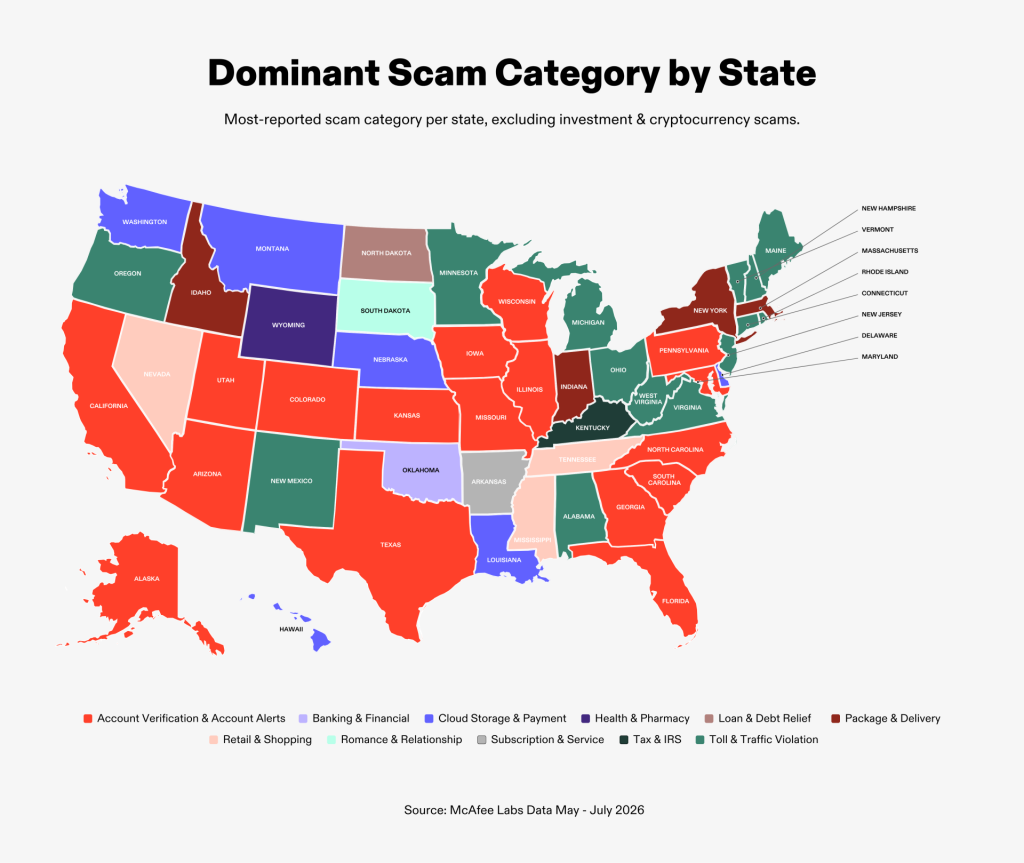
The Broader Scam Reality Across the U.S.

State by state breakdown infographic

Gen Z’s experience sits inside a much bigger shift in how Americans navigate life online.

McAfee’s newest research, which combines a nationally representative survey of 5,000 U.S. adults with McAfee Labs analysis of text-based scam activity, found that 88% of Americans encountered at least one type of scam in the past year. Nearly one-third, 31%, reported losing money to one.

The effects extend beyond financial losses.

Nearly three-quarters of Americans, 74%, say they feel the need to double-check most things online before trusting them. Sixty-two percent say figuring out what is real takes more mental energy than it did a year ago. And 82% say concerns about scams have changed something they do online.

That can mean avoiding an unfamiliar retailer, ignoring a legitimate message or deciding against clicking a real link.

AI adds another layer to that uncertainty because convincing content can now be produced faster and at greater scale. As synthetic content becomes part of everyday digital life, spotting scams cannot depend entirely on whether something simply “looks fake.”

For Gen Z, the findings suggest that challenge is already especially visible. They are encountering some forms of manipulated and fraudulent content more frequently while also navigating important parts of early adult life, from finding work to shopping and managing money, online.

Safety Tips From McAfee Experts

A few habits can help reduce the risk without requiring you to investigate everything you encounter online.

Here’s what our threat researchers want you to know:

  • Verify through a second channel. If a friend, recruiter, company or customer support representative contacts you unexpectedly, confirm the request somewhere else. Open the company’s official app, visit its website yourself or contact the person using a number you already trust.
  • Slow down when someone creates urgency. Scammers frequently want a decision before you have time to investigate. Unexpected requests involving money, account credentials, verification codes or personal information deserve an extra check.
  • Investigate the source, not just the content. AI-generated images, video and audio are becoming increasingly convincing. Check who posted something, where an offer originated and whether another reliable source confirms it.
  • Avoid sending money to unlock money. Be especially cautious if a job, prize, investment or refund requires you to pay a fee, purchase equipment or transfer money first.

How McAfee Is Changing to Meet This Moment

As AI changes how people create, communicate and connect, consumer protection needs to evolve with it.

McAfee has been protecting people for decades, and for many people, our name is still synonymous with antivirus. Today’s digital lives extend far beyond a single device, and the risks people encounter do too.

The new McAfee experience is designed to help protect the things people rely on every day, including their personal information, connections, devices and accounts, while making it clearer what’s safe, what needs attention and what McAfee can handle for them.

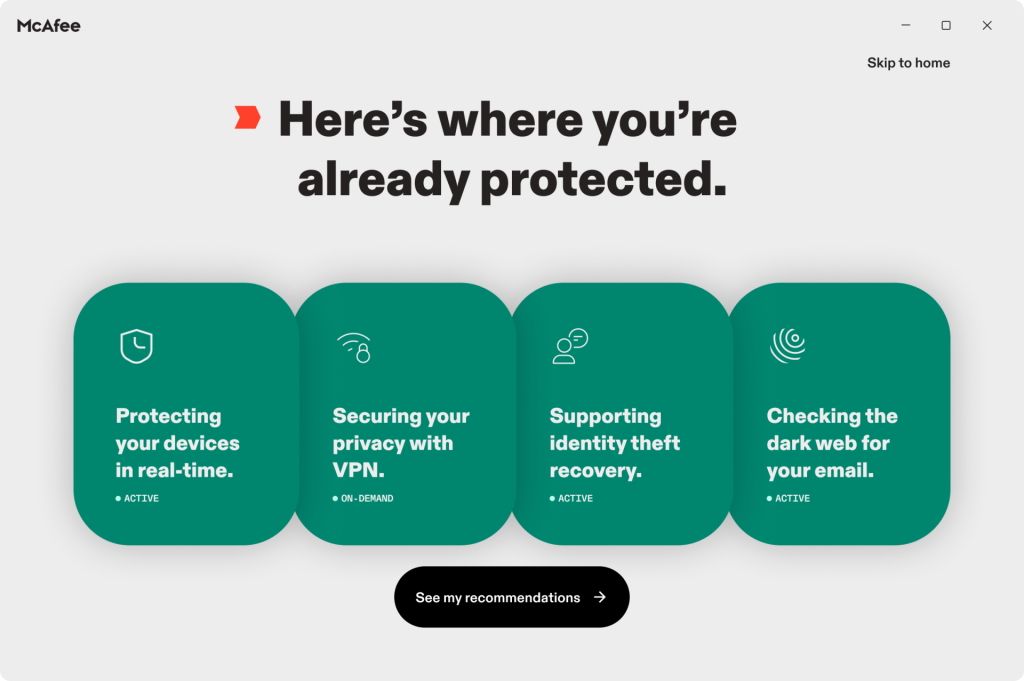
An example of McAfee's new experience and recommendations

That includes helping identify suspicious messages, links and websites, alerting people when personal information appears in a data breach, monitoring for exposed personal information, helping protect connections on risky Wi-Fi and keeping devices and accounts safer.

The experience is built around three principles:

  • Simple and easy. McAfee does more of the work so people don’t need to understand complex threats, security terminology or which setting they need to find.
  • Personalized and proactive. McAfee surfaces timely alerts when information or devices may be at risk, with guided actions that explain what is happening and what to do next in plain language.
  • Always-on and unified. Protection for personal information, connections and devices comes together in one connected experience across devices, helping people stay protected wherever their digital lives take them.

The goal is to help identify risk earlier and give people clearer guidance in the moment, reducing how much of the burden they have to carry themselves.

Navigating the New Scam Reality

Gen Z’s digital fluency has developed alongside the internet itself. Now the internet is changing again.

AI is lowering the barrier to creating realistic fake content, while many of the interactions young adults depend on, including friendships, job searches, shopping, banking and entertainment, happen online.

The answer cannot be expecting people to become experts at identifying every new AI trick.

Let McAfee do that for you.

The post The Top 5 Scams Hitting Gen Z Harder Than the Rest of America appeared first on McAfee Blog.

  •  

Pentagon Data Breach Impacts 3.05 Million: How Military Personnel Can Protect Themselves

A security breach at the Pentagon’s Defense Manpower Data Center (DMDC) exposed unencrypted personal and military records for approximately 3.05 million individuals between October 2025 and July 2026. First reported by Military Times on September 24, 2026, the intrusion compromised sensitive files, including Social Security numbers, belonging to active-duty personnel, veterans, and deceased service members.

With official notification letters dated September 18, 2026, now arriving in physical mailboxes, affected individuals can determine their exposure and enroll in 12 months of free credit monitoring and identity restoration services provided by the Department of Defense through IDX. Understanding the full scope of the incident, confirming whether your records were involved, and establishing immediate account and credit safeguards are essential steps to shielding military benefits and personal finances from targeted exploitation.

How the DMDC Data Breach Happened and What Data Was Compromised

The breach occurred when unauthorized actors exploited a software vulnerability in a DMDC file-sharing system, maintaining access to a server holding unencrypted personnel data for nine months. According to official notification letters mailed by the DMDC on September 18, 2026, unauthorized users accessed personal and military service files between October 2025 and July 2026.

The Pentagon did not issue a public press release prior to dispatching physical mailings. Community members first raised public awareness by sharing letter excerpts on Reddit’s r/Veterans. Pentagon officials confirmed to CNN that the breach compromised records for 2.76 million living individuals and 294,000 deceased service members.

The exposed server contained unencrypted personally identifiable information (PII) belonging to service members, veterans, and military dependents. Compromised records include full names, Social Security numbers, dates of birth, contact information, and administrative military service details.

How to Know If Your Information Was Exposed in the Pentagon Breach

The primary notification method for this incident is a physical letter sent via the United States Postal Service. The DMDC began mailing official breach notification letters dated September 18, 2026, directly to affected personnel, veterans, and surviving family members.

The Pentagon has not released an online lookup database to verify individual exposure. The incident affects individuals whose personnel, manpower, or benefits records were stored on the compromised server during the nine-month exposure window, spanning active-duty military, reserve personnel, National Guard, defense civilians, contractors, veterans, and eligible dependents.

If you have moved recently, your notification letter may be delayed or returned to sender. Log in to milConnect to confirm that your mailing address and contact details are current within the Defense Enrollment Eligibility Reporting System (DEERS). If your records were maintained in DMDC systems between October 2025 and July 2026, take proactive security steps even before a physical letter arrives.

Red Flags That Cybercriminals Are Using Your Military Data

When personal and military records leak, cybercriminals routinely use the data to stage targeted impersonation schemes and financial fraud. Watch for these warning signs:

  • Government impersonation attempts: Unsolicited calls, emails, or text messages claiming to be from the Department of Defense (DOD), Department of Veterans Affairs (VA), or TRICARE requesting verification of personal identifiers.
  • Benefit redirection notices: Unexpected alerts regarding direct deposit changes, login credential updates, or profile modifications across military portals that you did not initiate.
  • Phony breach assistance solicitations: Unofficial communications offering expedited claims, settlements, or data removal services in exchange for an upfront fee or account numbers.
  • Unexplained credit or loan activity: Inquiries on your credit report, new credit card accounts, or collection notices for debt you do not recognize.
  • Unexpected tax or benefit filings: Notifications from the IRS or state tax authorities stating that a tax return or benefit claim has already been filed in your name.

How Military Personnel Can Protect Themselves

Military personnel and service members should take immediate steps to restrict access to their credit profiles and personal accounts:

  1. Enroll in free credit monitoring through the official IDX portal.
    The Defense Department is offering 12 months of free credit monitoring and identity restoration services to affected individuals through IDX. If you received a breach notification letter, use the unique enrollment code included in the mailing to register on the official IDX DMDC response portal or call the support line directly at 1-855-744-4556.
  2. Place a credit freeze with all three credit bureaus.
    Contact Equifax, Experian, and TransUnion to freeze your credit files. A credit freeze blocks prospective lenders from accessing your credit report, stopping identity thieves from opening loans or lines of credit with your Social Security number.
  3. Enable multi-factor authentication on defense portals.
    Log in to MilConnect, VA.gov, and MyPay to update passwords and enforce multi-factor authentication (MFA). Use an authenticator app or hardware security key rather than SMS verification where available.
  4. Verify official contacts independently.
    The DOD, DMDC, and VA do not initiate contact via phone, text, or email to demand immediate payment or confirmation of your Social Security number. Verify any inquiry by navigating directly to official .gov domains.
  5. Inspect TRICARE and medical billing statements.
    Review Explanations of Benefits (EOBs) and medical statements closely. Confirm that all listed provider appointments, diagnostic tests, and prescription orders match care you actually received.

What Military Personnel Should Do If Their Data Was Compromised

If you received an official DMDC notification letter dated September 18, 2026, or notice unauthorized activity on your accounts, execute the following recovery steps:

  • File an identity theft report with the FTC. Submit an official report through the Federal Trade Commission identity theft portal to establish your legal rights and dispute fraudulent accounts with creditors and banks.
  • Obtain an IRS Identity Protection PIN (IP PIN). Prevent fraudulent tax filings using your exposed Social Security number by applying for a six-digit IP PIN through the Internal Revenue Service identity protection page.
  • Place an extended fraud alert on your credit file. If you choose not to freeze your credit entirely, request an extended fraud alert, which requires lenders to verify your identity before approving credit in your name.
  • Notify your financial institutions. Contact the fraud divisions of your bank and credit card issuers to review account statements, replace compromised account numbers, and set up real-time transaction alerts.
  • Retain all breach correspondence. Keep physical copies of your DMDC notification letter, agency complaints, police reports, and dispute logs for ongoing tracking.

How Military Personnel Can Report Fraud and Suspicious Activity

Report security incidents, fraudulent accounts, and impersonation attempts directly through official federal reporting channels:

  • Department of Defense Inspector General: Report military personnel data misuse or military identity impersonation via the Department of Defense Hotline.
  • FBI Internet Crime Complaint Center (IC3): File an online cybercrime complaint regarding credential misuse or unauthorized financial compromise through the FBI Internet Crime Complaint Center.
  • Local Law Enforcement: File a formal police report with your municipal department if an unauthorized party obtains loans, opens accounts, or conducts financial transactions in your name.

Because Social Security numbers and military service records cannot be readily changed, exposure from the DMDC breach presents a persistent risk for active personnel and veterans. Taking proactive security measures now, such as enrolling in the IDX identity monitoring program, locking down credit files, securing military accounts with multi-factor authentication, and reporting suspicious contact immediately, is critical to preventing long-term identity exploitation.

The post Pentagon Data Breach Impacts 3.05 Million: How Military Personnel Can Protect Themselves appeared first on McAfee Blog.

  •  

ASOS Push Notification Hack: Inside the Breach and How to Stay Safe

On October 6, 2026, the ASOS push notification hack sent unauthorized messages to millions of customer devices after cybercriminals accessed a connected third-party platform. ASOS, a British online fashion and cosmetic retailer serving active shoppers worldwide, confirmed that an attacker compromised employee credentials to access external systems. As reported by BBC News, the intrusion exposed customer contact records and personal search histories, although company representatives confirmed that banking and payment information was not accessed.

How the Attack and Social Engineering Breach Worked

The unauthorized messages originated from an extortion ring calling itself the Xuanyewen hacker group. The intruders hijacked the ASOS mobile shopping app interface to broadcast rogue alerts directly to users, claiming they had extracted full customer databases.

The breach did not stem from a software flaw within the ASOS mobile application. Instead, the intruders relied on social engineering, impersonating a trusted contact to deceive an employee into providing valid system credentials.

Those credentials allowed the attackers to sign in to Simon AI, a third-party marketing and personalization platform built on Snowflake Cortex AI that ASOS uses to power customer communications. Once logged in, the threat actors initiated app-wide push alerts and exfiltrated audience data containing customer personal data.

Clarifying the Snowflake Breach Claims

During the intrusion, the hackers claimed they had carried out a direct Snowflake breach to compromise ASOS’s central databases. Official statements from both platforms quickly refuted that claim.

In a corporate statement released through Snowflake’s official statement via Alliance News, a Snowflake spokesperson stated: “We can confirm this issue did not in any way result from a vulnerability, weakness, flaw, or misconfiguration with the Snowflake service… and was not caused by Snowflake.”

Independent reporting and corporate disclosures confirm that the compromise occurred exclusively at the third-party marketing integration layer. Attackers frequently target peripheral marketing tools using stolen credentials because these platforms handle live customer segments without requiring direct access to locked-down corporate networks.

Warning Signs That Your Personal Data Was Compromised

The data accessed during the incident included more than basic contact lists. As documented by BBC’s reporting, data samples provided directly by the threat actors revealed specific customer search histories, including search terms such as “reclaimed vintage.”

In the official ASOS customer breach notification, the retailer stated they did not believe that payment card numbers, banking details, and account passwords were accessed, as those are stored on separate, isolated transactional systems. However, exposed contact information and shopping preferences still present risks for targeted follow-up fraud. Watch for these warning signs that your personal data was exposed:

  • Unsolicited push messages: App notifications prompting you to verify your identity, visit external chat platforms, or click unverified links.
  • Tailored phishing emails: Messages referencing specific clothing brands, recent browsing queries, or recent order details designed to trick you into revealing passwords.
  • Unrequested authentication codes: Password reset messages or multi-factor prompts that you did not initiate.
  • Direct contact from extortionists: Unsolicited communications via email or messaging apps claiming to hold your retail browsing data.

How to Protect Your Personal Data

Taking direct defensive steps helps minimize the risk of identity theft or secondary phishing. Use these best practices to protect your personal data:

  • Avoid clicking unexpected push notification links: If you receive an unexpected alert about an account security issue, dismiss the message and sign in through an official web browser instead.
  • Update your account password: Create a strong, unique password for your ASOS account that is at least 12–16 characters long and not shared across any other platforms.
  • Enable multi-factor authentication (MFA): Set up MFA across your primary email and retail accounts, opting for an authenticator app over SMS codes whenever available.
  • Verify retailer messages independently: If you receive an email regarding an order change or account issue, visit the store’s website directly rather than using embedded links.

What to Do If Your Personal Data Was Compromised

If your personal details were exposed or you interacted with the rogue push alert, take these containment measures:

  • Cease all contact with extortionists: Do not communicate with extortionists or send payments to individuals offering to delete stolen records.
  • Change shared account credentials: If you used your ASOS password on other websites, update those services with unique login combinations immediately.
  • Place a credit freeze: Contact the three major credit reporting agencies—Equifax, Experian, and TransUnion—to freeze your credit files against unauthorized new accounts.
  • Monitor financial statements: Check linked credit card and bank statements for unauthorized charges or low-value test transactions.
  • Create an identity recovery plan: If sensitive contact or identity records were exposed, file a report at the federal government’s IdentityTheft.gov recovery portal to document the incident and receive a recovery plan.
  • Preserve digital evidence: Keep screenshots, message headers, and timestamps of any suspicious texts, emails, or calls you receive.

How to Report Identity Threats and Extortion

Reporting incidents to official oversight agencies helps authorities identify threat infrastructure and take down fraudulent operations:

The ASOS App push notifications incident highlights how cybercriminals bypass central infrastructure by using social engineering to compromise connected third-party tools. Practicing strong credential hygiene, staying alert to targeted phishing messages, and reporting suspicious contact to regulators are your most effective steps for keeping your personal information secure.

The post ASOS Push Notification Hack: Inside the Breach and How to Stay Safe appeared first on McAfee Blog.

  •  

New Adception Campaign Weaponizes Search Ads: How to Stay Safe From Malvertising

A new cyberattack is weaponizing everyday search results to trick users into running malicious code on their devices. The campaign, dubbed “Adception,” was uncovered by Push Security. By buying paid search ads on Google and routing traffic through trusted web services, attackers are placing deceptive links directly in front of people searching for popular software. Then, they use a social engineering framework known as “ClickFix” to trick people into running malicious scripts on their devices.

How the Adception Campaign Works

Search ads appear at the very top of search engine results, making them easy to click and easy to trust. Malvertising (short for malicious advertising) occurs when cybercriminals buy or hijack legitimate ad placements to spread malware or direct users to fraudulent websites. In this campaign, attackers purchase legitimate ad slots but route clicking visitors through a hidden chain of web redirects before loading a fraudulent website. This detour conceals the final destination from automated ad-review crawlers, allowing malicious ads to bypass platform security filters and reach active searchers.

According to Push Security’s research, the threat actors specifically targeted Mac users searching for Anthropic’s Claude AI assistant. To evade automated detection, the attack chain bounces traffic through legitimate Bing click-tracking redirects and a compromised website. Once a visitor lands on the fake software portal, the attackers deploy an evasion technique known as “ClickFix,” using deceptive troubleshooting prompts to trick macOS users into executing base64-encoded malware directly inside the Z shell (zsh).

The campaign executes across five distinct stages:

  1. Sponsored Search Ad Placement: Attackers purchase top-ranked Google search ads that bid on keywords for Anthropic’s Claude desktop app.
  2. Cross-Engine Redirection (Google to Bing): Clicking the Google ad routes the visitor through legitimate Bing click-tracking infrastructure. The attackers use this cross-engine detour because automated Google ad-review crawlers do not expect ad traffic to route through a competitor’s tracking domain, effectively blinding them to the ultimate destination.
  3. Compromised Intermediary Site: The traffic forwards to a compromised WordPress site owned by a South American retailer, which runs two layers of cloaking to weed out automated scanners and non-Mac operating systems.
  4. Deceptive Landing Page: Qualifying visitors land on a counterfeit webpage that closely mimics Anthropic’s official website and branding.
  5. ClickFix Terminal Execution: The landing page displays a fake installation error and activates the “AcSig” ClickFix toolkit, which hijacks the user’s clipboard and instructs them to paste code into the macOS Terminal to “fix” the download.

Warning Signs of Deceptive Search Ads

  • Unfamiliar or shifting URLs: The address displayed on the ad card does not match the real software vendor, or your browser rapidly redirects through multiple unrelated domains before loading.
  • Terminal or command-line prompts: When you arrive at a website through a search ad, it instructs you to open your computer’s terminal, shell, or command prompt to complete a download or resolve an installation error.
  • Clipboard hijack instructions: The webpage asks you to copy code or automatically copies script text containing terms like base64, eval, curl, or zsh into your system clipboard.
  • Fake system repair messages: On-screen pop-ups claim your browser or operating system requires an immediate manual patch to proceed with a standard download.

How to Protect Yourself from Deceptive Search Ads

  • Navigate directly to official vendor sites. Type known web addresses directly into your browser’s address bar rather than searching for download portals.
  • Verify the destination URL before clicking. Inspect the displayed web address on search results to ensure it matches the actual company domain.
  • Use automated web protection tools: Install a secure browsing extension to automatically protect against malware and phishing sites.
  • Never paste unverified code into command-line tools. Legitimate commercial software does not require pasting terminal commands to resolve browser download issues.
  • Use official application stores. Download desktop applications directly through official developer portals, the Mac App Store, or the Microsoft Store.

What to Do If You Interacted with a Malicious Ad

If you clicked a deceptive ad and pasted code into your Mac’s Terminal, assume your device has been compromised. Take these immediate steps to limit the damage:

  1. Disconnect from the internet immediately. Turn off your Wi-Fi from the menu bar at the top of your screen and unplug any network cables. This cuts off communication between your computer and the attacker’s server.
  2. Shut down the Terminal and turn off your Mac. Quit the Terminal app completely. Shut down your computer to stop any background scripts from continuing to run.
  3. Change your passwords from a different device. Using your phone or a separate, clean computer, immediately update passwords for your primary email, online banking, and password manager. When prompted, choose the option to “Log out of all devices.”
  4. Turn on two-factor authentication (2FA). For any critical accounts that don’t already have it, enable two-factor authentication using an authenticator app rather than SMS text messages.
  5. Run a full antivirus scan. Restart your Mac, keep Wi-Fi turned off, and run an offline security scan using reputable antivirus software to detect and quarantine any installed files.
  6. Avoid sensitive logins and seek professional help if uncertain. Do not sign into online banking, email, or password accounts on the affected computer. If your security scan cannot confirm the threat is gone or you feel unsure, take the device to an Apple Store or certified technician to safely wipe and reinstall the operating system.

How to Report Deceptive Ads

  • Report rogue ads to Google: Submit an abuse report via the Google Ads Complaints Form to flag fraudulent ad links and advertiser accounts.
  • Report redirect abuse to Microsoft: Submit details on hijacked redirect links directly through the Microsoft Security Response Center.
  • File an official fraud report: Report deceptive advertising to the Federal Trade Commission.
  • Contact cybercrime authorities: File formal reports regarding malware delivery or financial loss with the FBI’s Internet Crime Complaint Center.
  • Notify the impersonated vendor: Alert the affected brand’s support team to inform them of active trademark abuse and domain spoofing.

Deceptive search ads succeed by exploiting everyday browsing habits and the assumption that top-ranked search results are safe. Taking a moment to verify destination URLs and reporting suspicious sponsored listings helps platforms dismantle malicious infrastructure and keeps the broader online community safer. 

The post New Adception Campaign Weaponizes Search Ads: How to Stay Safe From Malvertising appeared first on McAfee Blog.

  •  

CloudSyncD macOS Malware Hidden in Fake Zoom Installer: How to Avoid Malicious Installers

Security researchers at Jamf Threat Labs issued a September 2026 threat report warning Mac users about a newly discovered malware program called “CloudSyncD.” Disguised as a Zoom installer on unverified download sites, this malicious software tricks users into entering their administrator password, allowing attackers to secretly take remote control of the computer. The campaign targets individuals looking to install or update the popular video conferencing software.

How the CloudSyncD Malware Works

For a detailed technical breakdown of how the malware operates, you can read the full Jamf Threat Labs report. In simple terms, when someone downloads and opens the fake Zoom installer, the malware enacts a process to take control of the Mac:

  • Fake System Prompt: The installer opens a pop-up window asking for your computer password, designed to look like an official macOS prompt.
  • Hidden Credentials: Once typed, the malware saves your password in a disguised file, hiding the text with invisible characters to bypass standard checks.
  • Silent Setup: Using administrative privileges, the malware quietly installs a hidden background program on your system.
  • Remote Access: The background program connects your Mac to an attacker’s server, granting hackers full remote access to run commands, steal files, or install additional software.

Malicious Installer Warning Signs and Red Flags

Recognizing a suspicious installer before opening it prevents system compromise:

  • Unofficial Download Sources: The file originates from a sponsored search link, file-sharing site, or third-party portal rather than the software’s official web page or the official Mac App Store.
  • Immediate Password Requests: A system password prompt appears right when opening a disk image before any setup wizard begins.
  • System Security Warnings: macOS Gatekeeper or XProtect displays an alert stating the software is untrusted or lacks a recognized developer signature.
  • Unfamiliar Background Processes: Unknown applications or scripts execute with administrative privileges in macOS Activity Monitor.

How to Protect Your Mac From CloudSyncD and Other Malware

Adopting safe download practices reduces the risk of installing malicious macOS software:

  • Download exclusively from official sources: Always obtain applications directly from the developer’s official website or the Mac App Store.
  • Verify unexpected password prompts: Cancel any password request that appears unexpectedly when opening a newly downloaded file.
  • Keep macOS security features active: Ensure built-in protections like macOS Gatekeeper and XProtect remain turned on to flag unverified software.
  • Check app signatures before opening: Inspect installer details and developer certificate signatures before approving setup.

What to Do If You’ve Already Used a Fake Zoom Installer

If you downloaded a fraudulent Zoom installer or entered credentials into a suspicious prompt, execute these recovery steps immediately:

  • Disconnect from the Internet: Turn off Wi-Fi and unplug Ethernet cables right away to break active communication between your Mac and remote servers.
  • Change Account Passwords: Using a separate, secure device, update your Mac administrator password and any account credentials accessed from that computer.
  • Turn On Multi-Factor Authentication: Enable multi-factor authentication (MFA) across your financial, email, and personal accounts.
  • Isolate and Remove Malicious Artifacts: Run a full system scan or work with a technical professional to locate and delete unauthorized background files.
  • Place a Credit Freeze: If personal or financial data was stored on the computer, place a credit freeze with Equifax, Experian, and TransUnion.

Report Fraudulent Installers and Secure Your Mac

Reporting malicious downloads helps threat intelligence researchers and federal agencies track active campaigns. Submit reports regarding fraudulent software installers to the FBI Internet Crime Complaint Center or the Federal Trade Commission. Notifying the official security team of the impersonated service provider also assists in taking down fake download domains.

Because CloudSyncD installs persistent background files, completely removing every component is essential to restoring system security. Simply deleting the downloaded installer disk image does not eliminate the threat. Ensure all hidden binaries and configuration files are thoroughly purged from your system to revoke remote access and protect your data.

The post CloudSyncD macOS Malware Hidden in Fake Zoom Installer: How to Avoid Malicious Installers appeared first on McAfee Blog.

  •  

Microsoft X Account Hacked in Crypto Scam: How to Spot Hijacked Accounts Promoting Scams

On October 2, 2026, attackers hijacked Microsoft’s official X account (which reaches over 13 million followers) to execute a cryptocurrency pump-and-dump scheme, as reported by The Verge. The unauthorized access allowed attackers to replace Microsoft’s profile image with its retro mascot Clippy and promote a fraudulent token called $Clippy before the posts were removed. An official statement on Microsoft’s X account confirmed the account was secured, the unauthorized posts were deleted, and an internal investigation into the breach is ongoing.

How the $Clippy Crypto Scam Worked

When cybercriminals gain control of a verified corporate account, they leverage its built-in credibility to trick followers into fake financial investments.

Unauthorized actors gained access to @Microsoft on October 1, 2026. The attackers changed the account’s profile picture to image assets of Clippy, Microsoft’s legacy virtual assistant, and retweeted promotional posts from an impersonator handle, @clippymsftcto.

The malicious posts directed users to external sites promoting a fraudulent $Clippy cryptocurrency token. To confuse followers and delay remediation, the attackers also published a fake apology tweet from @Microsoft claiming control had been restored while continuing to promote the scam. Account access was eventually restored, and X suspended the associated impersonator accounts.

Warning Signs That an Account Has Been Compromised for a Crypto Pump-and-Dump

  • Uncharacteristic financial endorsements: Verified corporate accounts suddenly promoting unannounced meme coins, cryptocurrency presales, or Web3 projects.
  • Sudden profile changes: Abrupt alterations to official branding, logos, bios, or handles accompanying high-yield investment offers.
  • High-pressure purchasing tactics: Posts creating artificial urgency by urging followers to buy unlisted tokens or connect wallets before a deadline.
  • External wallet connection links: Unfamiliar links directing users to third-party decentralized finance platforms or signature-draining websites.
  • Contradictory apology posts: False status updates or fake “all-clear” statements published during an active breach that still include external links or contract addresses.

How to Protect Yourself from Social Media Crypto Scams

Protecting your assets from social media crypto schemes requires careful verification and strict wallet safety practices.

  • Cross-reference announcements on official newsrooms: Confirm product or financial launches on a company’s main website before trusting social media posts.
  • Avoid clicking direct links for token sales: Never interact with link shorteners or unfamiliar domains asking you to connect a digital wallet.
  • Audit token contracts independently: Use reputable blockchain analytics tools to check liquidity, developer wallet allocations, and contract safety before buying new tokens.
  • Remember that verified badges do not guarantee immunity: Blue checkmarks confirm identity verification, but they do not prevent credential theft, session hijacking, or account takeovers.

What to Do If You Have Already Been Targeted

  • Disconnect wallet permissions immediately: Use security tools to cancel active smart contract allowances granted to suspicious sites.
  • Transfer remaining assets: Move funds to a newly generated, secure wallet if you suspect your private keys or seed phrases were compromised.
  • Contact your financial institutions: Notify your bank, credit card company, or crypto exchange immediately if fiat currency or linked accounts were involved.
  • Change passwords and enable multi-factor authentication (MFA): Update credentials across all sensitive accounts using an authenticator app rather than SMS.
  • Document transaction evidence: Save wallet addresses, transaction hashes, screenshots of fraudulent posts, and web links for formal reports.
  • Report identity exposure: If you shared personal identity or banking details on a phishing site, submit a report to the FTC and get a recovery plan.

How to Report Social Media Crypto Scams

If you encounter or fall victim to a social media crypto scam, report cyber fraud directly to the FBI Internet Crime Complaint Center and deceptive financial schemes to the Federal Trade Commission. You can also flag hijacked profiles or scam links using on-platform reporting tools directly on X, or contact local law enforcement if you suffered significant financial losses.

High-profile corporate account hijacks demonstrate how quickly bad actors can exploit trusted brands to promote fraudulent schemes. Verifying financial news across primary corporate websites, auditing token contracts, and recognizing red flags remain critical steps to keeping your digital assets secure.

The post Microsoft X Account Hacked in Crypto Scam: How to Spot Hijacked Accounts Promoting Scams appeared first on McAfee Blog.

  •  

Frontline Education Data Breach Hits 1.3M: What to Do If You Got a Letter

Updated: Nov 5, 2026

Frontline Education, which makes K–12 school administration software, is notifying more than 1.3 million school employees and students that their personal information was stolen in an August 2026 breach. That count comes from filings in five states, SecurityWeek reported on Nov. 3, 2026, and the full total is likely higher.

The exposed data varies by person but can include Social Security numbers, dates of birth, driver’s license and passport numbers, Medicaid IDs, and Student IDs, according to Frontline’s Oct. 26 notice. Frontline serves more than 10,000 K–12 organizations nationwide.

Did You Get a Frontline Education Breach Letter or Email?

Frontline began sending individual notices on or about Oct. 26, 2026, by email or by U.S. mail. The mailed letter’s return address reads “Frontline Education c/o Cyberscout, PO Box 1286, Dearborn, MI 48120-9998,” according to the sample letter Frontline filed with the California attorney general. Cyberscout, a TransUnion company, is handling mailings and monitoring on Frontline’s behalf. District administrators received earlier emails from frontline@notifications.cyberscout.com starting Oct. 1.

  • What’s offered: Adults get 24 months of free TransUnion credit monitoring. Enroll at mytrueidentity.com with the activation code in your letter. Minors are offered free cyber monitoring.
  • Deadline: Enroll by the date in your letter (Jan. 31, 2027, on the sample notice). Your code won’t work after the date in your letter.
  • How to confirm it’s real: Don’t call numbers or click links in an unexpected message. Call the TransUnion call center listed in Frontline’s notice, 1-800-759-7279 (8 a.m. to 8 p.m. ET, Monday through Friday), or check with your district’s HR department or main office.
  • Spanish: A Spanish version of the letter template is at frontline-transunion.com/Spanish.

What Happened in the Frontline Education Data Breach

On Aug. 14, 2026, Frontline’s security team found that a vulnerability in third-party software it uses had allowed unauthorized access to part of its environment. The last unauthorized activity was Aug. 15. Frontline says it fixed the vulnerability, investigated with an independent cybersecurity firm, and contacted law enforcement. It has not named the software or the attackers, and it says it is not aware of any misuse of the data.

The breach affected two Frontline products: Frontline Central, which districts use for employee records, and School Health Management, which school nurses use to document student health care. That is why both staff and students are getting notices. The exposed information varies by person and can include:

  • Names, home addresses, and email addresses
  • Social Security numbers and dates of birth
  • Driver’s license numbers, passport numbers, and other government ID numbers
  • Medicaid IDs
  • Student IDs

Who has been notified so far:

What was exposed depends on which Frontline products a district used. Some districts report only employee data, and others report student data.

  • Five states: Filings in Massachusetts, New Hampshire, South Carolina, Texas, and Vermont total 1,298,917 people, SecurityWeek reported. Frontline also filed notices in California, Indiana, and Iowa, so the full count is likely higher.
  • South Carolina: The state’s breach notice registry lists 493,535 affected residents, eSecurityPlanet reported.
  • Killeen ISD (Texas): About 45,000 current and former employees and others. The district said no student information was involved.
  • Greenwood School District 50 (South Carolina): About 16,678 current and former students. Exposed data may include Medicaid ID numbers and contact details. [VERIFY]

Warning Signs That Your Personal Information was Compromised in a Data Breach

Because compromised Social Security numbers and contact details enable identity theft and targeted phishing, school employees and parents should watch for these specific warning indicators:

  • Unsolicited verification requests: Emails or calls claiming to represent Frontline Education, Cyberscout, or district HR asking you to confirm personal details, login credentials, or your monitoring activation code.
  • Targeted phishing (spear phishing): Messages addressing you by name and referencing your specific school district, job title, or administrative role.
  • Unfamiliar credit inquiries: Alerts from credit monitoring services showing credit checks or new account applications that you did not initiate.
  • Tax filing irregularities: Communications from the IRS or state tax authorities indicating that a tax return has already been filed using your Social Security number.
  • Health coverage you didn’t use: Medicaid or health plan statements, or benefit notices, for care or services you didn’t receive.
  • Activity in a child’s name: Credit offers, IRS notices, or collection calls addressed to a student.

How School Staff and Parents Can Protect Themselves

If you work or worked for a school district that uses Frontline, or your child attends or attended one, take these steps:

  • Enroll in the free monitoring by the date in your letter. Adults can enroll at mytrueidentity.com with the activation code in their letter. Minors are offered free monitoring.
  • Freeze your child’s credit. Parents and guardians can request a free credit freeze for children under 16 at Equifax, Experian, and TransUnion. Each bureau creates a file for the child and freezes it, which blocks new accounts in the child’s name.
  • Review health coverage statements. If your letter lists a Medicaid ID, check Medicaid or health plan statements for visits, prescriptions, or services you didn’t receive.
  • Freeze your credit, or place a fraud alert. A freeze has to be placed separately at Equifax, Experian, and TransUnion. A fraud alert needs only one bureau, which notifies the other two. A credit freeze prevents lenders from accessing your credit report, stopping bad actors from opening unauthorized accounts in your name.
  • Verify the notice before you act. Confirm with your district’s HR department or main office that your district was affected, or call the TransUnion call center listed in Frontline’s notice. Don’t call numbers or click links in an unexpected message.
  • Enable multi-factor authentication (MFA). Turn on MFA across all personal email accounts, financial portals, and school district access systems to prevent unauthorized sign-ins.
  • Monitor credit reports at the source. Request free annual credit reports through the official annual credit report website to review active accounts and financial inquiries.

What to Do If You Have Already Been Targeted

If your or your child’s Social Security number or personal financial details have already been misused, complete the following recovery steps immediately:

  • Stop contact with suspicious senders. Do not reply to unverified emails, texts, or phone calls requesting additional personal information.
  • Notify your financial institutions. Contact your bank, credit card issuers, and payment providers to alert them of potential identity theft and place fraud holds on compromised accounts.
  • Report identity theft to the federal government. File an official identity theft report at the FTC identity theft portal to receive a recovery plan and official documentation for disputing fraudulent accounts.
  • Freeze your credit. If you have not yet frozen your credit, do so immediately with Equifax, Experian, and TransUnion.
  • Change affected account credentials. Update passwords for primary email accounts and school portal logins. Use complex, unique passwords for every service.
  • File a report with local law enforcement. If you incur financial losses or discover fraudulent accounts opened in your name, submit a police report and request a copy for your dispute records.
  • Maintain detailed documentation. Retain copies of notification letters, email headers, police reports, and fraudulent transaction statements.

How to Report the Threat and Next Steps

To report suspicious activity or document fraudulent use of your information resulting from this incident, use official reporting channels:

As of November 2026, Frontline’s notices are still going out, and new district and state counts are still being posted. If you got a letter or email, enroll in the free monitoring by the date in your letter, and freeze your credit, and your child’s, with Equifax, Experian, and TransUnion. Treat any call, text, or email about this breach that asks for your Social Security number or activation code as a scam until you confirm it through your district or the call center number in Frontline’s notice. Automated monitoring tools can alert you if your exposed information appears online.

The post Frontline Education Data Breach Hits 1.3M: What to Do If You Got a Letter appeared first on McAfee Blog.
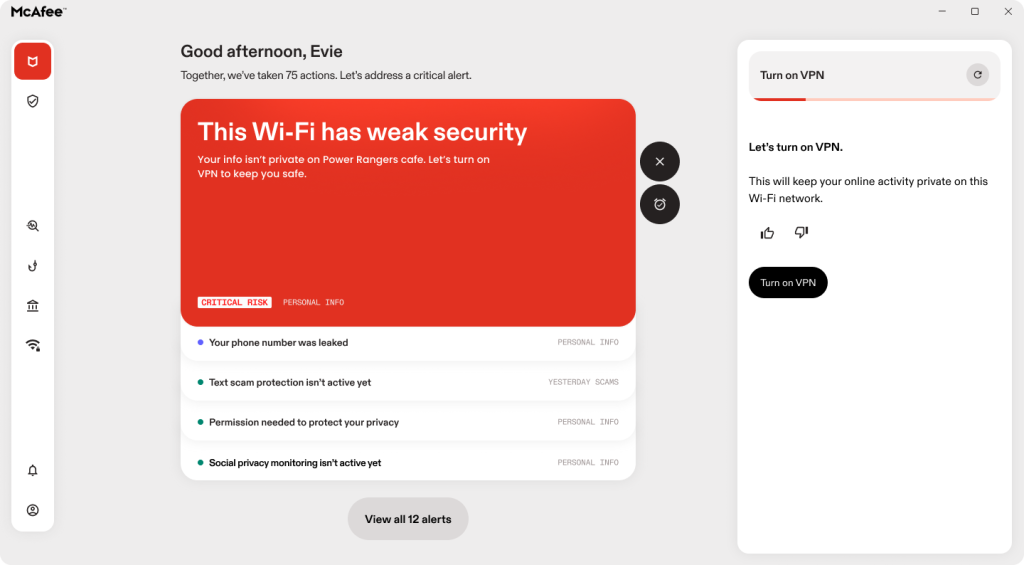
  •  

Cybersecurity Awareness Month 2026: 4 Simple Ways to Stay Safer Online

Cybersecurity used to be easier to picture. It was antivirus software protecting the family computer. A suspicious email you knew not to open. A password you were reminded to make a little harder to guess.

Today, our digital lives don’t fit neatly inside a computer. And neither do the risks.

A scam text can follow you into a purchase. Personal information scattered online can fuel unwanted calls and messages. An account you haven’t thought about in 10 years can still hold information about you. And every ordinary interaction, from following a delivery link to shopping at a new store, can require a moment of calculation: Is this real? Is this safe?

McAfee’s latest research shows how much work that’s becoming. Nearly three-quarters of Americans (74%) say they feel the need to double-check most things online before trusting them, while 62% say figuring out what’s real takes more mental energy than it did a year ago.

That’s why this Cybersecurity Awareness Month, we’re thinking about cybersecurity a little differently.

What is Cybersecurity Awareness Month?

Every October, Cybersecurity Awareness Month encourages people and organizations to build better habits for staying safe online.

For 2026, the Cybersecurity and Infrastructure Security Agency (CISA) is marking the month with the theme “Securing the Next 250.“ CISA points to technologies such as artificial intelligence that are accelerating how quickly attackers can identify and take advantage of weaknesses in computer systems.

For individuals and families, CISA recommends four basic actions:

  • Avoid and report phishing scams.
  • Use strong passwords.
  • Use multifactor authentication and a password manager.
  • Keep software updated.

They’re good fundamentals. Use unique passwords and multifactor authentication when they’re available. Install security updates instead of putting them off indefinitely. And treat unexpected requests for money or information with caution.

But good cybersecurity today also means looking beyond the traditional security checklist.

McAfee’s Cybersecurity Awareness Month Tips: 4 Quick Fixes

1. Make yourself harder for scammers to find

If your phone constantly rings with unknown callers or your inbox is overflowing with unwanted messages, consider looking at how much information about you is available online.

Your name, phone number, email address, home address, and other personal details can appear on data broker and people-search sites. That information can contribute to the pool of data available to marketers, and potentially provide useful ingredients for scammers trying to make a message more convincing.

You can’t make yourself invisible online. But you can reduce unnecessary exposure.

Personal Data Cleanup scans data broker sites for your personal information and can help with its removal, depending on your plan. Think of it as reducing some of the information about you that’s unnecessarily floating around online.

It’s a useful shift in mindset: don’t just get better at dealing with unwanted contact. Look for opportunities to reduce your exposure in the first place.

 2. Close the accounts you forgot you had

Remember Myspace?

What about that Tumblr you haven’t touched in a decade? The shopping site you ordered from once? An old forum account? Or one of the dozens of apps and services you tried, abandoned, and promptly forgot existed?

Our digital footprints are full of these little leftovers.

And your digital footprint isn’t only what you post publicly. It’s also the accounts you’ve created and the companies you’ve entrusted with pieces of your information over the years.

An abandoned account may still contain an email address, old login information, purchase history, personal details, or other data. If a service you no longer use experiences a breach someday, that’s one more place where information associated with you could potentially be exposed.

A good, simple rule: If you don’t use it and don’t need it, consider deleting it.

McAfee’s Online Account Cleanup can help find accounts associated with your email and help you identify ones you may want to remove. We’ve also updated the experience to help prioritize higher-risk accounts, so you can focus your attention where it matters.

This Cybersecurity Awareness Month, see how many pieces of your old internet life you can finally retire.

 3. Keep your public browsing safe

Airport Wi-Fi. Hotel Wi-Fi. Coffee-shop Wi-Fi.

Using a network you don’t control doesn’t need to become a cybersecurity event every time you leave the house.

A VPN, or virtual private network, encrypts the internet traffic traveling between your device and the VPN service. That adds privacy to your connection, particularly when you’re using unfamiliar or unsecured networks.

The important part isn’t remembering to become extra vigilant every time you sit down at a coffee shop. It’s making protection easier to use consistently.

With Secure VPN, you can add protection to your internet connection when you’re away from networks you know and trust.

That’s the kind of cybersecurity we like: something working quietly in the background while you get on with whatever you actually opened your laptop to do.

McAfee will let let you know if you have weak internet security.

McAfee will let let you know if you have weak internet security.

4. Check the destination before you trust the invitation

Think about how many times a day something online asks you to go somewhere else.

A text sends you to track a package. An email asks you to sign in. A search result takes you to a new website. An ad introduces you to a store you’ve never heard of.

Scammers rely on those transitions.

McAfee Labs’ 2026 analysis of text scams found schemes impersonating or referencing everything from deliveries and bank accounts to jobs, tolls, shopping, subscriptions, investments, and utilities. Many are designed to get the recipient to click, respond, or move the conversation somewhere else.

You can inspect every URL yourself. But that puts the work right back on you.

McAfee’s Scam Detector can help warn you about risky websites and links before an everyday click becomes a bigger problem.

It’s a small example of a larger principle at McAfee: You shouldn’t have to be the cybersecurity expert. That’s our job.

While You’re At It: Give Your Browser a 5-Minute Cleanup

If you have another five minutes this Cybersecurity Awareness Month, open your browser settings.

Start with your extensions.

Browser extensions can be genuinely useful, but some require significant permissions to function. If you have extensions you don’t recognize or haven’t used in years, remove them. The fewer unnecessary tools you give access to your browsing, the fewer things you’re relying on to behave responsibly.

Next, check which websites have permission to send you notifications. Remove ones you don’t recognize or no longer want. Unwanted browser notifications can sometimes imitate security alerts or use other alarming messages to get your attention.

Finally, check for browser updates, or simply turn on automatic updates if your browser supports them.

You don’t have to become an expert on browser security. You’re just cleaning out things you no longer need.

A New McAfee Experience To Do More of The Work For You

This Cybersecurity Awareness Month also comes just as we’re rolling out an updated McAfee experience.

The idea behind it connects directly to what our research is telling us.

Seventy-four percent of Americans feel the need to double-check most things online before trusting them. Sixty-two percent say deciding what’s real takes more mental energy than it did a year ago.

Good protection shouldn’t add another set of things to check.

The new McAfee experience brings protection for personal information, connections, and devices into one connected experience across PC, Mac, mobile, and tablet. It’s designed to make it easier to understand what’s protected, what needs your attention, and what McAfee can help handle. That can mean alerting you to suspicious messages and links, helping identify risky websites, monitoring for exposed personal information, protecting your connection, finding forgotten accounts, or helping remove personal information from data broker sites.

We’ve also updated tools including Online Account Cleanup to help people prioritize higher-risk accounts and Personal Data Cleanup to make it easier to understand what personal information is being found and removed on their behalf.

The philosophy behind those changes is simple: Good protection shouldn’t create another job for you.

New McAfee Experience - iPhone Mockup

One Key Takeaway

Our digital lives are simply our lives now.

We shop, date, bank, work, travel, talk to family, look for jobs, manage our health, and discover new things online. And the risks can move just as easily between those digital and physical worlds.

So this Cybersecurity Awareness Month, don’t worry about becoming a cybersecurity expert.

Reduce what you expose. Close what you don’t use. Protect the connections you rely on. And let technology help you decide what’s safe.

The post Cybersecurity Awareness Month 2026: 4 Simple Ways to Stay Safer Online appeared first on McAfee Blog.
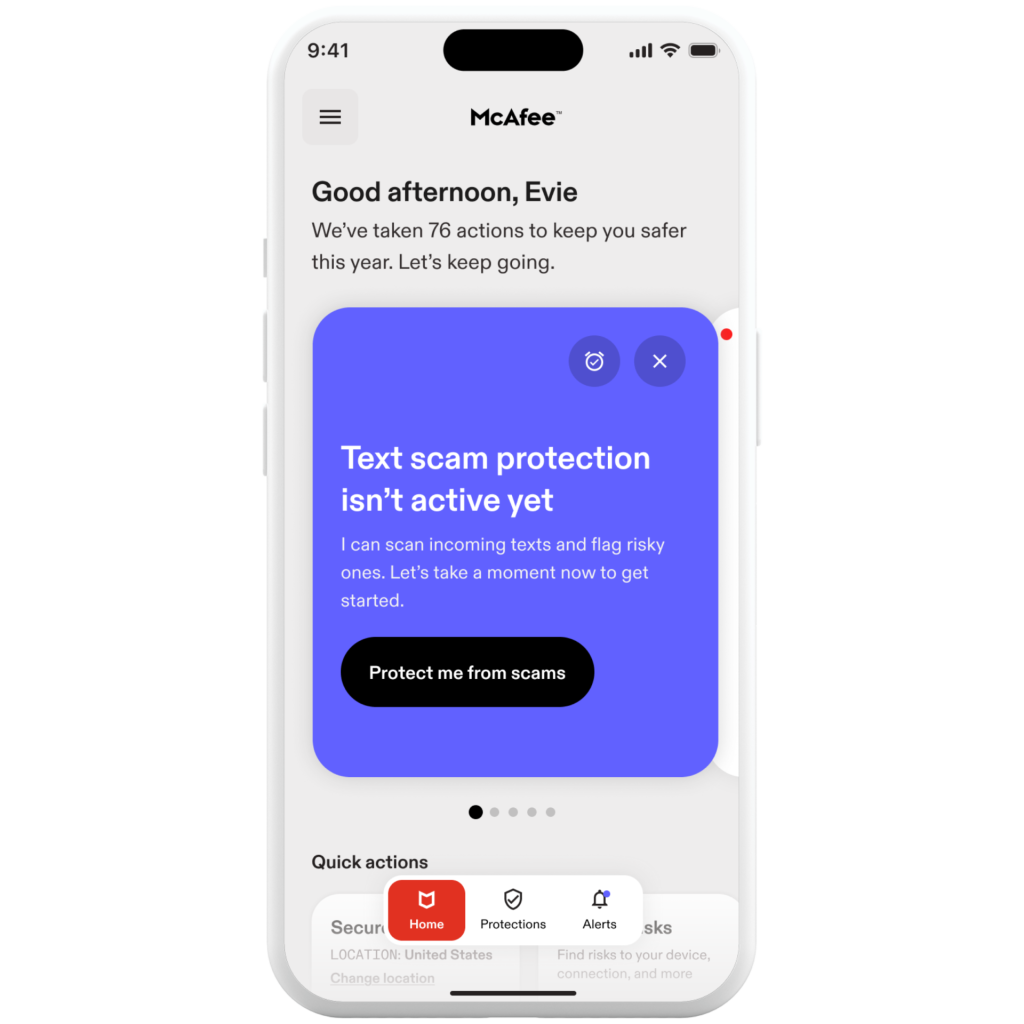
  •  

BigCommerce Ribon App Breach: What It Is and How to Protect Yourself

Phishing scams

Customer names, email addresses, phone numbers, and shipping addresses were exposed across multiple e-commerce storefronts when attackers breached two third-party shopping applications. The cyberattack was confirmed when UK online spirits retailer Master of Malt notified its customers on September 18, 2026 of the risk to their personally identifiable information (PII). The following day, they informed customers that Master of Malt was not the target of the attack and that “The attack was against Ribon, which was installed on hundreds of BigCommerce stores.”

In a September 2026 statement reported by BleepingComputer, e-commerce platform BigCommerce alerted merchants that unauthorized actors accessed shopper records between September 13 and September 17, 2026. BigCommerce confirmed its core platform remained uncompromised and uninstalled the affected software on September 17, 2026, to block cybercriminals from further access.

How the BigCommerce Ribon App Breach Worked

According to BigCommerce’s comments to BleepingComputer, the data breach originated from a system compromise at Fastr, the parent company of third-party app developer “Be A Part Of.” Attackers obtained API application keys for the Ribon and Ribon 1.5 e-commerce apps, which merchants integrate into BigCommerce storefronts to manage customer features.

Because e-commerce integrations grant application keys permission to read store data, holding valid credentials allowed attackers to generate legitimate platform API requests. From September 13 to September 17, 2026, the unauthorized actor extracted customer records across affected stores and injected malicious scripts into a small number of storefronts. BigCommerce uninstalled the applications on September 17, 2026, and notified impacted merchants directly.

Warning Signs That Your Personal Data May Have Been Exposed

Exposed contact details often serve as the foundation for follow-up phishing attempts and impersonation scams. Watch for these specific indicators:

  • Unsolicited credential or payment requests: Watch for unexpected emails, texts, or phone calls claiming to be from affected retailers that ask for account passwords, PINs, or financial details.
  • Urgent payment or store verification messages: Be skeptical of communications demanding payment confirmation or immediate money transfers due to an alleged processing error or security update.
  • Suspicious login and verification links: Avoid clicking links in text messages or emails that direct you to non-official login portals or request personal information.
  • Requests for non-standard payment methods: Treat any demand for wire transfers, prepaid gift cards, or cryptocurrency as a major scam indicator.

 How to Protect Yourself After a Data Breach

Protecting your personal accounts after news of a data breach requires proactive credential management and exercising caution with calls and emails. Take these actions to help protect yourself:

  • Verify sender identity before responding. Legitimate retailers will not contact you unexpectedly to ask for sensitive credentials or payment information over phone or email.
  • Inspect email header details and website URLs. Ensure links lead directly to official domain names rather than lookalike URLs.
  • Use unique passwords across online accounts. Ensure passwords used on e-commerce sites are not reused on email or banking portals.
  • Enable multi-factor authentication (MFA). Turn on MFA across primary email and shopping accounts to add a verification layer beyond passwords.

What to Do If You Have Already Been Targeted

If your data was exposed or you received a breach notification from an affected BigCommerce merchant, take these immediate steps to secure your identity and finances:

  • Stop contact and do not send money. Discontinue communication with any sender requesting credentials or payments related to recent purchases.
  • Contact your bank, card issuer, or payment app immediately. Report potential fraud or stop suspicious transactions if payment details were compromised.
  • Update exposed passwords. Change login credentials and turn on multi-factor authentication for affected merchant accounts and any accounts where you reused passwords.
  • Freeze your credit reports. Consider a credit freeze with Equifax, Experian, and TransUnion if you suspect broader personal identity data exposure.
  • Document all suspicious interactions. Keep records of suspicious activity, including phone numbers, message transcripts, email headers, and receipts.

Next Steps After the BigCommerce Data Breach News

If you encounter phishing attempts or fraudulent activity linked to this breach, report the incident directly to official regulatory and law enforcement channels. You can submit details to the FBI Internet Crime Complaint Center, report deceptive or suspicious messages through the Federal Trade Commission, or notify the impacted retailer directly through the customer support portal on its primary website.

The BigCommerce Ribon app incident demonstrates how compromised third-party application permissions can expose customer records even when core e-commerce platform infrastructure remains secure. Verifying sender credentials and maintaining separate passwords across online accounts helps mitigate personal risk when supply-chain breaches occur.

The post BigCommerce Ribon App Breach: What It Is and How to Protect Yourself appeared first on McAfee Blog.

  •  

Your State’s Scam Reality: What New Research Reveals Across All 50 States

There is a small tax many of us pay in our everyday interactions without even realizing it.

A package notification arrives, and we stop to check whether we actually ordered something. A recruiter reaches out about a job, but before replying, we research the person and the company. A bank alert appears, and instead of tapping the link, we open the banking app ourselves.

These are sensible habits. But McAfee’s latest research suggests the effort behind them is increasing the average American’s every day mental load.

Nearly three-quarters of Americans (74%) say they feel the need to double-check most things online before trusting them. Sixty-two percent say figuring out what is real takes more mental energy than it did a year ago.

That growing burden is one reason McAfee is introducing a new brand and product experience built around a broader idea of what protection should do. Good security shouldn’t demand more of people’s attention. It should help give some of it back.

That’s why the new McAfee experience is designed to do more than protect individual devices. It helps protect the things people rely on every day, their personal information, connections, devices, and accounts, all while making it clearer what’s safe, what needs attention, and what McAfee can handle for them.

New McAfee Experience - iPhone Mockup

Get quick alerts and easily update protections in McAfee’s app

That matters at a moment when attention is already stretched thin. AI is everywhere, and it has made it easier to produce convincing content at an enormous scale, adding to an already crowded attention economy. Increasingly, ordinary moments come with an extra question: Is this real?

And those questions have consequences. Our research found that 82% of Americans have changed how they behave online because of scams. Some have stopped buying from unfamiliar retailers. Others have ignored communications that turned out to be legitimate. Eighteen percent say scam concerns have even caused them to avoid responding to a job opportunity.

“I’ve accused my doctor’s office of being an AI,” says McAfee Threat Researcher Charles McFarland, recounting a time when even he thought something legitimate was fraudulent. “I had to apologize.”

Financial losses remain a serious part of the picture. Nearly one-third of Americans (31%) reported losing money to a scam in the past year. But measuring scams only in dollars misses something important. Scams are also making trust more expensive.

This report examines that growing cost: the attention Americans are spending figuring out what to trust, how the scam experience differs across all 50 states, and what protection should look like when staying safe increasingly competes for the same limited time and attention as everything else we do online.

Infographic - USA Map Dominant Scam Category by State

Key Findings

McAfee’s research combines a nationally representative survey of 5,000 U.S. adults, with 100 respondents in every state, and McAfee Labs analysis of text-based scam activity across the U.S.

Together, the findings show how scams are affecting not only Americans’ wallets, but also their attention, trust and behavior online.

Scams are placing a growing burden on Americans’ attention. Nearly three-quarters (74%) say they feel the need to double-check most things online before trusting them, while 62% say figuring out what is real takes more mental energy than it did a year ago. (Survey)

That uncertainty is changing legitimate online behavior. Eighty-two percent say scam concerns have changed something they do online. Forty-four percent have avoided buying from an unfamiliar retailer, 37% have ignored a legitimate call, text or email, 34% have avoided a new app, website or service, 33% have avoided a legitimate link and 25% have abandoned an online purchase. (Survey)

Scams can make real opportunities harder to trust. Twenty-seven percent encountered a fake recruiter or job opportunity in the past year. At the same time, 18% say scam concerns have caused them to avoid responding to a job opportunity. (Survey)

Financial losses are widespread, and getting money back can be difficult. Nearly one-third of Americans (31%) report losing money to a scam in the past year. Among those who lost money, 53% recovered none. In Wyoming, Kansas, Louisiana, California and New Mexico, more than 70% of victims who lost money recovered nothing. (Survey)

Investment and cryptocurrency scams dominate text-based scam activity. McAfee Labs found them to be the leading scam-text category by volume in 47 of 50 states from May through July 2026. Maine, North Dakota and Michigan were the exceptions. In Maine and North Dakota, toll and traffic scams ranked first. Meanwhile, in North Dakota, loan and investment scams ranked first. (McAfee Labs)

The volume and intensity of scam texts varies considerably by state. Alabama averaged 5.14 scam texts per device, the highest in McAfee’s analysis. In North Dakota, scams represented 2.8% of analyzed text traffic, the highest concentration nationally. In Hawaii, devices receiving at least one scam text averaged 8.45 scam messages during the three-month analysis period. (McAfee Labs)

Some states experience especially high exposure or financial consequences. Ninety-five percent of Nevada respondents encountered at least one type of scam in the past year. In Ohio, 41% reported losing money to a scam. Thirty percent of New Jersey respondents say they encounter four or more scam attempts on a typical day. North Carolina stood out in the other direction: 42% of victims who lost money said they recovered all of it. (Survey)

Many scam texts are designed to begin a conversation rather than complete the scam immediately. Joining or clicking through to a WhatsApp group was the most common requested action in the scam texts McAfee analyzed, driven largely by investment and cryptocurrency schemes. The initial message may be only the first step in a longer attempt to build trust before asking for money. (McAfee Labs)

Displays the number of scams seen per unique device

Displays the number of scams seen per unique device

The New Scam Landscape

Scams no longer occupy some separate, obviously suspicious corner of the internet. Increasingly, they imitate the ordinary business of being online.

In its analysis of U.S. text-based scams from May through July 2026, McAfee Labs identified 49 leading scam topics across 23 broader categories. They touched nearly every part of daily life: package deliveries and bank accounts, job offers and investments, shopping and subscriptions, health and utilities, relationships and family emergencies.

Example of one of the many types of delivery text scams consumers face Example of one of the many types of delivery text scams consumers face

The full list spans Cloud Storage & Payment; Package & Delivery; Banking & Financial; Toll & Traffic Violation; Tax & IRS; Legal Threat & Law Enforcement; Government Impersonation; Tech Support & Security; Prize & Lottery; Romance & Relationship; Employment & Job Offer; Subscription & Service; Account Verification & Account Alerts; Investment & Cryptocurrency; Charity & Donation; Utility & Bill Payment; Health & Pharmacy; Family & Friend Emergency; Retail & Shopping; Loan & Debt Relief; Buying Property & Real Estate; Context-Free Links & Phone Numbers; and Other.

That breadth matters. The more scams resemble the normal messages people receive every day, the more ordinary life requires verification.

One category nevertheless dominated. Investment and cryptocurrency scams were the largest text-scam category by volume in 47 of 50 states. Only Maine, North Dakota and Michigan broke the pattern, with toll and traffic violation scams as well as loan and investments ranking first.

The prevalence of investment scams is important because many are not trying to steal money with a single text. They are trying to start a relationship.

The most common action requested in the scam texts analyzed by McAfee was clicking or joining a WhatsApp group, driven heavily by investment and cryptocurrency schemes. A message might promote an investing community or offer access to financial advice.

Example of a scam text attempting to move users to WhatsApp Example of a scam text attempting to move users to WhatsApp

Moving the recipient into a group or private conversation gives the scammer more time to establish credibility before money enters the picture. Plus, for many of us, social apps feel more personal and we more easily let our guard down when we move a conversation to these messaging platforms.

That helps explain why an unsolicited text that looks relatively harmless can still be the beginning of a much longer scam.

Other prominent scams rely on a different tactic: urgency. Fake account alerts can suggest that something needs immediate attention. Toll and traffic scams warn of an unpaid charge or violation. McAfee Labs also saw scammers impersonating T-Mobile with fake reward offers among the largest individual scam topics.

Example of a scam text attempting to move users to WhatsApp Example of scammers exploiting trusted brands like T-Mobile to dupe customers

The stories change, but the underlying objective is often the same. Scammers want people to act before they have time to question what they are seeing. And there is a lot to question.

Across the United States

McAfee’s analysis found meaningful differences in the amount of scam traffic reaching consumers around the country during the three month analysis period. Alabama recorded an average of 5.14 scam texts per device, the highest in the analysis. Georgia followed at 4.67, with Mississippi close behind at 4.64.

North Dakota stood out in a different way. There, scams represented 2.8% of all text traffic McAfee analyzed, the highest concentration in the country. Hawaii showed another pattern: among devices that received at least one scam text, the average was 8.45 scam messages during the three-month period. That was about 15% higher than Alabama, which ranked second at 7.35 scam texts per exposed device.

Rank  State  Scams per device  State  Scams per device scammed 
1  Alabama  5.14  Hawaii  8.45 
2  Georgia  4.67  Alabama  7.35 
3  Mississippi  4.64  Ohio  7.29 
4  Nevada  4.54  Florida  7.29 
5  Tennessee  4.50  North Dakota  7.28 

A third measure shows how concentrated scam traffic was within people’s overall text messages. North Dakota had the highest concentration in the country, with scams accounting for 2.8% of all text traffic McAfee analyzed.

These measures capture different dimensions of the same problem. The all-device average shows how many scam texts reached devices across a state overall. The exposed-device average shows how persistent scam activity was for devices that received at least one scam. And the share of total text traffic shows how prominent scam messages were within the broader messaging environment.

This shows each states top scam category by volume if Investments & Cryptocurrency scams are ignored. Notice these colors don’t necessarily match the colors from the previous graph.

This shows each states top scam category by volume if Investments & Cryptocurrency scams are ignored. Notice these colors don’t necessarily match the colors from the previous graph.

For consumers, those distinctions may be invisible. What they experience is repetition: another message asking for attention and another decision about whether it deserves it.

AI raises the stakes further. It can make convincing scam content cheaper and faster to produce, while people are simultaneously encountering more AI-generated material in everyday online life. The result is an environment where the old advice to simply “look for something suspicious” becomes harder to apply reliably. Sometimes the suspicious thing looks perfectly ordinary.

That is why the next phase of consumer protection cannot depend on people becoming infinitely better at scrutinizing everything themselves.

America’s Scam Reality

McAfee’s consumer research shows what happens when that scam environment meets everyday life.

Most Americans are encountering scams regularly. Eighty-eight percent say they experienced at least one type of scam in the past year, and one in five say they typically encounter four or more scam attempts in a single day.

Yet frequency tells only part of the story. The more consequential finding may be what people are doing in response.

Eighty-two percent say scam concerns have changed their online behavior. Forty-four percent have avoided an unfamiliar retailer. Thirty-seven percent have ignored a legitimate call, text or email because they suspected a scam. Thirty-three percent have avoided clicking a legitimate message or link.

These are not examples of people falling for scams. They are examples of people trying not to.

Job scams make that tradeoff particularly tangible. Twenty-seven percent of Americans say they encountered a fake recruiter or job opportunity in the past year. Eighteen percent say concerns about scams have caused them to avoid responding to a job opportunity.

The financial consequences remain substantial when a scam does succeed. Nearly one-third of Americans (31%) report losing money to a scam in the past year. Among those victims, 53% recovered none of what they lost.

From our McAfee Labs Research: This shows approximate location of all the scams received

From our McAfee Labs Research: This shows approximate location of all the scams received

But a national average can obscure how differently people experience the problem.

Our full 50-state scam breakdown examines the data state by state, combining McAfee’s consumer survey with Labs telemetry to show where scam exposure is highest, where financial recovery is hardest, how concerns affect behavior, and which types of text scams McAfee is seeing across the country.

Across those differences, one finding remains remarkably consistent: Americans are adapting. They are checking more carefully and approaching unfamiliar interactions with greater caution, or even avoiding them altogether.

Those behaviors can help keep people safe. But that puts the mental load on back onto the everyday user. There is a limit to how much vigilance we should expect people to supply on their own.

The better question is how technology can take on more of that work for them. And that is the thinking behind McAfee’s new brand and product experience, beginning its rollout in the U.S. today.

How McAfee is Changing to Meet the Moment

McAfee’s new consumer experience is designed to make protection simpler to understand and easier to act on, while helping people navigate the moments where scams and other threats increasingly create uncertainty.

We’ll let you know if something seems suspicious and could put you at risk.

The experience is built to spot risks earlier, guide people clearly, and act when protection can be handled automatically. That means flagging suspicious messages, links, sites, exposed data, or unsafe connections; explaining what matters in plain language; and helping people take the right next step without requiring them to become security experts.

McAfee can alert you when your information appears in a data breach, help identify suspicious messages and links, protect your connection on risky Wi-Fi, monitor for exposed personal information, and help keep your devices and accounts safer.

Just as importantly, we’ve worked to make those protections understandable.

Instead of expecting people to know cybersecurity terminology or hunt through settings, the experience is designed to surface what matters and help people understand what to do next.

Because good protection shouldn’t create another job for you.

The refreshed McAfee experience makes it easier to see what needs your attention and how you’re protected.

The refreshed McAfee experience makes it easier to see what needs your attention and how you’re protected.

What We’re Unveiling

That idea, making protection do more of the work, is built into the new McAfee experience we’re unveiling today.

We’ve brought protection for personal information, connections, and devices into one connected experience across PC, Mac, mobile, and tablet. Instead of asking people to piece together what’s protected or search for what needs attention, McAfee makes it easier to see both in one place.

The experience is also more personal. McAfee can alert you when your information or devices may be at risk and provide guided actions, that explain what needs your attention in plain language. The goal is not to give people more security information. It’s to help them understand what matters to them and what they can do about it.

And over time, the experience is designed to become more personal and relevant to each person, proactively identifying risks, alerting in the moment, and guiding when action is needed for the protections that matter most based on their digital life.

We’ve also made improvements to privacy tools like Online Account Cleanup, which now helps people prioritize higher-risk accounts, and Personal Data Cleanup, which makes it easier to see the personal information being found and removed on their behalf.

Taken together, these changes reflect where we believe consumer safety needs to go: less hunting through settings, less deciphering security alerts, and less relying on people to spot every threat themselves.

More protection that understands what matters, explains what needs attention, and works proactively in the background.

Here to give you peace of mind and lighten the mental load of life online.

Here to give you peace of mind and lighten the mental load of life online.

Conclusion

The findings in this report suggest that the impact of scams extends beyond exposure and financial loss.

Every scam adds another small decision to an already crowded digital day: Is this message real? Is this link safe? Is this person who they say they are? As those decisions multiply, staying safe online becomes not just a security challenge, but a growing mental burden.

As people encounter more attempts to imitate legitimate messages, businesses and opportunities, the effort required to establish trust becomes a consequence in its own right.

That makes reducing the burden of verification an increasingly important part of consumer protection. People should not have to devote more of their limited attention to staying safe simply because scams are becoming harder to distinguish from everyday life online. That’s where McAfee comes in.

The post Your State’s Scam Reality: What New Research Reveals Across All 50 States appeared first on McAfee Blog.
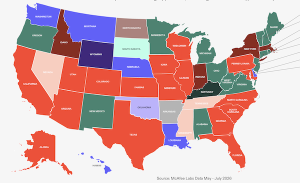
  •  

Card Skimmers Expose 600k Cards: What They Are and How to Protect Yourself

Cybercriminals are deploying autonomous AI agent frameworks to target online retailers and steal payment card details at scale, according to research from cybersecurity firm Gambit Security. Their analysis reveals that the ongoing campaign has compromised at least 119 websites—including a Fortune 500 hospitality company, a major U.S. airline, and an online fashion retailer—exfiltrating over 600,000 valid credit card records. These automated systems allow threat actors to scan, exploit, and infect target sites at a remarkably low operational cost, lowering the technical and financial barriers to large-scale cybercrime.

How the AI Credit Card Skimming Attack Works

In simple terms, a digital credit card skimmer acts like a hidden recording device inside an online checkout counter. Instead of physically tampering with a card reader, scammers use automated software tools to breach an e-commerce website’s backend servers.

Once inside, the software places invisible lines of malicious code directly on the payment page. When you enter your credit card number, expiration date, and security code to make a purchase, the hidden code silently copies your financial information and sends it to the attacker. Your order processes normally without any visible interruption.

Behind this campaign, threat actors use three specialized open-source AI frameworks to manage the intrusion without needing constant human oversight:

  • Strix: Automatically scans websites to search for unpatched security vulnerabilities or unprotected doors into backend servers. Across an eight-day window, Strix logged 633 scanning hours across 138 website hosts.
  • Cairn: Takes the security flaws discovered by Strix and uses them automatically to break through website defenses, giving the scammer administrative access.
  • Hermes: Serves as an orchestration agent for the operation. Powered by advanced AI (Claude Opus 4.6), it makes real-time tactical decisions, directs the attack steps, installs the skimmers, and manages 121 operational skills.

The Low Cost and High Impact of AI-Driven Attacks

According to data published by Gambit Security, the attacker ran 105 distinct attack waves in a five-day span using brief instructions like “get to work.” The total infrastructure cost ranged between $12,000 and $18,000, averaging just $25.46 per targeted company. By driving the average cost down to tens of dollars per target, AI automation slashes the financial and technical barriers to cybercrime. Threat actors can now execute high-volume enterprise breaches at scale that previously required costly manual operations and dedicated technical teams.

Once inside, the AI agents inject malicious JavaScript skimmers into checkout forms, Google tag blocks, content delivery networks (CDNs), or server caches. The Hermes agent was also instructed to execute cleanup routines that wiped stolen payment fields directly from merchant databases, causing server errors and data loss for affected retailers. While this particular campaign compromised e-commerce websites, automated scripts can also target payment data directly on client devices, such as the browser-level threats highlighted in McAfee Labs research on wallet-swapping extension malware.

Warning Signs and Red Flags

Digital skimmers operate quietly within legitimate checkout pages, but technical anomalies can indicate a compromised payment form:

  • Checkout latency or page crashes: The payment form freezes, stutters, or throws an error message while processing your transaction.
  • Repeated payment prompts: The website requests that you re-enter your payment card details immediately after you submit them.
  • Visual formatting errors: Payment entry fields display misaligned input boxes, mismatched fonts, or unexpected design changes compared to the rest of the site.
  • Immediate transaction notifications: Your bank flags an unfamiliar charge or location seconds after you complete a purchase.

How to Protect Yourself From Digital Credit Card Skimmers

  • Pay with third-party digital wallets. Complete purchases using Apple Pay, Google Pay, or PayPal. These payment services use encrypted tokenization, ensuring your actual credit card number is never transmitted to or stored on the merchant’s payment form.
  • Use virtual credit cards. Generate temporary, single-use, or merchant-locked virtual card numbers through your bank or card issuer to prevent stolen card details from being reused elsewhere.
  • Avoid saving payment information in merchant accounts. Input payment details manually for individual transactions rather than storing card numbers inside store customer profiles or retailer databases.
  • Enable real-time transaction alerts. Turn on immediate push notifications or SMS alerts in your banking app for every account charge so you can identify unauthorized activity immediately.

What to Do If You’ve Already Been Targeted

If you suspect your credit card information was stolen or compromised in a digital skimming attack:

  • Contact your bank or card issuer immediately. Report the compromised card, request an immediate cancellation, and dispute any unauthorized charges.
  • Update your account credentials. Change passwords and turn on multi-factor authentication (MFA) across all financial accounts and shopping portals where you used the same login information.
  • Place a credit freeze. Contact Equifax, Experian, and TransUnion to freeze your credit files, preventing unauthorized accounts from being opened in your name.
  • Maintain transaction records. Retain bank statements, order confirmation emails, receipts, and the web URL of the merchant site where the purchase occurred.
  • Create an official recovery plan. If personal identifying information (such as your Social Security number or date of birth) was exposed alongside financial details, submit a report to the FTC to get a recovery plan.

Reporting Credit Card Skimming and Staying Safe

Reporting stolen payment data helps law enforcement track malicious server infrastructure and disrupt automated threat networks. If you suspect your financial data was exposed on a compromised site, report the incident through official channels:

  • FBI Internet Crime Complaint Center: Submit a formal incident report with ic3.
  • Federal Trade Commission: Report payment fraud and scam activity to the FTC.
  • Local Police Department: File a police report if required by your bank or insurance provider for fraud reimbursement claims.
  • The Affected Merchant: Contact the retailer’s customer support or security team directly through their official domain.

While AI skimming attacks can be difficult to detect on the front end of retail websites, taking immediate action after a suspected exposure limits potential financial damage. By utilizing encrypted digital wallets, avoiding stored payment methods, and reviewing account statements regularly, you significantly reduce your exposure to AI-driven cybercrime.

The post Card Skimmers Expose 600k Cards: What They Are and How to Protect Yourself appeared first on McAfee Blog.
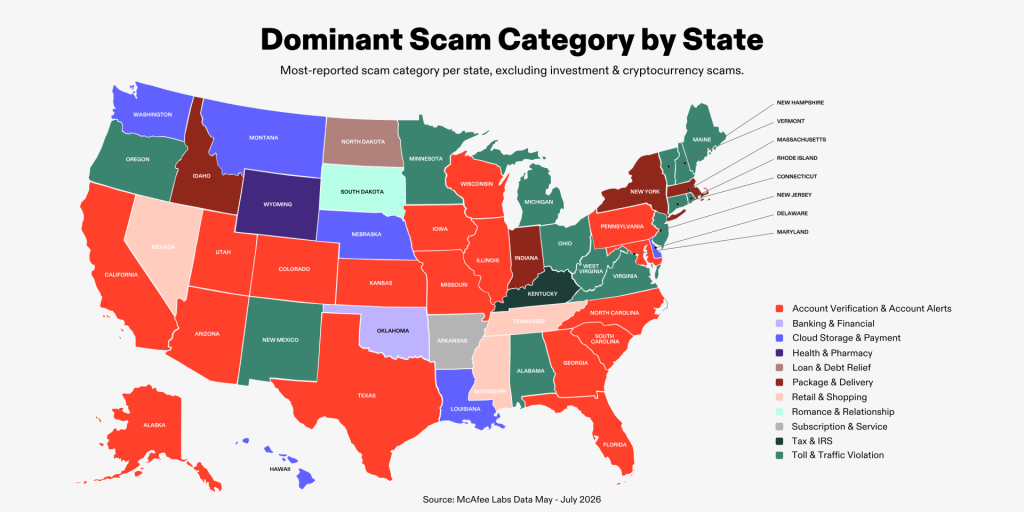
  •  

FBI Job Portal Hack Claimed by ShinyHunters: What Happened and How to Protect Yourself

An agent walks by the FBI seal at headquarters.

The FBI is investigating a major data breach after learning the federal agency’s job application portal was compromised, according to a September 2026 report by 404 Media. The cyberattack on FBIJobs.gov may have exposed the personal records of thousands of job applicants alongside current and former FBI personnel.

On September 23, the FBI shared in a statement that they were “aggressively investigating this matter,” and on September 29, shared a video on X reporting that Dutch authorities had arrested an alleged leader of ShinyHunters, the global cybercrime group known who took responsibility for the FBI data breach. In the video, Brett Leatherman, Assistant Director of the FBI’s Cyber Division, warned remaining members of ShinyHunters that the FBI knew where to find them and suggested they reach out to the FBI first while they still have the choice.

Inside the FBI Jobs Portal Cyberattack

The intrusion targeted the FBI Candidate Gateway, where the hacker group claims to have extracted sensitive personally identifiable information (PII). According to the group and media reviews of leaked sample data, this compromised dataset contains the PII of federal job applicants, prospective candidates, active special agents, and former FBI employees. Exposed records allegedly include full legal names, home addresses, phone numbers, email addresses, spousal information, job titles, and Social Security numbers.

In a statement circulated on the dark-web by ShinyHunters, the group attempted to use the stolen database to extort the agency, giving officials one week to retract a public advisory that had identified ShinyHunters as a criminal syndicate. After the deadline passed and the advisory remained live, the group claimed they would not publish the database publicly. However, breached records frequently wind up circulating in cybercriminal forums.

How Breach Data Creates Additional Threats

When news breaks that sensitive personnel data from a high-profile agency has been exposed, the risks extend beyond immediate identity theft. Cybercriminals can leverage this stolen data to launch two categories of attacks:

  • Internal Spear-Phishing and System Infiltration: Hackers could use stolen internal personnel registries, agent titles, and applicant profiles to target current FBI staff. By citing real colleague names, internal job postings, or specific department codes, bad actors can craft hyper-targeted phishing emails to trick employees into surrendering internal network credentials. The goal of this attack would be to gain access to restricted databases, confidential files, and sensitive intelligence networks.
  • External Impersonation and Consumer Fraud: Scammers could also exploit stolen agent credentials to trick the general public. By matching leaked names with real public offices, fraudsters could contact civilians claiming to be active federal agents conducting official investigations, pressuring targets into paying fake fines or forfeiting financial credentials.

Watch for Warning Signs of FBI Impersonation Scams

Because this breach may have exposed real personnel details, impersonation attempts carry heightened risk. Scammers could pair verified agent names, genuine department titles, and realistic internal background details with fake caller ID tags, making fraudulent outreach appear legitimate. Be extra vigilant for these red flags that you may be dealing with an impersonation scam:

  • Demands for immediate payment. Federal agencies will never call to demand immediate payment, and do not accept payment via gift cards, cryptocurrency, wire transfers, or cash couriers.
  • Threats of arrest or legal action. Impersonators use high-pressure tactics, claiming you face active arrest warrants or federal lawsuits if you do not pay or comply on the spot.
  • Pressure to remain on the line. Scammers try to prevent you from independently verifying their identity. Legitimate law enforcement officers will allow you to hang up and call official public agency numbers.
  • Spoofed caller ID and credentials. Scammers manipulate caller ID displays to mirror official FBI field office phone numbers or send emails containing legitimate bureau logos.

How to Protect Yourself from Impersonation Scams

Protect against impersonation schemes by verifying all unexpected contacts independently.

  • Hang up and verify directly. If you receive a call claiming to be from the FBI or another federal agency, hang up immediately. Search for the official phone number of your local FBI field office on fbi.gov and call them directly to confirm if the inquiry is legitimate.
  • Do not trust caller ID. Phone numbers displayed on caller ID can be spoofed to match real government offices.
  • Avoid clicking links in unsolicited messages. If you receive an email or text message regarding an FBI application or investigation, do not click embedded links. Type the official URL ending in .gov directly into your browser.

What to Do If Your PII Was Compromised or You’ve Been Targeted by Scammers

If you shared personal details or sent funds to a scammer, or if you previously submitted job applications or personal information through federal career sites, take immediate action to secure your identity and accounts:

  • Stop contact with scammers and cease payments. Block all phone numbers, email addresses, and messaging channels used by the scammer immediately. Do not transfer additional money.
  • Notify your financial institutions. If you’ve initiated payment with a suspected scammer or notice charges that you did not approve, contact your bank, credit card issuer, or payment app provider right away to report fraudulent transactions and request charge reversals or account holds.
  • Update passwords and activate multi-factor authentication (MFA). Change login passwords across all online accounts, starting with primary email and financial logins, and enable MFA using an authenticator app.
  • Freeze your credit. Contact Equifax, Experian, and TransUnion to freeze your credit files, preventing attackers from opening loans or credit lines in your name.
  • File an identity theft report. If your Social Security number or identity details were exposed, visit IdentityTheft.gov to submit a report and receive a personalized recovery plan.
  • Preserve evidence. Save phone logs, text messages, emails, wire receipts, and digital wallet addresses associated with the scam.

Report Cybercrime to Help Make a Safer Internet

Reporting cybercrime and impersonation attempts helps law enforcement trace criminal networks like the ShinyHunters hacker group and shut down active fraud operations. Submit reports through these official channels:

  • FBI Internet Crime Complaint Center (IC3): Submit a complaint regarding cyber breaches and online scams through the IC3 reporting portal.
  • Federal Trade Commission (FTC): Rport fraud, impersonation, and identity theft directly to the FTC fraud reporting page.
  • Federal Communications Commission (FCC): File complaints about illegal robocalls and caller ID spoofing via the FCC consumer complaint portal.
  • Local Police Department: Contact local law enforcement if you experienced monetary loss or direct extortion threats.
  • The FBI: Report direct agent impersonation through the official FBI contact page.

Prompt reporting provides law enforcement with vital intelligence to track threat actors and protect others from emerging scams.

The post FBI Job Portal Hack Claimed by ShinyHunters: What Happened and How to Protect Yourself appeared first on McAfee Blog.
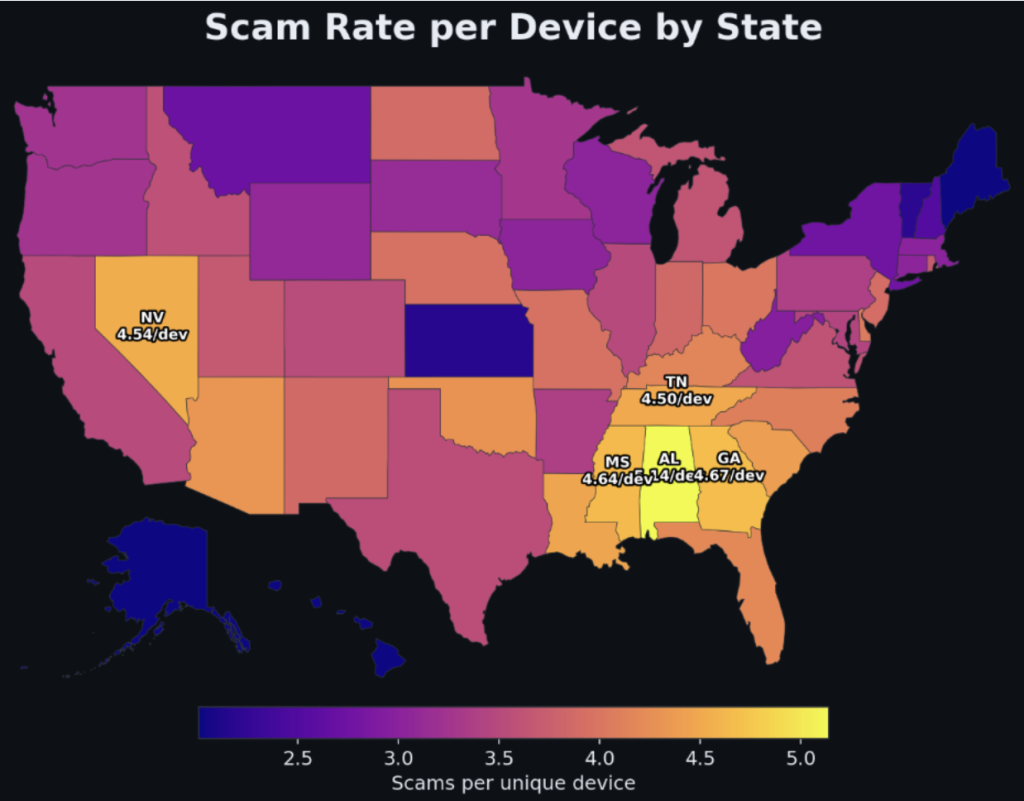
  •  

FBI Warns of Law Enforcement Impersonation Scams: What They Are + How to Protect Yourself

The FBI Internet Crime Complaint Center (IC3) issued a September 2026 public service announcement warning of a rise in government and law enforcement impersonation scams. These scams feature individuals posing as law enforcement agents leveraging threats to acquire money or personal information.

Between January 2025 and July 2026, the IC3 received nearly 61,000 complaints regarding fraudsters posing as local police, federal agents, or court officials, with reported losses exceeding $1.6 billion. Imposters use caller ID spoofing and legal threats to extract immediate payments and sensitive personal information from their targets.

How Law Enforcement Impersonation Scams Work

Law enforcement impersonation scams rely on scammers projecting authority and manufacturing urgency. Their goal is to drive you to act before you can verify the caller’s identity.

According to the IC3, fraudsters use caller ID spoofing technology to make your phone screen display the legitimate name and telephone number of a law enforcement agency or court. They build credibility by providing fake badge numbers, official-sounding department names, and fictitious case file numbers.

During these law enforcement imposter scams, callers may claim that you missed jury duty, owe outstanding court fines, face an active arrest warrant, or have a suspended driver’s license or passport. The fraudster insists that you resolve the issue immediately over the phone or online. They demand payment via non-traditional methods, including prepaid gift cards, cryptocurrency, wire transfers, or physical cash couriers. Scammers frequently follow up with text messages or emails containing links to fake government portals designed to capture payment details and login credentials.

Impersonation Scam Warning Signs and Red Flags

If you receive a call from police, local courts, or federal agencies, watch for these warning signs that you could be dealing with a scam:

  • Demands for immediate payment over the phone: Legitimate law enforcement officers and court clerks will not call demanding instant payment to clear a warrant or missed jury duty summons.
  • Requirements for non-standard payment methods: Requests for payment via prepaid gift cards, cryptocurrency, bank wire transfers, or physical cash couriers indicate a scam.
  • Threats of immediate arrest or legal action: Imposters use aggressive tones to force rapid payment before you can verify their credentials through official sources.
  • Unsolicited links in text messages or emails: Follow-up messages directing you to online payment or verification portals are designed to capture personal credentials or payment details.
  • Requests for sensitive personal identifiers: Scammers ask for Social Security numbers, banking details, or account passwords under the pretense of “verifying” your record.

How to Protect Yourself From Impersonation Scams

  1. Hang up and verify through official channels. Immediately disconnect if you receive a suspicious call from police or court officials. Look up the agency’s official telephone number on a public .gov website and call directly to verify claims.
  2. Recognize how legitimate agencies operate. Real law enforcement officers, courts, and government agencies do not demand payment over the phone, nor do they accept gift cards, cryptocurrency, wire transfers, or cash couriers.
  3. Avoid clicking links in unexpected messages. Do not click unsolicited links or download attachments in emails or text messages claiming to come from court or police portals. Type official website addresses directly into your web browser.
  4. Limit public personal information. Fraudsters collect names, home addresses, and family details from social media and data broker websites to make fake scripts sound authentic. Adjust your privacy settings and submit removal requests to public data broker directories.

What to Do If You’ve Already Been Targeted

  • Stop all communication immediately: Cease interacting with the scammer immediately and do not send additional money.
  • Contact financial institutions: Call your bank, credit card issuer, or payment app provider right away to report the fraud and request a payment reversal or wire recall.
  • Secure online accounts: Change passwords and enable multi-factor authentication on all financial and email accounts that may have been exposed.
  • Freeze your credit: Contact Equifax, Experian, and TransUnion to freeze your credit files and prevent unauthorized accounts from being opened in your name.
  • Report identity theft: If you shared sensitive identifiers like your Social Security number, submit a report to the FTC to get a recovery plan.
  • Maintain evidence: Retain all call logs, text messages, emails, payment receipts, and cryptocurrency transaction details.

Reporting Law Enforcement Impersonation Scams

Reporting an impersonation incident promptly helps authorities track fraudulent networks and protects others from falling victim. If you encounter a fake call from police or a fraudulent court notice, submit an official report through the FBI Internet Crime Complaint Center. You should also contact your local police department to file a report, particularly if you experienced financial loss or received direct threats. Finally, inform the specific agency or court that was impersonated by calling the official directory number listed on its .gov website, allowing their security officials to issue public advisories.

The post FBI Warns of Law Enforcement Impersonation Scams: What They Are + How to Protect Yourself appeared first on McAfee Blog.
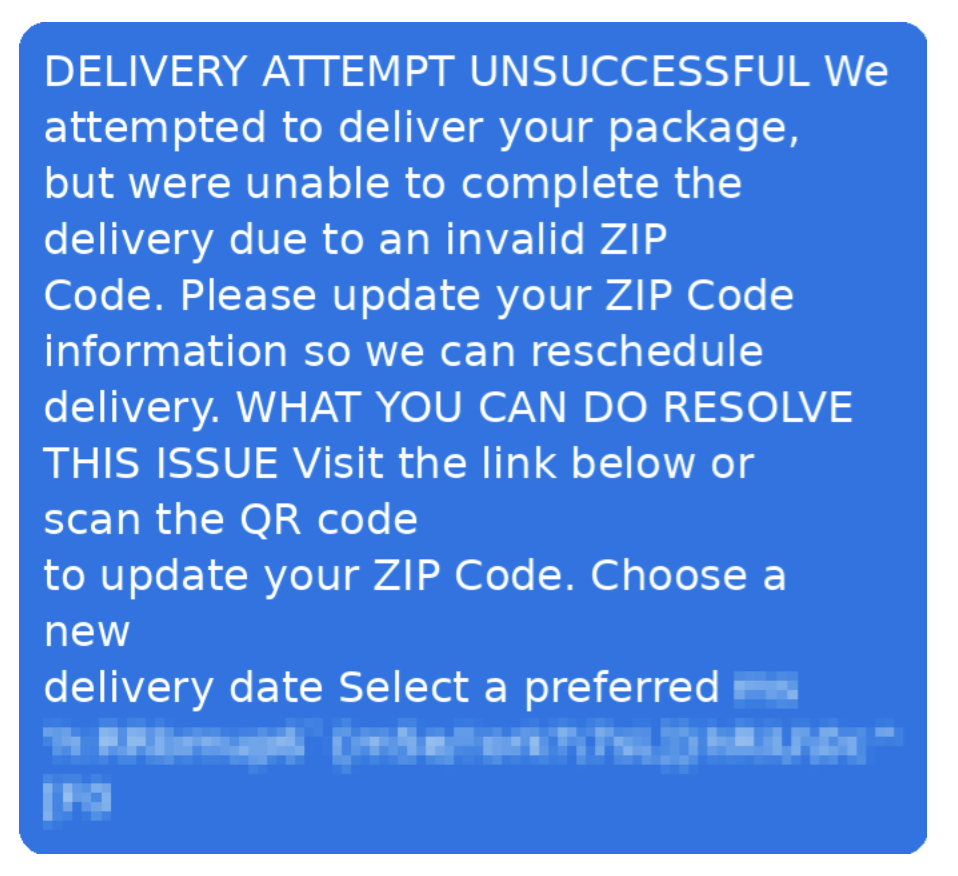
  •  
❌