A 31-year-old engineer and self-described indie game developer is suspected of firing shots at the annual event attended by President Donald Trump, high-profile media figures, and US government officials.
Plus: Spy firms tap into a global telecom weakness to track targets, 500,000 UK health records go up for sale on Alibaba, Apple patches a revealing notification bug, and more.
A new scam making the rounds takes a familiar delivery trick and upgrades it with hyper‑realistic messaging and a QR code that looks safe to scan.
But don’t be fooled.
It’s the same delivery scam playbook scammers have relied on for years, just repackaged with better design and more convincing details.
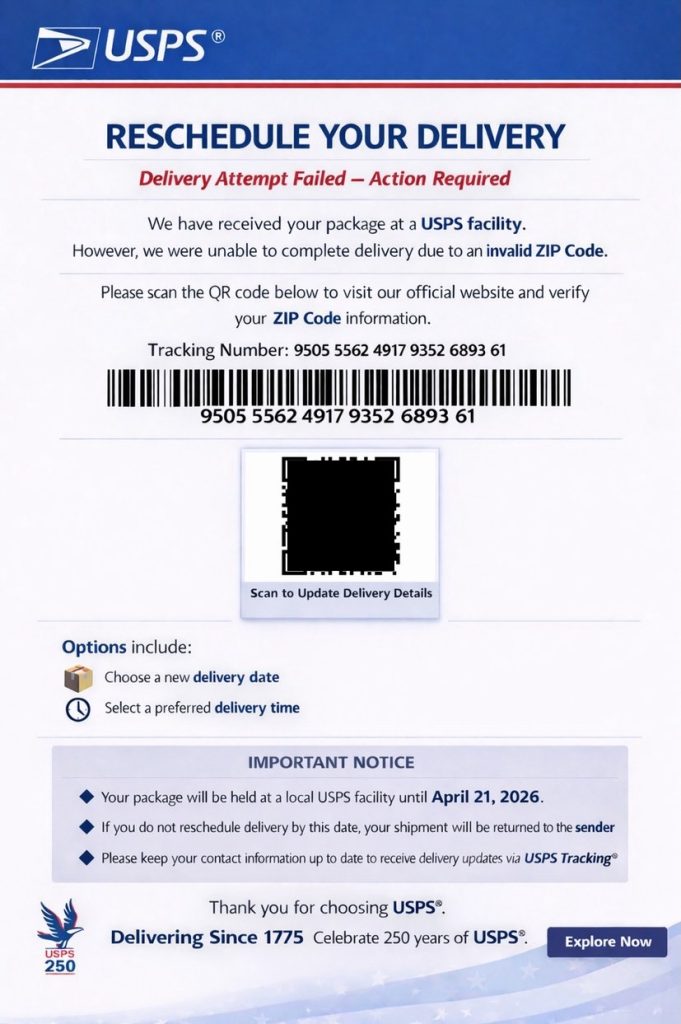
You get a message with a notice that looks something like this, a real message received by our team and tested against McAfee’s Scam Detector.
This is an example of the scam message we received, impersonating the USPS.
That added layer of realism is what makes this version more dangerous. But it doesn’t hold up under scrutiny. McAfee’s Scam Detector flagged both the suspicious language and the QR code in this message before any interaction.
If you receive something like this, pause. Do not scan the code.
You can also protect yourself with McAfee’s Scam Detector, which flags suspicious links and messages, including delivery scams and QR‑based attacks, and explains why they may be risky.
What is the USPS QR Code Scam and How Does it Work?
The USPS QR code scam is a phishing attempt where scammers impersonate postal services and use QR codes instead of clickable links to direct victims to malicious websites.
Once scanned, the QR code can lead to a fake USPS page that asks for payment, login credentials, or personal information.
How the scam works
Step
What happens
The red flags
What to do
How McAfee helps
1
You receive a text about a delivery issue or missed package
Requests for small “redelivery” or “processing” fees are not normal
Exit immediately and do not submit anything
Scam Detector explains why the page is risky, and Identity Monitoring supports you when if your info gets out.
What To Do If You Get This Message
Do not scan the QR code
Go directly to the official USPS website to check tracking
Delete the message
Report it as spam
Monitor your accounts if you interacted with it
And that, my friends, is scam number one in this week’s This Week in Scams.
Let’s get into what else is on our radar.
A Major Health Data Breach Exposes 500,000 Records
A massive health data incident is raising new concerns about how sensitive information is handled and shared.
According to reporting from the Associated Press, data tied to 500,000 participants in a major U.K. health research project was found listed for sale online. The dataset included biological and health-related information, though it did not contain direct identifiers like names or contact details.
Access to the data had been granted to research institutions, but that access has since been revoked. Authorities say no purchases were made, and the listing has been removed.
Still, the situation highlights a growing reality: once data is accessed or shared, control over it becomes harder to guarantee.
What This Breach Says About Data Privacy
Scams are no longer isolated events. They are layered.
A data breach does not just stay a breach. It becomes fuel for future scams. Exposed information can be used to make phishing messages more convincing, personalize attacks, and build trust with targets.
That is why detection alone is not enough anymore. Protection has to account for both incoming threats and what happens when data is already out there.
How McAfee Protects You In A World of Scams and Data Breaches
McAfee+ Advanced gives you multiple layers working together so you are not left figuring it out after the damage is done:
Identity Monitoring alerts you if your personal info shows up where it should not, so you can act fast
Personal Data Cleanup helps remove your information from data broker sites, making you harder to target in the first place
Scam Detector flags suspicious texts, emails, links, and even deepfake videos before you engage
Safe Browsing helps block risky sites if you do click

 Login
Login