
Reading view

SMS Phishers Pivot to Points, Taxes, Fake Retailers

China-based phishing groups blamed for non-stop scam SMS messages about a supposed wayward package or unpaid toll fee are promoting a new offering, just in time for the holiday shopping season: Phishing kits for mass-creating fake but convincing e-commerce websites that convert customer payment card data into mobile wallets from Apple and Google. Experts say these same phishing groups also are now using SMS lures that promise unclaimed tax refunds and mobile rewards points.

Over the past week, thousands of domain names were registered for scam websites that purport to offer T-Mobile customers the opportunity to claim a large number of rewards points. The phishing domains are being promoted by scam messages sent via Apple’s iMessage service or the functionally equivalent RCS messaging service built into Google phones.
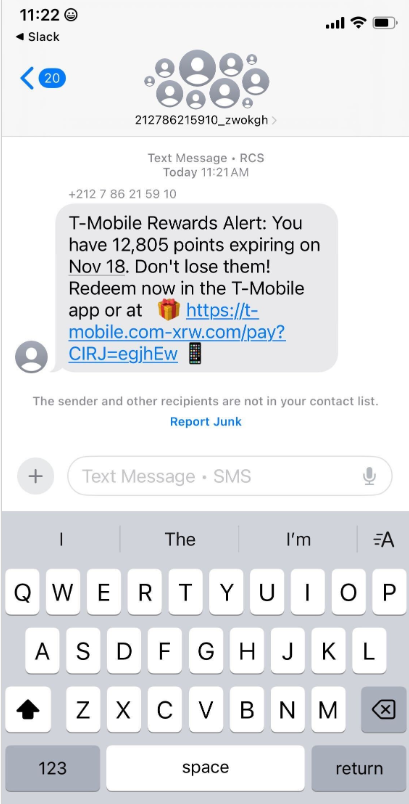
An instant message spoofing T-Mobile says the recipient is eligible to claim thousands of rewards points.

The website scanning service urlscan.io shows thousands of these phishing domains have been deployed in just the past few days alone. The phishing websites will only load if the recipient visits with a mobile device, and they ask for the visitor’s name, address, phone number and payment card data to claim the points.

A phishing website registered this week that spoofs T-Mobile.

If card data is submitted, the site will then prompt the user to share a one-time code sent via SMS by their financial institution. In reality, the bank is sending the code because the fraudsters have just attempted to enroll the victim’s phished card details in a mobile wallet from Apple or Google. If the victim also provides that one-time code, the phishers can then link the victim’s card to a mobile device that they physically control.

Pivoting off these T-Mobile phishing domains in urlscan.io reveals a similar scam targeting AT&T customers:
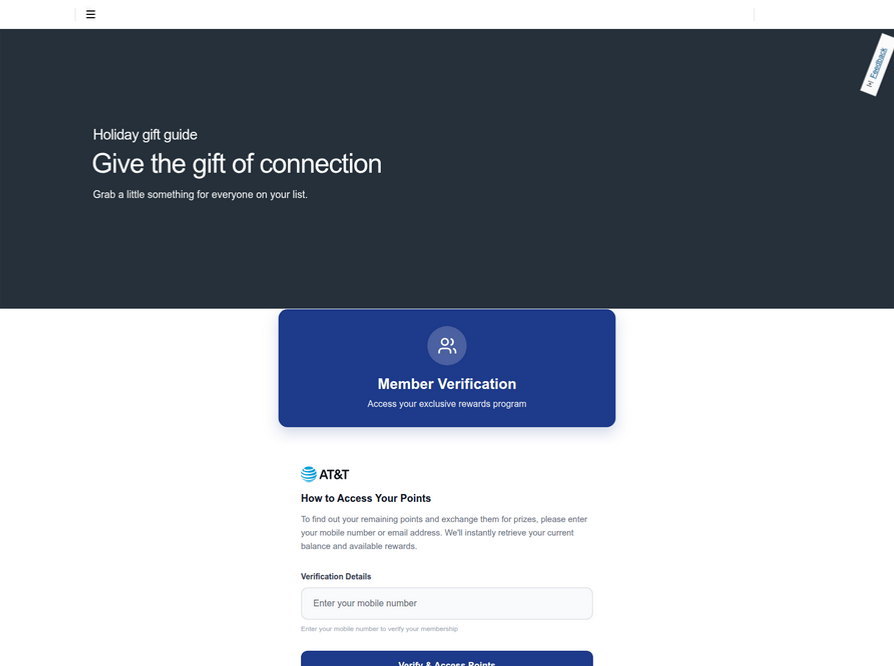
An SMS phishing or “smishing” website targeting AT&T users.

Ford Merrill works in security research at SecAlliance, a CSIS Security Group company. Merrill said multiple China-based cybercriminal groups that sell phishing-as-a-service platforms have been using the mobile points lure for some time, but the scam has only recently been pointed at consumers in the United States.

“These points redemption schemes have not been very popular in the U.S., but have been in other geographies like EU and Asia for a while now,” Merrill said.

A review of other domains flagged by urlscan.io as tied to this Chinese SMS phishing syndicate shows they are also spoofing U.S. state tax authorities, telling recipients they have an unclaimed tax refund. Again, the goal is to phish the user’s payment card information and one-time code.
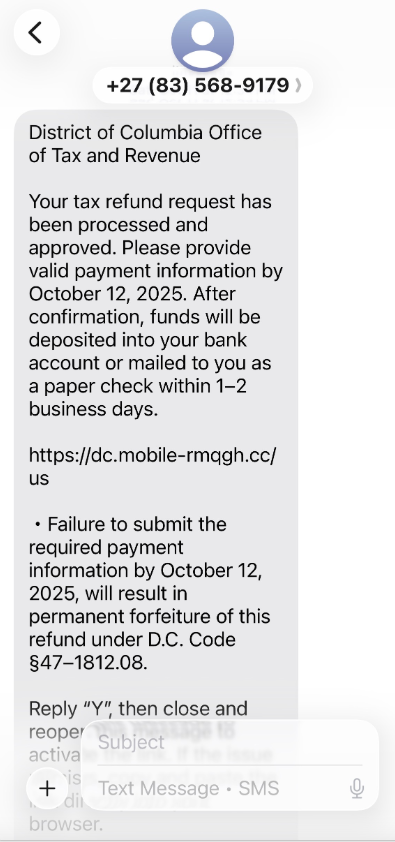
A text message that spoofs the District of Columbia’s Office of Tax and Revenue.

CAVEAT EMPTOR

Many SMS phishing or “smishing” domains are quickly flagged by browser makers as malicious. But Merrill said one burgeoning area of growth for these phishing kits — fake e-commerce shops — can be far harder to spot because they do not call attention to themselves by spamming the entire world.

Merrill said the same Chinese phishing kits used to blast out package redelivery message scams are equipped with modules that make it simple to quickly deploy a fleet of fake but convincing e-commerce storefronts. Those phony stores are typically advertised on Google and Facebook, and consumers usually end up at them by searching online for deals on specific products.
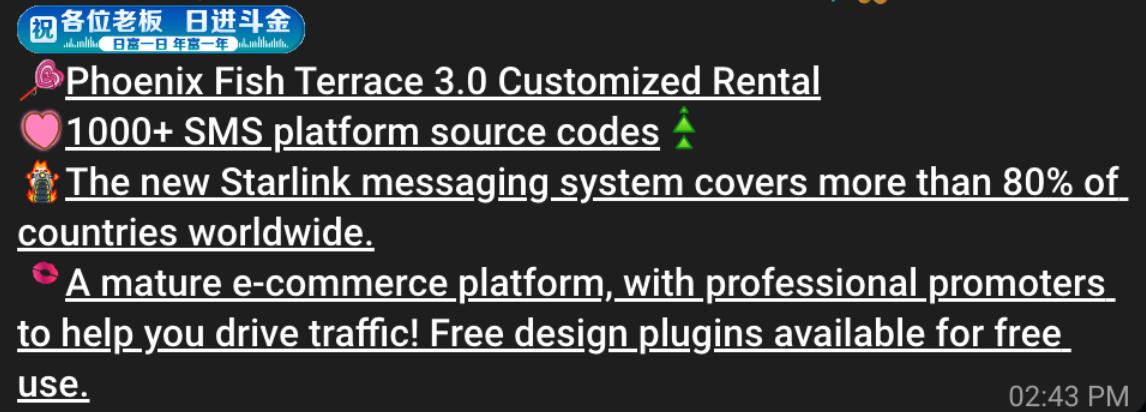
A machine-translated screenshot of an ad from a China-based phishing group promoting their fake e-commerce shop templates.

With these fake e-commerce stores, the customer is supplying their payment card and personal information as part of the normal check-out process, which is then punctuated by a request for a one-time code sent by your financial institution. The fake shopping site claims the code is required by the user’s bank to verify the transaction, but it is sent to the user because the scammers immediately attempt to enroll the supplied card data in a mobile wallet.

According to Merrill, it is only during the check-out process that these fake shops will fetch the malicious code that gives them away as fraudulent, which tends to make it difficult to locate these stores simply by mass-scanning the web. Also, most customers who pay for products through these sites don’t realize they’ve been snookered until weeks later when the purchased item fails to arrive.

“The fake e-commerce sites are tough because a lot of them can fly under the radar,” Merrill said. “They can go months without being shut down, they’re hard to discover, and they generally don’t get flagged by safe browsing tools.”

Happily, reporting these SMS phishing lures and websites is one of the fastest ways to get them properly identified and shut down. Raymond Dijkxhoorn is the CEO and a founding member of SURBL, a widely-used blocklist that flags domains and IP addresses known to be used in unsolicited messages, phishing and malware distribution. SURBL has created a website called smishreport.com that asks users to forward a screenshot of any smishing message(s) received.

“If [a domain is] unlisted, we can find and add the new pattern and kill the rest” of the matching domains, Dijkxhoorn said. “Just make a screenshot and upload. The tool does the rest.”
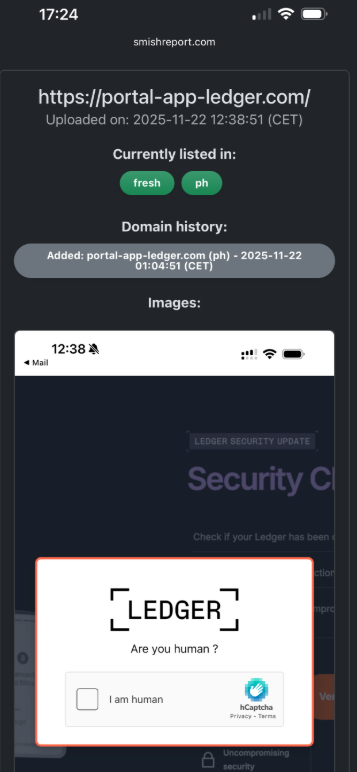
The SMS phishing reporting site smishreport.com.

Merrill said the last few weeks of the calendar year typically see a big uptick in smishing — particularly package redelivery schemes that spoof the U.S. Postal Service or commercial shipping companies.

“Every holiday season there is an explosion in smishing activity,” he said. “Everyone is in a bigger hurry, frantically shopping online, paying less attention than they should, and they’re just in a better mindset to get phished.”

SHOP ONLINE LIKE A SECURITY PRO

As we can see, adopting a shopping strategy of simply buying from the online merchant with the lowest advertised prices can be a bit like playing Russian Roulette with your wallet. Even people who shop mainly at big-name online stores can get scammed if they’re not wary of too-good-to-be-true offers (think third-party sellers on these platforms).

If you don’t know much about the online merchant that has the item you wish to buy, take a few minutes to investigate its reputation. If you’re buying from an online store that is brand new, the risk that you will get scammed increases significantly. How do you know the lifespan of a site selling that must-have gadget at the lowest price? One easy way to get a quick idea is to run a basic WHOIS search on the site’s domain name. The more recent the site’s “created” date, the more likely it is a phantom store.

If you receive a message warning about a problem with an order or shipment, visit the e-commerce or shipping site directly, and avoid clicking on links or attachments — particularly missives that warn of some dire consequences unless you act quickly. Phishers and malware purveyors typically seize upon some kind of emergency to create a false alarm that often causes recipients to temporarily let their guard down.

But it’s not just outright scammers who can trip up your holiday shopping: Often times, items that are advertised at steeper discounts than other online stores make up for it by charging way more than normal for shipping and handling.

So be careful what you agree to: Check to make sure you know how long the item will take to be shipped, and that you understand the store’s return policies. Also, keep an eye out for hidden surcharges, and be wary of blithely clicking “ok” during the checkout process.

Most importantly, keep a close eye on your monthly statements. If I were a fraudster, I’d most definitely wait until the holidays to cram through a bunch of unauthorized charges on stolen cards, so that the bogus purchases would get buried amid a flurry of other legitimate transactions. That’s why it’s key to closely review your credit card bill and to quickly dispute any charges you didn’t authorize.

  •  

Secure Your Black Friday & Cyber Monday Purchases

The holiday shopping season, especially Black Friday and Cyber Monday, is a prime time for cybercriminals. McAfee Labs consistently observes a significant spike in malicious activity during this period, fueled by the combination of high web traffic, deals that create a sense of urgency, and a massive increase in card-not-present online transactions that create a perfect storm. Attackers exploit the chaos, knowing shoppers are often distracted and rushing to find the best Black Friday deals, making them more susceptible to phishing scams, fake websites, and malware designed to steal financial information.

As we gear up to feast with family and friends this Thanksgiving, and prepare our wallets for Black Friday and Cyber Monday, let’s look at how these two popular shopping events can impact your online security, and how to protect yourself from scammers.

Stolen credentials and identity theft

The consequences of falling for a holiday scam can be devastating. Beyond the initial financial loss from a fraudulent purchase, victims often face the long-term nightmare of identity theft. According to the Federal Trade Commission (FTC), consumers reported losing $12.5 billion to fraud in 2024, with online shopping scams as the second most commonly reported incident. Recovering from identity theft is not just costly. It’s also incredibly time-consuming. On average, it can take victims months to clear their names and correct their credit reports, adding significant emotional stress during what should be a joyful season.

The Black Friday shopping phenomenon

Historians trace the use of Black Friday to the 1960s, when Philadelphia police officers named the day after Thanksgiving as Black Friday because they had to work overtime to manage the mob of holiday shoppers and attendees to the traditional Army-Navy football game on Saturday. Later on, Shop.org coined the term Cyber Monday as a way for online retailers to participate in the Black Friday shopping frenzy.

Since the beginning of these two massive shopping holidays, both have seen incredible growth as more shoppers are turning to the Internet to participate in holiday bargain hunting. In the US, consumers reportedly spent $10.8 billion online on Black Friday 2024, a 10.2% increase from 2023, while Cyber Monday brought in a record $13.3 billion

The uptick in online shopping activity provides cybercriminals the perfect opportunity to disrupt shoppers’ holiday activities and compromise their online security. During this festive season, it is best to take proactive measures to safeguard your digital presence. 

Black Friday risks versus Cyber Monday risks

Historically, Black Friday was initially focused on in-store shopping, while Cyber Monday centered on online deals. As such, each shopping event presented its own cyber risks: 

Black Friday risks

  • Mobile-first scams: Shoppers often hunt for deals on their phones on the go before heading to the physical stores, making them more susceptible to smishing and malicious links sent via text.
  • Public Wi-Fi dangers: While in-store, shoppers usually connect to unsecured public Wi-Fi at malls or cafes, exposing their data to hackers on the same network.
  • Fake QR Codes: Shoppers could click on malicious QR codes on posters or flyers that promise exclusive deals, but lead to phishing sites.

Cyber Monday risks

  • Sophisticated phishing emails: Attackers often use data from weekend shopping activities to launch targeted email campaigns with fake shipping notifications or order confirmations for incredible deals.
  • Desktop-based Malware: With more people shopping from work or home computers, there’s a higher risk of encountering malicious ads or downloading fake browser extensions that steal data.
  • Lookalike websites: Scammers create highly convincing replicas of popular retail websites to trick users into entering login and payment details.

As retailers embrace both in-store and online platforms, cyber fraudsters are blurring the lines to take their scams to both domains.

How to protect yourself from these scams 

With the surge in online shopping during both shopping holidays, cybercriminals are also on high alert, crafting sophisticated scams to trick unsuspecting shoppers. It’s essential to approach every email or text message suspiciously, checking the sender’s information and avoiding clicking on unsolicited links.Thankfully, there are steps you can take to protect yourself when shopping online during Black Friday and Cyber Monday. 

  • Never give your information. Be suspicious of unsolicited messages, even if it appears to be from a trusted source. Hover over links in emails or texts to see the actual destination URL before clicking. If the offer seems tempting, visit the retailer’s official website and check if the same deal is available there. 
  • Eye the website with skepticism: If you happen to click the link and are led to a website, always ensure that the website you’re shopping from is legitimate. Check for the padlock icon in the address bar and “https” in the URL, as these are indicators of a secure site. Steer clear of websites that have misspelled domain names, as they could be fraudulent. Learn more about the traits of a fake website.
  • Use credit instead of debit cards. Credit cards generally offer better fraud protection and make it easier to dispute unauthorized charges.
  • Enable multi-factor authentication (MFA). Add this extra layer of security to your email and retail accounts whenever possible.
  • Beware of too good to be true offers. Extreme discounts are a common lure for scams. If a deal seems unbelievable, it probably is.
  • Verify the seller. Shop with well-known, reputable retailers. For unfamiliar sellers, look for reviews and a physical address.
  • Avoid public Wi-Fi for purchases. Your personal data is vulnerable on unsecured networks. Use your mobile data or a secure VPN instead.
  • Keep your software updated. Install updates for your operating system, browser, and security software to address known vulnerabilities.
  • Install a reputable security software. This can provide you with real-time protection and alert you to a malicious website or link.

Use virtual cards and trusted payment gateways

One of the most effective ways to protect your financial data is to avoid entering your actual debit or credit card number directly on websites. Instead, use payment methods that act as a buffer. Virtual credit cards, offered by many banks and privacy services, generate a unique, temporary card number for a single transaction or vendor, making your real account information useless to thieves if a site is breached. 

Similarly, digital wallets such as PayPal, Apple Pay, and Google Pay use tokenization to mask your card details. When using browser extensions for coupons, be cautious. Only install trusted extensions and check their permissions. 

Monitor price drops without sacrificing security

Everyone wants to find the best price, but be wary of how you track those Black Friday deals. While some deal-tracking apps and browser extensions are helpful, others are privacy nightmares, requesting broad permissions to read all your browsing data. 

Before installing any price tracker, carefully review the permissions it requests. Better yet, use well-known, reputable services or set up price alerts directly on major retail websites. Before you download any new app to your phone or computer, use a security solution with a safe-app check feature to ensure it doesn’t contain malware or spyware.

Invest in McAfee security software

Keeping your digital data and identity safe during the holiday shopping fever might be the best gift you could give yourself and your family. Consider these top features:

  • McAfee® Total Protection: This powerful solution provides essential antivirus and web protection to block malicious websites and phishing links in their tracks while you hunt for online deals.
  • McAfee® Scam Detector: This feature uses patented AI technology to detect and protect you from risky links in texts, emails, and social media, stopping scams before you can even click.
  • McAfee® Mobile Security: This comprehensive protection on the go helps shield you from risky Wi-Fi networks and malicious apps.
  • Identity Monitoring: Get alerts if your personal information, like email addresses or credit card numbers, is found on the dark web, allowing you to take action quickly to prevent identity theft. 

FAQs: Stay protected while holiday shopping

Is it safe to shop Cyber Monday deals on mobile?

Shopping for Cyber Monday deals on your phone can be convenient, but it requires extra caution. The biggest pitfall is using unsecured public Wi-Fi networks in places like coffee shops or malls, allowing criminals to intercept your data. 

Another major threat is fraudulent shopping apps designed to steal your information. For another layer of protection, use mobile wallets like Apple Pay or Google Pay as they use tokenization to process payments without exposing your actual card number.

Are deals advertised on social media legitimate?

They can be, but social media is also rife with scams. Instead of clicking links in ads, go directly to the retailer’s official website to find the deal. Scammers often create fake storefronts on social platforms to steal your money and data.

Do retailers release Cyber Monday deals early?

Yes, many retailers start their Cyber Monday deals during the Black Friday weekend or earlier. However, be cautious of unsolicited emails announcing “early access.” Always verify these offers on the retailer’s actual website, as this is a common phishing tactic.

Is it safe to pay with a QR code?

Only use QR codes from trusted sources. Criminals can place malicious QR code stickers over legitimate ones, redirecting you to a phishing site. When in a store, confirm the QR code is legitimate with an employee. When shopping online, only scan codes on a retailer’s official site or app.

What should I do if I get a suspicious shipping notification?

Do not click any links in the email or text message. Scammers send fake shipping alerts to get you to click on malicious links or provide personal information. Instead, go to the retailer’s website and use your official order number to track your package directly.

Final thoughts

Black Friday and Cyber Monday are prime opportunities for consumers to snag once-a-year deals and for cybercriminals to exploit their eagerness to save. However, being aware of the prevalent scams and knowing how to protect yourself can save you from falling prey to these ploys. 

One effective way to do so is by investing in top-tier online protection solutions. McAfee offers award-winning cybersecurity solutions developed to shield you from the ever-evolving threats. Explore the features of our McAfee+ Ultimate and Total Protection plans and stay informed about the latest cyber threats with McAfee Labs.

Always strive to shop wisely and stay safe, and remember that if an offer seems too good to be true, it probably is.

The post Secure Your Black Friday & Cyber Monday Purchases appeared first on McAfee Blog.

  •  
❌