Login
Login
How to use Google Messages' new Trash feature to recover texts you accidentally deleted
Here's why I treasure Google Messages' new Trash - and how it works.



I maintain awesome-prometheus-alerts, a collection of production-ready Prometheus alerting rules. Just added a batch of rules relevant to low-level system and network monitoring:
eBPF (cloudflare/ebpf_exporter) - Program load failures - Map allocation errors - Decoder config issues
SNMP - Interface operational status - Bandwidth utilization - Interface error/discard rate
WireGuard - Peer last handshake age: fires when a peer hasn't been seen in >3 minutes, which reliably catches dropped tunnels without noisy flapping
Cilium - Policy enforcement drop rate - BPF map pressure - Endpoint health
cert-manager - Certificate expiry warnings - Renewal and ACME failure detection
All rules are plain YAML, no dependencies beyond the respective exporters.
-> https://samber.github.io/awesome-prometheus-alerts
If you spot anything wrong in the PromQL or have better thresholds for your environment, issues and PRs welcome.
Two rival ransomware gangs have locked horns after 0APT threatened to expose people affiliated with Krybit.…


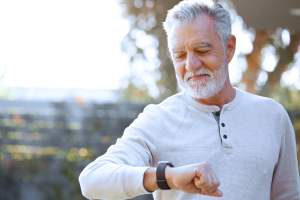
Wearable health devices are designed to give you more control over your body and your data.
But in 2026, the bigger risk isn’t someone spying on your smartwatch or smartring in real time. It’s what happens if the data connected to that device gets exposed.
Health data, login credentials, and behavioral patterns tied to wearables can become valuable signals for cybercriminals. And once that data is out, it can fuel everything from identity theft to highly targeted scams.
Here’s what’s actually at risk, and how to protect yourself.
Wearable health data refers to the personal information collected and stored by devices like fitness trackers, smartwatches, and connected medical monitors.
This can include:
On its own, this data may seem harmless. But combined, it creates a highly detailed profile of your habits, routines, and health status.
Early conversations around wearable security focused on device hacking or surveillance.
Today, the bigger concern is data exposure.
If wearable platforms, apps, or connected services are breached, your data could be:
And because this data is personal and specific, scams built from it can feel far more convincing than generic spam.
When cybercriminals gain access to personal data, they don’t just sit on it. They use it.
Here’s how that plays out:
| Scenario | What It Looks Like | Why It Works |
| Health-related phishing | “Your insurance claim was denied” or “Update your health profile” | Feels relevant and urgent |
| Account takeover attempts | Password reset emails tied to known apps | Uses real account signals |
| Personalized scams | Messages referencing routines, devices, or conditions | Builds trust quickly |
| Fake alerts or services | “Device security issue detected” | Mimics real product behavior |
This is where the risk shifts from data privacy → real-world financial and identity impact.
1)Install updates immediately
Security patches fix known vulnerabilities. Delaying updates leaves gaps open.
2) Use layered protection, not just device settings
A VPN and security software help protect data in transit and block threats before they reach you.
3) Strengthen your login credentials
Use strong, unique passwords and enable two-factor authentication wherever possible.
4) Limit what you share
Review app permissions and only connect devices to services you trust.
5) Verify every message or alert
If you receive a message tied to your device or health data, double-check the source before clicking.
6) Monitor your accounts regularly
Small signs of unusual activity can be early indicators of larger issues.
Protecting your wearable doesn’t stop at the device itself. It extends to what happens if your data is exposed or targeted.
McAfee helps track your personal information across known breach sources and alerts you if your data appears where it shouldn’t.
This gives you early warning if wearable-related accounts or associated data are compromised.
If your data is exposed, scammers often follow.
McAfee’s Scam Detector helps identify suspicious messages, links, and communications before you engage, and explains why something was flagged, so you can make informed decisions quickly.
Together, these tools help protect not just your device, but the chain reaction that can follow a data breach.
The post Can Your Wearable Health Monitors Be Compromised? appeared first on McAfee Blog.


I'm starting to become pretty fond of Bruce. Actually, I've had a bit of an epiphany: an AI assistant like Bruce isn't just about auto-responding to tickets in an entirely autonomous manner; it's also pretty awesome at responding with just a little bit of human assistance. Charlotte and I both replied to some tickets today that were way too specific for Bruce to ever do on his own, but by feeding in just a little bit of additional info (such as the number of domains someone was presently monitoring), Bruce was able to construct a really good reply and "own" the ticket. So maybe that's the sweet spot: auto-reply to the really obvious stuff and then take just a little human input on everything else.