Reading view

Weekly Update 499

Weekly Update 499

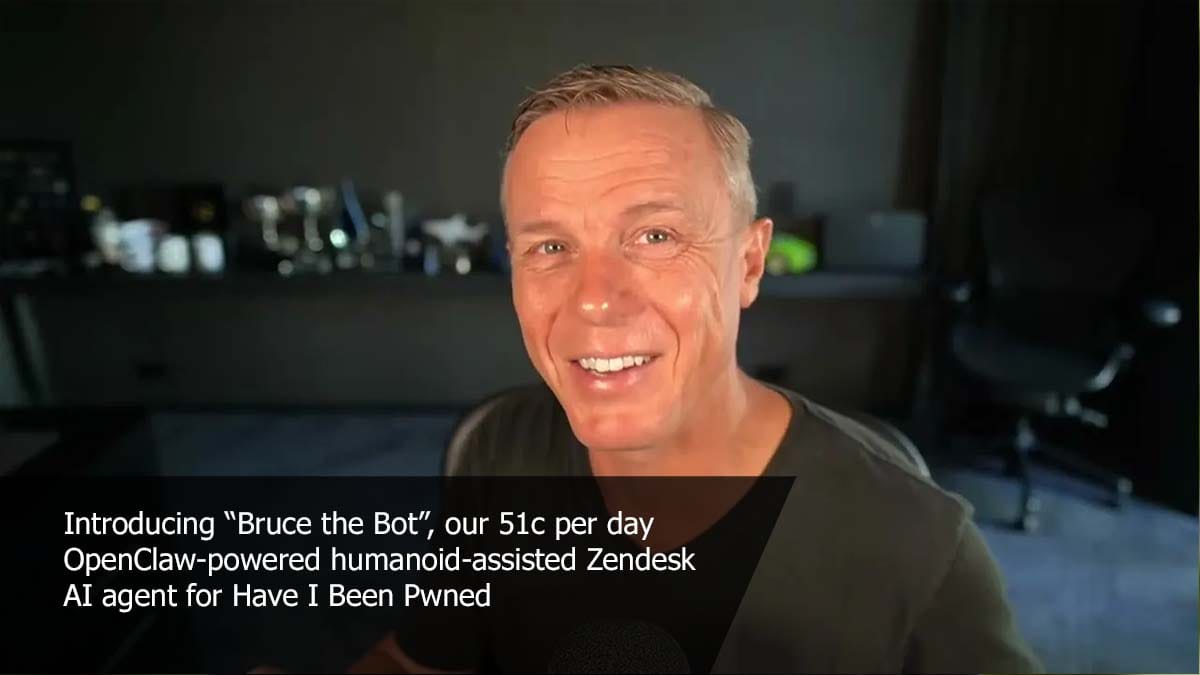
I'm starting to become pretty fond of Bruce. Actually, I've had a bit of an epiphany: an AI assistant like Bruce isn't just about auto-responding to tickets in an entirely autonomous manner; it's also pretty awesome at responding with just a little bit of human assistance. Charlotte and I both replied to some tickets today that were way too specific for Bruce to ever do on his own, but by feeding in just a little bit of additional info (such as the number of domains someone was presently monitoring), Bruce was able to construct a really good reply and "own" the ticket. So maybe that's the sweet spot: auto-reply to the really obvious stuff and then take just a little human input on everything else.


Weekly Update 499
Weekly Update 499
Weekly Update 499
Weekly Update 499
  •  

ShowDoc RCE Flaw CVE-2025-0520 Actively Exploited on Unpatched Servers

A critical security vulnerability impacting ShowDoc, a document management and collaboration service popular in China, has come under active exploitation in the wild. The vulnerability in question is CVE-2025-0520 (aka CNVD-2020-26585), which carries a CVSS score of 9.4 out of 10.0. It relates to a case of unrestricted file upload that stems from improper validation of

  •  

CISA Adds 6 Known Exploited Flaws in Fortinet, Microsoft, and Adobe Software

The U.S. Cybersecurity and Infrastructure Security Agency (CISA) on Monday added half a dozen security flaws to its Known Exploited Vulnerabilities (KEV) catalog, citing evidence of active exploitation. The list of vulnerabilities is as follows - CVE-2026-21643 (CVSS score: 9.1) -  An SQL injection vulnerability in  Fortinet FortiClient EMS that could allow an unauthenticated attacker to

  •  

Fake Linux leader using Slack to con devs into giving up their secrets

Google Sites lure leads to bogus root certificate

Imagine getting asked to do something by a person in authority. An unknown malware slinger targeting open source software developers via Slack impersonated a real Linux Foundation official and used pages hosted on Google.com to steal developers' credentials and take over their systems.…

  •  

JanelaRAT Malware Targets Latin American Banks with 14,739 Attacks in Brazil in 2025

Banks and financial institutions in Latin American countries like Brazil and Mexico have continued to be the target of a malware family called JanelaRAT. A modified version of BX RAT, JanelaRAT is known to steal financial and cryptocurrency data associated with specific financial entities, as well as track mouse inputs, log keystrokes, take screenshots, and collect system metadata. "One of the

  •  

Unpatched RAGFlow Vulnerability Allows Post-Auth RCE

The current version of RAGFlow, a widely-deployed Retrieval Augmented Generation solution, contains a post-auth vulnerability that allows for arbitrary code execution.

This post includes a POC, walkthrough and patch.

The TL;DR is to make sure your RAGFlow instances aren't on the public internet, that you have the minimum number of necessary users, and that those user accounts are protected by complex passwords. (This is especially true if you're using Infinity for storage.)

submitted by /u/Prior-Penalty
[link] [comments]
  •  

ClearFrame – an open-source AI agent protocol with auditability and goal monitoring

Body

I’ve been playing with the current crop of AI agent runtimes and noticed the same pattern over and over:

  • One process both reads untrusted content and executes tools
  • API keys live in plaintext dotfiles
  • There’s no audit log of what the agent actually did
  • There’s no concept of the agent’s goal, so drift is invisible
  • When something goes wrong, there is nothing to replay or verify

So I built ClearFrame, an open-source protocol and runtime that tries to fix those structural issues rather than paper over them with prompts.

What ClearFrame does differently

  • Reader / Actor isolation Untrusted content ingestion (web, files, APIs) runs in a separate sandbox from tool execution. The process that can run shell, write_file, etc. never sees raw web content directly.
  • GoalManifest + alignment scoring Every session starts with a GoalManifest that declares the goal, allowed tools, domains, and limits. Each proposed tool call is scored for alignment and can be auto-approved, queued for human review, or blocked.
  • Reasoning Transparency Layer (RTL) The agent’s chain-of-thought is captured as structured JSON (with hashes for tamper‑evidence), so you can replay and inspect how it reached a decision.
  • HMAC-chained audit log Every event (session start/end, goal scores, tool approvals, context hashes) is written to an append-only log with a hash chain. You can verify the log hasn’t been edited after the fact.
  • AgentOps control plane A small FastAPI app that shows live sessions, alignment scores, reasoning traces, and queued tool calls. You can approve/block calls in real time and verify audit integrity.

Who this is for

  • People wiring agents into production systems and worried about prompt injection, credential leakage, or goal drift
  • Teams who need to show regulators / security what their agents are actually doing
  • Anyone who wants something more inspectable than “call tools from inside the model and hope for the best”

Status

  • Written in Python 3.11+
  • Packaged as a library with a CLI (clearframe init, clearframe audit-tail, etc.)
  • GitHub Pages site is live with docs and examples

Links

I’d love feedback from people building or operating agents in the real world:

  • Does this address the actual failure modes you’re seeing?
  • What would you want to plug ClearFrame into first (LangChain, LlamaIndex, AutoGen, something else)?
  • What’s missing for you to trust an agent runtime in production?
submitted by /u/TheDaVinci1618
[link] [comments]
  •  

FBI and Indonesian Police Dismantle W3LL Phishing Network Behind $20M Fraud Attempts

The U.S. Federal Bureau of Investigation (FBI), in partnership with the Indonesian National Police, has dismantled the infrastructure associated with a global phishing operation that leveraged an off-the-shelf toolkit called W3LL to steal thousands of victims' account credentials and attempt more than $20 million in fraud. In tandem, authorities detained the alleged developer, who has&

  •  
❌